
Riccia Fluitans: Tied Down or Floating – A Unique Carpeting Approach

Welcome to Aquarium Mastery!
Ever dreamt of a lush, vibrant carpet in your aquarium, but struggled with traditional methods? Dive in! This article explores the captivating world of Riccia fluitans and unveils a unique approach to creating a stunning carpet, even if you've thought it was impossible. Discover how to achieve a breathtaking Riccia fluitans carpet aquarium, and unlock the secrets to its successful cultivation. Intrigued? Let's get started!
- Riccia Fluitans: Anchored or Floating – A Versatile Carpeting Option for Aquariums
- Understanding Riccia Fluitans: A Unique Liverwort for Aquascaping
- Creating a Riccia Fluitans Carpet: Anchored vs. Floating Methods
- Riccia Fluitans Care: Maintaining a Healthy Aquarium Carpet
- Troubleshooting Common Riccia Fluitans Issues
- Riccia Fluitans as a Habitat and Food Source in the Aquarium
- Riccia Fluitans vs. Other Carpeting Plants: A Comparison
- Achieving Aquarium Mastery with Riccia Fluitans
-
Frequently Asked Questions
- How can Riccia fluitans be used to create a carpet in an aquarium?
- Is Riccia fluitans suitable for both freshwater and saltwater aquariums?
- What are the key factors to consider when growing a Riccia fluitans carpet?
- What are some common problems aquarists face when creating a Riccia fluitans carpet?
- How often should a Riccia fluitans carpet be trimmed?
- Final Reflection: Embracing Ephemeral Beauty
- Unleash Your Aquatic Artistry!
Riccia Fluitans: Anchored or Floating – A Versatile Carpeting Option for Aquariums
Understanding Riccia Fluitans: A Unique Liverwort for Aquascaping
What is Riccia Fluitans? Exploring the Crystalwort Plant's Biology
Riccia fluitans, commonly known as Crystalwort, is a fascinating aquatic organism that, despite its plant-like appearance, is actually a type of liverwort, belonging to the division Marchantiophyta. Unlike true vascular plants, it lacks roots, stems, and leaves, instead comprising a thallus – a simple, undifferentiated body that performs all vegetative functions. This unique biological structure allows Riccia fluitans to absorb nutrients directly from the surrounding water column through its entire surface.
Globally distributed, Riccia fluitans is found in various freshwater environments, from slow-moving streams to stagnant ponds. Its simple biological makeup means it reproduces primarily through fragmentation, where pieces of the thallus break off and grow into new individuals, or via spores. This rapid propagation method contributes to its ability to quickly form dense mats, making it a highly adaptable and distinctive component in the aquatic ecosystem and a popular choice for a vibrant Riccia fluitans carpet aquarium.
Riccia Fluitans Characteristics: Appearance, Growth, and CO2 Pearling
The appearance of Riccia fluitans is characterized by its delicate, bright green, dichotomously branching thalli, which interlace to form dense, cushion-like mats. Each individual thallus segment typically measures between 0.5 to 2 centimeters in length, creating a fine, feathery texture. When cultivated under optimal conditions, particularly with high light and ample carbon dioxide (CO2), Riccia fluitans exhibits remarkably rapid growth, often doubling its mass within a week.
One of the most captivating characteristics of healthy Riccia fluitans is its pronounced CO2 pearling. This phenomenon occurs when the plant photosynthesizes intensely, producing oxygen as a byproduct. Since the oxygen is produced faster than it can dissolve into the water, it accumulates as tiny, shimmering bubbles on the plant's surface. This "pearling" effect creates a stunning, effervescent display, transforming a well-maintained Riccia fluitans carpet into a sparkling, jewel-toned foreground that is highly sought after in aquascaping.
Natural Habitat and Aquarium Suitability of Riccia Fluitans
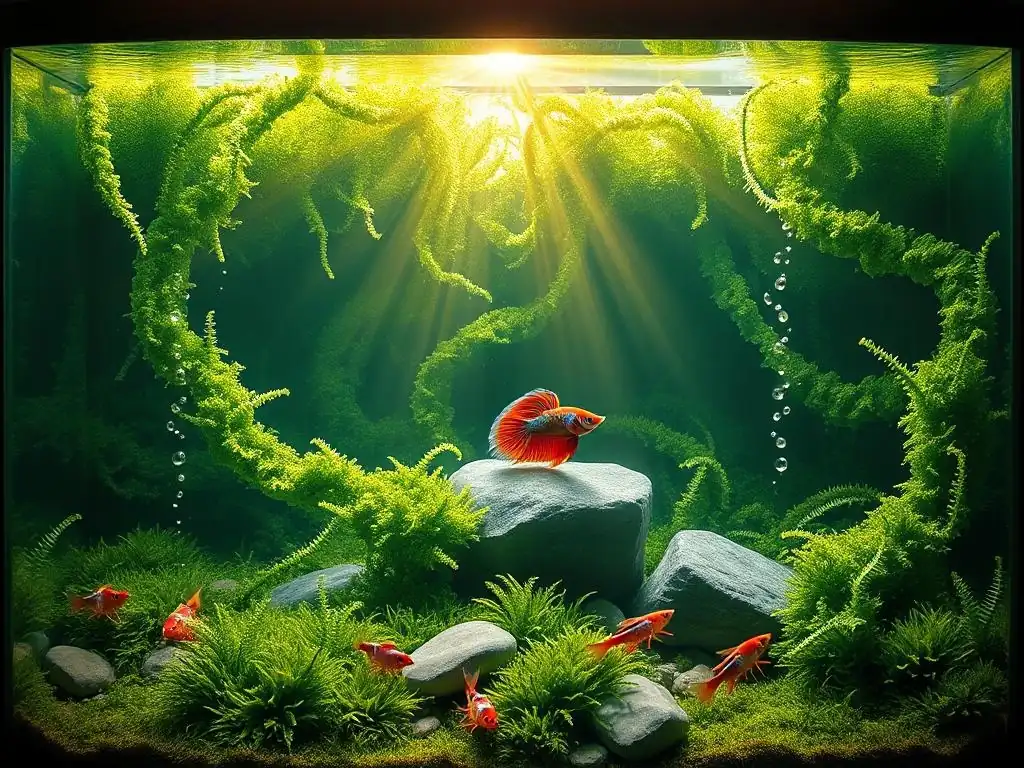
In its natural habitat, Riccia fluitans thrives in a variety of freshwater environments, predominantly in temperate and tropical regions across the globe. It is commonly found floating freely on the surface of still or slow-moving waters such as ponds, ditches, and the edges of lakes. Occasionally, it can also be found submerged and attached to rocks or driftwood in clear, nutrient-rich waters, showcasing its adaptability to both floating and anchored conditions. This natural versatility makes it an ideal candidate for diverse aquascaping applications.
Due to its robust nature and aesthetic appeal, Riccia fluitans is highly suitable for freshwater aquariums. Its ability to thrive either as a free-floating surface plant or, with proper anchoring, as a vibrant green carpet in the foreground, offers aquarists significant flexibility. Its distinctive texture and dramatic pearling effect make it a centerpiece in many aquascapes, particularly in Iwagumi and Nature Aquarium styles, where a lush Riccia fluitans carpet can create a truly stunning visual impact.
Creating a Riccia Fluitans Carpet: Anchored vs. Floating Methods
The Floating Riccia Fluitans Method: Pros, Cons, and Surface Coverage
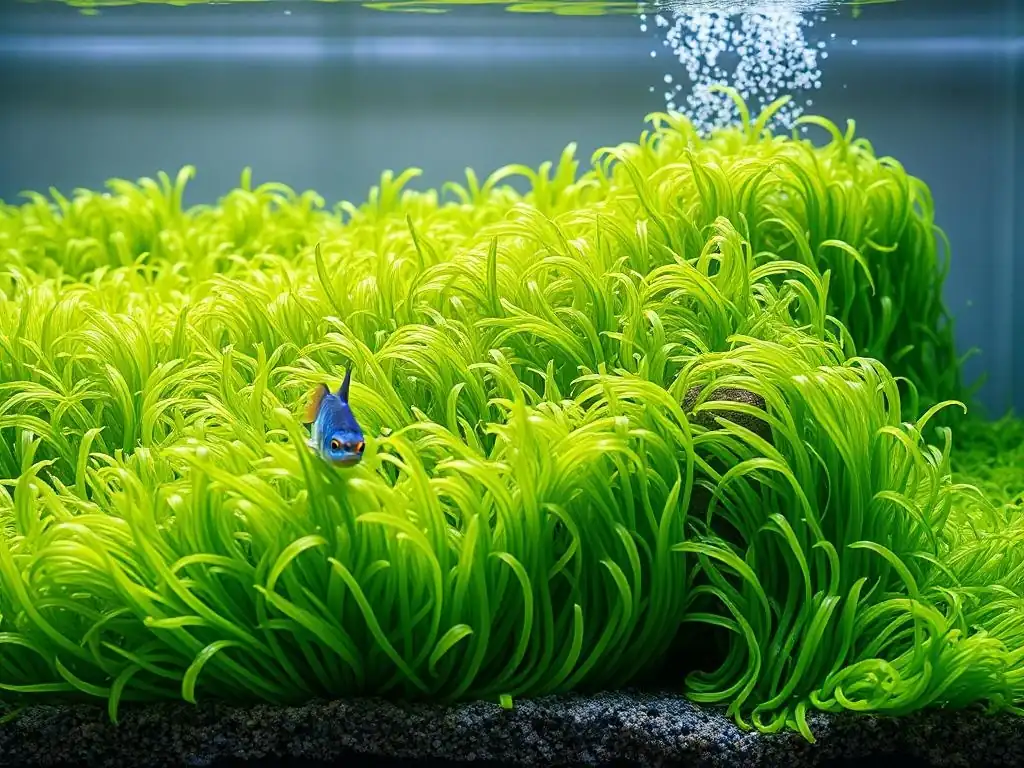
The floating method for Riccia fluitans is its most natural state, where the plant is simply introduced to the water and allowed to drift freely on the surface. This approach offers several advantages, including extreme ease of setup, as no attachment materials or intricate procedures are required. Floating Riccia provides excellent shade and cover for surface-dwelling fish, such as bettas or gouramis, and can help to diffuse intense lighting, benefiting plants below that prefer lower light conditions.
However, the floating method also comes with its drawbacks. Uncontained Riccia can quickly spread and become a nuisance, potentially blocking too much light from reaching submerged plants and leading to their decline. It can also become entangled in filters or interfere with surface skimmers. While it offers excellent surface coverage, providing a dense, protective canopy, aquarists must regularly manage its growth to prevent it from completely covering the water surface, which could lead to oxygen depletion for fish if not properly aerated.
The Anchored Riccia Fluitans Carpet: A Detailed Guide
Creating an anchored Riccia fluitans carpet is a popular aquascaping technique that transforms this buoyant liverwort into a lush, vibrant foreground or midground element. The primary motivation for anchoring is aesthetic, allowing aquarists to shape the plant into a dense, uniform carpet that contrasts beautifully with other plants and hardscape elements. Despite its natural tendency to float, with proper technique, Riccia can be persuaded to grow submerged, providing a stunning, bubbly landscape.
The process of creating an anchored Riccia fluitans carpet involves securing the plant to a weighted material that can be placed on the substrate. This method requires patience and consistent maintenance, as the plant's inherent buoyancy, especially when actively pearling, can cause it to detach over time. However, the visual reward of a shimmering, oxygen-rich Riccia fluitans carpet makes the effort worthwhile for many dedicated aquascapers aiming for a truly unique display.
Choosing the Right Attachment Material for a Riccia Carpet
Selecting the appropriate attachment material is crucial for the success and longevity of a Riccia fluitans carpet. Common choices include stainless steel mesh, lava rock, driftwood, and ceramic tiles. Stainless steel mesh, typically with a grid size of about 0.5 to 1 cm, is highly favored for creating flat, expansive carpets due to its inert nature and ease of shaping. Its weight helps to counteract Riccia's buoyancy, ensuring it remains submerged.
Lava rock and driftwood offer more naturalistic attachment points, allowing for irregular, organic shapes that blend seamlessly into the aquascape. Lava rock, being porous, can also provide additional surface area for beneficial bacteria. Ceramic tiles, while less common, are also inert and can be used for flat areas. The key is to choose a material that is aquarium-safe, heavy enough to sink, and provides a stable surface for the Riccia to be tied or sandwiched onto, ensuring it doesn't leach harmful substances into the water.
Materials Needed for Anchoring Riccia Fluitans
To successfully create an anchored Riccia fluitans carpet, gather the following essential materials: first, a healthy portion of Riccia fluitans itself, ideally vibrant green and free of algae. Next, you'll need your chosen attachment material; stainless steel mesh is highly recommended for carpeting, with common sizes being 5x5 cm or 10x10 cm squares, though larger sheets can be cut to fit. The mesh should be food-grade or specifically designed for aquariums to prevent rust.
For securing the Riccia, clear monofilament fishing line (approximately 0.15-0.20 mm diameter) is ideal due to its near invisibility in water and durability. Alternatively, biodegradable cotton thread can be used, which will eventually break down as the Riccia establishes itself. You will also need a sharp pair of scissors for trimming the Riccia and the fishing line, and optionally, a pair of long-nosed tweezers can be helpful for precise placement and tying.
Step-by-Step Guide: Creating a Substrate-Adhered Riccia Carpet
Creating a substrate-adhered Riccia fluitans carpet begins with preparing the plant itself. Gently separate your bulk Riccia fluitans into smaller, thin clumps, ensuring each piece is healthy and vibrant. Avoid using large, thick clumps as these are harder to attach evenly and may rot in the center due to lack of light and circulation. Prepare your chosen attachment material, such as stainless steel mesh squares, by ensuring they are clean and free of any debris or sharp edges.
Next, place a thin, even layer of the prepared Riccia onto one side of a mesh square. Ensure the Riccia is spread out, not piled up, to allow light and water flow to all parts. Carefully place another mesh square directly on top, creating a "sandwich" with the Riccia in between.
Secure the two mesh squares together by wrapping them tightly with fishing line or thread, crisscrossing multiple times to ensure the Riccia is firmly held in place and evenly distributed. Once secured, gently lower your newly created Riccia fluitans carpet into the desired location on your aquarium substrate, ensuring it lays flat and is not disturbed by strong currents.
Riccia Fluitans Care: Maintaining a Healthy Aquarium Carpet
Lighting Requirements for Optimal Riccia Fluitans Growth
Optimal growth and the signature pearling effect of a Riccia fluitans carpet are heavily dependent on high-intensity lighting. To achieve a dense, vibrant carpet, a Photosynthetically Active Radiation (PAR) level of 50-80 PAR at the substrate level is generally recommended, with higher PAR levels (80-100+) promoting even more vigorous pearling. Full-spectrum LED lights are ideal, as they provide the necessary light wavelengths for robust photosynthesis.
Insufficient lighting will lead to leggy, sparse growth, a dull appearance, and a significant reduction in pearling, ultimately hindering the formation of a dense Riccia fluitans carpet. A consistent photoperiod of 8-10 hours per day is crucial for healthy development. Overly long photoperiods or excessively high intensity without adequate CO2 and nutrients can, however, trigger algae growth, so a balanced approach is key to maintaining a stunning Riccia fluitans carpet aquarium.
CO2 Injection and Fertilization for Riccia Fluitans
Carbon dioxide (CO2) injection is not merely beneficial but often essential for cultivating a truly lush and pearling Riccia fluitans carpet. With CO2 levels maintained between 20-30 parts per million (ppm), Riccia can photosynthesize at its peak efficiency, leading to rapid, dense growth and the spectacular pearling effect that makes it so desirable. Without supplemental CO2, especially in high-light setups, growth will be significantly slower, and the plant may struggle to thrive, becoming susceptible to algae.
Beyond CO2, a comprehensive fertilization regimen is vital. Riccia fluitans, being a fast grower, is a heavy feeder and requires a steady supply of both macronutrients (nitrogen, phosphorus, potassium) and micronutrients (iron, manganese, zinc, etc.). Liquid fertilizers dosed regularly, often daily or every other day, are preferred, as Riccia absorbs nutrients directly from the water column. Maintaining adequate iron levels is particularly important for its vibrant green coloration, contributing to a healthy and visually appealing Riccia fluitans carpet.
Water Parameters for a Thriving Riccia Fluitans Carpet
For a thriving Riccia fluitans carpet, maintaining stable and appropriate water parameters is crucial. The ideal temperature range for Riccia is between 20-28°C (68-82°F), with temperatures consistently outside this range potentially stressing the plant. A slightly acidic to neutral pH, typically ranging from 6.0 to 7.5, is generally well-tolerated. However, consistency in pH is more important than hitting an exact number, especially when CO2 injection is used.
General Hardness (GH) levels between 3-10 dGH and Carbonate Hardness (KH) levels of 3-8 dKH are suitable, providing essential minerals without causing extreme fluctuations. Regular water changes, approximately 25-30% weekly, are highly recommended. This practice helps to replenish vital nutrients, remove accumulated waste products, and maintain overall water quality, which directly contributes to the health and density of your Riccia fluitans carpet aquarium.
Pruning and Maintenance of Your Riccia Fluitans Aquarium
Regular pruning is an indispensable aspect of maintaining a healthy and aesthetically pleasing Riccia fluitans carpet. As Riccia grows, the bottom layers of the carpet can become deprived of light and circulation, leading to browning and decay. To prevent this, it's essential to trim the top layer of the carpet every 2-4 weeks, depending on its growth rate. Use sharp aquascaping scissors to carefully snip away the excess growth, aiming for an even surface.
After pruning, it's crucial to remove any detached pieces of Riccia from the water column promptly. These fragments, being buoyant, can float to the surface and become a nuisance, potentially clogging filters or shading other plants. Regular trimming not only prevents the lower layers from dying off but also encourages denser, bushier growth, contributing to a more robust and vibrant Riccia fluitans carpet. This proactive maintenance ensures the longevity and beauty of your Riccia fluitans carpet aquarium.
Troubleshooting Common Riccia Fluitans Issues
Algae Growth on Riccia Fluitans: Prevention and Treatment
Algae growth on a Riccia fluitans carpet is a common frustration for aquarists, often indicative of an imbalance in the aquarium ecosystem. The delicate structure of Riccia makes it particularly susceptible to various forms of algae, including hair algae or diatoms. Prevention is key: ensure stable CO2 levels (20-30 ppm), consistent nutrient dosing, and proper lighting intensity and duration. Fluctuations in these parameters are common triggers for algae outbreaks.
Should algae appear, treatment involves a multi-pronged approach. Manual removal using tweezers can help, though it's often tedious. Temporarily reducing light intensity or photoperiod can slow algae growth. Increasing water flow around the Riccia fluitans carpet can also help prevent algae from settling. Introducing algae-eating inhabitants like Amano shrimp (Caridina multidentata) can be effective, but caution is advised as they may dislodge the delicate Riccia. Addressing the underlying cause, whether it's nutrient excess/deficiency or unstable CO2, is paramount for long-term success.
Riccia Fluitans Detaching from Substrate: Causes and Solutions
The most common and frustrating issue with an anchored Riccia fluitans carpet is its tendency to detach from the substrate and float to the surface. This is primarily due to its inherent buoyancy, which intensifies significantly when the plant is actively pearling, as oxygen bubbles become trapped within its dense structure, acting like miniature balloons. Insufficient initial attachment or the use of too few anchoring points are also major contributing factors.
To address detachment, ensure the Riccia is initially secured very tightly to its anchoring material, using fine fishing line wrapped thoroughly around the mesh or rock. Regular and aggressive pruning of the Riccia fluitans carpet is crucial, as it reduces the overall mass and, consequently, the buoyant force. If detachment persists, consider re-attaching the affected sections with fresh, tighter wraps of fishing line. Ensuring gentle water flow over the carpet area can also help prevent strong currents from lifting the buoyant plant.
Yellowing or Browning Riccia Fluitans: Identifying and Correcting the Problem
Yellowing or browning of a Riccia fluitans carpet typically signals underlying issues with nutrient availability, lighting, or water quality. Yellowing often points to a deficiency in essential nutrients, particularly nitrogen or iron, which are crucial for chlorophyll production and overall plant vitality. Inadequate lighting can also cause yellowing, as the plant struggles to photosynthesize effectively.
Browning, on the other hand, usually indicates rot or decay, often occurring in the lower layers of a very thick Riccia fluitans carpet due to insufficient light penetration and poor water circulation. It can also be a symptom of poor water quality or extreme nutrient imbalances. To correct these issues, first test your water parameters and adjust fertilizer dosing to ensure a complete nutrient profile.
Confirm your lighting is adequate for high-light plants. Most importantly, implement a strict pruning schedule to prevent the carpet from becoming too dense, allowing light and water to reach all parts of your Riccia fluitans carpet, ensuring its vibrant green health.
Riccia Fluitans as a Habitat and Food Source in the Aquarium
Benefits of Riccia Fluitans for Shrimp and Small Fish
A well-established Riccia fluitans carpet offers numerous ecological benefits within the aquarium, particularly for small invertebrates and fish. Its dense, intricate structure creates an excellent network of hiding spots and sheltered areas, which are invaluable for species like Cherry Shrimp (Neocaridina davidi) or Amano shrimp (Caridina multidentata), providing them security from larger tank mates. Small fish, such as Endler's Livebearers (Poecilia wingei) or various Dwarf Rasboras (Boraras spp. ), also benefit from these secure retreats, reducing stress and encouraging more natural behaviors.
Beyond shelter, the Riccia fluitans carpet serves as a continuous foraging ground. The plant's surface and the spaces within its dense mat naturally accumulate biofilm, detritus, and microscopic organisms, which provide a constant food source for grazing shrimp and fry. This micro-ecosystem within the Riccia contributes to a healthier and more biologically diverse aquarium environment, making the Riccia fluitans carpet an active and beneficial component of the tank's living system.
Using Riccia Fluitans for Fry Protection
For aquarists engaged in breeding, a Riccia fluitans carpet is an invaluable asset for protecting vulnerable fish fry. The extremely dense and complex network of Riccia thalli creates an impenetrable sanctuary that larger, predatory adult fish simply cannot navigate. Newly hatched fry, often minuscule and defenseless, can easily hide within the fine filaments of the Riccia, significantly increasing their chances of survival in a community tank setting.
Furthermore, the same micro-ecosystem that benefits adult shrimp also provides a crucial initial food source for fry. Microorganisms and infusoria that thrive within the Riccia fluitans carpet are readily available for the tiny mouths of developing fry. This dual benefit of shelter and readily accessible food makes Riccia fluitans an ideal choice for breeding tanks or community setups where fry survival is desired, greatly enhancing the success rate of various fish breeding projects.
Riccia Fluitans vs. Other Carpeting Plants: A Comparison
Comparing Riccia Fluitans to Monte Carlo
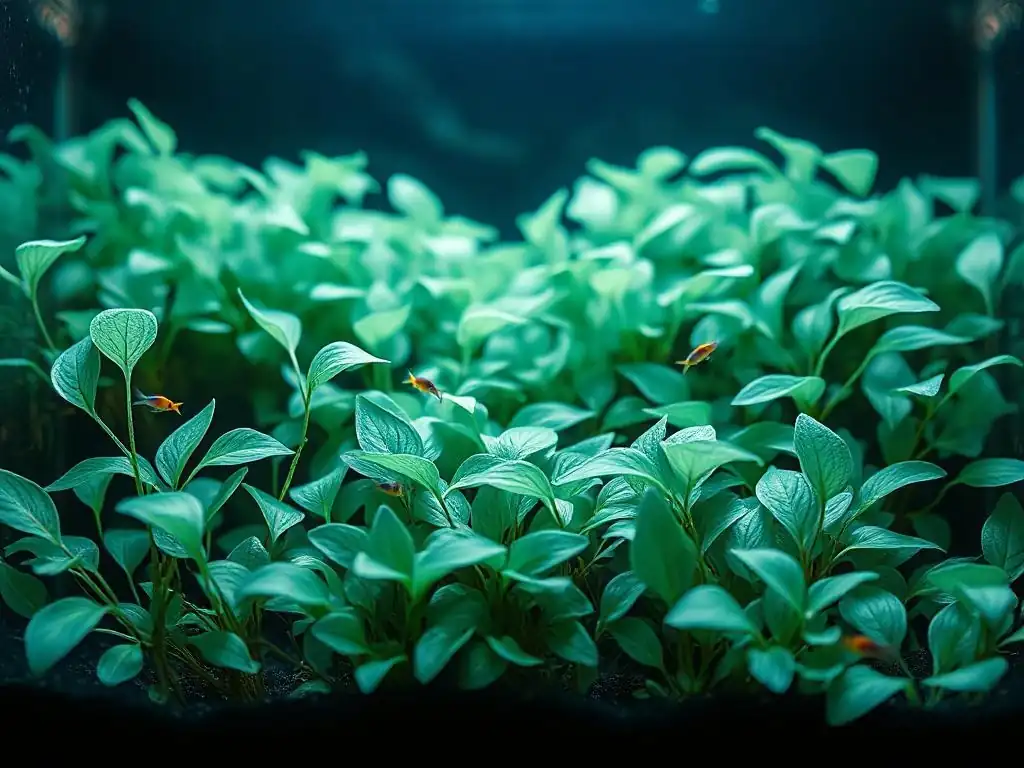
When comparing Riccia fluitans to Monte Carlo ( Micranthemum tweediei), distinct differences emerge in their growth habits and aesthetic. Monte Carlo is a true stem plant that spreads by sending out runners, eventually forming a dense, uniform carpet with small, round leaves. Once established and rooted into the substrate, Monte Carlo is relatively stable and less prone to floating or detaching, making it a lower-maintenance carpeting option in the long run.
In contrast, Riccia fluitans, as a liverwort, does not root into the substrate and must be anchored to create a carpet effect. Its appearance is characterized by a unique, bubbly, and fluffy texture, especially when pearling, which creates a highly dynamic visual. While Monte Carlo offers a more traditional, manicured lawn appearance, a Riccia fluitans carpet provides a distinct, effervescent look, demanding initial anchoring effort and ongoing management to prevent buoyancy-related issues. Both thrive under high light and CO2.
Comparing Riccia Fluitans to Dwarf Hairgrass
Dwarf Hairgrass ( Eleocharis parvula) presents a stark contrast to Riccia fluitans in terms of form and growth. Dwarf Hairgrass is a true grass-like plant that grows as slender, upright blades, typically reaching 2-5 cm in height. It spreads vigorously via runners, forming a naturalistic, meadow-like carpet that provides excellent cover for small inhabitants. Once rooted, Dwarf Hairgrass is extremely stable and does not suffer from buoyancy issues.
Riccia fluitans, on the other hand, offers a completely different aesthetic with its bright green, bubbly, and dense mat-like growth. While Dwarf Hairgrass provides a uniform grassy texture, a Riccia fluitans carpet delivers a unique, almost effervescent appearance, particularly when pearling. Establishing Dwarf Hairgrass can be slow initially as it needs to root and spread, whereas Riccia fluitans requires meticulous initial anchoring and continuous pruning to maintain its carpet form and prevent it from floating.
Comparing Riccia Fluitans to Glossostigma elatinoides and Hemianthus callitrichoides 'Cuba'
Glossostigma elatinoides (Glosso) and Hemianthus callitrichoides 'Cuba' (HC 'Cuba') are two of the most popular and challenging carpeting plants, offering a dense, low-growing "lawn" effect that differs significantly from a Riccia fluitans carpet. Both Glosso and HC 'Cuba' are true stem plants with tiny leaves that spread horizontally via runners, rooting into the substrate to create a solid green ground cover. They are known for their demanding requirements: very high light, consistent CO2 injection (often 30+ ppm), and rich nutrient substrates.
Riccia fluitans, while also demanding in terms of light and CO2, offers a distinct texture and growth habit. Its liverwort structure means it doesn't root and relies on anchoring for a carpet effect, leading to a more "fluffy" or "bubbly" appearance compared to the flat, tightly matted look of Glosso and HC 'Cuba'. While all three plants can produce stunning pearling, the visual effect of a Riccia fluitans carpet is uniquely effervescent. The maintenance strategies also differ, with Glosso and HC requiring propagation by replanting runners, while Riccia needs regular trimming and re-securing to manage its buoyancy.
Achieving Aquarium Mastery with Riccia Fluitans
Creative Aquascaping Ideas with Riccia Fluitans
Riccia fluitans' unique texture and pearling capabilities make it a highly versatile plant for creative aquascaping, allowing aquarists to achieve a distinctive visual impact. In Iwagumi layouts, a Riccia fluitans carpet can be meticulously anchored over carefully selected rocks, creating the illusion of moss-covered hills or ancient, weathered stones emerging from a lush, sparkling foreground. This technique softens the harshness of the hardscape and introduces a vibrant green element that truly comes alive with intense pearling.
Beyond carpeting, Riccia fluitans can be creatively used to mimic natural growth in other ways. When tied to small pieces of driftwood or lava rock, it can simulate mossy branches or textured boulders, adding depth and naturalism to the midground. It can also be allowed to float freely in specific areas of the tank, particularly in open-top setups, providing a natural surface cover for specific fish species or creating a dynamic, reflective ceiling that plays with light. The sheer adaptability of a Riccia fluitans carpet allows for endless imaginative applications.
The Role of Riccia Fluitans in the Planted Tank Hobby
Riccia fluitans holds a significant and almost iconic role within the planted tank hobby, largely popularized by the legendary aquascaper Takashi Amano, who famously used it to create breathtaking, shimmering carpets in his Nature Aquarium designs. Its introduction to mainstream aquascaping challenged conventional notions of carpeting plants, demonstrating that even a non-rooted liverwort could form a stunning, vibrant foreground. This innovation broadened the scope of plant choices and inspired aquarists to experiment with diverse textures and forms.
Today, cultivating a successful Riccia fluitans carpet remains a benchmark for many aquarists, symbolizing mastery over key parameters such as high light, CO2 injection, and nutrient management. The rewarding sight of a densely pearling Riccia fluitans carpet is a testament to an aquarist's skill and dedication. Its unique aesthetic and the technical challenge it presents ensure Riccia fluitans continues to be a cherished and influential plant, pushing the boundaries of creativity and technical proficiency in the world of planted aquariums.
Frequently Asked Questions
How can Riccia fluitans be used to create a carpet in an aquarium?
Riccia fluitans is typically tied down to mesh or rocks to prevent it from floating to the surface. This allows it to grow horizontally, forming a dense, carpet-like appearance on the aquarium substrate.
Is Riccia fluitans suitable for both freshwater and saltwater aquariums?
Riccia fluitans is primarily a freshwater plant. It is not typically used or recommended for saltwater aquariums due to its intolerance to salinity.
What are the key factors to consider when growing a Riccia fluitans carpet?
Light intensity is crucial for Riccia fluitans growth. Also important are CO2 supplementation and regular trimming to maintain its shape and prevent it from detaching from its base.
What are some common problems aquarists face when creating a Riccia fluitans carpet?
Detachment from the substrate is a frequent issue, often due to inadequate tying or poor water conditions. Algae growth can also be a problem, competing with the Riccia for nutrients and light.
How often should a Riccia fluitans carpet be trimmed?
The frequency of trimming depends on the growth rate, but generally, trimming should be done every 1-2 weeks to maintain the desired carpet thickness and prevent the lower layers from dying off due to lack of light.
Final Reflection: Embracing Ephemeral Beauty
The journey of cultivating a Riccia fluitans carpet aquarium is more than just an exercise in aquascaping; it's a testament to our ability to appreciate and nurture transient beauty. As we've explored the nuances of securing and maintaining this delicate aquatic plant, its fleeting nature reminds us that even the most meticulously crafted environments are subject to change, demanding adaptability and a willingness to embrace impermanence.
This exploration has profoundly influenced my perspective on the aquarium hobby, highlighting the importance of understanding the natural rhythms and inherent fragility of the ecosystems we create. It's a constant reminder that control is an illusion, and true mastery lies in fostering a harmonious balance. As the renowned aquascaper Takashi Amano once said: To know Mother Nature, is to love her smallest creations.
This quote encapsulates the essence of appreciating the intricate details and delicate balance within our aquariums, and indeed, within the larger world.
Now, as you consider your own aquascaping endeavors, I encourage you to reflect on the lessons learned from the Riccia fluitans. Embrace the challenge, celebrate the successes, and learn from the inevitable changes. Let the ephemeral beauty of this plant inspire you to create not just a visually stunning aquarium, but a thriving ecosystem that reflects your own dedication to balance, beauty, and the ever-evolving dance of nature.
Unleash Your Aquatic Artistry!
Thank you for diving into the world of Riccia fluitans with us! We hope you’ve gained some fresh inspiration for your next aquascaping project. Now, it’s time to transform that knowledge into action.
- Embark on your Riccia fluitans adventure: Choose your method – tying it down or letting it float – and begin creating your underwater masterpiece. Observe how it thrives in your aquarium environment.
- Share your Riccia fluitans successes (and challenges!) with fellow aquascapers on social media using #AquariumMasteryRiccia. Let's inspire each other!
- Experiment with unconventional aquascaping substrates – beyond rocks and driftwood – to anchor your Riccia. Perhaps try terracotta pots or even unconventional materials for a unique look.
What surprising substrate will you try to attach Riccia fluitans to in your aquarium? Share your innovative ideas below!