
Acan vs. Chalice Corals: Telling These Colorful LPS Apart

Welcome to Aquarium Mastery!
Ever been mesmerized by the vibrant corals in a reef tank and wondered, "Is that an Acan or a Chalice?" You're not alone! These two stunning LPS corals can be tricky to tell apart. Dive in to our comprehensive guide, " Acan vs. Chalice Corals: Telling These Colorful LPS Apart," and unlock the secrets to identifying and caring for these underwater jewels. Prepare to become a coral connoisseur!
- Understanding LPS Corals: A Diverse World
- Acan Corals: Characteristics and Identification
- Chalice Corals: Unveiling the Unique Growth Forms
- Acan vs. Chalice Corals: Key Differences Summarized
- Telling Them Apart: Practical Tips for Identification
- Caring for Acan and Chalice Corals in Your Reef Tank
- Common Issues and Troubleshooting
- Conclusion: Appreciating the Diversity of Colorful LPS Corals
-
Frequently Asked Questions
- How can I easily distinguish between Acan and Chalice corals in my aquarium?
- What are the primary care requirements that differentiate Acan and Chalice corals?
- Are Acan and Chalice corals compatible with the same tank mates in a reef aquarium?
- What are some common issues that aquarists face when keeping Acan or Chalice corals?
- What makes Acan and Chalice corals popular choices for reef tank enthusiasts?
- Final Reflection: Appreciating the Reef's Subtle Beauty
- Unveil Your Coral Expertise!
Understanding LPS Corals: A Diverse World
Introduction to LPS Corals
Large Polyp Stony (LPS) corals represent a captivating and diverse group within the marine aquarium hobby, prized for their vibrant colors, fascinating textures, and relatively robust nature compared to some Small Polyp Stony (SPS) corals. These corals are characterized by their large, fleshy polyps that often extend significantly from their skeletal base, especially during feeding or low-flow periods. Unlike soft corals that lack a rigid skeleton, LPS corals build impressive calcium carbonate structures, contributing to the overall architecture of a reef tank.
The popularity of LPS corals, including the sought-after Acan and Chalice corals, stems from their striking visual appeal and their ability to thrive in a range of reef tank conditions, making them suitable for both intermediate and experienced aquarists. Many LPS corals exhibit a mesmerizing fluorescence under actinic lighting, transforming a reef tank into a dynamic, glowing underwater landscape. Understanding the nuances of their identification and care is crucial for their long-term health and for creating a balanced and thriving ecosystem.
Importance of Coral Identification in Reef Aquariums
Accurate identification of corals is not merely an academic exercise; it is a fundamental aspect of successful reef keeping, directly impacting the health and longevity of your inhabitants. Different coral species, even within the same broad categories like LPS, have distinct requirements for lighting, water flow, feeding, and even aggression levels. Misidentifying a coral can lead to inappropriate care, resulting in stress, tissue recession, and ultimately, the loss of the specimen.
Beyond basic care, proper identification helps aquarists understand potential inter-species aggression, allowing for strategic placement within the tank to prevent stinging or chemical warfare between corals. For example, some Chalice corals can be quite aggressive with sweepers, while Acans, though generally peaceful, can still sting nearby corals if directly touching. Knowing the specific needs and behaviors of each coral, such as distinguishing Acan vs Chalice corals, ensures that each receives optimal conditions and coexists harmoniously within the confined environment of a reef aquarium.
Acan Corals: Characteristics and Identification
What are Acan Corals? Defining the Genus Micromussa
Acan corals, primarily belonging to the genus Micromussa (formerly Acanthastrea), are highly prized Large Polyp Stony (LPS) corals renowned for their striking color patterns and robust nature. These colonial corals form encrusting or massive growth forms, composed of numerous individual polyps, each residing in its own fleshy corallite. The reclassification from Acanthastrea to Micromussa for many popular "Acan" species, such as Micromussa lordhowensis (often called Acan Lord), reflects ongoing scientific understanding of coral phylogeny, though the common name "Acan" persists widely in the hobby.
Micromussa corals are native to the Indo-Pacific region, found in diverse habitats ranging from shallow, turbulent reef crests to deeper, calmer slopes. Their adaptability to varying light and flow conditions contributes to their popularity among aquarists. These corals are generally photosynthetic, relying on zooxanthellae for most of their energy needs, but they are also capable of capturing small food particles, making them versatile feeders in a home aquarium setup.
Identifying Features of Acan Corals
Identifying Acan corals involves observing several key morphological characteristics that distinguish them from other LPS corals, including Chalice corals. Their unique corallite structure and vibrant coloration are primary indicators. When examining an Acan, pay close attention to the individual polyps and how they are arranged within the colony.
Furthermore, the overall growth form provides additional clues. Acans typically grow as encrusting plates, domes, or even sub-massive colonies, spreading across rockwork rather than forming thin, delicate shelves or distinct cups. Their robust appearance and fleshy polyps are often the first features to catch an aquarist's eye, setting them apart from many other LPS types.
Distinctive Corallite Structure in Acan Corals
The corallite structure of Acan corals is one of their most defining features. Each polyp sits within its own distinct, individual corallite, which is the skeletal cup that houses the coral polyp. These corallites are typically circular to oval in shape, with well-defined walls (septa) that radiate inwards from the rim. The septa are usually coarse and tooth-like, giving the coral a somewhat rugged, yet intricate, appearance when the polyps are retracted.
A key characteristic is that the corallites are generally phaceloid or plocoid, meaning they are distinct and separated by a small amount of coenosteum (the skeletal tissue connecting individual corallites), or they are tightly packed but still retain individual boundaries. For instance, Micromussa lordhowensis exhibits clearly defined, almost bubble-like individual polyps when fully inflated, each with its own fleshy mouth, distinct from the more integrated growth of many Chalice corals.
Color Variations and Patterns in Acan Corals
Acan corals are celebrated for their extraordinary range of color variations and intricate patterns, making them highly sought after by collectors. They commonly display combinations of reds, oranges, greens, blues, purples, and even neon hues. A single colony often exhibits multiple colors, with contrasting rims, centers, and septa, creating a kaleidoscope effect. For example, a popular morph might feature a vibrant green center with a striking red or purple rim.
The patterns often involve concentric rings of different colors around each corallite, or radiating stripes. This multi-colored appearance is a significant distinguishing factor. Unlike some other corals that might have more uniform or subtle coloration, Acans frequently boast bold, distinct color blocks or gradients across their polyps, contributing significantly to their visual appeal and making them relatively easy to spot in a mixed reef tank.
Common Acan Morphs: Distinguishing Traits
Within the Micromussa genus, several popular morphs are commonly encountered in the aquarium trade, each with unique characteristics that help in their identification. These morphs are often named based on their origin, coloration, or distinctive patterns, such as "Acan Lord" or "Acan Echinata." Understanding these specific traits aids in precise identification and appreciation of their diversity.
The robust nature and striking appearance of these common Acan morphs make them staples in many LPS-dominated reef tanks. Their ability to encrust and fill spaces with vibrant color adds significant aesthetic value, while their relatively straightforward care requirements ensure they remain a favorite among aquarists.
Acan Lord ( Micromussa lordhowensis): Identifying Features and Care
Micromussa lordhowensis, commonly known as Acan Lord, is perhaps the most iconic and widely recognized Acan morph. Originating from Lord Howe Island, Australia, these corals are characterized by their relatively large, fleshy polyps, typically ranging from 1 to 2 cm in diameter when fully extended. Their corallites are distinct, often with a slightly raised rim, giving them a bubbly or lumpy appearance.
Acan Lords are famous for their unparalleled color diversity, frequently displaying intricate patterns of multiple vibrant hues within a single polyp, such as concentric rings of green, red, orange, or blue. They thrive under moderate lighting (PAR 75-150) and moderate flow, preferring stable water parameters with calcium around 400-450 ppm, alkalinity 8-10 dKH, and magnesium 1300-1400 ppm. Target feeding small meaty foods like mysis shrimp or copepods a few times a week significantly enhances their growth and coloration.
Acan Echinata ( Micromussa echinata): Identifying Features and Care
Micromussa echinata, often referred to as Acan Echinata, differs from the Lordhowensis in its corallite structure and overall texture. While also forming encrusting or massive colonies, M. echinata typically has smaller, more tightly packed corallites, often less than 1 cm in diameter. The walls of their corallites are more pronounced and often have a spikier, more granular appearance, giving them a coarser texture compared to the smoother, fleshier look of the Lordhowensis.
Coloration in Acan Echinata can be equally stunning, though often with a slightly different palette, frequently featuring more muted tones of greens, browns, and reds, sometimes with contrasting centers. Like other Acans, they benefit from moderate lighting and flow, and regular target feeding. Their more integrated growth form can sometimes make individual polyp boundaries less distinct than in Acan Lords, but the characteristic spiky texture of their skeletal structure remains a key identifier.
Acan Coral Care: Essential Requirements for a Thriving Reef
Caring for Acan corals, specifically Micromussa species, involves providing stable water parameters, appropriate lighting, and moderate water flow, along with supplemental feeding. These LPS corals are generally considered moderately easy to care for, making them an excellent choice for aquarists looking to expand their LPS collection. Consistency in maintenance is key to their long-term health and vibrant coloration.
Regular observation of Acans is vital to detect any signs of stress, such as tissue recession, bleaching, or lack of polyp extension. Addressing issues promptly, whether it's adjusting water parameters, lighting, or flow, can prevent further decline. With proper care, Acan corals can grow into impressive, colorful colonies that significantly enhance the beauty and diversity of any reef aquarium.
Chalice Corals: Unveiling the Unique Growth Forms
What are Chalice Corals? A Look at Diverse LPS Genera
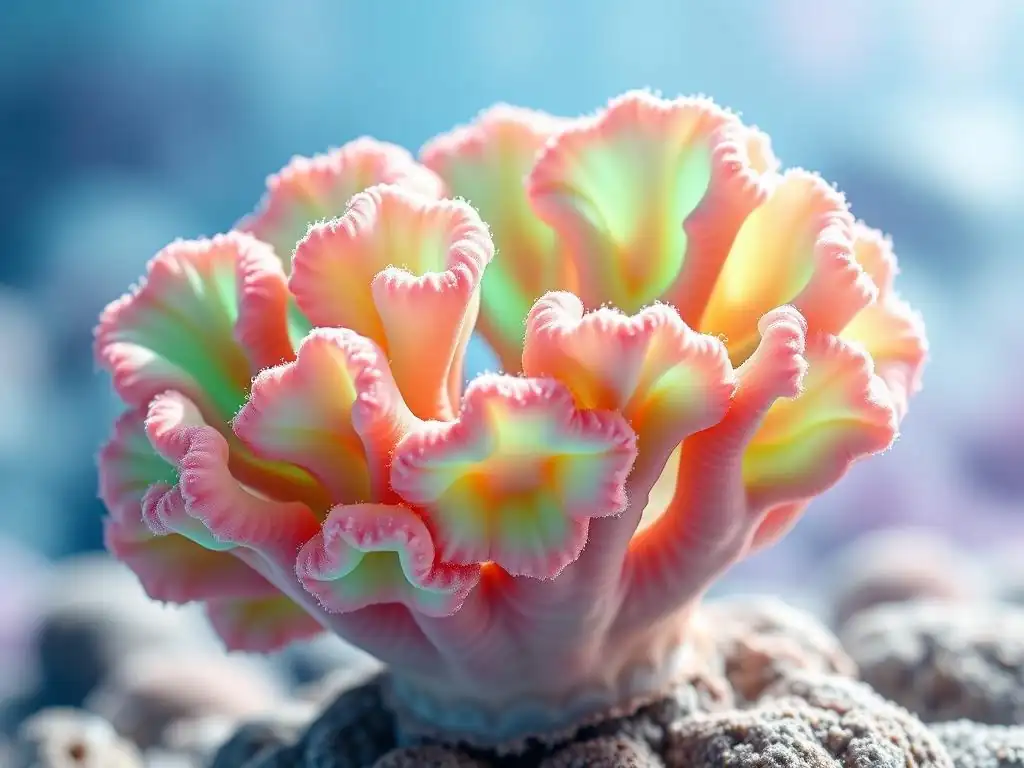
Chalice corals are a broad grouping within the LPS category, encompassing several genera known for their distinctive plating, encrusting, or sometimes cup-shaped growth forms. Unlike Acans which primarily belong to one genus ( Micromussa), "Chalice coral" is a common name applied to species from genera such as Echinophyllia, Oxypora, Mycedium, Plerogyra sinuosa (known as bubble chalice), and even some Symphyllia. This diversity makes their identification more complex, as characteristics vary significantly between genera.
These corals are typically found in deeper, calmer waters of the Indo-Pacific, often in shaded or dimly lit areas, which influences their lighting requirements in an aquarium. Chalice corals are primarily photosynthetic, but many species also possess highly effective feeding mechanisms, extending mesenterial filaments or sweepers to capture food particles from the water column. Their unique growth patterns and often mesmerizing eyespots make them a highly desirable addition to many reef tanks.
Identifying Features of Chalice Corals
Identifying Chalice corals requires a keen eye for their characteristic growth forms, the arrangement of their corallites, and their often striking "eyes" or distinct polyp mouths. Unlike the distinct, individual polyps of Acans, Chalice corals often exhibit a more confluent or integrated growth pattern where polyps share a common skeletal base, and their mouths (eyes) are scattered across the surface.
The overall texture of Chalice corals can range from smooth to slightly bumpy or ridged, depending on the genus. Their growth often resembles a thin, undulating plate or a multi-layered shelf, sometimes with distinct raised "eyes" that are the polyp mouths. These eyes can be a contrasting color to the main body of the coral, adding to their visual appeal and aiding in identification.
Chalice Coral Growth Forms and Structures
Chalice corals are renowned for their highly variable and often intricate growth forms, primarily growing as thin, plating, or encrusting colonies. They can form flat sheets that spread over rockwork, develop into multi-layered shelves, or create undulating, cup-like structures. Some species, like those in the genus Oxypora, are known for their delicate, leafy, and often fragile plates that extend outwards.
The corallites in Chalice corals are typically immersed or only slightly raised, and they are often scattered irregularly across the coenosteum (the connecting skeletal tissue). Instead of distinct polyps with clear boundaries like Acans, Chalice corals often feature multiple "eyes" or polyp mouths distributed across their skeletal surface. These eyes are often distinct in color, appearing as bright dots against the coral's background.
Color Morphs and Patterns in Chalice Corals
Chalice corals exhibit a vast array of color morphs and patterns, though they tend to have a different aesthetic compared to the blocky, multi-colored polyps of Acans. Common colors include greens, reds, oranges, purples, and browns, often with contrasting "eyes" that can be neon green, yellow, or pink. The coloration often appears as a wash or gradient across the plate, rather than distinct individual polyp patterns.
Many Chalice corals are famous for their "splatter" or "splatter paint" patterns, where various colors appear to be splashed across the surface of the coral. For example, a green Chalice might have random red or orange spots, or a brown Chalice might be dotted with neon green eyes. This unique patterning, combined with their plating growth, distinguishes them visually from the more uniform polyp structures of Acans.
Common Chalice Genera and Variations
Given the broad classification of "Chalice coral," it's helpful to understand some of the common genera encountered in the hobby. Each genus contributes to the diversity of Chalice corals with its own unique characteristics, growth patterns, and care requirements. Recognizing these generic differences is crucial for proper care and placement in a reef tank.
The variety within Chalice corals means that aquarists can find species suitable for different areas of their tank, from lower light, shaded spots to areas with moderate illumination. Their unique aesthetics, from delicate plates to vibrant splatter patterns, make them a popular choice for adding texture and color to the reef scape.
Echinophyllia: Key Characteristics
Echinophyllia is one of the most common genera referred to as Chalice corals. These corals typically form encrusting or plating colonies, often developing into multi-layered structures or undulating sheets. Their surface is usually covered with distinct, raised "eyes" or polyp mouths, which are often brightly colored and contrast sharply with the main body of the coral. The coenosteum (connecting tissue) between the eyes can be smooth or slightly bumpy.
Echinophyllia corals are known for their vibrant coloration, including various shades of green, red, orange, and purple, often with contrasting neon eyes. They are relatively hardy LPS corals, preferring moderate to low light and moderate flow. They are effective feeders, capable of capturing small zooplankton and dissolved organic matter, which enhances their growth and coloration.
Oxypora: Key Characteristics
Oxypora is another prominent Chalice coral genus, distinguished by its typically thin, delicate, and often leafy or frilly plating growth forms. Unlike the more robust plates of Echinophyllia, Oxypora can be quite fragile, requiring careful handling. Their plates can grow outwards in multiple directions, creating complex, layered structures with ruffled edges.
The corallites of Oxypora are usually immersed and less distinct than those of Echinophyllia, with the "eyes" being smaller and sometimes less pronounced. Coloration often includes greens, browns, and reds, frequently with contrasting tips or edges. Oxypora corals generally prefer lower light and moderate, indirect flow, as strong direct flow can damage their delicate tissues. They also benefit from supplemental feeding.
Chalice Coral Care: Providing the Right Environment
Caring for Chalice corals involves understanding their preferences for lower light and moderate flow, as they often originate from deeper or shaded areas of the reef. Stable water parameters are paramount, including consistent levels of calcium (400-450 ppm), alkalinity (8-10 dKH), and magnesium (1300-1400 ppm). Maintaining these parameters within optimal ranges prevents stress and promotes healthy growth.
Supplemental feeding is highly beneficial for Chalice corals, as they are efficient nocturnal feeders. Offering small meaty foods like copepods, mysis shrimp, or specialized coral foods a few times a week can significantly boost their health and vibrant coloration. Due to their potential for aggression with sweepers, adequate spacing from other corals, especially SPS, is important to prevent stinging.
Acan vs. Chalice Corals: Key Differences Summarized
Distinguishing Acan vs Chalice corals is crucial for proper care and placement in a reef tank. While both are highly desirable LPS corals, their unique morphological characteristics, growth habits, and general care requirements set them apart. Observing their polyp structure, growth form, texture, and coloration patterns are the primary methods for accurate identification.
Understanding these key differences allows aquarists to appreciate the individuality of each coral type and provide them with the specific conditions they need to thrive. It also helps in planning tank layout to avoid inter-coral aggression and maximize aesthetic appeal.
Corallite Size and Shape: A Direct Comparison
One of the most immediate distinctions between Acan and Chalice corals lies in their corallite size and shape. Acan corals ( Micromussa) feature distinct, individual polyps, each encased in its own fleshy corallite that is typically circular to oval and relatively large, often 1-2 cm in diameter for popular morphs like Micromussa lordhowensis. These corallites are clearly separated, giving the colony a lumpy or bubbly appearance when polyps are inflated.
In contrast, Chalice corals (e.g., Echinophyllia, Oxypora) generally have immersed or only slightly raised corallites. Instead of distinct individual polyps, their "eyes" or polyp mouths are scattered across a common skeletal plate. These "eyes" are usually smaller than Acan polyps, often less than 0.5 cm, and are not separated by distinct fleshy walls but rather by the coenosteum of the plating skeleton.
Texture: Examining the Corallite Surface and Coenosteum
The texture of Acan vs Chalice corals also provides clear differentiating clues. Acan corals, especially Micromussa lordhowensis, are known for their very fleshy, smooth polyps that can inflate significantly, giving them a soft, almost balloon-like appearance. The septa (skeletal walls) within each corallite can be coarse, but the overall presentation of the extended polyp is smooth and plump.
Chalice corals, on the other hand, typically have a more integrated skeletal surface. While some can be relatively smooth, many Echinophyllia species have a slightly granular or bumpy coenosteum between their "eyes." Oxypora corals have a delicate, almost paper-thin texture to their plates, which are often very fragile. The texture is more about the skeletal surface and less about individual fleshy polyp inflation.
Skeletal Structure: Examining the Underlying Differences
The underlying skeletal structure is a fundamental difference when comparing Acan vs Chalice corals. Acan corals form phaceloid or plocoid colonies, where each polyp has its own distinct, individual corallite that grows upwards or outwards, sometimes separated by a small amount of shared skeletal tissue. If you were to look at a skeleton without tissue, you'd see clearly defined, separate cups.
Chalice corals, conversely, are typically meandroid or hydnophoroid, meaning their corallites are immersed within a common, continuous skeletal plate. The "eyes" are simply the openings of the polyps scattered across this plate, rather than individual, protruding cups. When observing a Chalice skeleton, you would see a continuous sheet with scattered depressions or raised bumps where the polyps reside, rather than distinct, separate structures.
Coloration and Patterns: A Visual Comparison
While both Acan and Chalice corals are incredibly colorful, their typical coloration patterns differ. Acan corals are famous for their bold, multi-colored polyps, often displaying concentric rings or distinct color blocks within each individual polyp. A single Micromussa lordhowensis polyp might have a green center, a red rim, and purple septa, creating a highly detailed, intricate pattern on each "bubble."
Chalice corals, while also vibrant, tend to exhibit more of a "splatter paint" or "wash" effect across their entire plate-like colony. Their "eyes" are often a contrasting color to the main body, appearing as distinct dots, but the overall coloration is often more uniform or gradient across the coenosteum, rather than meticulously patterned within each polyp. For instance, a green Chalice might have random red speckles across its surface, or a brown plate might be dotted with neon green eyes.
Telling Them Apart: Practical Tips for Identification
Beyond the detailed characteristics, practical observation techniques can significantly aid in distinguishing Acan vs Chalice corals. Focusing on how the polyps are arranged, the nature of their base, and their overall growth habits in the aquarium will provide clear indicators. These tips are especially useful when encountering new corals or trying to confirm an identification.
Observing Corallite Arrangement and Density
When examining an Acan coral, you will typically see distinct, individual corallites that are clearly separated from one another, even if tightly packed. Each corallite is a separate, fleshy "bubble" or "mouth," and you can often count the individual polyps. The density will be high due to the close packing of these distinct units.
For Chalice corals, the arrangement is different. While they have multiple "eyes" or polyp mouths, these are scattered across a continuous skeletal plate. You won't see individual, separated fleshy polyps in the same way you would with an Acan. The "eyes" might be dense in some areas and sparser in others, but they are integrated into the surface rather than being distinct, separate structures.
Analyzing the Base Structure
The base structure of Acan corals often reveals their encrusting or massive growth habit. They tend to grow directly on or around the rockwork, forming solid, often thick, colonies that spread outwards. Their skeletal base is robust and dense, providing a strong foundation for their fleshy polyps.
Chalice corals, particularly Oxypora and many Echinophyllia species, are known for their thin, plating, or leafy skeletal bases. These plates can be quite delicate and extend outwards from the rockwork, sometimes forming multiple layers. If you were to gently tap the edge of a Chalice plate, you would notice its relative thinness and fragility compared to the solid mass of an Acan.
Considering Growth Habits in the Aquarium
Acan corals typically grow by adding new polyps around the periphery of their existing colony, gradually increasing their encrusting or mounding size. They tend to fill in spaces with their robust, fleshy polyps, creating a solid, colorful mass. Their growth rate is generally moderate, adding new corallites steadily over time.
Chalice corals, on the other hand, expand primarily by extending their skeletal plates. They will spread across rockwork or grow outwards in thin sheets, sometimes layering upon themselves. Their growth often appears more two-dimensional, focusing on surface area expansion rather than increasing the density of individual polyps. They can also exhibit faster growth rates in terms of surface area coverage due to their thin plating nature.
Summary Table: Acan vs. Chalice Corals
| Feature | Acan Corals ( Micromussa) | Chalice Corals ( Echinophyllia, Oxypora, etc.) |
|---|---|---|
| Common Growth Form | Encrusting, massive, mounding | Plating, encrusting, leafy, cup-shaped |
| Corallite Structure | Distinct, individual, fleshy polyps/corallites (phaceloid/plocoid) | Immersed "eyes" or polyp mouths scattered on continuous plate (meandroid/hydnophoroid) |
| Polyp Size | Larger (1-2 cm typically) | Smaller (often < 0.5 cm for "eyes") |
| Texture | Fleshy, plump, smooth polyps; coarse septa | Skeletal surface often granular/bumpy or delicate/thin |
| Color Pattern | Intricate patterns within each individual polyp; bold contrasts | "Splatter" or "wash" effect across plate; contrasting "eyes" |
| Skeletal Base | Robust, dense, solid | Thin, often delicate, plating |
| Aggression | Generally peaceful, but can sting on contact | Can have aggressive sweepers; chemical warfare possible |
| Typical Light Pref. | Moderate (PAR 75-150) | Moderate to Low (PAR 50-120) |
| Typical Flow Pref. | Moderate, indirect | Moderate, indirect (avoid direct strong flow on thin plates) |
Caring for Acan and Chalice Corals in Your Reef Tank
Both Acan vs Chalice corals are stunning additions to a reef tank, but providing optimal care ensures their vibrant coloration and healthy growth. While they share some general LPS care requirements, subtle differences in their preferred conditions can significantly impact their well-being. Consistent monitoring of water parameters, appropriate lighting, and targeted feeding are paramount.
Proper placement within the aquarium is also critical, not just for aesthetics but also to ensure each coral receives its preferred light and flow, and to minimize potential aggression between species. Understanding these nuances will help aquarists cultivate thriving colonies of both Acan vs Chalice corals.
Water Chemistry Parameters: Meeting Their Needs
Maintaining stable and optimal water chemistry is the cornerstone of successful Acan and Chalice coral care. Both types of LPS corals require consistent levels of calcium, alkalinity, and magnesium for skeletal growth. Aim for calcium levels between 400-450 ppm, alkalinity at 8-10 dKH, and magnesium between 1300-1400 ppm. Fluctuations in these parameters can cause stress and inhibit growth.
Beyond the major elements, trace elements like strontium and iodine, while needed in smaller quantities, also contribute to coral health and coloration. Regular water changes (10-20% bi-weekly or monthly) with high-quality saltwater are essential to replenish these trace elements and remove accumulated nitrates and phosphates. Keeping nitrates below 10 ppm and phosphates below 0.05 ppm is generally recommended to prevent nuisance algae and maintain water clarity, though some aquarists report success with slightly higher nutrient levels for LPS.
Lighting Requirements: Providing Optimal Illumination
Lighting is a critical factor for both Acan vs Chalice corals, as they primarily rely on their symbiotic zooxanthellae for energy. Acan corals generally thrive under moderate lighting conditions, typically in the range of 75-150 PAR (Photosynthetically Active Radiation). Placing them in the middle to lower sections of the tank, away from direct, intense light, is usually ideal. Too much light can cause bleaching, where the corals expel their zooxanthellae.
Chalice corals, often originating from deeper or shaded reef environments, typically prefer lower to moderate lighting, usually within the 50-120 PAR range. They are more prone to bleaching under intense light than Acans. Placing them in shaded areas, under overhangs, or in the lower third of the tank is often best. Observing coral coloration and polyp extension is key; if a coral appears to be retracting significantly or losing color, it may be receiving too much light.
Flow Requirements: Ensuring Proper Circulation
Appropriate water flow is vital for Acan and Chalice corals, facilitating nutrient delivery, waste removal, and preventing detritus accumulation on their polyps. Both types of corals prefer moderate, indirect water flow. Turbulent or strong direct flow can cause tissue damage, prevent full polyp extension, and stress the coral.
For Acans, ensure flow is sufficient to gently sway their fleshy polyps without causing them to be constantly blasted. Chalice corals, especially those with delicate plating structures like Oxypora, are particularly susceptible to direct, strong flow that can tear their thin tissues. Aim for random, indirect flow patterns that bring food and oxygen to the coral while gently removing waste, ensuring optimal health for both Acan vs Chalice corals.
Feeding Strategies: Supplementing Their Diet
While both Acan vs Chalice corals are photosynthetic, supplemental feeding is highly beneficial and often necessary for optimal growth, coloration, and overall health. Both are carnivorous and will readily accept small meaty foods. Target feeding is the most effective method, allowing direct delivery of food to the polyps.
Offer small particulate foods such as mysis shrimp, copepods, enriched brine shrimp, or specialized LPS coral foods a few times per week, typically after the lights are off when their feeding tentacles are most extended. Acan corals, with their distinct mouths, are excellent at capturing larger food particles. Chalice corals will extend mesenterial filaments or use their "eyes" to capture smaller particles. Turn off powerheads during feeding to prevent food from being immediately swept away.
Common Issues and Troubleshooting
Even with diligent care, Acan and Chalice corals can encounter issues in a reef tank. Recognizing common problems and understanding their causes is crucial for effective troubleshooting and maintaining a healthy coral collection. Prompt intervention can often reverse negative trends and save a coral from further decline.
Common LPS Coral Diseases: Recognizing and Addressing the Risks
LPS corals, including Acan vs Chalice corals, are susceptible to various diseases, with Brown Jelly Disease (BJD) being one of the most devastating. BJD is characterized by a rapid tissue necrosis covered in a slimy, brown, jelly-like substance, often caused by bacterial infections, especially after tissue damage or stress. If observed, the affected coral should be immediately removed from the tank to prevent spread, and the affected area can be siphoned off or dipped in an antiseptic solution (e.g., iodine-based dip) before returning to the quarantine tank.
Another common issue is tissue recession or bleaching. Tissue recession, where the coral tissue pulls back from its skeleton, can be caused by poor water quality (high nitrates/phosphates, unstable parameters), insufficient lighting, aggression from other corals, or pests. Bleaching, characterized by a loss of color, typically indicates too much light, though it can also be a sign of extreme stress from other factors. Addressing the underlying cause is essential for recovery.
Pests and Predators: Identifying and Managing Threats
Several pests and predators can target Acan and Chalice corals. Nudibranchs, such as Phestilla melanobrachia, are known to prey on LPS corals, often matching the coral's coloration, making them difficult to spot. Signs of nudibranch presence include tissue damage, retracted polyps, or visible eggs. Manual removal and dips are the primary methods of control.
Flatworms, particularly Acropora-eating flatworms (AEFW), though primarily targeting SPS, can sometimes bother LPS. Other potential threats include certain types of snails or crabs that may nip at coral tissue. Regular inspection of your Acan vs Chalice corals, especially at night when many pests are active, is important. Quarantining new corals for at least 4-6 weeks and performing prophylactic dips can significantly reduce the risk of introducing pests into your main display tank.
Tissue Recession: Understanding the Causes and Solutions
Tissue recession, where the living coral tissue begins to pull away from its skeleton, is a serious sign of stress or disease in both Acan vs Chalice corals. The exposed skeleton often turns white or green with algae. Common causes include unstable water parameters (e.g., sudden drops in alkalinity or calcium), poor water quality (high nitrates/phosphates), insufficient lighting or flow, aggression from neighboring corals (stinging), or bacterial infections.
To address tissue recession, first, meticulously test all water parameters and correct any deviations. Ensure proper lighting and flow for the specific coral. Inspect for signs of physical damage or pests. If no clear environmental cause is found, a coral dip (e.g., iodine or antibiotic-based) might be beneficial, especially if a bacterial infection is suspected. Isolating the affected coral in a quarantine tank can also help prevent potential spread and provide a stable environment for recovery.
Conclusion: Appreciating the Diversity of Colorful LPS Corals
The Beauty and Uniqueness of Acan and Chalice Corals
Acan vs Chalice corals represent some of the most visually stunning and diverse groups within the Large Polyp Stony (LPS) coral category, each bringing unique beauty and character to a reef aquarium. Acan corals, with their distinct, fleshy polyps and intricate, multi-colored patterns, offer a vibrant, textured focal point that can densely populate an area with their robust growth. Their individual "bubbles" of color are truly mesmerizing.
Chalice corals, on the other hand, captivate with their elegant plating forms, often delicate textures, and striking "splatter paint" patterns accented by contrasting "eyes." Their ability to create overhangs and layered structures adds a different dimension to the reef scape. Together, Acan vs Chalice corals provide aquarists with an incredible palette of forms and colors, making LPS-dominated tanks a dynamic and ever-evolving display of underwater artistry.
Encouraging Responsible Reef Keeping Practices
The vibrant world of Acan vs Chalice corals underscores the importance of responsible reef keeping practices. This includes not only understanding the specific needs of each coral species, as detailed in this article, but also committing to sustainable sourcing, maintaining impeccable water quality, and practicing diligent observation and troubleshooting. By providing optimal conditions and promptly addressing any issues, aquarists contribute to the long-term health and success of these magnificent organisms in captivity.
Furthermore, responsible reef keeping extends to educating oneself and others about the fragility of marine ecosystems and the significance of coral conservation. The beauty we cultivate in our home aquariums serves as a powerful reminder of the natural wonders found in the oceans, fostering a greater appreciation and commitment to protecting these invaluable natural resources for future generations.
Frequently Asked Questions
How can I easily distinguish between Acan and Chalice corals in my aquarium?
The easiest way is to look at the polyp structure. Acans generally have distinct, individual polyps while Chalices display a more plating or encrusting growth with fused polyps. Also consider the shape and texture of the skeleton.
What are the primary care requirements that differentiate Acan and Chalice corals?
While both are LPS corals, Acans often prefer lower light levels and moderate flow, whereas Chalices typically thrive under moderate to high light and strong flow. Understanding these differences is crucial for their health.
Are Acan and Chalice corals compatible with the same tank mates in a reef aquarium?
Generally, yes, but you need to consider aggressiveness of other inhabitants and the placement of the corals. Provide sufficient space to prevent stinging and competition.
What are some common issues that aquarists face when keeping Acan or Chalice corals?
Common issues include brown jelly disease, bleaching due to incorrect lighting, and tissue recession from poor water quality. Maintaining stable parameters is key.
What makes Acan and Chalice corals popular choices for reef tank enthusiasts?
They are prized for their vibrant colors and unique patterns, adding significant aesthetic appeal to reef aquariums. Their relative ease of care compared to some SPS corals also contributes to their popularity.
Final Reflection: Appreciating the Reef's Subtle Beauty
The vibrant world of reef aquariums, often overlooked in our daily lives, reveals a microcosm of nature's artistry. Understanding the nuances between Acan and Chalice corals, as we've explored, is more than just a matter of identification; it's about appreciating the intricate beauty and delicate balance within these underwater ecosystems. The differences, though subtle to the untrained eye, highlight the incredible diversity that makes coral reefs so vital and captivating.
This journey into distinguishing Acans from Chalices has deepened my own appreciation for the complexities of marine life. It reminds us that even seemingly small distinctions can hold significant ecological importance, and that our understanding of these creatures is constantly evolving. In the end, we will conserve only what we love; we will love only what we understand; and we will understand only what we are taught.
- Baba Dioum. This quote resonates deeply, underscoring the power of knowledge in fostering conservation and respect for our planet's biodiversity.
Now, I invite you to look beyond the surface of your own world. Just as we've learned to discern the subtle differences between Acan and Chalice corals, consider the nuances in your own surroundings. Cultivate a deeper understanding of the natural world, and let that knowledge inspire you to become a more conscious and responsible steward of our planet. The beauty and fragility of the reef, and indeed, the world, depend on our collective appreciation and action.
Unveil Your Coral Expertise!
Thanks for diving into the world of Acan and Chalice corals with us! We hope you've gained a clearer understanding of how to differentiate these captivating LPS corals. Now, let's put that knowledge to practical use.
Here's what you can do next:
- Boldly attempt to identify corals in your own tank or local fish store. Use the characteristics discussed to confidently distinguish between Acans and Chalices.
- Share this article with fellow reefing enthusiasts to spark a lively discussion about their ID challenges.
- Experiment with different lighting and flow conditions for your corals and document the results.
What subtle differences have you noticed between Acan and Chalice corals in your reef tank?