
Blackwater Alchemy: Crafting the Perfect Breeding Environment for Difficult Tetras with Aquarium Mastery

Welcome to Aquarium Mastery!
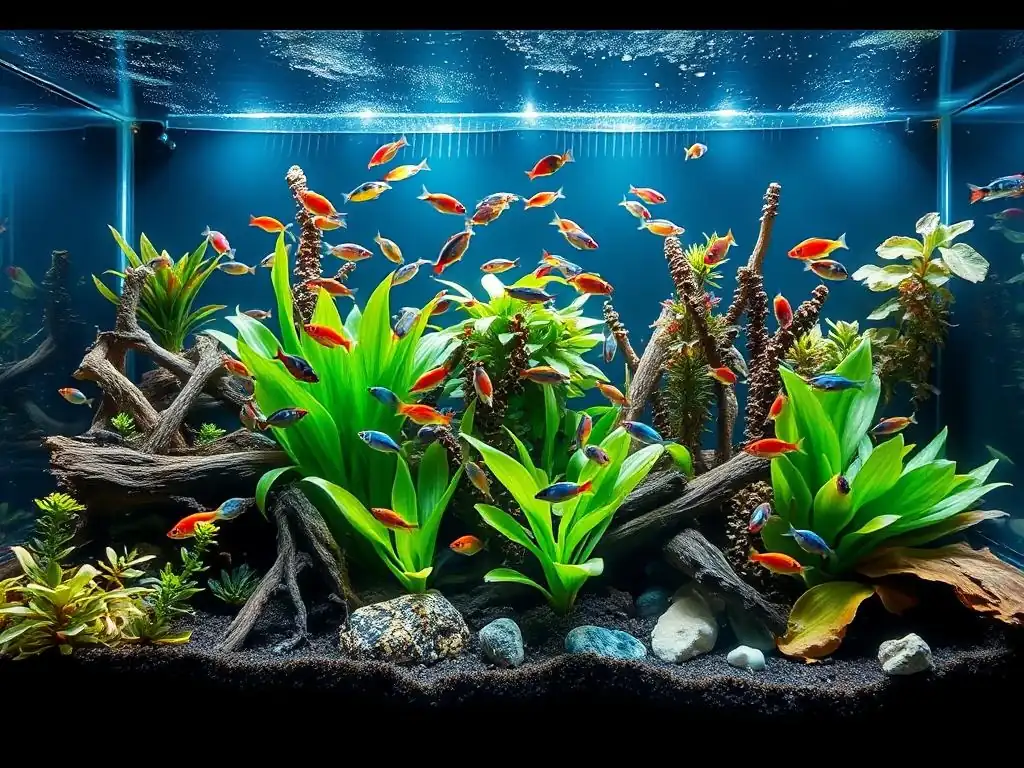
Ever wondered if you could unlock the secret to breeding those notoriously finicky tetras? Blackwater tanks hold the key, and we're about to dive deep into the art of crafting the perfect environment. Discover the Blackwater Alchemy that can transform your aquarium into a thriving breeding ground for even the most challenging species. Ready to unravel the mysteries? Let's begin!
- Breeding Cardinal Tetras: Creating an Ideal Blackwater Habitat
- Understanding the Blackwater Ecosystem for Cardinal Tetra Breeding
- Tank Setup for Cardinal Tetra Breeding
- Mastering Blackwater Chemistry: Achieving Ideal Water Parameters
- Plant Selection for Cardinal Tetra Breeding Tanks
- Feeding and Conditioning Cardinal Tetras for Breeding
- Spawning and Raising Cardinal Tetra Fry
- Troubleshooting Common Issues in Cardinal Tetra Breeding
- Advanced Techniques for Cardinal Tetra Breeding
- Cardinal Tetra Breeding: A Rewarding Challenge
-
Frequently Asked Questions
- How does a blackwater tank environment benefit tetra breeding?
- What specific water parameters are crucial for breeding tetras in a blackwater tank?
- What types of plants and botanicals are recommended for a blackwater tetra breeding tank?
- How often should water changes be performed in a blackwater tank dedicated to tetra breeding?
- What type of food is best for conditioning tetras for breeding in a blackwater tank?
- Final Reflection: Unlocking the Secrets of Blackwater
- Unleash the Secrets of Blackwater Breeding!
Breeding Cardinal Tetras: Creating an Ideal Blackwater Habitat
Understanding the Blackwater Ecosystem for Cardinal Tetra Breeding
The Importance of Blackwater for Cardinal Tetra Reproduction
The creation of a blackwater environment is not merely an aesthetic choice for Paracheirodon axelrodi, the Cardinal Tetra; it is a fundamental requirement for successful reproduction. These stunning fish originate from the incredibly soft, acidic waters of the Rio Negro and Orinoco basins in South America, where decaying organic matter stains the water a tea-like brown.
This specific chemical composition—characterized by extremely low mineral content, a pH typically ranging from 4.5 to 6.5, and the presence of humic acids and tannins—plays a critical role in signaling to the fish that conditions are optimal for spawning. Without these specific parameters, Cardinal Tetras often remain healthy but will not engage in breeding behaviors.
Beyond signaling readiness, the blackwater conditions directly contribute to egg viability. The low pH acts as a natural antiseptic, significantly inhibiting the growth of fungus and bacteria on the delicate, non-adhesive eggs. In harder, more alkaline water, Cardinal Tetra eggs are highly susceptible to fungal infections, which can decimate an entire spawn within hours. The tannins and humic substances also reduce stress on the parent fish, mimicking their natural habitat and promoting overall well-being, which is crucial for inducing the intricate spawning dance necessary for successful blackwater tank breeding tetras.
Replicating Natural Conditions: Key Parameters for Cardinal Tetra Tanks
To effectively replicate the natural conditions vital for breeding Cardinal Tetras, aquarists must meticulously control several key water parameters. The ideal pH range for inducing spawning is exceptionally low, typically between 5.0 and 5.5, though some success has been reported at pH as low as 4.0 or as high as 6.0. This acidity must be paired with extremely low general hardness (GH) and carbonate hardness (KH), ideally less than 3 dGH and often close to 0-1 dKH. These soft water conditions are paramount, as higher mineral content inhibits egg development and often prevents spawning altogether.
Temperature also plays a significant role in stimulating breeding. While Cardinal Tetras are comfortable in a range of temperatures, a stable temperature between 78°F and 82°F (25.5°C to 27.8°C) is often recommended to encourage spawning activity. Maintaining these precise parameters requires careful consideration of the water source, as most tap water is too hard and alkaline. Utilizing reverse osmosis (RO) or deionized (DI) water, then remineralizing it with specific buffers designed for blackwater aquariums, provides the most control for achieving the soft, acidic environment necessary for successful blackwater tank breeding tetras.
Tank Setup for Cardinal Tetra Breeding
Tank Size and Dimensions for Optimal Spawning
For the specific purpose of breeding Cardinal Tetras, a dedicated spawning tank is highly recommended over attempting to breed them in a community setup. While Cardinal Tetras are small fish, a tank of 5 to 10 gallons (approximately 19 to 38 liters) is generally considered sufficient for a single breeding pair or a small group of 3-4 individuals (e.g., two males and one or two females).
The dimensions are more critical than sheer volume; a tank with a longer footprint is preferable to a tall, narrow one, as it provides more horizontal swimming space for the courtship and spawning chase. For instance, a standard 10-gallon tank (20" L x 10" W x 12" H) offers ample room for a pair to engage in their natural breeding behaviors.
The intimate size of a smaller breeding tank also makes it significantly easier to manage the precise water parameters required for these sensitive fish. It allows for more accurate adjustments of pH and hardness, and simplifies the process of monitoring water quality, which is crucial given the delicate nature of Cardinal Tetra eggs and fry. Furthermore, a dedicated breeding tank minimizes disturbances from other tank inhabitants and makes the subsequent removal of adult fish after spawning, and the protection of the fragile eggs, a much more straightforward task.
Substrate Selection: Inert Options for Easy Cleaning
When setting up a breeding tank for Cardinal Tetras, the choice of substrate is critical, primarily for hygiene and egg collection. The most recommended option is a bare-bottom tank, meaning no substrate at all. This design simplifies cleaning immensely, allowing for the easy removal of uneaten food and waste, which is vital in maintaining the ultra-clean water conditions that prevent fungal growth on the eggs. A bare bottom also makes it effortless to spot and collect the tiny, transparent eggs once they have been laid.
If an aquarist prefers a substrate for aesthetic reasons or to provide a surface for beneficial bacteria, an extremely thin layer of inert, fine-grained sand, such as silica sand, can be used. However, it must be light in color to make the eggs visible and kept meticulously clean. Any substrate chosen must be completely inert, meaning it will not alter water chemistry by releasing minerals or buffering the pH. Gravel or substrates that can trap debris should be avoided entirely, as they pose a significant risk to water quality and egg viability in a blackwater tank breeding tetras setup.
Essential Equipment: Filtration, Heating, and Lighting
The equipment in a Cardinal Tetra breeding tank should be chosen with minimalism and gentleness in mind to protect the delicate eggs and fry. For filtration, a simple air-driven sponge filter is ideal. These filters provide adequate mechanical and biological filtration without creating strong currents that could harm eggs or tiny fry. The gentle aeration from the air stone also contributes to oxygen exchange without disturbing the water surface excessively. Power filters, especially hang-on-back or canister filters, are generally too powerful and can easily suck up or damage eggs and fry.
Heating is another critical component, as Cardinal Tetras require stable temperatures between 78°F and 82°F (25.5°C to 27.8°C) for optimal breeding. A reliable, submersible heater with an accurate thermostat is essential to maintain this consistent warmth. Finally, lighting should be very dim and indirect.
Cardinal Tetra eggs are highly light-sensitive and can be damaged or fail to hatch if exposed to strong illumination. Ambient room light or a very low-wattage LED fixture positioned well above the tank, perhaps for only a few hours a day, is usually sufficient. The naturally tannin-stained water in a blackwater setup will also help to diffuse and reduce light intensity, further mimicking their dark, shaded natural habitat.
Mastering Blackwater Chemistry: Achieving Ideal Water Parameters
The Importance of pH and KH for Cardinal Tetras
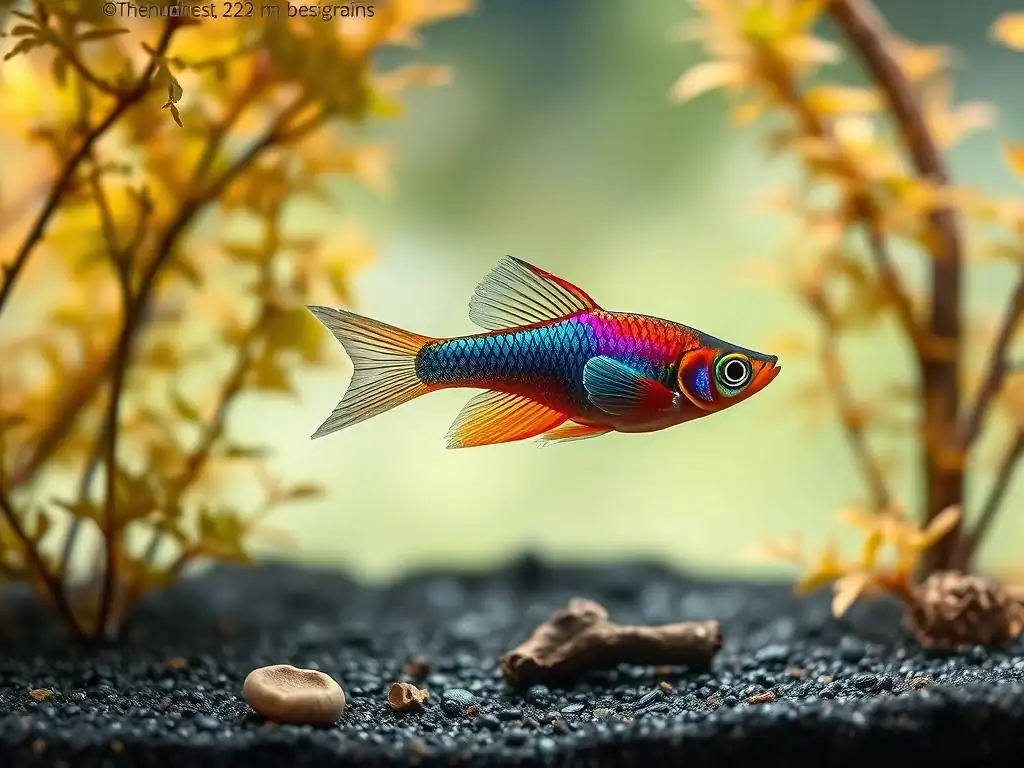
For successful blackwater tank breeding tetras, understanding the delicate interplay between pH and KH (carbonate hardness) is paramount. Cardinal Tetras require highly acidic water, with a pH ideally between 5.0 and 5.5, and exceptionally soft water, meaning a KH value close to zero (0-1 dKH). In typical aquarium setups, a low KH can lead to unstable pH, as there are few buffers to resist fluctuations. However, in a blackwater environment designed for these specific fish, this low KH is precisely what allows the pH to drop into the acidic range needed for spawning and egg viability.
The natural humic acids and tannins released from organic materials in blackwater tanks act as weak buffering agents, helping to stabilize the very low pH within the desired range. Without a near-zero KH, it is virtually impossible to achieve and maintain the consistently low pH levels required without resorting to harsh chemical additives, which are generally not recommended due to their potential for rapid and dangerous pH swings. Therefore, the goal is to eliminate carbonate hardness almost entirely, allowing the natural acids from botanicals to gently lower and maintain the pH.
Using Natural Elements to Acidify and Soften Water
The most effective and natural way to acidify and soften water for Cardinal Tetra breeding is by incorporating specific botanical elements into the aquarium. Peat moss, specifically aquarium-grade sphagnum peat, is a classic choice known for its ability to release humic acids and lower both pH and GH. It can be placed in a media bag within the filter or directly on the substrate. However, it's crucial to pre-soak and rinse peat thoroughly to remove any impurities.
Indian almond leaves (Catappa leaves), alder cones, and various types of driftwood (such as Malaysian or Mopani wood) are also excellent sources of tannins and humic substances. These elements not only contribute to the desired water chemistry but also add to the aesthetic authenticity of a blackwater tank, providing natural hiding spots and spawning surfaces. When using these botanicals, it's advisable to add them gradually and monitor pH and KH closely to avoid drastic changes, ensuring a stable and safe environment for the breeding pair.
Tannin Extraction: Utilizing Leaves and Wood
Tannins, the organic compounds responsible for the characteristic tea-stained appearance of blackwater, are naturally extracted from botanical elements like Indian almond leaves, alder cones, and various types of driftwood. To prepare these elements for use in a breeding tank, it's generally recommended to rinse them thoroughly to remove any dust or debris.
For maximum tannin release, some aquarists opt to boil driftwood or leaves for several hours; this also helps to waterlog the wood so it sinks and can sterilize the botanicals, reducing the risk of introducing unwanted pathogens. However, boiling can release tannins very rapidly, potentially causing sudden pH drops.
A more controlled approach, especially for leaves and cones, is to simply add them directly to the tank after a good rinse. They will gradually release tannins over days or weeks, allowing for slower, more stable changes in water chemistry.
Alternatively, a "tannin tea" can be brewed by soaking leaves and cones in a separate container of RO water for a few days, then adding the stained water to the tank. This method provides precise control over the concentration of tannins and humic acids being introduced, allowing the aquarist to fine-tune the water parameters to the specific needs of blackwater tank breeding tetras.
Water Changes and Maintenance
Maintaining stable blackwater chemistry for Cardinal Tetra breeding requires a specific approach to water changes. Traditional large, infrequent water changes can be detrimental, as they can cause rapid shifts in pH and hardness, stressing the fish and potentially harming sensitive eggs. Instead, small, frequent water changes are recommended, typically 10-15% of the tank volume every few days or even daily, depending on bioload and water parameters.
Crucially, the replacement water must precisely match the tank's parameters – extremely soft and acidic, ideally prepared using RO/DI water and conditioned with blackwater extracts or buffers to achieve the target pH and GH. Adding aged, pre-conditioned water is also beneficial, as it minimizes immediate shock. Regular testing of pH, KH, and GH is non-negotiable to ensure consistency. Furthermore, gently siphoning off any uneaten food or debris from the bare bottom is essential during these mini-water changes to prevent the buildup of nitrates and other pollutants that can negatively impact egg viability and fry health.
Plant Selection for Cardinal Tetra Breeding Tanks
Choosing Plants That Provide Cover and Mimic Natural Habitat
The selection of plants for a Cardinal Tetra breeding tank is crucial for providing both visual cover and suitable spawning sites, mimicking their naturally dense, submerged habitats. Fine-leaved plants are particularly effective. Java Moss ( Taxiphyllum barbieri) is an excellent choice due to its dense, tangled structure, which offers numerous hiding spots for fry and a surface for eggs to adhere to, though Cardinal Tetra eggs are often scattered rather than adhesive. Other mosses like Christmas Moss ( Vesicularia montagnei) or Weeping Moss ( Vesicularia ferriei) serve similar purposes.
In addition to mosses, other fine-leaved aquatic plants such as Cabomba ( Cabomba caroliniana) or Myriophyllum ( Myriophyllum aquaticum) can be used. These plants, when grown densely, create a "bushy" environment where the tetras feel secure enough to spawn and where the fry can seek refuge from potential predation (even from their parents, though parents are typically removed post-spawning). Floating plants, like Dwarf Water Lettuce ( Pistia stratiotes) or Frogbit ( Limnobium laevigatum), can also be beneficial by diffusing light and providing additional cover, contributing to the dim, shaded conditions preferred by breeding Cardinal Tetras.
Creating a Functional Planted Environment
Beyond simply choosing the right species, the arrangement of plants in a Cardinal Tetra breeding tank should be functional, aiming to create an environment that encourages spawning and protects eggs and fry. Dense clumps of fine-leaved plants, especially mosses, should be strategically placed throughout the tank to provide ample spawning surfaces. Many aquarists will create "spawning mops" using synthetic fibers or even just a large clump of Java Moss anchored to the bottom, which the fish can utilize.
The overall layout should provide a sense of security for the breeding pair. This means ensuring there are plenty of shaded areas and hiding spots, which can be achieved through dense planting, the use of driftwood, or even by covering parts of the tank with dark paper or fabric. The goal is to make the fish feel completely at ease, replicating the dark, tannin-stained, and vegetated undergrowth of their native Amazonian streams. This secure, functional planted environment is a key component in encouraging the delicate process of blackwater tank breeding tetras.
Feeding and Conditioning Cardinal Tetras for Breeding
Optimal Diet: Live, Frozen, and High-Quality Flake Foods
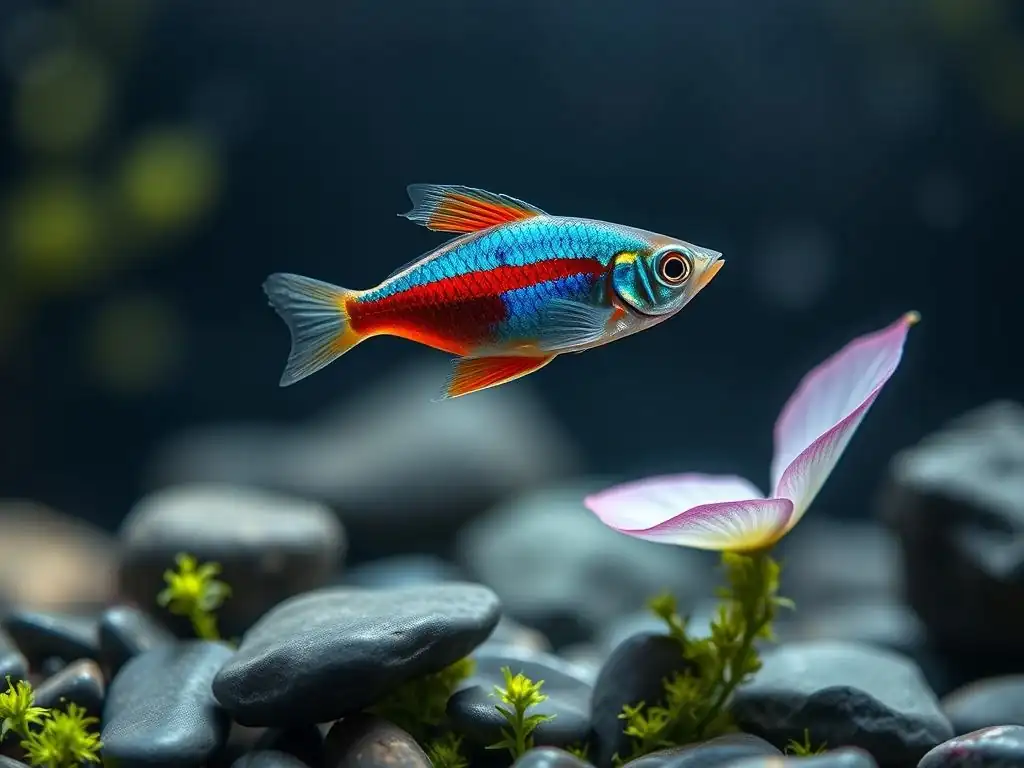
Proper conditioning through diet is paramount for inducing spawning in Cardinal Tetras. A varied and nutrient-rich diet signals to the fish that conditions are favorable for reproduction. Live foods should form the cornerstone of their conditioning diet due to their high nutritional value and natural appeal. Excellent live food options include newly hatched brine shrimp nauplii, daphnia, micro-worms, and grindal worms. These small, wiggling foods stimulate the tetras' natural hunting instincts and provide essential proteins and fats.
While live foods are superior, high-quality frozen alternatives can supplement the diet. Frozen brine shrimp, daphnia, and bloodworms (cut into smaller pieces for adult tetras) are readily accepted and provide similar nutritional benefits. Additionally, a high-quality flake or granule food specifically formulated for small tropical fish can be offered, though it should not be the primary component of a breeding diet. Feeding small amounts multiple times a day (2-3 times) for 1-2 weeks prior to attempting to breed is crucial for "loading" the fish with the energy and nutrients needed for egg production and successful spawning.
Conditioning Techniques to Induce Spawning
Beyond simply providing an optimal diet, specific conditioning techniques can further encourage Cardinal Tetras to spawn. One common method involves separating the male and female tetras into different tanks for about a week while feeding them heavily with conditioning foods. This brief separation builds up their desire to mate and allows the females to develop a full complement of eggs without being constantly harassed by males. After this period, they are introduced into the prepared breeding tank, often in the evening.
Another effective technique involves simulating environmental changes that trigger spawning in their natural habitat. This can include a gradual increase in temperature by a degree or two over a few days, followed by a slight decrease, mimicking the onset of a rainy season. A partial, cooler water change with very soft, acidic water can also act as a trigger. The combination of optimal water parameters, rich feeding, and these environmental cues significantly increases the likelihood of successful blackwater tank breeding tetras.
Spawning and Raising Cardinal Tetra Fry
Identifying Spawning Behavior
Observing spawning behavior in Cardinal Tetras requires patience and keen observation, as they are often shy spawners, especially in a new environment. Spawning usually occurs in the early morning, often just as the lights come on or as dawn breaks if the tank is near a window. The male will typically begin to chase the female, displaying vibrant colors and shimmering. He may "tremble" or vibrate his body next to the female, attempting to coax her into the dense plant thickets or spawning mop.
Once the female is ready, she will release a small clutch of tiny, clear, non-adhesive eggs, usually in batches of 5-10, as she swims through the plants. The male will immediately follow, fertilizing them. This process can continue for several hours, with hundreds of eggs potentially being scattered.
The eggs are extremely delicate and almost invisible against a dark background or among plants. Once spawning is complete, typically indicated by the female appearing noticeably thinner and the pair no longer engaging in the chase, the adult fish should be carefully removed from the breeding tank to prevent them from eating the eggs.
Protecting Eggs and Fry
Protecting Cardinal Tetra eggs and subsequent fry is one of the most challenging aspects of their breeding. Cardinal Tetra eggs are highly susceptible to light and fungal infections. After the parents are removed, the breeding tank should be kept in near darkness for the first 24-48 hours. This can be achieved by covering the tank with a dark towel or black paper. This light deprivation helps prevent the eggs from developing fungal growth.
The extremely soft, acidic water of the blackwater setup is the primary defense against fungus. However, some aquarists may add a very small amount of methylene blue to the water (enough to lightly stain it blue) as an additional preventative measure, though this can also inhibit hatching if overused. Hatching typically occurs within 24-36 hours at 80°F (26.7°C). The newly hatched fry are minuscule and almost transparent, often hanging motionless on tank surfaces for the first few days while they absorb their yolk sac. During this critical period, minimal disturbance to the tank is essential to ensure their survival.
Feeding and Caring for Fry: Infusoria, Rotifers, and Microworms
The initial feeding of Cardinal Tetra fry is the most critical and often the most difficult stage. For the first 3-5 days after hatching, once their yolk sacs are absorbed and they become free-swimming, the fry are so tiny that they can only consume microscopic organisms. Infusoria, a collective term for various microscopic protozoa, are the ideal first food. Infusoria can be cultured easily by placing decaying lettuce leaves or a few grains of rice in a jar of aged aquarium water a few days beforehand.
As the fry grow, usually after about 5-7 days, they can graduate to slightly larger live foods. Newly hatched brine shrimp nauplii are an excellent next step, providing vital protein and fat for rapid growth. Microworms and rotifers are also highly nutritious and readily consumed by growing Cardinal Tetra fry.
It is crucial to feed the fry multiple times a day (4-6 small feedings) to ensure a constant supply of food, as their tiny stomachs require frequent replenishment. Maintaining pristine water quality through small, daily water changes (siphoning carefully to avoid sucking up fry) is also essential for their healthy development.
Troubleshooting Common Issues in Cardinal Tetra Breeding
Addressing Fungal Infections and Diseases
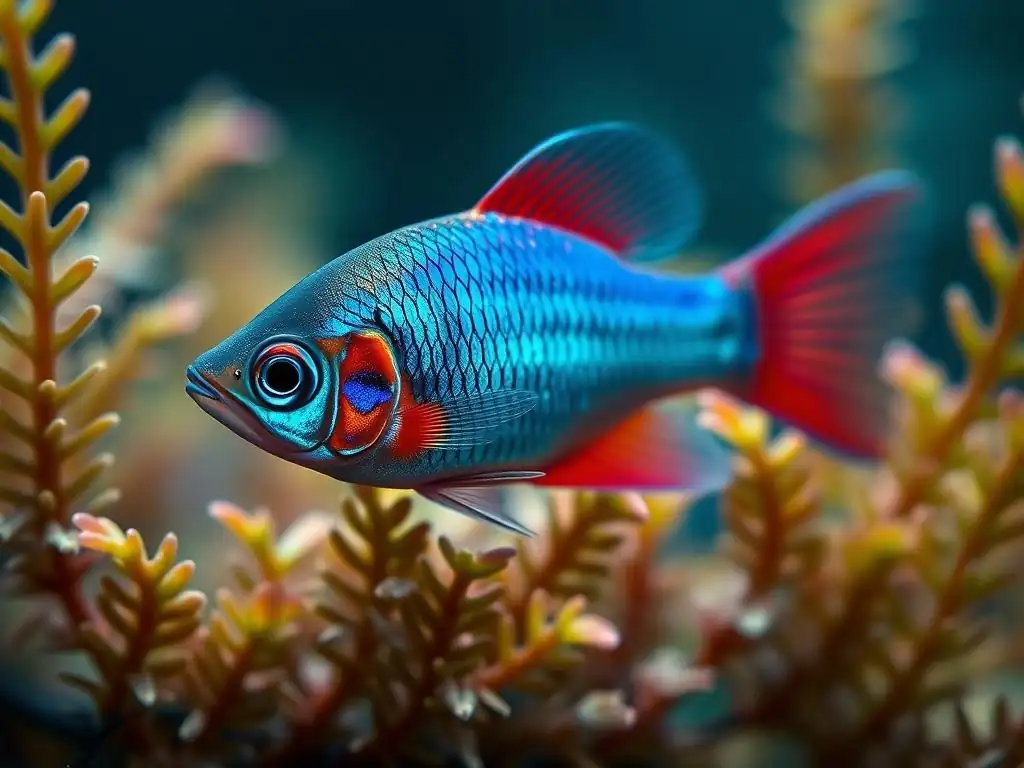
Fungal infections on Cardinal Tetra eggs are a common and disheartening issue in breeding attempts, primarily due to their delicate nature and the soft, low-mineral water they require. The primary defense against fungus is maintaining impeccable water quality and the extremely soft, acidic conditions of the blackwater setup, which naturally inhibit fungal growth. If fungus appears, it often indicates either a problem with water parameters (e.g., pH too high, or KH not low enough), or the presence of unfertilized eggs which are more susceptible. Removing fungused eggs immediately with a pipette can prevent spread.
While the natural acidity is the best preventative, some breeders use a very dilute solution of methylene blue as a prophylactic measure in the spawning tank after egg laying, as it has antifungal properties. However, caution is advised as too much can harm the eggs.
For adult fish, diseases are less common in a dedicated, clean breeding tank, but stress from improper water parameters or poor nutrition can weaken their immune system. Maintaining stable blackwater conditions and a high-quality diet are the best defenses against general fish diseases, ensuring the parents are healthy enough for successful blackwater tank breeding tetras.
Maintaining Water Quality and Preventing Algae
Maintaining stable water quality is paramount for Cardinal Tetra breeding, impacting both spawning success and fry survival. The primary challenge is balancing the need for extremely soft, acidic water with the prevention of ammonia and nitrite buildup, especially once fry are present and being fed frequently. Regular, small water changes (10-15% daily or every other day) using perfectly matched, pre-conditioned RO/DI water are essential. A gentle sponge filter provides adequate biological filtration without creating strong currents.
Algae is generally less of an issue in blackwater breeding tanks due to the dim lighting and tannin-stained water, which reduces light penetration. However, if algae does appear, it's often a sign of excessive light or nutrient imbalance. Addressing the root cause (reducing light duration/intensity, ensuring proper water changes) is key. Avoid using algaecides, as they can be harmful to delicate eggs and fry. The focus should always be on proactive maintenance, such as siphoning out uneaten food and detritus from the bare bottom, to prevent water quality issues before they arise.
Optimizing Spawning Rates and Fry Survival
Optimizing spawning rates and fry survival in Cardinal Tetras involves a holistic approach that fine-tunes all aspects of the breeding process. If spawning isn't occurring, re-evaluate the water parameters: is the pH consistently between 5.0-5.5? Is the GH near zero? Is the temperature stable at 78-82°F? Ensure the conditioning diet is rich in live foods, and consider separating males and females for a week before reintroduction. Simulating a "rainy season" with a slight temperature drop and a large, cooler water change can often trigger spawning.
Once eggs are laid, maximizing fry survival hinges on immediate removal of parents, maintaining complete darkness for the first 24-48 hours post-hatching, and providing the correct microscopic first foods (infusoria) as soon as they become free-swimming. Overfeeding should be avoided to prevent water fouling, but underfeeding is equally detrimental. Small, frequent water changes are critical, and a gentle air stone can ensure adequate oxygenation without creating harmful currents. A dedicated breeding setup minimizes stress and disturbance, significantly increasing the chances of successfully raising a batch of blackwater tank breeding tetras.
Advanced Techniques for Cardinal Tetra Breeding
Simulating Rainy Season Conditions to Trigger Spawning
One of the most effective advanced techniques for triggering spawning in Cardinal Tetras is to meticulously simulate the onset of a "rainy season" in their native Amazonian habitat. In nature, a drop in barometric pressure, combined with cooler, softer water from rainfall, signals to fish that it's time to breed. Aquarists can replicate this by first lowering the water level in the breeding tank gradually over a few days, then performing a significant water change (e.g., 50-70%) with water that is a few degrees cooler (e.g., 75°F / 24°C) than the tank's current temperature (e.g., 80°F / 26.7°C).
This sudden influx of cooler, fresh, soft, and acidic water, combined with the earlier reduction in water volume, often acts as a powerful spawning trigger. The water used for this simulated rain must, of course, be perfectly conditioned RO/DI water with the ideal blackwater parameters (pH 5.0-5.5, GH 0-1 dGH). Dimming the lights or even keeping the tank in darkness during this process can further enhance the naturalistic effect, encouraging the shy Cardinal Tetras to begin their courtship and spawning activities within hours or days of the simulated downpour.
Utilizing RO Water for Precise Water Parameters
For serious aquarists aiming for consistent success in blackwater tank breeding tetras, the use of Reverse Osmosis (RO) or Deionized (DI) water is almost indispensable. Tap water, even if seemingly soft, often contains varying levels of minerals, chlorine, chloramines, and other dissolved solids that can be detrimental to sensitive fish like Cardinal Tetras, especially during breeding. RO/DI systems remove virtually all impurities, providing a blank slate for water chemistry.
With pure RO/DI water, aquarists gain complete control over the water parameters. This allows for precise remineralization using specialized buffers or blackwater extracts to achieve the exact pH (e.g., 5.0-5.5) and GH (e.g., 0-1 dGH) required for Cardinal Tetra spawning. This level of precision is virtually impossible to achieve with inconsistent tap water. By using RO/DI water for all water changes and top-offs, the breeding environment remains incredibly stable, reducing stress on the fish and significantly increasing the viability of eggs and the survival rate of the delicate fry.
Breeding in Separate Spawning Tanks
While it might seem like an extra effort, setting up a completely separate spawning tank is an advanced but highly recommended technique for breeding Cardinal Tetras. This dedicated tank, often a small 5-10 gallon (19-38 liter) aquarium, offers numerous advantages over attempting to breed in a community tank. Firstly, it allows for meticulous control over water parameters without affecting other fish, ensuring the extremely specific soft, acidic blackwater conditions are met precisely for the breeding pair.
Secondly, a separate tank isolates the breeding pair, minimizing stress and allowing them to focus solely on reproduction without competition or disturbance from tank mates. Crucially, once spawning has occurred, the parents can be immediately removed. This prevents them from consuming the eggs or newly hatched fry, which is a common occurrence in community setups. Furthermore, a dedicated spawning tank makes it significantly easier to monitor the eggs, protect them from light, manage their delicate hatching, and provide the specific feeding and care required for the microscopic fry, dramatically increasing the success rate for blackwater tank breeding tetras.
Cardinal Tetra Breeding: A Rewarding Challenge
The Joys of Successfully Breeding Cardinal Tetras
Successfully breeding Cardinal Tetras is undoubtedly one of the most rewarding achievements in the freshwater aquarium hobby. Given their reputation as challenging spawners, the moment you observe the tiny, almost invisible fry wiggling through the water column after days of meticulous care and preparation is a profound testament to an aquarist's dedication and skill. It offers a unique opportunity to witness the complete life cycle of these magnificent fish, from courtship and spawning to the incredible transformation of microscopic fry into miniature versions of their vibrant parents.
Beyond the personal satisfaction, the process provides an invaluable educational experience, deepening one's understanding of fish behavior, water chemistry, and the delicate balance of an aquatic ecosystem. The vibrant colors of adult Cardinal Tetras are captivating, but seeing a new generation emerge, a direct result of your efforts, brings a deeper connection to the hobby. It's a journey that tests patience and precision, but the sight of a thriving school of self-bred Cardinal Tetras makes every effort worthwhile, cementing the joy of blackwater tank breeding tetras.
Contributing to the Availability of Captive-Bred Fish
Engaging in the successful breeding of Cardinal Tetras offers a significant contribution to the broader aquarium hobby and conservation efforts. A large percentage of Cardinal Tetras available in the pet trade are wild-caught from their native Amazonian habitats. While these populations are generally robust, the demand for wild-caught fish can sometimes put pressure on natural ecosystems and involve collection methods that are not always sustainable. By successfully breeding these fish in captivity, aquarists directly reduce the reliance on wild-caught specimens.
Captive-bred Cardinal Tetras are also often hardier and more adaptable to aquarium conditions, having never experienced the stress of wild capture and transport. They are less prone to disease and more accustomed to prepared foods, making them a more robust choice for many hobbyists. Therefore, every successful breeding attempt not only brings joy to the aquarist but also plays a vital role in promoting responsible aquaristics, contributing to the availability of sustainable, healthy, and resilient populations of blackwater tank breeding tetras for enthusiasts worldwide.
Frequently Asked Questions
How does a blackwater tank environment benefit tetra breeding?
A blackwater tank mimics the natural habitat of many tetras, providing the right water parameters and chemical compounds. This stimulates breeding behavior and improves fry survival rates.
What specific water parameters are crucial for breeding tetras in a blackwater tank?
Maintaining a low pH (around 5.5-6.5), low hardness (GH/KH), and high tannin levels are essential. These conditions mimic the soft, acidic waters where many tetras naturally reproduce.
What types of plants and botanicals are recommended for a blackwater tetra breeding tank?
Using leaf litter (like Indian Almond Leaves) and driftwood releases tannins and creates a natural environment. Soft-leaved plants like Java Moss provide spawning sites and cover for fry.
How often should water changes be performed in a blackwater tank dedicated to tetra breeding?
Water changes should be infrequent and small, around 10-15% weekly, to avoid drastic shifts in water chemistry. Stability is key for successful breeding and fry development.
What type of food is best for conditioning tetras for breeding in a blackwater tank?
A diet rich in live and frozen foods, such as bloodworms, daphnia, and brine shrimp, is ideal. This provides the necessary nutrients to stimulate spawning and healthy egg production.
Final Reflection: Unlocking the Secrets of Blackwater
The journey into the depths of blackwater aquariums, as we've explored, is not merely about recreating a specific environment; it's about understanding and mastering the delicate balance of nature. This understanding is more crucial than ever, as we strive to preserve biodiversity and replicate the conditions necessary for the survival of increasingly threatened species, particularly those challenging tetras that demand such specialized care.
The art of crafting a thriving blackwater biotope extends far beyond the confines of a glass box. It’s a testament to our dedication to understanding and respecting the intricate ecosystems that exist beyond our immediate perception. This pursuit has profoundly shaped my own perspective on responsible aquarium keeping, fostering a deeper appreciation for the fragility and interconnectedness of life. In the end, we will conserve only what we love; we will love only what we understand; and we will understand only what we are taught.
- Baba Dioum's powerful words remind us that education and understanding are the cornerstones of conservation.
As you close this article, I encourage you to consider how you can apply these principles of observation, patience, and meticulous care to your own endeavors, whether within the aquarium or beyond. Embrace the challenge of creating a balanced ecosystem, and remember that every detail, no matter how small, contributes to the overall harmony. Let the lessons learned from the blackwater tank inspire you to cultivate a deeper connection with the natural world and to become a steward of its delicate beauty.
Unleash the Secrets of Blackwater Breeding!
Thank you for diving into the art of blackwater aquariums and discovering the nuances of breeding difficult tetras. We hope you've gained valuable insights into creating the perfect environment for these fascinating fish. Now, let's turn that knowledge into action!
Here are some steps you can take to further your aquarium mastery:
- Craft Your Own Blackwater Paradise: Start by experimenting with different leaf litter types and botanicals to observe their impact on water parameters and tetra behavior. Document your findings for future reference.
- Delve deeper into understanding the specific needs of your chosen tetra species. Research their natural habitat and replicate it as closely as possible in your aquarium.
- Share your blackwater journey with fellow aquarists! Connect with others on forums or social media to exchange tips, ask questions, and inspire others to embark on this rewarding endeavor.
What specific blackwater botanical will you try first to unlock the breeding secrets of your tetras?