
Bower Building Behavior in *Cyathopharynx*: Nature's Underwater Architects


Welcome to Aquarium Mastery!
Ever witnessed an underwater architect at work? Prepare to be amazed! Delve into the fascinating world of Cyathopharynx and their incredible bower building behavior. Uncover the secrets behind these intricate displays and learn how it relates to their courtship rituals. Ready to explore the underwater artistry of these captivating cichlids? Let's dive in!
- Bower Building Behavior in Cyathopharynx furcifer: Nature's Underwater Architects
- Understanding Cyathopharynx furcifer Cichlids and Their Unique Bower Building
- The Intricacies of Cyathopharynx furcifer Bower Building Behavior
- Step-by-Step: The Cyathopharynx furcifer Bower Building Process
- The Role of the Male Cyathopharynx furcifer in Bower Construction
- The Impact of the Aquarium Environment on Cyathopharynx furcifer Bower Building
- Observing Cyathopharynx furcifer Bower Building in the Home Aquarium
- Troubleshooting Common Issues with Cyathopharynx furcifer Bower Building
- The Evolutionary Significance of Cyathopharynx furcifer Bower Building
- Conclusion: Appreciating the Architectural Genius of Cyathopharynx furcifer
-
Frequently Asked Questions
- What is Cyathopharynx bower building behavior?
- Why do Cyathopharynx fish build bowers?
- What materials do Cyathopharynx fish typically use to build their bowers?
- How does the size and complexity of a Cyathopharynx bower affect mating success?
- Is it possible to observe Cyathopharynx bower building behavior in a home aquarium?
- Final Reflection: Unveiling the Art of Underwater Construction
- Unearth the Secrets of *Cyathopharynx*: Become an Underwater Architect!
Bower Building Behavior in Cyathopharynx furcifer: Nature's Underwater Architects
Understanding Cyathopharynx furcifer Cichlids and Their Unique Bower Building
Introduction to Cyathopharynx furcifer Species in Lake Tanganyika
Cyathopharynx furcifer, commonly known as the Featherfin Cichlid, is a captivating species endemic to the vast, ancient waters of Lake Tanganyika in East Africa. These elegant fish are typically found in the open water sections, often foraging near sandy substrates or rocky outcrops, where they can quickly retreat for cover. Males of this species can reach impressive sizes, often growing up to 15-20 centimeters (approximately 6-8 inches) in length, while females remain slightly smaller, usually around 10-12 centimeters (4-5 inches).
In their natural habitat, Cyathopharynx furcifer primarily feed on planktonic organisms, sifting through the water column for microscopic food particles. This feeding strategy, combined with their striking coloration—especially the males' iridescent blues, yellows, and reds—makes them a highly sought-after species among cichlid enthusiasts. However, it is their extraordinary Cyathopharynx bower building behavior that truly sets them apart, showcasing a level of architectural complexity rarely seen in freshwater fish.
The Significance of Bower Construction in Cyathopharynx furcifer Breeding
Bower construction is not merely an instinctual act for the male Cyathopharynx furcifer; it is the cornerstone of their entire reproductive strategy and a profound display of fitness. The elaborate sand structure serves multiple critical purposes: it functions as a prominent courtship arena, a secure spawning site, and a visual testament to the male's vigor and genetic quality. Without a well-maintained bower, a male Cyathopharynx furcifer has virtually no chance of attracting a mate and successfully breeding.
The female's selection process is heavily influenced by the quality and design of the bower. She meticulously inspects the male's creation, assessing its size, symmetry, and cleanliness. A superior bower signals a strong, healthy male capable of defending territory and providing for offspring, making the Cyathopharynx bower building behavior a direct driver of sexual selection. Once a female accepts the bower, she will lay her eggs within its confines, where the male will then fertilize them, ensuring the continuation of their species.
The Intricacies of Cyathopharynx furcifer Bower Building Behavior
Defining the Cyathopharynx furcifer Bower: Purpose and Structure
A Cyathopharynx furcifer bower is a meticulously crafted structure, primarily composed of sand or fine gravel, serving as the central stage for courtship and spawning. Unlike simple depressions dug by some cichlids, Cyathopharynx species often construct distinct mounds or crater-like formations with raised rims, designed to optimize visibility and provide a clear, contained area for the intricate spawning ritual. The primary purpose is to create an unmistakable advertisement for a receptive female, signaling the male's readiness and capability to breed.
The specific structure of the bower can vary slightly depending on the individual male, the specific variant of Cyathopharynx furcifer, and the available substrate, but it generally features a central flattened area or shallow depression where the actual egg laying occurs, surrounded by a distinct raised perimeter. This architectural design not only enhances the male's display but also helps to keep the eggs contained during the spawning process, making the Cyathopharynx bower building behavior incredibly functional.
Materials Used in Cyathopharynx furcifer Bower Construction: A Detailed Look
The fundamental material for Cyathopharynx furcifer bower construction is fine, soft sand. In their natural Lake Tanganyika habitat, they utilize the abundant sandy bottoms to meticulously fashion their structures. Males will methodically scoop mouthfuls of sand, carrying them to the designated bower site and carefully depositing them to form the desired shape. This process is highly energy-intensive and demonstrates the male's unwavering commitment to reproduction.
In the aquarium environment, providing the correct substrate is paramount for encouraging Cyathopharynx bower building behavior. A grain size typically ranging from 0.5 mm to 2 mm is ideal, allowing the fish to easily manipulate the particles while providing enough stability for the bower to hold its shape. Substrates that are too coarse, such as large gravel, will prevent bower construction, while excessively fine silt might not provide enough structural integrity.
Cyathopharynx furcifer Bower Dimensions and Architecture
The dimensions of a Cyathopharynx furcifer bower can be quite impressive, reflecting the male's size, maturity, and dedication. In the wild, bowers of mature males can range from approximately 30 centimeters (12 inches) up to well over 1 meter (3 feet) in diameter, with the central depression being 5-15 centimeters (2-6 inches) deep. For example, observations in Lake Tanganyika have noted C. furcifer 'Kigoma' constructing bowers upwards of 60 cm in diameter, while larger males of the 'Ruziba' variant might exceed 1 meter.
Architecturally, Cyathopharynx bowers are often described as "sand castles" or "volcanoes" due to their raised, conical, or crater-like forms. Some males create simple, shallow saucers, while others build more complex structures with multiple concentric rings or distinct peaks, showcasing individual variations in their Cyathopharynx bower building behavior. This intricate engineering serves to maximize the bower's visual appeal and effectiveness as a spawning platform, making it a true marvel of underwater architecture.
Step-by-Step: The Cyathopharynx furcifer Bower Building Process
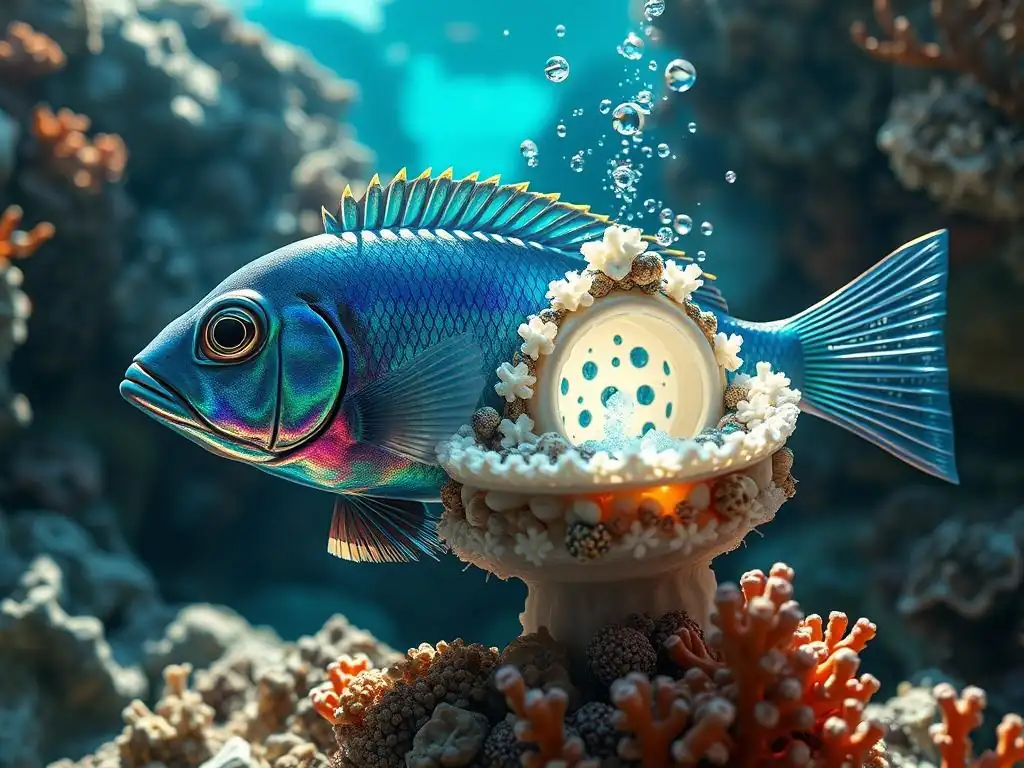
Site Selection: Choosing the Ideal Location for a Cyathopharynx furcifer Bower
The male Cyathopharynx furcifer begins the bower building process by meticulously selecting an ideal site. This location is typically an open, relatively flat area of sand substrate, often situated near a perceived boundary or a piece of decor like a rock, but crucially, it must be unobstructed. The chosen spot needs to offer excellent visibility, allowing the male to showcase his bower and himself to passing females, while also providing a sense of security.
Furthermore, the male ensures the selected site is strategically positioned to minimize interference from potential rivals or predators. He will often clear a significant perimeter around the chosen bower location, moving any small stones or debris with his mouth. This initial clearing phase demonstrates the male's commitment and territorial claim, setting the stage for the elaborate Cyathopharynx bower building behavior to follow.
Initial Construction Phase: Laying the Foundation for the Bower
Once the site is chosen, the male Cyathopharynx furcifer commences the intensive initial construction phase. He begins by systematically scooping mouthfuls of sand from the central area and depositing them around the periphery, gradually forming the raised rim of the bower. This excavation process is highly methodical, with the male often working tirelessly for extended periods, sometimes over several days, to establish the basic shape and foundation.
During this phase, the male's movements are precise and repetitive. He might start by creating a shallow depression, then progressively deepen it while simultaneously building up the surrounding mound. The volume of sand moved can be substantial, with a single male potentially relocating several liters of substrate to form a sizable bower. This foundational work is critical for the stability and overall aesthetic of the final structure, a testament to the male's strength and dedication to Cyathopharynx bower building behavior.
Refinement and Maintenance: Perfecting the Cyathopharynx furcifer Breeding Bower
After the basic structure of the bower is established, the male Cyathopharynx furcifer enters a phase of meticulous refinement and ongoing maintenance. He will continuously smooth the surfaces of the bower, deepen the central depression, and perfect its symmetry. Any stray debris, uneaten food particles, or algae that settle on the bower are swiftly removed, ensuring its pristine condition and maximum appeal to potential mates.
The bower is not a static construction; it requires constant upkeep. Males will routinely inspect and repair any damage caused by water currents, tank mates, or their own movements. They may even modify the bower's shape in response to female interest or perceived threats. This continuous dedication to maintaining a perfect bower highlights the critical importance of the Cyathopharynx bower building behavior in their reproductive success and signals the male's enduring fitness.
The Role of the Male Cyathopharynx furcifer in Bower Construction
Displaying Dominance Through Bower Building Prowess
The act of bower building in Cyathopharynx furcifer is a profound display of male dominance and vigor. The size, complexity, and immaculate condition of a male's bower are direct indicators of his physical strength, territorial holding capabilities, and overall genetic fitness. A male capable of constructing and maintaining a large, structurally sound bower demonstrates his superior health and ability to secure resources, making him a more formidable presence within the aquarium or wild environment.
This prowess serves as a clear signal to rival males, often deterring them from encroaching on the bower territory. A well-established and defended bower communicates a male's dominance, reducing the likelihood of direct aggressive encounters and allowing him to focus his energy on attracting females. The impressive nature of the Cyathopharynx bower building behavior thus plays a crucial role in establishing and maintaining the male hierarchy.
Attracting Females: The Bower as a Reproductive Advertisement
The bower is the primary visual advertisement used by the male Cyathopharynx furcifer to attract receptive females for spawning. Upon completion of his architectural masterpiece, the male will intensify his coloration, flare his fins, and perform elaborate courtship dances within or immediately adjacent to the bower. The bower itself acts as a magnificent stage, highlighting the male's vibrant hues and graceful movements.
Females are highly selective, scrutinizing the bower's quality as a proxy for the male's fitness. A bower that is large, clean, well-defined, and strategically located indicates a male with good genes and strong parental instincts. This assessment directly influences a female's decision to spawn with a particular male, reinforcing the evolutionary importance of the Cyathopharynx bower building behavior as a key factor in reproductive success.
Defending the Bower: Protecting the Nesting Site
Once constructed, the bower becomes a fiercely defended territory. The male Cyathopharynx furcifer will aggressively guard his bower against any perceived threats, especially other males of his species or even non-compatible tank mates that venture too close. This territorial defense is critical to ensure the bower remains intact and exclusive for the spawning process.
Defense mechanisms include vigorous chasing, fin flaring, and sometimes direct nipping to ward off intruders. This protective instinct extends beyond courtship; after spawning, the male continues to guard the bower area, indirectly protecting the newly laid eggs within the bower's confines. This unwavering commitment to defending the nesting site underscores the vital role of the male in the reproductive cycle and his dedication to the Cyathopharynx bower building behavior.
The Impact of the Aquarium Environment on Cyathopharynx furcifer Bower Building

Tank Size and Layout: Providing Adequate Space for Bower Construction
For Cyathopharynx furcifer to exhibit their natural Cyathopharynx bower building behavior, providing ample space is non-negotiable. A minimum tank size of 180 liters (approximately 50 gallons) is recommended for a single male and a small group of females. However, for multiple males or a more diverse community setup, tanks of 300 liters (80 gallons) or larger are highly preferred. This generous footprint allows males sufficient room to establish territories and construct their impressive bowers without undue stress or aggression from tank mates.
The tank layout should prioritize open, unobstructed sand areas. While some rockwork can be incorporated around the periphery to provide visual breaks and security, the central substrate area should be kept clear. This ensures that the male has a large, flat expanse of sand to work with, mimicking the vast sandy plains of Lake Tanganyika and encouraging natural bower construction.
Substrate and Decor: Supplying Appropriate Building Materials
The type and depth of the substrate are critical factors influencing Cyathopharynx bower building behavior. Fine, soft sand, such as play sand, pool filter sand, or specialized African cichlid sand, is absolutely essential. The sand should have a consistent grain size that the fish can easily manipulate with their mouths. A minimum substrate depth of 5-7 centimeters (2-3 inches) across the entire tank bottom, and ideally 7-10 centimeters (3-4 inches) in areas designated for bower construction, is necessary to allow for significant excavation and mound building.
Regarding decor, it is best to keep it minimal in the primary bower-building areas. Large, heavy rocks should be placed directly on the bottom glass before adding sand to prevent them from shifting and crushing fish during excavation. Avoid sharp or unstable decor that could injure the fish during their vigorous digging activities. Smooth, rounded river stones can be used sparingly, as males may sometimes incorporate them into the perimeter of their bowers.
Water Parameters: Maintaining Optimal Conditions for Breeding
Maintaining stable and optimal water parameters is crucial for the overall health of Cyathopharynx furcifer and directly impacts their willingness to engage in Cyathopharynx bower building behavior and spawning. These fish thrive in conditions that mimic Lake Tanganyika: a temperature range of 24-27°C (75-80°F), a high pH between 7.8 and 9.0, and hard, alkaline water with a general hardness (GH) of 10-20 dGH and a carbonate hardness (KH) of 10-15 dKH.
Consistent water quality is paramount. Fluctuations in temperature, pH, or the presence of elevated nitrates can cause stress, suppressing natural behaviors and breeding instincts. Regular partial water changes—typically 20-30% weekly—are essential to keep nitrate levels low and maintain pristine conditions. Effective biological and mechanical filtration, ensuring excellent water clarity and oxygenation, will further encourage these magnificent cichlids to display their full range of natural behaviors, including their elaborate bower construction.
Observing Cyathopharynx furcifer Bower Building in the Home Aquarium
Setting Up a Tank to Encourage Natural Bower Construction
To maximize your chances of observing the fascinating Cyathopharynx bower building behavior in a home aquarium, strategic tank setup is key. Begin with a spacious tank, ideally 200 liters (around 55 gallons) or larger, ensuring ample open swimming space. The substrate should consist of at least 7-10 cm (3-4 inches) of fine, soft sand (e.g., pool filter sand or aragonite sand) across the entire bottom, providing the necessary material for excavation.
While Cyathopharynx furcifer prefer open areas for their bowers, strategically placed rockwork or tall, sturdy artificial plants at the back or sides of the tank can provide a sense of security and visual boundaries for the fish. Avoid cluttering the central sandy areas where the male is likely to construct his bower. Maintain stable water parameters consistent with Lake Tanganyika conditions: pH 8.0-9.0, GH 10-20 dGH, KH 10-15 dKH, and temperature 24-27°C (75-80°F). A gentle to moderate water flow is suitable, but strong currents directly over potential bower sites should be avoided as they can disrupt sand manipulation.
Identifying Bower Building Behaviors in Your Cyathopharynx furcifer Cichlids
Observing Cyathopharynx bower building behavior is a rewarding experience. The first signs usually involve the male selecting a specific area of the sand and beginning to clear it. You'll notice him taking mouthfuls of sand, carrying them a short distance, and then expelling them, often in a repetitive pattern that starts to form a circular or oval depression. This initial excavation may seem subtle but will gradually become more pronounced.
As the construction progresses, the male's dedication will become evident. He will tirelessly work to deepen the central crater and build up the surrounding rim, creating a distinct mound or volcano-like structure. You may also observe him fanning his fins vigorously to clear away finer particles or debris. His colors may intensify, and he will become increasingly territorial around his chosen site, actively chasing away any tank mates that venture too close to his developing bower, a clear indicator of active breeding preparations.
Documenting and Sharing Your Observations
Documenting the Cyathopharynx bower building behavior of your cichlids can provide valuable insights and enhance your understanding of these remarkable fish. Keep a log of when the male begins construction, the duration of the building process, and the final dimensions of the bower. Note any specific behaviors, such as how he manipulates the sand, his interactions with females, or how he defends his territory. Photographs and short video clips can capture the dynamic process of the bower's evolution.
Sharing your observations with the broader aquarist community is highly encouraged. Online forums dedicated to cichlids, social media groups, and local aquarium clubs are excellent platforms to share your experiences, ask questions, and learn from others. Your personal documentation contributes to the collective knowledge base, helping fellow hobbyists understand the nuances of Cyathopharynx furcifer care and appreciate the intricate Cyathopharynx bower building behavior that makes these fish so unique.
Troubleshooting Common Issues with Cyathopharynx furcifer Bower Building
Lack of Bower Construction: Possible Causes and Solutions
Several factors can inhibit Cyathopharynx bower building behavior in an aquarium. One primary reason is insufficient tank size; a cramped environment prevents males from establishing territory and feeling secure enough to build. Another common issue is unsuitable substrate – coarse gravel or insufficient sand depth (less than 7 cm) makes bower construction impossible.
Stress from aggressive tank mates, poor water quality, or inadequate diet can also suppress natural breeding behaviors. Additionally, the male might simply be too young; Cyathopharynx furcifer males typically reach sexual maturity and begin building bowers around 12-18 months of age, though this can vary with growth rate.
To address these issues, first, ensure your tank is of adequate size (200+ liters) with a deep, fine sand bed. Optimize water parameters to mimic Lake Tanganyika conditions (pH 8.0-9.0, hard water, 24-27°C). Review your tank mates, removing any overly aggressive or boisterous species that might be intimidating the male. Provide a high-quality diet rich in spirulina and other nutrients. Patience is also key; sometimes, a male needs time to settle into a new environment before initiating his elaborate Cyathopharynx bower building behavior.
Inadequate Building Materials: Supplementing the Tank Environment
If your male Cyathopharynx furcifer attempts to build a bower but struggles or abandons the effort, the issue might lie with the building materials themselves. Substrate that is too coarse, too shallow, or mixed with large debris will make it difficult for the fish to manipulate and form a stable structure. For instance, if the sand bed is only 2-3 cm deep, the male cannot excavate a proper depression or build a substantial mound.
The solution is straightforward: ensure a generous supply of fine, soft sand. Add more sand to achieve a depth of at least 7-10 cm (3-4 inches) across the entire tank bottom, particularly in areas where bower building is likely. Consider using specialized aquarium sands like aragonite or fine play sand, which are free of sharp edges and provide an ideal texture for Cyathopharynx bower building behavior. Regularly vacuuming the substrate to remove detritus will also keep the building material clean and appealing.
Competition and Aggression: Managing Tank Mates
Aggression from tank mates is a significant deterrent to Cyathopharynx bower building behavior. Other territorial cichlids, especially those that also prefer sandy substrates or are overly boisterous, can harass the male Cyathopharynx, disrupt his construction efforts, or even destroy a partially built bower. This constant stress can prevent the male from feeling secure enough to engage in breeding activities.
Careful selection of tank mates is crucial. Peaceful, open-water Tanganyikan cichlids such as Cyprichromis species or other less aggressive Featherfin variants make excellent companions. Avoid mixing Cyathopharynx furcifer with highly aggressive species like some Tropheus or overly territorial Neolamprologus species that might constantly intrude on the male's space. If aggression becomes an issue, consider rehoming the problematic fish or moving the Cyathopharynx to a species-specific tank to allow him to exhibit his natural Cyathopharynx bower building behavior without interference.
The Evolutionary Significance of Cyathopharynx furcifer Bower Building
Bower Building as an Indicator of Genetic Fitness
The elaborate Cyathopharynx bower building behavior is a powerful indicator of genetic fitness in male Cyathopharynx furcifer. The construction and meticulous maintenance of a large, complex bower require significant energy, physical strength, and sustained effort. These attributes signal to potential mates that the male is robust, healthy, and possesses superior genes. A male capable of such a demanding feat is likely to be an efficient forager, skilled at evading predators, and resilient to disease.
Females, in turn, select males with the most impressive bowers, ensuring that their offspring inherit these desirable traits. This selective pressure drives the evolution of increasingly sophisticated bower-building capabilities within the species. The bower, therefore, is not just a structure; it is a living resumé of the male's genetic quality, directly influencing his reproductive success and the propagation of advantageous traits within the Cyathopharynx furcifer population.
Adaptive Advantages of Bower Construction in Lake Tanganyika
Bower construction offers several significant adaptive advantages for Cyathopharynx furcifer in the unique ecosystem of Lake Tanganyika. Firstly, the bower provides a clear, protected, and easily identifiable spawning site in the vast, open sandy plains where suitable crevices or other natural hiding spots for eggs might be scarce. This localized, defended area significantly reduces the risk of egg predation by opportunistic feeders.
Secondly, the confined nature of the bower facilitates efficient fertilization. When the female lays her eggs within the bower's central depression, the male can release his milt in a concentrated manner, maximizing the chances of successful fertilization in the open water column. This specialized reproductive strategy, centered around the intricate Cyathopharynx bower building behavior, allows the species to thrive in its specific niche within the diverse cichlid community of Lake Tanganyika, ensuring reproductive success in a challenging environment.
Comparing Bower Building Strategies Among Tanganyikan Cichlids
The bower building strategy of Cyathopharynx furcifer stands out even among the diverse reproductive behaviors of Tanganyikan cichlids. While many Tanganyikan species are maternal mouthbrooders, their spawning sites vary widely. For instance, shell dwellers like Neolamprologus multifasciatus utilize empty snail shells for breeding, and rock dwellers such as Neolamprologus brichardi lay their eggs in crevices. Some sand-dwelling cichlids, like certain Xenotilapia species, may simply excavate shallow pits or "craters" for spawning.
In contrast, Cyathopharynx furcifer actively constructs a raised, architecturally complex mound or crater, meticulously moving sand particles to create a distinct and often visually striking structure. This active construction, rather than simple excavation or opportunistic use of existing features, places Cyathopharynx in a unique category of "true" bower builders among cichlids, akin to the famous bowerbirds of Australia. Their highly specialized Cyathopharynx bower building behavior showcases an extraordinary evolutionary adaptation to their specific habitat in Lake Tanganyika.
Conclusion: Appreciating the Architectural Genius of Cyathopharynx furcifer
The Importance of Understanding Cyathopharynx furcifer Natural Behaviors
Understanding the natural Cyathopharynx bower building behavior is paramount for any aquarist aiming to successfully keep and breed these magnificent cichlids. By recognizing the intricate details of their courtship rituals and the environmental requirements for bower construction, hobbyists can create an aquarium setup that closely mimics their natural Lake Tanganyika habitat. This not only promotes the physical health of the fish but also allows them to express their full range of natural instincts, leading to a more enriching and rewarding experience for the observer.
Furthermore, observing this complex behavior provides a unique window into the fascinating world of aquatic life. It highlights the profound connection between an animal's environment, its evolutionary adaptations, and its reproductive success. Appreciating the dedication and architectural genius displayed by male Cyathopharynx furcifer during their bower building process deepens our respect for these intelligent and beautiful creatures.
Further Research and Conservation Efforts
The study of Cyathopharynx furcifer bower building behavior, both in the wild and in captivity, continues to offer valuable insights into fish ethology and evolutionary biology. Aquarists, through careful observation and documentation, can contribute to this ongoing research, acting as citizen scientists who provide real-world data on captive breeding success and behavioral nuances. Further scientific studies could delve deeper into the specific metrics females use to assess bower quality or the energetic costs associated with such elaborate construction.
While Cyathopharynx furcifer is not currently listed as an endangered species, like many endemic species from the African Great Lakes, they face potential threats from habitat degradation due to pollution, overfishing, and climate change. Responsible aquarism, including promoting successful captive breeding of these fish and advocating for sustainable collection practices, plays a crucial role in conservation efforts. By understanding and appreciating their unique Cyathopharynx bower building behavior, we contribute to the long-term preservation of this extraordinary species for future generations.
Frequently Asked Questions
What is Cyathopharynx bower building behavior?
Cyathopharynx bower building behavior refers to the intricate nest-building activities of male Cyathopharynx fish, particularly during courtship and breeding. These structures, often called bowers, are meticulously crafted from substrate materials.
Why do Cyathopharynx fish build bowers?
The primary purpose of bower building is to attract females for spawning. The size, complexity, and maintenance of the bower serve as an indication of the male's fitness and genetic quality.
What materials do Cyathopharynx fish typically use to build their bowers?
These fish typically use sand, gravel, and small shells to construct their bowers. The choice of material depends on the available substrate in their natural habitat.
How does the size and complexity of a Cyathopharynx bower affect mating success?
Generally, larger and more complex bowers are more attractive to females. They suggest the male has the energy and skill to provide a safe environment for their offspring.
Is it possible to observe Cyathopharynx bower building behavior in a home aquarium?
Yes, with proper setup, including a sandy substrate and suitable water parameters, it is possible. Providing appropriate tank mates and a stress-free environment is also crucial for encouraging this behavior.
Final Reflection: Unveiling the Art of Underwater Construction
The intricate details of Cyathopharynx bower building, as explored in this article, are not just fascinating biological observations; they represent a profound testament to the power of instinct and adaptation in the natural world. Understanding the complexities of this behavior provides valuable insights into evolutionary processes and the driving forces behind animal behavior, particularly in the face of environmental pressures and the pursuit of reproductive success.
This deep dive into the Cyathopharynx's architectural prowess underscores the beauty and ingenuity present in even the seemingly simplest of creatures. Witnessing such dedication and skill in these underwater architects reminds us of the interconnectedness of life and the importance of preserving the delicate ecosystems that support such unique behaviors. In nature, nothing exists alone.
- Rachel Carson. This quote perfectly encapsulates the essence of this study, highlighting how the bower building behavior is intricately linked to the fish's survival, reproduction, and the overall health of its aquatic environment.
Now, consider the lessons learned from these underwater architects. How can we, as conscious beings, apply the principles of dedication, resourcefulness, and environmental awareness to our own endeavors? Let the Cyathopharynx's unwavering commitment to its craft inspire you to approach your own challenges with renewed purpose and a deeper appreciation for the intricate beauty that surrounds us.
Unearth the Secrets of *Cyathopharynx*: Become an Underwater Architect!
Thank you for diving deep into the fascinating world of Cyathopharynx and their incredible bower-building behavior! We hope you found these insights valuable and inspiring. Now, it's your turn to explore further.
Here are a few ways you can continue the journey:
- Embark on a virtual exploration: Dive into online forums and communities dedicated to Tanganyikan cichlids, and share your own observations and questions about bower-building behavior.
- Consider the ethics: If you have the resources and expertise, research ethical and sustainable ways to recreate aspects of a Cyathopharynx habitat within a responsible aquarium setting.
- Spread the word: Share this article with fellow aquarium enthusiasts and spark a conversation about the marvels of Cyathopharynx!
What unique bower-building adaptation surprised you the most, and how might you creatively represent it in your aquarium design, even if you don't keep Cyathopharynx?