
Dwarf Cichlid Aggression: Managing Territorial Disputes in Your Tank

Welcome to Aquarium Mastery!
Intrigued by the complex social dynamics of the aquarium world? You've come to the right place! Ever wondered how to keep the peace in your dwarf cichlid community? Our comprehensive guide to dwarf cichlid aggression solutions will help you understand and manage territorial disputes, ensuring a harmonious and thriving environment for your finned friends. Dive in and discover the secrets to a balanced tank – the answers you seek are just below!
- Understanding Dwarf Cichlid Aggression in the Aquarium
- Identifying Signs of Aggression in Dwarf Cichlids
- Solutions for Reducing Dwarf Cichlid Aggression: Creating a Peaceful Tank
- Choosing the Right Tank Mates for Dwarf Cichlids
- Optimizing Water Parameters and Tank Conditions for Dwarf Cichlids
- Feeding Strategies to Minimize Aggression in Dwarf Cichlids
- Managing Aggression During Breeding
- When to Intervene: Separating Aggressive Dwarf Cichlids
- Preventing Future Aggression: Long-Term Strategies
- Dwarf Cichlid Aggression Solutions: A Summary of Best Practices
-
Frequently Asked Questions
- How can I identify if my dwarf cichlids are displaying aggression or just normal territorial behavior?
- What tank size is generally recommended for housing multiple dwarf cichlids to minimize aggression?
- What types of decorations and tank setups can help reduce aggression among dwarf cichlids?
- How does water quality impact dwarf cichlid aggression, and what parameters should I monitor?
- Besides tank size and decoration, what other factors can contribute to dwarf cichlid aggression, and how can I address them?
- Final Reflection: Navigating the Waters of Peaceful Coexistence
- Unleash Harmony: Create a Peaceful Dwarf Cichlid Paradise!
Understanding Dwarf Cichlid Aggression in the Aquarium
Why Are My Dwarf Cichlids Fighting? Identifying the Root Causes
Dwarf cichlids, such as Apistogramma species, Mikrogeophagus ramirezi (Rams), and Pelvicachromis pulcher (Kribensis), are renowned for their vibrant colors and engaging personalities. However, they are also inherently territorial, a trait stemming from their natural behaviors in the wild where they defend specific areas for breeding, foraging, and shelter. In the confined space of an aquarium, these natural instincts can manifest as aggression, particularly when resources are limited or space is insufficient.
Common root causes include inadequate tank size, insufficient hiding spots, an imbalanced male-to-female ratio, or even subtle water quality issues that induce stress. For instance, a male Apistogramma cacatuoides might naturally claim a territory of 1-2 square feet, which can quickly become a point of contention in a smaller tank.
Furthermore, competition for mates and prime spawning sites often fuels dwarf cichlid aggression. Males will typically display more aggressive behavior towards each other, especially when females are present, as they vie for breeding rights. Females can also be highly territorial, particularly when guarding eggs or fry, and may exhibit aggression towards other tank inhabitants, including their own mates if the space is too small. Understanding these underlying instincts is the first step in implementing effective dwarf cichlid aggression solutions and fostering a harmonious aquarium environment.
Common Triggers for Aggression in Dwarf Cichlids
Several factors can trigger or exacerbate aggressive behaviors in dwarf cichlids within a home aquarium. The introduction of new fish, especially those perceived as rivals or threats, can immediately spark territorial disputes as existing inhabitants defend their established domains. Similarly, breeding attempts are a significant trigger; a pair of Kribensis cichlids, for example, will become intensely protective of their chosen spawning cave and the surrounding area, chasing away any perceived intruders with surprising vigor. Competition for food can also lead to aggression, especially if food is not distributed adequately or if dominant individuals monopolize feeding areas.
Beyond social interactions, environmental stressors play a crucial role in triggering heightened dwarf cichlid aggression. Sudden or significant fluctuations in water parameters, such as a rapid pH drop of 0.5 units or a temperature swing of more than 2°F (1°C), can induce stress, making fish more irritable and prone to aggressive displays. Inadequate filtration, poor water circulation, or even inappropriate lighting cycles can contribute to a stressful environment, leading to increased tensions among tank inhabitants. Addressing these triggers is paramount for effective dwarf cichlid aggression solutions.
Identifying Signs of Aggression in Dwarf Cichlids
Recognizing Subtle Signs of Stress and Dominance
Identifying dwarf cichlid aggression early is crucial for effective intervention. Subtle signs of stress and dominance often precede overt attacks. These can include fin nipping, particularly on the caudal (tail) or dorsal fins, which might appear as small tears or frayed edges. Chasing, even if brief, and flaring of gills as a display of intimidation are common. Rapid color changes, where a fish might darken significantly when asserting dominance or lighten/fade when stressed and submissive, are also key indicators. For example, a stressed Ram cichlid might exhibit a "shivering" or "trembling" behavior, indicating discomfort and potential bullying.
Body language provides further clues. A dominant dwarf cichlid will often display its most vibrant colors, hold its fins erect and spread wide, and confidently occupy central, open areas of the tank. Conversely, a submissive or bullied fish may appear pale, keep its fins clamped, and retreat to corners, hiding spots, or the upper water column. Consistent pursuit of another fish for more than 10-15 seconds at a time, even without physical contact, indicates a clear power imbalance and the need for dwarf cichlid aggression solutions.
Clear Indicators of Dwarf Cichlid Territorial Disputes
When subtle signs are ignored, dwarf cichlid territorial disputes can escalate into clear, undeniable indicators of aggression. Direct physical attacks, such as ramming, biting, or prolonged chasing that leads to exhaustion of the target fish, are overt signs that intervention is required. Observe for tangible damage like torn fins, missing scales, or open wounds on the bullied fish, which signify severe harassment. In some cases, a particularly aggressive male Apistogramma agassizii might relentlessly drive a subordinate female into a corner, preventing her from feeding or resting.
In extreme situations, one fish might be consistently cornered, prevented from accessing food or oxygen at the surface, leading to severe stress, emaciation, and eventual death if unchecked. This often results in a stark contrast in health and vitality between the aggressor and the victim. Recognizing these clear indicators is vital for implementing immediate dwarf cichlid aggression solutions, such as separating the fish or re-evaluating the tank setup, to prevent further harm and ensure the well-being of all inhabitants.
Solutions for Reducing Dwarf Cichlid Aggression: Creating a Peaceful Tank
Optimizing Tank Size and Layout for Dwarf Cichlids
One of the most fundamental dwarf cichlid aggression solutions involves optimizing the aquarium's size and layout. For a single pair of dwarf cichlids like German Blue Rams or Apistogramma borellii, a minimum of a 20-gallon long tank (approximately 30x12x12 inches) is often recommended. This size provides sufficient linear space for the pair to establish a territory without infringing too heavily on others. For multiple pairs or a community setup with other species, a 30-gallon or 40-gallon breeder tank is far more suitable, offering ample room for distinct territories and escape routes.
It is crucial to understand that for territorial bottom-dwellers like dwarf cichlids, the tank's footprint (length and width) is generally more important than its height. A 20-gallon long tank, despite having the same volume as a 20-gallon high, offers significantly more horizontal swimming space and a longer linear dimension, allowing for better sightline breaks and more distinct territorial boundaries. This increased horizontal space dilutes potential aggression by providing more room for each fish to establish its domain and for subordinates to retreat.
The Importance of Tank Size for Cichlid Behavior
Inadequate tank size is a primary contributor to heightened dwarf cichlid aggression. When space is limited, fish are forced into constant close proximity, escalating natural territorial instincts into continuous conflict. A larger tank, by contrast, effectively dilutes aggression because it provides more physical space for individual fish to establish their own territories, as well as ample room for subordinate fish to escape and avoid confrontation. This reduced constant pressure significantly lowers stress levels for all inhabitants.
Even a seemingly small increase in tank volume can yield substantial benefits in managing dwarf cichlid aggression. For example, upgrading from a cramped 10-gallon tank to a 20-gallon long can drastically reduce stress and the need for constant intervention, simply by providing double the horizontal space. This allows for greater separation between territories and creates more opportunities for visual barriers, leading to a much more peaceful and stable environment where dwarf cichlid aggression solutions are more effective.
Creating Territories: Using Aquascaping to Minimize Conflict
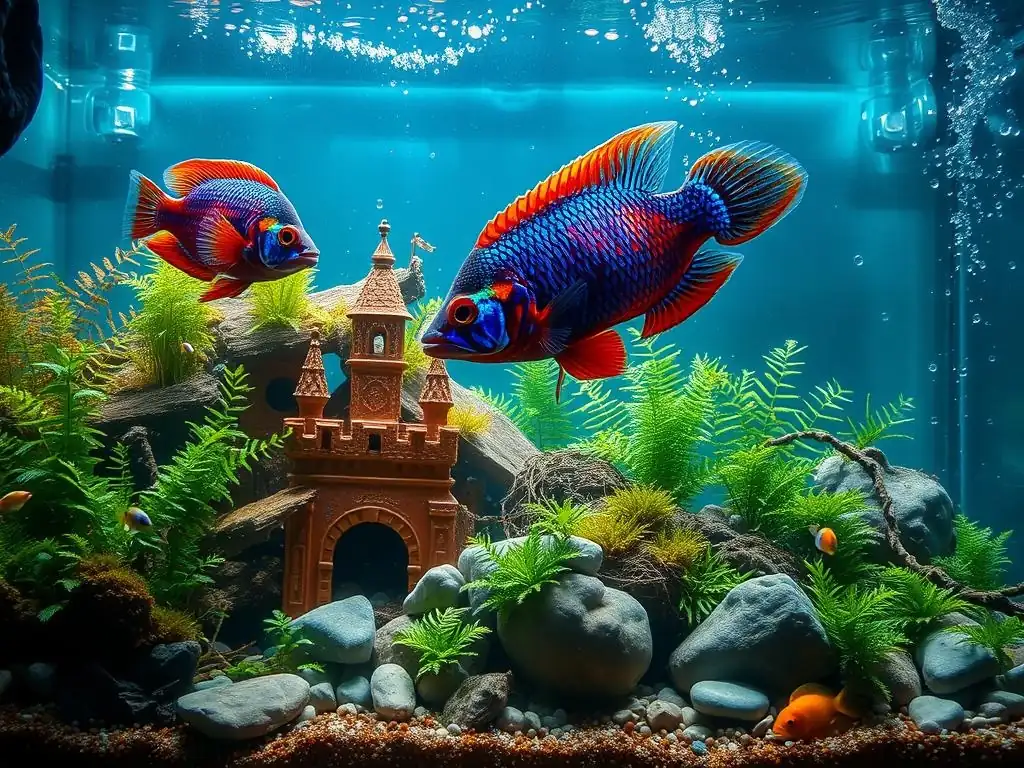
Strategic aquascaping is a powerful tool among dwarf cichlid aggression solutions, enabling the creation of distinct territories that minimize conflict. Utilize hardscape elements such as rocks, driftwood, and strategically placed plants to break up sightlines within the aquarium. By creating visual barriers, you prevent dominant fish from constantly seeing and harassing subordinates, effectively diffusing potential disputes before they escalate. For instance, a tall, branching piece of driftwood can act as a natural partition across the middle of the tank, dividing it into separate zones.
Beyond sightline breaks, the arrangement of decor should facilitate the establishment of multiple, defensible territories. Incorporate both vertical and horizontal partitioning using various elements. Caves, rock formations, and dense thickets of live plants (like Java Fern, Anubias, or Amazon Swords) provide clear boundaries and safe havens. Consider using different types of substrate in various areas to further delineate territories and encourage specific fish to claim particular spots, thus reducing competition for prime real estate.
Introducing Hiding Places and Visual Barriers
An abundance of hiding places and visual barriers is critical for managing dwarf cichlid aggression. Each dwarf cichlid, particularly if kept in groups or with other species, should have access to at least one private hiding spot where it can retreat to feel secure. Excellent options include coconut shells, small terracotta pots, PVC pipe sections (camouflaged with gravel), ceramic caves, or dense plant groupings. These offer immediate refuge for bullied or stressed fish, allowing them to escape the aggressor's view and recover.
The benefit of these hiding spots and barriers extends beyond mere escape routes; they actively reduce stress by providing a sense of security. When a subordinate fish can disappear from sight, the dominant fish often loses interest, as the perceived threat is no longer visible. A well-placed cluster of tall plants or a carefully stacked rock formation can block the line of sight across a significant portion of the tank, effectively diffusing potential conflicts and contributing significantly to long-term dwarf cichlid aggression solutions.
Choosing the Right Tank Mates for Dwarf Cichlids
Compatible Tank Mates to Reduce Cichlid Bullying
Careful selection of tank mates is a crucial component of dwarf cichlid aggression solutions. Ideal companions are peaceful, occupy different levels of the water column, have similar water parameter requirements, and are not known fin-nippers. Small schooling fish that primarily inhabit the mid to upper water column make excellent dither fish. Examples include Neon Tetras (a school of 8-10 individuals), Rummy-nose Tetras, Harlequin Rasboras (6-8 individuals), or peaceful pencils fish. These species tend to stay out of the dwarf cichlids' lower-level territories.
Additionally, peaceful bottom-dwellers like Corydoras catfish (a group of 5-6) can coexist harmoniously, as they occupy a different ecological niche and rarely compete directly with dwarf cichlids for food or space. The presence of schooling dither fish can actually reduce cichlid aggression by making the cichlids feel more secure and less likely to focus their territorial instincts on each other. A thriving school of tetras, for instance, signals to the cichlids that the environment is safe, often leading to a more relaxed demeanor.
Fish to Avoid: Incompatible Species and Increased Aggression
To effectively manage dwarf cichlid aggression, it is equally important to know which fish to avoid as tank mates. Large, aggressive cichlids, such as most African Cichlids or larger South American species, are entirely unsuitable as they will outcompete and likely kill dwarf cichlids due to significant differences in size, temperament, and often water parameter requirements. Fin-nipping species like Tiger Barbs should also generally be avoided unless kept in very large schools (10+ individuals) in spacious tanks, as their nipping behavior can stress dwarf cichlids and exacerbate aggression.
Furthermore, overly boisterous or fast-moving fish can stress dwarf cichlids by constantly darting around their territories, leading to increased irritability and defensive aggression. Keeping dwarf cichlids with species that prefer vastly different water parameters, such as very hard or alkaline water, will also lead to chronic stress and a compromised immune system, making them more prone to aggressive outbursts. For example, attempting to house delicate Apistogramma species with hardy, high-pH Mbuna cichlids from Lake Malawi would inevitably lead to severe stress and likely fatalities for the dwarf cichlids.
Optimizing Water Parameters and Tank Conditions for Dwarf Cichlids
The Link Between Water Quality and Cichlid Temperament
The quality and stability of water parameters have a profound impact on a dwarf cichlid's overall health and temperament, directly influencing dwarf cichlid aggression. Poor water quality, characterized by elevated levels of ammonia, nitrite, or nitrate, acts as a significant stressor. Chronic exposure to these toxins weakens the fish's immune system, making them more susceptible to disease and often leading to increased irritability and aggression towards tank mates. A fish that feels unwell or stressed is far more likely to lash out.
Conversely, maintaining pristine and stable water parameters reduces stress, allowing dwarf cichlids to exhibit their natural, often more peaceful, behaviors. Fluctuations in pH, temperature, or water hardness can be just as detrimental as consistently poor parameters. For instance, a sudden 2°F temperature swing or a pH change of 0.2 units can be more stressful than a consistent temperature or pH value at the lower or higher end of their preferred range. Consistent, high-quality water is a foundational element among dwarf cichlid aggression solutions.
Maintaining Ideal Water Chemistry to Reduce Stress
To minimize stress and reduce dwarf cichlid aggression, maintaining ideal and stable water chemistry is paramount. For many popular dwarf cichlids, such as German Blue Rams and Apistogramma species, soft, acidic water is preferred. Aim for a pH between 5.5 and 7.0, a general hardness (GH) of 2-8 dGH, and a temperature range of 78-82°F (25.5-27.8°C). Kribensis cichlids are generally more tolerant, thriving in pH 6.0-7.5, GH 5-15 dGH, and temperatures of 75-80°F (24-26.7°C).
Regular water testing (weekly or bi-weekly) using a reliable liquid test kit is essential to monitor these parameters and ensure consistency. Performing routine 20-30% weekly water changes helps to replenish beneficial minerals and effectively remove accumulated nitrates and other waste products. Utilizing a quality water conditioner to neutralize chlorine and chloramines is also crucial. By rigorously adhering to these water maintenance practices, aquarists can significantly reduce environmental stress, thereby contributing effectively to dwarf cichlid aggression solutions.
Feeding Strategies to Minimize Aggression in Dwarf Cichlids
Ensuring Adequate Food and Reducing Competition
Food scarcity is a common catalyst for dwarf cichlid aggression, as fish will compete fiercely for limited resources. To mitigate this, ensure that all fish receive adequate nutrition by feeding small amounts multiple times a day, typically 2-3 times, rather than one large meal. This approach not only prevents overfeeding but also ensures that even the shyer or more submissive fish have opportunities to eat without being outcompeted by dominant individuals. Distribute the food across various areas of the tank to prevent a single fish from monopolizing the feeding zone.
For example, when feeding flakes or pellets, sprinkle them in multiple spots or along the entire length of the tank. For frozen foods like bloodworms or brine shrimp, consider using multiple feeding clips or directing food to different areas with a pipette. This strategy reduces direct competition and stress during feeding times, leading to a more harmonious environment. Properly managed feeding is a simple yet highly effective dwarf cichlid aggression solution.
Varying the Diet to Support Overall Health and Temperament
A well-rounded and varied diet is crucial for the overall health, vitality, and temperament of dwarf cichlids, directly impacting their propensity for aggression. A diet consisting solely of dry flakes, even high-quality ones, may not provide all the necessary nutrients. Incorporate a mix of high-quality flakes, small pellets, and various frozen foods such as bloodworms, brine shrimp, daphnia, and Mysis shrimp. Live foods, if sourced safely, can also be offered as occasional treats.
A diverse diet mimics their natural foraging behaviors and provides essential vitamins, minerals, and proteins that support a robust immune system and balanced disposition. Malnutrition or a lack of specific nutrients can lead to lethargy, susceptibility to disease, or, conversely, increased irritability and aggression due to underlying stress. For instance, spirulina-based foods can enhance color and vitality, while protein-rich options support breeding readiness. Ensuring comprehensive nutrition is a key preventative dwarf cichlid aggression solution.
Managing Aggression During Breeding
Breeding is a powerful natural instinct that significantly intensifies dwarf cichlid aggression. Once a pair forms and selects a spawning site, such as a cave, a broad plant leaf, or a terracotta pot, they become highly territorial and fiercely protective of their chosen area. The male, in particular, will display heightened aggression towards any fish that approaches too closely, regardless of species or size. This protective behavior extends to defending the eggs and, subsequently, the free-swimming fry.
The intensity of this breeding-related aggression can be surprising. A male Kribensis cichlid, for instance, can become remarkably bold, chasing away tank mates several times its own size from its immediate vicinity. Even the female, while often smaller, will actively participate in fry defense, nipping and shooing away intruders. This natural, instinct-driven aggression is a primary driver of conflict during certain periods and requires specific management strategies to ensure the safety of other tank inhabitants.
Strategies for Protecting Fry and Reducing Parental Conflicts
To manage breeding-related dwarf cichlid aggression and protect both the fry and other tank inhabitants, several strategies can be employed. Firstly, ensure the breeding pair has ample choice in spawning sites; providing multiple caves or sheltered spots can help them select a less disruptive location. If the aggression becomes severe, consider temporarily removing other fish from the main tank, or creating dense plant barriers (e.g., a wall of Java Fern) around the breeding pair's territory to provide visual separation.
A common and highly effective dwarf cichlid aggression solution during breeding is to move the breeding pair to a dedicated breeding tank, typically 10-15 gallons, once the eggs have been laid. This isolates the aggressive pair and allows the fry to grow safely without threat from other fish or the parents' territorial disputes impacting the main community. Once the fry are free-swimming for 3-4 weeks, or if parental aggression towards each other becomes problematic, be prepared to remove the parents or the fry, depending on your breeding goals and tank capacity.
When to Intervene: Separating Aggressive Dwarf Cichlids
Recognizing When Intervention is Necessary
Recognizing when to intervene and separate aggressive dwarf cichlids is crucial for preventing serious harm and providing effective dwarf cichlid aggression solutions. Immediate action is necessary if you observe physical injury, such as torn fins, missing scales, or open wounds, on any fish. Signs of extreme stress in the bullied fish, including constant hiding, clamped fins, rapid and labored breathing, or refusal to eat, also indicate that intervention is overdue. If one fish is being relentlessly pursued for hours or even days, without respite, it is a clear sign that the situation is beyond self-correction.
Unchecked aggression leads to chronic stress, which severely weakens a fish's immune system, making it highly susceptible to diseases like Ich, fungal infections, or bacterial infections. In severe cases, relentless bullying can lead to the exhaustion, starvation, and eventual death of the bullied fish. Prolonged stress can also stunt growth and diminish the overall vitality of the entire tank population. Therefore, knowing these critical warning signs allows for timely and life-saving intervention.
Setting Up a Quarantine Tank for Aggressive Individuals
When intervention becomes necessary, setting up a quarantine tank is an essential dwarf cichlid aggression solution. A simple 5-10 gallon tank, equipped with a heater, a small sponge filter, and some basic hiding places (like a terracotta pot or a piece of PVC pipe), serves as an ideal temporary home. This allows either the aggressive fish to de-stress in isolation or, more commonly, the bullied fish to recover without constant harassment and competition for resources.
The general practice is to remove the aggressor first. This often allows the remaining fish in the main tank to re-establish a new pecking order without the dominant individual. Keep the aggressive fish in the quarantine tank for several days to a few weeks. If, upon reintroduction, the aggression immediately resumes, it may indicate that the fish is simply too aggressive for your particular setup or community. In such cases, rehoming the aggressive individual might be the most humane and effective long-term dwarf cichlid aggression solution for the overall peace of your aquarium.
Preventing Future Aggression: Long-Term Strategies
Regular Observation and Monitoring of Cichlid Behavior
Preventing future dwarf cichlid aggression relies heavily on consistent and proactive management, beginning with regular observation. Dedicate at least 5-10 minutes each day to simply watching your dwarf cichlids. Look for subtle changes in their behavior, such as altered swimming patterns, changes in color intensity, fin posture, and how they interact with each other and their environment. Early detection of rising tensions or minor squabbles can allow you to address issues before they escalate into full-blown aggression.
Maintaining a simple log or mental note of specific behaviors, feeding habits, and interactions can help identify patterns or specific triggers for aggression. For example, if you notice that aggression consistently flares after a water change, it might indicate a sensitivity to parameter fluctuations or tap water additives. If a particular fish always seems to be the target, it might signal a need for more hiding places specific to its size or preferred area. These insights are invaluable for implementing targeted dwarf cichlid aggression solutions.
Adjusting Tank Conditions Based on Observed Aggression
Based on your observations, be prepared to make strategic adjustments to your tank conditions as a long-term dwarf cichlid aggression solution. If you notice increased chasing or territorial disputes, consider adding more hiding spots, rearranging existing aquascaping to create new visual barriers, or even introducing new elements like floating plants to break up overhead sightlines. For instance, if a male Apistogramma is persistently harassing a female, adding an additional ceramic cave or a dense clump of plants specifically for her can provide much-needed refuge.
Re-evaluating your stocking density is also critical. If the tank appears overcrowded, even with optimal aquascaping, reducing the number of fish may be the only sustainable long-term solution. Sometimes, removing one particularly dominant or aggressive individual can restore peace to the entire community. Conversely, if a fish appears overly stressed due to lack of dither fish, adding a small school of appropriate tank mates might help. Continuous adjustment and adaptation are key to maintaining a harmonious dwarf cichlid tank.
Dwarf Cichlid Aggression Solutions: A Summary of Best Practices
Key Takeaways for a Peaceful Dwarf Cichlid Tank
Successfully managing dwarf cichlid aggression requires a multifaceted approach that addresses their natural instincts within the confines of an aquarium. The cornerstone of dwarf cichlid aggression solutions is providing an adequately sized tank, with a strong emphasis on footprint rather than height. For a pair, a 20-gallon long is a good starting point, while larger tanks (30-40 gallons) are recommended for multiple pairs or community setups. Strategic aquascaping, incorporating numerous visual barriers and ample hiding places (e.g., caves, dense plants, driftwood), is paramount to creating distinct territories and safe retreats.
Further key takeaways include the careful selection of tank mates; opt for peaceful, mid-to-upper water column schooling fish (like Neon Tetras) and avoid aggressive or fin-nipping species. Maintaining pristine and stable water parameters (e.g., pH 6.0-7.0, temperature 78-82°F for many species) is crucial for reducing stress. Implement proper feeding strategies, offering small, varied meals multiple times a day to minimize competition.
During breeding, be prepared for heightened aggression and consider temporary isolation of the pair. Finally, consistent observation and proactive adjustment of tank conditions based on fish behavior are essential for preventing and resolving dwarf cichlid aggression, ensuring a thriving and peaceful community aquarium.
Frequently Asked Questions
How can I identify if my dwarf cichlids are displaying aggression or just normal territorial behavior?
Dwarf cichlid aggression is typically characterized by persistent chasing, fin nipping, and physical attacks. Normal territorial behavior involves brief displays of dominance and establishing territories without causing significant harm.
What tank size is generally recommended for housing multiple dwarf cichlids to minimize aggression?
A larger tank is always better. Generally, a 20-gallon long tank is the minimum for a pair of dwarf cichlids. For a community tank with multiple individuals, consider a 30-gallon or larger tank to provide ample space.
What types of decorations and tank setups can help reduce aggression among dwarf cichlids?
Creating a densely planted environment with plenty of hiding places like caves and driftwood helps break line of sight and provides refuge. This significantly reduces territorial disputes.
How does water quality impact dwarf cichlid aggression, and what parameters should I monitor?
Poor water quality can stress dwarf cichlids, making them more aggressive. Monitor ammonia, nitrite, and nitrate levels regularly. Maintain optimal pH and temperature for the species to reduce stress and aggression.
Besides tank size and decoration, what other factors can contribute to dwarf cichlid aggression, and how can I address them?
Overcrowding and incompatible tank mates can escalate aggression. Ensure your tank isn't overcrowded and choose tank mates carefully. Consider rehoming aggressive individuals if necessary.
The challenges of managing dwarf cichlid aggression are not merely about maintaining a visually appealing aquarium; they reflect a broader understanding of creating harmonious ecosystems, even within confined spaces. Today, as we increasingly recognize the importance of responsible pet ownership and the interconnectedness of all living things, finding effective solutions to territorial disputes within our tanks becomes even more crucial. The principles of careful observation, thoughtful planning, and proactive intervention, as discussed throughout this article, extend far beyond the glass walls of an aquarium.
This journey into the world of dwarf cichlids has underscored the delicate balance between instinct and environment. Understanding the root causes of aggression, from overcrowding to incompatible tank mates, allows us to not only mitigate conflict but also to appreciate the complex social dynamics at play. The greatness of a nation and its moral progress can be judged by the way its animals are treated.
- Mahatma Gandhi. This quote resonates deeply, reminding us that our compassion and understanding should extend to all creatures, regardless of their size or perceived simplicity.
As you consider the insights shared in this article, I encourage you to reflect on how these principles of observation, planning, and intervention can be applied to other areas of your life. Just as a well-managed aquarium fosters a thriving community, so too can our mindful actions create more harmonious and balanced environments in our homes, workplaces, and communities. Let us strive to be thoughtful stewards, creating spaces where all can flourish.
Unleash Harmony: Create a Peaceful Dwarf Cichlid Paradise!
Thank you for diving into the world of dwarf cichlids and learning how to manage their territorial behaviors! Now that you're equipped with the knowledge, it's time to create a thriving, peaceful aquarium for your finned friends.
Here are a few actions you can take immediately:
- Redesign your tank layout: Introduce more visual barriers like driftwood and plants to break up lines of sight and minimize territorial disputes.
- Share your experiences! Head over to our Aquarium Mastery community forum and tell us about your dwarf cichlid tank setup and any unique challenges you've faced.
- Consider adding dither fish: Introduce a small school of peaceful, active fish to reduce aggression by diverting attention.
What's one new décor element you'll add to your tank this week to reduce aggression among your dwarf cichlids?