
Endler's Guppy vs. Common Guppy: Key Differences & Care Needs

Welcome to Aquarium Mastery!
Ever wondered if those dazzling, miniature guppies you see are different from their more common cousins? Dive into our Endler's Guppy Care Guide and unlock the secrets to successfully keeping these vibrant jewels. Discover the subtle, yet crucial, differences between Endler's and common guppies, and learn how to provide the perfect environment for these lively freshwater fish. Ready to master Endler's guppy care? Let's get started!
- Introduction: Exploring the World of Livebearing Guppies
- Endler's Guppy: An Overview of This Vibrant Nano Fish
- Common Guppy: A Popular Aquarium Staple
- Endler's Guppy vs. Common Guppy: A Detailed Comparison
- Endler's Guppy Care Guide: Creating the Ideal Habitat
- Common Guppy Care Guide: Ensuring a Healthy Environment
- Breeding Endler's Guppies: A Step-by-Step Guide
- Breeding Common Guppies: Optimizing Reproduction
- Potential Health Issues in Endler's and Common Guppies
- Hybridization: Understanding the Risk of Crossbreeding
- Conclusion: Choosing the Right Guppy for Your Aquarium
-
Frequently Asked Questions
- What are the main differences between Endler's Guppies and common guppies?
- What are the specific water parameters recommended for Endler's Guppy care?
- What type of food should I feed my Endler's Guppies?
- How often should I perform water changes in an Endler's Guppy tank?
- Are Endler's Guppies easy to breed, and what do I need to know?
- Final Reflection: Appreciating the Miniature Wonders
- Ignite Your Aquarium Adventure!
Introduction: Exploring the World of Livebearing Guppies
The world of freshwater aquariums offers a captivating array of fish, and among the most popular and vibrant are guppies. Known for their dazzling colors, flowing fins, and prolific breeding habits, guppies have long been a staple in both beginner and experienced aquarists' tanks. However, not all guppies are created equal. While the common guppy ( Poecilia reticulata) is widely recognized, its smaller, equally stunning cousin, the Endler's Livebearer ( Poecilia wingei), has gained significant popularity in recent years.
This article aims to delve into the fascinating distinctions between the Endler's guppy and the common guppy, providing a comprehensive comparison of their origins, physical characteristics, temperament, and specific care requirements. Understanding these differences is crucial for any aquarist looking to provide the best possible environment for these livebearing beauties, ensuring their health, longevity, and vibrant display within the home aquarium.
Endler's Guppy: An Overview of This Vibrant Nano Fish
Origins and Natural Habitat of Endler's Livebearer
The Endler's Livebearer, often simply called Endler's guppy, boasts a relatively recent discovery in the aquarium hobby. These captivating fish were first brought to scientific attention in 1975 by Dr. John Endler, who rediscovered them in Laguna de Patos (Duck Lagoon) near Cumaná, Venezuela. Their natural habitat consists of warm, shallow, and often brackish waters, typically found in coastal lagoons and slow-moving rivers with dense vegetation. This unique environment contributes to their hardiness and adaptability within the aquarium setting.
In their native Venezuelan waters, Endler's guppies thrive in areas rich with algae and detritus, where they can forage for small invertebrates and plant matter. The water parameters in these habitats typically range from slightly hard to very hard, with a pH that can fluctuate but generally remains alkaline. Their population in the wild is considered endangered due to habitat destruction and hybridization with common guppies, making their preservation in the aquarium hobby even more significant.
Distinctive Physical Characteristics of Endler's Guppy
Endler's guppies are renowned for their striking, almost neon coloration, which is particularly pronounced in males. Unlike the common guppy, Endler's males are considerably smaller, typically reaching only about 0.8 to 1 inch (2-2.5 cm) in length, while females are slightly larger, growing up to 1.5-1.8 inches (3.8-4.5 cm). Their bodies are more slender and streamlined than those of common guppies, reflecting their wild ancestry.
The color patterns of male Endler's guppies are incredibly diverse and vivid, often featuring metallic greens, oranges, yellows, and blacks arranged in distinct, often irregular, patterns that differ greatly from the more uniform patterns seen in many common guppy strains. Common patterns include "snake," "peacock," "sword," and "dot" markings, which are unique to the species. Their fins are generally shorter and less elaborate than those of selectively bred common guppies, maintaining a more natural, wild appearance.
Common Guppy: A Popular Aquarium Staple
History and Distribution of the Common Guppy
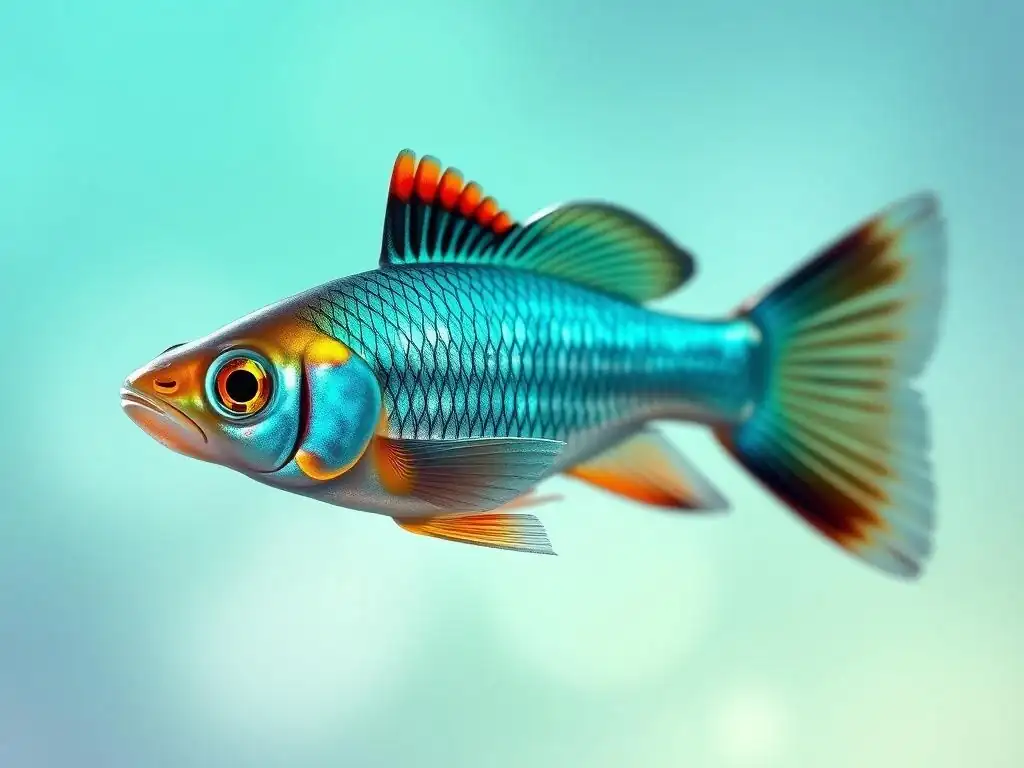
The common guppy, Poecilia reticulata, holds a long and storied history in the aquarium trade, dating back over a century. Originally native to various parts of South America, including Venezuela, Trinidad, Barbados, and Brazil, their natural distribution has been vastly expanded due to human intervention. They were widely introduced to tropical and subtropical regions across the globe, primarily for mosquito control, as they readily consume mosquito larvae. This widespread introduction has made them one of the most globally distributed freshwater fish species.
Their adaptability and ease of breeding quickly made them a favorite among aquarists, leading to extensive selective breeding programs that have transformed their appearance over decades. This long history of cultivation has resulted in an astonishing array of forms that bear little resemblance to their wild counterparts, showcasing the immense genetic potential within the species.
Variety in Color and Fin Types of Common Guppies
The defining characteristic of the common guppy is its incredible phenotypic diversity, particularly in terms of color and fin morphology. Through generations of selective breeding, aquarists have developed hundreds of distinct strains, each with unique patterns, hues, and fin shapes. Colors range from solid reds, blues, yellows, and greens to intricate multi-color patterns like "cobra," "tuxedo," and "leopard." The possibilities seem endless, with new strains continually being developed.
Beyond color, common guppies are celebrated for their elaborate fin types. Males, in particular, display a spectacular variety of caudal (tail) fin shapes, including fan tails, delta tails, veil tails, swordtails (double, top, bottom), lyretails, and even ribbon fins. Dorsal fins also vary in size and shape, often complementing the caudal fin's grandeur. These extensive variations make common guppies a popular choice for hobbyists interested in breeding and showcasing specific genetic traits.
Endler's Guppy vs. Common Guppy: A Detailed Comparison
Size and Appearance: Spotting the Differences
The most immediate and striking difference between Endler's guppies and common guppies lies in their size and overall appearance. Endler's guppies are significantly smaller and more slender. Male Endler's rarely exceed 1 inch (2.5 cm) in length, and females typically reach up to 1.8 inches (4.5 cm). Their coloration is often described as metallic and iridescent, with naturally occurring patterns that appear "painted on." Their fins are generally shorter and more natural-looking, lacking the elaborate extensions found in many common guppy strains.
In contrast, common guppies are typically larger and more robust. Males can reach up to 1.5 inches (3.8 cm), and females often grow to 2.5 inches (6.4 cm) or even larger. Their colors, while incredibly varied, are often the result of selective breeding, leading to solid blocks of color or highly intricate patterns across the entire body and fins. The defining feature of many common guppies is their long, flowing, and often elaborate caudal and dorsal fins, which are a direct result of decades of human intervention in their genetics.
Temperament and Behavior: Are They Compatible?
Both Endler's and common guppies are generally peaceful fish, making them excellent choices for community aquariums. However, there are subtle differences in their behavior. Endler's guppies are known for being extremely active and constantly darting around the tank. They are typically less prone to fin-nipping than some common guppy strains, partly due to their shorter fins and generally more harmonious social structure within their species. They thrive in groups and display fascinating schooling behaviors.
Common guppies are also active and generally peaceful, but their temperament can vary slightly depending on the specific strain and individual personality. Males can sometimes be overly persistent in chasing females, which can stress the females if there are not enough hiding spots or if the male-to-female ratio is not balanced (ideally 1 male to 2-3 females). While generally not aggressive, their larger, more elaborate fins can sometimes make them targets for fin-nipping by other fish, or conversely, they might occasionally nip at the fins of slower, long-finned tank mates if conditions are crowded.
Breeding Habits: Endler's Guppy vs. Common Guppy Reproduction
Both Endler's guppies and common guppies are livebearers, meaning they give birth to live, free-swimming fry rather than laying eggs. This characteristic makes them incredibly popular among aquarists interested in breeding. However, their reproductive rates and brood sizes differ. Endler's guppies tend to have smaller broods, typically ranging from 5 to 25 fry per birth, with a gestation period of approximately 22-24 days. Their fry are relatively small but well-developed upon birth.
Common guppies are even more prolific breeders. A single female common guppy can produce a brood of 20 to 100+ fry, and sometimes even more in exceptional cases, with a gestation period ranging from 21 to 30 days. Both species are capable of storing sperm for several months, allowing females to give birth to multiple broods from a single mating encounter. This remarkable ability contributes significantly to their reputation as "million fish" due to their rapid reproduction.
Lifespan: How Long Do They Live?
The lifespan of both Endler's guppies and common guppies is influenced by a multitude of factors, including water quality, diet, genetics, and overall tank conditions. Generally, Endler's guppies tend to have a slightly shorter lifespan compared to their common counterparts. A healthy Endler's guppy can typically live for 1 to 2 years in a well-maintained aquarium.
Common guppies, particularly the hardier strains, often live for 2 to 3 years under optimal conditions. Some individuals, especially in exceptionally stable and pristine environments, have been known to live even longer. Providing consistent water parameters, a balanced diet, and a stress-free environment are critical for maximizing the longevity of both species. Overstocking, poor water quality, and an inadequate diet are common factors that can significantly shorten their lives.
Endler's Guppy Care Guide: Creating the Ideal Habitat
Tank Size Recommendations for Endler's Guppies
When considering an Endler's guppy care guide, tank size is a crucial initial factor. Due to their small size and active nature, Endler's guppies do not require excessively large tanks, but adequate space is still important for their well-being. A minimum tank size of 5 gallons (approximately 19 liters) is suitable for a small group of 3-5 Endler's guppies, ideally with a male-to-female ratio of 1:2 or 1:3 to disperse male attention.
For larger groups, such as 6-10 Endler's, a 10-gallon (approximately 38 liters) aquarium is highly recommended. More space allows for better water stability, reduces aggression, and provides ample room for these active fish to explore. Always remember that more space is generally better, especially if you plan to keep other compatible tank mates or anticipate a growing population of fry.
Water Parameters: Maintaining Optimal Conditions for Endler's
Maintaining precise water parameters is a cornerstone of any effective Endler's guppy care guide. These fish are relatively hardy but thrive in stable, clean conditions that mimic their natural habitat. The ideal temperature range for Endler's guppies is between 72-82°F (22-28°C), with a stable temperature being more important than the exact degree within this range. A consistent temperature prevents stress and supports their metabolism.
Regarding pH, Endler's prefer slightly alkaline to hard water, with a pH range of 6.7-8.5, though an ideal range is often cited as 7.0-7.8. Water hardness (GH) should be between 8-20 dGH (140-360 ppm). Regular weekly water changes of 25% are essential to remove nitrates and replenish beneficial minerals, ensuring pristine water quality. Using a reliable filter, such as a sponge filter or a hang-on-back filter with a pre-filter sponge, is vital for mechanical and biological filtration.
Diet and Feeding: What Do Endler's Guppies Eat?
A comprehensive Endler's guppy care guide must address their nutritional needs. Endler's guppies are omnivores with a preference for protein-rich foods, but they also graze on algae and plant matter in their natural environment. A high-quality flake food or micro-pellets formulated for small tropical fish should form the staple of their diet. Ensure the food particles are small enough for their tiny mouths.
To provide a balanced diet and enhance their vibrant coloration, supplement their staple food with live or frozen options. Excellent choices include newly hatched brine shrimp, daphnia, micro worms, and finely chopped bloodworms. Feed small amounts 2-3 times per day, only what they can consume within 2-3 minutes. Overfeeding can lead to poor water quality and health issues. Occasionally, blanched spirulina flakes or finely crushed algae wafers can be offered to meet their plant matter requirements.
Tank Mates: Choosing Compatible Fish for an Endler's Tank
Selecting appropriate tank mates is a critical aspect of an Endler's guppy care guide to ensure a harmonious aquarium environment. Endler's guppies are peaceful and small, so they should be housed with other equally peaceful and similarly sized fish. Avoid any species that are known fin-nippers, aggressive, or significantly larger than Endler's, as they could intimidate or prey upon them.
Good tank mate options include other peaceful nano fish such as Neon Tetras, Ember Tetras, Chili Rasboras, and Dwarf Corydoras species (e.g., Corydoras habrosus). Otocinclus catfish are also excellent additions for algae control. Peaceful dwarf shrimp species, like Cherry Shrimp or Amano Shrimp, can coexist well with Endler's guppies, though some Endlers might occasionally snack on very young shrimp fry. Always introduce new tank mates slowly and monitor interactions closely.
Common Guppy Care Guide: Ensuring a Healthy Environment
Tank Size Considerations for Common Guppies
While generally similar to Endler's, a common guppy care guide often recommends slightly larger tank sizes due to their increased size and potentially more elaborate fins. For a small group of 3-5 common guppies, a minimum of a 10-gallon (approximately 38 liters) aquarium is advisable. This size provides sufficient swimming space and helps dilute waste products more effectively.
For a larger community of common guppies or if you plan to include other tank mates, a 20-gallon (approximately 76 liters) or larger tank is highly recommended. More space reduces stress, minimizes aggression, and provides a more stable environment for these active fish. Ensure the tank has a secure lid, as guppies are known jumpers, especially when startled.
Water Quality: Maintaining a Stable Environment for Guppies
Maintaining stable and clean water quality is paramount for the health of common guppies. They thrive in temperatures ranging from 72-79°F (22-26°C). While they can tolerate a wider range, consistency is key. A heater with a thermostat is essential to prevent temperature fluctuations.
Common guppies prefer slightly alkaline to neutral water, with an ideal pH range of 6.8-7.8. They are quite adaptable to water hardness, thriving in moderately hard to hard water, typically 8-18 dGH (140-320 ppm). Regular weekly water changes of 25-30% are crucial for removing accumulated nitrates and ensuring the water remains pristine. A robust filtration system, including mechanical, chemical, and biological filtration, is vital for maintaining excellent water parameters.
Guppy Diet: Providing a Balanced Nutritional Intake
A balanced diet is essential for the vibrant colors and overall health of common guppies. They are omnivores and will readily accept a variety of foods. A high-quality flake or small pellet food designed for tropical fish should serve as their primary diet. Look for foods that list fish meal or spirulina as primary ingredients.
Supplementing their diet with live or frozen foods is highly beneficial. Options include brine shrimp, bloodworms, daphnia, and mosquito larvae. These protein-rich foods enhance their coloration and provide essential nutrients. Additionally, common guppies benefit from some vegetable matter; spirulina flakes, blanched spinach, or small pieces of cucumber can be offered occasionally. Feed small amounts 2-3 times daily, only what they can consume within a few minutes, to prevent overfeeding and water pollution.
Choosing Suitable Tank Mates for Common Guppies
When selecting tank mates for common guppies, prioritize peaceful species that won't nip at their often elaborate fins. Avoid aggressive or predatory fish that could intimidate or harm them. Common guppies are social and do best in groups, ideally with more females than males to spread out male attention.
Good tank mate options include other peaceful livebearers like Mollies and Platies, provided the tank is large enough. Small schooling fish such as Neon Tetras, Harlequin Rasboras, and White Cloud Mountain Minnows can also coexist peacefully. Bottom dwellers like Corydoras catfish and Otocinclus are excellent additions, as they occupy different tank levels and help with algae control. Ensure the tank is not overstocked, as this can lead to stress and aggression among fish.
Breeding Endler's Guppies: A Step-by-Step Guide
Setting Up a Breeding Tank for Endler's
Breeding Endler's guppies can be a rewarding experience for aquarists, and it's a key part of an advanced Endler's guppy care guide. While they will breed readily in a community tank, setting up a dedicated breeding tank significantly increases fry survival rates. A 5-10 gallon (19-38 liter) tank is sufficient for a breeding pair or a small group. Equip it with a reliable heater to maintain a stable temperature between 75-80°F (24-27°C) and a gentle filter, such as a sponge filter, which is safe for tiny fry.
Crucially, the breeding tank should be heavily planted with dense vegetation like Java Moss, Guppy Grass, or Anacharis. These plants provide essential hiding spots for the fry immediately after birth, protecting them from potential cannibalism by the adult female or other tank inhabitants. A floating cover of plants like Water Sprite or Frogbit can also offer additional shelter and a sense of security for the fish.
Identifying Male and Female Endler's Guppies
Distinguishing between male and female Endler's guppies is relatively straightforward, even for beginners, and is vital for controlled breeding. Male Endler's guppies are significantly smaller, more slender, and display the brilliant, intricate coloration for which the species is famous. Their anal fin is modified into a gonopodium, a rod-like organ used for internal fertilization.
Female Endler's guppies are larger, plumper, and typically have a more subdued, silvery or yellowish coloration, though some may exhibit hints of color. Their anal fin is fan-shaped, not modified like the male's. When a female is pregnant, a dark "gravid spot" will become visible near her anal fin, indicating the development of fry within her. As she nears birth, her belly will become noticeably swollen and squared off.
Caring for Endler's Guppy Fry
Caring for Endler's guppy fry requires specific attention to diet and water quality to ensure their rapid growth and survival. Once the fry are born, it's advisable to remove the adult female from the breeding tank to prevent her from consuming the fry, as cannibalism is common. The fry are born free-swimming and will immediately seek cover among the dense plants.
For feeding, Endler's guppy fry have tiny mouths, so they require very small food particles. Newly hatched brine shrimp are an excellent first food, providing high protein for rapid growth. Alternatively, finely crushed high-quality flake food, specialized fry food, or infusoria can be offered. Feed the fry small amounts multiple times a day (3-5 times) to support their rapid metabolism. Perform small, frequent water changes (10-15% every other day) to maintain pristine water quality, as fry are particularly sensitive to ammonia and nitrite.
Breeding Common Guppies: Optimizing Reproduction
Creating a Breeding Environment for Common Guppies
Common guppies are famously prolific breeders, often reproducing without any special intervention in a well-maintained community tank. However, to optimize fry survival and manage breeding efforts, setting up a dedicated breeding tank is highly beneficial. A 10-20 gallon (38-76 liter) tank is ideal for common guppy breeding, providing ample space for the female and subsequent fry. Equip the tank with a heater to maintain a stable temperature around 75-78°F (24-26°C) and a gentle filter, such as a sponge filter, to ensure fry safety.
Just like with Endler's, dense live plants are crucial for common guppy fry. Floating plants like Guppy Grass, Java Moss, Hornwort, and Water Lettuce provide excellent hiding spots from the mother, who may prey on her own offspring. A breeding box or net can also be used to separate the female just before birth, but these can be stressful for the female and are less natural than heavily planted tanks.
Recognizing Signs of Pregnancy in Female Guppies
Identifying a pregnant female common guppy is relatively easy due to several distinct signs. The most obvious indicator is an enlarged and increasingly rounded abdomen. As the pregnancy progresses, the female's belly will become noticeably fuller, sometimes appearing almost square or box-like just before birth. This "squared-off" appearance is a strong sign that birth is imminent, often within 24-48 hours.
Another clear sign is the development of a dark "gravid spot" at the rear of the female's abdomen, just above the anal fin. This spot is actually the developing eyes of the fry becoming visible through the transparent skin. The gravid spot becomes darker and more prominent as the fry mature inside. Pregnant females may also become more reclusive or seek out quiet, sheltered areas of the tank as they prepare to give birth.
Raising Common Guppy Fry: Tips and Tricks
Raising common guppy fry successfully involves providing them with appropriate nutrition and maintaining excellent water quality. Once the fry are born, it is generally recommended to remove the adult female from the breeding tank to prevent her from eating her offspring. Common guppy fry are larger than Endler's fry and are born as miniature versions of the adults, capable of swimming and finding food immediately.
Feed the fry small, frequent meals (3-5 times a day) to support their rapid growth. Excellent food choices include newly hatched brine shrimp, micro worms, finely crushed high-quality flake food, and specialized fry foods. For optimal growth, avoid overfeeding and ensure that all food is consumed within a few minutes to prevent water fouling. Regular small water changes (10-15% every 1-2 days) are vital to keep the water pristine, as fry are highly sensitive to poor water conditions. As they grow, gradually transition them to larger food particles.
Potential Health Issues in Endler's and Common Guppies
Common Diseases Affecting Guppies and Endler's
Both Endler's guppies and common guppies are generally hardy fish, but like all aquarium inhabitants, they can be susceptible to various health issues if their living conditions are not optimal. One of the most common ailments is Ich (White Spot Disease), caused by the parasite Ichthyophthirius multifiliis, which manifests as small white spots resembling salt grains on the body and fins. Fin Rot is another frequent problem, often caused by poor water quality or bacterial infections, leading to frayed or deteriorating fins.
Fungal infections, often appearing as white, cotton-like growths on the body or fins, can also affect guppies, particularly if they have open wounds or stressed immune systems. Columnaris (Cottonmouth Disease), caused by the bacterium Flavobacterium columnare, can present as white or gray patches around the mouth and gills, resembling fungus, but it is a much more aggressive bacterial infection. Lastly, Dropsy, characterized by a severely bloated body and scales that protrude outwards (pinecone effect), is usually a symptom of severe internal organ failure, often due to bacterial infection or poor water quality.
Prevention and Treatment of Guppy Diseases
Preventing diseases in Endler's and common guppies is far more effective than treating them. The cornerstone of prevention is maintaining consistently high water quality. This includes performing regular weekly water changes (25-30%), ensuring proper filtration, and avoiding overfeeding and overstocking. A balanced, nutritious diet strengthens their immune systems, making them more resilient to pathogens. Quarantining all new fish for at least 2-4 weeks before introducing them to the main tank is crucial to prevent the introduction of diseases.
If disease does strike, prompt diagnosis and treatment are essential. For Ich, increasing the water temperature gradually (if compatible with other tank inhabitants) and using an Ich-specific medication can be effective. Fin Rot and fungal infections often respond to broad-spectrum antibacterial or antifungal treatments, alongside immediate improvements in water quality. Columnaris requires aggressive antibacterial treatment, while Dropsy is often fatal due to its advanced nature, but immediate isolation and strong antibacterial medication may offer a slim chance of recovery. Always follow medication instructions carefully and remove carbon from the filter during treatment.
Hybridization: Understanding the Risk of Crossbreeding
Why You Should Avoid Hybridizing Endler's and Common Guppies
While Endler's guppies ( Poecilia wingei) and common guppies ( Poecilia reticulata) can readily interbreed and produce fertile offspring, it is strongly advised against for several critical reasons. The primary concern is the preservation of the genetic purity of Endler's Livebearers. Endler's guppies are a distinct species, recognized for their unique wild characteristics, specific coloration patterns, and smaller size. Crossbreeding them with common guppies, which have been extensively line-bred for specific traits, dilutes the Endler's gene pool.
This hybridization leads to the loss of the distinct Endler's traits over generations, resulting in offspring that are neither pure Endler's nor true common guppies, but rather a mix of characteristics. This can be particularly problematic for conservation efforts, as pure Endler's are considered endangered in their natural habitat. Maintaining separate populations helps preserve the integrity and unique beauty of both species for future generations of aquarists and for scientific study.
Identifying Hybrid Guppies
Identifying hybrid guppies can be challenging, especially in early generations, as they may exhibit a mix of traits from both parent species. Generally, hybrids tend to be larger than pure Endler's guppies but may not reach the full size of some common guppy strains. Their body shape might be less slender than a pure Endler's but not as robust as a common guppy.
The most telling signs often lie in their coloration and finnage. Hybrid males might display colors that are vibrant but lack the distinct, intricate, and often metallic patterns characteristic of pure Endler's. Their fins might be longer than a pure Endler's but less elaborate or symmetrical than those of selectively bred common guppies.
For example, a hybrid might have a faint "sword" tail that is not as defined as a true Endler's sword, combined with a larger body size and less intense wild coloration. If you are unsure about the purity of your Endler's guppies, comparing them to well-documented images of pure strains can be helpful.
Conclusion: Choosing the Right Guppy for Your Aquarium
Summary of Key Differences and Care Considerations
Deciding between an Endler's guppy and a common guppy for your aquarium ultimately depends on your specific preferences and tank setup. Endler's guppies are smaller, more slender, and display unique, naturally occurring vibrant patterns with shorter fins. They are incredibly active and generally very peaceful, making them ideal for nano tanks or peaceful community setups with other small fish. An Endler's guppy care guide emphasizes stable, slightly harder water, and small, frequent feedings. Their lifespan is typically 1-2 years.
Common guppies, on the other hand, are larger, more robust, and come in an astonishing variety of colors and elaborate fin shapes due to extensive selective breeding. While also peaceful, their larger fins can sometimes be targets or cause for minor fin-nipping in crowded conditions. They thrive in slightly larger tanks and have a lifespan of 2-3 years. Both are prolific livebearers, but Endler's tend to have smaller broods. Crucially, avoid crossbreeding to maintain the genetic purity of Endler's Livebearers.
Resources for Further Learning About Guppies and Endler's Livebearers
The world of guppies and Endler's Livebearers is incredibly diverse and fascinating, offering endless opportunities for observation and learning. For aquarists keen on deepening their knowledge, numerous resources are available. Exploring specialized forums and communities dedicated to livebearers can provide invaluable insights from experienced hobbyists. Consulting detailed species profiles and care guides from reputable aquarium websites and books can further enhance your understanding of their specific needs, breeding behaviors, and genetic variations. Continuous research into water chemistry, fish health, and plant husbandry will contribute significantly to the long-term success and enjoyment of keeping these beautiful and rewarding fish.
Frequently Asked Questions
What are the main differences between Endler's Guppies and common guppies?
Endler's Guppies are generally smaller than common guppies and exhibit more vibrant, varied color patterns. They also tend to be more active and social in the aquarium.
What are the specific water parameters recommended for Endler's Guppy care?
Endler's Guppies thrive in water temperatures between 72-82°F (22-28°C) with a pH of 6.7-8.5. It's crucial to maintain stable water parameters and perform regular water changes to prevent issues.
What type of food should I feed my Endler's Guppies?
Endler's Guppies are omnivores and enjoy a varied diet. Offer them high-quality flake food, supplemented with live or frozen foods like brine shrimp and daphnia for optimal health and coloration.
How often should I perform water changes in an Endler's Guppy tank?
Regular weekly water changes of 25-30% are recommended to maintain water quality. Monitor your water parameters and adjust frequency as needed, depending on tank size and stocking levels.
Are Endler's Guppies easy to breed, and what do I need to know?
Yes, Endler's Guppies are prolific breeders! Provide plenty of hiding places for the fry (baby fish) to avoid being eaten by adults. A separate breeding tank can also improve fry survival rates.
Final Reflection: Appreciating the Miniature Wonders
The exploration of Endler's guppies and their distinction from common guppies highlights more than just aquarium keeping; it underscores the importance of biodiversity and responsible pet ownership in a world increasingly aware of ecological balance. Understanding the nuances of these miniature aquatic ecosystems allows us to appreciate the delicate interplay of genetics, environment, and care that shapes the lives of these vibrant creatures.
This journey into the world of Poecilia wingei and Poecilia reticulata has profoundly influenced my perspective on the interconnectedness of life. It reminds us that even the smallest creatures deserve our respect and informed care. In the end, we will conserve only what we love; we will love only what we understand; and we will understand only what we are taught.
- Baba Dioum. This quote perfectly encapsulates the need for education and understanding in preserving the beauty and diversity of our natural world, starting with the tiny ecosystems we create in our own homes.
Now, armed with this knowledge, I invite you to reflect on your own relationship with the natural world. Consider how you can contribute to the well-being of these delicate creatures, whether through responsible aquarium keeping, supporting conservation efforts, or simply spreading awareness. Let us all strive to be informed stewards of the environment, ensuring that future generations can marvel at the miniature wonders that grace our planet.
Ignite Your Aquarium Adventure!
Thank you for exploring the fascinating world of Endler's and common guppies with us! We hope this article has shed light on the unique qualities of these vibrant fish and equipped you with the knowledge to care for them. Now, it’s time to take action and create the perfect aquatic environment.
Here's how you can dive deeper:
- Begin planning your guppy paradise! Research the ideal tank setup, considering the specific needs of Endler's, common guppies, or a harmonious mix.
- Share your newfound guppy expertise! Discuss your plans and insights with fellow aquarium enthusiasts in online forums or local fishkeeping clubs.
- Try photographing your guppies. Observe their unique patterns and colors and create a stunning visual logbook of your aquarium's inhabitants!
What specific element of guppy care are you most excited to implement in your aquarium?