
HoleintheHead Disease in Rams & Apistos: Causes & Cures

Welcome to Aquarium Mastery!
Ever wondered why your beautiful Ram or Apisto is developing those unsettling pits? Hole-in-the-Head disease can be a real worry for any aquarist. Dive into our comprehensive guide to understand the causes, prevention, and effective treatments for Ram apisto holeinhead, and learn how to keep your finned friends healthy and thriving. Let's unravel this mystery together!
- Hole-in-the-Head Disease in Ram Cichlids & Apistogramma: A Comprehensive Guide
- Understanding Hole-in-the-Head Disease (HITH) in Aquarium Fish
- Causes of Hole-in-the-Head Disease in Rams & Apistos
- Symptoms of Hole-in-the-Head in Ram Cichlids and Apistogramma
- Treating Hole-in-the-Head Disease in Rams & Apistos: Effective Cures
- Preventing Hole-in-the-Head Disease in Your Aquarium
- Hole-in-the-Head in Rams vs. Apistos: Are There Differences?
- Advanced Hole-in-the-Head Disease: When Treatment is Challenging
- Preventing HITH Recurrence: Long-Term Aquarium Management
-
Frequently Asked Questions
- How common is Hole-in-the-Head disease in Ram and Apisto cichlids?
- What are the primary causes of Hole-in-the-Head disease in these fish?
- What are the early signs of Hole-in-the-Head disease I should watch for?
- Can Hole-in-the-Head disease be cured in Rams and Apistos?
- How can I prevent Hole-in-the-Head disease in my Ram and Apisto aquarium?
- Final Reflection: Healing the Scars of the Aquarium
- Unleash a Vibrant Aquarium: Take the Next Step!
Hole-in-the-Head Disease in Ram Cichlids & Apistogramma: A Comprehensive Guide
Understanding Hole-in-the-Head Disease (HITH) in Aquarium Fish
What is Hole-in-the-Head Disease (HITH)?
Hole-in-the-Head disease, often abbreviated as HITH, is a serious and commonly misunderstood condition affecting various freshwater aquarium fish, including the popular Ram cichlids and Apistogramma species. Characterized by the progressive erosion of flesh, primarily on the head and along the lateral line, it manifests as small pits or lesions that can deepen over time. While the exact cause is often multi-factorial, it is generally considered a syndrome resulting from a combination of environmental stressors, nutritional deficiencies, and opportunistic parasitic infections.
This debilitating condition, sometimes referred to as 'lateral line erosion' in its advanced stages, can severely impact a fish's health and appearance. For dwarf cichlids like the Ram cichlid and Apistogramma, which are already somewhat sensitive to water quality, understanding and preventing HITH is paramount to their long-term well-being. Early detection is crucial for successful intervention and recovery, as advanced cases can be challenging to treat.
Identifying HITH in Ram Cichlids and Apistogramma
Identifying Hole-in-the-Head disease in Ram cichlids and Apistogramma typically begins with observing changes in their head and facial regions. Initial symptoms often appear as small, pin-prick depressions or erosions, usually white or grayish in color, around the eyes, forehead, or above the lateral line. These early pits can be subtle and easily overlooked, especially in dwarf cichlids that might hide or have complex patterns.
As the disease progresses, these initial small pits can enlarge and deepen, forming more prominent craters that may even expose underlying bone or tissue. In some "Ram apisto holeinhead" cases, the lesions might extend along the lateral line pores on the body, creating a noticeable pattern of eroded tissue. Other signs to look for include a general dulling of coloration, loss of appetite, and increased reclusiveness, all indicative of a fish under significant distress.
Differentiating HITH from Other Fish Diseases
Differentiating Hole-in-the-Head disease from other common fish ailments is vital for accurate diagnosis and effective treatment. While physical injuries, such as scrapes from tank decor or aggressive tank mates, can cause superficial wounds, these typically heal without the characteristic progressive pitting seen in HITH. Similarly, some bacterial or fungal infections might cause lesions, but they usually present as fuzzy growths, red sores, or fin rot, rather than the distinct erosions of HITH.
Another condition sometimes confused with HITH is Lymphocystis, a viral infection that causes wart-like growths on the skin and fins; however, these are raised and nodular, not eroded pits. The unique combination of pitted lesions on the head and lateral line, often accompanied by changes in behavior and appetite, is the hallmark of HITH. For any suspected "Ram apisto holeinhead" case, careful observation of the specific lesion type is the first step in proper identification.
Causes of Hole-in-the-Head Disease in Rams & Apistos
Poor Water Quality as a Primary Cause of HITH
Poor water quality is arguably the most significant contributing factor to Hole-in-the-Head disease in Ram cichlids and Apistogramma. High levels of ammonia, nitrite, and especially nitrate, which accumulate in unmaintained aquariums, create a chronically stressful environment for these sensitive dwarf cichlids. For instance, nitrates consistently above 20 ppm, particularly in tanks housing delicate species like German Blue Rams, can significantly weaken their immune systems, making them highly susceptible to HITH.
Inconsistent water parameters, such as fluctuating pH levels or sudden temperature shifts, also contribute to stress and compromise a fish's natural defenses. Ram cichlids and Apistogramma thrive in stable, soft, and acidic to neutral water conditions (e.g., pH 6.0-7.0, GH 3-8 dGH). When these parameters are neglected, the fish's metabolic processes are strained, leading to a breakdown in their ability to ward off opportunistic pathogens, ultimately paving the way for "Ram apisto holeinhead" symptoms to manifest.
Nutritional Deficiencies and HITH Development
Nutritional deficiencies play a critical role in the development of Hole-in-the-Head disease, particularly the lack of essential vitamins and minerals. A diet solely consisting of low-quality flake food, for example, often lacks sufficient Vitamin C, Vitamin D, and calcium—nutrients vital for immune function, bone health, and overall tissue integrity. Without these crucial elements, the fish's ability to repair tissue and fight off infections is severely compromised.
For Ram cichlids and Apistogramma, which are naturally omnivores with a preference for small invertebrates, a varied diet is paramount. Feeding high-quality frozen foods like bloodworms, brine shrimp, and daphnia, supplemented with vitamin-enriched pellets or flakes, ensures they receive a full spectrum of nutrients. A deficiency in Vitamin D, for instance, can impair calcium absorption, potentially leading to bone and tissue degradation that manifests as the characteristic pitting of "Ram apisto holeinhead" disease.
The Role of Hexamita Parasites in Hole-in-the-Head
While not the sole cause, Hexamita (also known as Spironucleus) is a common internal flagellate parasite often implicated in Hole-in-the-Head disease, especially in cichlids. These protozoan parasites typically reside in the intestinal tract, where they can cause inflammation, malabsorption of nutrients, and general debilitation. In a fish already stressed by poor water quality or inadequate nutrition, Hexamita can proliferate rapidly, further weakening the fish and contributing to the visible lesions.
The precise mechanism by which Hexamita contributes to external lesions is still debated, but it is thought that the internal damage and nutrient deprivation caused by the parasite weaken the fish's overall health and immune response. This systemic weakening then allows for the development of the characteristic pits and erosions on the head and lateral line. Therefore, while treating "Ram apisto holeinhead" often involves addressing the parasitic component, it is crucial to remember that environmental and dietary factors often create the conditions for Hexamita to become problematic.
Stress as a Contributing Factor to HITH in Dwarf Cichlids
Stress is a significant underlying factor that predisposes Ram cichlids and Apistogramma to Hole-in-the-Head disease. Chronic stress, whether from overcrowding, aggressive tank mates, unstable water parameters, or insufficient hiding spots, continually suppresses a fish's immune system. When a fish is constantly in a state of high alert or discomfort, its energy reserves are diverted from essential bodily functions like immune defense and tissue repair.
For delicate species like "Ram apisto holeinhead," even seemingly minor stressors can accumulate. For example, a male Apistogramma constantly harassed by a dominant tank mate or unable to establish territory in a too-small tank will experience persistent stress. This weakened immune system then makes the fish highly vulnerable to opportunistic infections, including Hexamita, and hinders its ability to recover from minor injuries, ultimately leading to the onset and progression of HITH.
Symptoms of Hole-in-the-Head in Ram Cichlids and Apistogramma
Early Signs of HITH: Recognizing the Initial Symptoms
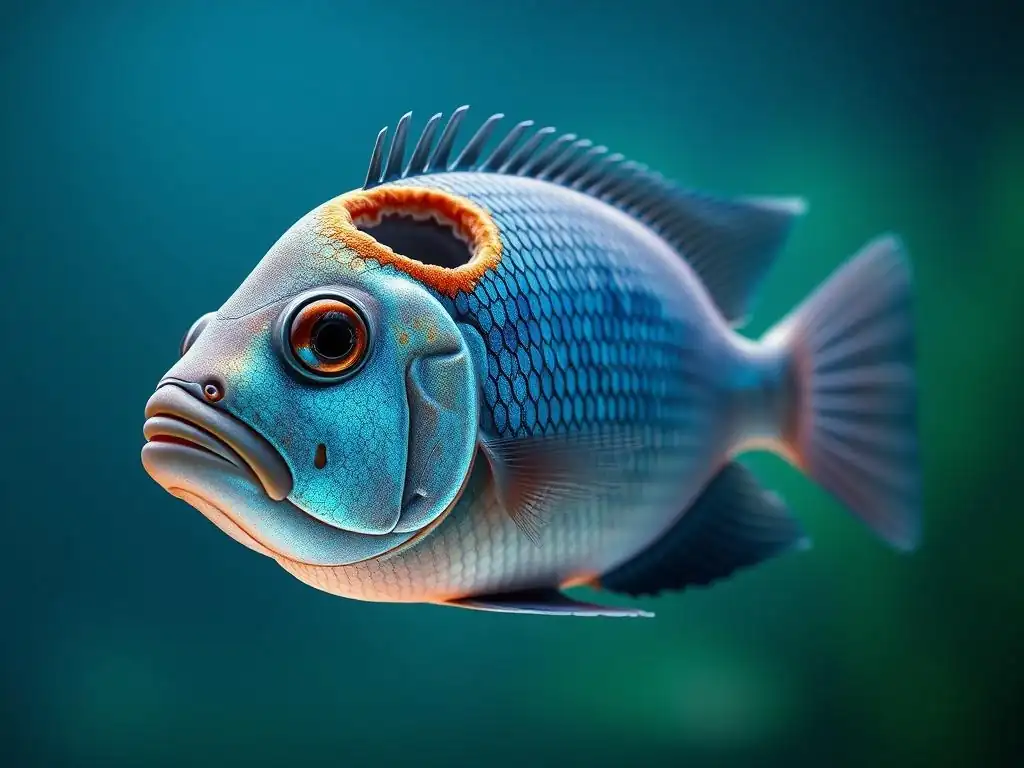
Recognizing the early signs of Hole-in-the-Head disease in Ram cichlids and Apistogramma is critical for prompt and effective treatment. Initially, you might observe subtle changes such as small, shallow depressions or indentations on the fish's head, particularly around the eyes, nostrils, or along the forehead. These pits may appear slightly discolored, often a pale white or grayish hue, and might be difficult to spot without close inspection, especially on the patterned skin of some Apistogramma species.
Beyond the visible lesions, early behavioral changes can also signal the onset of HITH. Affected fish may exhibit a decrease in appetite, showing less interest in food or even refusing to eat entirely. They might become more reclusive, hiding more frequently than usual, and their coloration may appear duller than their healthy counterparts. Catching these initial symptoms in your "Ram apisto holeinhead" allows for intervention before the disease becomes severe.
Progression of HITH: From Small Pits to Larger Lesions
As Hole-in-the-Head disease progresses, the initial small pits on the head and lateral line of Ram cichlids and Apistogramma will enlarge and deepen. These lesions can evolve into significant craters, sometimes appearing as if chunks of flesh have been eroded away. In severe cases, the lesions may expose underlying bone or even brain tissue, particularly around the eye sockets or on the top of the head, making the fish appear disfigured.
Furthermore, a white, stringy, or mucoid discharge may be observed emanating from these open sores. This discharge is often indicative of bacterial or fungal secondary infections taking hold in the compromised tissue. The progression of "Ram apisto holeinhead" lesions also frequently extends beyond the head, manifesting as similar erosions along the lateral line pores on the body, sometimes resembling a series of small, broken dashes rather than a continuous line.
Behavioral Changes in Fish with Hole-in-the-Head Disease
Hole-in-the-Head disease not only manifests physically but also significantly impacts the behavior of affected Ram cichlids and Apistogramma. As the disease advances, fish often become increasingly lethargic, spending more time at the bottom of the tank, in hiding spots, or simply listlessly hovering. Their normal active swimming and exploratory behaviors diminish significantly, and they may appear generally unwell.
A profound loss of appetite is a common and concerning behavioral symptom. Fish with HITH may completely refuse food, leading to rapid weight loss and emaciation. Their fins may become clamped close to their bodies, and their breathing might become rapid or labored. These behavioral shifts, coupled with the characteristic lesions, paint a clear picture of a "Ram apisto holeinhead" suffering from a serious and debilitating condition.
Secondary Infections Associated with HITH
The open lesions characteristic of Hole-in-the-Head disease create prime entry points for secondary bacterial and fungal infections, significantly complicating the condition and increasing mortality risk. As the fish's immune system is already compromised by the underlying causes of HITH and the parasitic burden of Hexamita, these opportunistic pathogens can quickly take hold. Bacterial infections might manifest as reddened edges around the lesions, fin rot, or cloudy eyes.
Fungal infections, on the other hand, often appear as white, cotton-like growths on or around the eroded areas, further damaging tissue and potentially spreading to other parts of the fish's body. These secondary infections can lead to a rapid decline in the fish's health, making treatment more challenging as multiple pathogens need to be addressed. Successfully treating "Ram apisto holeinhead" often requires not just addressing the primary causes but also managing these dangerous secondary complications.
Treating Hole-in-the-Head Disease in Rams & Apistos: Effective Cures
Improving Water Quality: The First Step in HITH Treatment
Improving water quality is the absolute cornerstone of treating Hole-in-the-Head disease in Ram cichlids and Apistogramma. The immediate action should be a significant water change, typically 50% or more, to drastically reduce accumulated nitrates, ammonia, and nitrites. Following this initial large change, daily or every-other-day smaller water changes (e.g., 25%) should be implemented for at least a week, or until water parameters stabilize at optimal levels.
Regular and thorough water testing is crucial during this period. For "Ram apisto holeinhead" recovery, target nitrate levels of 10 ppm or less, with zero ammonia and nitrite. Ensuring stable pH and temperature within their preferred ranges (e.g., pH 6.0-7.0, 78-82°F) is also vital, as fluctuations cause additional stress. Clean, consistent water reduces the overall stress burden on the fish, allowing its immune system to begin the healing process.
Dietary Adjustments: Providing Essential Nutrients
Alongside water quality improvements, dietary adjustments are paramount for treating Hole-in-the-Head disease in Rams & Apistos. A high-quality, varied, and nutritious diet helps to reverse any underlying vitamin and mineral deficiencies that contributed to the condition. Offer a mix of premium frozen foods such as bloodworms, mysis shrimp, and brine shrimp, as these are highly palatable and rich in protein and essential fatty acids.
Consider supplementing their diet with vitamin-enriched foods or by soaking existing foods in a liquid vitamin supplement (e.g., Vita-Chem or Garlic Guard) before feeding. Vitamin C, in particular, is crucial for immune function and tissue repair. For "Ram apisto holeinhead" that may be refusing food, offering live foods like small worms or daphnia can sometimes stimulate an appetite. A robust nutritional intake directly supports the fish's ability to heal and fight off infections.
Medication Options for Treating Hexamita
Medication is often necessary to combat the Hexamita parasite, which frequently accompanies or exacerbates Hole-in-the-Head disease. While water quality and nutrition address the underlying stressors, an antiparasitic treatment targets the internal flagellates directly. It's important to choose medications specifically effective against internal protozoan parasites.
Metronidazole Treatment for HITH
Metronidazole is the most widely recognized and effective medication for treating Hexamita infections in fish, making it a primary choice for "Ram apisto holeinhead" cases. It can be administered in two main ways: by medicating the water or by soaking food. Medicated food is generally preferred as it delivers the drug directly to the parasite's location in the gut, minimizing impact on beneficial bacteria in the filter.
A common dosage for water treatment is approximately 250-500 mg per 10 gallons of water, administered daily for 3-5 days, with a significant water change (e.g., 25-50%) between doses. For medicated food, a typical approach is to mix 1/4 teaspoon of Metronidazole powder with a tablespoon of frozen food (like thawed bloodworms) and a binder (like gelatin or a few drops of tank water), feeding this mixture for 7-10 days. Always follow the specific instructions on the product packaging, as concentrations can vary.
Other Anti-Parasitic Medications for HITH
While Metronidazole is the gold standard for Hexamita, other anti-parasitic medications may be considered in certain circumstances or as part of a broader treatment strategy. Products containing active ingredients like Dimetridazole or Ronidazole are also effective against flagellates, though they may be less commonly available for aquarium use. Some broad-spectrum parasite treatments might list Hexamita on their target list.
However, it is crucial to carefully research any alternative medication and understand its specific efficacy against Hexamita and its potential side effects on delicate "Ram apisto holeinhead" species. Always prioritize medicated food delivery when possible, as it is generally safer and more targeted than broadcast dosing the entire tank. Consulting with an aquatic veterinarian or experienced aquarist can provide guidance on specific product choices and their appropriate use.
Quarantine and Isolation: Preventing the Spread of HITH
Quarantine and isolation are vital steps when treating Hole-in-the-Head disease, especially in a community tank setting. Moving the affected Ram cichlid or Apistogramma to a dedicated hospital tank offers several benefits. Firstly, it allows for more precise medication dosing and easier monitoring of the sick fish without affecting other tank inhabitants or the main tank's beneficial bacteria.
Secondly, isolating the fish reduces stress from tank mates and provides a quiet, stable environment conducive to healing. While HITH itself isn't highly contagious in the direct sense, the underlying stressors and opportunistic parasites can affect other fish in the main tank if conditions are not addressed. A hospital tank for "Ram apisto holeinhead" should be set up with a heater, sponge filter, and minimal decor to facilitate observation and cleaning.
Preventing Hole-in-the-Head Disease in Your Aquarium
Maintaining Optimal Water Parameters for Ram Cichlids and Apistogramma
Maintaining optimal and stable water parameters is the cornerstone of preventing Hole-in-the-Head disease in Ram cichlids and Apistogramma. These dwarf cichlids thrive in specific conditions: a soft to moderately hard water (GH 3-8 dGH), slightly acidic to neutral pH (6.0-7.5), and a consistent temperature range of 78-82°F (25.5-27.8°C). Regular testing with reliable liquid test kits for ammonia, nitrite, and nitrate is indispensable.
Ammonia and nitrite must always be at zero. Nitrates should be kept below 10-20 ppm through consistent water changes. For example, weekly 25-30% water changes are often sufficient for a moderately stocked "Ram apisto holeinhead" tank. Stability in these parameters is just as important as the target values themselves, as sudden fluctuations are a major source of stress for these sensitive fish.
Providing a Balanced and Nutritious Diet
A balanced and nutritious diet is crucial for preventing Hole-in-the-Head disease by bolstering the fish's immune system and preventing nutritional deficiencies. Relying solely on a single type of food, particularly low-quality flakes, is a common pitfall. Instead, offer a diverse diet that includes high-quality flakes or pellets specifically formulated for cichlids, supplemented with a variety of frozen and live foods.
Frozen bloodworms, brine shrimp, daphnia, and mysis shrimp are excellent choices that mimic their natural diet and provide essential proteins, fats, and vitamins. Incorporating vitamin-enriched foods or using a liquid vitamin supplement (e.g., once or twice a week) can further ensure that your "Ram apisto holeinhead" receive all necessary nutrients, especially Vitamin C and D, which are vital for overall health and disease resistance.
Minimizing Stress in Your Aquarium Environment
Minimizing stress is a key preventative measure against Hole-in-the-Head disease in Ram cichlids and Apistogramma. Stress weakens the immune system, making fish susceptible to various ailments. Ensure your aquarium is appropriately sized for the number and type of fish housed; for example, a pair of German Blue Rams typically requires a minimum of 20 gallons, while some Apistogramma species can thrive in 10-15 gallons for a pair.
Provide ample hiding spots and visual breaks using live plants, driftwood, and caves, which allow these somewhat shy dwarf cichlids to feel secure and escape perceived threats. Choose tank mates carefully, avoiding overly aggressive or boisterous species that might harass your "Ram apisto holeinhead." Stable lighting, a quiet environment, and avoiding sudden movements around the tank also contribute significantly to a low-stress habitat.
Regular Water Changes and Tank Maintenance
Regular water changes and consistent tank maintenance are fundamental practices for preventing Hole-in-the-Head disease. Weekly partial water changes (e.g., 25-30% for a typical "Ram apisto holeinhead" tank) are essential for diluting nitrates and replenishing essential minerals. Using a gravel vacuum during water changes helps remove accumulated detritus and uneaten food, which can otherwise decompose and negatively impact water quality.
Beyond water changes, routine filter maintenance is also critical. Sponge filters should be gently rinsed in old tank water every few weeks to prevent clogging, while mechanical filter media should be cleaned or replaced as needed. Avoid overfeeding, as excess food quickly pollutes the water. These consistent habits ensure a clean, stable, and healthy environment that significantly reduces the risk of HITH developing in your Ram cichlids and Apistogramma.
Hole-in-the-Head in Rams vs. Apistos: Are There Differences?
Species-Specific Susceptibility to HITH
While both Ram cichlids and Apistogramma species are susceptible to Hole-in-the-Head disease, there can be subtle differences in their perceived susceptibility, often linked to their specific care requirements and typical origins. German Blue Rams ( Mikrogeophagus ramirezi ) are frequently cited as being particularly delicate and prone to HITH, largely due to their specific water parameter needs (very soft, acidic water, high temperatures) and often intensive breeding practices that can result in weaker immune systems. Bolivian Rams ( Mikrogeophagus altispinosus ), being hardier, may show less frequent HITH cases.
Apistogramma species, while also requiring specific water conditions, vary widely in their robustness. Wild-caught Apistogramma might be more susceptible to stress-induced HITH upon introduction to an aquarium due to changes in environment and diet, whereas tank-bred varieties may be more adaptable. Ultimately, the underlying causes—poor water quality, nutritional deficiencies, and stress—affect all "Ram apisto holeinhead" species, but the threshold at which these factors trigger HITH can differ slightly based on the individual species' resilience and genetic background.
Treatment Considerations for Different Dwarf Cichlid Species
The core treatment protocol for Hole-in-the-Head disease remains largely consistent across both Ram cichlids and Apistogramma: meticulous water quality improvement, dietary enrichment, and targeted anti-parasitic medication (like Metronidazole). However, slight considerations might be made based on the specific species' size and general sensitivity. For instance, smaller Apistogramma species might be more sensitive to sudden, drastic changes in water parameters during treatment, necessitating slightly more gradual adjustments.
Similarly, while Metronidazole dosages are generally standard, individual fish size and overall health can influence how well they tolerate medication. It is always prudent to start with the lower end of the recommended dosage range for very small or highly stressed "Ram apisto holeinhead" and observe their reaction. Regardless of species, close monitoring of the fish's response to treatment and consistent environmental stability are paramount to a successful recovery.
Advanced Hole-in-the-Head Disease: When Treatment is Challenging
Recognizing Untreatable Cases of HITH
Recognizing untreatable cases of Hole-in-the-Head disease is a difficult but necessary aspect of responsible fish keeping. When lesions are extremely large, deep, and cover extensive areas of the head or lateral line, penetrating through muscle and potentially exposing brain or bone tissue, the damage may be irreversible. At this stage, the fish is likely experiencing severe pain and discomfort, and its internal organs may also be compromised from prolonged malnutrition and infection.
If a "Ram apisto holeinhead" shows no signs of improvement after several weeks of diligent treatment—including optimal water quality, a high-quality diet, and consistent medication—and continues to exhibit severe emaciation, extreme lethargy, or complete refusal to eat, the prognosis is very poor. In such advanced stages, the fish's quality of life is severely diminished, and recovery is highly improbable.
Humane Euthanasia as a Last Resort
When a Ram cichlid or Apistogramma is suffering from advanced, untreatable Hole-in-the-Head disease, humane euthanasia becomes a compassionate last resort. Prolonging suffering in a fish with no chance of recovery is not ethical. The goal of euthanasia is to end the fish's life quickly and painlessly, minimizing stress and discomfort.
One widely accepted method for humane euthanasia involves using clove oil, an anesthetic that can be purchased at pharmacies. A small amount (e.g., 10-20 drops per liter of water) is mixed into a separate container of tank water until fully dispersed, and the fish is then gently placed into this solution. The clove oil first sedates the fish, then, at higher concentrations, causes it to pass away peacefully. This method ensures that the "Ram apisto holeinhead" experiences no further pain or distress.
Preventing HITH Recurrence: Long-Term Aquarium Management
Establishing a Stable and Healthy Aquarium Ecosystem
Preventing the recurrence of Hole-in-the-Head disease in Ram cichlids and Apistogramma hinges on establishing and maintaining a stable and healthy aquarium ecosystem. This begins with proper tank cycling to ensure a robust biological filter capable of processing ammonia and nitrites. Once cycled, avoid overstocking, as this increases the bioload and makes it difficult to maintain pristine water quality. A general guideline is to allow at least 5 gallons per "Ram apisto holeinhead," though more is always better for long-term health.
Furthermore, ensure the tank is appropriately sized for the species and provides adequate space and territories to minimize aggression and stress. A well-scaped tank with plenty of plants, driftwood, and caves creates a secure environment, allowing fish to exhibit natural behaviors and reducing stress, which is a key factor in HITH susceptibility. A stable environment promotes robust immune systems in your dwarf cichlids.
Continuous Monitoring of Water Quality and Fish Behavior
Continuous monitoring of water quality and fish behavior is essential for preventing HITH recurrence. Regular water testing, ideally weekly or bi-weekly, for ammonia, nitrite, and nitrate levels allows you to catch any deviations from optimal parameters before they become problematic. Keeping nitrates consistently below 10-20 ppm is crucial for the long-term health of "Ram apisto holeinhead" species.
Beyond testing, daily observation of your fish is paramount. Look for subtle changes in appetite, activity level, coloration, and any nascent physical abnormalities. Early detection of stress or minor symptoms allows for prompt intervention, such as increased water changes or dietary adjustments, before a full-blown HITH outbreak occurs. This proactive approach is far more effective than reacting to advanced stages of the disease.
Selecting Healthy Ram Cichlids and Apistogramma from the Start
Preventing Hole-in-the-Head disease recurrence also involves making informed choices when acquiring new fish. Always select healthy Ram cichlids and Apistogramma from reputable sources. Before purchasing, carefully inspect prospective fish for any visible signs of illness, such as clamped fins, dull coloration, emaciation, labored breathing, or any existing lesions or pitting on the head or body. Active, alert fish with clear eyes and full fins are generally good indicators of health.
Inquire about the store's water parameters and feeding regimen for the fish you intend to buy. Upon bringing new "Ram apisto holeinhead" home, always quarantine them in a separate tank for at least 2-4 weeks. This practice prevents the introduction of diseases, including Hexamita or other pathogens that could trigger HITH in your established aquarium. Quarantine also allows new fish to acclimate to your water conditions in a low-stress environment.
Frequently Asked Questions
How common is Hole-in-the-Head disease in Ram and Apisto cichlids?
Hole-in-the-Head disease, also known as lateral line erosion, is relatively common in Ram and Apisto cichlids, especially when they are stressed or kept in poor water conditions. Prevention is always better than cure.
What are the primary causes of Hole-in-the-Head disease in these fish?
The causes are multifactorial, but often involve poor water quality, nutritional deficiencies (especially vitamin D and calcium), and parasitic infections, such as Hexamita.
What are the early signs of Hole-in-the-Head disease I should watch for?
Look for small pits or lesions around the head and lateral line, loss of appetite, and changes in behavior such as lethargy or hiding more than usual.
Can Hole-in-the-Head disease be cured in Rams and Apistos?
Yes, Hole-in-the-Head disease can be cured, especially if caught early. Treatment typically involves improving water quality, providing a nutrient-rich diet, and using medication for parasitic infections if necessary.
How can I prevent Hole-in-the-Head disease in my Ram and Apisto aquarium?
Maintain excellent water quality through regular water changes, provide a balanced diet with essential vitamins and minerals, and avoid overstocking your aquarium to reduce stress on your fish.
Final Reflection: Healing the Scars of the Aquarium
The prevalence of Hole-in-the-Head Disease, or HITH, in aquarium fish like Rams and Apistos, as we've explored, is a stark reminder that even in our carefully curated aquatic worlds, vulnerability persists. Understanding the causes and cures is not just about treating sick fish; it's about fostering a deeper responsibility towards the delicate ecosystems we create within our tanks.
The ongoing battle against HITH underscores the importance of preventative care and informed decision-making in fishkeeping. This journey into understanding HITH has personally reinforced the profound connection between water quality, nutrition, and the overall well-being of these fascinating creatures. The cure for anything is salt water: sweat, tears, or the sea.
- Isak Dinesen. While Dinesen's quote speaks metaphorically, its essence resonates here; maintaining a healthy aquatic environment, much like the ocean, is often the key to preventing and treating ailments like HITH.
Now, armed with knowledge about Ram apisto holeinhead, I invite you to reflect on your own role in the aquarium ecosystem. Consider how you can proactively improve water quality, provide optimal nutrition, and observe your fish with a more discerning eye. Let's commit to creating thriving aquatic environments where these beautiful creatures can flourish, free from the debilitating effects of HITH.
Unleash a Vibrant Aquarium: Take the Next Step!
Thank you for diving into the world of Hole-in-the-Head Disease and learning how to protect your Rams and Apistos. Now it's time to put that knowledge into action and ensure the health and happiness of your aquatic companions.
Here are a few ways you can make a difference today:
- Immediately assess your fish for early signs of HITH and start implementing preventive water quality measures. Don't wait for symptoms to worsen!
- Share this article with fellow aquarium enthusiasts! Help others learn how to identify and combat this disease.
- Consider documenting your experiences treating HITH in your fish and sharing your insights in online forums or communities to help build a collective knowledge base.
Ready to create a thriving, disease-free environment for your fish? What specific water quality adjustment will you prioritize this week to prevent HITH from taking hold in your aquarium?