
Why Do Kissing Gouramis "Kiss" Each Other and Objects?

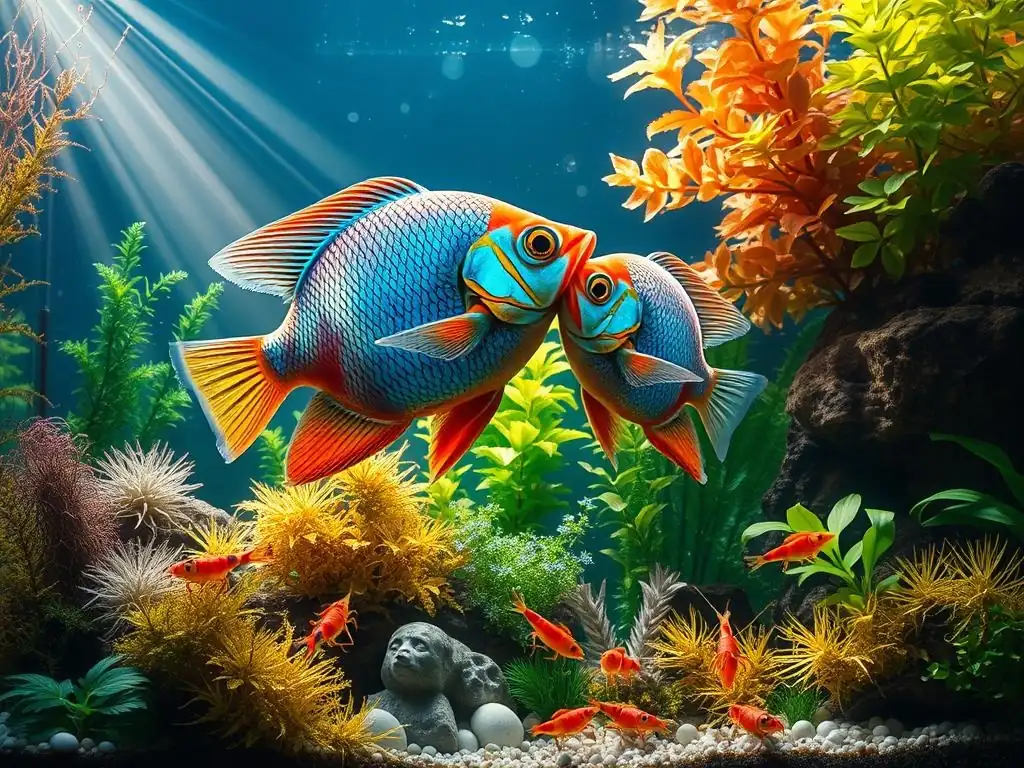
Welcome to Aquarium Mastery! Ever wondered why your Kissing Gouramis are constantly locking lips? It's more than just affection! Dive into our comprehensive guide to understand the fascinating and sometimes surprising reasons behind Kissing Gourami courtship behavior. Get ready to unlock the secrets behind those puckered faces and create a thriving environment for your freshwater friends. Let's explore!
- Why Do Kissing Gouramis "Kiss" Each Other and Objects? Understanding Kissing Gourami Social Behavior
- Understanding the "Kiss": Deciphering Kissing Gourami Behavior
- Kissing Gourami Social Hierarchy: Establishing Dominance and Territory
- Aggression and Territory: The Other Side of the "Kiss"
- Factors Influencing Kissing Gourami Behavior
- Distinguishing Social Interaction: A Guide for Aquarium Keepers
- Creating a Harmonious Environment for Kissing Gouramis
- Addressing Excessive Kissing: Troubleshooting Behavioral Issues
- The Fascinating World of Kissing Gourami Behavior: A Summary
-
Frequently Asked Questions
- Why do Kissing Gouramis "kiss" each other and objects?
- Is "kissing" always a sign of Kissing Gourami courtship behavior?
- What other behaviors accompany Kissing Gourami courtship besides "kissing"?
- How can I tell if my Kissing Gouramis are fighting or courting?
- What should I do if my Kissing Gouramis are constantly "kissing" aggressively?
- Final Reflection: Unveiling the Secrets of the Kiss
- Dive Deeper into the Gourami Galaxy!
Understanding the "Kiss": Deciphering Kissing Gourami Behavior
The Misconception of Affection: Are Kissing Gouramis Really Kissing?
The iconic "kissing" behavior of Helostoma temminckii, commonly known as the Kissing Gourami, is perhaps one of the most widely misinterpreted actions in the aquarium hobby. Many aquarists, captivated by the seemingly affectionate mouth-to-mouth contact, believe these fish are exhibiting a form of courtship or even friendship. However, this charming facade belies a far more primal instinct: the "kiss" is primarily a display of dominance and territoriality, not an act of tenderness or Kissing gourami courtship behavior.
While the sight of two Kissing Gouramis pressing their large, fleshy lips together might evoke images of romance, it is crucial to understand that this behavior is rarely, if ever, indicative of courtship or bonding. These fish are known to be semi-aggressive, particularly towards their own species, and their mouth-to-mouth encounters are often a direct challenge, a test of strength, or a means to establish social hierarchy within the tank. This understanding is fundamental for any aquarist aiming to provide an appropriate and stress-free environment for these fascinating fish.
Beyond Romance: Exploring the Functions of Mouth-to-Mouth Contact in Helostoma temminckii
The true functions of the Kissing Gourami's mouth-to-mouth contact are rooted in their natural social dynamics. Primarily, these "kisses" serve as dominance displays, where two individuals push against each other, attempting to assert their superiority. This can be a prolonged test of strength, with fish pushing for several seconds or even minutes, until one concedes and retreats. This behavior is a non-lethal way for Helostoma temminckii to establish a pecking order, reducing the need for more injurious physical confrontations.
Beyond dominance, these interactions also play a significant role in territorial disputes. Kissing Gouramis are known to defend specific areas within the aquarium, such as a favored hiding spot, a patch of plants, or even a section of the substrate. When another gourami encroaches upon this defended space, a "kissing" bout can ensue as a warning or an assertion of ownership.
Less frequently, this mouth action can also be related to feeding, as gouramis use their specialized mouths to graze on algae and detritus from surfaces, and they may "kiss" an object or even another fish if it perceives a food source there. However, the most prevalent and observable form of "kissing" gourami behavior remains tied to social hierarchy and territory.
Identifying Potential Rivals: How Kissing Gouramis Assess Each Other
Kissing Gouramis are highly observant of their conspecifics, constantly assessing potential rivals within their social group. This assessment often begins visually, with fish observing each other's size, overall health, and fin condition. Larger, healthier fish with intact fins are typically perceived as stronger contenders. They may also engage in initial posturing, such as flaring their fins or displaying their lateral line, to appear larger and more intimidating before direct physical contact.
While less studied for Helostoma temminckii specifically in this context, many fish species also use chemical signals, or pheromones, to communicate social status and reproductive readiness. Although direct evidence for pheromonal assessment in Kissing Gourami dominance displays is limited, their keen senses likely play a role in their overall evaluation of tank mates. The initial assessment phase is crucial, as it often determines whether a direct confrontation, such as a "kissing" bout, will occur, or if one fish will simply back down.
The "Kiss" as a Dominance Display: Asserting Status and Rank
The "kiss" is a quintessential dominance display in Kissing Gouramis. When two individuals engage in mouth-to-mouth contact, they are essentially testing each other's strength and resolve. They lock jaws and push, often with considerable force, attempting to overpower the other. The fish that can sustain the push longer, or successfully push the other backward, is typically the one asserting its dominance. This can be a surprisingly lengthy process, with some "kissing" bouts lasting for several minutes.
Through repeated "kissing" encounters, a clear pecking order is established within a group of Kissing Gouramis. The dominant fish will typically be larger and more robust, having won previous encounters. This hierarchy helps to minimize constant conflict, as subordinate fish learn to avoid challenging the dominant individual directly. While seemingly aggressive, this ritualized Kissing gourami behavior helps maintain social order and reduces the frequency of more damaging fights.
Submissive Behavior: Signals of De-escalation
Once a dominance bout has concluded, or even during its early stages, the subordinate Kissing Gourami will display clear signals of submission to de-escalate the conflict. The most common submissive behaviors include rapidly retreating or darting away from the dominant fish, often seeking cover behind plants or decorations. They may also turn their body sideways to present a smaller profile, or clamp their fins close to their body, which is a common sign of stress and submission in many fish species.
In some cases, a submissive fish might also exhibit muted coloration, appearing paler than its dominant counterpart, indicating stress and a lack of assertive intent. These signals are crucial for preventing further aggression from the dominant fish. By clearly communicating their lack of challenge, the subordinate fish can often avoid prolonged harassment and potential injury. Recognizing these signs of submission is vital for aquarists to assess the social dynamics within their tank and intervene if a fish is consistently being bullied.
Aggression and Territory: The Other Side of the "Kiss"
Male-to-Male Aggression: Establishing Dominance Through "Kissing"
Male Kissing Gouramis are particularly prone to engaging in aggressive "kissing" bouts, especially when housed together in tanks that are too small or lack sufficient hiding spots. These encounters are intense and serve to establish a clear pecking order among the males. The "kissing" can be prolonged, with both fish pushing against each other with considerable force, testing their physical strength and endurance.
While often non-lethal, these prolonged male-to-male dominance displays can lead to injuries such as torn fins, damaged mouths, or severe stress for the losing fish. In some instances, a highly aggressive male might relentlessly pursue a subordinate, preventing it from feeding or resting, leading to chronic stress, weakened immune systems, and even death. This highlights why understanding the true nature of Kissing gourami courtship behavior (or lack thereof) is critical for preventing harm.
Territorial Disputes: Defending Resources and Space
Beyond direct male-to-male aggression, Kissing Gouramis also use "kissing" to defend their territory. In an aquarium, a gourami may claim a specific area, such as a favored plant cluster, a rock formation, or even a section of the tank's substrate, as its personal territory. When another gourami or even a different species of fish encroaches upon this defended space, the resident gourami may initiate a "kissing" bout as a warning or a direct challenge.
The intensity of these territorial disputes can vary. A brief "kiss" might be enough to send an intruder away, while a more determined trespasser could lead to a prolonged pushing match. These disputes are not always about establishing dominance over another fish, but rather about defending valuable resources like food sources, shelter, or prime resting spots. For example, a gourami might repeatedly "kiss" another fish that attempts to feed from an area it considers its own.
Recognizing Aggressive Kissing: Identifying Warning Signs
Distinguishing between normal social interaction and genuinely aggressive "kissing" is crucial for the health of your Kissing Gouramis. Aggressive "kissing" is typically prolonged, forceful, and often followed by chasing, nipping, or body slamming. Unlike brief, exploratory mouth-to-mouth contact, aggressive bouts show clear intent to dominate or drive away another fish.
Other warning signs of aggression include constant fin flaring, rapid darting, chasing other tank mates relentlessly, visible fin damage (such as torn fins or splits), or actual injuries to the mouth area from forceful pushing. A fish that is consistently on the receiving end of aggressive "kisses" will often show signs of chronic stress, such as clamped fins, faded coloration, hiding excessively, or refusing to eat. Observing these behaviors early allows aquarists to intervene before serious harm occurs.
Factors Influencing Kissing Gourami Behavior
The physical environment of an aquarium profoundly influences Kissing Gourami social behavior, particularly the frequency and intensity of their "kissing" interactions. Inadequate tank size is a primary contributor to heightened aggression. A single adult Kissing Gourami requires a minimum of 30 gallons, but for a pair, a tank of at least 55 gallons is recommended to provide sufficient personal space.
When multiple gouramis are housed in tanks that are too small, their territories inevitably overlap, leading to constant conflict and aggressive "kissing" bouts. For instance, attempting to keep three or more Kissing Gouramis in a 55-gallon tank often results in one or two fish becoming severely stressed or injured due to relentless bullying by a dominant individual.
Overcrowding, not just with other gouramis but with any large or active fish, exacerbates stress and competition for resources, leading to an increase in aggressive displays. A crowded tank reduces the available swimming space and the number of suitable hiding spots, forcing fish into closer proximity and increasing the likelihood of territorial disputes. Providing ample space allows each gourami to establish a distinct territory, minimizing direct confrontations and promoting more natural, less aggressive social dynamics.
Water Quality and Health: How Stress Affects Behavior
Poor water quality is a significant stressor for all aquarium fish, and Kissing Gouramis are no exception. Elevated levels of ammonia, nitrite, or nitrate, along with incorrect pH or temperature, can severely compromise a fish's immune system and overall well-being. Stressed fish are far more susceptible to disease and are also more prone to exhibiting abnormal or aggressive behaviors, including excessive "kissing" as a manifestation of their discomfort. For example, a tank with persistently high nitrates (above 20 ppm) can lead to chronic stress, making otherwise docile gouramis more irritable and confrontational.
Maintaining pristine water parameters is essential for reducing stress and promoting healthy, natural behavior. Ideal conditions for Kissing Gouramis include a stable temperature between 72-82°F (22-28°C), a pH range of 6.0-8.0, and ammonia and nitrite levels at 0 ppm, with nitrates kept below 20 ppm through regular partial water changes (e.g., 25% weekly) and effective filtration. A healthy fish is a happier fish, less likely to engage in unnecessary aggression or stress-induced "kissing" gourami courtship behavior.
The diet and nutritional status of Kissing Gouramis also play a crucial role in their social dynamics and the frequency of "kissing" interactions. An insufficient or imbalanced diet can lead to nutritional deficiencies, weakening the fish and making them more susceptible to stress and illness. More directly, inadequate feeding can lead to intense food competition, where fish engage in "kissing" bouts over limited resources. If food is not distributed widely or if there isn't enough for all individuals, the dominant fish will often use their size and strength, including "kissing" displays, to hoard food, leaving less for subordinates.
A well-rounded and varied diet is crucial for reducing food-related aggression. Kissing Gouramis are omnivores and thrive on a diet that includes high-quality flake or pellet food supplemented with live or frozen foods such as bloodworms, brine shrimp, and daphnia. They also appreciate vegetable matter, like blanched spinach or spirulina flakes, as they are natural algae grazers. Ensuring that all fish receive adequate nutrition by feeding small amounts multiple times a day or distributing food widely across the tank can significantly reduce competitive "kissing" gourami behavior and promote overall harmony.
Observing Subtle Cues: Body Language and Fin Displays
Understanding Kissing Gourami behavior requires keen observation of their subtle cues beyond just the "kissing" itself. Before, during, or after a mouth-to-mouth encounter, their body language and fin displays offer significant insights into their intentions. For instance, flaring of the dorsal and anal fins, accompanied by a stiffened body posture, often indicates a challenge or an assertion of dominance. A fish approaching another with its head slightly down and fins flared is likely preparing for a confrontation.
Conversely, a fish that rapidly retreats, clamps its fins close to its body, or pales in coloration after an interaction is likely exhibiting submissive behavior and attempting to de-escalate the situation. Observing these detailed responses, such as a dominant gourami chasing a submissive one after a "kissing" bout, can clearly differentiate between a simple exploratory touch and an aggressive dominance display. These nuanced observations are key to interpreting the true nature of their social interactions.
Monitoring Frequency and Intensity: Tracking Kissing Gourami Interactions
The frequency and intensity of "kissing" bouts are critical indicators of the social health of your Kissing Gouramis. Occasional, brief mouth-to-mouth contact, lasting only a few seconds, might be normal exploratory behavior or a mild assertion of presence. However, if "kissing" occurs multiple times a day, is prolonged (lasting more than 10-15 seconds), or involves forceful pushing and body slamming, it strongly suggests underlying issues such as high aggression, territorial disputes, or severe stress.
Keeping a mental or even physical log of these interactions can be highly beneficial. Note which fish are involved, the duration of the "kiss," and any subsequent behaviors like chasing or hiding. For example, if a specific 5-inch male is consistently "kissing" and chasing a 4-inch female for minutes at a time, it's a clear sign of bullying. Consistent monitoring allows aquarists to identify problematic patterns early, preventing chronic stress or injury to the less dominant fish, and helps understand true Kissing gourami courtship behavior (or lack thereof).
Interpreting "Kissing" Scenarios: Food Competition, Territory Defense, and Dominance Challenges
Interpreting the specific context of "kissing" scenarios provides valuable clues about the underlying motivations. There are typically three main scenarios:
- Food Competition: If "kissing" occurs primarily during feeding times, especially if food is scarce or unevenly distributed, it's likely a form of competition. For instance, if two gouramis are "kissing" over a sinking pellet, it's a clear sign they are competing for that food source. Ensuring sufficient food for all individuals and distributing it widely can mitigate this.
- Territory Defense: "Kissing" that occurs when one fish enters a specific area claimed by another, such as a favorite cave, a dense plant thicket, or a particular corner of the tank, indicates territorial defense. If a 6-inch gourami consistently "kisses" any fish that approaches its preferred resting spot under a piece of driftwood, it's defending its territory. Providing ample hiding spots and breaking line of sight can help reduce these disputes.
- Dominance Challenges: This is the most common and often most intense form of "kissing," where two similarly sized or rivaling fish engage in prolonged pushing matches to establish or re-establish their rank within the social hierarchy. These bouts are not tied to a specific resource but rather to overall social standing. For example, two new male Kissing Gouramis introduced to a 75-gallon tank might engage in daily "kissing" challenges for the first week until a clear dominant individual emerges. Understanding these distinctions allows for targeted interventions to create a more harmonious environment.
Creating a Harmonious Environment for Kissing Gouramis
Tank Setup and Decorations: Minimizing Aggression
A well-designed tank setup is paramount for minimizing aggression and promoting natural Kissing gourami behavior. Since these fish are territorial, providing ample hiding spots and visual breaks is crucial. Dense planting, such as large Amazon Swords ( Echinodorus amazonicus) or Vallisneria, along with strategically placed driftwood and rocks, can create multiple territories and break lines of sight. This allows less dominant fish to escape from the view of more aggressive tank mates and retreat when feeling stressed.
Consider arranging decorations to create distinct zones within the aquarium. For example, placing a large piece of driftwood in the center can divide the tank into two or more visual territories. This reduces direct confrontations and allows each gourami to claim its own space, minimizing the need for constant "kissing" bouts to assert dominance. A tank with a cluttered, uniform layout offers no escape routes, leading to increased stress and aggression.
Choosing Compatible Tank Mates: Avoiding Conflict
Choosing appropriate tank mates is vital for a peaceful Kissing Gourami aquarium. While Kissing Gouramis can be semi-aggressive, particularly towards their own kind, they can coexist with other species if chosen carefully. Avoid keeping multiple Kissing Gouramis together in tanks smaller than 100 gallons, especially if they are of similar size, as this often leads to relentless territorial disputes and bullying. If you must keep a pair, ensure a tank size of at least 55 gallons with abundant hiding spots.
Ideal tank mates are peaceful, similarly sized fish that occupy different levels of the water column. Good choices include larger, peaceful schooling fish like Giant Danios ( Devario aequipinnatus), various larger Rasboras, or even some larger Tetras like Congo Tetras ( Phenacogrammus interruptus). Bottom dwellers such as Corydoras catfish ( Corydoras spp.) or Bristlenose Plecos ( Ancistrus cirrhosus) are also generally compatible, as they do not compete for the same space or resources as the gouramis. Avoid small, delicate fish that could be bullied, or fin-nipping species that might stress the gouramis.
Providing Adequate Space: Reducing Stress and Promoting Natural Behaviors
The importance of adequate tank space for Kissing Gouramis cannot be overstated. While a single gourami can technically survive in a 30-gallon tank, a minimum of 55 gallons is recommended for optimal well-being and to reduce stress-induced aggression. For a pair, a 75-gallon tank provides significantly more space for each fish to establish a territory without constant encroachment. If considering a group of three or more, a tank of 100 gallons or larger is essential, providing enough room for multiple territories and reducing the likelihood of a single dominant fish relentlessly bullying others.
Sufficient space directly reduces the perceived competition for resources and territories, allowing Kissing Gouramis to exhibit more natural behaviors rather than constant defensive or aggressive displays. A larger tank footprint (length and width) is often more beneficial than height, as it provides more horizontal swimming space and surface area for establishing territories. Providing ample room allows these fish to thrive, minimizing the stress that often leads to excessive or harmful "kissing" gourami behavior.
Addressing Excessive Kissing: Troubleshooting Behavioral Issues
Identifying the Root Cause: Stress, Overcrowding, or Aggression?
When Kissing Gouramis exhibit excessive or overly aggressive "kissing," the first step is to systematically identify the root cause. Begin by checking your water parameters immediately: high ammonia, nitrite, or nitrate levels, or sudden fluctuations in pH or temperature, are major stressors. Next, assess your tank's size relative to the number and size of your gouramis and other tank mates. Overcrowding is a common culprit.
Observe the specific interactions: is the aggression targeted at one particular fish, or is it a general increase in hostility? Consider any recent changes to the tank, such as new fish introductions, redecorating, or changes in feeding routines, as these can trigger behavioral shifts. For instance, if aggressive "kissing" began shortly after adding a new, similarly-sized gourami, the cause is likely a dominance challenge.
Implementing Corrective Measures: Improving Water Quality, Reducing Density
Once the root cause is identified, implement corrective measures promptly. If water quality is an issue, perform immediate partial water changes (e.g., 25-50% depending on parameter severity) and increase the frequency of regular maintenance (e.g., daily water testing, more frequent filter cleaning). If overcrowding is the problem, the most effective solution is to rehome some fish or upgrade to a larger tank.
For example, moving a bullied gourami to a separate, appropriately sized tank can save its life. Enhancing the tank environment by adding more hiding spots (plants, driftwood, rocks) and rearranging decorations to break lines of sight can also significantly reduce stress and territorial disputes, even in adequately sized tanks. This can often de-escalate aggressive Kissing gourami courtship behavior that is actually dominance related.
When to Seek Professional Help: Consulting a Veterinarian or Aquarium Expert
While many behavioral issues can be resolved with careful observation and environmental adjustments, there are times when professional help is warranted. If your Kissing Gouramis are severely injured (e.g., deep wounds, persistent torn mouths, eye damage) from aggressive encounters, or if a fish is exhibiting prolonged severe stress (e.g., constant hiding, refusal to eat, rapid breathing, clamped fins) despite your interventions, consult an aquatic veterinarian.
They can diagnose underlying health issues that might be contributing to stress or provide treatment for injuries. For complex behavioral problems that persist despite all troubleshooting attempts, an experienced aquarium expert or a local fish store specializing in advanced aquatics can offer tailored advice, helping you navigate challenging social dynamics and ensure the long-term well-being of your Helostoma temminckii.
The Fascinating World of Kissing Gourami Behavior: A Summary
The social interactions of Helostoma temminckii, the Kissing Gourami, are far more intricate and nuanced than their common name suggests. The seemingly affectionate "kissing" behavior is a prime example of this complexity, serving not as a romantic gesture or Kissing gourami courtship behavior, but primarily as a ritualized display of dominance and a means of establishing territorial boundaries.
These interactions are a crucial aspect of their natural social structure, allowing them to establish a pecking order and minimize more injurious forms of aggression within their group. Understanding these underlying motivations is essential for any aquarist hoping to truly appreciate and properly care for these unique fish.
Their social dynamics are influenced by a myriad of factors, including tank size, fish density, water quality, and diet. A well-maintained and appropriately sized environment can significantly mitigate aggressive tendencies, allowing these fish to exhibit more natural and less stressful behaviors. The subtlety of their body language, from fin flaring to changes in coloration, further underscores the depth of their communication, providing aquarists with valuable clues about their well-being and social standing.
Appreciating the Nuances of Kissing Gourami "Kisses"
For the dedicated aquarist, learning to appreciate the nuances of Kissing Gourami "kisses" transforms a simple observation into a meaningful insight into their world. Differentiating between a brief, exploratory mouth-to-mouth contact and a prolonged, forceful dominance display is key to interpreting their social cues. An occasional, short "kiss" might simply be a mild assertion of presence, while frequent, intense pushing matches indicate a clear need for intervention, whether it's adjusting tank parameters, adding more hiding spots, or re-evaluating tank mates.
By closely monitoring the frequency, intensity, and context of these interactions – noting whether they occur during feeding, over specific territories, or as general dominance challenges – aquarists can proactively address potential issues. This deeper understanding allows for the creation of a more harmonious and stress-free environment, where these captivating fish can thrive, demonstrating their full range of natural behaviors without undue aggression.
Further Research and Resources: Expanding Your Knowledge of Kissing Gourami Care
The journey of understanding Kissing Gourami behavior is ongoing, and there is always more to learn. For those seeking to deepen their knowledge, exploring scientific literature on fish ethology, particularly studies on anabantoid behavior, can provide fascinating insights into the evolutionary roots of their actions. Reputable online aquarium forums and dedicated books on gourami species offer practical advice and shared experiences from fellow aquarists.
Engaging with the aquarium community and continuously educating oneself on best practices for Helostoma temminckii care will empower you to become a more informed and effective aquarist. By staying curious and committed to providing optimal conditions, you can ensure your Kissing Gouramis live healthy, enriched lives, allowing you to witness the true complexity and beauty of their unique social interactions.
Frequently Asked Questions
Why do Kissing Gouramis "kiss" each other and objects?
Kissing gouramis engage in "kissing" primarily for establishing dominance or fighting for territory. It's not always a sign of affection. They also use it to graze algae off surfaces.
Is "kissing" always a sign of Kissing Gourami courtship behavior?
No, while it can be a component, "kissing" is more commonly observed as a form of aggression or territorial dispute. True courtship also involves other behaviors.
What other behaviors accompany Kissing Gourami courtship besides "kissing"?
During courtship, you might observe color changes, fin displays, and chasing as the male attempts to attract the female. Actual spawning involves the release of eggs and sperm.
How can I tell if my Kissing Gouramis are fighting or courting?
Observe the intensity and duration of the "kissing." Fighting usually involves more aggressive lip-locking and repeated chasing. Courtship is less intense and more fluid.
What should I do if my Kissing Gouramis are constantly "kissing" aggressively?
Ensure your tank is large enough and provides ample hiding places. This can reduce territorial disputes and lessen the frequency of aggressive "kissing". Separating the fish might be necessary in severe cases.
Final Reflection: Unveiling the Secrets of the Kiss
The exploration of Kissing Gourami "kissing" behavior, as we've seen, is far more complex than a simple display of affection. This seemingly innocent act is, in reality, a window into the intricate world of dominance, territory, and, yes, even courtship within the fish kingdom. Understanding these nuances allows us to appreciate the depth of animal behavior and the subtle strategies employed for survival and reproduction, a lesson that resonates even in our own complex social interactions.
This journey into the lives of Kissing Gouramis has underscored the importance of observation and challenging assumptions. It reminds us that appearances can be deceiving, and that a deeper understanding requires careful study and a willingness to look beyond the surface. The real voyage of discovery consists not in seeking new landscapes, but in having new eyes.
- Marcel Proust. This quote perfectly encapsulates the shift in perspective we gain when we delve into the "kissing" behavior of these fascinating fish.
Now, consider the lessons learned from the Kissing Gourami. How often do we misinterpret the actions of others based on superficial observations? How can we apply a more nuanced understanding to our own relationships and interactions? Let us strive to look beyond the surface, to understand the underlying motivations, and to appreciate the complexity of behavior, both in the animal kingdom and in our own lives. Embrace the curiosity that drove this exploration and continue to seek deeper meaning in the world around you.
Dive Deeper into the Gourami Galaxy!
Thank you for exploring the fascinating world of Kissing Gouramis with us! We hope you've gained a newfound appreciation for their unique behaviors. Now, let's translate that curiosity into action.
- Share Your Observations! If you have Kissing Gouramis, take 10 minutes today to really observe their interactions. Can you identify any patterns?
- Delve into related species. Research other gourami types to broaden your understanding of the Osphronemidae family and their intriguing social dynamics.
- Create a "Gourami Guide" for other hobbyists! Share your knowledge and help others appreciate these fantastic fish.
What surprising behaviour have you witnessed from your Kissing Gouramis, or what behaviour do you hope to witness?