
PlantProofing Your Tank: Keeping Buenos Aires Tetras with Live Greenery

Welcome to Aquarium Mastery!
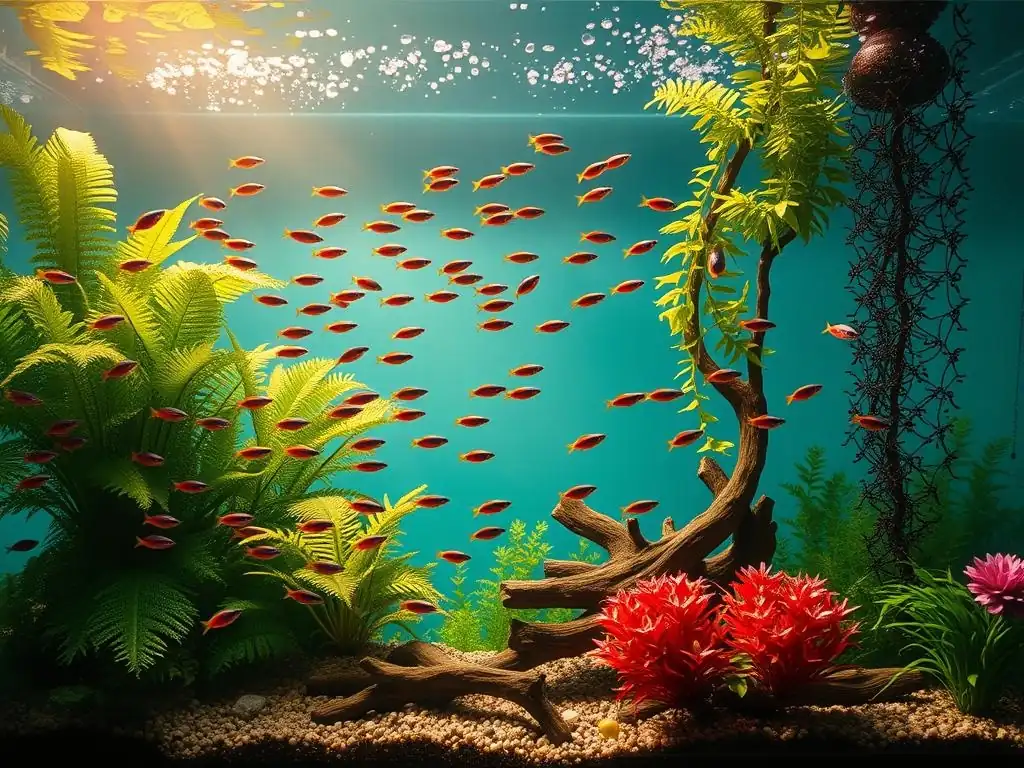
Ever wondered if you could have lush, vibrant plants in your aquarium, even with those famously nibbly Buenos Aires tetras? It's a question many aquarists face. Dive in to discover plant-proofing secrets and create a thriving, beautiful ecosystem where your Buenos Aires tetras and your plants can coexist in harmony. Ready to unlock the secrets to Buenos Aires tetra care and a stunning planted tank? Let's get started!
- Understanding Buenos Aires Tetras and Their Plant Preferences
- Selecting the Right Plants for a Buenos Aires Tetra Tank
- Planting Strategies for a Buenos Aires Tetra Aquarium
- Optimizing Water Parameters for Plant and Buenos Aires Tetra Health
- Feeding Strategies to Minimize Plant Consumption
- Maintaining a Plant-Proofed Buenos Aires Tetra Tank
- Conclusion: Enjoying a Beautiful Planted Tank with Buenos Aires Tetras
-
Frequently Asked Questions
- What are the main challenges of keeping Buenos Aires Tetras with live plants?
- What types of plants are most likely to survive with Buenos Aires Tetras?
- How can I prevent Buenos Aires Tetras from destroying my aquarium plants?
- What are some alternative food sources I can offer to distract Buenos Aires Tetras from plants?
- How do water parameters affect both Buenos Aires Tetras and live plants in the same aquarium?
- Final Reflection: Cultivating Harmony in the Aquarium
- Cultivate Your Tetra Paradise!
Understanding Buenos Aires Tetras and Their Plant Preferences
Buenos Aires Tetra Natural Habitat and Its Implications for Plant Selection
The Buenos Aires tetra (scientific name: Hyphessobrycon anisitsi) originates from the Rio de la Plata basin in South America, spanning parts of Argentina, Paraguay, Uruguay, and Brazil. In their natural environment, these active fish inhabit a variety of freshwater systems, including clear streams, slow-moving rivers, and floodplains. While these habitats do contain aquatic vegetation, it's often not as densely matted or as diverse as a heavily planted aquarium. Their natural diet in these environments is opportunistic, consisting of small insects, crustaceans, worms, and some plant detritus or soft plant matter.
This omnivorous and adaptable nature directly impacts their behavior in an aquarium. Unlike strict herbivores, Buenos Aires tetras don't rely solely on plants for survival, but their natural inclination to forage means they will sample and consume available plant material. Understanding this background is crucial for successful Buenos Aires tetra care, as it guides the selection of plants that can withstand their exploratory grazing tendencies. Plants with tougher leaves or those that grow rapidly are often more successful in emulating a resilient natural environment.
Why Buenos Aires Tetras Might Eat Your Aquarium Plants
Buenos Aires tetras are known for their lively disposition and, unfortunately, their tendency to nibble on aquarium plants. This behavior stems primarily from their omnivorous diet and their natural curiosity. If their primary diet lacks sufficient vegetable matter, or if they are underfed, they will often supplement their meals by grazing on available live plants. This is not necessarily malicious, but rather an instinctual foraging behavior.
Beyond dietary needs, boredom or stress can also contribute to plant nipping. An under-stimulated Buenos Aires tetra might explore its surroundings, including the plants, out of curiosity or a lack of other engaging activities. Furthermore, certain plant textures or the bright green color of new growth can simply be too tempting for these active fish. Therefore, comprehensive Buenos Aires tetra care involves not only providing a balanced diet but also creating an engaging and appropriate environment.
Identifying Plant-Eating Behavior in Buenos Aires Tetras
Identifying plant-eating behavior in your Buenos Aires tetras requires careful observation and differentiation from other common plant issues. The most obvious signs are physical damage to the leaves: look for ragged edges, small holes, or missing sections, particularly on softer or newer plant growth. This damage will typically appear inconsistent, as if bitten or torn, rather than the uniform yellowing or browning associated with nutrient deficiencies or the distinct trails left by snails.
Observing the fish directly is the most definitive method. Watch your school of Buenos Aires tetras, especially during feeding times or when they are most active. You might see them darting towards plants and nipping at the leaves. While a single Buenos Aires tetra might cause minimal damage, a school of six to eight individuals or more can collectively defoliate a tank quite rapidly. Consistent monitoring of both your fish's behavior and your plants' health is an essential part of effective Buenos Aires tetra care in a planted tank.
Selecting the Right Plants for a Buenos Aires Tetra Tank
Hardy Plants Resistant to Buenos Aires Tetra Grazing
When planning a planted tank for Buenos Aires tetras, prioritizing hardy, robust plants is paramount. These plants are generally less palatable or physically tougher, making them less susceptible to the tetras' grazing habits. While "resistant" does not mean "immune," these species significantly increase your chances of maintaining a lush, green aquarium. This strategy is a cornerstone of successful Buenos Aires tetra care in a planted setup.
Java Fern: A Beginner-Friendly Option for Tetra Tanks
Java Fern ( Microsorum pteropus) is an excellent choice for a Buenos Aires tetra tank due to its tough, leathery leaves, which are generally unappealing to most plant-eating fish. This plant does not require planting in the substrate; instead, it thrives when attached to driftwood or rocks using fishing line or super glue until its rhizome roots grip the surface. It is incredibly versatile, tolerating a wide range of water parameters (pH 6.0-7.5, temperature 68-82°F or 20-28°C) and low to moderate lighting.
Java Fern propagates easily by dividing its rhizome or by adventitious plantlets that form on older leaves. Its low maintenance requirements and resilience make it a fantastic option for beginners and experienced aquarists alike. It provides excellent cover and visual structure within the aquarium, contributing positively to the overall environment and long-term Buenos Aires tetra care.
Anubias: Slow-Growing and Unpalatable to Most Fish
Anubias species, such as Anubias barteri and Anubias nana, are another top recommendation for tanks housing Buenos Aires tetras. Their leaves are exceptionally thick, tough, and waxy, making them highly unpalatable to most aquarium inhabitants, including even the most persistent plant nibblers. Like Java Fern, Anubias is a rhizome plant that should never have its rhizome buried in the substrate, as this can lead to rot. It should be tied or glued to hardscape elements.
Anubias plants are known for their slow growth rate, often producing only one new leaf every few weeks under optimal conditions. This slow growth means they won't quickly replace nibbled leaves, but their inherent toughness largely prevents significant damage. They thrive in low to moderate light and a broad temperature range (72-82°F or 22-28°C), making them a reliable and aesthetically pleasing addition to any Buenos Aires tetra setup, enhancing both the tank's appearance and the effectiveness of Buenos Aires tetra care.
Vallisneria: Fast-Growing and Tolerant of Buenos Aires Tetras
Vallisneria, commonly known as "Val" (e.g., Jungle Val, Corkscrew Val), is a grass-like plant that can be a good option despite having softer leaves than Anubias or Java Fern. Its primary advantage is its incredibly fast growth rate and prolific propagation via runners. While Buenos Aires tetras might occasionally nibble on its leaves, the plant's rapid growth often allows it to quickly outpace any consumption, maintaining a full and lush appearance.
Vallisneria prefers moderate lighting and a temperature range of 68-82°F (20-28°C), with a pH between 6.0-8.0. It should be planted in the substrate, where its extensive root system can anchor firmly and absorb nutrients. Planting it densely at the back or sides of the tank creates an effective green wall, providing cover for the fish and a natural feel to the aquarium, which is beneficial for overall Buenos Aires tetra care.
Fast-Growing Plants to Outpace Buenos Aires Tetra Consumption
Beyond hardy plants, incorporating very fast-growing species can be a successful strategy. These plants might still be grazed upon, but their rapid rate of growth ensures they can quickly regenerate lost biomass, keeping the tank looking full and vibrant. This approach provides a continuous supply of plant matter, potentially diverting the tetras' attention from slower-growing or more valued plants.
Hornwort: A Nutrient Sponge for a Healthy Aquarium
Hornwort ( Ceratophyllum demersum) is an incredibly fast-growing stem plant that can be either floated freely or loosely anchored in the substrate. Its unique needle-like leaves are less appealing to many fish, and its explosive growth rate makes it highly resilient to grazing. It is also an excellent nutrient absorber, helping to reduce nitrates and improve overall water quality, which directly benefits the health of your Buenos Aires tetras.
Hornwort tolerates a wide range of conditions, from cool to tropical temperatures (60-85°F or 15-29°C) and varying pH levels (6.0-8.0). Its dense growth provides ample hiding spots for fry or smaller fish and can help provide shade for light-sensitive species. While it can sometimes grow so fast that it requires frequent trimming, its ability to quickly rebound from any nibbling makes it a strong candidate for a Buenos Aires tetra tank, supporting comprehensive Buenos Aires tetra care.
Water Wisteria: Beautiful and Relatively Fast-Growing
Water Wisteria ( Hygrophila difformis) is a versatile and attractive stem plant known for its lacy, dissected leaves and relatively fast growth rate under good conditions. While its leaves are softer than those of Anubias, its quick propagation often allows it to thrive even with some occasional nibbling from Buenos Aires tetras. It prefers moderate to high lighting and temperatures between 72-82°F (22-28°C), with a pH range of 6.0-7.5.
Water Wisteria can be planted directly into the substrate, where it will develop a robust root system, or it can be allowed to float. Regular trimming encourages bushier growth and helps manage its size. Its lush appearance and ability to quickly fill out a tank make it a popular choice for aquarists aiming to balance aesthetics with the practicalities of Buenos Aires tetra care in a planted environment.
Plants to Avoid with Buenos Aires Tetras
To prevent disappointment and wasted effort, it is advisable to avoid certain types of plants when keeping Buenos Aires tetras. Generally, any plant with very soft, delicate leaves, or those that are particularly palatable to omnivorous fish, are at high risk of being decimated. Examples include many species of Cabomba, Limnophila, and some softer varieties of Cryptocoryne. These plants are often too tempting and lack the resilience to withstand consistent grazing.
Specific examples of plants often targeted include Amazon Swords ( Echinodorus species), particularly their tender new growth, and most delicate stem plants like Rotala species. While some aquarists might have limited success with these, the risk of significant damage is high. Prioritizing the hardier and faster-growing options discussed above will lead to a much more successful and visually appealing planted aquarium when focusing on effective Buenos Aires tetra care.
Planting Strategies for a Buenos Aires Tetra Aquarium
Creating a Dense Planted Environment to Reduce Plant Damage
A highly effective strategy for deterring Buenos Aires tetras from severely damaging your plants is to create a densely planted environment. This "buffet" approach means that if there are hundreds or even thousands of leaves available, the occasional nibbling on a few individual leaves will be less noticeable and cause less overall harm to the plant population. A heavily planted tank also provides a more natural and stimulating environment for the fish, offering ample hiding spots and breaking up line of sight, which can reduce stress and potentially curb boredom-induced grazing.
Beyond simply diluting the impact of grazing, a dense planted setup offers numerous benefits for the entire aquarium ecosystem. Robust plant growth significantly improves water quality by absorbing excess nitrates, which are byproducts of fish waste and uneaten food. This leads to healthier water parameters, directly benefiting the well-being and longevity of your Buenos Aires tetras. Furthermore, the sheer volume of plant matter contributes to a more stable environment, providing a sense of security for the fish and enhancing overall Buenos Aires tetra care.
Using Plant Protectors: Physical Barriers Against Grazing
For particularly valuable or vulnerable plants, or during the initial establishment phase of new plantings, physical barriers can offer a temporary solution to protect them from Buenos Aires tetra grazing. This can involve strategically placing rocks, driftwood, or even small, clear plastic mesh around the base of a plant. The goal is to make it difficult for the fish to access the roots or the tender lower stems and leaves.
While plant protectors can be effective for isolated specimens, they are generally not a practical long-term solution for an entire tank. They can detract from the natural aesthetic and require careful placement to avoid restricting plant growth. This method is best utilized for newly introduced plants that need time to establish a strong root system or for highly prized individual plants. The primary approach for successful Buenos Aires tetra care in a planted tank should still focus on selecting appropriate plant species and maintaining a balanced diet for the fish.
Planting Techniques to Encourage Root Development
Strong, well-established root systems are crucial for plants to thrive and recover from any potential grazing by Buenos Aires tetras. When planting stem plants, ensure that at least 1-2 inches (2.5-5 cm) of the stem are buried firmly in the substrate. For rhizome plants like Anubias and Java Fern, it is vital that the rhizome itself remains exposed to the water column, but their fine roots should be allowed to attach to hardscape or penetrate the substrate if possible.
Using a nutrient-rich substrate or supplementing inert substrates with root tabs is highly beneficial for heavy root feeders. Healthy roots enable plants to efficiently absorb essential nutrients from the substrate, promoting vigorous growth and increasing their resilience. Plants with robust growth are better equipped to withstand minor damage and will contribute significantly to the overall health and stability of the aquarium, which is a key component of effective Buenos Aires tetra care.
Optimizing Water Parameters for Plant and Buenos Aires Tetra Health
Water Chemistry for Plant Growth and Tetra Wellbeing
Maintaining appropriate and stable water chemistry is fundamental for both thriving aquatic plants and healthy Buenos Aires tetras. For most of the recommended plant species and the tetras themselves, a slightly acidic to neutral pH range of 6.5 to 7.5 is ideal. General hardness (GH) between 5-15 dGH and carbonate hardness (KH) between 3-8 dKH are also generally suitable. Consistency in these parameters is often more critical than hitting exact target numbers. Regular monitoring with a reliable test kit, ideally weekly, is essential.
Beyond pH and hardness, ensuring the availability of essential nutrients is vital for plant growth. While plants absorb some nutrients from fish waste, additional supplementation is often required for a lush planted tank. These include macronutrients like nitrogen, phosphorus, and potassium (NPK), and micronutrients such as iron, manganese, and boron. Regular water changes help replenish some trace elements, but specific liquid fertilizers or root tabs may be necessary. Optimal water chemistry directly supports vigorous plant growth, which in turn helps mitigate the impact of Buenos Aires tetra grazing, enhancing overall Buenos Aires tetra care.
Lighting Requirements for a Thriving Planted Tank
Adequate lighting is a critical factor for successful plant growth. Most of the hardy and fast-growing plants recommended for a Buenos Aires tetra tank thrive under moderate to high light intensity. Aim for a consistent photoperiod of 8-10 hours per day. Insufficient light will stunt plant growth, making them weaker and more susceptible to damage, while excessive light can lead to unwanted algae blooms.
Full-spectrum LED lights are highly recommended as they provide the necessary wavelengths for efficient photosynthesis. Many modern LED fixtures offer adjustable intensity and programmable timers, allowing you to fine-tune the lighting to your specific plant needs and the tank's environment. Proper lighting ensures that your plants can grow vigorously, enabling them to outpace any potential consumption by Buenos Aires tetras and contributing significantly to the overall success of your planted aquarium and Buenos Aires tetra care.
Fertilization Strategies for a Lush Aquarium
To ensure your plants grow robustly enough to withstand potential grazing by Buenos Aires tetras, a comprehensive fertilization strategy is often necessary. Plants require a balanced supply of both macronutrients (Nitrogen, Phosphorus, Potassium - NPK) and micronutrients (Iron, Manganese, Boron, etc.). Liquid fertilizers are excellent for plants that absorb nutrients primarily through their leaves and the water column, such as stem plants and floating species. These are typically dosed daily or weekly based on the product instructions and plant density.
For heavy root feeders that draw nutrients from the substrate, such as Vallisneria and Cryptocorynes (if you choose to attempt them), root tabs are highly effective. These small tablets are inserted into the substrate near the base of the plants, providing a slow and steady release of nutrients directly to the root zone. A nutrient-rich aquasoil substrate can also provide a foundational layer of nutrients. Tailoring your fertilization regimen to the specific needs of your plants is crucial for promoting the vigorous growth that can outcompete Buenos Aires tetra grazing, thereby enhancing comprehensive Buenos Aires tetra care.
Feeding Strategies to Minimize Plant Consumption
Providing a Balanced Diet for Buenos Aires Tetras
A well-rounded and nutritious diet is perhaps the most crucial element in minimizing plant consumption by Buenos Aires tetras. As omnivores, they require a varied diet that includes both protein and vegetable matter. High-quality flake or pellet food should form the staple of their diet, but it is essential to ensure these foods contain a good proportion of plant-based ingredients, such as spirulina. Feeding small amounts two to three times a day is generally recommended to keep them satisfied and reduce their urge to forage on plants.
Beyond dry foods, supplementing their diet with live or frozen foods is highly beneficial. Offer bloodworms, brine shrimp, and daphnia regularly to provide essential proteins and fats. Crucially, blanched vegetables like zucchini, cucumber, or lettuce should also be offered a few times a week. A diverse and rich diet ensures that all their nutritional needs are met, significantly reducing their motivation to graze on your prized aquatic plants, which is a key component of effective Buenos Aires tetra care.
Supplemental Feeding Options to Deter Plant-Eating
To actively deter Buenos Aires tetras from eating your live plants, providing readily available and appealing supplemental food options is highly effective. Instead of forcing them to graze on your aquarium plants, offer blanched vegetables directly. A small piece of blanched zucchini, cucumber slice, or a leaf of romaine lettuce can be weighted down and left in the tank for a few hours. These provide an easy and palatable source of greens that satisfies their natural inclination to consume plant matter.
Additionally, introducing algae wafers or vegetable-based sinking pellets can be very successful. Many fish, including Buenos Aires tetras, will readily consume these. Offering these specialized foods a few times a week ensures they receive sufficient vegetable content without resorting to damaging your live plants. This proactive feeding strategy is a cornerstone of managing Buenos Aires tetra care in a planted aquarium.
The Role of Algae in the Buenos Aires Tetra Diet
In their natural habitats, Buenos Aires tetras, like many omnivorous fish, will graze on naturally occurring algae and biofilm. In an aquarium setting, a minimal amount of soft green algae growth on decor or the tank glass can provide a supplemental food source that they might occasionally nibble on. This can be seen as a natural behavior and, in small quantities, is generally harmless.
However, it is important not to rely on algae as a primary food source for Buenos Aires tetras. Excessive algae growth typically indicates an imbalance in the tank's lighting or nutrient levels, which can be detrimental to both your plants and fish. While they might pick at some types of algae, their comprehensive nutritional needs are best met through a varied and balanced diet of high-quality flakes, pellets, and supplemental vegetable and protein foods. Prioritizing proper feeding over relying on incidental algae consumption is paramount for optimal Buenos Aires tetra care.
Maintaining a Plant-Proofed Buenos Aires Tetra Tank
Regular Water Changes and Plant Maintenance
Consistent maintenance is critical for the long-term success of a plant-proofed Buenos Aires tetra tank. Regular water changes are essential for maintaining pristine water quality, which benefits both your fish and your plants. Perform weekly or bi-weekly water changes of 25-30% to remove accumulated nitrates, replenish trace elements, and dilute any potential build-up of organic waste. When vacuuming the gravel, be careful around plant roots to avoid disturbing them.
Simultaneously, regular plant maintenance is vital. Trim fast-growing plants like Vallisneria and Hornwort to prevent them from overgrowing and shading out slower-growing species. Promptly remove any decaying or yellowing leaves, as these can decompose and foul the water. Periodically, gently wipe down plant leaves to remove any accumulated detritus or algae, ensuring optimal light absorption for photosynthesis. This diligent approach to tank upkeep is a cornerstone of effective Buenos Aires tetra care.
Monitoring Buenos Aires Tetra Behavior and Plant Health
Continuous observation is key to a thriving planted tank with Buenos Aires tetras. Regularly observe your Buenos Aires tetras for any changes in their behavior, such as increased lethargy, clamped fins, or unusual swimming patterns, which could indicate stress or illness. Pay close attention to whether they are still actively nipping at plants despite your feeding and plant selection efforts.
Concurrently, inspect your plants daily for new signs of damage, stunted growth, or nutrient deficiencies. Look for new holes, ragged edges, or discolored leaves. If you notice a resurgence of plant damage, it might indicate that their diet needs further adjustment or that your plants are not growing vigorously enough. Successful Buenos Aires tetra care in a planted environment is an ongoing process of observation, evaluation, and adaptation based on the specific dynamics of your aquarium.
Troubleshooting Common Plant and Fish Issues
Even with the best planning, issues can arise in a planted Buenos Aires tetra tank. If your plants are yellowing, check for nutrient deficiencies: yellowing new leaves often point to an iron deficiency, while yellowing older leaves can indicate a lack of nitrates. If plants are melting, investigate sudden changes in water parameters, insufficient lighting, or inadequate CO2 (if supplementing). Algae blooms are typically a sign of excess nutrients (nitrates/phosphates) or too much light. Addressing these imbalances promptly is crucial.
For fish-related issues, if your Buenos Aires tetras exhibit signs of stress or illness (e.g., erratic swimming, loss of appetite), the first step is always to test your water parameters. If plant eating becomes excessive despite a balanced diet, consider increasing the frequency of vegetable offerings or adding more unpalatable, robust plants. Maintaining a stable, clean, and well-fed environment is the best preventative measure for both plant and fish health, which is the ultimate goal of effective Buenos Aires tetra care.
Conclusion: Enjoying a Beautiful Planted Tank with Buenos Aires Tetras
Frequently Asked Questions
What are the main challenges of keeping Buenos Aires Tetras with live plants?
The main challenge is their tendency to eat and uproot most aquatic plants. You need to select hardy and unpalatable species or provide them with ample alternative food sources. They can be quite destructive otherwise.
What types of plants are most likely to survive with Buenos Aires Tetras?
Plants like Anubias, Java Fern, and Java Moss are generally more resistant to being eaten due to their tough leaves and bitter taste. Consider attaching them to rocks or driftwood to prevent them from being uprooted.
How can I prevent Buenos Aires Tetras from destroying my aquarium plants?
Provide a varied diet rich in vegetable matter to reduce their hunger for plants. Also, ensure the tank is sufficiently planted to spread out the damage and offer hiding places.
What are some alternative food sources I can offer to distract Buenos Aires Tetras from plants?
Offer them blanched vegetables like zucchini or spinach, as well as algae wafers. These provide essential nutrients and can satisfy their herbivorous tendencies.
How do water parameters affect both Buenos Aires Tetras and live plants in the same aquarium?
Maintaining stable and appropriate water parameters is crucial. Buenos Aires Tetras prefer slightly acidic to neutral water. Ensure the plants receive adequate lighting and nutrients, while avoiding excessive algae growth.
Final Reflection: Cultivating Harmony in the Aquarium
The journey of creating a thriving planted aquarium with Buenos Aires Tetras, as we've explored, is more than just aesthetics; it's about fostering a balanced ecosystem within the confines of glass. Understanding their needs and compatibility with live plants is crucial, not just for the fish's well-being but also for the overall health and beauty of the aquatic environment we create. This understanding is particularly relevant today, as more aquarists seek sustainable and enriching ways to keep fish, moving away from sterile environments towards vibrant, naturalistic displays.
This exploration into Buenos Aires Tetra care and plant compatibility has profoundly influenced how I view aquascaping. It's not simply about arranging plants and fish; it's about understanding the intricate relationships within the ecosystem and striving to create a harmonious balance. The joy of watching these active tetras thrive amidst lush greenery is a testament to the power of thoughtful planning and informed care. As the renowned aquascaper Takashi Amano once said: To know Mother Nature, is to love her smallest creations.
This quote encapsulates the essence of planted aquariums – a deep appreciation for the delicate balance of life within our tanks.
Now, I invite you to reflect on your own aquascaping journey. Consider how you can incorporate these principles of plant-proofing your tank into your own practice. Embrace the challenge of creating a vibrant, balanced ecosystem for your Buenos Aires Tetras, and witness the transformative power of a well-planted aquarium. Let's all strive to be responsible stewards of these miniature aquatic worlds, ensuring the health and happiness of our finned companions for years to come.
Cultivate Your Tetra Paradise!
Thanks for exploring the lush world of planted aquariums and Buenos Aires Tetras! We hope this article has inspired you to create a vibrant ecosystem for your finned friends. Ready to take the plunge and transform your aquarium?
Here's how to get started:
- Prioritize a sturdy plant selection that Buenos Aires Tetras won't devour, starting with Anubias or Java Ferns.
- Explore the world of aquarium aquascaping, post your tank's progress online and share your experiences and learn from a fishkeeping community.
- Research local aquarium clubs or online forums: what uncommon plant has proven surprisingly resilient in a tank with nippy tetras?
What's one plant species you're most excited to introduce into your Buenos Aires Tetra tank, and why do you think it will thrive?