
Setting Up the Ideal Corydoras Breeding Tank Environment

Welcome to Aquarium Mastery!
Ever wondered how to unlock the secrets of successful Corydoras breeding? You've come to the right place! Dive into our comprehensive guide on Corydoras breeding tank setup and discover the key elements to creating the perfect environment for these adorable bottom-dwellers to thrive and reproduce. Ready to transform your aquarium into a Corydoras paradise? Let's get started!
- Setting Up a Panda Corydoras Breeding Tank Environment
- Understanding Panda Corydoras Breeding: An Introduction
-
Essential Components of a Panda Corydoras Breeding Tank Setup
- Tank Size and Dimensions for Panda Corydoras Breeding Success
- Substrate Selection: What's Best for Panda Corydoras Fry?
- Filtration Systems for a Panda Corydoras Breeding Tank: Maintaining Water Quality
- Lighting Considerations for Panda Corydoras Breeding
- Heating and Temperature Control: Crucial for Spawning
- Water Parameters for Successful Panda Corydoras Breeding
- Preparing Your Panda Corydoras for Breeding
- Setting Up the Breeding Tank: A Step-by-Step Guide
- Spawning Triggers and Techniques for Panda Corydoras
- Caring for Panda Corydoras Eggs and Fry
- Common Problems and Solutions in Panda Corydoras Breeding
- Maintaining a Healthy Panda Corydoras Breeding Tank: Long-Term Care
- Conclusion: Mastering Panda Corydoras Breeding
- Frequently Asked Questions
- Final Reflection: Nurturing New Life
- Ignite Your Corydoras Breeding Journey!
Setting Up a Panda Corydoras Breeding Tank Environment
Understanding Panda Corydoras Breeding: An Introduction
Why Breed Panda Corydoras? The Joys of Raising Cory Fry
Breeding Panda Corydoras offers a uniquely rewarding experience for aquarists, combining the satisfaction of nurturing new life with the opportunity to observe fascinating natural behaviors. These charming bottom-dwellers, typically reaching about 2 inches (5 cm) in length, are relatively easy to breed compared to many other freshwater species, making them an excellent choice for aspiring fish breeders. The sight of tiny, bustling Cory fry exploring their environment is a joy that few other aquarium activities can match.
Beyond personal enjoyment, successfully raising Panda Corydoras fry can contribute positively to the aquarium hobby. There's often a demand for healthy, locally bred fish, allowing hobbyists to trade with local fish stores or fellow enthusiasts. This not only offsets some of the costs associated with the hobby but also ensures that new stock is well-adapted to local water conditions, promoting healthier fish populations within the community. A well-executed Corydoras breeding tank setup can become a vibrant, active mini-ecosystem.
Panda Corydoras Breeding Behaviors: A Quick Overview
Panda Corydoras exhibit distinct breeding behaviors that are captivating to observe. When ready to spawn, the male and female engage in what is famously known as the "T-position." In this unique embrace, the male positions himself perpendicular to the female's head, fertilizing the eggs that she holds cupped between her pelvic fins. This ritual is a clear indicator that spawning is imminent or underway.
After fertilization, the female will typically deposit her adhesive eggs on various surfaces throughout the tank. Common egg-laying sites include aquarium glass, broad plant leaves (like Anubias or Java Fern), or even specific spawning mops provided in the Corydoras breeding tank setup. A single spawning event can yield anywhere from 10 to 30 eggs, though larger, well-conditioned females can sometimes lay upwards of 100 eggs over several hours or even days. These eggs are usually translucent with a slight amber tint, providing a clear view of their development.
Essential Components of a Panda Corydoras Breeding Tank Setup
Tank Size and Dimensions for Panda Corydoras Breeding Success
Establishing a dedicated breeding tank is paramount for successful Panda Corydoras propagation. While a 10-gallon (approximately 38 liters) tank can suffice for a small breeding group of 3-5 individuals, a 15-gallon (57 liters) or even a 20-gallon (76 liters) long tank is often recommended for larger groups (e.g., 6-8 fish). This provides ample swimming space and reduces stress, which can significantly improve spawning rates. The larger footprint of a "long" tank style is particularly beneficial, as it offers more bottom surface area for these active bottom-dwellers and their future fry.
When considering the tank dimensions for your Corydoras breeding tank setup, prioritize horizontal space over vertical height. Panda Corydoras spend most of their time foraging and interacting on the substrate. A tank with a larger length and width but shallower depth is more suitable than a tall, narrow tank of the same volume. For instance, a 20-gallon long tank (typically 30 inches long, 12 inches wide, 12 inches high) provides more usable bottom area than a standard 20-gallon high tank.
Substrate Selection: What's Best for Panda Corydoras Fry?
The choice of substrate is a critical element in any Corydoras breeding tank setup, especially when considering the delicate nature of both adult Corydoras and their fry. Fine-grained sand, such as pool filter sand or specialized aquarium sand, is overwhelmingly recommended. This type of substrate is smooth and gentle on the Corydoras' sensitive barbels, which they use extensively for foraging. Sharp or coarse gravel can cause damage to these barbels, leading to infections and stress, which are detrimental to breeding success.
While sand allows for natural foraging behavior, some breeders opt for a bare-bottom tank, particularly in the fry-rearing stage. A bare-bottom setup simplifies cleaning and makes it easier to remove uneaten food and waste, which is crucial for maintaining pristine water quality for vulnerable fry. However, if a bare-bottom tank is chosen, ensure that alternative surfaces like broad-leafed plants or spawning mops are provided for egg deposition, as Corydoras prefer to attach their eggs to stable surfaces rather than directly on the tank bottom.
Filtration Systems for a Panda Corydoras Breeding Tank: Maintaining Water Quality
Maintaining impeccable water quality is non-negotiable for a successful Corydoras breeding tank setup. For filtration, sponge filters are the gold standard for breeding and fry-rearing tanks. These filters provide gentle mechanical and biological filtration, effectively removing particulate matter and housing beneficial bacteria that convert harmful ammonia and nitrite into less toxic nitrate. Crucially, their design prevents small fry from being sucked into the filter intake, a common problem with more powerful hang-on-back (HOB) or canister filters.
While HOB or canister filters can provide robust filtration, their strong current and powerful intakes make them generally unsuitable for a breeding tank unless heavily modified with pre-filters or baffles. The gentle flow of a sponge filter creates a calm environment that minimizes stress on the adults and allows the delicate fry to swim and feed without being buffeted around. For a 10-gallon breeding tank, a single medium-sized sponge filter driven by a small air pump is typically sufficient to maintain the necessary water parameters.
Lighting Considerations for Panda Corydoras Breeding
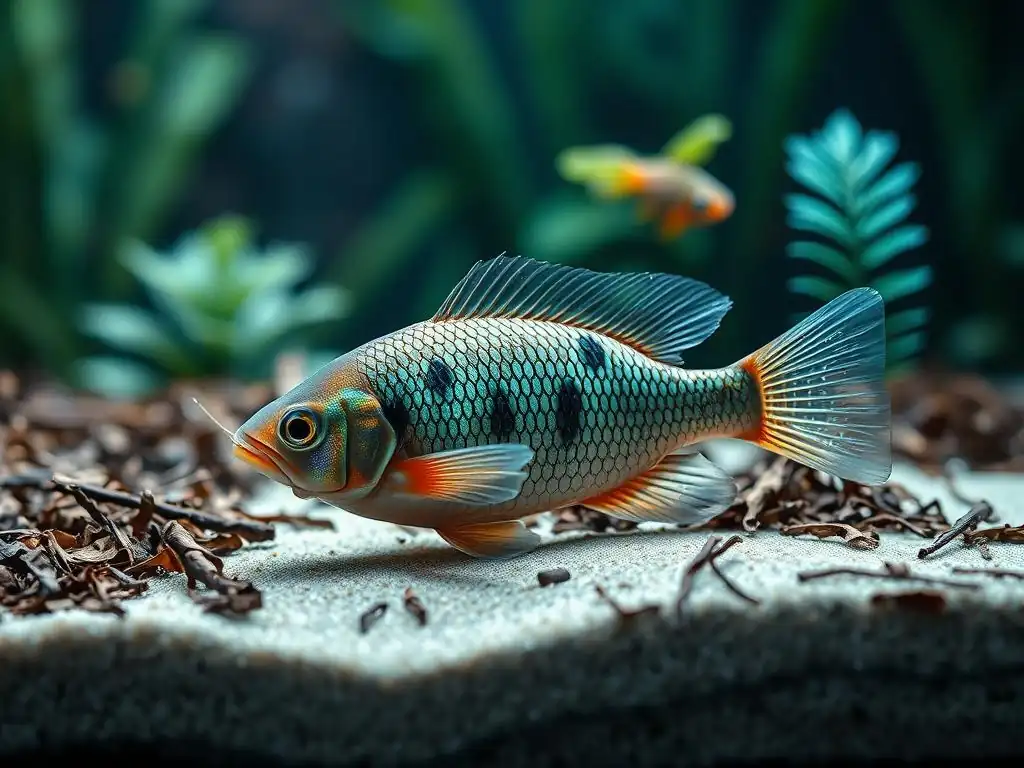
Lighting in a Corydoras breeding tank setup should be moderate and subdued. Panda Corydoras, like most Corydoras species, are often shy and prefer dimmer conditions, especially when preparing to spawn. Overly bright or intense lighting can cause stress, leading them to hide more and potentially inhibiting breeding behavior. A simple LED light fixture, set to a moderate intensity, is usually more than adequate.
An appropriate photoperiod, typically 8-10 hours daily, is important for maintaining a natural day-night cycle and promoting overall fish health. Using a timer can help ensure consistency, which is beneficial for the fish's natural rhythms. While some plants might benefit from brighter light, the primary focus in a breeding tank is the well-being and spawning activity of the Corydoras, making subdued lighting the preferred choice.
Heating and Temperature Control: Crucial for Spawning
Consistent and appropriate temperature control is a vital component of any successful Corydoras breeding tank setup. Panda Corydoras generally thrive and breed best in a stable temperature range of 72-76°F (22-24°C). Maintaining this temperature with a reliable, appropriately sized heater is essential for their overall health and metabolic function. Fluctuations can stress the fish and deter spawning.
However, a strategic manipulation of temperature can also act as a powerful spawning trigger. Mimicking the onset of the rainy season in their natural habitat, a slight drop in temperature (2-3°F or 1-2°C) followed by a return to the optimal range, often coupled with a cool water change, can encourage breeding. This subtle yet impactful change signals to the fish that conditions are ideal for reproduction, making a precise and reliable heater indispensable for any serious Corydoras breeder.
Water Parameters for Successful Panda Corydoras Breeding
Achieving Optimal Water Chemistry: pH, KH, and GH
Optimal water chemistry is a cornerstone for success in a Corydoras breeding tank setup. Panda Corydoras thrive in soft to moderately hard water with a slightly acidic to neutral pH. Specifically, a pH range of 6.5-7.5 is ideal. While they can tolerate a broader range, stability within this spectrum is more critical than hitting an exact number. Consistent water parameters reduce stress, which directly impacts breeding readiness and success.
In terms of hardness, aim for a General Hardness (GH) between 4-12 dGH (70-210 ppm) and Carbonate Hardness (KH) between 2-8 dKH (35-140 ppm). KH is particularly important as it acts as a buffer, helping to stabilize the pH. Regular testing with a reliable liquid test kit (not test strips, which can be less accurate) is essential to monitor these parameters and make necessary, gradual adjustments. Sudden changes in water chemistry can be detrimental to breeding Corydoras.
The Importance of Water Changes in Panda Corydoras Breeding Tanks
Frequent, small water changes are arguably the most crucial maintenance practice in a Corydoras breeding tank setup, especially when attempting to induce spawning and during the fry-rearing phase. For adult breeders, performing 20-30% water changes every 2-3 days, particularly with water that is 2-5°F (1-3°C) cooler than the tank temperature, can simulate natural rainfall patterns. This influx of fresh, cooler water is a well-known trigger for Corydoras spawning behavior, signaling that it's the ideal time to reproduce.
Once eggs have hatched and fry are present, daily small water changes (10-20%) become even more critical. Fry are incredibly sensitive to accumulating nitrates and other dissolved organic compounds. Regular water changes dilute these pollutants, provide fresh minerals, and help maintain the pristine conditions necessary for healthy development. Using a slow drip or a fine-stream siphon during water changes ensures minimal disturbance to the delicate fry.
Avoiding Ammonia and Nitrite Spikes: Maintaining a Healthy Environment
Preventing ammonia and nitrite spikes is paramount for the health of both adult Corydoras and their vulnerable fry in a breeding tank setup. Ammonia (NH3/NH4+) and nitrite (NO2-) are highly toxic to fish, even in small concentrations, and can quickly lead to stress, disease, or death. These compounds are produced from fish waste, uneaten food, and decaying plant matter. In a breeding tank, especially one with a high bioload from conditioning adults or growing fry, diligent monitoring is essential.
Regular testing with a high-quality liquid test kit should show 0 ppm for both ammonia and nitrite. If any detectable levels are present, immediate action, such as a significant water change (e.g., 50%) and a reduction in feeding, is required. A well-cycled tank with a robust biological filter (like a sponge filter) is the first line of defense. Overfeeding is a common cause of spikes, so feed sparingly and remove any uneaten food promptly to maintain a healthy and safe environment for your Corydoras breeding tank setup.
Preparing Your Panda Corydoras for Breeding
Identifying Male and Female Panda Corydoras
Accurately identifying the sex of your Panda Corydoras is a key step in preparing them for breeding. While subtle, there are noticeable differences between males and females, particularly when they reach maturity and are well-conditioned. Generally, female Panda Corydoras are larger and more robust than males, especially when viewed from above. A mature female, often 2.5 inches (6.3 cm) or more, will appear noticeably broader and plumper, particularly in the abdominal area, as she develops eggs.
In contrast, male Panda Corydoras are typically smaller and more slender, usually ranging from 1.5 to 2 inches (3.8-5 cm). Their body shape is more streamlined. When viewed from above, their pectoral fins might also appear slightly larger and more pointed compared to the female's. Observing the fish side-by-side or from an overhead perspective, particularly during feeding when they are active, can help in distinguishing their subtle differences and selecting an appropriate breeding group for your Corydoras breeding tank setup.
Conditioning Panda Corydoras for Spawning: Diet and Feeding Strategies
Proper conditioning through diet is vital for encouraging Panda Corydoras to spawn. A high-quality, varied diet ensures that the fish are in peak health and have sufficient energy reserves for egg production and spawning activity. For 1-2 weeks leading up to your desired spawning attempt, increase the frequency and richness of their meals. Incorporate a variety of live and frozen foods, which are particularly effective for conditioning.
Excellent conditioning foods include live or frozen bloodworms, brine shrimp, daphnia, and grindal worms. Supplement these with high-quality sinking pellets or wafers specifically designed for bottom-feeders. Feeding small amounts multiple times a day (2-3 times) rather than one large meal ensures that all fish get enough to eat and reduces waste. This enhanced nutrition signals to the fish that conditions are abundant, promoting gonadal development and readiness for a successful Corydoras breeding tank setup.
Simulating the Rainy Season: Triggering Spawning in Panda Corydoras
Simulating the onset of the rainy season is the most effective method for triggering spawning in Panda Corydoras. In their natural habitat, a sudden influx of cooler, fresh water signals abundant food and safe breeding grounds. You can replicate this by performing large, cool water changes in your Corydoras breeding tank setup. Start with a 30-50% water change using dechlorinated water that is 5-10°F (3-6°C) cooler than the tank's current temperature.
Repeat these large, cool water changes every 1-2 days for about a week, combined with consistent, heavy feeding of conditioning foods. The combination of fresh, cooler water and increased nutrition often stimulates the fish to spawn within a few days of starting this regimen. Observing the fish for increased activity, chasing, and the characteristic "T-position" will indicate that your efforts are successful and spawning is imminent.
Setting Up the Breeding Tank: A Step-by-Step Guide
Step 1: Assembling the Tank and Equipment
Begin by thoroughly cleaning your selected breeding tank. Use only plain water and a clean sponge or cloth; avoid any soaps or detergents, as residues can be highly toxic to fish. Once clean, place the tank on a stable, level surface.
Install your essential equipment: the heater (ensure it's appropriately sized for the tank volume), a reliable thermometer, and the air-driven sponge filter. Position the heater securely and ensure the thermometer is placed where it can be easily read. All electrical components should be plugged into a power strip with a drip loop to prevent water from traveling down the cord to the outlet, ensuring safety in your Corydoras breeding tank setup.
Step 2: Preparing the Substrate and Adding Water
If you've chosen a sand substrate, rinse it meticulously under running water until the water runs completely clear. This removes fine dust and debris that could cloud the water. Add a thin layer of sand, approximately 0.5 to 1 inch (1-2.5 cm) deep, to the bottom of the tank.
Next, slowly add dechlorinated water to the tank. It's advisable to use a plate or plastic bag on the substrate to diffuse the water flow and prevent disturbing the sand. Ensure the water temperature matches the temperature of the water your breeding Corydoras are currently in, to minimize shock during acclimation to their new Corydoras breeding tank setup.
Step 3: Introducing Plants and Decorations (Spawning Mops, etc.)
With the water added, it's time to introduce elements that provide spawning surfaces and a sense of security for your Corydoras. Fine-leaved plants like Java Moss (Taxiphyllum barbieri) or Anubias species are excellent choices, as they offer ample surface area for eggs to adhere to. Alternatively, homemade spawning mops, typically constructed from acrylic yarn, are highly effective and easy to remove once eggs are laid.
Position these items to provide cover and potential egg-laying spots. Avoid any sharp or rough decorations that could injure your fish. The goal is to create a calm, conducive environment for breeding within your Corydoras breeding tank setup.
Step 4: Acclimating Your Panda Corydoras to the Breeding Tank
Once the breeding tank is fully set up, cycled (if bare-bottom and new), and its water parameters match your main tank, it's time to introduce your selected breeding group. Drip acclimation is the safest and most recommended method for transferring fish, as it slowly equalizes water parameters and temperature, minimizing stress. Place your Corydoras in a clean bucket or container with their original tank water. Use airline tubing to siphon water from the breeding tank into the bucket, tying a knot in the tubing to allow water to drip slowly (e.g., 1-2 drops per second).
Continue the drip acclimation for at least 30-60 minutes, or until the water volume in the bucket has doubled. During this process, regularly remove excess water from the bucket to prevent overflow. Once acclimated, gently net the Corydoras and release them into their new Corydoras breeding tank setup. Discard the water from the bucket; do not add it to the breeding tank. Observe your fish closely for any signs of stress after introduction.
Spawning Triggers and Techniques for Panda Corydoras
The Role of Water Changes in Inducing Spawning
As highlighted previously, water changes are perhaps the most potent spawning trigger for Panda Corydoras, effectively mimicking their natural environment. To induce spawning, perform large (30-50%) water changes every 1-2 days using dechlorinated water that is significantly cooler—typically 5-10°F (3-6°C) colder—than the existing tank temperature. This abrupt influx of cooler, fresh water signals the start of the rainy season, a period of increased food availability and ideal breeding conditions in their native habitats.
Consistent application of this technique, combined with a period of heavy conditioning feeding, often yields results within a week. The fish will become more active, and you might observe increased chasing and cleaning of potential egg-laying sites. This methodical approach to water changes is a cornerstone technique for any successful Corydoras breeding tank setup.
Temperature Fluctuations as a Spawning Trigger
Beyond simply introducing cooler water, controlled temperature fluctuations can also serve as a powerful spawning trigger for Panda Corydoras. While maintaining a stable optimal temperature is crucial for general health, a slight, temporary dip can be the final push needed for spawning. This can be achieved by allowing the tank temperature to gradually decrease by 2-3°F (1-2°C) over a few hours, perhaps by turning off the heater for a short period during a cool water change, and then allowing it to return to the optimal range.
This subtle temperature shift, especially when combined with the large, cool water changes, closely replicates the environmental cues that prompt Corydoras to breed in the wild. It's a nuanced approach that adds another layer of control to your Corydoras breeding tank setup, encouraging the fish to perceive conditions as ideal for reproduction.
Other Environmental Factors That Encourage Panda Corydoras to Breed
While cool water changes and temperature fluctuations are primary triggers, other environmental factors can also contribute to a successful spawning event in your Corydoras breeding tank setup. Increasing the water flow slightly can sometimes stimulate activity. This can be achieved by aiming a small powerhead at the water surface for increased agitation, or by adjusting the output of your sponge filter (if using a more powerful air pump). This increased turbulence can simulate the flow of water during a rainy season, further encouraging breeding.
Additionally, some breeders find that a slightly longer photoperiod, perhaps 12-14 hours of moderate light, can subtly influence breeding behavior by mimicking longer daylight hours associated with spring and summer. Providing ample hiding spots and a calm environment, even during the triggering phase, also reduces stress, allowing the fish to feel secure enough to focus on reproduction.
Caring for Panda Corydoras Eggs and Fry
Protecting Panda Corydoras Eggs from Predators
Once Panda Corydoras have spawned, protecting their delicate eggs from predation is critical for maximizing hatch rates. Adult Corydoras, while generally peaceful, may consume their own eggs if left in the breeding tank. Other tank inhabitants, if present, are also likely to view the eggs as a food source. The most effective method is to either remove the adult fish from the breeding tank after spawning or, more commonly, to carefully remove the eggs to a dedicated hatching container.
To remove eggs, gently roll them off the glass or plant leaves with a clean finger, or carefully detach the spawning mop. Place them in a small container (e.g., a 1-2 gallon tank or a breeder box) filled with water from the breeding tank. This specialized environment ensures the eggs are safe and provides optimal conditions for their development, significantly improving the success of your Corydoras breeding tank setup.
Hatching Panda Corydoras Eggs: Incubation Methods
Panda Corydoras eggs typically hatch within 3-5 days when incubated at a stable temperature of approximately 75°F (24°C). During this incubation period, preventing fungal growth is paramount, as fungus can quickly spread and destroy entire clutches. A common preventative measure is to add a few drops of methylene blue solution to the hatching container until the water turns a light blue tint. This antifungal agent inhibits fungal spores without harming the developing embryos.
Alternatively, a very small amount of aquarium salt (e.g., 1 teaspoon per 5 gallons) can also help deter fungus. Ensure gentle aeration in the hatching container using a small air stone to provide oxygen and prevent water stagnation around the eggs. Regularly inspect the eggs and promptly remove any that turn white and opaque, as these are infertile or fungused and can spread infection to healthy eggs.
Feeding Panda Corydoras Fry: First Foods and Growth
Panda Corydoras fry are incredibly tiny and delicate when they first hatch. They will initially feed on their yolk sac for the first 2-3 days, after which they become free-swimming and require external food sources. Providing the correct first foods is critical for their survival and rapid growth. Infusoria (microscopic organisms) or liquid fry food are excellent choices for the first few days, as they are small enough for the fry to consume.
As the fry grow, typically after 3-5 days, transition them to larger, more nutritious foods. Newly hatched brine shrimp nauplii are an ideal next step, providing essential proteins and fats for rapid development. Microworms are another excellent option. Feed small amounts multiple times a day (3-5 times) to ensure constant access to food, as fry have high metabolic rates and need to eat frequently to thrive in a successful Corydoras breeding tank setup.
Maintaining Water Quality for Panda Corydoras Fry Development
Maintaining pristine water quality is even more critical for Panda Corydoras fry than for adults, as they are extremely sensitive to pollutants. Due to their high metabolism and the frequent feeding required, waste can accumulate quickly. Therefore, daily, small water changes (10-20%) are essential. Use a small-diameter airline tubing or a turkey baster to carefully siphon out uneaten food and detritus from the bottom of the fry tank, being extremely cautious not to suck up any fry.
Always use dechlorinated water that matches the tank's temperature and parameters for these changes. Regular testing for ammonia, nitrite, and nitrate is paramount; ammonia and nitrite should always be 0 ppm, and nitrates should be kept below 10 ppm. Consistent water quality is the single most important factor in preventing fry mortality and ensuring the successful development of your young Corydoras in their dedicated Corydoras breeding tank setup.
Common Problems and Solutions in Panda Corydoras Breeding
Egg Fungus: Prevention and Treatment
Egg fungus is a common and frustrating problem encountered in a Corydoras breeding tank setup, capable of wiping out entire clutches of eggs. Fungus typically attacks infertile or damaged eggs first, then rapidly spreads to healthy, viable eggs. Prevention is key: ensure good water circulation around the eggs (e.g., with a gentle air stone), and consider using antifungal agents. Methylene blue, added to the hatching container until the water is a light blue, is highly effective at preventing fungal growth.
If fungus is observed on a few eggs, immediately remove the affected eggs using tweezers or a small siphon to prevent further spread. Maintaining exceptionally clean water in the hatching container also significantly reduces the likelihood of fungal outbreaks. Regularly check the eggs for any signs of white, fuzzy growth, which indicates fungus.
Fry Mortality: Identifying and Addressing Issues
High fry mortality rates can be disheartening for breeders. Several factors commonly contribute to the loss of Panda Corydoras fry. The most prevalent cause is poor water quality, specifically spikes in ammonia or nitrite, or high nitrate levels. Fry are incredibly sensitive to these toxins. To address this, rigorously adhere to daily small water changes and ensure your filtration system (ideally a sponge filter) is functioning optimally.
Another major factor is inadequate feeding. Fry need constant access to appropriate, small-sized foods. If fry are not growing or appear lethargic, it could be a sign of insufficient or incorrect food. Ensure you are feeding newly hatched brine shrimp, microworms, or high-quality liquid fry food multiple times a day. Strong currents from filtration can also exhaust and stress fry, leading to mortality; ensure the water flow is gentle enough for their tiny size in your Corydoras breeding tank setup.
Infertile Eggs: Identifying Causes and Solutions
Identifying infertile eggs is crucial for managing your Corydoras breeding tank setup and preventing fungal outbreaks. Healthy, fertile Panda Corydoras eggs are typically clear or slightly amber-colored. Infertile eggs, on the other hand, will turn opaque and white within 24-48 hours of being laid. These eggs should be promptly removed, as they are highly susceptible to fungal growth which can then spread to viable eggs.
Several factors can contribute to a high percentage of infertile eggs. One common cause is immature or unconditioned parents. Ensure your breeding group is fully mature (at least 6-8 months old) and has been properly conditioned with a high-protein diet for several weeks prior to spawning attempts.
An imbalance in the male-to-female ratio (e.g., too few males for the number of females, or vice versa) can also lead to lower fertilization rates. Aim for a ratio of 2-3 males per female to maximize the chances of successful fertilization. Lastly, unsuitable water parameters or excessive stress during spawning can also impact fertility.
Maintaining a Healthy Panda Corydoras Breeding Tank: Long-Term Care
Regular Water Testing and Adjustments
Maintaining a healthy Corydoras breeding tank setup, especially when housing fry, requires vigilant and consistent water parameter monitoring. Daily testing for ammonia, nitrite, and nitrate is non-negotiable. Ammonia and nitrite should always read 0 ppm, indicating a fully cycled and healthy biological filter. Nitrate levels should be kept below 10 ppm for fry, and ideally below 20 ppm for adult breeders, as even moderate levels can stress fish and inhibit growth.
Based on your test results, make necessary adjustments through small, targeted water changes. If ammonia or nitrite are detected, perform an immediate, larger water change (e.g., 50%) and assess feeding habits or filter function. Consistent monitoring and proactive adjustments are key to providing a stable, healthy environment for your breeding Corydoras and their offspring.
Preventing Disease Outbreaks in the Breeding Tank
Preventing disease outbreaks is paramount in a breeding tank, as sick fish will not breed successfully, and diseases can quickly decimate vulnerable fry. The cornerstone of disease prevention is maintaining impeccable water quality through regular water changes and proper filtration. Stress, often caused by poor water parameters, overcrowding, or sudden changes, significantly weakens a fish's immune system, making them susceptible to pathogens.
Quarantining new fish for at least 2-4 weeks in a separate tank before introducing them to your breeding group is a critical preventative measure. This allows you to observe them for any signs of illness and treat them if necessary, preventing the introduction of pathogens into your established Corydoras breeding tank setup. A balanced, high-quality diet also boosts the fish's natural immunity, further reducing the risk of disease.
Regular Gravel Vacuuming for Optimal Fry Health
Even with a thin sand substrate, regular gravel vacuuming is an essential maintenance task in a Corydoras breeding tank setup to ensure optimal fry health. Uneaten food and fish waste can quickly accumulate, decomposing and releasing harmful ammonia and nitrites. For sand substrates, gently hover the gravel vacuum just above the sand surface to siphon off debris without disturbing the sand too much or sucking up fry. If you're using a bare-bottom tank, siphoning off debris is even simpler.
This daily or every-other-day task is crucial, especially during the fry-rearing stage when frequent feeding contributes to a higher bioload. By diligently removing organic waste, you significantly reduce the risk of water quality deterioration and subsequent health issues for your delicate Panda Corydoras fry, ensuring a clean and safe environment for their development.
Conclusion: Mastering Panda Corydoras Breeding
Enjoying the Rewards of a Well-Maintained Panda Corydoras Breeding Tank
Mastering the art of breeding Panda Corydoras, while requiring dedication and attention to detail, offers immense rewards. The journey from setting up a meticulously planned Corydoras breeding tank setup to witnessing the first free-swimming fry is deeply satisfying. It provides an intimate glimpse into the natural life cycle of these charming fish, enhancing your understanding of aquarium ecosystems and fish behavior. The successful propagation of a species you care for fosters a profound sense of accomplishment.
Beyond the personal enjoyment, a well-maintained Panda Corydoras breeding tank contributes to the broader aquarium community by providing healthy, robust, and locally adapted fish. The experience gained refines your aquarist skills, from water chemistry management to fry care, making you a more knowledgeable and capable hobbyist. Embrace the challenges and celebrate the successes, for the vibrant activity of a thriving Corydoras breeding tank is a truly enjoyable and enriching aspect of the aquarium hobby.
Frequently Asked Questions
What is the ideal tank size for a Corydoras breeding tank setup?
The ideal tank size is generally at least 10 gallons, but larger is better. This provides enough space for the breeding group and reduces stress, which is crucial for successful spawning.
What water parameters are essential for Corydoras breeding?
Maintaining soft, slightly acidic water is key. Aim for a pH between 6.5 and 7.0, and a hardness below 10 dGH. Regular water changes are also vital to keep nitrates low.
What type of substrate is best for a Corydoras breeding tank?
A fine sand substrate is recommended, as it mimics their natural habitat and allows them to sift through it for food. Avoid sharp gravel, which can injure their delicate barbels.
What type of plants and decorations should be included in the tank?
Include live plants like Java Moss or Anubias to provide hiding places and spawning surfaces. Smooth rocks or driftwood can also create a natural and comfortable environment.
How do I trigger spawning in my Corydoras?
Perform a large, cool water change (20-50%) to simulate the rainy season. This often triggers spawning behavior, especially when combined with a high-quality diet of live and frozen foods.
Okay, here's a final reflection designed to close your article on setting up the ideal Corydoras breeding tank environment, optimized for emotional connection and a lasting impression, while also subtly incorporating your target keyword:
Final Reflection: Nurturing New Life
The journey of setting up a Corydoras breeding tank, as we've explored, is more than just assembling equipment and adding water; it's about creating a sanctuary where life can flourish. Understanding the nuances of water parameters, substrate selection, and plant placement is paramount to successfully breeding these fascinating fish. It's a testament to our dedication as aquarists, and a direct contribution to the continuation of these species, especially as wild habitats face increasing pressures.
This pursuit extends beyond the technical aspects; it's a deeply rewarding experience that connects us to the intricate beauty of the natural world. Witnessing the delicate dance of courtship, the careful placement of eggs, and the eventual emergence of tiny fry is a privilege that reinforces our responsibility as stewards of these creatures. The ultimate goal of farming isn't the growing of crops, but the cultivation and perfection of human beings.
- Masanobu Fukuoka. This quote resonates deeply, reminding us that our efforts in creating the ideal Corydoras breeding tank setup are, in essence, about cultivating a deeper understanding and respect for life itself.
Now, as you consider your own Corydoras breeding tank setup, I invite you to reflect on the profound impact you can have. Take the knowledge gained here, and transform your aquarium into a thriving ecosystem, a testament to the power of informed care and dedication. Embrace the challenge, and you'll not only witness the miracle of life unfold, but also contribute to the preservation of these captivating creatures for generations to come.
Ignite Your Corydoras Breeding Journey!
Thank you for diving into the fascinating world of Corydoras breeding! We hope you've gained valuable insights into creating the perfect environment for these charming catfish to thrive and reproduce. Now, let's translate that knowledge into action!
Here are a few steps to kickstart your Corydoras breeding adventure:
- Prioritize: Replicate Natural Conditions!: Adjust water parameters by slightly lowering the temperature, softening the water, and decreasing the pH to mimic the onset of the rainy season. This small change can trigger spawning.
- Dive Deeper: Begin Culturing Live Foods! Supplement your Corydoras' diet with live foods like blackworms, daphnia, or baby brine shrimp to enhance their breeding readiness.
- Share Your Progress: Document the evolution of your Corydoras breeding tank, post photos, and videos on social media and use #AquariumMastery to share your successes.
What unique substrate are you considering for your breeding tank to encourage egg scattering and survival?