
Sexing Discus Fish: Challenges and Techniques for Identification


Welcome to Aquarium Mastery!
Ever wondered how the pros tell the difference between a male and female Discus? Unlocking the secrets to Discus fish sexing techniques can be a real challenge, even for experienced aquarists. Dive into our comprehensive guide to explore the methods, understand the nuances, and finally master the art of identifying your Discus fish – discover what you've been missing!
- Understanding the Difficulty of Discus Fish Sexing
- Discus Fish Sexing Techniques: A Detailed Guide
- Visual Cues for Discus Sexing: What to Look For
- Factors Affecting the Accuracy of Discus Sexing Techniques
- Tools and Equipment for Discus Sexing
- Common Mistakes in Discus Fish Sexing and How to Avoid Them
- Confirming Discus Sex: Breeding and Observation
- Conclusion: Mastering Discus Fish Sexing Techniques
-
Frequently Asked Questions
- How difficult is it to determine the sex of Discus fish?
- What are the primary behavioral indicators that might suggest the sex of Discus fish?
- What physical characteristics are sometimes used to differentiate male and female Discus, and how reliable are they?
- At what age or size are Discus fish typically mature enough for sexing to be possible?
- What are some common misconceptions about sexing Discus fish that aquarists should be aware of?
- Final Reflection: Unveiling the Secrets of Discus
- Unveil the Secrets: Start Your Discus Breeding Journey!
Understanding the Difficulty of Discus Fish Sexing
Why Identifying Male and Female Discus is Challenging
Discus fish (Symphysodon spp.) are renowned for their stunning colors and majestic presence, but distinguishing between males and females presents a significant challenge for aquarists. Unlike many other cichlid species, Discus exhibit very little sexual dimorphism, meaning there are no obvious visual differences in coloration, fin shape, or size that reliably separate the sexes outside of breeding activities. This monomorphic characteristic makes accurate Discus fish sexing techniques particularly difficult, even for experienced breeders.
The subtlety of their sexual characteristics means that relying on casual observation is often insufficient. Young Discus, in particular, are virtually impossible to sex visually, as any potential differences only manifest as they approach sexual maturity, typically around 12 to 18 months of age. Even mature adults require keen observation, specific environmental conditions, and sometimes specialized tools to apply effective Discus fish sexing techniques.
Physical Similarities Between Male and Female Discus
Both male and female Discus fish display remarkably similar vibrant coloration patterns, ranging from brilliant blues and reds to striking yellows and greens, depending on the strain. Their iconic round, disc-like body shape is also consistent across both sexes, as are their prominent dorsal, anal, and caudal fins, which often appear identical in overall structure and size. There are no consistent size differences; while males can sometimes grow slightly larger, a dominant female can easily surpass a submissive male in size, making this an unreliable indicator for Discus fish sexing techniques.
Furthermore, Discus do not develop typical secondary sexual characteristics found in many other fish species, such as nuchal humps (forehead bumps) seen in some larger cichlids, or distinct breeding tubercles that appear on the fins or bodies of some characins or cyprinids. This absence of overt physical cues necessitates a more nuanced approach, focusing on specific anatomical features or behavioral patterns as part of effective Discus fish sexing techniques.
Discus Fish Sexing Techniques: A Detailed Guide
Examining Genital Papillae: The Most Reliable Method for Discus Sexing
Examining the genital papilla is widely considered the most reliable of all Discus fish sexing techniques, especially when the fish are mature and conditioned for breeding. The papilla is a small, tube-like protrusion located just anterior to the anal fin, near the vent. While subtle differences can sometimes be observed even outside of spawning, the papilla becomes more pronounced and distinct when the fish are preparing to lay or fertilize eggs, offering the clearest opportunity for identification.
This method's reliability stems from the fact that the papilla is directly involved in the reproductive process, its shape adapted for either egg deposition or milt release. It requires patience, good lighting, and often a calm fish to get a clear view. Many experienced breeders will wait until a pair begins to show interest in a spawning site or exhibits pre-spawning behaviors before attempting this precise Discus fish sexing technique.
How to Identify the Genital Papilla in Discus Fish
To identify the genital papilla, observe the fish from a slightly elevated angle or, ideally, from below if your tank setup allows. The papilla is located directly in front of the anal fin, at the opening of the vent. It is typically very small, often only a millimeter or two in length, and can be difficult to spot without close inspection. Good, direct lighting from above or the side of the tank is crucial to illuminate this area clearly.
For optimal viewing, try to observe the fish when it is resting calmly near the substrate or a piece of decor. Some aquarists find it helpful to gently encourage the fish to position itself against the glass for a side-on view, though this should be done without causing undue stress. The papilla's visibility increases significantly when the fish are sexually mature and actively conditioned for breeding, as it will extend slightly in preparation for spawning.
Differences in Genital Papilla Shape: Male vs. Female Discus
The key to Discus fish sexing techniques using the papilla lies in discerning the subtle differences in its shape. In a female Discus, the genital papilla is generally broader, blunter, and more rounded or truncated at the tip, often appearing like a small, blunt cone or a flattened cylinder. This shape is specifically adapted for the precise deposition of adhesive eggs onto a chosen spawning surface.
Conversely, the male Discus's genital papilla is typically narrower, more pointed, and sometimes described as more "v-shaped" or needle-like. This elongated, sharper shape facilitates the accurate release of milt (sperm) over the freshly laid eggs to ensure fertilization. While these differences are subtle, with practice and careful observation, they become discernable, making papilla examination one of the most accurate Discus fish sexing techniques.
Observing Spawning Behavior: A Confirmation Method for Sexing Discus
Observing actual spawning behavior is the most definitive and undeniable method for confirming the sex of Discus fish. While other Discus fish sexing techniques offer strong indicators, witnessing the roles played during a spawning event removes all doubt. This method requires a mature pair that is well-conditioned and comfortable enough in their environment to reproduce.
Once a pair begins to spawn, their roles become distinctly clear: one fish will lay the eggs, and the other will follow to fertilize them. This provides irrefutable evidence of their respective sexes. It's often the ultimate goal for breeders looking to confirm their carefully selected pairs, solidifying their Discus fish sexing techniques.
Discus Breeding Behavior as an Indicator of Sex
Before actual spawning, Discus pairs will exhibit specific pre-spawning behaviors. Both male and female Discus will typically become more aggressive towards other tank mates, chasing them away from a chosen spawning site. They will meticulously clean a vertical surface, such as a breeding cone, slate, broad plant leaf, or even the aquarium glass, by nibbling and rubbing it repeatedly. This cleaning behavior is often accompanied by shimmying or twitching movements as they bond.
During the actual spawning sequence, the female will make repetitive passes over the cleaned surface, adhering rows of small, adhesive eggs. A healthy female Discus can lay anywhere from 100 to over 300 eggs in a single spawn, depending on her age, size, and conditioning. Immediately after the female deposits her eggs, the male will follow closely behind, passing over the same area to release his milt, ensuring the eggs are fertilized. This coordinated back-and-forth action is a clear and unmistakable indicator of their sex.
Identifying Male and Female Roles During Spawning
Identifying the male and female roles during spawning is straightforward. The female is the fish that visibly expels the eggs onto the chosen spawning substrate. These eggs are typically small (around 1-2 mm in diameter), round, and translucent, appearing in neat rows or clusters. She will often press her papilla against the surface as she deposits them.
The male's role is identified by his immediate follow-up to the female's egg-laying passes. He will swim over the freshly laid eggs, often quivering or vibrating his body, to release a cloudy white substance (milt) that contains his sperm. This action fertilizes the eggs. The distinct actions of egg deposition by one fish and subsequent fertilization by the other provide an unambiguous confirmation of their sex, making it the gold standard among Discus fish sexing techniques.
Anal Fin Shape and Size: A Subtle Clue for Discus Gender Identification
While far less reliable than papilla examination or spawning observation, some aquarists suggest that the shape and size of the anal fin might offer a subtle clue for Discus gender identification. This method is highly anecdotal and subject to significant individual variation, making it one of the less dependable Discus fish sexing techniques. It should never be used as a primary identifier.
The theory posits that there can be minor differences in the posterior extension or curvature of the anal fin between males and females. However, these differences are often so subtle as to be imperceptible or easily confused with natural variations within a given strain or even within a single brood.
Differences in Anal Fin Morphology Between Male and Female Discus
Anecdotal observations sometimes suggest that male Discus might have a slightly more elongated or pointed posterior end of their anal fin, potentially extending a fraction further beyond the caudal peduncle (the narrow part of the body leading to the tail fin) compared to females. This purported elongation is thought to give the male's anal fin a subtly sharper or more angular appearance at its trailing edge.
In contrast, the female's anal fin is sometimes described as appearing more rounded or blunt at its posterior edge, possibly not extending as far back as a male's. However, it is crucial to reiterate that these are highly generalized observations. The actual morphology of Discus fins can be influenced by genetics, diet, water quality, and even previous fin damage or nipping, rendering this a highly unreliable indicator for Discus fish sexing techniques.
Limitations of Using Anal Fin Shape for Sexing Discus
The primary limitation of using anal fin shape for Discus fish sexing techniques is its extreme unreliability. There is no consistent scientific evidence to support a definitive correlation between anal fin morphology and sex in Discus fish. Individual variation is so significant that relying on this characteristic often leads to misidentification. For example, a particularly robust female might have fins that appear more elongated, while a submissive male might have less developed fins.
Furthermore, factors such as fin nipping from tank mates, bacterial infections, or physical damage can alter the natural shape of the fins, making any subtle differences even harder to discern accurately. Therefore, while some enthusiasts might mention this as a potential "clue," it is strongly advised not to use anal fin shape as a primary or even secondary method when attempting Discus fish sexing techniques for accurate identification.
Head Shape and Body Conformation: A Less Reliable Sexing Technique
Some aquarists occasionally refer to head shape and overall body conformation as potential indicators for Discus sexing, suggesting that males might develop a slightly more prominent forehead or that females might appear rounder when gravid. However, these are among the least reliable Discus fish sexing techniques. Any perceived differences are highly subjective, inconsistent, and often influenced by factors unrelated to sex.
These observations often stem from anecdotal experiences with specific strains or dominant individuals rather than consistent biological markers. Relying on such generalized characteristics can easily lead to inaccurate identification, especially given the wide variety of Discus strains available, each with unique growth patterns and physical attributes.
Potential Differences in Head Shape Between Male and Female Discus
Anecdotal evidence suggests that some male Discus, particularly older, dominant individuals, might develop a slightly more sloped, angular, or "beefier" appearance around the forehead or nuchal area. This perceived robustness is sometimes attributed to muscle development or the general dominance asserted by the male.
Conversely, female Discus are sometimes described as having a slightly rounder, smoother, or less pronounced forehead. However, these distinctions are exceedingly subtle and frequently indistinguishable to the untrained eye. Moreover, factors like the specific Discus strain (e.g., Pigeon Blood vs. Wild type), age, and individual growth rates have a far greater impact on head shape than sex, making this an unreliable component of Discus fish sexing techniques.
Body Size and Shape Variations in Discus Fish
While it's often stated that male Discus can grow larger than females, this is far from a consistent rule and makes body size a poor indicator for Discus fish sexing techniques. A well-fed, dominant female can easily achieve or even surpass the size of a subordinate male within the same tank or brood. For instance, a mature male might reach 6-8 inches in diameter, but a robust female can also easily reach 7 inches if well-nourished and stress-free.
Similarly, the idea that females appear "rounder" or "fuller" in the body is often only true when they are gravid (carrying eggs), a temporary condition that can also be mimicked by overfeeding or certain health issues like bloat. Overall body conformation is largely influenced by genetics, diet quality, water parameters, and general health, rather than being a reliable sexual characteristic. Therefore, relying on general body size or shape for Discus fish sexing techniques is highly prone to error.
Visual Cues for Discus Sexing: What to Look For
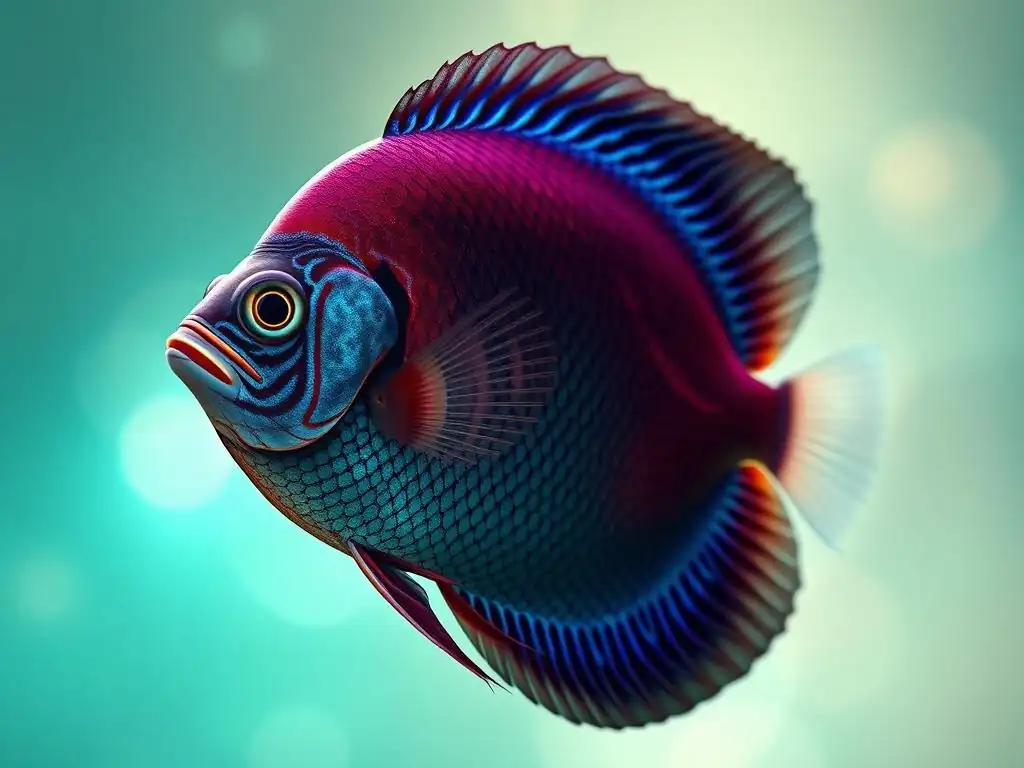
Observing Fin Shape and Size for Sex Differences in Discus
While not definitive, observing the overall appearance of the fins can sometimes provide very subtle and highly variable cues for Discus fish sexing techniques, particularly in mature, breeding-conditioned fish. Some breeders suggest that males might exhibit slightly longer or more pointed dorsal and anal fins, with the fin rays extending a bit further, giving them a more elongated appearance. However, this is not a universal rule and varies significantly between individual fish and different strains.
It is crucial to remember that fin shape and size can also be influenced by factors such as genetics, water quality, and even previous fin damage or nipping from tank mates. Therefore, any perceived differences in fin morphology should be treated with extreme caution and never used as a standalone indicator for Discus gender. They serve more as a supplementary observation rather than a reliable component of Discus fish sexing techniques.
Examining Body Shape and Contour for Sexing Discus Fish
The body shape and contour of Discus fish are generally very similar between sexes. However, a female Discus that is gravid (carrying eggs) will often appear noticeably fuller and rounder in the abdominal area, especially just prior to spawning. This increased girth is due to the development and presence of a large mass of eggs within her body.
It is important to exercise caution when using this as a visual cue for Discus fish sexing techniques. A full abdomen can also be indicative of a well-fed fish, or, more concerningly, a fish suffering from internal parasites or bloat. This temporary fullness is not a consistent characteristic of female Discus outside of their reproductive cycles and should therefore not be relied upon as a primary method for sex identification.
Discus fish, like many cichlids, establish a social hierarchy within their tank, and dominant individuals often exhibit more aggressive behaviors, such as chasing, fin nipping, or claiming prime territories. While males can be overtly aggressive, particularly when defending a spawning site, it's important to note that dominant females can also display significant territoriality and aggression towards other tank mates, including other males or females.
Therefore, observing aggression and social hierarchy is generally not a reliable Discus fish sexing technique. A dominant fish, regardless of its sex, will often be the most assertive in the tank. Only when aggression is specifically linked to the defense of a spawning site and followed by the distinct actions of egg laying or fertilization can it contribute to sex identification.
Factors Affecting the Accuracy of Discus Sexing Techniques
Age and Maturity: Impact on Discus Sex Characteristics
The age and sexual maturity of Discus fish significantly impact the accuracy of Discus fish sexing techniques. Juvenile Discus, typically those under 12 months of age or smaller than 4 inches in diameter, are virtually impossible to sex visually. Their sexual organs and associated external characteristics, such as the genital papilla, are not yet fully developed or discernible.
Attempting to sex immature Discus will almost certainly lead to inaccurate results. For the most reliable identification, it is crucial to wait until the fish reach sexual maturity, which usually occurs between 12 and 18 months of age. At this stage, they are more likely to exhibit the subtle physical differences or engage in the reproductive behaviors necessary for accurate Discus fish sexing techniques.
Health and Condition: Influence on Discus Appearance
The overall health and physical condition of Discus fish profoundly influence the accuracy of Discus fish sexing techniques. A fish that is stressed, malnourished, or suffering from disease may not exhibit clear sexual characteristics, even if mature. For instance, a fish in poor health might not develop a clearly defined genital papilla, or its colors and finnage might be subdued, making any subtle differences harder to observe.
Optimal water quality parameters (e.g., stable pH between 6.0 and 6.8, soft water with GH below 5 dGH, and a consistent temperature of 82-86°F or 28-30°C), coupled with a high-quality, varied diet, are essential for Discus to be in prime condition. Healthy, well-fed fish are more likely to display their full potential in terms of physical development and breeding readiness, which in turn facilitates more accurate Discus fish sexing techniques.
Environmental Factors: Affecting Discus Behavior and Appearance
Environmental factors within the aquarium play a crucial role in influencing Discus behavior and appearance, thereby affecting the accuracy of Discus fish sexing techniques. A stressful environment, characterized by overcrowding, unstable water parameters, aggressive tank mates, or inadequate hiding spots, can inhibit a Discus's natural behaviors, including their readiness to spawn. If fish are constantly stressed, they are unlikely to show any breeding interest or develop clear sexual characteristics.
Conversely, a stable, clean, and appropriately sized environment (e.g., a minimum 50-gallon tank for a group, or a 20-30 gallon tank for a breeding pair) encourages natural behaviors. Proper conditions, including soft, acidic water and warm temperatures, can prompt a pair to condition for breeding, making the observation of spawning behavior – the most definitive of Discus fish sexing techniques – possible.
Tools and Equipment for Discus Sexing
Magnifying Glasses or Lenses for Genital Papilla Examination
Given the minute size and subtle differences of the genital papilla, a good quality magnifying glass or jeweler's loupe can be an invaluable tool for Discus fish sexing techniques. A magnification of 5x to 10x is often sufficient to clearly discern the shape of the papilla and differentiate between the blunt female and pointed male structures.
When using a magnifying tool, ensure that the fish is calm and positioned for a clear view, ideally from below or directly to the side. This allows for a detailed examination without causing undue stress to the fish. Careful and patient observation with magnification significantly increases the accuracy of this primary Discus fish sexing technique.
Aquarium Lighting for Clear Observation
Adequate and appropriate aquarium lighting is paramount for all visual Discus fish sexing techniques. Bright, stable, and evenly distributed lighting allows for clear visibility of the fish's underside and the delicate structures around the vent, which are crucial for papilla examination. LED or high-quality fluorescent lights are often preferred for their intensity and color rendering.
Ensure that the light eliminates shadows and glare that could obscure the view. Positioning the light source directly over the area being observed or using a handheld flashlight to supplement the main aquarium lighting can greatly enhance visibility, making subtle details more apparent and improving the accuracy of your Discus fish sexing techniques.
Quarantine Tank for Observation
While not a direct sexing tool, a dedicated observation or quarantine tank can be incredibly beneficial for accurate Discus fish sexing techniques. A smaller, bare-bottom tank (e.g., 20-30 gallons) allows for isolated observation of a potential pair without the interference or stress from other tank mates. This controlled environment encourages the fish to relax and, critically, to exhibit breeding behaviors.
In a dedicated tank, you can meticulously control water parameters (e.g., lowering pH and hardness to induce spawning), and focus solely on observing the fish for pre-spawning rituals and actual egg laying. This isolation significantly increases the chances of witnessing definitive spawning behavior, which is the most conclusive of all Discus fish sexing techniques.
Common Mistakes in Discus Fish Sexing and How to Avoid Them
Misinterpreting Dominance Behavior as Spawning Behavior
A common mistake in Discus fish sexing techniques is to misinterpret general dominance behavior for actual spawning behavior. Discus, being cichlids, naturally establish a pecking order. Dominant fish, whether male or female, will often chase, nip, and assert their territory, which can sometimes be confused with courtship or pre-spawning rituals.
To avoid this error, it's crucial to look for specific, distinct actions: the meticulous cleaning of a spawning site, followed by the female making passes to lay eggs, and the male immediately following to fertilize them. General aggression or territoriality alone is not indicative of sex and should not be relied upon for accurate Discus fish sexing techniques.
Relying Solely on Body Shape for Discus Gender Identification
Relying solely on body shape, size, or head conformation for Discus gender identification is a significant and frequent mistake. As discussed, these characteristics are highly unreliable due to individual variation, strain differences, and factors like diet and health. A well-fed male can appear just as "round" as a female, and a dominant female can easily be larger than a male.
To avoid this pitfall, always prioritize the more accurate Discus fish sexing techniques: direct examination of the genital papilla, especially when the fish are conditioned to breed, and, most definitively, the observation of actual spawning behavior where the roles of egg layer and fertilizer are clear.
Sexing Immature Discus
Attempting to sex immature Discus fish (typically those under 12 months of age or smaller than 4 inches) is a common mistake that inevitably leads to inaccurate results. At this young age, their sexual organs are not fully developed, and the subtle external characteristics, particularly the genital papilla, are not yet discernible.
Patience is key. To ensure accuracy when applying Discus fish sexing techniques, wait until your Discus are sexually mature. If you acquire juvenile fish, assume their sex is unknown until they reach an age where their sexual characteristics become apparent or they begin to exhibit breeding behavior.
Confirming Discus Sex: Breeding and Observation
Setting Up a Breeding Tank for Discus
To definitively confirm the sex of your Discus, setting up a dedicated breeding tank is often the most effective approach. A typical breeding tank for Discus is a bare-bottom aquarium, usually 20-30 gallons in size, to minimize distractions and facilitate cleaning. Water parameters are crucial: soft, acidic water (pH 5.5-6.5, GH < 5 dGH) and a stable, warm temperature (84-86°F or 29-30°C) are ideal to encourage spawning.
Include a spawning cone, slate, or a broad-leaf plant as a designated site for egg deposition. The absence of substrate makes it easier to keep the water pristine, which is vital for egg and fry health. This controlled environment maximizes the chances of a pair spawning, providing the ultimate confirmation for Discus fish sexing techniques.
Observing Discus Spawning Behavior to Confirm Sex
Once a potential pair is introduced into a suitable breeding tank, careful observation of their spawning behavior is the most conclusive way to confirm their sex. The female will be the fish that physically passes over the chosen spawning site, laying rows of small, adhesive eggs. She will often press her papilla against the surface as she releases them.
Immediately following the female, the male will swim over the newly laid eggs, visibly releasing his milt (a cloudy white substance) to fertilize them. This distinct, sequential action of one fish laying eggs and the other fertilizing them is an irrefutable confirmation of their respective sexes, making it the gold standard among Discus fish sexing techniques.
Raising Discus Fry: Further Confirmation of Parent Sex
If the spawning is successful and the eggs hatch, the subsequent behavior of the parents in raising the fry provides further, undeniable confirmation of their sex. Discus parents are known for their exceptional parental care, with both male and female secreting a nutritious slime coat from their bodies for the newly hatched fry to feed on during their first few days to weeks of life.
The sight of tiny fry attaching to both adult fish to feed is strong evidence of a successful breeding pair. While the initial egg-laying and fertilization are usually enough to confirm sex, the collective parenting behavior, where both adults participate in providing sustenance and guarding the fry, serves as final, irrefutable proof of their respective sexes, affirming the effectiveness of the Discus fish sexing techniques employed.
Conclusion: Mastering Discus Fish Sexing Techniques
Key Takeaways for Identifying Male and Female Discus
Mastering Discus fish sexing techniques is a challenging but rewarding aspect of Discus husbandry, primarily due to the species' minimal sexual dimorphism. The most reliable visual clue is the examination of the genital papilla, particularly when the fish are mature and conditioned for breeding: females will exhibit a broader, blunter, or rounded papilla, while males will have a narrower, more pointed one. However, the ultimate and most definitive confirmation of sex comes from observing actual spawning behavior, where the female lays the eggs and the male follows to fertilize them.
Other potential cues, such as subtle differences in fin shape, overall body size, head conformation, or general aggression, are highly unreliable and should not be used as primary indicators. These characteristics are often influenced by individual variation, strain differences, health, and environmental factors, leading to frequent misidentification. Patience, careful observation, and focusing on the most accurate Discus fish sexing techniques are paramount for success.
Resources for Further Learning About Discus Fish Breeding and Care
For those looking to deepen their understanding of Discus fish sexing techniques, breeding, and overall care, a wealth of resources is available. Consulting with experienced Discus breeders, either in person at local aquarium clubs or through dedicated online forums and social media groups, can provide invaluable practical insights and tips. Many seasoned aquarists are willing to share their knowledge and observations.
Furthermore, specialized books and scientific articles on cichlid reproduction and Discus husbandry offer detailed information on optimal breeding conditions, water chemistry, and advanced Discus fish sexing techniques. Continuously learning, sharing experiences, and engaging with the Discus community are key to refining your skills and ensuring the health and successful propagation of these magnificent fish.
Frequently Asked Questions
How difficult is it to determine the sex of Discus fish?
Sexing Discus fish is extremely challenging, especially in juveniles. There are no reliable external characteristics that can be used to definitively identify males and females until they reach breeding maturity.
What are the primary behavioral indicators that might suggest the sex of Discus fish?
During breeding periods, observe for spawning behavior. Females will typically lay eggs, while males will follow behind to fertilize them. This is the most definitive way to sex them.
What physical characteristics are sometimes used to differentiate male and female Discus, and how reliable are they?
Some aquarists suggest that males have a more pointed genital papilla than females, and that males might have a slightly larger nuchal hump. However, these are not reliable and can vary greatly between individuals.
At what age or size are Discus fish typically mature enough for sexing to be possible?
Discus fish usually reach sexual maturity around 12-18 months of age. This is when the differences in breeding behavior become most apparent, allowing for more accurate sexing.
What are some common misconceptions about sexing Discus fish that aquarists should be aware of?
A common misconception is that vent shape is a definitive indicator. While there might be subtle differences, this is highly variable and unreliable. Relying on breeding behavior is key for accurate identification.
Final Reflection: Unveiling the Secrets of Discus
The journey to accurately sex Discus fish, as we've explored, is far from straightforward, yet the pursuit of reliable Discus fish sexing techniques remains incredibly relevant today. As the popularity of these magnificent fish continues to grow, so too does the demand for responsible breeding and informed purchasing decisions. Understanding the nuances of sexing Discus is not merely an academic exercise; it's crucial for hobbyists aiming to establish thriving communities and for breeders striving to improve genetic lines.
The ongoing challenges in Discus sexing highlight the intricate beauty and subtle complexities of the natural world. My own fascination with this topic stems from a deep respect for the delicate balance within aquatic ecosystems, and the responsibility we bear as caretakers. The key is not to prioritize what's on your schedule, but to schedule your priorities.
- Stephen Covey. This quote resonates deeply, reminding us that dedicating time and effort to understanding these creatures is an investment in their well-being and the future of the hobby.
Now, as you close this article, consider the implications of what you've learned. How can you apply these insights to your own Discus keeping journey? Whether you're a seasoned breeder or a curious beginner, I encourage you to embrace the challenge of Discus sexing with patience, observation, and a commitment to continuous learning. By sharing your knowledge and experiences, you can contribute to a more informed and responsible Discus community for generations to come.
Unveil the Secrets: Start Your Discus Breeding Journey!
Thank you for diving deep into the art of sexing Discus fish! We hope this article has shed light on the often-mysterious world of Discus identification and equipped you with the knowledge to confidently approach this challenge. Now, let’s put that knowledge into action:
- Begin observing your Discus more closely: Pay special attention to subtle differences in their breeding tubes during spawning season. Record your observations; even small details can be crucial.
- Expand your knowledge: Explore Aquarium Mastery's forum to connect with experienced Discus breeders. Share your photos and ask for advice.
- Surprise yourself: Try using a magnifying glass or macro lens to enhance your observation of the breeding tubes.
Ready to share your initial observations and any surprises you encounter along the way?