
The Hidden Dangers: Common Household Items & Chemicals Toxic to Shrimp

Welcome to Aquarium Mastery!
Ever wonder if that seemingly harmless cleaner under your sink could be a silent killer in your shrimp tank? Dive in to uncover the shocking truth about Shrimp toxic household chemicals and how they might be jeopardizing your delicate aquatic ecosystem. Let's explore the hidden dangers lurking in your home and learn how to protect your precious shrimp!
- Protecting Shrimp: Identifying and Mitigating Household Chemical Risks
- Understanding Shrimp Sensitivity to Environmental Toxins
- Identifying Common Household Sources of Harmful Substances
- Specific Chemicals and Their Impact on Shrimp Health
- Preventing Chemical Contamination in Shrimp Aquariums
- Recognizing Signs of Chemical Exposure in Shrimp
- Emergency Response: Actions to Take During a Chemical Event
- Long-Term Strategies for a Shrimp-Safe Home Environment
-
Frequently Asked Questions
- What types of household cleaners are most dangerous to shrimp?
- How can I prevent household chemicals from entering my aquarium?
- Are certain types of soap safe to use around my shrimp tank?
- What are the symptoms of chemical poisoning in shrimp?
- What should I do if I suspect my shrimp have been exposed to toxic chemicals?
- Final Reflection: Protecting Our Aquatic Ecosystems
- Unleash a Thriving Shrimp Paradise!
Protecting Shrimp: Identifying and Mitigating Household Chemical Risks
Understanding Shrimp Sensitivity to Environmental Toxins
Why Shrimp are More Vulnerable to Chemical Exposure
Shrimp, particularly freshwater varieties like Neocaridina and Caridina, possess unique biological characteristics that make them exceptionally vulnerable to environmental toxins. Unlike fish, shrimp have a permeable exoskeleton, meaning their outer layer is not a solid barrier but allows for the exchange of water and dissolved substances. This, combined with their small size and high surface area to volume ratio, significantly increases their susceptibility to absorbing even minute quantities of contaminants directly from the water. Their delicate gill structures are also highly efficient at gas exchange but equally efficient at absorbing harmful chemicals, leading to rapid internal poisoning.
Furthermore, shrimp have limited detoxification capabilities compared to larger aquatic organisms. Their metabolic pathways are not as robust in breaking down or excreting many synthetic chemicals found in household products. This means that even trace amounts of shrimp toxic household chemicals can accumulate in their tissues over time, leading to chronic stress, organ damage, and ultimately, mortality. For example, studies have shown that certain heavy metals can impair reproductive success in Neocaridina shrimp at concentrations as low as parts per billion, highlighting their extreme sensitivity.
Maintaining a Safe and Stable Aquarium Environment
A stable and consistent aquarium environment is paramount for shrimp health and resilience against potential chemical exposure. Fluctuations in key water parameters such as pH, temperature, and general hardness (GH) can significantly stress shrimp, weakening their immune systems and making them more susceptible to the adverse effects of toxins. When these parameters are kept within optimal ranges (e.g., pH 6.5-7.5 for Neocaridina, 5.5-6.5 for Caridina; GH 6-10 for Neocaridina, 4-6 for Caridina), shrimp are better equipped to withstand minor environmental challenges.
Crucially, the delicate balance of the nitrogen cycle, maintained by beneficial bacteria, is easily disrupted by shrimp toxic household chemicals. These bacteria, which convert toxic ammonia and nitrite into less harmful nitrate, are highly sensitive to disinfectants, heavy metals, and many organic compounds. A collapse of the bacterial colony due to chemical contamination can lead to dangerous ammonia and nitrite spikes, creating a double threat to the shrimp. Therefore, preventing chemical ingress is not just about direct poisoning but also about safeguarding the biological filtration system that underpins a healthy aquarium.
Identifying Common Household Sources of Harmful Substances
Cleaning Products: A Significant Threat to Shrimp Health
Soaps and Detergents: The Danger of Residual Contamination
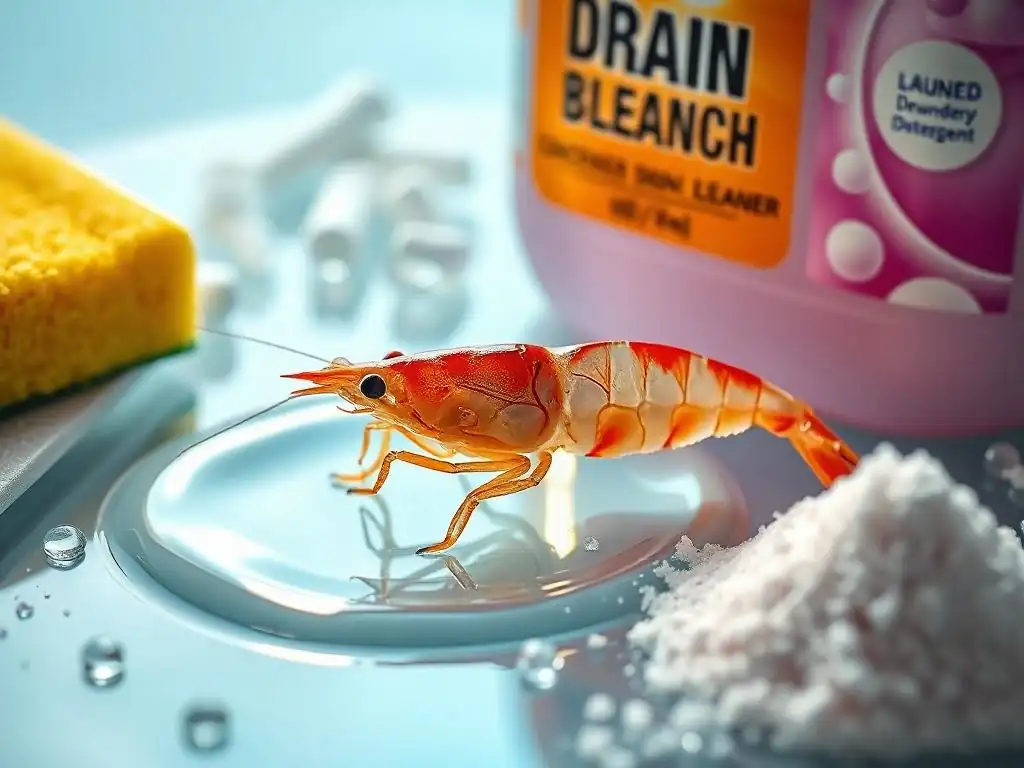
Soaps and detergents, ubiquitous in household cleaning, pose an extreme and often underestimated threat to shrimp. Their primary components, surfactants, are designed to break down surface tension and emulsify fats, properties that are devastating to aquatic life. Even a microscopic residue of soap on hands, a cleaning cloth, or a bucket used for water changes can introduce enough surfactant into the aquarium to damage shrimp gills, disrupt their cellular membranes, and lead to suffocation. The invisible film left behind can continue to leach into the water, causing prolonged distress.
Consider a common scenario: a bucket used for water changes is inadvertently washed with dish soap and not rinsed thoroughly enough. The residual soap, even if visually undetectable, can be lethal. Just a few drops of dish soap in a 10-gallon aquarium can wipe out an entire colony of shrimp within hours, as their gills become coated and unable to extract oxygen. This highlights why dedicated, never-used-for-anything-else equipment is essential for all aquarium maintenance.
Disinfectants and Bleach: Understanding Immediate Toxicity
Disinfectants, including chlorine bleach (sodium hypochlorite), are among the most immediately toxic substances to aquatic invertebrates. Their powerful oxidizing properties, designed to destroy bacteria and viruses, indiscriminately attack living tissues. Exposure, even to fumes or residual film, can cause rapid and irreversible damage to shrimp gills, nervous systems, and internal organs. The onset of symptoms is typically swift, ranging from erratic swimming to complete paralysis, often followed by death within minutes to a few hours.
The danger extends beyond direct contact. If surfaces near the aquarium are cleaned with bleach or strong disinfectants, airborne particles or residual films can settle on the water's surface or on equipment. For instance, a single drop of concentrated bleach in 5 gallons of water can create a chlorine concentration of several parts per million, a level instantly lethal to shrimp. This underscores the critical importance of avoiding the use of such shrimp toxic household chemicals anywhere near an open aquarium.
Air Fresheners and Aerosols: Assessing Invisible Risks
The Impact of VOCs on Aquatic Invertebrates
Air fresheners, aerosol sprays (e.g., hairspray, furniture polish), and even certain scented candles release Volatile Organic Compounds (VOCs) into the air. While seemingly harmless in a household context, these airborne chemicals can settle on the surface of aquarium water. Once dissolved, VOCs like formaldehyde, benzene, and phthalates become highly toxic to aquatic invertebrates. Shrimp, with their permeable exoskeletons, readily absorb these compounds, leading to neurotoxic effects, organ damage, and disruption of their endocrine systems.
Studies indicate that even low parts-per-billion concentrations of specific VOCs can impair essential biological functions in shrimp, such as molting, reproduction, and overall immune response. These invisible dangers can accumulate over time, leading to chronic stress and unexplained mortalities. The insidious nature of VOC contamination makes it particularly challenging to diagnose without specific chemical testing, emphasizing the need for preventative measures.
Avoiding Aerosol Exposure Near Aquariums
The wide dispersal of aerosol particles makes them a significant threat to an open aquarium. A single spray of hairspray across a room can send microscopic droplets drifting for minutes, eventually settling on the water's surface. These droplets contain concentrated chemicals that, upon dissolving, create a toxic environment for shrimp. Even "natural" or "odorless" aerosols can contain compounds harmful to aquatic life, as their safety is typically assessed for human inhalation, not aquatic exposure.
To safeguard shrimp, it is imperative to never use any aerosol products in the same room as an open aquarium. If spraying must occur nearby, the aquarium should be completely covered with a non-porous material, such as a thick plastic sheet, ensuring no gaps for airborne particles to enter. Adequate ventilation should be established immediately to dissipate any fumes, and the cover should remain in place until the air is clear, typically for at least 30-60 minutes after spraying.
Tap Water Treatment: Addressing Potential Chemical Concerns
Chloramine and Chlorine: Effective Neutralization Methods
Municipal tap water is routinely treated with chlorine or chloramine to disinfect it and make it safe for human consumption. While effective for drinking, both chlorine and chloramine are extremely toxic to shrimp and other aquatic life. Chlorine directly damages gill tissues and interferes with oxygen uptake, leading to rapid suffocation. Chloramine, a more stable compound of chlorine and ammonia, is even more problematic because it does not dissipate simply by aeration or letting water sit overnight, unlike chlorine.
Therefore, using a high-quality water conditioner that specifically neutralizes both chlorine and chloramine is absolutely essential for every water change in a shrimp aquarium. These conditioners work by chemically binding to and rendering harmless these disinfectants. Relying solely on aging water for 24 hours will only remove chlorine, leaving the equally dangerous chloramine to harm your shrimp. Always add the conditioner to the new water before it enters the tank to ensure immediate neutralization.
Addressing Heavy Metal Contamination in Tap Water
Beyond chlorine and chloramine, tap water can also harbor heavy metals, such as copper, lead, and zinc, which can leach from plumbing pipes, especially in older homes. Shrimp are exquisitely sensitive to heavy metals, with copper being particularly lethal even at minute concentrations. For instance, copper concentrations as low as 0.03 parts per million (ppm) can be fatal to most freshwater shrimp species. These metals accumulate in their bodies, leading to organ failure and death.
If you suspect heavy metal contamination in your tap water, professional water testing is advisable. As a precautionary measure, or if tap water quality is consistently poor, consider using Reverse Osmosis (RO) or Deionized (DI) water. RO/DI water is virtually free of all contaminants, including heavy metals, but it lacks essential minerals. Therefore, it must be remineralized with products specifically designed for shrimp (e.g., GH/KH+ for Neocaridina, GH+ for Caridina) to achieve the appropriate water parameters before use in the aquarium.
Specific Chemicals and Their Impact on Shrimp Health
Ammonia: Recognizing and Preventing Ammonia Spikes
Ammonia (NH3) is profoundly toxic to shrimp, even at concentrations as low as 0.05 mg/L. It directly impairs gill function, hindering the shrimp's ability to absorb oxygen and excrete waste, leading to rapid internal poisoning and suffocation. Ammonia spikes are most common in newly set up aquariums that have not completed the nitrogen cycle, or in established tanks due to overfeeding, decaying organic matter (like uneaten food or dead plants/animals), or a sudden crash of beneficial bacteria.
Preventing ammonia spikes is critical for shrimp survival. This involves thoroughly cycling the aquarium before introducing shrimp, ensuring a robust colony of beneficial bacteria is established. Additionally, avoid overfeeding, as uneaten food quickly breaks down into ammonia. Regular, gentle gravel vacuuming to remove detritus and decaying organic matter, along with consistent water changes, are essential practices to keep ammonia levels at zero. Frequent water testing for ammonia, especially in new or struggling tanks, allows for early detection and intervention.
Nitrites and Nitrates: Maintaining a Healthy Nitrogen Cycle
Nitrites (NO2-) represent the second stage of the nitrogen cycle and are also highly toxic to shrimp, though generally less so than ammonia. Nitrites interfere with the shrimp's hemocyanin (their oxygen-carrying blood pigment), preventing it from binding with oxygen. This leads to a condition often called "brown blood disease," where shrimp effectively suffocate despite adequate oxygen levels in the water. Concentrations above 0.5 mg/L are dangerous and can cause significant stress and mortality.
Nitrates (NO3-), the final product of a healthy nitrogen cycle, are considerably less toxic than ammonia or nitrites but can still cause chronic issues in high concentrations. For sensitive Caridina shrimp, nitrate levels should ideally be kept below 20 ppm, while Neocaridina can tolerate up to 40 ppm. High nitrate levels can lead to chronic stress, stunted growth, reduced breeding success, and increased susceptibility to disease. The primary method for controlling nitrate accumulation is regular water changes, which dilute the nitrates and replenish essential minerals.
Copper: Identifying and Eliminating Sources of Copper Contamination
Copper is arguably one of the most lethal elements for shrimp, even in minute quantities. As shrimp utilize a copper-based blood system (hemocyanin), copper contamination directly attacks their circulatory and respiratory functions. Concentrations as low as 0.03 ppm can be fatal to most shrimp species within hours, making it a particularly insidious shrimp toxic household chemical. Common sources include some fish medications (especially those for parasitic infections), certain plant fertilizers, older copper plumbing pipes, and even some aquarium decorations or substrates that contain copper.
Extreme vigilance is required when introducing any new product or item to a shrimp tank. Always meticulously check product labels for "copper sulfate," "chelated copper," or similar ingredients. If copper contamination is suspected, immediate and substantial water changes (e.g., 50-70%) are crucial. Additionally, using a specialized copper-removing media, such as activated carbon or specific copper adsorbents, in the filter can help to rapidly remove the contaminant from the water column.
Pesticides and Insecticides: Preventing Accidental Exposure
Pesticides and insecticides, by their very design, are formulated to kill insects. Since shrimp are crustaceans and share similar biological mechanisms with insects, these chemicals are equally, if not more, lethal to them. Even trace amounts, whether from airborne particles, residue on hands, or contaminated clothing, can cause rapid paralysis, organ failure, and mass mortality. This category represents some of the most potent shrimp toxic household chemicals.
Common household sources of these deadly substances include bug sprays, ant traps, flea and tick treatments for pets, and garden pesticides. The danger is not limited to direct spraying; even walking into the aquarium room after handling treated pets or gardening with pesticides can transfer harmful residues. Absolute caution is paramount: never use these products in the same room as an aquarium, wash hands thoroughly with plain water before touching any aquarium equipment or water, and ensure no treated clothing or items come into contact with the tank.
Preventing Chemical Contamination in Shrimp Aquariums
Safe Cleaning Practices Around Aquatic Environments
Utilizing Aquarium-Safe Cleaning Alternatives
Maintaining a clean home environment is important, but it must be done with extreme care around shrimp aquariums. For cleaning surfaces near the tank, always opt for simple, non-toxic alternatives. Plain water is often sufficient for wiping down surfaces. For tougher spots, a diluted white vinegar solution (e.g., 1:1 ratio with water) can be effective and is generally safe once it has dried and the area is aired out. It is crucial to avoid all commercial cleaning sprays, polishes, and air fresheners in the vicinity of the aquarium.
When it comes to cleaning inside the aquarium or its equipment, only use dedicated tools that have never been exposed to household soaps, detergents, or other chemicals. This means having separate buckets, brushes, and siphons specifically for aquarium use. Even a minute residue from a previously used cleaning product can be enough to introduce shrimp toxic household chemicals into the water, leading to devastating consequences for the shrimp colony.
Avoiding Direct Spray Near Open Aquariums
The fine mist generated by aerosol sprays and pump-action cleaners can travel surprisingly far and settle imperceptibly on the surface of your aquarium water. These airborne particles, once dissolved, introduce concentrated chemicals that are highly toxic to shrimp. Even if the spray is not directly aimed at the tank, the wide dispersal of these particles poses a significant risk of contamination.
To mitigate this danger, it is imperative to completely cover the aquarium with a solid, non-porous lid or a heavy-duty plastic sheet whenever any spraying activity occurs in the same room or even an adjacent area. Ensure the cover creates a tight seal to prevent any airborne particles from entering. Once the spraying is complete, ensure adequate ventilation by opening windows or using fans to dissipate any lingering fumes before uncovering the tank, typically after 30-60 minutes.
Water Changes: A Crucial Tool for Maintaining Water Quality
Recommended Water Change Frequency and Volume
Regular water changes are one of the most effective tools for maintaining optimal water quality and preventing the accumulation of shrimp toxic household chemicals and metabolic waste products. For most shrimp tanks, a weekly water change of 10-20% is recommended. This frequency and volume help to dilute nitrates, replenish essential minerals, and remove any minor contaminants that may have inadvertently entered the water. Avoid large, infrequent water changes (e.g., 50% or more every month) as these can cause sudden shifts in water parameters, shocking the delicate shrimp.
Consistency is key; irregular water changes can lead to fluctuating water chemistry and a gradual, unnoticed buildup of harmful substances. Small, frequent changes also minimize stress on the shrimp, allowing them to acclimate gradually to the new water. Always assess your specific tank's needs based on stocking density, feeding habits, and water test results, adjusting the frequency and volume of water changes accordingly.
Proper Dechlorination and Water Preparation Techniques
The proper preparation of new water for changes is non-negotiable for shrimp safety. Always use a high-quality water conditioner that explicitly states it neutralizes both chlorine and chloramine. Add the conditioner to the new water before it is introduced into the aquarium. This ensures that any harmful disinfectants are neutralized immediately upon contact, preventing them from ever reaching your shrimp. Never add tap water directly to the tank without conditioning it first.
Additionally, temperature matching is crucial. The new water should be within 1-2 degrees Fahrenheit (approximately 0.5-1 degree Celsius) of the aquarium's current temperature. Sudden temperature fluctuations can cause severe stress and shock to shrimp, weakening their immune systems and making them more susceptible to any lingering chemical stress or disease. Slowly adding the new water to the tank, perhaps via a drip line or small cup, further minimizes stress.
Selecting Shrimp-Safe Aquarium Equipment and Decorations
Choosing Inert Substrates to Prevent Leaching
The substrate in a shrimp aquarium forms the foundation of its environment and can be a hidden source of contamination if not chosen carefully. It is vital to select inert substrates that will not leach harmful substances, particularly heavy metals or pH-altering compounds, into the water over time. Examples of safe, inert substrates include high-quality inert sands (e.g., ADA La Plata Sand, CaribSea Super Naturals), specific types of natural gravel, or dedicated aquarium soils designed for planted tanks (which often buffer pH but are generally safe for shrimp once cycled).
Avoid substrates with unknown compositions, brightly colored "decorative" gravels that might be coated with paints or dyes, or those marketed for specific fish types that may contain copper or other shrimp toxic household chemicals. Always thoroughly rinse new substrates with plain water until the water runs clear before adding them to the tank. If uncertain about a substrate's inertness, a simple test involves placing a small amount in a container of water and monitoring pH and GH over a few days.
Avoiding Potentially Toxic Decorations and Materials
Many common decorative items, particularly those not specifically designed for aquariums, can leach harmful chemicals into the water, posing a severe threat to shrimp. This includes certain plastics, craft items, painted rocks, metals, and even some natural materials that have not been properly prepared. Dyes, heavy metals (like lead or zinc), plasticizers, and other unknown compounds can slowly dissolve, creating a chronically toxic environment.
To ensure shrimp safety, only use decorations explicitly labeled as "aquarium safe" from reputable brands. Natural driftwood should be properly cured (boiled and soaked) to remove tannins and potential contaminants. Inert rocks, such as Seiryu Stone, Dragon Stone, or lava rock, are generally safe once thoroughly cleaned. Always avoid any item with paint, glaze, unknown coating, or metal components, as these are common sources of shrimp toxic household chemicals. When in doubt, it's always safer to err on the side of caution and not introduce the item to your shrimp tank.
Recognizing Signs of Chemical Exposure in Shrimp
Behavioral Indicators of Chemical Stress
Identifying Erratic Swimming and Lethargy
One of the earliest and most noticeable signs of chemical exposure in shrimp is a drastic change in their behavior. Healthy shrimp are typically active grazers, constantly foraging for biofilm and micro-organisms. However, if exposed to shrimp toxic household chemicals, they may exhibit frantic, erratic swimming, darting around the tank, or attempting to climb the glass walls or even out of the water. This hyperactive phase is often followed by profound lethargy, where shrimp become unusually still, lie on their sides, or sit motionless for extended periods.
These behavioral shifts are clear indicators of severe discomfort and a desperate struggle to cope with the altered water chemistry. They might also display unusual, jerky movements, twitching, or convulsive motions, signaling neurological distress from the toxins affecting their nervous systems. Observing such widespread and sudden behavioral changes across the colony warrants immediate investigation into water parameters and potential contamination.
Monitoring Changes in Appetite and Hiding Behavior
A sudden and significant change in a shrimp's appetite is another critical indicator of chemical stress. Healthy shrimp are voracious eaters, constantly grazing on tank surfaces and readily consuming specialized shrimp foods. If your shrimp suddenly lose interest in food, refuse to eat, or show a marked decrease in their foraging activity, it strongly suggests an underlying issue, often related to water quality or chemical contamination.
Increased hiding behavior is also a common stress response. While shrimp naturally hide occasionally, especially after molting, if an entire colony suddenly disappears from view, clusters in unusual, secluded spots, or remains hidden for much longer than usual, it signals a perceived threat from their environment. This collective disappearance often indicates widespread discomfort or a direct response to the presence of shrimp toxic household chemicals, prompting them to seek refuge from the stressor.
Physical Manifestations of Chemical Poisoning
Observing Discoloration or Opacity Changes
Chemical poisoning can manifest in visible physical changes in shrimp. One common sign is a noticeable discoloration or dulling of their vibrant colors. Shrimp may appear faded, washed out, or develop blotchy patches on their bodies. More alarmingly, their muscle tissue may become unusually opaque or milky, particularly in the abdomen or tail. This "milky shrimp" appearance often indicates severe internal distress, organ damage, or even bacterial infections secondary to the stress caused by toxins.
This opacity is a serious sign, as it suggests the internal organs or the hemolymph (blood) itself has been compromised. The normal transparency or semi-transparency of a healthy shrimp's body parts is lost, replaced by a cloudy, solid appearance. Such changes warrant immediate attention, as they usually signify severe and often irreversible damage from shrimp toxic household chemicals.
Identifying Molting Difficulties and Failed Sheds
Molting, the process by which shrimp shed their old exoskeleton to grow, is highly sensitive to environmental conditions and chemical exposure. Chemical stress can severely disrupt this vital process, leading to "molting death syndrome." In this scenario, shrimp may get stuck in their old shell, fail to fully shed it, or die during the arduous molting process, often seen as a shrimp struggling to break free from its old exoskeleton. The old shell may remain partially attached, or the shrimp may simply be found dead next to a partially shed skin.
Successful molting requires specific mineral levels (calcium and magnesium) and a stress-free environment. Toxins can disrupt the hormonal balance necessary for a proper molt, or directly weaken the shrimp, making the process fatal. Observing multiple failed molts or an increase in molting-related deaths in a short period is a strong indicator of environmental issues, with shrimp toxic household chemicals being a prime suspect.
Emergency Response: Actions to Take During a Chemical Event
Immediate Water Changes: Reducing Contaminant Concentration
In the event of suspected chemical contamination, the most immediate and critical action is to perform a large water change. A substantial water change, typically 50-70% of the tank's volume, can rapidly dilute the concentration of shrimp toxic household chemicals in the water column. This quick dilution is crucial for minimizing further absorption by the shrimp and reducing the overall toxic load.
Prepare the new water quickly but carefully, ensuring it is properly dechlorinated (or remineralized RO/DI water) and temperature-matched to the aquarium water to avoid further stress. If the source of contamination is known and ongoing (e.g., a spill near the tank), consider performing a second large water change shortly after the first, perhaps within a few hours, to ensure maximal removal of residual toxins. This aggressive approach offers the best chance for shrimp survival.
Activated Carbon Filtration: Effective Chemical Removal
Following immediate water changes, adding fresh, high-quality activated carbon to your aquarium filter is a vital step in emergency response. Activated carbon is highly effective at adsorbing a wide range of organic chemicals, odors, medications, and some heavy metals from the water column. It acts as a powerful sponge, pulling dissolved contaminants out of the water that may not have been removed by water changes alone.
Place a new bag of activated carbon in an area of high water flow within your filter. It is important to remember that activated carbon has a finite capacity; once saturated, it can no longer absorb chemicals and may even begin to leach previously adsorbed substances back into the water. Therefore, if the chemical event was significant, replace the carbon every few days (e.g., every 2-3 days for a week) to ensure continuous removal. While not a permanent solution, activated carbon is an indispensable emergency tool for mitigating chemical poisoning.
Close Observation: Monitoring Shrimp Recovery and Behavior
After implementing emergency measures, continuous and close observation of your shrimp is crucial for several days. Monitor their behavior meticulously: look for improvements in activity levels, a return to normal foraging, and a decrease in erratic swimming or hiding. Observe their physical appearance for any signs of continued discoloration, opacity, or molting difficulties. Any lingering symptoms suggest that the contamination may not have been fully resolved or that the shrimp are still severely stressed.
It is also vital to frequently test your water parameters (ammonia, nitrite, nitrate, pH) to ensure that the nitrogen cycle has not crashed due to the chemical insult. A compromised biological filter will lead to secondary ammonia and nitrite spikes, further endangering the shrimp. Be prepared for potential secondary infections, as stressed shrimp are more susceptible to disease. Consider adding beneficial bacteria supplements to help re-establish a healthy nitrogen cycle and aid in the shrimp's recovery.
Long-Term Strategies for a Shrimp-Safe Home Environment
Educating Household Members About Shrimp Sensitivity
Creating a truly shrimp-safe home environment is a collective effort that requires the understanding and cooperation of everyone in the household. Educating family members, roommates, or visitors about the extreme sensitivity of shrimp to common household products is a critical long-term strategy. Many people are unaware that seemingly innocuous items like hand soap or air fresheners can be lethal to aquatic invertebrates.
Practical tips for educating household members include: clearly labeling all buckets and equipment designated only for aquarium use; explaining the dangers of spraying chemicals near the tank, even in adjacent rooms; and emphasizing the importance of thorough handwashing with plain water before touching any aquarium water or equipment. A brief, clear explanation of "why" these precautions are necessary can foster greater adherence and protect your valuable shrimp.
Establishing a Designated Safe Zone Near the Aquarium
To minimize the risk of accidental exposure to shrimp toxic household chemicals, establish a designated "safe zone" around your aquarium. This area should be strictly free of any cleaning products, air fresheners, pest control sprays, or other potentially harmful chemicals. Ideally, the aquarium should be located in a room where such chemicals are used infrequently, such as a bedroom or a dedicated hobby room, rather than a kitchen, bathroom, or laundry area prone to chemical use.
This safe zone should also be kept clean and free of dust and fumes from other household activities. By creating a physical boundary and a mental reminder, you significantly reduce the chances of accidental spills, airborne contamination, or cross-contamination from cleaning cloths or hands. A well-planned aquarium location is a proactive step in preventing chemical incidents.
Regular Water Testing: Monitoring Key Parameters and Potential Toxins.
Consistent and regular water parameter testing is the cornerstone of long-term shrimp health and an invaluable tool for preventing and detecting the presence of shrimp toxic household chemicals. Routinely testing for ammonia, nitrite, nitrate, pH, general hardness (GH), and carbonate hardness (KH) allows you to monitor the stability of your nitrogen cycle and the overall suitability of your water. This helps identify imbalances before they become critical, providing an early warning system.
Beyond the standard parameters, consider occasional testing for specific contaminants like copper, especially if you have older copper plumbing or if unexplained shrimp deaths persist. Many home test kits or professional lab services can detect heavy metals. Early detection of any imbalance or the presence of subtle shrimp toxic household chemicals through regular testing allows for prompt corrective action, preventing severe consequences for your delicate shrimp colony and ensuring their long-term well-being.
Frequently Asked Questions
What types of household cleaners are most dangerous to shrimp?
Many common cleaners are toxic. Look out for those containing ammonia, bleach, or copper. Even small amounts can be deadly to your shrimp.
How can I prevent household chemicals from entering my aquarium?
Always wash your hands thoroughly before interacting with your tank, and never use cleaning products near the aquarium. Be mindful of airborne sprays and cross-contamination from cleaning tools.
Are certain types of soap safe to use around my shrimp tank?
Generally, no. Most soaps contain detergents and chemicals harmful to shrimp. If you must use soap, ensure it is completely rinsed and free of residue. It's better to avoid it altogether.
What are the symptoms of chemical poisoning in shrimp?
Signs include erratic swimming, loss of color, lethargy, and sudden death. These symptoms can appear quickly after exposure to toxic chemicals.
What should I do if I suspect my shrimp have been exposed to toxic chemicals?
Perform an immediate water change and add activated carbon to your filter. Monitor your shrimp closely and consider using a water testing kit to check for contaminants.
Final Reflection: Protecting Our Aquatic Ecosystems
The information presented throughout this article highlights a critical, often overlooked reality: the pervasive threat of everyday household items to delicate aquatic life, specifically shrimp. The seemingly innocuous chemicals we use to clean our homes and gardens can have devastating consequences when they enter our waterways, underscoring the urgent need for greater awareness and responsible disposal practices.
This issue extends far beyond the confines of our homes, impacting the health of entire ecosystems and the livelihoods of those who depend on them. The realization that our actions, however small, can contribute to such widespread environmental damage is a sobering one. We are tied to the ocean. And when we go back to the sea, whether it is to sail or to watch it, we are going back from whence we came.
- John F. Kennedy. This quote reminds us of our intrinsic connection to the marine world and our responsibility to protect it.
As you reflect on the information shared, consider the choices you make in your own home. What steps can you take to reduce your reliance on harmful chemicals and ensure their safe disposal? Let us all commit to becoming more conscious consumers and stewards of our environment, safeguarding the health of our aquatic ecosystems for generations to come.
Unleash a Thriving Shrimp Paradise!
Thank you for diving into the world of shrimp keeping with us! We hope you've gained valuable insights into protecting your delicate aquatic friends from everyday dangers lurking in your home. Now, let's put that knowledge into action!
Here are a few things you can do right now:
- Immediately review your household cleaning products and replace any containing copper, ammonia, or bleach with shrimp-safe alternatives. This single action can drastically improve your shrimp's health.
- Explore our other articles on aquarium maintenance for tips on maintaining optimal water parameters and preventing future issues.
- Share this vital information with fellow aquarium enthusiasts to help create a safer shrimp-keeping community!
What surprising household item are you most concerned about affecting your shrimp, and what steps will you take to mitigate the risk?