
Can You Keep a Single Cardinalfish? Understanding Their Social Needs and Wellbeing

Welcome to Aquarium Mastery!
Ever wondered if your vibrant Cardinalfish needs a companion? Or if keeping one solitary fish is truly the best for its well-being? Dive into our in-depth exploration of Cardinalfish social tank requirements and uncover the secrets to creating a thriving, harmonious environment for these captivating saltwater beauties. Prepare to unlock the knowledge that will transform your aquarium from simply a display into a vibrant ecosystem, where your fish not only survive, but thrive. Ready to learn more?
- Cardinalfish: Social Needs and Wellbeing in Aquariums
- Cardinalfish Overview
- Social Behavior of Cardinalfish
- Social Tank Requirements for Cardinalfish
- Compatible Tank Mates for Cardinalfish
- Cardinalfish School Size in Aquariums
- Setting Up a Social Tank for Cardinalfish
- Feeding Cardinalfish Schools
- Alternative Solutions for Single Cardinalfish
- Cardinalfish Health in Social Settings
- Responsible Cardinalfish Keeping
-
Frequently Asked Questions
- Can I keep just one Cardinalfish in my aquarium?
- What is the ideal group size for Cardinalfish in a social tank?
- What are the potential problems if I don't meet Cardinalfish social tank requirements?
- What size tank is needed to accommodate a group of Cardinalfish comfortably?
- What tank mates are suitable for Cardinalfish in a social tank setting?
- Final Reflection: The Echoes of Connection in Our Aquariums
- Ignite Your Aquarium Passion: Start Small, Dream Big!
Cardinalfish Overview
Cardinalfish in the Aquarium Hobby
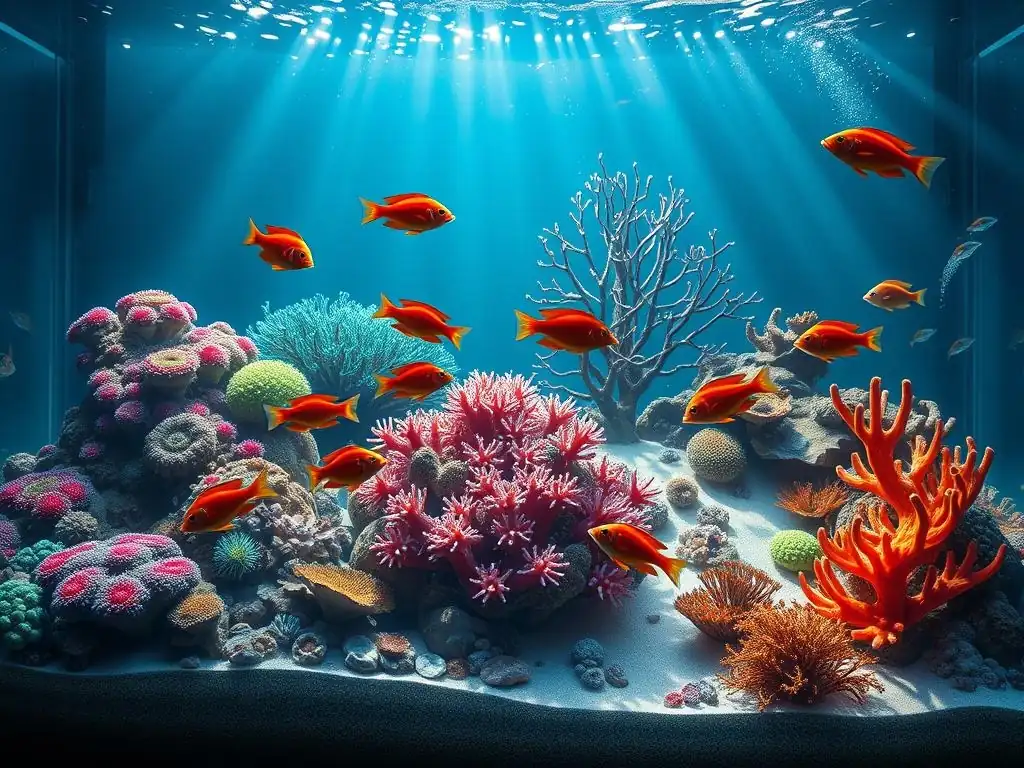
Cardinalfish have long been a popular choice in the marine aquarium hobby due to their striking appearance, generally peaceful disposition, and relatively manageable size, making them suitable for a wide range of reef aquariums. Their most distinctive feature is their large, often reflective eyes, which are perfectly adapted for their crepuscular or nocturnal habits, allowing them to navigate and hunt in low-light conditions.
Aquarists appreciate the diverse patterns and colors found within the family, from the unique striped and spotted patterns of the Pajama Cardinalfish to the vibrant hues of the Flame Cardinalfish, adding visual interest and dynamic movement to a tank.
While many cardinalfish species are considered robust and adaptable to captive environments, their popularity also stems from their typically non-aggressive nature, which allows them to coexist peacefully with a variety of other reef inhabitants. This makes them excellent candidates for community tanks. However, understanding their specific needs, particularly their inherent social behaviors and the importance of meeting Cardinalfish social tank requirements, is paramount for ensuring their long-term health, vitality, and natural expression in a home aquarium setting.
Popular Cardinalfish Species: Pajama, Banggai, and Flame Cardinalfish
Among the myriad of cardinalfish species, a few stand out as perennial favorites in the aquarium trade due to their unique aesthetics and care requirements. The Pajama Cardinalfish ( Sphaeramia nematoptera) is instantly recognizable by its vibrant yellow face, broad black mid-body band, and a tail section adorned with red spots, typically reaching about 3 inches (7.5 cm) in length. They are widely appreciated for their peaceful demeanor and distinctive appearance.
The Banggai Cardinalfish ( Pterapogon kauderni) is another highly sought-after species, famed for its elegant, elongated fins and striking black and white striped pattern. Growing up to 3 inches (7.5 cm), this critically endangered species is also notable for its unique paternal mouthbrooding behavior, where the male carries the eggs and fry in his mouth.
The Flame Cardinalfish ( Apogon maculatus), conversely, captivates with its intense, fiery red-orange body, often complemented by a prominent black spot near its caudal fin. This species can grow slightly larger, reaching up to 4 inches (10 cm), and brings a splash of vivid color to the reef tank.
While these three are the most commonly encountered, other species like the Blue-eyed Cardinalfish ( Apogon parvulus) and the Ring-tailed Cardinalfish ( Apogon aureus) also offer appealing choices, each with their own subtle variations in color, pattern, and social tendencies. Each species, regardless of its distinctiveness, benefits significantly from an environment that respects its natural Cardinalfish social tank requirements.
In their natural habitats, most cardinalfish species exhibit strong schooling or shoaling behaviors, inhabiting diverse environments such as shallow coral reefs, rocky crevices, and seagrass beds across the Indo-Pacific and Atlantic oceans. This collective behavior is not merely coincidental; it serves as a fundamental survival strategy, primarily offering enhanced protection from predators. A large, cohesive group can confuse or deter potential threats, such as larger piscivorous fish, sharks, and barracudas, by presenting a unified, difficult-to-target mass rather than isolated individuals. This inherent need for group security is a critical factor in understanding Cardinalfish social tank requirements.
Beyond predator avoidance, schooling also plays a vital role in foraging efficiency. Moving as a unified unit allows the group to locate and exploit food sources more effectively, covering a wider area and potentially stirring up prey. For instance, species like the Banggai Cardinalfish are often observed forming relatively small, stable groups around protective structures like sea urchins or anemones during the day, emerging as a collective to feed on zooplankton at night. This deeply ingrained social structure underscores that their natural behaviors and overall wellbeing are intrinsically linked to the presence of conspecifics.
Group Hierarchy and Communication
While cardinalfish schools do not typically exhibit the rigid, complex hierarchies seen in some other fish families, they do possess a fluid social structure where individuals recognize and interact with their conspecifics. Dominance, when observed, is usually subtle and often relates to preferential access to prime hiding spots or feeding opportunities, rather than overt aggression. In species such as the Pajama Cardinalfish, larger or more robust individuals might subtly influence the direction or cohesion of the group, but overall, interactions within a stable school are largely peaceful and cooperative.
Communication within cardinalfish schools primarily relies on visual cues and subtle body language. Changes in swimming patterns, synchronized movements, and even slight alterations in body coloration can convey vital information about alarm, the presence of food, or the need for group cohesion.
For example, a sudden darting movement or a rapid color change by one member can trigger a synchronized flight response in the entire school, demonstrating their innate ability to communicate and react collectively to perceived threats. This collective sensitivity highlights why meeting their Cardinalfish social tank requirements through appropriate group housing is crucial for their psychological and physiological health.
Negative Impacts of Solitary Confinement
Keeping a cardinalfish in solitary confinement, especially species that are naturally strong schoolers like the Pajama or Banggai Cardinalfish, can have profoundly negative impacts on their overall wellbeing. Without the constant presence of conspecifics, these fish often experience heightened stress levels, which can manifest as lethargy, a significant reduction in appetite, and a general disinterest in their surroundings.
The absence of a group denies them their natural sense of security, making them feel perpetually vulnerable and anxious. This chronic stress significantly compromises their immune system, leaving them far more susceptible to common aquarium diseases such as Ich and marine velvet.
Beyond physical health, solitary cardinalfish frequently display severe behavioral aberrations. They may become excessively shy and reclusive, spending most of their time hiding deep within rockwork or in tank corners, emerging only reluctantly for food. Conversely, some individuals might exhibit unusual or misdirected aggression towards other non-conspecific tank mates dueishing to their underlying stress.
Their normally vibrant coloration can dull significantly, and their innate schooling behaviors, such as synchronized swimming or active foraging, diminish or cease entirely. Research on similar schooling fish indicates that chronic isolation can reduce their lifespan by as much as 20-30% compared to those kept in appropriate social settings, underscoring the critical nature of their Cardinalfish social tank requirements.
Signs of Stress and Loneliness
Recognizing the signs of stress and loneliness in a cardinalfish is paramount for any responsible aquarist, as prompt intervention can dramatically improve their quality of life. Common physiological indicators of distress include clamped fins, where the fins are held tightly against the body instead of being naturally spread, and rapid, labored breathing, signaling a compromised respiratory system. A solitary cardinalfish suffering from loneliness might spend an excessive amount of time hiding in rockwork or dark corners, emerging only cautiously, or exhibit erratic, aimless swimming patterns without purpose or direction.
Furthermore, a noticeable fading of their normally vibrant colors is a strong visual cue of chronic stress, as their chromatophores (pigment cells) contract due to physiological duress. Refusal to eat, even preferred foods, or spitting out food after taking it, indicates a severe level of discomfort and can lead to malnutrition. Observing one or more of these signs in a single cardinalfish is a clear indication that its fundamental Cardinalfish social tank requirements are not being met, and the fish is experiencing significant psychological and physiological distress due to its isolated state.
Compatible Tank Mates for Cardinalfish
Peaceful Tank Mates
When selecting tank mates for cardinalfish, particularly when aiming to meet their Cardinalfish social tank requirements by housing them in a school, it is imperative to choose species that are equally peaceful and non-aggressive. Ideal companions include small, docile fish that will not harass or outcompete cardinalfish for food or space. Excellent choices include various species of gobies, such as watchman gobies or diamond gobies, which typically occupy the bottom of the tank and pose no threat.
Similarly, blennies like the lawnmower blenny or tailspot blenny are good additions, being primarily herbivorous and generally non-confrontational. Smaller, peaceful wrasses, such as the six-line wrasse or various fairy wrasses, can also coexist harmoniously, provided the tank offers sufficient space.
Invertebrates also make excellent and safe tank mates for cardinalfish. Cleaner shrimp (e.g., peppermint shrimp, skunk cleaner shrimp), various species of hermit crabs, and snails (e.g., turbo snails, Nassarius snails) are entirely ignored by cardinalfish and contribute positively to the tank's cleanup crew. Even certain types of peaceful clownfish, if introduced as juveniles and given adequate space in a larger tank, can coexist harmoniously, provided they do not display overly territorial aggression towards the cardinalfish. The goal is to create a balanced and stress-free environment where all inhabitants can thrive without conflict, directly supporting the cardinalfish's wellbeing.
Fish to Avoid: Aggressors and Competitors
To maintain the delicate balance and ensure the safety of a cardinalfish social tank, certain fish species should be strictly avoided due to their aggressive nature, predatory instincts, or direct competition for resources. Large, predatory fish such as lionfish, groupers, or large snappers will invariably view cardinalfish as a food source, leading to constant stress for the cardinalfish or, ultimately, their demise through predation. Similarly, fin-nippers like certain triggerfish (e.g., clown triggerfish) or large pufferfish can inflict severe injuries on cardinalfish, causing chronic stress and increasing their susceptibility to disease.
Highly territorial species, including many large angelfish (e.g., Emperor Angelfish in smaller tanks) or certain damsel fish (e.g., three-stripe damsel), can relentlessly harass cardinalfish, especially if the tank is not sufficiently large to provide adequate personal space and numerous hiding spots. Even other schooling fish that are much more boisterous or faster swimmers can inadvertently outcompete cardinalfish for food, leading to malnutrition over time. Prioritizing peaceful and similarly sized tank mates is paramount to meeting the precise Cardinalfish social tank requirements and ensuring the long-term health and stability of the entire aquarium ecosystem.
Cardinalfish School Size in Aquariums
Minimum School Size for Wellbeing
For most cardinalfish species commonly kept in aquariums, particularly the popular Pajama and Banggai Cardinalfish, a minimum school size of at least five to seven individuals is generally recommended to ensure their wellbeing and encourage natural behaviors. This specific number provides the collective security and comfort that these inherently schooling fish instinctively seek, significantly reducing individual stress levels. When maintained in such a group, cardinalfish are far more likely to swim openly, forage confidently, and display their full, vibrant coloration, contrasting sharply with the shy, reclusive behavior often observed in solitary or undersized groups.
The benefits of a larger group extend beyond mere numerical presence; it helps to dilute any minor aggression that might occur between individuals and provides a more stimulating and natural social environment. For instance, Banggai Cardinalfish, known for forming tighter, more stable groups, often thrive in schools of 4-6 individuals, which can also allow for the formation of breeding pairs if conditions are suitable. Adhering to these minimum Cardinalfish social tank requirements is not just about keeping the fish alive, but about enabling them to truly thrive and express their innate schooling instincts in a captive environment.
Factors Influencing School Size: Tank Size and Species
The optimal school size for cardinalfish is significantly influenced by the aquarium's physical dimensions, primarily its total volume and footprint. A larger tank, for example, a 75-gallon (280-liter) or 120-gallon (450-liter) reef tank, provides ample swimming space and territory for a larger school of 8-10 Pajama Cardinalfish, effectively minimizing potential territorial disputes or bullying. Conversely, a smaller tank, such as a 30-gallon (113-liter) nano reef, might only comfortably house a trio of a less active species, or a very small group of 3-4 Banggai Cardinalfish due to their more sedentary and localized social units.
Species-specific social dynamics also play a crucial role in determining appropriate school size. While Pajama Cardinalfish are generally tolerant of larger, more loosely associated groups, Banggai Cardinalfish, despite being schooling fish, often form smaller, more defined social units, sometimes even stable pairs that maintain a small territory.
Flame Cardinalfish, while also benefiting from the company of their own kind, can occasionally exhibit more territorial behavior within their species if the tank is too small or if there are insufficient hiding spots to diffuse potential squabbles. Understanding these nuances is essential for meeting the precise Cardinalfish social tank requirements for each specific species and fostering a harmonious, thriving aquarium environment.
Tank Size and Aquascaping
Establishing a suitable environment is paramount for successfully meeting Cardinalfish social tank requirements. For a small group of 3-5 cardinalfish, a minimum tank size of 30 gallons (approximately 113 liters) is often recommended, providing a basic foundation for their social needs. However, a 50-gallon (190-liter) or larger tank is always preferable, as it offers greater water volume for stability and ample space for a larger, more natural school. The tank should prioritize a good footprint over sheer height, as this allows for more extensive swimming lanes and bottom space, which cardinalfish utilize.
Aquascaping plays a critical role in providing security and comfort. Cardinalfish thrive in environments with abundant live rock arranged to create numerous caves, crevices, and overhangs. These structures serve as essential hiding spots, particularly during their more active nocturnal periods or when they feel threatened, reducing stress significantly. Providing multiple secure retreats allows individual fish to establish small, non-aggressive territories within the larger group. Additionally, dim or subdued lighting, particularly during the day, mimics their natural crepuscular habitat and encourages them to be more active and visible, enhancing their sense of security and overall wellbeing.
Water Parameters and Filtration
Maintaining stable and pristine water parameters is fundamental for the health of any marine fish, including cardinalfish, and directly impacts their ability to thrive in a social setting. Ideal water temperature should consistently range from 72-78°F (22-25.5°C), salinity at 1.023-1.025 specific gravity, and pH between 8.1-8.4. Crucially, ammonia and nitrite levels must always be undetectable (0 ppm), and nitrates should be kept as low as possible, ideally below 10-20 ppm, to prevent chronic stress and disease. Regular water changes, typically 10-20% bi-weekly or monthly, are essential for nutrient export and replenishment of vital trace elements.
Robust filtration is equally essential to handle the bioload of a cardinalfish school effectively. A high-quality protein skimmer is strongly recommended to efficiently remove organic waste before it breaks down into harmful nitrates and other undesirable compounds. Biological filtration, primarily provided by well-cured live rock and efficient filter media, is vital for the complete nitrogen cycle.
Furthermore, ensuring good water flow without creating strong, turbulent currents that might stress these relatively sedate swimmers helps distribute oxygen and nutrients evenly while preventing detrimental dead spots. Meeting these stringent water quality Cardinalfish social tank requirements minimizes stress, prevents disease outbreaks, and allows the school to flourish.
Feeding Cardinalfish Schools
Varied Diet for Nutritional Needs
Cardinalfish are primarily carnivores, and providing a varied and nutritious diet is crucial for their long-term health, vibrant coloration, and overall vitality, especially when catering to the Cardinalfish social tank requirements of a school. Their diet should consist of a diverse mix of high-quality frozen foods that mimic their natural zooplankton diet. Excellent choices include Mysis shrimp, enriched brine shrimp, copepods, and finely chopped krill. These foods provide essential proteins, beneficial fatty acids, and other vital nutrients necessary for robust growth and immune function.
Supplementing frozen foods with a high-quality marine flake or pellet food specifically designed for carnivorous marine fish can ensure a complete nutritional profile and offer convenience. Feeding should occur 2-3 times daily in small amounts that can be entirely consumed within a few minutes. This frequent, small feeding strategy ensures that all members of the school get adequate nutrition, including potentially shyer or less dominant individuals, and helps maintain water quality by preventing excessive uneaten food from decaying and polluting the tank.
Addressing Feeding Competition
In a social tank containing a school of cardinalfish, feeding competition can occasionally arise, particularly if there is a significant size difference among individuals or if some fish exhibit more dominant behaviors. To effectively mitigate this, it is highly advisable to disperse food widely across the tank rather than concentrating it in a single spot. This scattering technique allows shyer or less aggressive cardinalfish to access food without direct confrontation, ensuring that all members of the school receive their fair share and preventing any single individual from monopolizing the meal.
For larger schools or tanks with complex aquascaping that might create visual barriers, offering food at multiple points simultaneously can further reduce competition and stress during feeding times. Observing the feeding behavior of the group is key; if certain individuals consistently miss out or appear underfed, adjustments to the feeding technique, such as target feeding specific areas or temporarily isolating a very aggressive eater, might be necessary. Effectively addressing feeding competition is a practical and important aspect of managing Cardinalfish social tank requirements to ensure the nutritional wellbeing of the entire school.
Alternative Solutions for Single Cardinalfish
Rehoming Options
If an aquarist finds themselves with a single cardinalfish that is exhibiting clear signs of stress, reclusiveness, or loneliness, rehoming is a compassionate and often necessary alternative solution to improve its quality of life. Local fish stores, particularly those specializing in marine aquariums, may offer to take the fish, sometimes in exchange for store credit, and place it in a more suitable environment with other cardinalfish. It is important to carefully vet the store to ensure they have appropriate facilities and a clear plan for the fish's future wellbeing.
Another excellent avenue for rehoming is connecting with local aquarium clubs or active online forums dedicated to marine aquarists. Experienced hobbyists within these communities are often willing and able to adopt fish and provide them with the proper Cardinalfish social tank requirements, including successful integration into an existing school. Rehoming allows the isolated cardinalfish to join a group, significantly improving its quality of life and enabling it to express its natural schooling behaviors, which it cannot do alone. This option prioritizes the fish's welfare above all else.
Introducing New Cardinalfish to a School: Quarantine and Acclimation
For aquarists wishing to add more cardinalfish to an existing single specimen or to bolster an undersized school, a strict quarantine protocol is non-negotiable and critically important. New cardinalfish should be quarantined in a separate, dedicated tank for at least 3-4 weeks. During this period, they can be closely monitored for any signs of disease, such as Ich ( Cryptocaryon irritans) or marine velvet ( Amyloodinium ocellatum), and treated if necessary. This preventative measure is vital to prevent the introduction of pathogens that could decimate the entire main display tank and its existing inhabitants.
Once cleared from quarantine and deemed healthy, the acclimation process to the main display tank should be slow and methodical to minimize stress. Drip acclimation over several hours is highly recommended to slowly equalize water parameters, including temperature, salinity, and pH, between the quarantine tank and the main tank.
Introducing the new fish when the main tank lights are off or significantly dimmed can further reduce initial stress and potential aggression from existing inhabitants. Providing plenty of new or rearranged hiding spots in the main tank for the new arrivals also helps them settle in, ensuring a smoother transition and meeting their long-term Cardinalfish social tank requirements.
Common Diseases and Prevention
Even in well-maintained social settings, cardinalfish can be susceptible to common marine aquarium diseases, with external parasitic infections like Ich ( Cryptocaryon irritans) and marine velvet ( Amyloodinium ocellatum) being particularly prevalent. These opportunistic infections are often triggered by environmental stressors such as fluctuating water quality, inadequate nutrition, or the introduction of infected new fish. Symptoms typically include small white spots resembling salt grains on the body and fins (Ich) or a dusty, velvet-like coating (velvet), often accompanied by rapid breathing, scratching against decor, and lethargy.
Prevention is paramount to maintaining a healthy cardinalfish school. This involves rigorously adhering to stable and pristine water parameters, providing a high-quality, varied diet as previously discussed, and implementing a strict quarantine period for all new arrivals. Minimizing overall stress by providing ample hiding spots, compatible tank mates, and appropriate Cardinalfish social tank requirements significantly boosts their immune system, making them more resilient against pathogens. Regular observation of the school allows for early detection of symptoms, enabling prompt treatment and preventing a widespread outbreak from affecting the entire cardinalfish school and other tank inhabitants.
Beyond physical symptoms, closely monitoring the social interactions within a cardinalfish school is vital for detecting early signs of illness or stress, which directly relates to Cardinalfish social tank requirements. Healthy cardinalfish schools typically exhibit synchronized swimming, peaceful coexistence, and active foraging behaviors. Any deviation from this norm, such as an individual consistently separating from the group, hiding excessively, refusing to join the school, or being visibly bullied by others, warrants immediate investigation. These behavioral changes can be early indicators of underlying health issues or social distress.
While cardinalfish are generally peaceful, minor squabbles can occur, especially if the tank is undersized, if the school size is too small, or if new fish are introduced without proper acclimation. Persistent fin-nipping, relentless chasing, or a fish showing torn fins are clear indicators of problematic aggression that needs to be addressed.
Identifying the aggressor or the bullied individual early allows for timely intervention, such as re-arranging aquascaping to break up established territories, increasing school size to dilute aggression, or, in rare severe cases, separating the problematic fish to maintain the overall wellbeing and harmony of the cardinalfish social tank.
Responsible Cardinalfish Keeping
Ethical Considerations for Owners
Responsible cardinalfish keeping extends far beyond simply providing food and clean water; it encompasses a deep commitment to understanding and meeting their inherent social needs. Recognizing that most cardinalfish species are naturally schooling animals and thrive only with the company of their own kind is an ethical imperative for every aquarist. Purchasing a single cardinalfish without the intention or capacity to provide a suitable social environment is a disservice to the animal, leading to a diminished quality of life characterized by chronic stress, unnatural behaviors, and a shortened lifespan.
Prospective owners should conduct thorough research on the specific cardinalfish species they intend to keep, understanding its adult size, temperament, and, most importantly, its Cardinalfish social tank requirements before making a purchase. This proactive approach ensures that the aquarium environment can adequately support a healthy school, providing them with the security, stimulation, and natural expression of behavior they require to thrive, rather than merely survive, in captivity. Ethical keeping means prioritizing the animal's welfare by providing an environment that closely mimics its natural social structure.
Resources for Learning More
For aquarists seeking to deepen their understanding of cardinalfish care and advanced social tank requirements, numerous reputable resources are readily available. Online forums dedicated to marine aquariums, such as Reef2Reef or The Reef Central, offer vast archives of information and active communities where experienced hobbyists share insights, troubleshooting tips, and success stories. Similarly, specialized books on reef tank husbandry, marine fish profiles, and fish health provide comprehensive details on species-specific needs, breeding behaviors, and disease management protocols, serving as invaluable references.
Additionally, reputable marine aquarium retailers often employ knowledgeable staff who can offer tailored advice based on their extensive experience with various species and tank setups. Attending local aquarium club meetings or events can also provide valuable networking opportunities and access to local expertise, fostering a sense of community among aquarists. Continuous learning and staying updated on best practices are crucial for providing the optimal environment and ensuring the long-term health and wellbeing of a cardinalfish school in a home aquarium, fulfilling all aspects of their Cardinalfish social tank requirements.
Frequently Asked Questions
Can I keep just one Cardinalfish in my aquarium?
Generally, it's not recommended. Cardinalfish are social creatures and thrive in groups. Keeping a single Cardinalfish can lead to stress and reduced lifespan.
A group of 5-7 Cardinalfish is usually recommended for a social tank. This allows them to establish a natural hierarchy and exhibit more natural behaviors.
Without a proper social group, a Cardinalfish may become stressed, reclusive, and prone to disease. They may also refuse to eat properly.
What size tank is needed to accommodate a group of Cardinalfish comfortably?
At minimum, a 30-gallon tank is recommended for a small group of Cardinalfish. Larger tanks are preferable to provide ample swimming space and reduce aggression.
Suitable tank mates include peaceful fish of similar size and temperament. Avoid aggressive or boisterous species that may bully or outcompete the Cardinalfish for food.
Final Reflection: The Echoes of Connection in Our Aquariums
The insights shared throughout this article highlight a crucial point: understanding the intrinsic social needs of Cardinalfish is not merely a matter of aquarium keeping, but a responsibility we undertake when bringing these creatures into our care. Ignoring these needs, as we've seen, can have devastating consequences for their wellbeing, underscoring the importance of informed decision-making before acquiring any aquatic life.
This understanding extends beyond the confines of our tanks, influencing how we perceive and interact with the natural world. Recognizing the complex social structures of Cardinalfish reminds us that even seemingly simple creatures possess intricate lives worthy of respect and consideration. The greatness of a nation and its moral progress can be judged by the way its animals are treated.
- Mahatma Gandhi. This quote resonates deeply, urging us to move beyond simple ownership and embrace a more compassionate and informed approach to animal husbandry.
As you consider the information presented here, I invite you to reflect on your own role in promoting ethical aquarium keeping. Are you prepared to meet the Cardinalfish social tank requirements? Will you advocate for responsible practices within the hobby? By embracing a deeper understanding of these fascinating fish, we can ensure their wellbeing and contribute to a more sustainable and compassionate future for all aquatic life.
Ignite Your Aquarium Passion: Start Small, Dream Big!
Thank you for diving into the world of Cardinalfish! We hope you found some valuable insights into their fascinating social lives and care requirements. Now, let's turn that knowledge into action and create a thriving aquarium environment.
Here are a few steps you can take to further your understanding and create the best possible home for these beautiful fish:
- Plan Your School: Don't get just one! Research compatible tankmates and the ideal group size for your aquarium to promote natural social behaviors. Aim for at least 6 cardinalfish to see their true personalities shine.
- Explore Beyond the Basics: Read articles on uncommon cardinalfish species to broaden your understanding of this diverse family and potentially discover a unique addition to your aquarium.
- Share Your Knowledge: Post photos or videos of your cardinalfish setup on social media using #AquariumMasteryCardinalfish and connect with other enthusiasts to exchange tips and experiences.
What unique detail about cardinalfish behavior has inspired you the most, and how might you incorporate it into your aquarium design?