
Shrimp & Snails with Dwarf Cichlids: A Risky Business?

Welcome to Aquarium Mastery!
Ever wondered if those adorable dwarf cichlids can truly coexist peacefully with your shrimp and snails? It's a question that plagues many aquarists! Dive into our comprehensive guide on dwarf cichlid shrimp snail care and uncover the secrets to a thriving, balanced freshwater ecosystem. But be warned, the answer might surprise you! Intrigued? Let's explore the risks and rewards together...
- Dwarf Cichlids with Shrimp and Snails: A Compatibility Guide
- Understanding Dwarf Cichlid Temperament
- Shrimp and Dwarf Cichlids: Compatibility Considerations
- Snails and Dwarf Cichlids: Evaluating Safety
- Setting Up a Community Tank for Dwarf Cichlids, Shrimp, and Snails
- Minimizing Risks and Ensuring Coexistence
- Alternative Tank Mates for Dwarf Cichlids
- Conclusion: Invertebrate Care with Dwarf Cichlids - Balancing Risks
-
Frequently Asked Questions
- Can I keep dwarf cichlids with shrimp and snails?
- What dwarf cichlid species are least likely to predate on shrimp and snails?
- What kind of tank setup is best for keeping dwarf cichlids with shrimp and snails?
- What are the signs that my dwarf cichlid is harassing or eating my shrimp and snails?
- How can I improve the chances of successful dwarf cichlid, shrimp, and snail coexistence?
- Final Reflection: Navigating the Delicate Ecosystem
- Ignite Your Aquarium: Embrace the Cichlid Challenge!
Dwarf Cichlids with Shrimp and Snails: A Compatibility Guide
Understanding Dwarf Cichlid Temperament
Factors Influencing Cichlid Aggression
Dwarf cichlids, such as Apistogramma species, German Blue Rams ( Mikrogeophagus ramirezi), and Kribensis ( Pelvicachromis pulcher), are often lauded as "community cichlids" due to their relatively smaller size and generally less aggressive nature compared to their larger cichlid cousins. However, it's crucial to remember that they are still cichlids, possessing inherent territorial and predatory instincts. Their aggression levels can vary significantly not only between species – for instance, a male Apistogramma cacatuoides is often more assertive than a Mikrogeophagus altispinosus (Bolivian Ram) – but also among individual fish within the same species, making generalized compatibility challenging.
Several key factors heavily influence the manifestation of a dwarf cichlid's aggression. Breeding behavior is a primary trigger; a pair guarding eggs or fry will become fiercely protective of their territory, often chasing away any perceived threat, regardless of size. Tank size plays a pivotal role; in smaller aquariums (e.g., under 20 gallons for a pair), limited space can intensify territorial disputes and stress, leading to heightened aggression.
Furthermore, the presence of multiple males, especially of the same species, in an inadequately sized tank can result in significant conflict. Maintaining a well-fed environment also contributes; a hungry cichlid is more likely to view small invertebrates as a food source.
Assessing Invertebrate Vulnerability
Shrimp and snails, despite their differences, share a common vulnerability to dwarf cichlids: their size and often defenseless nature. Shrimp, being soft-bodied crustaceans, mimic the natural prey items (like insect larvae) that many dwarf cichlids consume in the wild. Their small stature, particularly when juvenile, makes them easy targets for even moderately sized dwarf cichlids. Even adult shrimp, such as Neocaridina davidi (Cherry Shrimp), measuring around 1 inch (2.5 cm), can be seen as a tempting snack by a full-grown, 3-inch (7.5 cm) Pelvicachromis pulcher.
Snails, while protected by a hard shell, are not entirely immune. Their primary vulnerability lies in their slow movement and the exposure of their soft body parts (foot, tentacles) when moving or grazing. While most dwarf cichlids lack the jaw strength to crush mature snail shells, very small or thin-shelled snails, especially juveniles, can be consumed. Species like Melanoides tuberculata (Malaysian Trumpet Snails) or Physa acuta (Bladder Snails) are particularly at risk when young, as their shells are still developing and less robust. The key for successful dwarf cichlid shrimp snail care lies in understanding these vulnerabilities.
Shrimp and Dwarf Cichlids: Compatibility Considerations
Predation Risk: Shrimp as a Food Source
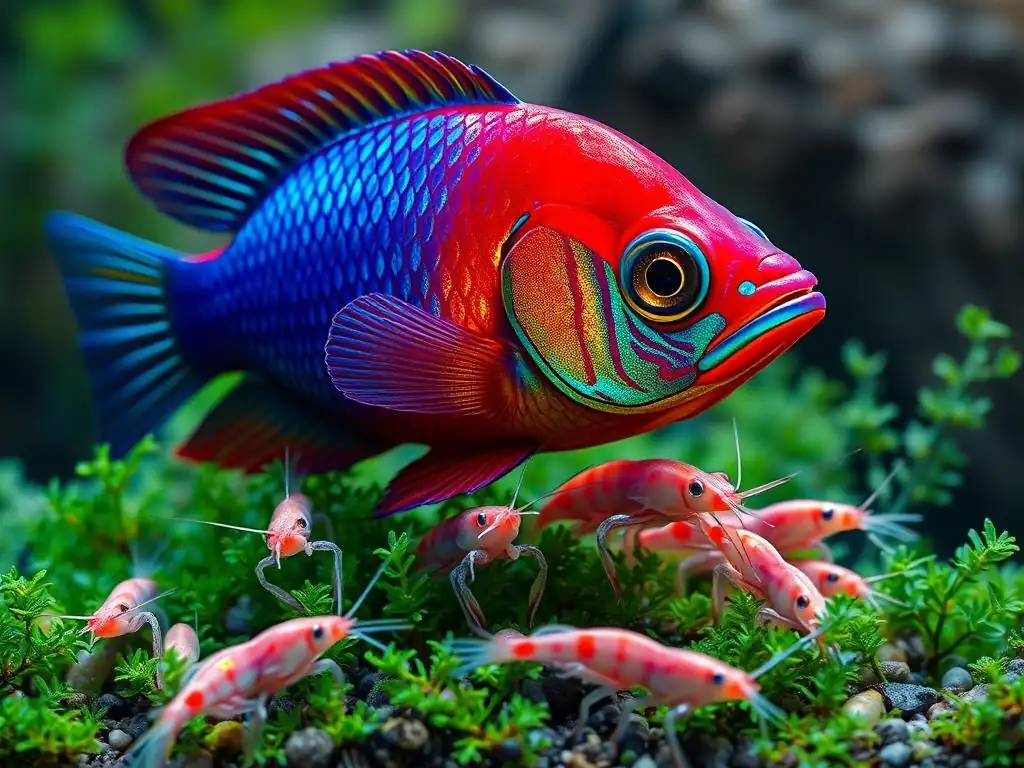
The predatory instinct of dwarf cichlids is a significant hurdle when attempting dwarf cichlid shrimp snail care. These fish are opportunistic feeders, and anything small enough to fit into their mouths, or be torn apart, is a potential meal. For instance, a Mikrogeophagus ramirezi (Ram Cichlid), despite its generally peaceful demeanor, will readily consume juvenile Neocaridina shrimp. Even adult Neocaridina can become prey, particularly if the cichlid is in a breeding phase or the tank lacks sufficient alternative food sources. This natural inclination means that keeping dwarf cichlids with shrimp always carries a notable risk of predation.
Numerous accounts from aquarists highlight this predation risk. In tanks housing Apistogramma agassizii, it's common for even a thriving Red Cherry Shrimp colony to dwindle rapidly, with reports of up to 80% or more losses within weeks, especially if the cichlids are mature or breeding. While some aquarists report limited success with larger shrimp, the general consensus is that shrimp are often viewed as a food item rather than a tank mate by most dwarf cichlid species, making consistent dwarf cichlid shrimp snail care challenging.
Shelter and Escape Routes for Shrimp
Providing abundant and effective shelter is paramount for the survival of shrimp in a dwarf cichlid tank. Shrimp require intricate hiding spots where they can retreat from aggressive fish, particularly during vulnerable periods like molting, when their new shells are soft. Dense plant thickets, such as large clumps of Java Moss ( Taxiphyllum barbieri) or Hornwort ( Ceratophyllum demersum), are ideal as they offer countless tiny crevices for shrimp to disappear into. These plants also provide foraging grounds for biofilm, which is a primary food source for shrimp.
Beyond dense planting, incorporating diverse hardscape elements is crucial. Driftwood with numerous nooks, crannies, and overhangs, along with rock formations that create small caves and tunnels, can serve as vital refugia. Ceramic shrimp tubes or small PVC pipes can also be strategically placed to offer dedicated, fish-proof hiding spots. The more complex and densely furnished the aquascape, the higher the chances of shrimp survival, as it offers more escape routes and reduces the cichlids' ability to corner their potential prey, thus improving the odds for dwarf cichlid shrimp snail care.
Recommended Shrimp Species: Cherry Shrimp, Amano Shrimp
Among the most common freshwater shrimp, Neocaridina davidi varieties, such as Red Cherry Shrimp, are popular but highly vulnerable. Their small size (typically 0.75-1 inch or 2-2.5 cm) and often vibrant coloration make them easily noticeable and consumable by most dwarf cichlids, particularly larger Apistogramma species or Pelvicachromis pulcher. While some aquarists report limited success in heavily planted, very large tanks, the general expectation should be that Neocaridina shrimp will serve as live food, especially juveniles.
For a higher chance of success in dwarf cichlid shrimp snail care, Caridina multidentata (Amano Shrimp) are often recommended. These shrimp are significantly larger, reaching up to 2 inches (5 cm), and possess a more translucent, muted coloration, making them less conspicuous. Their larger size and robust nature make them less likely to be preyed upon by smaller dwarf cichlids like Mikrogeophagus ramirezi or Apistogramma borellii. However, even Amanos are not entirely immune, and very aggressive individual cichlids, or those in breeding mode, may still harass or occasionally injure them, especially if the shrimp are smaller.
Snails and Dwarf Cichlids: Evaluating Safety
Shell Defense Mechanisms
Snails possess a natural defense mechanism that largely protects them from dwarf cichlid predation: their hard, calcified shell. Most dwarf cichlids, despite their predatory nature, lack the specialized crushing teeth or powerful jaws required to break open a mature snail's shell. This makes adult snails generally much safer tank mates than shrimp. A cichlid might attempt to nip at exposed tentacles or the snail's foot, but typically, the snail will quickly retract into its shell, rendering itself inaccessible.
However, the effectiveness of this defense is largely dependent on the snail's size and shell thickness. While a mature Nerite Snail or Mystery Snail is virtually impenetrable, very small or juvenile snails, particularly those with thin or delicate shells, can still be vulnerable. For instance, tiny ramshorn or bladder snails, often considered "pest" snails, might be consumed whole by a determined dwarf cichlid, especially if the cichlid is on the hunt for food.
Snail Species at Risk of Predation
When considering dwarf cichlid shrimp snail care, certain snail species face a higher risk of predation due to their size, shell fragility, or rapid breeding habits. Small, common "pest" snails like Physa acuta (Bladder Snails) and Planorbella duryi (Ramshorn Snails) are frequently targeted. Their shells are relatively thin, and their small size, especially as juveniles (often less than 0.2 inches or 0.5 cm), makes them easy for dwarf cichlids to consume. These snails can sometimes serve as a natural food source, helping to control their populations in a planted tank.
Another species at moderate risk, particularly when young, is the Melanoides tuberculata (Malaysian Trumpet Snail). While adults burrow into the substrate, providing significant protection, their newly hatched offspring are tiny and exposed. Dwarf cichlids may pick off these vulnerable juveniles from the substrate surface or on glass, though the snails' prolific breeding often means their population remains robust despite some predation. Larger, more robust snails are generally safe from direct consumption.
Recommended Snail Species: Nerite Snails, Mystery Snails
For robust and generally safe snail options in dwarf cichlid shrimp snail care, Neritina natalensis (Nerite Snails) are an excellent choice. They possess incredibly hard, thick shells that are virtually impervious to dwarf cichlid attacks. Furthermore, their strong foot adhesion makes them difficult for fish to dislodge. Nerite snails are also highly efficient algae eaters, coming in various attractive patterns, and do not reproduce in freshwater, preventing overpopulation.
Another highly recommended species is Pomacea bridgesii (Mystery Snails). These large, active snails can grow up to 2 inches (5 cm) in diameter and have thick, sturdy shells. While a dwarf cichlid might occasionally nip at their antennae if exposed, the snail's rapid retraction into its shell, coupled with its sheer size, makes it an unsuitable prey item. Mystery Snails are also good algae eaters and detritivores, contributing to tank cleanliness, and their large size makes them a prominent and safe addition to a dwarf cichlid community.
Setting Up a Community Tank for Dwarf Cichlids, Shrimp, and Snails
Tank Size and Population Density
Establishing a successful community tank for dwarf cichlids, shrimp, and snails hinges significantly on appropriate tank size and careful population density management. While a single pair of smaller dwarf cichlids, like Apistogramma borellii, might theoretically exist in a 15-gallon (approximately 57 liters) tank, for the inclusion of invertebrates, a minimum of 20 gallons (75 liters) is strongly recommended, with 30 gallons (115 liters) or more being ideal. This larger volume provides ample swimming space, helps dilute waste, and, crucially, allows for the creation of distinct territories for the cichlids while offering numerous safe zones for the invertebrates.
Overstocking, particularly with multiple dwarf cichlid pairs or other semi-aggressive fish, dramatically increases stress and aggression, directly jeopardizing the safety of shrimp and snails. For a 30-gallon setup, a single pair of dwarf cichlids (e.g., Mikrogeophagus ramirezi or a less aggressive Apistogramma species) alongside a modest colony of Amano Shrimp and a few Nerite or Mystery Snails represents a balanced bioload. Maintaining a low fish population relative to tank size reduces competition for resources and minimizes territorial disputes, fostering a more peaceful environment for successful dwarf cichlid shrimp snail care.
Aquascaping for Invertebrate Safety
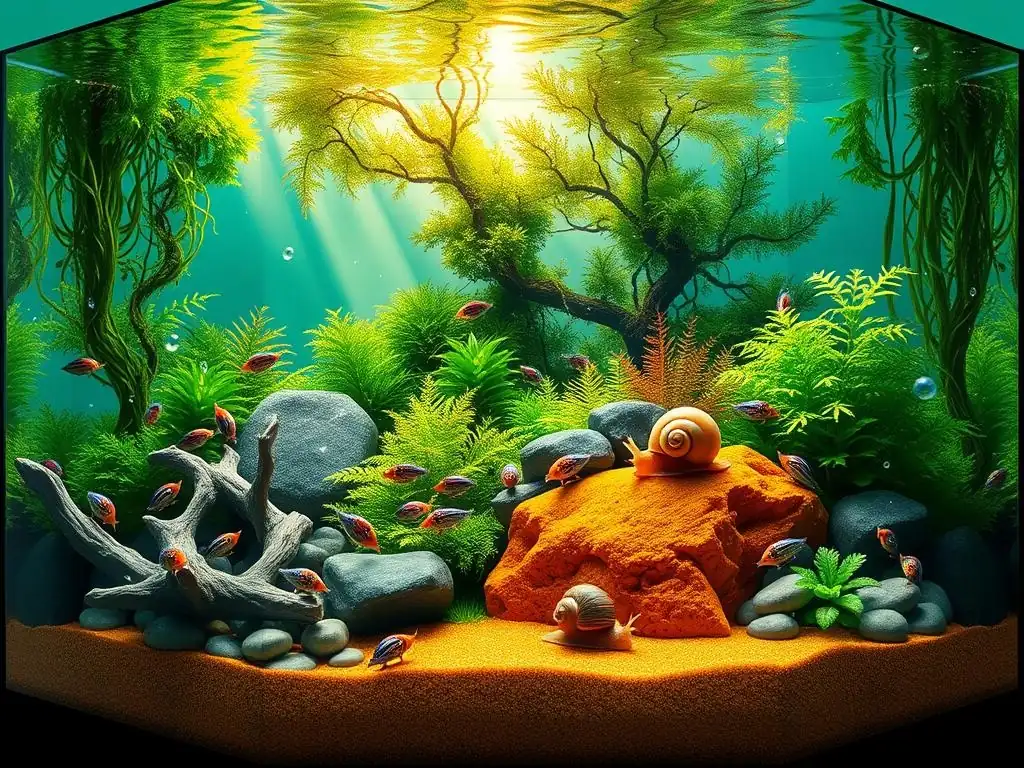
The aquascape is a critical component in ensuring the safety and well-being of shrimp and snails in a dwarf cichlid tank. A heavily planted environment is not just aesthetically pleasing but functionally essential. Dense thickets of fine-leafed plants, such as Java Moss ( Taxiphyllum barbieri), Hornwort ( Ceratophyllum demersum), or Guppy Grass ( Najas guadalupensis), provide myriad hiding spots and complex structures where shrimp can forage for biofilm, molt safely, and escape from curious or aggressive cichlids. These plants also offer cover for juvenile snails.
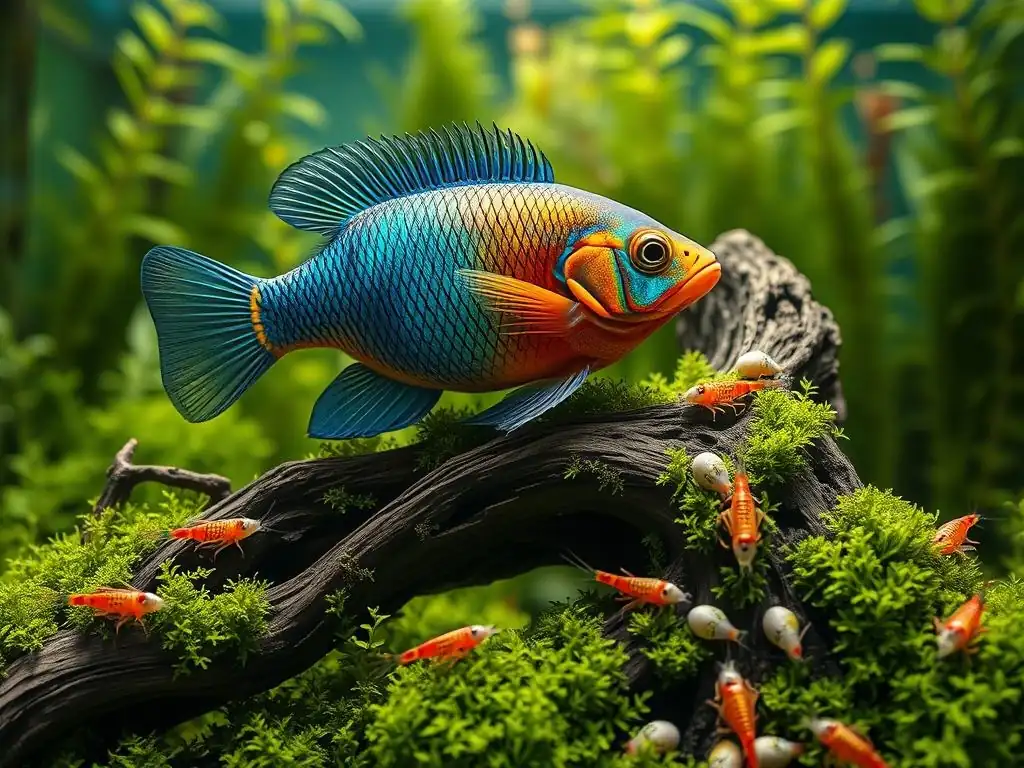
In addition to live plants, strategic placement of hardscape elements dramatically enhances invertebrate safety. Driftwood pieces with numerous crevices, branches, and hollows offer excellent natural refugia. Rocks can be arranged to form small caves, overhangs, and labyrinthine structures that are too small for dwarf cichlids to enter but perfectly sized for shrimp and snails to retreat into. Ceramic shrimp caves or small, dark pipes can also be incorporated to provide dedicated safe havens, increasing the likelihood of successful dwarf cichlid shrimp snail care.
Plant Selection: Java Moss, Hornwort
When selecting plants for a dwarf cichlid shrimp snail care setup, priority should be given to species that offer dense cover and are easy to maintain. Java Moss ( Taxiphyllum barbieri) is almost indispensable. Its dense, tangled growth habit provides excellent hiding spots for shrimp, especially juveniles, and offers a rich surface for biofilm and micro-organisms, which are vital food sources for them. Java Moss can be easily attached to driftwood or rocks, creating natural-looking shelters.
Hornwort ( Ceratophyllum demersum) is another highly beneficial plant. It's a fast-growing, hardy species that can be either floated at the surface, providing overhead cover, or anchored to the substrate. Its bushy, needle-like leaves create a dense curtain that offers significant visual barriers and hiding places for both shrimp and snails. Hornwort also helps to absorb excess nitrates, contributing to stable water quality, which benefits all inhabitants. Other good choices include Anubias and Bucephalandra, which can be tied to hardscape and offer broad leaves for grazing and hiding.
Optimal Water Parameters for All Inhabitants
Maintaining stable and appropriate water parameters is fundamental for the health and coexistence of dwarf cichlids, shrimp, and snails. Most popular dwarf cichlid species, such as Rams and Apistogrammas, generally thrive in soft to moderately hard, acidic to neutral water conditions, typically with a pH range of 6.0-7.5, GH (General Hardness) of 4-10 dGH, and a temperature between 74-78°F (23-26°C).
Fortunately, many commonly recommended invertebrates, including Amano Shrimp, Nerite Snails, and Mystery Snails, are quite adaptable and can tolerate these ranges, though some shrimp species might prefer slightly harder water. For optimal dwarf cichlid shrimp snail care, aim for a balanced compromise: a pH between 6.5-7.2, GH 5-8 dGH, and KH (Carbonate Hardness) 3-6 dKH to ensure buffer capacity. Consistent weekly water changes of 15-20% are crucial to keep nitrate levels below 20 ppm and maintain overall water quality, minimizing stress and disease risk for all inhabitants.
Minimizing Risks and Ensuring Coexistence
Introduction Strategies: Acclimation and Timing
The method and timing of introducing shrimp and snails can significantly impact their survival rate in a dwarf cichlid tank. Invertebrates are highly sensitive to sudden changes in water parameters, so proper acclimation is critical. Drip acclimation, where tank water is slowly added to the invertebrate's transport bag over a period of 1-2 hours, is highly recommended. This gradual process minimizes osmotic shock and stress, increasing their resilience.
Timing the introduction wisely can also improve outcomes for dwarf cichlid shrimp snail care. Ideally, introduce adult shrimp and snails to a heavily planted and established tank before the dwarf cichlids are added. This allows the invertebrates to explore and establish their hiding spots and territories without the immediate threat of new fish. If cichlids are already present, ensure they are well-fed before introducing the invertebrates, which can temporarily reduce their predatory drive. Introducing larger, mature invertebrates also gives them a better chance of survival compared to vulnerable juveniles.
Overstocking Avoidance
One of the most common pitfalls in community tank setups, especially when attempting dwarf cichlid shrimp snail care, is overstocking. An overcrowded tank inevitably leads to increased stress levels for all inhabitants, primarily due to competition for space, food, and suitable territories. For dwarf cichlids, this stress often manifests as heightened aggression, as they perceive more threats and feel the need to defend their limited space more vigorously. This directly translates to a greater risk of harassment and predation for the smaller, more vulnerable shrimp and snails.
Maintaining a balanced bioload is essential for a peaceful environment. For instance, in a 29-gallon tank, a single pair of Apistogramma cacatuoides might be the maximum recommended fish population if you intend to keep shrimp and snails. Adding more dwarf cichlids or other semi-aggressive fish would likely push the aggression threshold too high, leading to significant invertebrate losses. A well-stocked, not overstocked, tank allows each fish sufficient territory and reduces the overall stress, promoting more tolerant behavior towards invertebrates.
Targeted Feeding Strategies
Proper and targeted feeding is a subtle yet effective strategy for minimizing predation risks in dwarf cichlid shrimp snail care. Dwarf cichlids, like all fish, are less likely to hunt live prey if they are consistently well-fed. Offering high-quality flake foods, pellets, and a varied diet of frozen foods (such as bloodworms, brine shrimp, and daphnia) multiple times a day will keep the cichlids satiated and reduce their natural predatory drive towards shrimp and snails.
Concurrently, it's important to ensure that the shrimp and snails themselves have access to their own food sources without having to compete directly with the fish. Algae wafers, blanched vegetables (like zucchini or spinach), and specialized shrimp pellets can be dropped into areas of dense planting or hard-to-reach spots where the invertebrates can feed safely, away from the more aggressive fish. This dual feeding approach ensures both the cichlids are less inclined to hunt and the invertebrates are well-nourished, making them more robust and less exposed.
Observing Behavior and Adjusting the Environment
Continuous observation is crucial for successful dwarf cichlid shrimp snail care. After introducing shrimp and snails, closely monitor the behavior of your dwarf cichlids. Are they actively chasing or attempting to nip at the invertebrates? Do you notice a rapid decline in the invertebrate population without obvious causes? Pay attention to how the shrimp and snails are behaving; are they hiding constantly, or do they seem comfortable enough to forage in the open?
If significant aggression or unexplained disappearances occur, be prepared to make adjustments. This might involve adding even more dense plant cover or hardscape to create additional refugia. In some cases, a particularly aggressive individual dwarf cichlid might need to be rehomed or separated into its own tank if it poses an unmanageable threat to the invertebrates. Sometimes, despite all best efforts, certain individual cichlids are simply too predatory, and recognizing this early is vital to prevent further losses and ensure the well-being of all tank inhabitants.
Alternative Tank Mates for Dwarf Cichlids
Compatible Fish Species: Tetras, Rasboras
For aquarists seeking reliable and peaceful community tank mates for dwarf cichlids without the inherent risks associated with invertebrates, various small, schooling fish species are excellent choices. Small tetras, such as Neon Tetras ( Paracheirodon innesi), Cardinal Tetras ( Paracheirodon axelrodi), and Rummy Nose Tetras ( Hemigrammus bleheri), are often recommended. They occupy the mid-to-upper water column, largely staying out of the dwarf cichlids' bottom-dwelling territories, and their schooling behavior provides a sense of security.
Similarly, various species of Rasboras, including Harlequin Rasboras ( Trigonostigma heteromorpha) and Chili Rasboras ( Boraras brigittae), make fantastic companions. These fish are generally peaceful, stay relatively small, and their active schooling can add a dynamic element to the aquarium without stressing the dwarf cichlids. Other suitable bottom dwellers that are typically ignored by dwarf cichlids include peaceful Corydoras catfish species (e.g., Corydoras aeneus), which primarily forage in the substrate, and Otocinclus catfish, which are small, docile algae eaters.
Fish to Avoid: Aggressive or Fin-Nipping Species
While dwarf cichlids are generally considered community fish, not all fish are suitable tank mates. It's crucial to avoid any larger, more aggressive cichlid species, such as Convict Cichlids ( Amatitlania nigrofasciata) or larger Mbuna cichlids, as they will undoubtedly bully, outcompete, and potentially harm dwarf cichlids due to significant size and temperament differences. Even some seemingly peaceful fish, if they grow too large or are overly boisterous, can cause stress.
Furthermore, steer clear of known fin-nipping species. Fish like Tiger Barbs ( Puntigrus tetrazona) are notorious for nipping at the fins of slower-moving or long-finned fish, which can cause significant stress, injury, and susceptibility to disease in dwarf cichlids. Similarly, avoid very large or messy fish like Goldfish, as their vastly different water parameter requirements and waste production make them incompatible with the pristine conditions preferred by dwarf cichlids. Careful selection is key to maintaining a harmonious and healthy aquarium environment.
Conclusion: Invertebrate Care with Dwarf Cichlids - Balancing Risks
The Final Assessment: Success Factors
Successfully integrating shrimp and snails with dwarf cichlids is a nuanced endeavor that requires a careful balance of risk assessment and proactive tank management. While not an impossible feat, it's crucial for aquarists to understand that the outcome is never guaranteed and depends heavily on several key factors. These include the specific dwarf cichlid species chosen (with less aggressive types like Bolivian Rams offering higher chances), the individual temperament of the fish, the size and species of the invertebrates (larger, hard-shelled snails are generally safest), and, most critically, the provision of an exceptionally well-aquascaped tank with abundant hiding spots.
Ultimately, adult Nerite Snails and Mystery Snails are generally considered safe bets due to their robust shells and size, making them excellent choices for dwarf cichlid shrimp snail care. However, shrimp, particularly smaller Neocaridina varieties, face a significant and inherent predation risk. While Amano Shrimp offer a better chance of survival due to their larger size and more subdued coloration, aquarists must be prepared for potential losses, especially with more aggressive dwarf cichlid species or during breeding periods. It's a calculated gamble where the odds can be improved but never entirely eliminated.
Further Research on Compatible Tank Mates
Given the inherent variability in fish temperament and the dynamic nature of an aquarium ecosystem, continuous learning and adaptation are vital for optimal dwarf cichlid shrimp snail care. Aquarists are strongly encouraged to conduct further research on the specific dwarf cichlid species they intend to keep. Temperament can vary significantly even within a genus; for instance, Apistogramma borellii is generally considered milder than Apistogramma cacatuoides, directly impacting invertebrate compatibility.
Beyond general guidelines, consulting species-specific care sheets and engaging with experienced aquarists in online forums or local fish clubs can provide invaluable real-world insights and nuanced advice. These resources often share practical experiences regarding specific dwarf cichlid shrimp snail care scenarios, offering detailed accounts of what has worked (or hasn't) for particular combinations of fish and invertebrates. This ongoing commitment to understanding and adapting will ensure the best possible outcome for all inhabitants in your aquatic environment.
Frequently Asked Questions
Can I keep dwarf cichlids with shrimp and snails?
It's risky, but possible! Success depends on the specific dwarf cichlid species, tank size, and providing ample hiding places for the invertebrates. Some cichlids are more aggressive than others.
What dwarf cichlid species are least likely to predate on shrimp and snails?
Smaller, more peaceful dwarf cichlids like Apistogramma borellii or Microgeophagus ramirezi (German Blue Rams) are generally better choices, but even they might occasionally snack on baby shrimp.
What kind of tank setup is best for keeping dwarf cichlids with shrimp and snails?
A densely planted aquarium with plenty of driftwood, rocks, and leaf litter is crucial. This provides refuges for the shrimp and snails to escape predation.
What are the signs that my dwarf cichlid is harassing or eating my shrimp and snails?
Look for missing invertebrates, shrimp hiding constantly, or cichlids actively hunting or nipping at the shrimp and snails. Behavioral changes in the invertebrates are a key indicator.
How can I improve the chances of successful dwarf cichlid, shrimp, and snail coexistence?
Start with a larger tank, introduce shrimp and snails before the cichlids, and provide a dedicated feeding area for the cichlids to distract them from hunting. Regular monitoring is key.
The delicate balance explored throughout this article, highlighting the potential pitfalls of housing dwarf cichlids with shrimp and snails, resonates deeply with the broader challenges of maintaining any complex ecosystem, whether in our homes or in the natural world. The potential for predation and the need for careful planning are not just aquarium concerns; they are reflections of the intricate relationships that govern all life.
This topic has profoundly influenced my understanding of responsible aquarium keeping, emphasizing the importance of thorough research and ethical considerations. The potential for unintended consequences underscores the need for empathy and a commitment to the well-being of all creatures in our care. The greatness of a nation and its moral progress can be judged by the way its animals are treated.
- Mahatma Gandhi. This quote, though not specifically about aquariums, perfectly encapsulates the responsibility we bear when creating artificial ecosystems.
Now, consider the lessons learned about compatibility, environment, and responsible care. How can you apply these principles to other areas of your life? Perhaps in your relationships, your community, or even your approach to environmental stewardship. Let the awareness cultivated through understanding "dwarf cichlid shrimp snail care" inspire you to create more harmonious and sustainable environments wherever you go.
Ignite Your Aquarium: Embrace the Cichlid Challenge!
Thanks for diving into the complexities of keeping dwarf cichlids with shrimp and snails! Hopefully, you've gained some valuable insights into navigating this delicate balance. Now, let's turn that knowledge into action!
- Carefully observe your tank: Continuously monitor interactions, focusing on early warning signs, such as excessive hiding or stressed behavior in your shrimp and snails.
- Share your experiences and tips for successful cohabitation in the comments below!
- Research some unusual plants for your aquarium, especially those that provide ample hiding places for smaller inhabitants.
Ready to share your experiences and help others navigate this rewarding, yet challenging, aquatic adventure?