
Acan Coral Care Mastered: Your Guide to Acanthastrea & Micromussa

Welcome to Aquarium Mastery!
Ever been captivated by the vibrant colors and intricate patterns of Acan corals? Dive into our comprehensive Acan Coral Care Guide and unlock the secrets to successfully keeping these stunning Acanthastrea and Micromussa species thriving in your reef tank. Curious about lighting, feeding, or water parameters? Let's explore the essentials together and transform you into an Acan care pro!
- Acan Coral Care: A Guide to Acanthastrea and Micromussa
- Understanding Acanthastrea and Micromussa Corals
- Essential Water Parameters for Thriving Acan Corals
- Lighting Requirements for Acanthastrea and Micromussa
- Effective Feeding Strategies for Acan Corals
- Acan Coral Placement and Flow
- Common Acan Coral Diseases and Pests
- Fragging Acan Corals: Propagating Acanthastrea and Micromussa
- Choosing Healthy Acan Corals: A Buyer's Guide
- Troubleshooting Common Acan Coral Problems
- Advanced Acan Coral Care Techniques
- Frequently Asked Questions
- Final Reflection: The Enduring Beauty of Acan Corals
- Unlock the Vibrant Colors of Your Acan Today!
Acan Coral Care: A Guide to Acanthastrea and Micromussa
Understanding Acanthastrea and Micromussa Corals
Acanthastrea Genus: Exploring Lordhowensis, Echinata, and Bowerbanki
The Acanthastrea genus, often simply called "Acans" by aquarists, encompasses a diverse group of large polyp stony (LPS) corals highly prized for their vibrant coloration and distinctive patterns. These corals are popular among reef keepers due to their relatively moderate care requirements and striking appearance. Species like Acanthastrea lordhowensis (commonly known as "Lords"), Acanthastrea echinata, and Acanthastrea bowerbanki are frequently encountered in the hobby, each offering unique characteristics. A. lordhowensis typically features chunky, fleshy polyps, often 1.5 to 3 centimeters in diameter, displaying a wide spectrum of colors from fiery reds and oranges to deep blues and greens.
Acanthastrea echinata, often referred to as "Echies," is distinguished by its more spiny or bumpy appearance on the tissue, giving it a unique texture compared to the smoother polyps of other Acans. While sometimes having more muted colors, their intricate structure makes them highly desirable.
Acanthastrea bowerbanki (or "Bowers") are known for their larger, more individual polyps, which can reach up to 4-5 centimeters in diameter, often exhibiting complex patterns and multiple colors within a single polyp. These larger polyps and unique patterns often make A. bowerbanki among the more sought-after and, consequently, more expensive Acan varieties in the market, with individual frags sometimes fetching prices upwards of $100-$300 depending on color morph and size.
Micromussa Corals: A Closer Look at Lordhowensis and Amakusensis
Micromussa corals were, for a long time, classified under the Acanthastrea genus, particularly the species Micromussa lordhowensis (formerly Acanthastrea lordhowensis). However, recent phylogenetic studies have reclassified them into their own genus due to distinct genetic and morphological differences. Despite the reclassification, they retain the popular "Acan" moniker in the hobby, causing some confusion. Micromussa lordhowensis typically features smaller, tighter polyps, usually ranging from 0.5 to 1.5 centimeters in diameter, forming encrusting or hemispherical colonies. They are celebrated for their intricate patterns and incredibly vibrant color combinations, often showcasing contrasting rings or "eyes" within each polyp.
Another notable species in this genus is Micromussa amakusensis. This coral often presents with a more raised, convoluted surface, sometimes resembling miniature brain corals or Favites species, but with the characteristic small, distinct polyps of Micromussa. While M. lordhowensis often forms more uniform, circular polyps, M. amakusensis can have a more irregular, almost undulating appearance, adding to its unique appeal. Both Micromussa species, despite their smaller polyp size compared to true Acanthastrea, are equally captivating and require similar care, making the general Acan coral care guide applicable to them.
Acanthastrea vs. Micromussa: Polyp Size, Growth Form, and Skeletal Structure
The primary distinction between Acanthastrea and Micromussa lies in their polyp size, growth form, and subtle differences in their skeletal structure. Acanthastrea corals, particularly species like A. echinata and A. bowerbanki, are characterized by their larger, more fleshy polyps, which can inflate significantly, often reaching 1.5 to 5 cm in diameter. These larger polyps are typically more distinct and individual, showcasing pronounced septa (radial skeletal plates) and a visible columella (central skeletal structure) when retracted. Their growth forms can be diverse, ranging from encrusting to massive or even columnar, with a more robust and often spiny skeletal framework.
In contrast, Micromussa corals, such as M. lordhowensis, possess significantly smaller and more tightly packed polyps, typically measuring 0.5 to 1.5 cm in diameter. Their polyps often appear more uniform and form a smoother, more cohesive surface across the colony. Micromussa primarily grows in an encrusting or submassive form, with a finer skeletal structure that is less visible through the inflated tissue. While both are LPS corals and share many care similarities, understanding these distinctions can help aquarists appreciate the subtle differences in their appearance and growth habits, which is key for a precise Acan coral care guide.
Essential Water Parameters for Thriving Acan Corals
Maintaining Alkalinity: Target Range 8-11 dKH
Alkalinity is a critical water parameter for the health and growth of Acan corals, as it represents the buffering capacity of the water and provides the carbonate ions necessary for calcification – the process by which corals build their calcium carbonate skeletons. The ideal target range for alkalinity in a reef tank housing Acan corals is typically between 8 and 11 dKH (degrees of carbonate hardness), which translates to approximately 2.8 to 3.9 meq/L.
Consistency is paramount; daily fluctuations exceeding 0.5 dKH can stress corals, leading to reduced growth or even tissue recession, making stable alkalinity a cornerstone of successful Acan coral care.
To maintain alkalinity within this optimal range, aquarists often employ various methods. For smaller tanks or those with a light coral load, regular water changes (e.g., 10-20% monthly) with high-quality salt mix can suffice.
However, in tanks with a moderate to heavy coral load, daily or automated dosing of two-part alkalinity solutions (e.g., sodium bicarbonate or carbonate) or the use of a calcium reactor is often necessary. For example, a 100-gallon reef tank with a healthy population of LPS corals like Acans might consume alkalinity at a rate of 0.5 to 1.0 dKH per day, necessitating consistent daily supplementation to prevent drops below the ideal range.
Stable Calcium Levels: Target Range 400-450 ppm
Calcium is the primary building block for the aragonite skeletons of Acan corals, making its stable concentration in the water column indispensable for their growth and structural integrity. The optimal target range for calcium levels in a reef aquarium is between 400 and 450 ppm (parts per million). Maintaining calcium within this range supports robust skeletal development and ensures that the coral's calcification process can proceed efficiently without being limited by a lack of raw materials.
Monitoring calcium levels regularly with a reliable test kit is essential. If levels are consistently below the target, supplementation is required. Similar to alkalinity, methods include regular water changes, two-part calcium solutions (e.g., calcium chloride), or calcium reactors. A typical 75-gallon reef tank with a good number of LPS corals, including various Acans, might see a daily calcium consumption of 5-10 ppm. It's crucial to balance calcium supplementation with alkalinity, as these two parameters are intimately linked in the calcification process; one cannot be effectively maintained without the other.
Magnesium and Salinity: Target 1250-1350 ppm and 1.024-1.026 SG
Magnesium plays a vital supportive role in the calcification process for Acan corals, even though it's not directly incorporated into the skeleton in large amounts. Its primary function is to prevent the precipitation of calcium carbonate, which can occur if calcium and alkalinity levels are too high or fluctuate wildly. By keeping calcium and alkalinity soluble, magnesium ensures these critical ions are available for coral uptake.
The ideal target range for magnesium is 1250-1350 ppm. If magnesium levels drop significantly below this range (e.g., below 1100 ppm), it can inhibit calcification, even if calcium and alkalinity appear to be within their optimal ranges.
Salinity, the measure of salt content in the water, is fundamental for all marine organisms, including Acan corals. The recommended specific gravity (SG) for a reef tank is 1.024-1.026, which corresponds to 33-35 parts per thousand (ppt). Maintaining stable salinity is crucial, as significant fluctuations can cause osmotic stress to corals, leading to retraction, tissue damage, or even death.
Use a high-quality refractometer calibrated with a 35 ppt reference solution for accurate measurements. Daily top-offs with reverse osmosis deionized (RODI) water are necessary to compensate for evaporation, which concentrates salts and increases salinity. This consistent approach is integral to a comprehensive Acan coral care guide.
Nitrate and Phosphate: Target 1-5 ppm and 0.03-0.1 ppm
While often seen as undesirable, nitrates and phosphates are essential nutrients for corals, particularly for their symbiotic zooxanthellae. However, maintaining them within a specific, low range is crucial for Acan coral care. The target range for nitrates is typically 1-5 ppm, and for phosphates, 0.03-0.1 ppm.
Ultra-low or undetectable levels of these nutrients can lead to "nutrient starvation" in corals, resulting in pale coloration, slow growth, and reduced vitality, as the zooxanthellae need these elements for photosynthesis. Conversely, excessively high levels (e.g., nitrates above 20 ppm, phosphates above 0.2 ppm) can lead to nuisance algae blooms, coral browning, and ultimately, tissue necrosis.
Effective nutrient control involves a combination of strategies. Regular water changes (e.g., 10-20% per month) are foundational for diluting accumulated nutrients. A robust protein skimmer efficiently removes organic waste before it breaks down into nitrates and phosphates. Other methods include the use of filter socks to capture detritus, macroalgae refugiums that outcompete nuisance algae for nutrients, and granular ferric oxide (GFO) or similar phosphate-removing media. For instance, a tank with a bioload of 5-7 moderate-sized fish might generate 10-15 ppm of nitrates weekly if nutrient export is insufficient, emphasizing the need for consistent management to keep Acans healthy.
Lighting Requirements for Acanthastrea and Micromussa
Lighting Spectrum: Balance of Blue and White Light
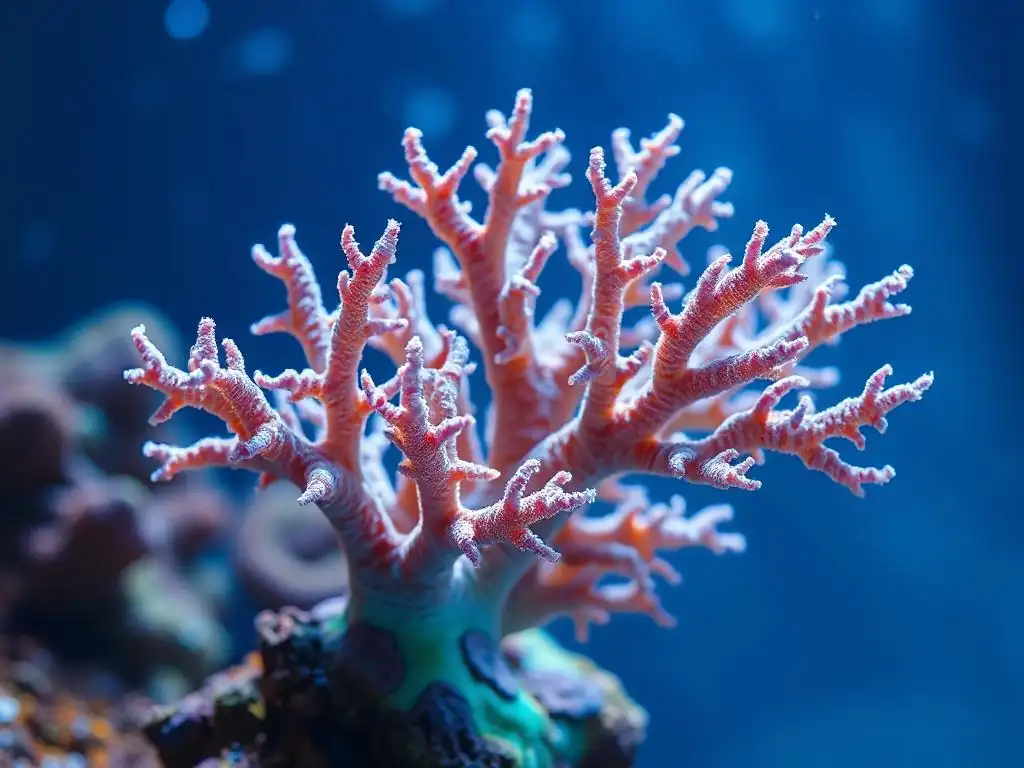
Acan corals, like most photosynthetic corals, rely on their symbiotic zooxanthellae to convert light energy into food. Therefore, providing the correct lighting spectrum is a vital component of Acan coral care. A balanced spectrum that includes both blue and white light is generally recommended. Blue light, particularly in the 450-470 nm range, is crucial as it penetrates deeper into the water column and is efficiently absorbed by zooxanthellae for photosynthesis. It also enhances the natural fluorescence and vibrant colors of Acans, making them visually pop in the aquarium.
White light, encompassing a broader spectrum, contributes to overall growth and provides a more natural viewing experience. Many aquarists aim for a color temperature between 15,000K and 20,000K, which leans heavily towards blue but retains enough white to prevent a monochromatic appearance. LED lighting systems are popular as they offer precise control over individual color channels, allowing aquarists to fine-tune the spectrum to their corals' preferences and enhance their aesthetics. T5 fluorescent bulbs or metal halides can also be used, often in combinations to achieve the desired spectral balance.
PAR Levels: Target PAR 50-150 depending on depth and species
PAR (Photosynthetically Active Radiation) measures the intensity of light available for photosynthesis. Acan corals are generally considered moderate-light LPS corals, and their ideal PAR range is typically between 50 and 150 PAR. Placing them within this range is crucial for their health and growth; too little light can lead to fading colors and slow growth, while too much light can cause bleaching, tissue recession, or even death as the zooxanthellae become stressed and expelled.
The specific PAR level within this range often depends on the coral's placement in the tank and the particular species. For instance, Acans placed on the sandbed or lower rockwork in a typical 24-inch deep tank might thrive at 50-80 PAR, while those positioned on mid-level rockwork could benefit from 100-150 PAR.
Some species, like Acanthastrea echinata, might tolerate slightly higher PAR levels than the more delicate Micromussa lordhowensis. Using a PAR meter to measure light intensity at various depths in your tank is the most accurate way to ensure your Acans are receiving optimal light, preventing guesswork in your Acan coral care guide.
Acclimation to Lighting: Gradual Increase in Light Intensity
When introducing new Acan corals to your aquarium or significantly upgrading your lighting system, proper acclimation to the light intensity is paramount. Corals, especially those that have been in a low-light environment, can easily get stressed or bleached by a sudden increase in PAR. A gradual acclimation process helps the coral adjust its zooxanthellae population and protective pigments to the new light conditions, minimizing the risk of shock.
Begin by placing new Acans in a lower-light area of the tank (e.g., on the sandbed) or by reducing your overall light intensity (e.g., to 50-60% of your target PAR). Over a period of 2-4 weeks, slowly increase the light intensity or move the coral incrementally higher in the tank. A common strategy for LED users is to increase intensity by 5-10% weekly until the desired PAR level is reached.
Observe the coral closely for signs of stress, such as paling, retraction, or tissue loss. If signs of stress appear, halt the increase or even reduce light temporarily until the coral recovers.
Effective Feeding Strategies for Acan Corals
Natural Food Sources: Zooplankton and Phytoplankton
Acan corals are heterotrophic, meaning they supplement the energy derived from photosynthesis (via zooxanthellae) by capturing and consuming food particles from the water column. In their natural reef environment, their diet primarily consists of various forms of zooplankton, such as copepods, amphipods, and brine shrimp nauplii, as well as phytoplankton. These microscopic organisms are abundant in healthy reef waters and provide essential proteins, lipids, and other nutrients vital for the coral's growth, tissue repair, and vibrant coloration.
While a mature reef tank with a healthy population of microfauna can provide some natural food, it is generally insufficient to meet the full nutritional needs of captive Acans, especially for larger colonies or those in heavily skimmed systems. Supplementing their diet through target feeding is highly recommended for optimal health and accelerated growth. Even in well-established systems with a diverse copepod population, a significant portion of their diet will still need to come from added food sources to ensure they thrive.
Target Feeding: Pipette or Syringe Application
Target feeding is the most effective and efficient method for delivering food directly to Acan corals, ensuring they receive adequate nutrition without polluting the entire tank. This technique involves using a pipette, turkey baster, or syringe to carefully squirt food directly onto the coral's polyps. Acans have relatively large mouths on their polyps, making them excellent candidates for this method, as they can readily capture and ingest individual food particles.
To target feed, it's often best to turn off circulation pumps for 15-30 minutes to allow the food to settle on the coral without being immediately swept away. Approach the polyps slowly and gently squirt a small amount of food directly onto them. Observe the polyps; they should begin to retract slightly and "grab" the food, indicating successful ingestion.
For example, a 1-inch Micromussa lordhowensis colony might effectively consume 2-3 small squirts of a food mixture, whereas a 3-inch Acanthastrea bowerbanki colony could readily accept 5-7 squirts due to its larger individual polyps. This precise method minimizes waste and ensures each coral receives its share, optimizing your Acan coral care guide.
Coral Food: Specialized Coral Foods or Small Particle Foods
When choosing food for Acan corals, opt for high-quality, specialized coral foods designed for LPS corals, or small particle foods that can be easily ingested by their polyps. Excellent choices include finely chopped frozen mysis shrimp, cyclop-eeze, enriched brine shrimp, or commercial powdered coral foods that contain a blend of marine proteins, lipids, and other essential nutrients. Particle size is an important consideration; while Acanthastrea species with larger polyps can handle particles up to 1-2 mm, Micromussa species with smaller polyps may prefer finer particles, typically less than 1 mm in size.
Many aquarists prepare a "coral smoothie" by blending various frozen foods (e.g., mysis, brine, krill, copepods) with liquid supplements like amino acids or vitamins. This creates a nutrient-rich suspension that is easy to target feed. Always thaw frozen foods completely before feeding and rinse them with tank water or RODI water to minimize nutrient leaching into the aquarium. Avoid overfeeding, as uneaten food can degrade water quality.
Feeding Frequency: 1-3 Times Per Week
The optimal feeding frequency for Acan corals typically ranges from 1 to 3 times per week. The exact frequency can depend on several factors, including the overall nutrient levels in your tank, the coral's growth rate, and its general appearance. In systems with very low nutrient levels (e.g., those with aggressive skimming or large refugiums), more frequent feeding (e.g., 2-3 times per week) can be beneficial to ensure the corals receive adequate nutrition and maintain their vibrant coloration.
Conversely, in tanks with higher baseline nutrient levels or a heavy fish bioload, feeding once a week might be sufficient to prevent nutrient spikes. Consistent feeding significantly contributes to the full inflation of Acan polyps, promotes faster growth rates, and enhances their brilliant colors.
For instance, an Acan colony that is fed 2-3 times weekly with a diverse food source might exhibit 20-30% faster growth and noticeably richer coloration compared to one fed only once every two weeks. Observe your corals; if they appear shriveled or their colors are dull, it could be a sign they need more frequent or substantial feeding.
Acan Coral Placement and Flow
Placement: Lower to Mid-Level Placement
Acan corals generally thrive in lower to mid-level placement within the aquarium. This positioning aligns with their moderate light requirements, typically in the PAR range of 50-150. Placing Acans too high in the tank, particularly directly under intense lighting, can lead to light stress, which manifests as bleaching (loss of color due to zooxanthellae expulsion) or tissue recession. In a typical 24-inch deep reef tank with standard LED lighting, "lower to mid-level" often means on the sandbed or on stable rockwork ledges that are 12-24 inches away from the light source.
When considering placement, also account for the potential for growth. Acans can encrust over rockwork or grow into larger colonies, so ensure they have enough space. Placing them on individual frag plugs or small rocks allows for easier relocation if their initial spot proves suboptimal. Observe how the coral reacts to its placement over a few days; if polyps remain retracted or colors fade, a slight adjustment in height or position might be necessary as part of your comprehensive Acan coral care guide.
Flow Rate: Moderate, Indirect Flow
The ideal flow rate for Acan corals is moderate and indirect. They require sufficient water movement to prevent detritus accumulation on their polyps and to ensure the delivery of food particles and essential nutrients. However, strong, direct, or laminar flow can be detrimental, causing the polyps to remain retracted, damaging their delicate tissue, or even dislodging them from their frag plugs.
Aim for a turbulent, random flow pattern that gently sways the polyps without causing them to constantly batter against the rockwork or themselves. This can be achieved by using multiple powerheads pointed at opposing angles or by employing wavemakers that create oscillating flow. For example, a total flow rate equivalent to 10-20 times the tank volume per hour, distributed by two or more powerheads, often works well for Acans. Avoid placing them in dead spots where detritus settles or in areas of extreme flow, such as directly in front of a return pump outlet.
Avoiding Aggression: Space Away From Aggressive Corals
Acan corals, despite their relatively peaceful appearance, can be aggressive towards neighboring corals. They possess mesenterial filaments and sweeper tentacles that can extend, particularly at night, to sting and damage other corals that come into contact with them. This aggression is a defense mechanism to secure their territory and prevent overgrowth.
To prevent inter-coral warfare, it is crucial to provide ample space between Acans and other corals. A general rule of thumb is to allow at least 4-6 inches (10-15 cm) of clearance around your Acan colony, especially from less aggressive species like zoanthids, palythoas, or many soft corals. Even different Acan colonies can sting each other, so give individual frags or colonies their own dedicated space. Observe your corals after lights out to ensure no sweeper tentacles are reaching out and causing damage to adjacent inhabitants. This foresight in placement is a critical aspect of effective Acan coral care.
Common Acan Coral Diseases and Pests
Identifying Diseases: Brown Jelly Disease, Rapid Tissue Necrosis
Acan corals, like all corals, can fall victim to various diseases, with Brown Jelly Disease (BJD) and Rapid Tissue Necrosis (RTN) being two of the most devastating. Brown Jelly Disease is a highly contagious and rapidly progressing protozoan or bacterial infection that appears as a slimy, brownish, gelatinous mass covering parts of the coral tissue. It often starts from a point of injury or stress and can consume an entire colony within 24-48 hours if left untreated. Immediate action is critical upon identification.
Rapid Tissue Necrosis (RTN) is another severe condition where the coral tissue rapidly peels away from the skeleton, leaving behind bare white skeleton. While more commonly associated with SPS corals, Acans can also suffer from RTN, often triggered by extreme stress, sudden shifts in water parameters, or severe bacterial infections. Unlike BJD, RTN typically presents without the visible "jelly" mass. Both diseases are characterized by swift tissue loss and require immediate intervention to prevent the entire colony from perishing, highlighting the urgency in Acan coral care.
Treating Infections: Coral Dips and Antibiotics
Upon identifying Brown Jelly Disease, immediate isolation of the affected Acan coral is paramount to prevent spread to other corals in the display tank. The first line of treatment involves a freshwater dip (using RODI water with matching temperature and pH for 30-60 seconds) or an iodine-based coral dip (e.g., Lugol's solution, following manufacturer instructions) to dislodge the jelly and disinfect the affected area. Gently siphon off the brown jelly with a pipette during the dip. If a portion of the coral is heavily affected, fragging off the healthy tissue can save part of the colony.
For more severe bacterial infections or suspected RTN, a targeted application of antibiotics can be considered, though this should be approached with caution and ideally under the guidance of an experienced aquarist or veterinarian. Ciprofloxacin, often available as a fish antibiotic, can be mixed with tank water and applied directly to the affected coral tissue using a syringe. In cases of widespread infection, a dedicated quarantine tank might be used for treatment with antibiotics, as full tank treatments can harm beneficial bacteria in the main display.
Dealing with Pests: Acan Eating Flatworms, Snails
Acan corals are susceptible to specific pests, with Acan Eating Flatworms (AEFWs, Waminoa sp. or Prosthiostomum sp.) being one of the most notorious. These small, cryptic flatworms, typically 1-3 mm in size and reddish-brown, are masters of camouflage, blending seamlessly with the coral's tissue. They directly consume the coral's tissue, leading to recession, pale spots, and eventual death of the colony. Signs of infestation include bite marks, patches of pale or retracted tissue, and sometimes visible worms on the coral surface, especially at night.
Treatment for AEFWs involves repeated coral dips using specific flatworm eradication products (e.g., Levamisole-based dips, or dedicated flatworm dips from aquarium brands). The coral should be dipped, gently swished to dislodge worms, and then inspected for any remaining worms or eggs, which should be manually removed. The dipping protocol often needs to be repeated every 3-5 days for several weeks to break the flatworm's life cycle, as dips typically don't kill eggs.
Quarantining all new Acans for 4-6 weeks and performing prophylactic dips is the best preventive measure. Other potential pests include certain nudibranchs or small predatory snails that directly feed on coral tissue, though these are less common than AEFWs.
Fragging Acan Corals: Propagating Acanthastrea and Micromussa
Tools: Bone Cutters or Coral Saws
Fragging Acan corals, the process of asexual propagation, allows aquarists to create new colonies from existing ones, share with other hobbyists, or trim overgrown pieces. The choice of tools depends on the size and skeletal density of the colony. For smaller Acan polyps or thin connections between polyps, a sharp, clean pair of bone cutters (surgical-grade stainless steel) is often sufficient. These provide a clean break with minimal tissue damage.
For larger, more established Acanthastrea colonies with dense skeletal structures, a Dremel rotary tool equipped with a diamond-coated cutoff wheel or a specialized coral saw (wet saw) is often necessary. These tools allow for precise cuts through thick calcium carbonate skeletons. Regardless of the tool used, it is absolutely critical to sterilize all equipment thoroughly before and after fragging (e.g., with a bleach solution followed by a thorough rinse in RODI water) to prevent the introduction or spread of diseases. Always wear eye protection and gloves during the fragging process.
Post-Fragging Care: Iodine Dip and Stable Water Parameters
After fragging an Acan coral, proper post-fragging care is essential to promote healing and minimize the risk of infection. Immediately after making the cut, both the new frag and the mother colony should be dipped in an iodine-based coral dip solution (e.g., Lugol's solution, following manufacturer's instructions) for 5-10 minutes. This dip acts as an antiseptic, helping to disinfect the fresh wound and reduce the chance of bacterial infection, which can lead to Brown Jelly Disease or RTN.
Following the dip, place both the frag and the mother colony in an area of the aquarium with stable, optimal water parameters and moderate, indirect flow. Avoid placing them in excessively high light immediately after fragging, as the coral is already stressed from the procedure. Consistent water parameters—such as alkalinity at 8.5 dKH, calcium at 420 ppm, and stable salinity—are crucial for rapid tissue regeneration and successful healing. Monitor the frag and mother colony closely for several days for any signs of stress or infection.
Mounting: Coral Glue or Epoxy
Once an Acan frag has been cut and treated, it needs to be securely mounted to a frag plug or a piece of live rock to prevent it from rolling around or being swept away by tank currents. The most common method for mounting Acan frags is using cyanoacrylate gel glue, often referred to as "super glue gel."
Apply a small amount of the gel directly to the clean, dry base of the frag and then firmly press it onto a frag plug or a suitable spot on your rockwork. Hold it in place for 10-30 seconds until it sets.
For larger or heavier Acan frags, or for a more permanent and robust attachment, marine epoxy putty can be used, either alone or in combination with super glue. Knead the epoxy until it becomes pliable, then mold it around the base of the frag and press it onto the desired surface. Epoxy provides a strong mechanical bond and can also be used to fill gaps or create a stable base for irregularly shaped frags. Allow the glue or epoxy to cure briefly in the air before returning the frag to the water, ensuring it is firmly attached and stable.
Choosing Healthy Acan Corals: A Buyer's Guide
Signs of Health: Inflated Polyps and Vibrant Color
When selecting Acan corals for your aquarium, identifying signs of health is crucial to ensure you're bringing a thriving specimen into your system. A primary indicator of a healthy Acan is fully inflated, plump polyps. These polyps should appear turgid and expanded, not shriveled, recessed, or deflated. Observe the coral in the store's tank for at least 15-30 minutes; healthy Acans will typically have their polyps extended, especially if there's moderate flow.
Another key sign is vibrant and consistent coloration. Healthy Acans are renowned for their rich, deep colors and distinct patterns, characteristic of their species or morph. The colors should be uniform across the polyps, without any dull, faded, or patchy areas. A healthy Micromussa lordhowensis might display striking concentric rings of contrasting colors, while an Acanthastrea bowerbanki could show deep reds with bright green eyes. This careful selection process is the first step in successful Acan coral care.
Avoiding Diseased Corals: Tissue Recession or Pale Coloration
Equally important as identifying healthy signs is recognizing and avoiding diseased or stressed corals. One of the most critical red flags is tissue recession, where the coral tissue appears to be pulling away from its skeleton, particularly at the edges or base of the colony. This can indicate severe stress, bacterial infection (like RTN), or pest infestation. A bare white skeleton showing through the tissue is a clear sign of trouble.
Pale or bleached coloration is another warning sign. While some Acans are naturally lighter, a significant loss of color or a "washed out" appearance often indicates light stress, nutrient starvation, or an underlying health issue. Also, inspect the coral closely for any visible signs of Brown Jelly Disease (slimy brown patches), white spots, or the presence of pests like Acan Eating Flatworms (small, cryptic flatworms on the tissue). It is always best to pass on a questionable coral to avoid introducing diseases or pests into your established reef tank.
Selecting Vibrant Corals: Look for Rich Colors and Patterns
Acan corals are celebrated for their incredible diversity of colors and intricate patterns, making them highly desirable additions to any reef tank. When making your selection, specifically look for corals that exhibit rich, intense coloration and well-defined patterns. These vibrant hues are not just aesthetically pleasing but also often indicative of a healthy coral with thriving zooxanthellae and a robust nutritional status.
For example, a premium Acanthastrea lordhowensis might showcase a stunning combination of bright orange, deep red, and fluorescent green, with each polyp displaying a unique "eye" or striped pattern. Micromussa lordhowensis often boasts intricate teal, purple, and yellow concentric rings. Take your time to compare different specimens and choose those that truly stand out in terms of color saturation and pattern complexity. This visual appeal, combined with the signs of health, ensures you bring home a magnificent specimen that will thrive with proper Acan coral care.
Troubleshooting Common Acan Coral Problems
Losing Color: Light Stress, Nutrient Imbalance, or Water Parameter Issues
If your Acan coral begins to lose its vibrant coloration, appearing pale, bleached, or dull, it's a clear sign of stress. The most common culprit is excessive light. Acans are moderate light corals, and too much PAR can cause their symbiotic zooxanthellae to expel, leading to bleaching. If this occurs, try moving the coral to a lower-light area of your tank (e.g., 20-30% less PAR) or reducing your overall light intensity gradually over a few days.
Another significant factor can be nutrient imbalance. While Acans need some nitrates (1-5 ppm) and phosphates (0.03-0.1 ppm), both excessively low (nutrient starvation) and excessively high levels can cause color loss. Test your water parameters thoroughly. Lastly, unstable water parameters, particularly large daily swings in alkalinity (e.g., more than 1 dKH fluctuation), can stress corals and lead to fading colors. Ensure your alkalinity, calcium, and magnesium are stable and within their optimal ranges.
Not Opening: Flow Problems, Poor Water Quality, or Pests
An Acan coral that consistently fails to open its polyps fully, remaining retracted or shriveled, indicates discomfort or stress. One primary cause is improper flow. If the flow is too strong and direct, the polyps will retract to protect themselves. Conversely, if the flow is too weak, detritus can accumulate on the coral, irritating it and preventing full extension. Adjust your powerheads to create moderate, indirect, and turbulent flow that gently sways the polyps.
Poor water quality is another common reason for retraction. High levels of ammonia, nitrite, or extreme spikes in nitrate or phosphate can be toxic. Immediately test all essential water parameters and address any issues with water changes or appropriate filtration. Finally, inspect the coral very closely for the presence of pests, such as Acan Eating Flatworms, which will cause localized retraction and tissue damage. If pests are suspected, remove the coral for a dedicated pest dip.
Slow Growth: Inadequate Feeding, Insufficient Lighting, or Instability
If your Acan coral is exhibiting very slow growth or no noticeable growth, despite appearing otherwise healthy, consider its nutritional intake and environmental conditions. Acans are heavy feeders, and inadequate or infrequent target feeding is a common reason for stunted growth. If you are feeding less than 1-2 times per week, increase the frequency and ensure the food particles are of an appropriate size for your coral's polyps.
Insufficient lighting (PAR levels consistently below 50) can also limit growth, as the coral's zooxanthellae cannot produce enough energy through photosynthesis. Verify your PAR levels with a meter and consider moving the coral to a slightly brighter spot. Lastly, chronic instability in water parameters, even if they generally fall within the target ranges, can stress corals and divert energy from growth to maintenance. Aim for minimal daily fluctuations (e.g., alkalinity within 0.5 dKH) and consistent water changes to provide a stable foundation for your Acan coral care.
Advanced Acan Coral Care Techniques
Optimizing Water Chemistry: Regular Water Testing and Adjustments
Beyond maintaining basic parameters, advanced Acan coral care involves a deeper dive into water chemistry. This includes rigorous and frequent water testing, not just for the major parameters (alkalinity, calcium, magnesium) but also for trace elements. Utilizing high-quality, professional-grade test kits or, for ultimate precision, sending water samples for ICP-OES (Inductively Coupled Plasma - Optical Emission Spectrometry) testing every 1-2 months can provide a detailed profile of your tank's water. ICP testing reveals concentrations of elements like Strontium, Iodine, Boron, and Potassium, which are crucial for coral health and coloration, even if in minute quantities.
Based on these detailed results, precise adjustments can be made using targeted trace element supplements. For instance, if ICP results indicate Strontium levels are below the natural seawater concentration of 8 ppm, a Strontium supplement can be dosed to aid calcification. Similarly, if Iodine (essential for coral pigmentation and overall health) is low, targeted supplementation can enhance color vibrancy. This meticulous approach to water chemistry fine-tuning allows for optimal coral physiology, pushing your Acan coral care guide beyond basic maintenance.
Amino Acids and Supplements: Enhance Color and Growth
Many advanced aquarists incorporate amino acid supplements into their Acan coral care regimen to further enhance coloration and accelerate growth. Amino acids are the building blocks of proteins and are vital for coral tissue development, repair, and the health of their symbiotic zooxanthellae. While corals obtain some amino acids from feeding and natural processes, supplementation can provide a direct and readily available source, especially in ultra-low nutrient (ULNS) systems where natural amino acid availability might be limited.
Popular amino acid products (e.g., Brightwell Aquatics' Aminodrifts, Fauna Marin's Aminos, or Red Sea's Reef Energy A&B) are typically dosed in small quantities, often 1-3 ml per 50 gallons of aquarium water, 2-3 times per week. Dosing is usually done at night or just before feeding to maximize absorption. While not strictly necessary for survival, consistent amino acid supplementation can lead to noticeably richer colors, better polyp extension, and improved growth rates in Acan corals, giving them that highly sought-after "display tank" appearance.
Stable Reef Environment: Consistent Water Changes and Maintenance
The pinnacle of advanced Acan coral care lies in maintaining an exceptionally stable reef environment. This goes beyond merely hitting target parameters; it means ensuring those parameters remain remarkably consistent day after day, with minimal fluctuations. Consistent, small weekly water changes (e.g., 5-10% of tank volume) with a high-quality salt mix are often more beneficial than larger, infrequent changes, as they replenish trace elements and dilute minor accumulating pollutants without causing significant parameter swings.
Regular, proactive maintenance is equally crucial. This includes daily or weekly cleaning of the protein skimmer to ensure efficient organic waste removal, timely replacement of filter media (e.g., activated carbon, GFO), and routine siphoning of detritus from the sandbed or sumps. Minimizing sources of stress through stable temperature (e.g., 76-78°F), consistent lighting cycles, and careful management of fish bioload creates an optimal environment where Acan corals can truly thrive, grow rapidly, and display their most spectacular colors. This holistic, consistent approach is the hallmark of a master Acan coral care guide.
Frequently Asked Questions
How often should I feed Acan corals?
Acan corals benefit from regular feeding, ideally 2-3 times per week. Offer small pieces of meaty foods designed for corals, such as coral pellets or frozen mysis shrimp.
What are the ideal water parameters for Acan corals?
Maintaining stable water parameters is crucial. Aim for a salinity of 1.024-1.026 specific gravity, a temperature of 72-78°F (22-26°C), and a pH of 8.1-8.4.
What type of lighting is best for Acan corals?
Acan corals generally prefer moderate lighting. Avoid placing them under intense lights, as this can cause bleaching. LED fixtures with adjustable intensity are ideal, allowing for fine-tuning of the light spectrum.
How do I prevent common Acan coral diseases?
Maintaining excellent water quality is the best preventative measure. Regularly monitor and adjust alkalinity, calcium, and magnesium levels. Acan corals are susceptible to brown jelly disease, so remove any affected tissue immediately.
What is the best placement for Acan corals in my aquarium?
Acan corals prefer areas with moderate flow and indirect lighting. Place them on the lower to mid-level of your aquarium, away from aggressive corals that may sting them. This will help prevent stress and competition.
Final Reflection: The Enduring Beauty of Acan Corals
The journey into Acan coral care reveals more than just the technical aspects of maintaining these vibrant creatures; it highlights our responsibility as stewards of delicate ecosystems. The knowledge shared within this guide, from understanding their specific needs to appreciating their unique beauty, empowers aquarists to not only keep Acans alive but to help them thrive, contributing to the preservation of coral diversity in our home aquariums and, by extension, inspiring conservation efforts in the wild.
This exploration of Acan and Micromussa corals has profoundly impacted my understanding of the interconnectedness within reef ecosystems. Witnessing the resilience and delicate beauty of these corals firsthand underscores the importance of responsible reef keeping and the need for continuous learning. In the end, we will conserve only what we love; we will love only what we understand; and we will understand only what we are taught.
- Baba Dioum. This quote perfectly encapsulates the spirit of this guide: to foster understanding and, ultimately, love for these incredible organisms.
Now, armed with this knowledge, I invite you to reflect on your own role in the reef keeping community. Consider how you can further enhance your Acan coral care practices, share your experiences with others, and advocate for responsible reef keeping. Let us all strive to be mindful custodians of these underwater jewels, ensuring their beauty continues to captivate and inspire for generations to come.
Unlock the Vibrant Colors of Your Acan Today!
Thanks for diving deep into the captivating world of Acan corals! You've now got the knowledge to cultivate these stunning gems in your own reef tank. Let's put that expertise into action and witness the explosion of color and life you can achieve.
- Take the plunge and acquire your first Acan coral! Visit your local reef store or a reputable online vendor specializing in healthy and vibrant Acans.
- Explore the unique feeding behaviors of your new Acan. Observe its tentacles during feeding time and experiment with different coral foods to discover its preferences. Document your observations for a future blog post on your personal aquarium journey!
- Share your Acan care success (or struggles!) in online reefing communities. Help others discover the joy of these amazing corals and learn from experienced aquarists.
Ready to show off the stunning Acan you're about to bring home?