
Setting Up a Dedicated SPS Frag Tank: A Pro Breeder's Guide to Propagation Success

Welcome to Aquarium Mastery!
Intrigued by the vibrant colors and intricate structures of SPS corals? Ever wondered how professional breeders achieve stunning propagation success? Dive in as we unravel the secrets to setting up a dedicated SPS coral propagation tank. This comprehensive guide will equip you with the knowledge and techniques to cultivate your own thriving coral garden. Get ready to unlock the potential of your reef and witness the magic of coral growth!
- Understanding the Importance of a Dedicated SPS Coral Propagation Tank
- Planning Your SPS Coral Propagation Tank: Key Considerations
-
Essential Equipment for a Thriving SPS Frag Tank
- Lighting for SPS Growth: Achieving Optimal PAR Levels
- Water Circulation and Flow: Replicating Natural Reef Conditions
- Filtration for Pristine Water Quality in Your SPS Frag Tank
- Temperature Control: Maintaining Stable Water Parameters
- Substrate Selection: Bare Bottom vs. Aragonite for SPS Frag Tanks
- Setting Up Your SPS Coral Propagation Tank: A Step-by-Step Guide
- Selecting SPS Corals for Propagation: A Focus on Fast Growers
-
Frequently Asked Questions
- What is an SPS coral propagation tank and why would I need one?
- What are the most important factors to consider when setting up an SPS coral propagation tank?
- How does water chemistry differ in a propagation tank compared to a display reef tank?
- What type of equipment is essential for a successful SPS coral propagation tank?
- How frequently should I frag SPS corals in my propagation tank?
- Final Reflection: Cultivating the Future of Reefs
- Ignite Your Reef: Propagate SPS Like a Pro!
Understanding the Importance of a Dedicated SPS Coral Propagation Tank
Why a Separate SPS Frag Tank is Crucial for Success
A dedicated SPS coral propagation tank offers significant advantages over fragging directly within a display aquarium, primarily due to the ability to precisely control environmental parameters. In a specialized SPS frag tank, aquarists can optimize water chemistry, lighting, and flow specifically for rapid coral growth and healing, rather than balancing the needs of a diverse reef community.
This targeted approach minimizes stress on newly cut frags, leading to higher survival rates and accelerated growth. For instance, while a display tank might aim for a general alkalinity of 8.0-8.5 dKH, a dedicated propagation system can be maintained at a slightly elevated 9.0-9.5 dKH to fuel faster calcification in growing SPS frags, potentially increasing growth rates by 20% or more compared to less optimized conditions.
Furthermore, a separate SPS coral propagation tank acts as a crucial quarantine and observation zone, safeguarding your main display from potential pests and diseases. Newly acquired mother colonies or frags can be isolated and monitored before introduction to the propagation system, or frags from your own colonies can be observed for signs of stress or infection post-fragging.
This isolation drastically reduces the risk of introducing common SPS nuisances like Red Bug (Tegastes acroporanus) or Montipora-eating nudibranchs (Phestilla melanobrachia) into your primary reef system, protecting your valuable display corals. Many professional breeders report a reduction in pest outbreaks by as much as 90% in their main systems when employing a strict quarantine protocol via a dedicated propagation setup.
Defining the Goals of Your SPS Propagation System
Before embarking on the setup of an SPS coral propagation tank, it's essential to clearly define its primary purpose. Goals can range from personal enjoyment and sharing frags with local hobbyists to large-scale commercial production or the preservation of rare species.
Understanding your objective will dictate the scale of your system, the equipment required, and the level of automation you might implement. For instance, a hobbyist aiming to share frags with friends might find a 20-gallon long SPS frag tank perfectly adequate, producing perhaps 20-30 frags per month, whereas a commercial operation might require multiple 75-gallon systems to yield hundreds of frags monthly to meet demand.
The specific goals also influence the selection of SPS coral species for propagation. If the aim is rapid commercial turnover, focusing on fast-growing and popular species like Montipora digitata or certain Acropora millepora strains that can double in size in a few months is prudent.
Conversely, if the objective is the preservation of rare or difficult-to-frag SPS corals, the system might be optimized for very stable, consistent parameters with less emphasis on sheer speed, allowing for the meticulous care required by delicate species. For example, some challenging Acropora species might only produce a few viable frags per year, requiring a more patient and stable propagation environment.
Planning Your SPS Coral Propagation Tank: Key Considerations
Selecting the Right Tank Size and Dimensions for SPS Frags
The ideal size and dimensions for your SPS coral propagation tank will depend on your propagation goals, available space, and the number of frags you intend to grow. While larger tanks offer greater water volume stability, shallower tanks are often preferred for SPS propagation due to their benefits in lighting penetration and ease of access for fragging and maintenance.
A common choice for hobbyist-level propagation is a 40-gallon breeder tank (approximately 36" L x 18" W x 16" H), which provides ample footprint for numerous frag plugs while maintaining a manageable water volume of around 40 gallons. This size can comfortably hold 100 to 150 small frags, allowing for significant production without overwhelming space constraints.
For those with more ambitious propagation plans or commercial aspirations, larger tanks like 75-gallon (48" L x 18" W x 21" H) or even 120-gallon (48" L x 24" W x 24" H) systems are often employed. These larger footprints allow for greater numbers of frags to be grown simultaneously, potentially housing 200-300 frags in a 75-gallon system, significantly increasing output.
The wider dimensions are particularly beneficial, as they allow for better light spread across a larger area, ensuring all frags receive adequate PAR (Photosynthetically Active Radiation) levels. Considering the long-term growth of frags, opting for a tank with sufficient depth (16-24 inches) can also accommodate larger mother colonies or more mature frags before they need to be moved or sold.
Choosing the Optimal Location for Your SPS Coral Propagation System
The location of your SPS coral propagation tank is a critical decision that impacts stability, accessibility, and overall operational efficiency. It's crucial to select a spot that is free from direct sunlight, as uncontrolled natural light can lead to significant temperature fluctuations and rampant nuisance algae growth, both detrimental to delicate SPS frags.
A stable room temperature, ideally between 68-75°F (20-24°C), will also minimize the workload on your heater and chiller, contributing to more consistent water parameters within the SPS frag tank. Placing the system in a dedicated fish room or basement can often provide the necessary environmental stability and isolation.
Accessibility is another key factor. The chosen location should allow for easy access to all sides of the SPS coral propagation tank for routine maintenance, fragging, water testing, and equipment adjustments. Ensure there's sufficient space, perhaps 2-3 feet of clearance around the tank, to comfortably work on the system, including the sump and any external equipment like dosing pumps or calcium reactors.
Proximity to a water source and a drain is also highly beneficial for efficient water changes, minimizing the effort involved in transferring large volumes of saltwater. Finally, consider the electrical infrastructure; a dedicated circuit with sufficient outlets is recommended to power the energy-intensive lighting, pumps, and other essential equipment of a robust SPS frag tank setup, preventing tripped breakers and ensuring continuous operation.
Essential Equipment for a Thriving SPS Frag Tank
Lighting for SPS Growth: Achieving Optimal PAR Levels
Appropriate lighting is paramount for the health, growth, and coloration of SPS corals in a propagation tank. SPS corals, particularly species like Acropora and Montipora, are highly dependent on strong, photosynthetically active radiation (PAR) to thrive. Achieving optimal PAR levels, typically ranging from 250-450 µmol·m⁻²·s⁻¹ at the coral surface, is crucial for maximizing photosynthetic efficiency and calcification rates.
While some hobbyists might use LED fixtures, T5HO fluorescent lighting or hybrid setups (LED with T5) are often favored by commercial propagators for their broad, even light spread and proven track record in promoting uniform growth across a dense frag rack. For example, a 48-inch 6-bulb T5HO fixture can provide excellent coverage for a 75-gallon SPS coral propagation tank, ensuring consistent PAR levels for hundreds of frags.
The duration of the photoperiod also plays a significant role in SPS growth. A typical photoperiod of 10-12 hours per day, including a gradual ramp-up and ramp-down phase, mimics natural reef conditions and prevents shocking the corals. Over-lighting or an excessively long photoperiod can stress corals, leading to bleaching or inhibited growth, while insufficient light will result in pale coloration and slow calcification.
Monitoring PAR levels with a reliable PAR meter is highly recommended to fine-tune light intensity and placement, ensuring that all frags within the SPS frag tank receive adequate illumination. Some propagators even employ specific light cycles for different growth stages, for instance, slightly higher PAR for newly cut frags to promote faster healing and growth.
Selecting the Correct Lighting Spectrum for SPS Coral Propagation
Beyond intensity, the spectral quality of light is equally vital for SPS coral propagation. Corals utilize specific wavelengths of light for photosynthesis, primarily in the blue and red spectrums. A balanced spectrum, often referred to as "full spectrum" with a strong emphasis on blue light (450-470nm), is ideal for promoting both growth and vibrant coloration.
Actinic (blue) bulbs are critical as they penetrate water deeply and stimulate the fluorescent proteins responsible for the stunning colors of SPS corals. For T5HO setups, a common and effective combination for an SPS coral propagation tank might include a mix of blue, actinic, and daylight bulbs (e.g., 4 Blue Plus, 2 Coral Plus for a 6-bulb fixture), creating a spectrum that encourages robust growth while enhancing the corals' natural hues.
The ideal color temperature for an SPS coral propagation tank often falls within the 14,000K to 20,000K range, providing a visually appealing aesthetic that also supports coral biology. While bluer light enhances fluorescence and can make corals "pop," a certain amount of white light is necessary to provide the full spectrum of wavelengths required by zooxanthellae for efficient photosynthesis.
Experimentation and observation are key, as different SPS species may respond slightly differently to variations in spectrum. Some advanced propagators might even fine-tune the spectrum based on the specific pigments they wish to enhance in their SPS coral propagation stock, for example, slightly more red light for certain green or yellow pigments, though blue light remains foundational for overall health and calcification.
Water Circulation and Flow: Replicating Natural Reef Conditions
Adequate water circulation and flow are indispensable for a thriving SPS coral propagation tank, directly impacting nutrient delivery, waste removal, and gas exchange. SPS corals, particularly those with intricate branching structures, require strong, turbulent, and varied flow patterns to prevent dead spots where detritus can accumulate and to ensure that all polyps receive fresh, oxygenated water and vital nutrients.
Stagnant water conditions can lead to tissue necrosis, especially in the inner branches of dense colonies, and hinder calcification rates. A general guideline is to aim for a total tank turnover rate of 20-40 times the tank volume per hour, distributed across multiple powerheads to create chaotic flow rather than unidirectional currents.
Implementing multiple, strategically placed powerheads, ideally those with wide flow patterns or wave-making capabilities, is crucial for replicating the dynamic water movement of natural reefs. For example, in a 40-gallon SPS frag tank, two powerheads each rated at 1000-1500 GPH placed at opposing ends can create sufficient flow. The flow should be strong enough to gently sway the coral polyps and prevent detritus from settling on frag plugs, but not so strong that it causes tissue damage or dislodges frags.
Observing the polyps' movement and the cleanliness of the frag rack can help indicate if the flow is adequate. Consistent, varied flow also strengthens the coral's skeletal structure, making frags more resilient.
Powerhead Placement for Effective SPS Frag Growth
Strategic placement of powerheads is key to achieving optimal water movement and preventing dead spots within your SPS coral propagation tank. Rather than simply pointing powerheads directly at frags, the goal is to create chaotic, multidirectional flow that mimics natural reef surges.
This is often achieved by positioning powerheads on opposing sides of the tank, angled slightly towards the front glass or towards each other, creating a gyre-like motion. For example, in a 48-inch long SPS frag tank, placing two larger powerheads (e.g., 2000 GPH each) on the back wall, angled slightly upwards and inwards, can generate significant water movement across the entire frag rack.
Consider the layout of your frag racks when placing powerheads. Ensure that flow reaches frags on both upper and lower levels, as well as those in the center of the tank. Using adjustable powerheads or those with broad flow patterns allows for fine-tuning the water movement.
Some propagators also utilize random flow generators or connect powerheads to a wavemaker controller to create oscillating flow patterns, further enhancing the natural feel and preventing corals from adapting to a single direction of flow. Regularly observing the movement of detritus and the subtle sway of coral polyps will help determine if adjustments are needed to ensure all SPS frags in the propagation system are receiving optimal water circulation.
Filtration for Pristine Water Quality in Your SPS Frag Tank
Maintaining pristine water quality is non-negotiable for successful SPS coral propagation. Effective filtration is essential to remove organic waste, control nutrient levels (nitrate and phosphate), and ensure stable water parameters. A robust filtration system for an SPS frag tank typically includes mechanical, biological, and chemical filtration components, often housed within a sump.
Mechanical filtration, such as filter socks or filter floss, should be changed frequently (e.g., every 1-3 days) to physically remove particulate matter before it breaks down and contributes to nutrient buildup. Neglecting mechanical filtration can quickly lead to elevated nitrates and phosphates, which can hinder SPS growth and promote nuisance algae.
Biological filtration, the cornerstone of any marine aquarium, is typically provided by live rock, bio-balls, or specialized ceramic media within the sump, converting ammonia and nitrite into less harmful nitrate. However, for an SPS coral propagation tank, the emphasis often shifts towards nutrient export methods that actively remove nitrates and phosphates, as even low levels can inhibit SPS coloration and growth. This leads to a strong reliance on protein skimming and often a refugium.
Chemical filtration, utilizing activated carbon and GFO (Granular Ferric Oxide), is also crucial. Activated carbon removes dissolved organic compounds and yellowing agents, improving water clarity, while GFO effectively binds phosphate, preventing its accumulation and mitigating algae issues. For instance, a small reactor loaded with GFO can keep phosphate levels consistently below 0.03 ppm, a critical threshold for many SPS keepers.
Choosing the Right Protein Skimmer for SPS Propagation
A high-performance protein skimmer is arguably the most critical piece of filtration equipment for an SPS coral propagation tank. Protein skimmers remove dissolved organic compounds (DOCs) from the water column before they break down into nitrate and phosphate, effectively acting as an "export" mechanism. For an SPS frag tank, it's advisable to choose a skimmer rated for a tank size significantly larger than your actual system volume, often 1.5 to 2 times the stated capacity.
For example, for a 40-gallon SPS frag tank, a skimmer rated for 60-80 gallons would provide robust nutrient export. This oversizing ensures efficient removal of DOCs, which is particularly important in a system potentially housing a high bioload of fast-growing corals.
The efficiency of a protein skimmer is measured by its ability to produce consistent, dark skimmate. Skimmers with needle-wheel impellers are popular for their ability to generate fine bubbles, maximizing the surface area for organic waste collection. Look for models with adjustable necks or air intakes, allowing for fine-tuning to optimize skimmate production.
Regular maintenance, including daily emptying of the collection cup and weekly cleaning of the neck, is essential to ensure the skimmer operates at peak efficiency. A well-performing protein skimmer in an SPS coral propagation tank can significantly contribute to maintaining ultra-low nutrient levels, which are vital for vibrant SPS coloration and robust growth, often keeping nitrates below 5 ppm and phosphates below 0.05 ppm.
Implementing a Refugium for Nutrient Control in SPS Systems
A refugium, typically a separate compartment within the sump of an SPS coral propagation tank, serves as a natural method for nutrient control and a safe haven for beneficial microfauna. The primary function of a refugium in an SPS system is to grow macroalgae, most commonly Chaetomorpha (chaeto), under a reverse photoperiod (lights on when the main tank lights are off). This reverse photoperiod helps stabilize pH fluctuations by absorbing CO2 during the dark hours of the main tank.
More importantly, the macroalgae actively consume nitrates and phosphates from the water column as they grow, effectively exporting these nutrients when the algae are harvested. Regular harvesting of the macroalgae (e.g., removing a handful every 1-2 weeks) ensures continuous nutrient export, helping to maintain the ultra-low nutrient environment critical for healthy SPS corals.
Beyond nutrient export, a refugium also provides a habitat for copepods and amphipods, tiny crustaceans that serve as a natural food source for corals and fish (if any are present in the system). These microfauna can also contribute to detritus consumption. For an effective refugium in an SPS frag tank, aim for a volume of at least 10-20% of the display tank volume.
The compartment should have moderate flow to prevent detritus buildup but not so strong that it rips apart the macroalgae. A dedicated light source, typically a full-spectrum LED grow light in the 6500K range, is essential for robust macroalgae growth. A well-maintained refugium can significantly reduce the reliance on chemical media for nutrient control, offering a more natural and stable approach to water quality management in an SPS coral propagation tank.
Temperature Control: Maintaining Stable Water Parameters
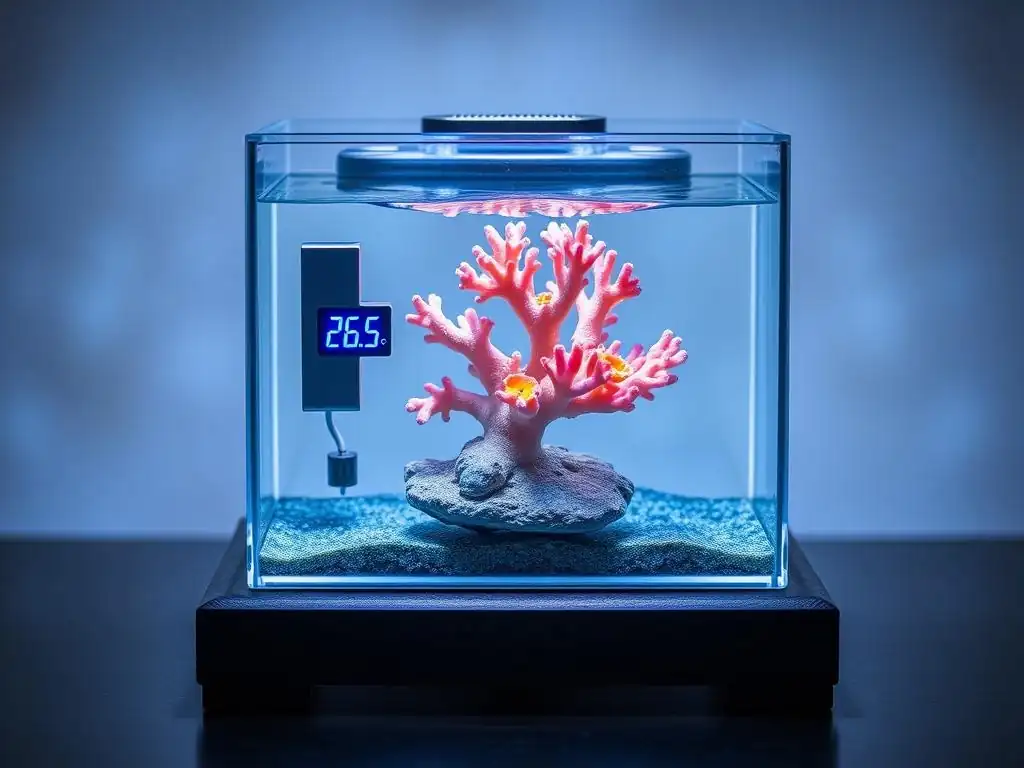
Maintaining a stable and consistent water temperature is absolutely critical for the health and growth of SPS corals in a propagation tank. SPS corals are highly sensitive to temperature fluctuations, and even small, rapid shifts can cause stress, leading to bleaching or inhibited growth. The ideal temperature range for most SPS corals is between 76°F and 79°F (24.4°C to 26.1°C), with minimal daily swings (ideally less than 1°F).
To achieve this stability, a reliable heater with an external controller is essential to prevent overheating. For larger SPS coral propagation tanks or those in cooler environments, multiple smaller heaters distributed within the sump can provide more even heating and redundancy.
Conversely, in warmer climates or during summer months, a chiller may be necessary to prevent the water temperature from exceeding the upper limit. Lighting, pumps, and other equipment generate heat, especially in a compact SPS frag tank setup, which can quickly raise water temperatures. A properly sized chiller, connected to a temperature controller, will automatically kick in when the water temperature rises above the desired set point, ensuring consistent conditions.
Monitoring temperature daily with a high-quality thermometer or controller is vital. Consistent temperature helps maintain stable metabolic rates in the corals and their symbiotic zooxanthellae, preventing stress and promoting robust calcification and vibrant coloration in your SPS coral propagation tank.
Substrate Selection: Bare Bottom vs. Aragonite for SPS Frag Tanks
When setting up an SPS coral propagation tank, one of the key decisions regarding the tank's interior is whether to opt for a bare bottom or a sand bed (aragonite substrate). For dedicated SPS propagation systems, a bare bottom approach is overwhelmingly favored by professional breeders and advanced hobbyists due to its significant advantages in cleanliness and maintenance.
A bare bottom SPS frag tank eliminates the possibility of detritus accumulating within the sand bed, which can break down into unwanted nitrates and phosphates, directly hindering the ultra-low nutrient environment required by SPS corals. This design also allows for much stronger and more turbulent flow patterns across the bottom of the tank, preventing any settling of waste and making it incredibly easy to siphon out any debris during routine maintenance.
While a sand bed can provide some biological filtration and a habitat for beneficial microfauna in a display tank, these benefits are often outweighed by the challenges in a high-density SPS coral propagation tank. Sand beds can trap uneaten food and coral waste, becoming a nitrate factory over time, and can also harbor pests that might be difficult to eradicate.
Furthermore, the strong flow required for SPS corals can easily create "sandstorms," irritating frags and potentially damaging pump impellers. Therefore, for optimal cleanliness, nutrient control, and ease of maintenance, a bare bottom setup is almost universally recommended for an SPS frag tank, allowing for maximum water clarity and simplified waste removal, which directly contributes to faster growth and healthier SPS frags.
Setting Up Your SPS Coral Propagation Tank: A Step-by-Step Guide
Step 1: Tank Setup and Plumbing Installation
The initial step in setting up your SPS coral propagation tank involves the physical assembly of the aquarium and its associated plumbing. Begin by placing the tank on a sturdy, level stand capable of supporting the significant weight of the filled system. Ensure the stand is positioned in your chosen optimal location, considering accessibility and proximity to electrical outlets and water sources.
Next, install any bulkheads for overflows and returns. For an effective SPS frag tank, a robust overflow system, such as a "Herbie" or "Bean Animal" style overflow, is highly recommended as it provides silent operation and redundancy, minimizing the risk of floods. The plumbing for the drain lines (to the sump) and return lines (from the sump to the display) should be meticulously planned and assembled using PVC pipe and appropriate fittings, ensuring all connections are watertight.
Once the bulkheads and initial plumbing are in place, test the system for leaks by slowly filling the tank with fresh water. Allow the water to sit for several hours, carefully inspecting all connections. Address any leaks immediately by tightening fittings or re-gluing joints. After confirming the system is watertight, proceed with installing the return pump in the sump and connecting it to the return plumbing.
Ensure the pump is adequately sized for your SPS coral propagation tank, providing sufficient flow back to the display. Finally, position any internal equipment such as powerheads or wavemakers, ensuring their cords are neatly managed and secured to prevent accidental dislodgement. A well-planned and executed plumbing system is the foundation for a stable and low-maintenance SPS frag tank.
Step 2: Establishing the Biological Filter
Establishing a robust biological filter is the cornerstone of a healthy SPS coral propagation tank, as it is responsible for the critical nitrogen cycle that converts toxic ammonia and nitrite into less harmful nitrate. The primary method for establishing this filter is through the use of live rock and/or specialized biological media. Begin by rinsing any new live rock in clean saltwater to remove loose debris, then carefully place it in the display tank and/or sump.
Aim for approximately 1 to 1.5 pounds of live rock per gallon of water for a robust biological base, though a bare bottom SPS frag tank will rely more heavily on live rock in the sump. If using dry rock, it will need to be cured first to remove any decaying matter before being added to the system.
In addition to live rock, incorporating high-surface-area biological media in the sump, such as bio-balls, ceramic rings, or specialized bio-blocks, can further enhance the biological filtration capacity, especially in a bare bottom SPS coral propagation tank where there is no sand bed to contribute to bacterial colonization. Ensure these media are placed in a section of the sump with good water flow.
The goal is to provide ample surface area for nitrifying bacteria to colonize and thrive. This step is crucial for preparing the SPS frag tank for the next phase, cycling, where these bacterial colonies will process the initial ammonia spike.
Step 3: Cycling the SPS Frag Tank
Cycling is the process of establishing the nitrogen cycle in your SPS coral propagation tank, allowing beneficial bacteria to colonize and convert toxic ammonia and nitrite into less harmful nitrate. This is a crucial step that must not be rushed. Begin the cycle by introducing an ammonia source; this can be done by adding a small piece of raw shrimp or by dosing pure ammonia (without surfactants) to bring the ammonia level to approximately 2-3 ppm.
Over the next few weeks, regularly test the water parameters using a reliable test kit. You will observe ammonia levels rising, then nitrites rising as ammonia falls, and finally nitrates rising as nitrites fall.
The cycling process typically takes 3-6 weeks, depending on various factors like temperature and the initial bacterial load. During this period, avoid adding any livestock, including corals, as they are highly sensitive to ammonia and nitrite. Once both ammonia and nitrite consistently test at 0 ppm for several consecutive days, and nitrates are detectable, your SPS frag tank is considered fully cycled.
At this point, perform a large water change (50-75%) to reduce nitrate levels before proceeding to the next step. A properly cycled SPS coral propagation tank provides a stable and safe environment for your delicate SPS frags, minimizing stress and ensuring their long-term health.
Step 4: Fine-Tuning Water Parameters for SPS Success
Once your SPS frag tank is fully cycled, the final crucial step before introducing corals is to fine-tune the water parameters to optimal levels for SPS coral growth and health. This involves adjusting salinity, alkalinity, calcium, and magnesium, which are the fundamental building blocks for SPS skeletal growth. Salinity should be maintained precisely at 1.025-1.026 specific gravity (or 35 ppt), using a high-quality refractometer calibrated with a reference solution.
Alkalinity, representing carbonate hardness, is critical for calcification and should be stable between 8.0-9.5 dKH for an SPS coral propagation tank; aim for consistency rather than chasing a specific number. Calcium levels should be maintained at 400-450 ppm, working in conjunction with alkalinity.
Magnesium is equally important as it helps maintain the stability of calcium and alkalinity, preventing their precipitation. Optimal magnesium levels for SPS are typically 1300-1350 ppm. Regular testing (daily for alkalinity, 2-3 times a week for calcium and magnesium initially) is essential to identify any drops and adjust dosing accordingly.
Dosing solutions, such as a two-part (calcium and alkalinity) or a three-part (including magnesium) system, will likely be necessary to maintain these parameters as your SPS frags grow and consume these elements. Achieving and maintaining stable, optimal water chemistry is paramount for promoting rapid calcification, vibrant coloration, and overall resilience in your SPS frags within the propagation system.
Selecting SPS Corals for Propagation: A Focus on Fast Growers
Identifying Healthy Mother Colonies for Fragging
The success of your SPS coral propagation tank heavily relies on the health and vitality of the mother colonies from which you take frags. A healthy mother colony exhibits several key characteristics: vibrant, consistent coloration, fully extended polyps, and active growth tips (often lighter colored at the very ends of branches).
Avoid fragging from colonies that show any signs of stress, such as receding tissue, bleaching, or pest infestations, as these issues can easily transfer to the frags and compromise their survival. For example, a mother colony showing signs of slow tissue necrosis (STN) or rapid tissue necrosis (RTN) should never be fragged, as the underlying problem will likely affect the new frags.
Before fragging, it's beneficial to acclimate the mother colony to the conditions of your SPS coral propagation tank, if possible, for a few weeks. This allows the coral to adjust and reduces stress before the fragging process. Inspect the colony meticulously for any hidden pests like Red Bugs or Montipora-eating nudibranchs, even if it appears healthy.
Dipping the colony in a coral dip solution designed to remove pests (e.g., a specific iodine-based dip or a commercial coral pest remover) is a prudent preventative measure before introducing it to the fragging area. Selecting robust, pest-free mother colonies ensures that your SPS frags have the best possible start, leading to higher success rates in your SPS coral propagation tank.
Choosing Ideal SPS Coral Species for Propagation
When selecting SPS coral species for propagation in your dedicated SPS coral propagation tank, focusing on fast-growing and resilient varieties can significantly increase your success rate and yield. While nearly all SPS corals can be fragged, some species are notoriously easier and faster to grow from small fragments.
Good candidates for beginners or those aiming for high output include various species of Montipora (e.g., M. digitata, M. capricornis, M. undata), which are known for their relatively rapid growth and hardiness. Certain Acropora species, such as Acropora millepora, Acropora hyacinthus, and Acropora secale, are also excellent choices, often exhibiting growth rates that allow for multiple fragging cycles within a year.
These "workhorse" SPS corals are not only more forgiving of minor parameter fluctuations but also tend to heal faster after fragging, minimizing the risk of infection or tissue loss. For instance, a small Montipora digitata frag can often double in size in just 2-3 months under optimal conditions in an SPS frag tank, allowing for subsequent fragging.
As you gain experience, you can gradually introduce more challenging or slower-growing SPS species, such as certain deepwater Acropora varieties or highly sensitive Seriatopora species. However, starting with proven fast growers ensures a rewarding experience and builds confidence in your SPS coral propagation techniques, leading to a consistently productive frag tank.
Frequently Asked Questions
What is an SPS coral propagation tank and why would I need one?
An SPS coral propagation tank is a separate aquarium specifically designed for growing and fragging Small Polyp Stony (SPS) corals. It's beneficial for aquarists aiming to expand their coral collection or propagate corals for sale.
What are the most important factors to consider when setting up an SPS coral propagation tank?
Key considerations include maintaining stable water parameters, providing intense lighting suited for SPS corals, and ensuring strong water flow for nutrient delivery and waste removal.
How does water chemistry differ in a propagation tank compared to a display reef tank?
While similar, propagation tanks often require even more precise control over alkalinity, calcium, and magnesium levels. This is because rapid coral growth demands a steady supply of these elements.
What type of equipment is essential for a successful SPS coral propagation tank?
Essentials include a high-quality protein skimmer, powerful lighting (LED or T5), robust water pumps, and a reliable controller for monitoring and automating water parameters.
How frequently should I frag SPS corals in my propagation tank?
The frequency depends on the coral species and growth rate. Regular fragging, typically every few weeks to months, stimulates further growth and allows for efficient propagation.
Final Reflection: Cultivating the Future of Reefs
The meticulous process of setting up a dedicated SPS coral propagation tank, as detailed in this guide, isn't merely about creating a controlled environment; it's about actively participating in the preservation and advancement of reef ecosystems. In a world facing unprecedented environmental challenges, the ability to successfully propagate SPS corals offers a tangible pathway to mitigating the loss of these vital marine habitats and ensuring their survival for generations to come.
This journey into SPS coral propagation has underscored the delicate balance and interconnectedness within reef systems. Witnessing the vibrant colors and intricate structures of these corals thrive under controlled conditions reinforces the profound responsibility we have to protect their natural counterparts. In the end, we will conserve only what we love; we will love only what we understand; and we will understand only what we are taught.
- Baba Dioum. This quote encapsulates the essence of our efforts: by understanding and nurturing these corals, we foster a deeper appreciation and commitment to their conservation.
Now, armed with the knowledge and techniques shared in this guide, I encourage you to consider your own role in the future of our reefs. Whether you're a seasoned aquarist or just beginning your journey, embrace the opportunity to contribute to the propagation and preservation of these magnificent creatures. Let's work together to cultivate a future where vibrant coral reefs continue to flourish, enriching our planet and inspiring generations to come.
Ignite Your Reef: Propagate SPS Like a Pro!
Thank you for diving deep into the art of SPS frag tank setups. We hope you found the insights you needed to elevate your coral propagation game. Now, it's time to turn that knowledge into action!
Here are some steps you can take to unlock your SPS propagation potential:
- Start Small, Dream Big: Dedicate a weekend to planning and setting up your first mini-frag tank, even if it's just a simple 10-gallon setup.
- Explore Advanced Techniques: Research and experiment with different lighting spectrums to witness firsthand how they affect coral coloration and growth rates.
- Share the Spark: Document your propagation journey, post it on social media with #AquariumMastery, and inspire fellow reefers to embrace the art of fragging!
Ready to witness the explosive growth of your own stunning SPS reef?