
The Unsung Hero: Why Your Aquarium Stand is as Crucial as the Tank Itself

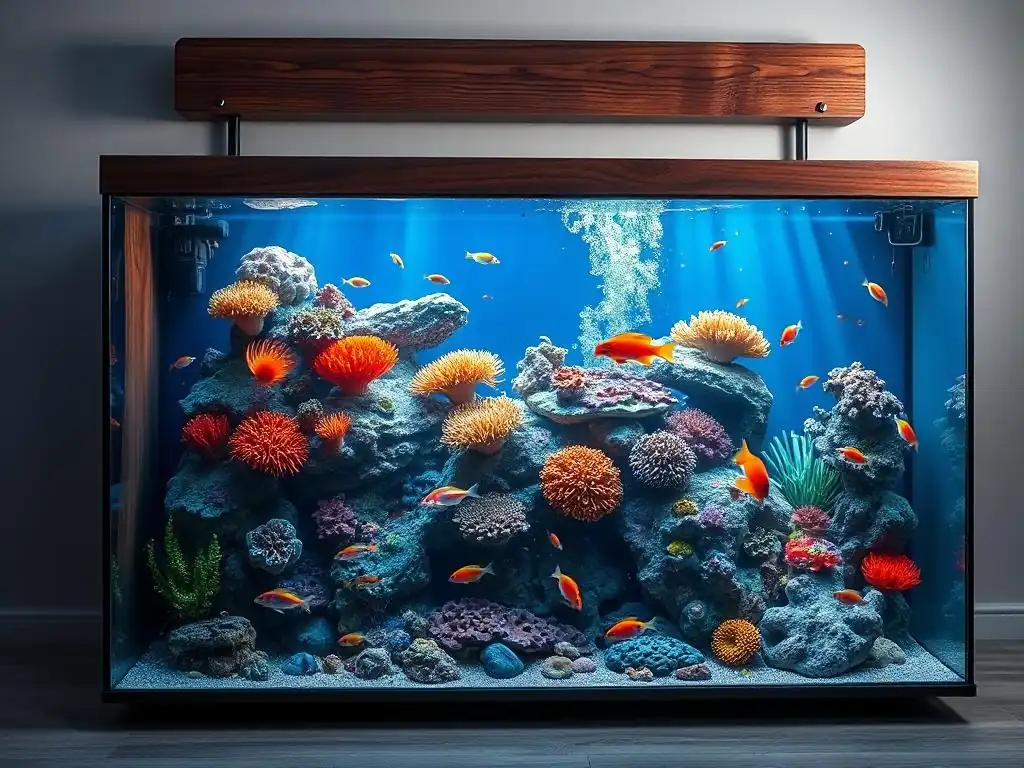
Welcome to Aquarium Mastery, where we help you unlock the secrets to thriving aquatic ecosystems!
Ever wondered if your aquarium stand is really up to the task? Before you dive deeper into the mesmerizing world beneath the surface, let's tackle a foundation often overlooked: aquarium stand stability issues. Is your current setup truly secure? Discover the potential dangers and essential solutions in our comprehensive guide, "The Unsung Hero: Why Your Aquarium Stand is as Crucial as the Tank Itself," and ensure your underwater paradise rests on solid ground. Ready to build a stable foundation for your aquatic dreams? Let's get started!
- Understanding the Importance of a Robust Aquarium Stand
- Aquarium Stand Materials: Choosing the Right One for Your Tank
- Assessing Your Aquarium's Weight and Selecting an Appropriate Stand
- Common Aquarium Stand Stability Issues and How to Avoid Them
- Leveling Your Aquarium Stand: Ensuring a Flat and Stable Base
- Reinforcing an Existing Aquarium Stand: Strengthening for Peace of Mind
- Preventing Aquarium Stand Instability: Maintenance and Best Practices
- Addressing Aquarium Stand Stability Issues: Troubleshooting Guide
- Choosing the Right Size Aquarium Stand: A Comprehensive Guide
- The Long-Term Benefits of a Stable Aquarium Stand
-
Frequently Asked Questions
- How critical is the aquarium stand to the overall health of my aquarium ecosystem?
- What are some common signs of aquarium stand instability I should watch out for?
- Can I use a regular piece of furniture, like a dresser, instead of a dedicated aquarium stand?
- What materials are best suited for building a durable and stable aquarium stand?
- How do I address leveling issues with my aquarium stand after I've set it up?
- Final Reflection: The Foundation of Aquatic Dreams
- Elevate Your Aquarium Experience!
Understanding the Importance of a Robust Aquarium Stand
Beyond Aesthetics: The Functional Role of an Aquarium Stand
An aquarium stand is far more than just a decorative piece of furniture; it is the foundational support system that bears the immense weight of your entire aquatic ecosystem. A 55-gallon aquarium, for instance, can weigh upwards of 600 pounds when filled with water, substrate, decor, and equipment. A 125-gallon tank can easily exceed 1,200 pounds.
Without a stand engineered to safely distribute this colossal load, the structural integrity of your tank, your flooring, and even your home can be compromised. The stand ensures that the weight is evenly dispersed, preventing stress points on the aquarium's bottom glass and seams, which are often the first points of failure under uneven pressure.
Furthermore, a well-designed stand provides essential space and concealment for filtration systems, heaters, air pumps, and electrical components. This not only maintains a clean and organized appearance but also protects sensitive equipment from splashes and accidental damage. The functional role extends to providing easy access for routine maintenance, feeding, and observation, making the daily care of your aquarium significantly more manageable. Ignoring the functional demands of a stand in favor of aesthetics can lead to critical aquarium stand stability issues that threaten the entire setup.
Preventing Aquarium Stand Stability Issues: A Foundation for Success
The primary objective of a robust aquarium stand is to prevent catastrophic failures arising from aquarium stand stability issues. An unstable stand can lead to a multitude of problems, from minor leaks caused by stressed tank seams to a complete collapse resulting in thousands of pounds of water, glass, and aquatic life flooding your home.
Such an event can cause extensive property damage, ranging from ruined flooring and furniture to severe structural damage, and poses a significant safety hazard to occupants and pets. The financial cost of repairing water damage alone often far exceeds the initial investment in a high-quality stand.
Investing in a sturdy, appropriately rated stand is a proactive measure that safeguards your investment in the aquarium itself, protects your home, and ensures the well-being of your aquatic inhabitants. A stable foundation minimizes vibrations and external disturbances, creating a more secure and less stressful environment for fish and invertebrates. It provides the peace of mind that your aquatic masterpiece is securely supported, allowing you to focus on the joys of aquascaping and fish keeping rather than constantly worrying about potential structural failures or aquarium stand stability issues.
Aquarium Stand Materials: Choosing the Right One for Your Tank
Wood Aquarium Stands: Pros, Cons, and Considerations for Water Damage
Wood aquarium stands are a popular choice due to their aesthetic versatility, often complementing home decor with a natural, furniture-like appearance. They can be crafted from various wood types, including solid hardwoods like oak or maple, or engineered wood products such as particle board and MDF (Medium-Density Fiberboard). Solid wood stands offer superior durability and resistance to warping compared to engineered options, though they typically come at a higher price point. For example, a solid oak stand designed for a 75-gallon tank might support over 1,000 pounds with ease and last for decades if properly maintained.
However, a significant drawback of wood stands is their susceptibility to water damage. Even minor spills, splashes from maintenance, or condensation can cause untreated or poorly sealed wood to swell, warp, and eventually rot. Particle board and MDF are particularly vulnerable, absorbing water quickly and losing their structural integrity, leading to severe aquarium stand stability issues. To mitigate this, wood stands should be properly sealed with water-resistant finishes, and any spills must be wiped up immediately. Regular inspection for signs of swelling or discoloration is crucial to prevent long-term damage and maintain the stand's structural soundness.
Metal Aquarium Stands: Durability, Weight Capacity, and Rust Prevention
Metal aquarium stands, typically constructed from steel or aluminum, are renowned for their exceptional strength, high weight capacity, and slim profiles. Steel stands, often powder-coated for corrosion resistance, can support immense loads; a standard black powder-coated steel stand for a 125-gallon tank is commonly rated to support 1,500 pounds or more, providing a substantial safety margin. Their minimalist design can also be advantageous in modern aesthetics or where space is a premium. Unlike wood, metal is not susceptible to warping or rotting from water exposure, making it an excellent choice for high-humidity environments or tanks prone to splashing.
Despite their durability, metal stands are not without their considerations. The primary concern for metal stands, especially those made of steel, is rust. If the protective powder coating is scratched or chipped, exposing the bare metal to moisture, rust can develop and eventually compromise the stand's integrity.
Stainless steel offers superior rust resistance but is significantly more expensive. Regular inspection for scratches or rust spots, and prompt touch-ups with rust-inhibiting paint, are essential maintenance practices. Ensuring proper ventilation around the stand can also help minimize condensation and reduce the risk of rust, thus preventing potential aquarium stand stability issues related to corrosion.
DIY Aquarium Stands: Balancing Cost, Customization, and Structural Integrity
Building a DIY aquarium stand can be an appealing option for aquarists looking to save money, achieve a specific aesthetic, or create a stand perfectly tailored to their tank's dimensions and equipment. Cost savings can be substantial, often 30-50% less than purchasing a comparable pre-built stand, especially for larger tanks. Common materials include kiln-dried 2x4s or 2x6s for the frame, and plywood or MDF for cladding. For instance, a robust DIY stand for a 75-gallon tank might utilize a frame of 2x4s on 12-inch centers, providing ample support when properly joined with structural screws and wood glue.
However, the primary challenge with DIY stands lies in ensuring adequate structural integrity and preventing aquarium stand stability issues. Unlike commercially manufactured stands that undergo engineering and testing, a DIY stand's strength relies entirely on the builder's design and execution. Errors in joinery, insufficient bracing, or using inappropriate materials can lead to catastrophic failure.
It is crucial to over-engineer the design, calculate weight loads meticulously, and use strong fasteners. Resources like online forums and carpentry guides can provide proven plans, but a lack of experience can result in a stand that looks good but cannot safely bear the weight, making professional consultation or thoroughly vetted plans advisable.
Assessing Your Aquarium's Weight and Selecting an Appropriate Stand
Calculating the Weight of Your Filled Aquarium: A Crucial Step
Accurately calculating the total weight of your filled aquarium is the single most crucial step in preventing aquarium stand stability issues. The formula is straightforward: sum the weight of the tank itself, the water, substrate, rocks, decor, and equipment. Water weighs approximately 8.34 pounds per U.S. gallon.
For example, a standard 55-gallon glass tank can weigh about 80-90 pounds when empty. When filled with water (55 gallons * 8.34 lbs/gallon = 458.7 lbs), plus 50-70 pounds of substrate and perhaps 30-50 pounds of rock and decor, the total weight easily exceeds 600 pounds. A larger 125-gallon tank, empty weighing around 200 pounds, will contain over 1,000 pounds of water, bringing its total weight to well over 1,300 pounds.
This calculation provides the minimum load the stand must support. It's vital not to guess or underestimate this figure, as even a small discrepancy can put undue stress on the stand over time. For instance, a small 10-gallon tank (approximately 110 lbs filled) requires a stand rated for at least that much, while a large 200-gallon tank can weigh over 2,000 pounds, demanding a highly robust and specialized stand. Taking the time to perform this calculation precisely ensures you select a stand with adequate capacity, laying the groundwork for long-term stability and safety.
Matching Stand Weight Capacity to Your Aquarium's Needs
Once you have precisely calculated the total weight of your filled aquarium, the next critical step is to select a stand with a weight capacity that not only meets but ideally exceeds this figure. A common recommendation is to choose a stand rated for at least 20-30% more than your calculated total weight. This safety margin accounts for potential inaccuracies in your calculation, future additions of heavier decor, or unforeseen stresses. For example, if your 75-gallon aquarium setup weighs 850 pounds, you should look for a stand rated for at least 1,020 to 1,100 pounds.
Reputable stand manufacturers clearly state the maximum weight capacity of their products. Always check these specifications carefully. Stands are often designed for specific tank sizes (e.g., "fits 55-gallon tanks"), but it's the weight rating that truly matters, as tank weights can vary based on materials (glass vs. acrylic), substrate type, and aquascaping choices. Matching the stand's capacity to your aquarium's actual weight, with a comfortable safety buffer, is a non-negotiable step in preventing aquarium stand stability issues and ensuring the longevity of your entire setup.
Overestimation vs. Underestimation: Why Accuracy Matters for Aquarium Stability
When it comes to assessing aquarium weight and selecting a stand, the difference between overestimation and underestimation is stark and critical. Overestimating the weight of your aquarium, while potentially leading to a slightly higher initial cost for a more robust stand than strictly necessary, is ultimately harmless. It simply provides an additional safety margin, offering greater peace of mind and reducing the likelihood of any aquarium stand stability issues. For instance, if your 55-gallon tank actually weighs 600 lbs, but you purchased a stand rated for 1,000 lbs, you've simply ensured an even higher degree of safety.
Underestimation, however, carries severe risks. Believing your 125-gallon tank weighs 800 lbs when it actually weighs 1,300 lbs, and purchasing a stand accordingly, is a recipe for disaster. An undersized or underrated stand will be constantly under excessive stress, leading to structural fatigue, bowing, cracking, and eventual catastrophic failure. This can result in shattered glass, thousands of gallons of water flooding your home, severe property damage, injury, and the loss of your aquatic life. Accuracy in weight calculation is paramount; it directly translates to the safety and longevity of your aquarium system and your home.
Common Aquarium Stand Stability Issues and How to Avoid Them
Uneven Floors: The Silent Killer of Aquarium Stands
One of the most insidious causes of aquarium stand stability issues is an uneven floor. While seemingly minor, even a slight incline or dip can concentrate the immense weight of a filled aquarium onto specific points of the stand's frame, rather than distributing it evenly across all support legs.
For example, a difference of just 1/8 to 1/4 inch over a 4-foot span can introduce significant twisting forces and localized stress on the stand's joints and the aquarium's glass bottom. Over time, this uneven pressure can lead to structural fatigue, joint separation, bowing of horizontal members, or even cause the aquarium glass to crack due to uneven support.
To avoid this "silent killer," always place your aquarium stand on the flattest, most level surface possible. Before setting up, use a long spirit level (at least 2-3 feet) to check the floor in multiple directions where the stand will sit. If the floor is not perfectly level, shims must be used under the stand's feet to achieve a perfectly stable and level base. Ignoring unevenness can lead to chronic aquarium stand stability issues that are difficult to remedy once the tank is filled, making proper leveling a crucial preparatory step.
Water Damage and Wood Rot: Protecting Your Investment
For wooden aquarium stands, water damage is a primary culprit behind aquarium stand stability issues. Constant exposure to moisture from spills, splashes during maintenance, or even high humidity can cause untreated or poorly sealed wood to swell, warp, and eventually rot. Particle board and MDF stands are particularly vulnerable, absorbing water like a sponge and rapidly losing their structural integrity. For instance, a small leak from a filter or a missed splash during a water change can, over months, turn a sturdy particle board leg into a crumbling, unstable support, leading to a dangerous sag or collapse.
Protecting your investment involves proactive measures. Ensure your wooden stand has a durable, water-resistant finish or consider applying one yourself. Place a waterproof mat or a thin sheet of plastic under the tank to catch minor drips. Immediately wipe up any spills, no matter how small. Regular inspection for signs of swelling, discoloration, or mold is vital. If you notice persistent dampness or significant wood degradation, consider sealing the affected areas or, if severe, reinforcing or replacing the stand to prevent catastrophic aquarium stand stability issues before they occur.
Overloading Your Aquarium Stand: Recognizing the Warning Signs
Overloading occurs when the total weight of your filled aquarium, including water, substrate, decor, and equipment, exceeds the maximum weight capacity of your stand. This is a direct pathway to severe aquarium stand stability issues. While a stand might not immediately collapse, the constant stress of excessive weight will manifest in various warning signs over time. These include:
- Sagging or Bowing: The most common sign, where horizontal support beams or shelves begin to visibly bend downwards. A subtle bow of even 1/4 inch on a 4-foot span can indicate significant stress.
- Creaking or Groaning Noises: These sounds, especially when weight shifts or if the stand is nudged, indicate joints under stress.
- Cracks or Splits: Hairline cracks appearing in wooden members, particularly near joints or along grain lines, signify structural failure. For metal stands, bending or buckling of support legs.
- Loose or Separating Joints: Screws pulling out, glue lines failing, or gaps appearing where pieces of the stand connect.
- Wobbling or Instability: The stand feels less rigid than it should, even when empty or lightly loaded.
Recognizing these warning signs early is crucial. If you observe any of these symptoms, immediately take steps to reduce the load (e.g., drain some water, remove heavy decor) and assess the stand's integrity. Ignoring these warnings can lead to an inevitable and dangerous structural collapse, highlighting the importance of proper weight calculation and stand selection from the outset.
Leveling Your Aquarium Stand: Ensuring a Flat and Stable Base
The Importance of a Level Surface for Even Weight Distribution
Ensuring your aquarium stand rests on a perfectly level surface is paramount for preventing aquarium stand stability issues and safeguarding the integrity of your tank. A level surface guarantees that the immense weight of the filled aquarium is distributed evenly across all points of the stand's frame and, consequently, across the entire bottom pane of the aquarium. If the stand is unlevel, even by a small fraction of an inch, the weight becomes concentrated on specific corners or edges. This creates uneven stress points on the aquarium's glass seams, which are designed to withstand even pressure, not concentrated loads.
Over time, this localized stress can lead to the weakening of silicone seals, hairline cracks in the glass, or even catastrophic seam failure and leaks. Consider a 75-gallon tank weighing around 850 pounds; if one corner is 1/8 inch lower than the others, that corner will bear a disproportionate share of the load, potentially hundreds of pounds more than intended. This constant, uneven pressure is a primary cause of tank failure. A perfectly level stand ensures that the pressure is uniformly applied, maximizing the life of your aquarium and eliminating preventable aquarium stand stability issues.
Tools and Techniques for Leveling Your Aquarium Stand Effectively
Leveling an aquarium stand requires precision and the right tools. The most essential tool is a high-quality spirit level, ideally one that is at least 2 to 3 feet long to span the entire length or width of your stand. A smaller torpedo level can be useful for checking individual legs or narrower sections. For highly precise leveling, a laser level can also be employed. The technique involves checking the level in multiple directions:
- Front to Back: Place the level along the front edge of the stand, then the back edge.
- Side to Side: Place the level along both side edges.
- Diagonally: Place the level from one corner to the opposite corner, then repeat for the other diagonal.
This comprehensive approach ensures that the stand is truly level across its entire footprint. For example, when setting up a 48-inch long 55-gallon tank stand, you would check its level along the 48-inch front, back, and two 13-inch sides, as well as both diagonals. Identifying any low spots in this systematic manner is the first step in addressing potential aquarium stand stability issues caused by an uneven floor.
Using Shims and Levelers: A Practical Guide
Once you've identified the low points on your stand using a spirit level, shims are the solution to achieve perfect levelness. Shims are thin, tapered pieces of material typically made from wood, plastic, or composite. Plastic shims are often preferred for aquarium stands as they are impervious to water and rot, unlike untreated wood shims.
To use shims effectively:
- Identify Low Spots: Place your long spirit level on the stand. Wherever the bubble indicates a low point, that's where a shim is needed.
- Lift and Insert: Carefully lift the low corner or side of the stand just enough to slide shims underneath. For heavy tanks, this may require assistance or a sturdy jack.
- Layer and Adjust: Start with a thin shim and add more layers as needed until the stand is level. If using tapered shims, you can slide them further in or out to fine-tune the height.
- Recheck Constantly: After adding or adjusting shims, recheck the level in all directions (front-to-back, side-to-side, and diagonally). It's an iterative process.
- Secure (Optional): For permanent setups, some people may trim excess shim material or even secure shims with a small amount of adhesive to prevent shifting, though this is often not necessary if the weight of the tank is sufficient.
Properly shimming your stand eliminates the stresses caused by uneven floors, directly preventing aquarium stand stability issues and protecting your tank from potential damage.
Reinforcing an Existing Aquarium Stand: Strengthening for Peace of Mind
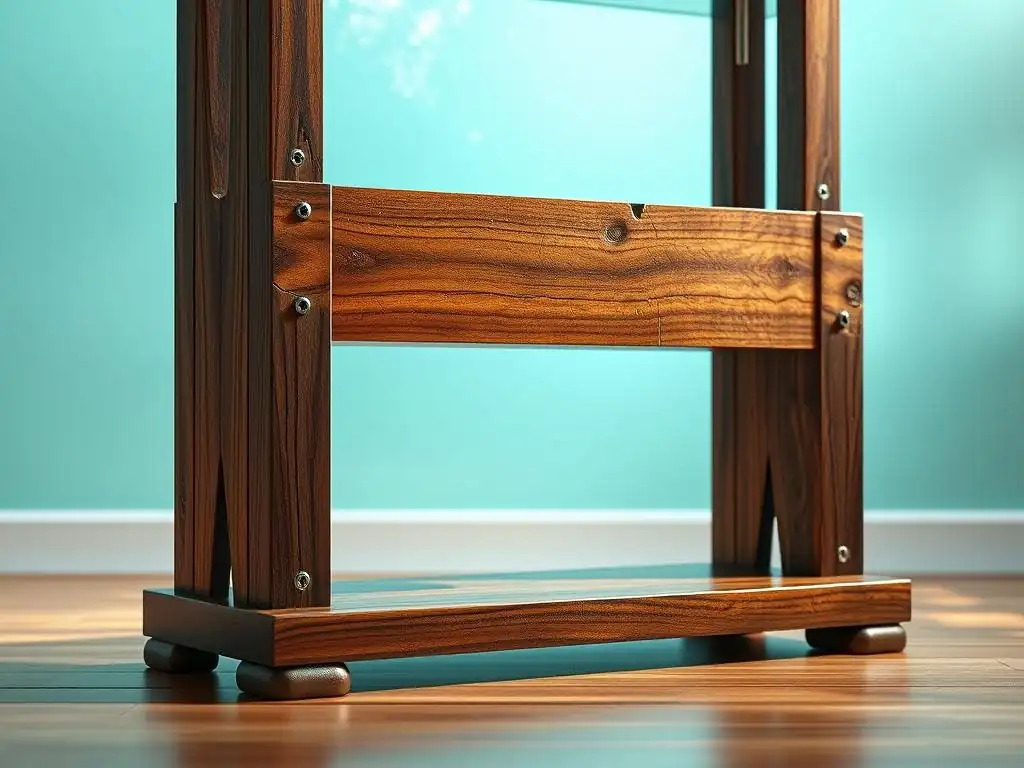
Identifying Weak Points in Your Current Stand
Before attempting to reinforce an existing aquarium stand, it's crucial to identify its current weak points. A thorough inspection can reveal areas prone to future aquarium stand stability issues. Begin by visually examining all joints: look for loose screws, separating glue lines, or visible gaps where pieces should meet.
Check horizontal support beams for any signs of bowing or sagging, especially under the center of the tank. For wooden stands, inspect for water damage, swelling, or rot, particularly near the base or any areas exposed to spills. Areas where the wood grain might be weak, or where knots are present, can also be potential failure points.
For metal stands, look for rust spots, bent or buckled legs, or compromised welds. Pay close attention to the overall rigidity; if the stand wobbles excessively when empty or with minor pressure, it indicates inadequate bracing or loose connections. Common weak points often include the central span of longer stands (e.g., a 48-inch stand for a 55-gallon tank might lack a central vertical support), or inadequate cross-bracing in the back or sides. Identifying these specific vulnerabilities will guide your reinforcement efforts, ensuring you strengthen the areas that need it most.
Adding Support Beams and Braces for Enhanced Stability
Once weak points are identified, adding support beams and braces can significantly enhance an existing stand's stability and prevent future aquarium stand stability issues.
- Vertical Supports: For longer stands (e.g., 48 inches or more) that lack a central vertical support, adding one or two 2x4s or 4x4s directly under the tank's center can dramatically reduce bowing. These should run from the top frame down to the floor, ensuring they are perfectly plumb and securely fastened to both the top and bottom frames.
- Horizontal Cross-Braces: Adding horizontal braces between existing vertical members, particularly at the back or sides, can prevent racking (side-to-side wobbling). These can be simple 2x4s or plywood panels securely screwed into the frame, forming rigid triangles or squares.
- Corner Brackets: For stands with less robust corner joints, adding metal L-brackets or larger corner gussets (triangular pieces of plywood) can reinforce these critical stress points.
- Sheathing: For open-frame wooden stands, adding a plywood back panel can significantly stiffen the entire structure, acting as a shear wall that resists twisting forces.
When adding wood, use construction-grade lumber (e.g., kiln-dried 2x4s) and secure them with strong structural screws (e.g., 2.5-3 inch wood screws) and wood glue for maximum strength. For metal stands, welding additional cross-members or bolting on steel plates can provide similar reinforcement.
When to Reinforce vs. When to Replace Your Aquarium Stand
Deciding whether to reinforce an existing stand or replace it entirely is a critical decision that hinges on the severity of its current condition and the inherent risks of aquarium stand stability issues.
- Reinforce When:
- The stand has minor bowing (e.g., less than 1/4 inch over a 4-foot span) but is otherwise structurally sound.
- It exhibits slight wobbling due to inadequate bracing but the main frame members are intact.
- You are adding a small amount of weight (e.g., upgrading from a 55-gallon to a 60-gallon tank on a stand originally rated for 55 gallons, but with a good safety margin).
- The primary material (wood or metal) is in good condition with no widespread rot, severe rust, or significant cracks.
- The stand was simply under-built for its intended purpose but not fundamentally damaged.
- Replace When:
- There is significant bowing or sagging (e.g., more than 1/2 inch on a 4-foot span), indicating major structural failure.
- Widespread wood rot, extensive cracking, or severe rust has compromised the main load-bearing components.
- Joints are widely separated, or fasteners are pulling out easily.
- The stand was clearly and fundamentally undersized for the tank's weight from the start, and reinforcement would only provide a false sense of security.
- You value absolute peace of mind and the cost of reinforcement approaches the cost of a new, appropriately rated stand.
When in doubt, especially with large, heavy tanks, err on the side of caution and opt for replacement. The cost of a new stand is negligible compared to the potential damage and danger of a catastrophic failure.
Preventing Aquarium Stand Instability: Maintenance and Best Practices
Regular Inspections: Catching Problems Early
Proactive maintenance is key to preventing aquarium stand stability issues. Regular inspections of your aquarium stand can help you catch potential problems early, before they escalate into major structural concerns. Aim to inspect your stand at least once every three to six months. During your inspection, look for the following:
- Visual Cues: Check for any signs of bowing, sagging, or warping in horizontal members. Look for cracks, splits, or swelling in wooden components, especially near the base or joints. For metal stands, inspect for rust spots, bent legs, or compromised welds.
- Joint Integrity: Gently push and pull on the stand to check for any wobbling or excessive play in the joints. Look for loose screws, separating glue lines, or gaps between connected pieces.
- Levelness: Recheck the stand's levelness using a spirit level, as floors can settle over time.
- Water Damage: Inspect for water stains, dampness, or mold, particularly in hidden areas or under equipment.
- Legs and Feet: Ensure all legs are firmly on the floor and that any shims or levelers are still securely in place.
Documenting your observations can help track changes over time. Early detection of these warning signs allows for timely intervention, such as tightening screws, applying a sealant, or adding minor reinforcement, effectively preventing small issues from becoming significant and dangerous aquarium stand stability issues.
Protecting Against Water Spills and Humidity
Water is the arch-nemesis of many aquarium stands, particularly those made of wood. Protecting your stand against spills and high humidity is crucial for maintaining its long-term stability and preventing aquarium stand stability issues.
- Immediate Cleanup: The most important rule is to immediately wipe up any and all water spills, no matter how small. Even a few drops, if left to sit, can begin to permeate wood and cause damage over time.
- Drip Trays and Mats: Consider placing a waterproof mat or a plastic drip tray directly under your aquarium. These inexpensive additions can catch minor leaks from filters, hoses, or condensation, preventing water from reaching the stand's surface.
- Sealants and Finishes: Ensure your wooden stand has a high-quality, water-resistant finish or sealant. If it's an older stand, consider re-applying a marine-grade polyurethane or epoxy finish. For DIY stands, proper sealing during construction is non-negotiable.
- Humidity Control: High ambient humidity, especially in enclosed aquarium cabinets, can lead to condensation and moisture buildup. Ensure good air circulation around and within the stand. Opening cabinet doors periodically or installing small ventilation fans can help reduce humidity levels, mitigating the risk of mold and wood rot.
- Hose and Equipment Maintenance: Regularly inspect all hoses, filter connections, and equipment for leaks. Replacing worn O-rings or cracked tubing can prevent significant water spills onto your stand.
By being vigilant about water management, you can significantly extend the life of your aquarium stand and avoid common structural degradation.
Proper Weight Distribution within the Aquarium
While the stand is responsible for supporting the total weight, how that weight is distributed within the aquarium itself can also influence aquarium stand stability issues. Uneven weight distribution inside the tank can create localized stress points on the tank's bottom glass and, consequently, on the stand directly beneath those points.
- Substrate Leveling: When adding substrate (gravel, sand, aquasoil), ensure it is spread as evenly as possible across the entire bottom of the tank. Avoid creating excessively thick layers in one area while another is bare, as this concentrates weight. For example, a 2-inch layer of sand spread evenly provides more uniform pressure than a 4-inch mound in one corner and a 1-inch layer elsewhere.
- Rock and Hardscape Placement: Large, heavy rocks or driftwood pieces should be placed carefully to distribute their weight. Avoid piling all heavy decor in one small area. If creating a rock structure, ensure its base is wide and stable, spreading its load over a larger footprint on the tank bottom. For very heavy rocks, some aquarists use foam pads or egg crate material under them to further distribute pressure and prevent direct contact with the glass.
- Equipment Placement: While most equipment (heaters, filters) are relatively light, ensure internal filters or powerheads are not causing constant, localized pressure on a single point of the tank's bottom or side glass.
By distributing the weight evenly within the aquarium, you help ensure that the stand is supporting the load as intended, minimizing localized stress and contributing to the overall long-term stability of your entire setup.
Addressing Aquarium Stand Stability Issues: Troubleshooting Guide
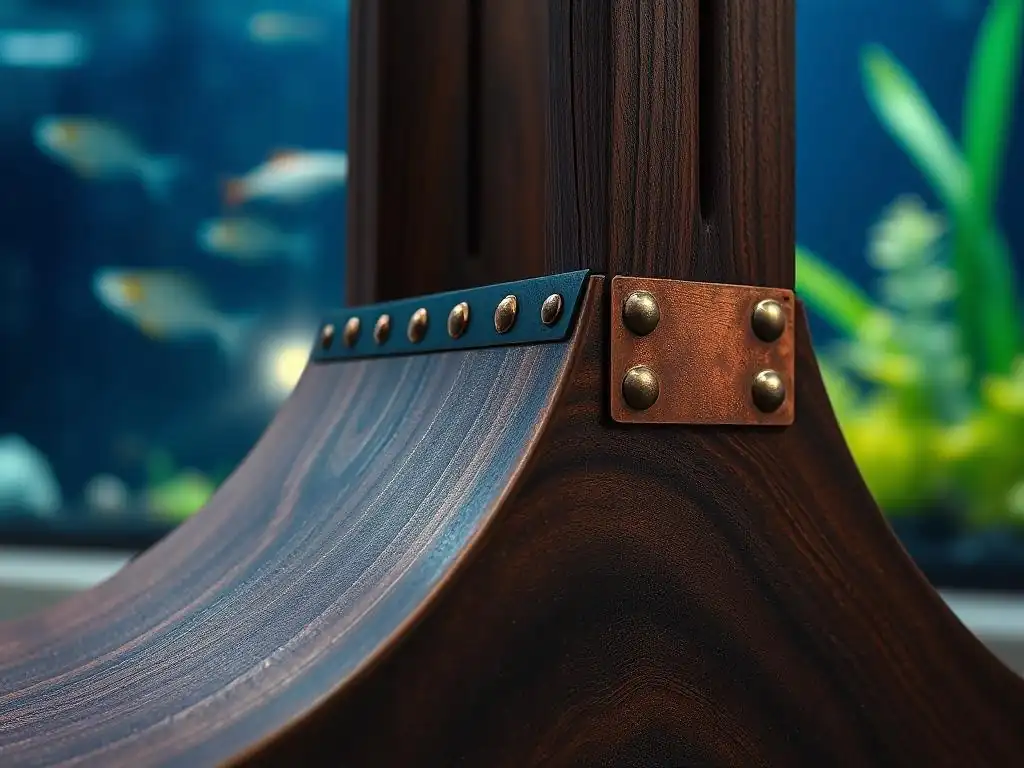
Wobbling or Shaking: Diagnosing the Cause
A wobbling or shaking aquarium stand is a clear indicator of aquarium stand stability issues and demands immediate attention. Diagnosing the cause is the first step towards a solution.
- Uneven Floor: This is the most common culprit. If the stand is not perfectly level, even minor movements can cause it to rock or wobble. Test by gently pushing on different corners of the stand and observing which legs lift.
- Loose Joints: Over time, screws can loosen, or glue bonds can weaken, especially in wooden stands. This creates play in the stand's frame, leading to instability. Examine all visible joints for gaps or loose fasteners.
- Inadequate Bracing: Some stands, particularly older or poorly constructed ones, may lack sufficient cross-bracing. This allows for side-to-side or front-to-back movement, even if the stand is otherwise sturdy.
- Under-designed for Weight: While usually leading to bowing, an undersized stand might also feel inherently unstable or "springy" under the full load of a large tank.
Once diagnosed:
- Leveling: If due to an uneven floor, use shims as described previously to stabilize and level the stand.
- Tightening: For loose joints, use a screwdriver or wrench to tighten all fasteners. For wooden stands, consider adding wood glue to the joints before tightening for a stronger bond.
- Reinforcing: If due to inadequate bracing, consider adding new cross-braces or a plywood back panel as discussed in the reinforcement section.
Never ignore a wobbling stand, as it signifies compromised structural integrity that could lead to a catastrophic failure.
Sagging or Bowing: Assessing Structural Damage
Sagging or bowing in an aquarium stand is a serious symptom of significant aquarium stand stability issues, indicating that the stand's structural integrity is compromised and it is failing under load. This typically occurs in horizontal support beams, particularly the top frame directly supporting the tank, or in central shelves.
- Assessing Damage:
- Visual Inspection: Look along the length of the top frame or any internal shelves. Use a straight edge or a long level to clearly identify any curvature or dip. Measure the extent of the sag – even a 1/4-inch sag over a 4-foot span is concerning.
- Material Inspection: For wooden stands, check for visible cracks, splits, or signs of wood fibers separating, especially on the underside of the bowed section. Look for water damage, swelling, or rot, which severely weakens wood. For metal stands, inspect for bent or buckled sections, particularly in the middle of spans.
- Joint Integrity: Examine the joints where the sagging beam connects to vertical supports. Are they pulling apart? Are screws loose or pulling out?
- Causes:
- Overloading: The most common cause. The stand's weight capacity was exceeded.
- Material Fatigue: The material has weakened over time due to constant stress.
- Water Damage: For wood, water absorption significantly reduces strength.
- Poor Design/Construction: Insufficient bracing or inadequate material thickness for the span.
Immediate Action: If you observe significant sagging, it is critical. Consider immediately draining some water from the tank (e.g., 25-50%) to reduce the load and prevent further damage, while you formulate a plan for reinforcement or replacement.
Repairing Minor Damage vs. Replacing the Entire Stand
When faced with aquarium stand stability issues, deciding whether to repair minor damage or replace the entire stand is crucial for safety and long-term reliability.
- Repairing Minor Damage: This is appropriate for issues that do not fundamentally compromise the stand's primary load-bearing capacity.
- Loose Screws: Simply tightening them, possibly adding wood glue for a stronger bond in wooden stands.
- Minor Water Stains: If the wood is still solid and shows no signs of swelling, rot, or structural weakening, cleaning and resealing might suffice.
- Slight Wobble (due to inadequate bracing): Adding new cross-braces or a back panel can often stabilize the stand without needing full replacement.
- Small Rust Spots (on metal): Cleaning, sanding, and repainting with rust-inhibiting paint can address superficial rust before it spreads.
- Replacing the Entire Stand: This is the safest and often most sensible option when the damage is significant or the stand was fundamentally inadequate from the start.
- Significant Sagging or Bowing: If a main load-bearing beam has visibly bowed by more than a minimal amount, its structural integrity is severely compromised. Attempts to merely reinforce it may not be enough to prevent future failure.
- Widespread Wood Rot or Cracking: If the wood is soft, crumbling, or has extensive cracks, it has lost its strength.
- Major Rust (on metal): If rust has caused significant pitting or thinning of the metal, or if main structural welds are compromised.
- Chronic Instability: If the stand continues to wobble or show signs of stress despite multiple attempts at reinforcement and leveling.
- Undersized from Day One: If your current tank's weight significantly exceeds the stand's rated capacity, even if it hasn't failed yet, replacement is the only truly safe option.
Prioritize safety over cost savings. The potential damage from a collapsed aquarium far outweighs the expense of a new, properly rated stand.
Choosing the Right Size Aquarium Stand: A Comprehensive Guide
Matching Stand Dimensions to Your Tank Footprint
Choosing the correct size aquarium stand is fundamental to preventing aquarium stand stability issues. The stand's footprint (length and width) must precisely match or be slightly larger than the base dimensions of your aquarium. Any overhang of the tank beyond the stand's edges, even by an inch, can create unsupported areas on the bottom glass. This concentrates the immense weight of the water and contents onto the supported areas, leading to uneven stress on the tank's bottom pane and silicone seams. Over time, this can result in hairline cracks, leaks, or even catastrophic shattering of the glass.
For instance, a standard 55-gallon aquarium measures 48 inches long by 13 inches deep. Therefore, it requires a stand that is at least 48 inches long and 13 inches deep. A stand that is 47.5 inches long would leave a 0.25-inch overhang on each end, which is unacceptable. Always measure your tank's exact base dimensions and compare them directly to the stand's top surface dimensions. Avoid relying solely on "fits X-gallon tank" labels, as tank dimensions for a given volume can vary slightly between manufacturers.
Considering the Stand's Height and Accessibility
Beyond supporting the tank, the stand's height plays a significant role in both aesthetics and practicality. The ideal height typically places the top of the aquarium at a comfortable viewing level when you are sitting or standing. Most commercially available stands range from 28 to 32 inches in height, which generally positions a standard aquarium at eye-level for an average adult when seated. A lower stand might be suitable for children or for aquariums placed in areas where floor-level viewing is desired.
From a practical standpoint, the stand's height also affects accessibility for maintenance tasks. A stand that is too low can make water changes, gravel vacuuming, and aquascaping physically challenging, requiring excessive bending or kneeling.
Conversely, a stand that is too high might make reaching the bottom of a deep tank difficult, even for taller individuals. Consider your own height, the depth of your chosen aquarium, and the typical activities you'll perform when selecting a stand height to ensure comfortable and easy maintenance, which can indirectly contribute to better overall aquarium care and reduce the likelihood of accidental spills that might lead to aquarium stand stability issues.
Avoiding Overhang: Ensuring Proper Support
Avoiding overhang is arguably the single most critical aspect of choosing the right size aquarium stand, directly impacting the prevention of aquarium stand stability issues. An overhang occurs when any part of the aquarium's bottom pane extends beyond the supporting surface of the stand. Even a slight overhang, as little as a quarter of an inch, can be disastrous.
The bottom glass of an aquarium is designed to be supported uniformly across its entire surface. When a portion of it is unsupported, the immense weight of the water above creates a cantilever effect. This applies immense, localized stress to the glass, particularly near the edges where the support ends.
This concentrated stress can lead to the glass cracking or the silicone seams failing, resulting in an immediate and catastrophic leak. For example, a 75-gallon tank weighing over 800 pounds resting on a stand with even a small overhang will experience hundreds of pounds of uneven pressure, potentially leading to a crack within hours or days. Acrylic tanks are more forgiving of minor imperfections but still benefit from full support.
Always ensure the stand's top surface fully encompasses the entire base of the aquarium, providing solid, continuous support for every square inch of the bottom pane. This is a non-negotiable rule for long-term aquarium safety and stability.
The Long-Term Benefits of a Stable Aquarium Stand
Preventing Tank Cracks and Leaks
The most significant long-term benefit of a stable aquarium stand is its role in preventing costly and devastating tank cracks and leaks. An unstable or unlevel stand creates uneven pressure points on the aquarium's bottom glass and, critically, on its silicone seams. These seams, while incredibly strong under uniform pressure, are highly vulnerable to concentrated stress.
Even a minute sag in the stand's top surface or an uncorrected uneven floor can cause specific areas of the tank's bottom to bear disproportionately more weight. For instance, a 100-gallon tank weighing over 1,000 pounds will exert immense localized force on any unsupported or uneven point.
Over time, this constant, uneven stress will fatigue the glass and silicone, leading to hairline cracks that slowly weep water, or, in more severe cases, sudden and catastrophic seam failure. A perfectly level and robust stand ensures that the weight is distributed uniformly across the entire base of the tank, minimizing stress on all components. This proactive approach significantly reduces the risk of structural failure, protecting your investment in the aquarium itself and preventing the extensive water damage that accompanies major leaks, thereby entirely mitigating these particular aquarium stand stability issues.
Protecting Your Fish and Invertebrates
Beyond protecting your home and property, a stable aquarium stand is crucial for the well-being and survival of your fish and invertebrates. A sudden tank collapse due to aquarium stand stability issues is almost invariably fatal for aquatic life. The rapid loss of water, the impact of falling debris, and the subsequent exposure to air are conditions few fish can survive. Even if a tank doesn't completely collapse, an unstable stand that wobbles or vibrates can cause chronic stress to your aquatic inhabitants.
Fish are highly sensitive to their environment, and constant vibrations or a sense of instability can compromise their immune systems, make them more susceptible to disease, and inhibit natural behaviors like feeding and breeding. A secure, unmoving foundation provides a calm and consistent environment, which is essential for the health, growth, and longevity of your fish, invertebrates, and live plants. It ensures that the ecosystem you've carefully cultivated remains undisturbed, allowing your aquatic pets to thrive in a safe and stable home.
Ensuring the Longevity of Your Aquarium Setup
Investing in a high-quality, stable aquarium stand is a long-term investment that ensures the longevity of your entire aquarium setup. A well-supported tank experiences less stress on its components, meaning the glass, silicone seals, and even internal bracing are less likely to prematurely degrade. This extends the lifespan of the aquarium itself, potentially for decades. For example, a properly supported 75-gallon glass tank can last 15-20 years or more, whereas one on an unstable stand might develop leaks within a few years.
Furthermore, a stable stand protects the expensive equipment housed within or around it, such as filters, heaters, and lighting systems, from damage due to unexpected shifts or collapses. By preventing tank cracks, leaks, and catastrophic failures caused by aquarium stand stability issues, you avoid the significant costs and hassle associated with replacing damaged tanks, repairing water damage, and restocking lost aquatic life. Ultimately, a stable stand minimizes maintenance headaches, reduces future expenses, and allows you to enjoy your beautiful aquatic display for many years to come, truly making it the unsung hero of your aquarium.
Frequently Asked Questions
How critical is the aquarium stand to the overall health of my aquarium ecosystem?
The aquarium stand is absolutely crucial. It provides the necessary stable foundation to support the tremendous weight of a filled aquarium, preventing cracks or catastrophic failure.
What are some common signs of aquarium stand instability I should watch out for?
Look for signs like uneven floors, wobbling, visible cracks or warping in the stand's structure, or difficulty leveling the tank.
Can I use a regular piece of furniture, like a dresser, instead of a dedicated aquarium stand?
Generally, no. Most furniture isn't designed to handle the immense weight of an aquarium. A dedicated stand offers structural integrity and weight distribution.
What materials are best suited for building a durable and stable aquarium stand?
Solid wood (like oak or pine) and metal are popular choices. Ensure the stand is properly sealed to prevent water damage and rot.
How do I address leveling issues with my aquarium stand after I've set it up?
Use shims to correct unevenness underneath the stand's base. A level can help you ensure the aquarium is perfectly level and stable before filling it with water.
Final Reflection: The Foundation of Aquatic Dreams
The journey through understanding aquarium stand stability issues reveals more than just practical advice; it underscores the vital role of often-overlooked elements in achieving success. The stability of an aquarium stand is not merely a matter of structural integrity, but a testament to the dedication and foresight required to nurture a thriving aquatic ecosystem. Ignoring this foundational aspect can lead to devastating consequences, highlighting the importance of meticulous planning and informed decision-making in all our endeavors.
The impact of a stable aquarium stand extends beyond the immediate safety of the tank and its inhabitants. It represents a commitment to responsible pet ownership and a deep respect for the delicate balance of nature. The peace of mind that comes from knowing your aquarium is securely supported allows you to fully immerse yourself in the beauty and tranquility of your underwater world. The details are not the details. They make the design.
- Charles Eames. This quote perfectly encapsulates the significance of seemingly minor components, like the aquarium stand, in creating a harmonious and sustainable environment.
Now, consider the lessons learned about aquarium stand stability and apply them to the foundations of your own life. Are there areas where you've neglected the underlying support structures? Take a moment to assess the stability of your personal and professional endeavors. By prioritizing a solid foundation, you can cultivate a more resilient and fulfilling existence, capable of weathering any storm and supporting the vibrant ecosystem of your dreams.
Elevate Your Aquarium Experience!
Thank you for diving into the world of aquarium stands! We hope this article has illuminated the vital role a sturdy and well-chosen stand plays in the health and beauty of your aquatic ecosystem. Now, let's turn knowledge into action!
Here are a few steps you can take to further enhance your aquarium setup:
- Prioritize safety: Inspect your current stand thoroughly, paying close attention to any signs of wear or instability. If in doubt, consult with a professional.
- Delve deeper: Research different stand styles and materials to discover options that perfectly complement your tank and décor. Consider functionality and aesthetics!
- Spread the wisdom: Share this article with fellow aquarium enthusiasts to raise awareness about the importance of proper stand selection.
Ready to ensure your aquarium's long-term stability and aesthetic appeal? What steps will you take today to assess and improve your aquarium stand setup?