
Creating Natural Boundaries: Using Decor to Manage Cichlid Territories

Welcome to Aquarium Mastery!
Ever wondered how to keep the peace in your vibrant Cichlid tank? Dive in! Understanding Cichlid tank territory management is key to a thriving aquarium. Discover how strategically placed decor can create natural boundaries, reduce aggression, and unlock the full potential of your underwater world. Curious to learn more? Let's explore!
- Understanding Cichlid Aggression and Territory in the Aquarium
- The Role of Aquarium Decor in Defining Cichlid Territories
- Practical Decorating Techniques for Cichlid Tank Territory Management
- Optimizing Water Flow and Circulation for Territory Control
- Tank Size and Overcrowding: Key Factors in Cichlid Territory Disputes
- Monitoring and Adjusting Your Cichlid Tank Setup for Optimal Territory Management
- Troubleshooting Common Territory Problems in Cichlid Aquariums
- Choosing the Right Substrate to Enhance Cichlid Tank Environment and Behavior
-
Frequently Asked Questions
- How does decor impact Cichlid tank territory management?
- What types of decor are most effective for managing Cichlid tank territory management?
- How many pieces of decor are needed for effective Cichlid tank territory management?
- Can live plants be used in Cichlid tank territory management?
- How often should I rearrange the decor in my Cichlid tank territory management?
- Final Reflection: Harmonizing Cichlid Havens
- Craft Your Cichlid Haven!
Understanding Cichlid Aggression and Territory in the Aquarium
Why Cichlid Territory Management is Crucial for Tank Health
Effective cichlid tank territory management is paramount for the long-term health and stability of your aquarium ecosystem. Unchecked aggression, a common issue in cichlid tanks, leads to chronic stress among subordinate fish, weakening their immune systems and making them highly susceptible to diseases such as Ich or bacterial infections, which can manifest within a few days of sustained stress. Furthermore, severe aggression can result in physical injuries like torn fins, scale loss, or even fatality, with a dominant male capable of eliminating several tank mates within a matter of weeks if territories are not properly defined.
Beyond the immediate welfare of the fish, poor cichlid tank territory management can also negatively impact water quality. Stressed fish may refuse to eat, leading to uneaten food polluting the water, or their weakened state might lead to increased waste production, both contributing to elevated ammonia and nitrite levels. A well-managed tank, on the other hand, promotes natural behaviors, reduces stress, and fosters a balanced environment where all inhabitants can thrive, exhibiting vibrant colors and healthy growth.
Cichlid Species and Territorial Behavior: A Quick Guide
Cichlids, particularly those from the African Rift Lakes like Mbuna and Peacock cichlids, exhibit distinct territorial behaviors that vary significantly by species. Mbuna cichlids (e.g., Metriaclima estherae, Labidochromis caeruleus) are renowned for their highly aggressive and territorial nature, typically defending specific rock formations, caves, or distinct sections of the hardscape as their personal domain. An adult Mbuna male might fiercely defend a territory of 1-2 square feet around a chosen cave entrance, aggressively chasing away any perceived intruders.
Peacock cichlids ( Aulonocara species), while still territorial, generally display less aggression than Mbuna. They often prefer open sand areas or specific rock structures, establishing a hierarchy within the tank but engaging in less physical confrontation. For instance, a male Peacock might claim a specific open area of the substrate, displaying to females and warding off rival males, but usually without the relentless pursuit seen in Mbuna. Understanding these species-specific nuances is fundamental to successful cichlid tank territory management, as it guides the design of an appropriate habitat.
Recognizing Signs of Aggression in Your Cichlid Tank
Identifying early signs of aggression is crucial for proactive cichlid tank territory management. Initial displays often involve visual cues such as gill flaring, body trembling, or darkening/lightening of colors as fish attempt to assert dominance. A dominant cichlid might also engage in constant chasing, nipping at fins, or head-butting, especially targeting weaker or subordinate tank mates. These behaviors, even if subtle, indicate a breakdown in territorial harmony.
As aggression escalates, physical damage becomes evident. Look for torn or frayed fins, missing scales, cloudy eyes, or body lesions. Subordinate fish may exhibit stress behaviors like hiding constantly, refusing to eat, or displaying dull coloration and listlessness. For example, if a fish is being relentlessly chased for more than 10-15 minutes a day, or if you observe fin damage after just a few hours, it's a clear indicator that the current cichlid tank territory management strategy is failing and immediate intervention is required to prevent further harm.
The Role of Aquarium Decor in Defining Cichlid Territories
How Visual Barriers Reduce Cichlid Aggression
Visual barriers are a cornerstone of effective cichlid tank territory management, working by disrupting lines of sight between competing fish. When cichlids can constantly see each other, particularly dominant males, perceived threats are heightened, leading to increased stress and aggression. By strategically placing rocks, caves, and even hardy plants, you can create natural partitions that prevent continuous visual contact, thereby reducing the frequency and intensity of aggressive encounters.
This principle is based on the idea that "out of sight, out of mind." If a dominant male cannot constantly spot a rival, he is less likely to initiate a chase or attack. Observations in well-structured cichlid tanks have shown a significant reduction, often by 30-40%, in aggressive interactions compared to barren or sparsely decorated setups. This demonstrates the critical role of visual breaks in fostering a more peaceful and stable environment for cichlid tank territory management.
Creating Natural-Looking Boundaries with Rocks and Caves
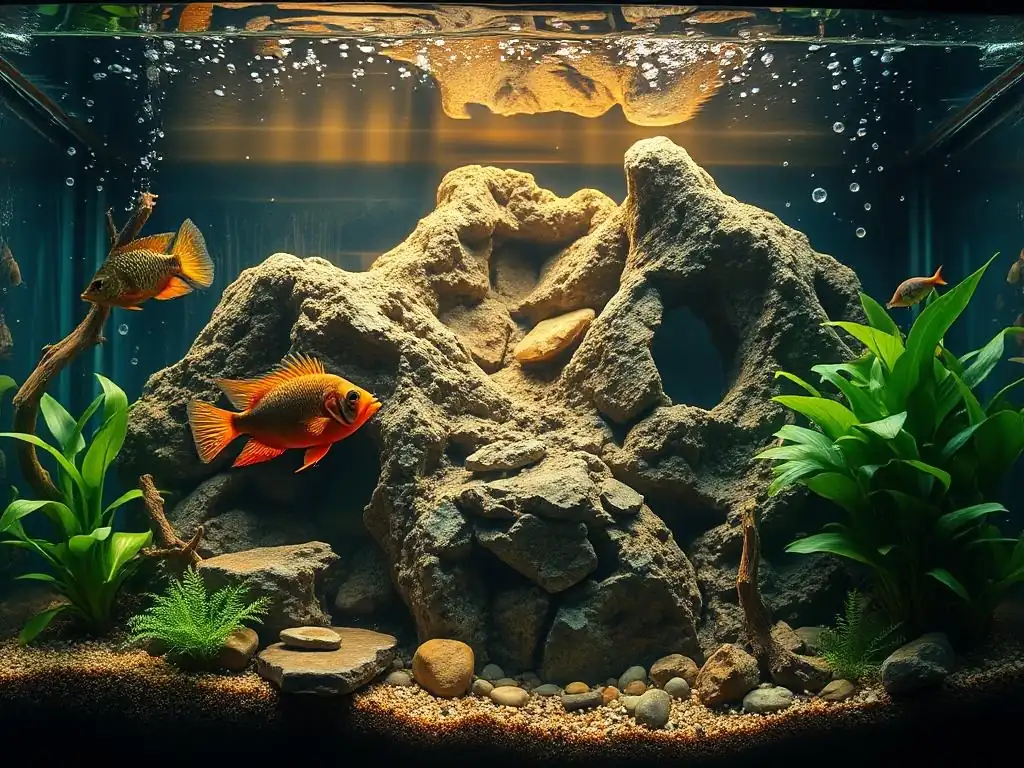
Rocks and caves are indispensable elements for establishing natural-looking boundaries and vital hiding spots in a cichlid aquarium. These hardscape materials provide both physical barriers and retreats, allowing subordinate fish to escape aggression and dominant fish to claim and defend their territories. When arranging rocks, focus on creating distinct zones and complex structures that offer multiple pathways and visual breaks.
For Mbuna cichlids, an abundance of caves and crevices is essential, as each male will typically claim a specific cave as his home. For Peacock cichlids, larger rock formations that create open "arenas" interspersed with sheltered areas can be more appropriate. The goal is to mimic their natural habitat, where rock piles and rocky outcrops define territories, enhancing your cichlid tank territory management efforts.
Using Plants Strategically to Demarcate Cichlid Tank Space
While many cichlids, especially Mbuna, are notorious for uprooting plants, certain hardy species can be used strategically to aid in cichlid tank territory management. Tough, root-feeding plants like Anubias species, Java Fern, or larger Vallisneria can provide additional visual breaks and soften the hardscape. These plants are best attached to rocks or driftwood, preventing them from being dug up.
For tanks housing less aggressive cichlids or certain Peacock species, denser plantings of robust species can create "green walls" or secluded areas. Even a few large, well-anchored Anubias plants can effectively break up a visual line by 10-15%, contributing to the overall complexity and territorial definition of the tank. The judicious use of plants can significantly enhance the natural feel and effectiveness of your cichlid tank territory management strategy.
Practical Decorating Techniques for Cichlid Tank Territory Management
Rockscaping for Cichlid Tanks: Building Structures for Dominance and Retreat
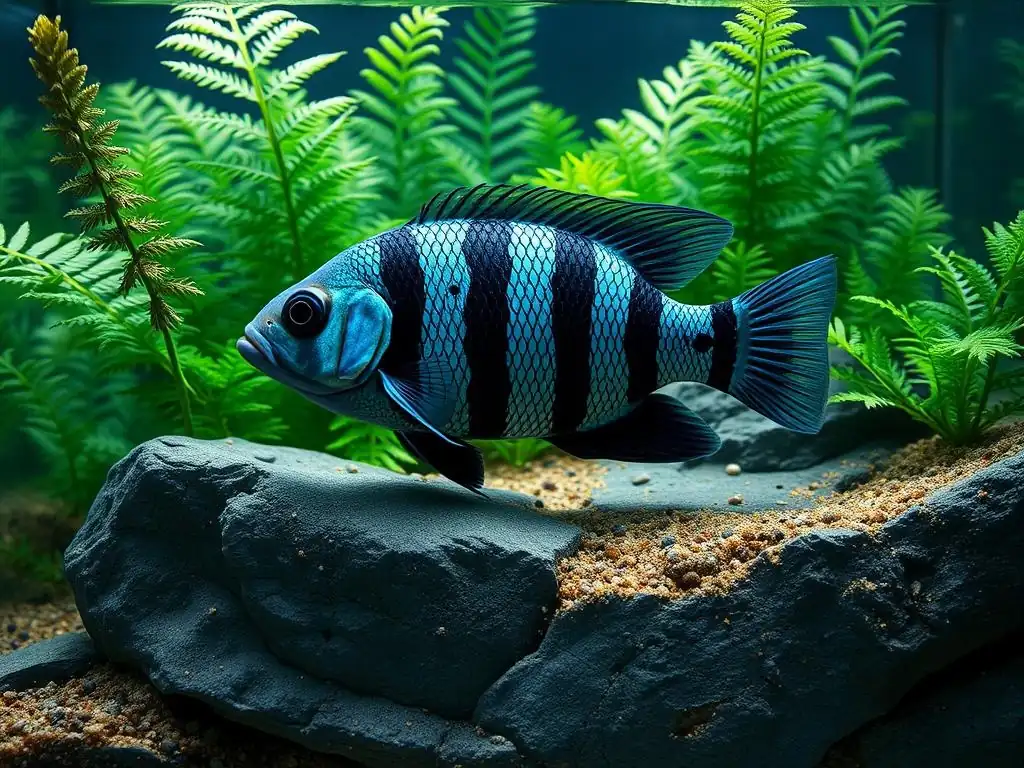
Effective rockscaping is the cornerstone of successful cichlid tank territory management, providing both areas for dominant fish to claim and crucial retreats for subordinate individuals. When designing your rock layout, aim for a complex, multi-layered structure that extends from the substrate to near the water surface, creating numerous caves, tunnels, and crevices.
This complexity allows for multiple territories to be established without constant direct confrontation. For instance, in a 75-gallon Mbuna tank, aiming for at least 15-20 distinct hideouts and visual breaks can significantly reduce aggression, as it provides enough options for all fish to claim a space or escape.
Consider creating distinct "zones" within the tank, using large rock formations to separate areas. One zone might be a dominant male's primary territory, while another offers a neutral zone or a series of smaller, less prominent caves for less aggressive species or females. Varying the height and depth of the rock structures also adds to visual complexity, preventing a clear line of sight across the entire tank and thus enhancing overall cichlid tank territory management.
Choosing the Right Rocks for Your Cichlid Aquarium
Selecting appropriate rocks is vital for both aesthetics and safety in cichlid tank territory management. Limestone, lace rock, lava rock, and slate are popular choices due to their natural appearance and ability to buffer pH, which is beneficial for African cichlids that prefer hard, alkaline water (pH 7.8-8.6). Avoid rocks with sharp edges that could injure fish. For a 55-gallon tank, you might need 40-60 pounds of rock to create a substantial hardscape, depending on the rock density.
Before adding any rocks, ensure they are thoroughly cleaned to remove any dirt, dust, or contaminants. A simple rinse with tap water followed by a scrub with a brush is usually sufficient. Never use soaps or detergents. If you are unsure about a rock's chemical composition, a simple vinegar test can help: if it fizzes, it contains carbonates and will affect water chemistry, which is often desirable for African cichlids but should be monitored.
Safe Rock Stacking Techniques to Prevent Accidents
Safety is paramount when stacking rocks for cichlid tank territory management; unstable structures can collapse, harming fish or even cracking the aquarium glass. Always build your rock structures directly on the aquarium bottom, not on the substrate. This prevents the rocks from shifting or collapsing if the cichlids dig away the substrate beneath them. Use a thin sheet of egg crate or similar material under the rocks to distribute weight evenly and protect the glass.
When stacking, interlock rocks like puzzle pieces, ensuring each rock has a stable base. Larger, flatter rocks should form the foundation, with smaller rocks built upon them. Silicone aquarium sealant can be used to permanently bond rocks together, creating secure, complex structures. This is especially recommended for taller formations or those with overhangs, providing peace of mind and preventing accidental collapses that could cause significant damage and stress within the cichlid tank.
Cave Placement: Providing Shelter and Reducing Competition
Strategic cave placement is a critical component of effective cichlid tank territory management, offering essential shelter and directly reducing inter-species competition. Each male cichlid, particularly Mbuna, requires at least one private cave to claim as his territory and retreat when stressed. Providing an abundance of caves—ideally more caves than dominant males—ensures that even subordinate fish have safe havens, minimizing the likelihood of constant harassment.
When positioning caves, distribute them throughout the tank rather than clustering them in one area. This encourages a more even distribution of territories and reduces the chances of a single dominant fish controlling all prime real estate. Vary the size and opening direction of the caves to cater to different species and individual preferences. For instance, some cichlids prefer tight, dark crevices, while others might favor a more open, yet secure, alcove.
Types of Caves Suitable for Different Cichlid Species
The type of caves chosen should align with the specific cichlid species you are keeping to optimize cichlid tank territory management. For Mbuna cichlids, who are rock-dwellers, caves formed by tightly stacked slate, lava rock, or limestone are ideal. These should have small, secure openings that allow a single fish to enter and defend its space. Ceramic caves, often sold specifically for cichlids, are also excellent alternatives, mimicking natural rock formations.
For Peacock cichlids and other less aggressive species that might prefer open areas but still need retreats, larger, more open caves or even simple rock overhangs can suffice. Clay pots turned on their side or PVC pipes (disguised with rock or sand) can also serve as effective, inexpensive caves. Ensure all cave materials are inert and won't leach harmful chemicals into the water. For example, a 2-3 inch diameter opening is suitable for most adult Mbuna, while Peacocks might utilize a 4-6 inch opening.
Optimizing Cave Density for Balanced Territory Distribution
Optimizing cave density is paramount for balanced cichlid tank territory management, directly influencing the distribution of aggression and establishment of stable hierarchies. A common guideline is to provide at least one cave per fish, plus several extra, especially in Mbuna tanks. For a 75-gallon tank housing 15 Mbuna, aiming for 20-25 distinct caves or hideouts is a good target. This overabundance ensures that even the most timid fish has a place to escape and that dominant individuals have multiple options for claiming territory, reducing direct competition over limited resources.
Distribute these caves throughout the tank, both horizontally and vertically, to encourage the use of all tank levels. Create distinct clusters of caves separated by open swimming areas or visual barriers. This prevents a single dominant fish from monopolizing an entire section of the tank and encourages the formation of multiple, smaller territories. A well-distributed cave system is a key factor in reducing overall stress and fostering natural behaviors in a cichlid community.
Plant Selection for Cichlid Tanks: Balancing Aesthetics and Functionality
Integrating plants into a cichlid tank requires careful selection, as many species are prone to uprooting or consuming vegetation. However, certain robust plants can be used effectively for cichlid tank territory management, providing visual breaks and a more natural aesthetic. The key is to choose species that are hardy, have strong root systems (or can be attached to decor), and are less palatable to cichlids. While plants won't form the primary territorial boundaries in a cichlid tank, they can complement rock structures by softening edges and providing additional visual complexity.
For instance, in a 125-gallon cichlid tank, a few large clumps of Anubias attached to driftwood or rocks, combined with several robust Java Ferns, can create effective partial barriers. These plants contribute to the overall visual density of the tank, making it harder for a dominant fish to maintain a clear line of sight across the entire aquarium, thereby subtly aiding in the demarcation of cichlid tank space.
Cichlid-Safe Plant Species that Aid in Territory Division
When selecting plants for cichlid tank territory management, prioritize species known for their durability and resilience to digging and nipping. Anubias species ( Anubias barteri, Anubias nana) are excellent choices; their tough, leathery leaves are generally unappealing to cichlids, and they can be easily attached to rocks or driftwood, bypassing the need for substrate planting. Java Fern ( Microsorum pteropus) is another hardy option, also best attached to decor.
Larger, robust stem plants like Vallisneria species (e.g., Giant Vallisneria) can also be used, though they might require deep planting and root tabs to establish. Their long, flowing leaves can create natural curtains that break up lines of sight. While not as effective as rock structures for primary territory division, a strategically placed cluster of Vallisneria can provide a visual barrier that helps delineate a sub-territory, especially in tanks with less aggressive cichlid species like Peacocks.
Planting Strategies to Minimize Plant Uprooting by Cichlids
To minimize plant uprooting, a common challenge in cichlid tank territory management, employ strategic planting techniques. For Anubias and Java Fern, never bury the rhizome (the thick horizontal stem) in the substrate, as this will cause it to rot. Instead, tie or superglue these plants to rocks or driftwood, ensuring they are firmly anchored. This prevents cichlids from digging them up and allows the plants to thrive by absorbing nutrients directly from the water column.
For any plants that must be rooted in the substrate, such as large Vallisneria, consider protecting their base with a ring of larger, heavy rocks. This physical barrier can deter cichlids from digging around the plant's base. Additionally, ensure the substrate layer is deep enough (at least 3-4 inches) to allow roots to establish firmly. While no method is foolproof with highly aggressive diggers, these strategies significantly increase the chances of successful plant integration in your cichlid tank.
Optimizing Water Flow and Circulation for Territory Control
How Water Flow Affects Cichlid Behavior and Territory
Water flow and circulation play a surprisingly significant role in cichlid tank territory management, influencing fish behavior and the establishment of territories. Cichlids, especially those from turbulent rift lake environments, are accustomed to specific current patterns. In an aquarium, areas of strong flow can become less desirable for certain species to claim as primary territories, pushing them towards calmer zones. Conversely, species that prefer higher flow might congregate in these areas, potentially creating distinct, flow-defined territories.
An uneven or poorly managed flow can lead to stagnant areas where waste accumulates, increasing stress and aggression. For example, a dominant cichlid might claim a low-flow area as its prime territory, while subordinate fish are forced into high-flow zones, adding to their stress. Understanding and manipulating water flow can subtly guide fish distribution and reduce direct territorial conflicts, thereby aiding overall cichlid tank territory management.
Using Powerheads and Filters to Create Water Current Boundaries
Strategic placement of powerheads and filter outputs can be utilized to create invisible "water current boundaries" that subtly influence cichlid tank territory management. By directing strong currents across certain open areas, you can deter some cichlid species from establishing territories there, effectively making those zones less appealing for a permanent claim. This can encourage fish to congregate in calmer, more sheltered areas, which can then be more easily structured with decor for defined territories.
For example, positioning a powerhead to create a strong, consistent flow across the front glass of a 100-gallon tank might encourage fish to utilize the more heavily decorated back and sides for their territories, leaving the front as a neutral swimming zone. Aim for a total tank turnover rate of 5-10 times per hour for cichlids. A 100-gallon tank, for instance, would ideally have filters/powerheads providing 500-1000 GPH (gallons per hour) of flow. Adjusting the direction and intensity of this flow can subtly manipulate where cichlids choose to establish their domains.
Maintaining Optimal Water Parameters to Reduce Stress and Aggression
Maintaining optimal water parameters is a fundamental aspect of cichlid tank territory management, as poor water quality directly contributes to fish stress and increased aggression. African cichlids thrive in stable, hard, alkaline water with a pH typically between 7.8 and 8.6, and temperatures ranging from 76-82°F (24-28°C). Fluctuations in these parameters, or elevated levels of ammonia, nitrite, or nitrate, can weaken fish and make them more irritable and prone to conflict.
Regular water changes (e.g., 25-30% weekly for a moderately stocked tank) are crucial for diluting nitrates and replenishing essential minerals. Consistent monitoring of water parameters with a reliable test kit (at least weekly for ammonia, nitrite, nitrate, and pH) allows for prompt correction of any issues. A healthy, stress-free environment, fostered by pristine water quality, significantly reduces instances of aggression and supports more effective cichlid tank territory management.
Tank Size and Overcrowding: Key Factors in Cichlid Territory Disputes
Determining the Appropriate Tank Size for Your Cichlid Population
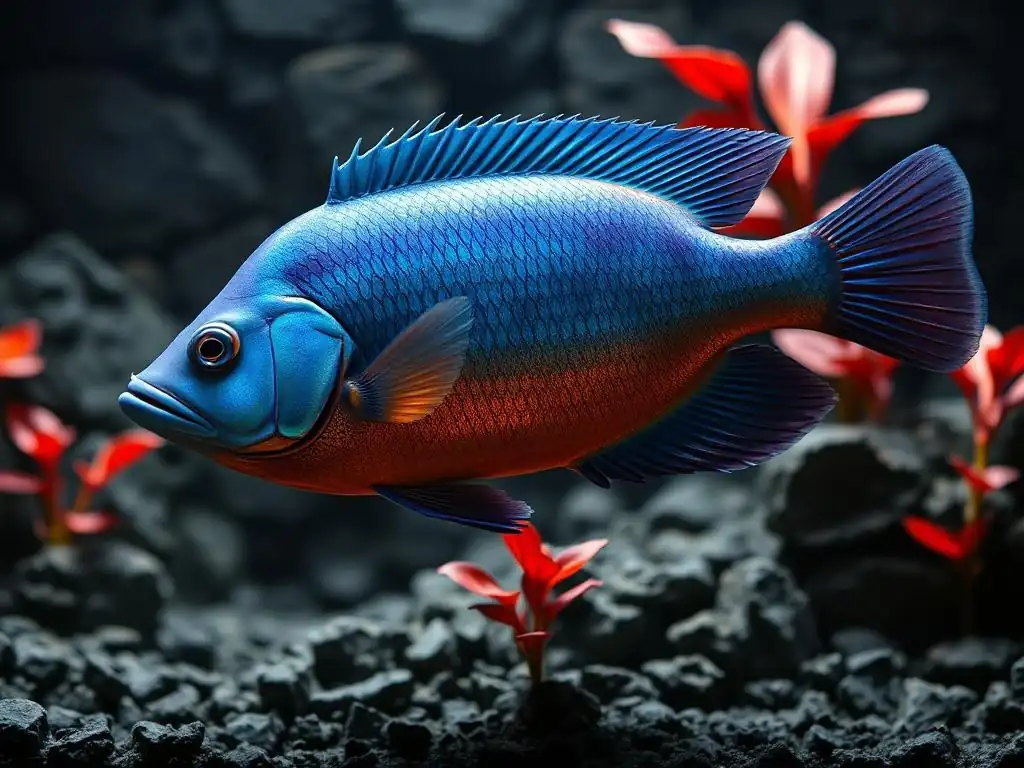
Tank size is perhaps the most critical factor in successful cichlid tank territory management. A common rule of thumb for African cichlids, particularly Mbuna, is a minimum of 55 gallons for a small community, with 75 gallons or larger being highly recommended for a mixed species setup. For every adult Mbuna, aim for at least 3-5 gallons of water volume, and for Peacocks, closer to 5-7 gallons per fish. For instance, a 75-gallon tank can comfortably house 12-15 adult Mbuna, provided it's heavily decorated with territories.
Under-sized tanks severely limit the ability to create sufficient territorial boundaries and escape routes, leading to constant conflict and stress. A small tank exacerbates aggression because fish cannot escape the sight of dominant individuals, making effective cichlid tank territory management virtually impossible. Investing in the largest tank possible for your space and budget will significantly contribute to a peaceful and thriving cichlid community.
The Impact of Overstocking on Cichlid Aggression and Territory
Overstocking a cichlid tank is a primary driver of aggression and a major impediment to effective cichlid tank territory management. While some aquarists intentionally overstock slightly to "diffuse" aggression (the "overstocking theory" where no single fish can establish a dominant territory), this strategy is risky and only works in very specific, heavily filtered, and meticulously managed setups. More often, overstocking leads to increased stress, poor water quality, and heightened territorial disputes as fish compete intensely for limited space and resources.
In an overstocked tank, fish are constantly in close proximity, unable to escape visual contact or establish a secure territory. This perpetual stress can lead to stunted growth, dull coloration, and susceptibility to disease. For example, trying to house 25 adult Mbuna in a 55-gallon tank will almost certainly result in high aggression and fatalities, regardless of decor. Proper stocking levels are essential for creating an environment where cichlid tank territory management can be successfully implemented.
Strategies for Managing Overcrowding in Existing Cichlid Tanks
If you find your existing cichlid tank is overcrowded, immediate action is necessary to prevent further aggression and health issues. The most effective strategy for improving cichlid tank territory management in an overcrowded situation is to reduce the fish population. This can involve rehoming some fish, upgrading to a larger tank, or setting up an additional aquarium. Reducing the number of fish directly increases the available space per individual, allowing for better territorial definition and less competition.
If rehoming or upgrading is not immediately possible, enhance your current cichlid tank territory management by maximizing the use of decor. Add more visual barriers, caves, and complex rock structures to break up lines of sight and provide additional hiding spots. Increase water changes to maintain pristine water quality, which can help reduce stress. While these measures can mitigate some issues, they are often temporary solutions, and ultimately, reducing the population to an appropriate level for the tank size is the most sustainable approach.
Monitoring and Adjusting Your Cichlid Tank Setup for Optimal Territory Management
Observing Cichlid Behavior After Decor Changes
After implementing any changes to your cichlid tank decor for territory management, meticulous observation of your fish's behavior is absolutely crucial. For the first few days, and even weeks, closely watch for shifts in aggression levels, changes in territorial claims, and the overall well-being of all inhabitants. Look for signs of reduced chasing, more relaxed swimming, and increased foraging behavior. Conversely, an increase in fin nipping, hiding, or outright fighting indicates that the new setup is not effectively managing aggression.
Pay particular attention to the interactions between dominant males and the ability of subordinate fish to find refuge. For example, if a previously bullied fish starts to explore more openly or if a dominant male spends less time patrolling and more time interacting with females, these are positive indicators. Continuous observation, perhaps for 15-30 minutes daily for the first week, will provide valuable insights into the success of your cichlid tank territory management efforts.
Fine-Tuning Decor Arrangement to Minimize Aggression
Even after initial decor changes, fine-tuning the arrangement is often necessary for optimal cichlid tank territory management. Based on your observations, you may need to subtly adjust rock positions, add or remove caves, or create new visual barriers. For instance, if a specific area remains a hotspot for aggression, try adding a large rock or a cluster of smaller ones to break up the line of sight in that particular zone.
If one fish is consistently being bullied, ensure there is a direct, clear escape route to a secure hideout. Sometimes, simply rotating a rock by 90 degrees can dramatically alter the dynamics of a territory. It's an iterative process; make small adjustments and then observe the tank's dynamics for a few days before making further changes. This meticulous approach ensures that your cichlid tank territory management strategy evolves to meet the specific needs of your fish.
Introducing New Cichlids: A Gradual Approach to Territory Integration
Introducing new cichlids into an established tank requires a gradual and strategic approach to minimize territorial disputes and ensure successful cichlid tank territory management. Always introduce several new fish at once (e.g., 3-5 individuals) rather than just one. This "dilution" strategy spreads out aggression, preventing a single new fish from becoming the sole target. It's also often beneficial to rearrange the tank decor significantly just before or during the introduction. This disrupts existing territories, forcing all fish, old and new, to re-establish their domains simultaneously, which can reduce initial aggression.
Another effective method is to introduce new fish after dark, or with the tank lights off, allowing them to acclimate overnight without immediate confrontation. For particularly aggressive tanks, using an acclimation box or a tank divider for a few days can allow new fish to get used to their surroundings and for existing fish to get used to their presence without direct physical interaction. These methods greatly improve the chances of successful integration and contribute to long-term cichlid tank territory management.
Troubleshooting Common Territory Problems in Cichlid Aquariums
Dealing with Dominant Cichlids Bullying Tank Mates
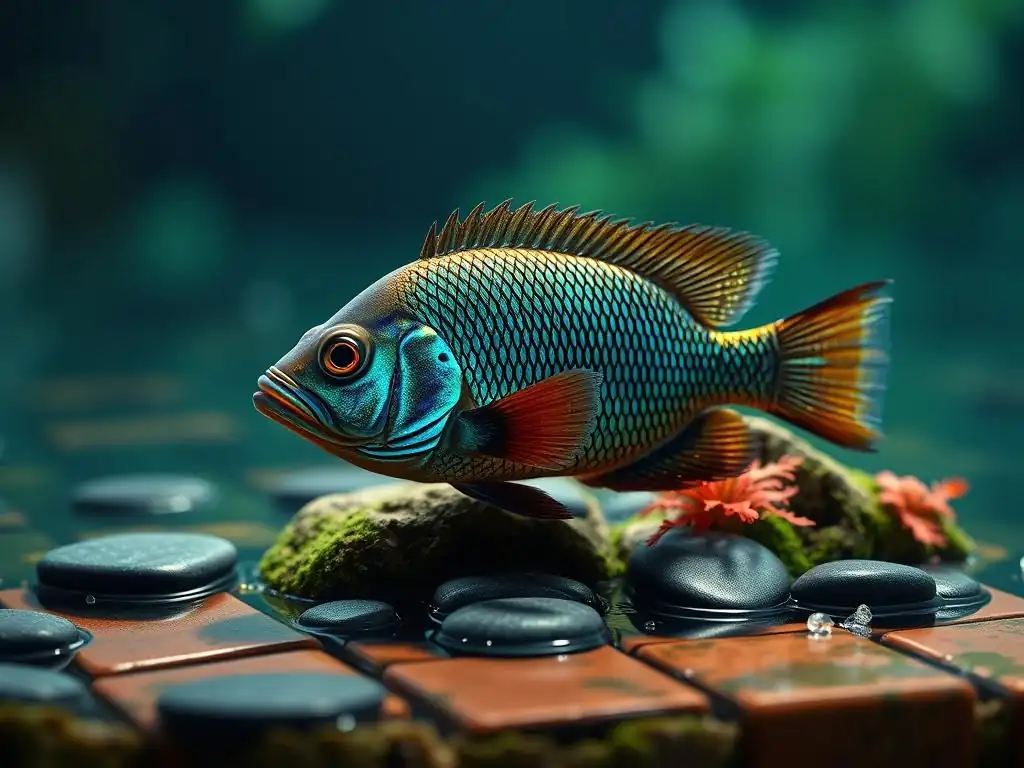
When a dominant cichlid consistently bullies tank mates, it's a clear sign that your cichlid tank territory management needs intervention. First, assess the tank's decor: are there enough hiding spots and visual barriers? If not, adding more complex rock structures and caves can often diffuse aggression by providing escape routes and breaking lines of sight. For instance, increasing the number of caves in a 75-gallon Mbuna tank from 10 to 20 might significantly reduce the dominant fish's ability to patrol all areas.
If decor adjustments don't suffice, consider temporarily removing the bully for a few days to a "time-out" tank. When reintroduced, it will be the "new fish" and often lose some of its prior dominance, allowing other fish to establish territories. As a last resort, permanent removal of the overly aggressive individual may be necessary to maintain peace in the cichlid community.
Addressing Territory Disputes After Water Changes or Tank Maintenance
Territory disputes often flare up after water changes or tank maintenance, as the disturbance can temporarily disrupt established hierarchies and territorial boundaries. Fish may become agitated by the intrusion, and the altered water chemistry (even if minor) can increase stress. To mitigate this, minimize physical disruption during maintenance. Avoid moving decor unnecessarily. If you must move rocks for cleaning, try to return them to their original positions as closely as possible to maintain familiar landmarks for cichlid tank territory management.
After a water change, observe your fish closely. If aggression spikes, consider turning off the tank lights for a few hours to allow fish to calm down and re-acclimate without constant visual stimulation. Ensuring consistent water parameters and temperature during and after changes is also crucial to minimize stress-induced aggression. A slight overfeeding immediately after maintenance can also distract fish and reduce immediate territorial squabbles.
Recognizing and Treating Injuries Resulting from Cichlid Aggression
Recognizing and promptly treating injuries from cichlid aggression is a vital part of proactive cichlid tank territory management. Common injuries include torn fins, missing scales, cloudy eyes, or body scrapes. Observe your fish daily for any signs of damage. If an injured fish is still being harassed, it's crucial to isolate it in a separate hospital tank to allow for recovery without further stress or injury.
Treat the hospital tank with a broad-spectrum antibacterial medication to prevent secondary infections, which are common in stressed and injured fish. Maintain pristine water quality in the hospital tank through frequent small water changes. For minor fin nips, often just improved water quality and reduced stress in the main tank (through better cichlid tank territory management) will allow for natural healing. Severe injuries, however, require dedicated treatment to prevent fatal infections.
Choosing the Right Substrate to Enhance Cichlid Tank Environment and Behavior
Substrate Types and Their Impact on Cichlid Digging and Territory
The choice of substrate significantly impacts cichlid behavior, particularly their natural digging instincts, and plays a role in overall cichlid tank territory management. For African cichlids, aragonite sand or crushed coral are excellent choices because they naturally buffer the water, helping to maintain the high pH and hardness levels these fish require. A sand substrate also allows cichlids to engage in their natural sifting and digging behaviors, which can be a form of territorial display or foraging.
While cichlids will inevitably move sand around, a fine sand substrate is less likely to cause injury if swallowed compared to coarser gravel. Deeper layers of sand (3-4 inches) can provide ample material for digging and creating burrows, which some species like Peacocks will utilize. This natural behavior, when accommodated, contributes positively to their well-being and can sometimes help in defining subtle territorial boundaries through excavated areas.
Creating Substrate Levels to Encourage Natural Territory Division
Creating varying substrate levels within your cichlid tank can subtly encourage natural territory division and enhance cichlid tank territory management. By building up certain areas of the substrate, you can create "hills" or "valleys" that, when combined with rock structures, form distinct zones. For example, a slightly elevated sand bed near a large rock formation might be claimed as a primary territory by a dominant male, while lower, flatter areas serve as neutral zones or foraging grounds.
These subtle topographical changes, combined with strategically placed rocks, can make it easier for fish to delineate their space. While cichlids will undoubtedly re-sculpt the sand to their liking, starting with varied levels provides a foundation for them to work with, mimicking the varied landscapes of their natural habitats and promoting more nuanced cichlid tank territory management.
Maintaining a Clean Substrate to Reduce Stress and Improve Water Quality
Maintaining a clean substrate is vital for reducing stress and improving water quality, which in turn supports effective cichlid tank territory management. Uneaten food and fish waste can quickly accumulate in the substrate, decomposing and releasing harmful ammonia and nitrites. While cichlids' digging behavior can help aerate the sand, regular siphoning is still necessary.
For a sand substrate, use a wide-mouth gravel vacuum hovered just above the sand to lift debris without removing too much sand. For a 75-gallon tank, a weekly substrate vacuuming during water changes can remove significant amounts of waste, contributing to stable water parameters. A clean substrate not only prevents water quality issues but also reduces the presence of harmful bacteria, creating a healthier environment where fish are less stressed and thus less prone to aggression, enhancing overall cichlid tank territory management.
Frequently Asked Questions
How does decor impact Cichlid tank territory management?
Decor, such as rocks and driftwood, creates visual barriers and physical boundaries within the tank. This helps break up sightlines and allows Cichlids to establish and defend smaller, more manageable territories.
What types of decor are most effective for managing Cichlid tank territory management?
Rocks are excellent for creating caves and rock piles, offering hiding places and distinct territories. Driftwood provides natural boundaries and can also alter water chemistry to better suit certain Cichlid species.
How many pieces of decor are needed for effective Cichlid tank territory management?
The number depends on the size of the tank and the number of Cichlids, but aim for enough decor to create multiple distinct zones. Ensure each Cichlid has a potential territory they can claim.
Can live plants be used in Cichlid tank territory management?
Some hardy plants, like Anubias or Java Fern, can be used but many Cichlids will uproot or eat them. Plants can contribute to visual breaks and provide additional hiding spots, but choose carefully.
How often should I rearrange the decor in my Cichlid tank territory management?
Avoid frequent rearrangements as this can disrupt the established territories and cause stress. Only rearrange if necessary, and do it gradually to minimize territorial disputes.
Final Reflection: Harmonizing Cichlid Havens
The principles of cichlid tank territory management, as explored throughout this article, extend far beyond the confines of a glass aquarium. They speak to a fundamental need for structure and defined space, not just for fish, but for any community striving for balance and peaceful coexistence. Understanding how to create natural boundaries is crucial, not only for the well-being of our aquatic companions but also for fostering harmonious environments in our own lives.
This journey into the cichlid world has highlighted the profound impact of thoughtfully designed environments. Observing how these fish respond to carefully placed rocks and plants underscores the universal desire for security and control over one's domain. The best way to find yourself is to lose yourself in the service of others.
- Mahatma Gandhi. This quote, while not directly about cichlids, speaks to the heart of the matter: by understanding and catering to the needs of others, even our finned friends, we create a more enriching and balanced world for ourselves.
Now, consider the lessons learned from these vibrant, territorial creatures. How can you apply the principles of creating natural boundaries to your own life? Perhaps it's about defining clearer personal boundaries, creating more organized workspaces, or simply fostering a greater sense of peace and order in your home. Let the cichlid tank serve as a constant reminder: a well-defined space fosters well-being and allows for the flourishing of all within.
Craft Your Cichlid Haven!
Thanks for diving into the world of cichlid territory management! We hope you've found this guide helpful in creating a harmonious environment for your finned friends. Now, let's turn that knowledge into action:
- Reimagine your tank's layout today! Try rearranging your current decorations to see if you can create more defined territories and reduce aggression.
- Explore adding new, unconventional decorations like slate caves or driftwood formations to diversify the environment.
- Share your tank transformations with fellow cichlid enthusiasts online – what unique solutions have you discovered?
What's one small change you can make to your cichlid tank this week to improve its territorial balance?