
Observing Courtship Rituals in Mbuna and Peacock Cichlids

Welcome to Aquarium Mastery!
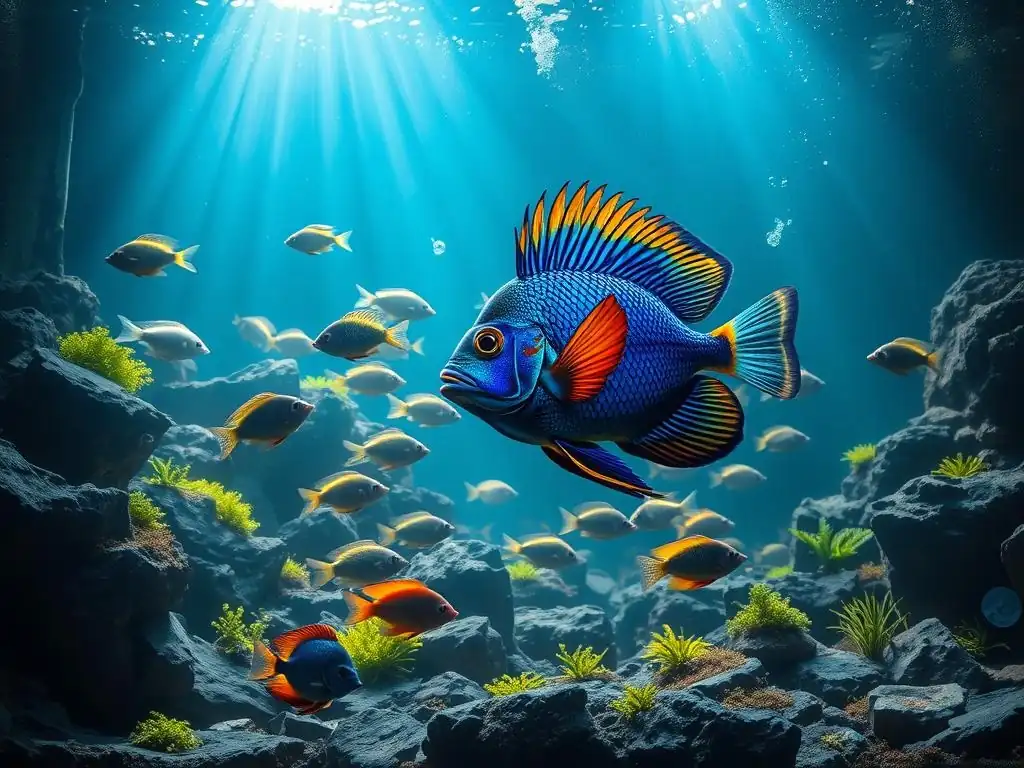
Ever wondered about the secret lives of your Mbuna cichlids? Dive into "Observing Courtship Rituals in Mbuna and Peacock Cichlids" and unlock the fascinating world of their mating behaviors. Prepare to be amazed by the intricate dances and vibrant displays – and learn how to create the perfect environment for these captivating freshwater fish to thrive. Ready to witness the magic?
- Understanding Mbuna and Peacock Cichlid Breeding
- Pre-Spawning Behaviors of Mbuna Cichlids: A Detailed Look
- Decoding Mbuna Cichlid Courtship Behavior: Visual Cues
- Peacock Cichlid Courtship Rituals: Nuances and Differences
- The Mbuna Mouthbrooding Process: From Egg to Fry
- Documenting Cichlid Spawning: Tips for Aquarium Keepers
- Identifying Successful Mbuna and Peacock Cichlid Spawning
- Conclusion: Appreciating the Complexity of Cichlid Courtship
-
Frequently Asked Questions
- What are the key differences between Mbuna and Peacock cichlid courtship behaviors?
- How can I identify if my Mbuna cichlids are engaging in courtship rituals?
- What water parameters are crucial for successful Mbuna cichlid breeding and courtship?
- What type of aquarium setup best encourages Mbuna cichlid courtship and spawning?
- What should I do if I observe excessive aggression during Mbuna cichlid courtship?
- Final Reflection: The Enduring Dance of Life
- Dive Deeper: Transform Your Cichlid Tank Today!
Understanding Mbuna and Peacock Cichlid Breeding
Differentiating Mbuna and Peacock Cichlids: Key Behavioral Traits
Mbuna cichlids, primarily rock-dwelling species from Lake Malawi, exhibit intensely territorial and often aggressive behaviors, especially during their Mbuna cichlid courtship behavior. Males establish and fiercely defend territories, typically a rock crevice or a patch of substrate around a rock, which can span 2-3 square feet in a 75-gallon aquarium. Their diet is predominantly herbivorous or omnivorous, and their aggression is often directed at conspecifics or similar-looking fish to secure spawning sites and mates.
Peacock cichlids ( Aulonocara species), in contrast, are generally more open-water swimmers and less overtly aggressive than Mbuna, though males still become territorial during breeding. They prefer sandy substrates where they excavate small pits for spawning. Peacocks are carnivorous, feeding on small invertebrates, and their Peacock cichlid courtship often involves elaborate displays in open water rather than confined rock structures. While still territorial, a male Peacock's defended area might be smaller, perhaps 1-2 square feet, and less aggressively guarded than a prime Mbuna territory.
The Significance of Courtship Displays in Cichlid Reproduction
Courtship displays are paramount for cichlid reproduction, serving as a complex communication system to ensure species recognition, assess mate fitness, and reduce aggression between potential partners. These elaborate rituals, whether the intense Mbuna cichlid courtship behavior or the vibrant Peacock cichlid displays, are crucial for a successful spawning event. They allow females to gauge the health, vigor, and genetic quality of a male, ensuring that only the fittest males pass on their genes.
The energy expenditure and inherent risks associated with these displays are significant. Males invest considerable energy in maintaining vibrant colors, performing intricate dances, and defending territories, which can also make them more conspicuous to predators in the wild. Despite these risks, successful and prolonged courtship often correlates with higher fertilization rates and more viable offspring, making these displays an evolutionary imperative for the continuation of cichlid species.
Pre-Spawning Behaviors of Mbuna Cichlids: A Detailed Look
Male Mbuna Cichlid Aggression and Territory Establishment
During the pre-spawning phase, male Mbuna cichlids become highly aggressive as they establish and defend prime breeding territories. This involves relentless patrolling, chasing away rival males, and occasionally engaging in physical skirmishes to assert dominance. A dominant male, such as a Maylandia zebra or Labeotropheus trewavasae, will claim a specific rock formation or a cave as his stronghold, meticulously clearing the area to create a suitable spawning site. This territorial defense is a critical component of Mbuna cichlid courtship behavior.
Visual cues of male aggression include intensified coloration, flared dorsal, anal, and caudal fins, and rapid, darting movements aimed at intruders. In a typical 75-gallon Mbuna setup, a strong male might command up to 30% of the tank's substrate area as his breeding territory. Providing ample rockwork and hiding spots can help diffuse aggression and provide refuge for subordinate males and females during this intense period.
Female Mbuna Cichlid Selection and Mate Preference
Female Mbuna cichlids are discerning in their mate selection, carefully assessing the male's health, territorial prowess, and the quality of his spawning site. A female will often visit multiple male territories, observing their displays and defensive capabilities. She seeks a male who demonstrates superior strength and genetic fitness, which is indicated by his vibrant colors and ability to repel rivals.
A receptive female will approach the male's territory cautiously, often displaying submissive gestures such as quivering or lowering her head. If she is not interested, she will typically flee the territory, often pursued by the male. Her willingness to remain within the male's defended space and engage in reciprocal movements signals her acceptance and readiness to participate in the Mbuna courtship ritual.
Water Parameters and Environmental Factors Influencing Spawning
Optimal water parameters are crucial for stimulating Mbuna cichlid spawning behavior. Mbuna thrive in hard, alkaline water, with a pH range of 7.8-8.6 and a general hardness (GH) of 150-300 ppm. A stable water temperature between 78-82°F (25.5-27.8°C) is also vital. Consistent partial water changes, typically 25-30% weekly, help maintain pristine conditions and can act as a trigger for spawning.
Beyond water chemistry, environmental factors like lighting cycles and diet play a significant role. A consistent 12-hour light and 12-hour dark cycle mimics their natural environment, promoting regular circadian rhythms essential for breeding. Furthermore, a high-quality, varied diet, rich in spirulina for herbivorous Mbuna and balanced protein for omnivorous species, ensures the fish are in peak physical condition for the rigors of Mbuna cichlid courtship behavior and reproduction. Stress from overcrowding or fluctuating water parameters can inhibit spawning.
Decoding Mbuna Cichlid Courtship Behavior: Visual Cues
Color Changes and Intensification During Mbuna Courtship
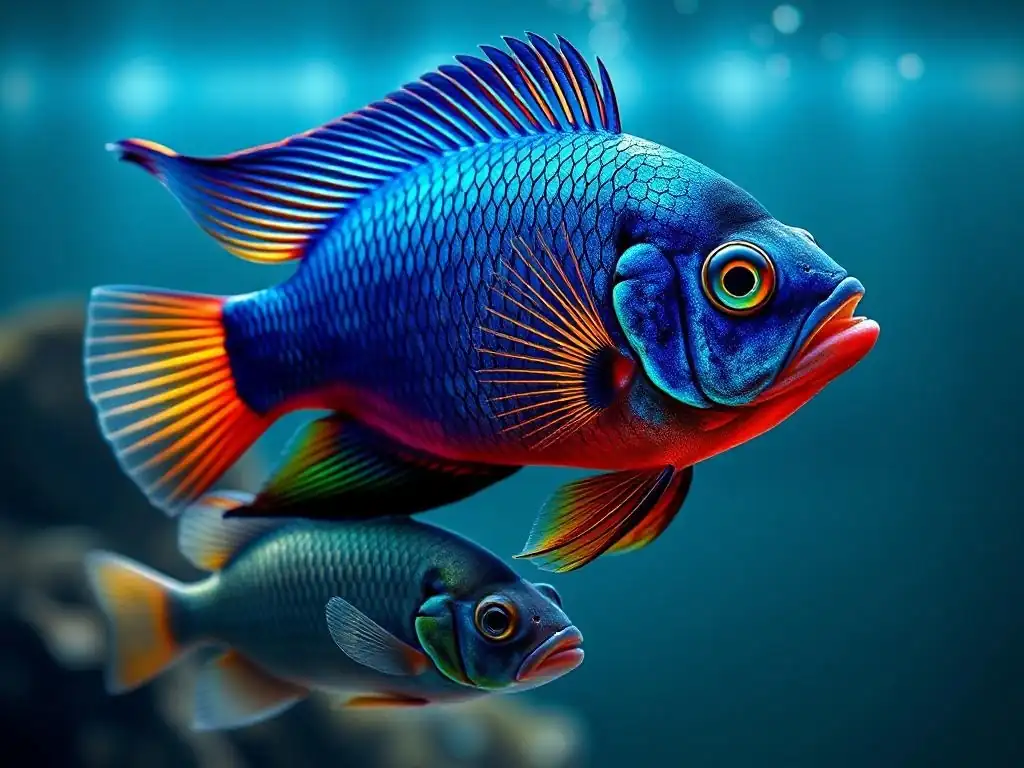
One of the most striking visual cues during Mbuna cichlid courtship behavior is the dramatic color change and intensification exhibited by the male. For instance, a male Labidochromis caeruleus (Electric Yellow) will display an even deeper, more vibrant yellow, while a Metriaclima estherae (Red Zebra) male's orange and red hues will become profoundly saturated. This heightened coloration serves as a powerful advertisement to females, signaling the male's health, vitality, and readiness to breed.
The purpose of these intense color displays extends beyond attracting mates; they also serve as a clear warning to rival males, asserting dominance and territorial claim. The vibrancy and depth of a male's coloration can directly influence a female's choice, as it often correlates with the male's overall fitness and ability to secure a prime spawning site, reinforcing the competitive nature of Mbuna cichlid courtship.
Fin Displays and Body Posturing in Male Mbuna Cichlids
Male Mbuna cichlids employ elaborate fin displays and body posturing to attract females and intimidate rivals during courtship. They frequently flare their dorsal, anal, and caudal fins to appear larger and more imposing, a direct challenge to other males and an invitation to females. These Mbuna mating displays often involve rapid quivering or vibrating of the entire body, showcasing their vigor.
Specific postures, such as the "S-bend" where the male curves his body into an S-shape, or rapid head-shaking, are common. These movements are frequently accompanied by gill flaring, further accentuating their size and strength. The male might also lead the female to his prepared spawning site, performing these displays around it to entice her to lay eggs, making these visual cues central to the Mbuna cichlid courtship behavior.
The Role of Substrate Preparation in Mbuna Spawning
Substrate preparation is a critical step in Mbuna cichlid spawning behavior. The male will meticulously clear a patch of substrate within his territory, often digging shallow pits or creating a small depression next to a flat rock or inside a cave. These prepared sites typically measure 6-10 inches in diameter and serve as the designated area for egg deposition.
The choice of substrate is important; fine sand or smooth, flat rocks are generally preferred. The male uses his mouth to remove any debris, ensuring a clean and secure surface for the eggs. This diligent preparation not only creates an optimal spawning environment but also serves as a visible demonstration of the male's commitment and territorial control, further enticing a receptive female during Mbuna cichlid courtship.
Peacock Cichlid Courtship Rituals: Nuances and Differences
Male Peacock Cichlid Displays: Attracting a Mate
Male Peacock cichlids are renowned for their spectacular displays designed to attract a mate. Unlike the more confined Mbuna cichlid courtship behavior, Peacocks, such as the Aulonocara stuartgranti "Ngara Flametail," perform elaborate "shimmering" dances in open water, flashing their iridescent scales to catch the female's eye. Their vibrant blues, yellows, and reds become exceptionally intense during this period.
A common Peacock cichlid courtship display is the "trembling" or "quivering" motion, where the male rapidly vibrates his body while circling a female. They often excavate small pits, typically 1-2 inches deep, in sandy substrates to serve as their spawning site. These pits are less about secure hiding and more about providing a clear, open space for the female to lay her eggs, a distinct difference from the rock-oriented Mbuna.
Female Peacock Cichlid Response and Acceptance Signals
A female Peacock cichlid's response to a male's advances is often subtle but clear. If she is receptive, her body coloration may darken slightly, and she will orient herself towards the male, sometimes swimming alongside him or mirroring his movements. She might also gently nudge him, signaling her interest in the Peacock cichlid breeding behavior.
The most definitive acceptance signal is when the female enters the male's prepared pit or spawning area. This action clearly communicates her readiness to lay eggs. Conversely, an uninterested female will typically ignore the male's fervent displays and simply swim away, indicating that the male's Peacock cichlid courtship has not been successful with her.
Peacock Cichlid Lek Behavior: Competitive Spawning
Many Aulonocara species exhibit a fascinating behavior known as lek spawning. In this system, multiple males gather in a specific open area, called a lek, and display competitively to attract females. Each male maintains a small, temporary territory, usually centered around a self-excavated pit in the sand, from which he performs his most vigorous displays.
Females visit the lek, carefully observing the displaying males. They then choose a male based on the quality of his display, his size, and his perceived vigor. After selecting a mate, the female will enter his pit to spawn. Once the eggs are fertilized and collected into her mouth, the female leaves the lek to mouthbrood, while the male remains to continue attracting other females, maximizing his reproductive opportunities through this Peacock cichlid lek behavior.
The Mbuna Mouthbrooding Process: From Egg to Fry
Female Mbuna Cichlid's Role in Egg Incubation
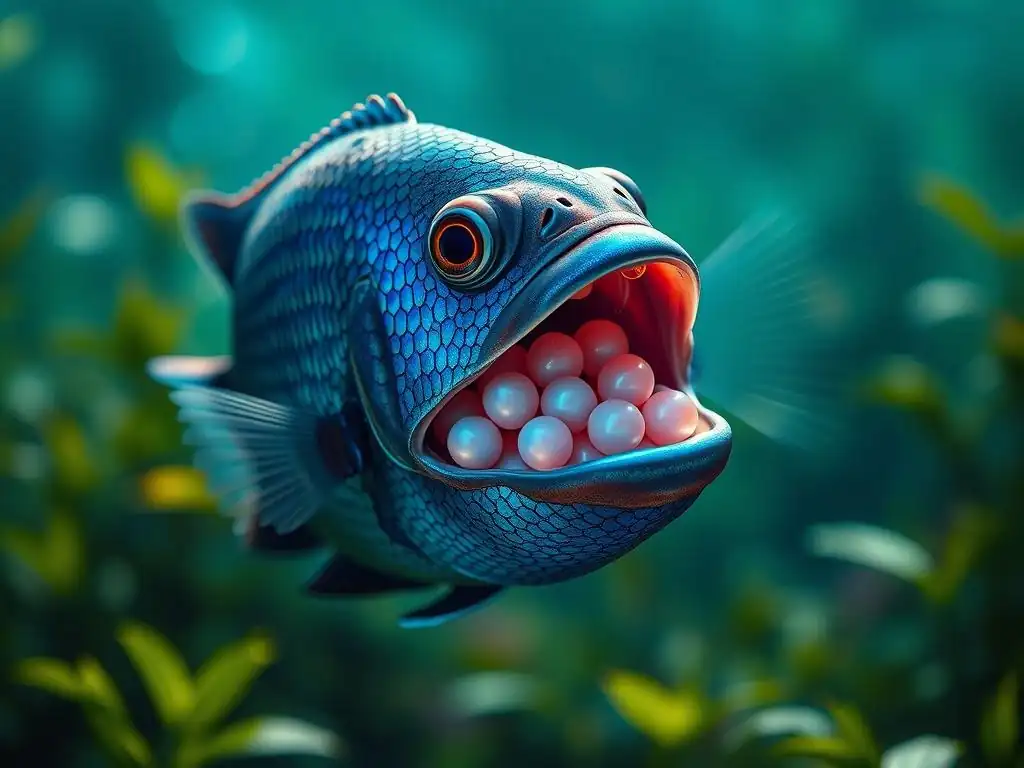
Following successful Mbuna cichlid courtship behavior and spawning, the female Mbuna takes on the crucial role of egg incubation through mouthbrooding. Immediately after fertilization, she collects the eggs, typically ranging from 15 to 60 depending on her size and species, into her buccal cavity. She will hold these eggs for approximately 21-28 days, a period during which she often ceases eating entirely to ensure the eggs' safety.
Within her mouth, the female continuously tumbles the eggs, ensuring proper aeration and preventing fungal growth, which is a common threat to developing eggs. Her throat and lower jaw area will appear visibly distended, a clear sign that she is brooding. This dedicated Mbuna cichlid parental care is a remarkable adaptation that significantly increases the survival rate of the delicate embryos.
Protecting Mbuna Fry: Parental Care Strategies
Once the fry are fully developed and free-swimming, typically after 3-4 weeks of mouthbrooding, the female will cautiously release them into the aquarium, often near a safe hiding spot among rocks or plants. A key aspect of Mbuna cichlid spawning behavior is the female's continued protection; if she senses danger, she will signal the fry, often by rapid movements or darkening her coloration, to return to the safety of her mouth.
This protective behavior can last for several days to a week after the initial release, as the fry are still vulnerable. While fascinating to observe in a community tank, many aquarists choose to move the brooding female to a separate breeding tank before she releases the fry to ensure their maximum survival rate, as larger tank mates often view the tiny fry as food.
Documenting Cichlid Spawning: Tips for Aquarium Keepers
Setting Up a Breeding Tank for Mbuna and Peacock Cichlids
To successfully document Mbuna cichlid courtship behavior or Peacock spawning, setting up a dedicated breeding tank is highly recommended. A tank size of 20-40 gallons is often sufficient for a single breeding pair or a trio (one male, two females). For Mbuna, ensure ample rockwork and caves are provided, while Peacock cichlids will appreciate a sandy substrate with open areas. Maintain stable temperatures, ideally between 78-80°F (25.5-26.7°C).
Ensure the breeding tank has a mature filtration system, such as a sponge filter or a small hang-on-back filter, to maintain pristine water quality without creating strong currents that could stress the breeding fish or dislodge delicate fry. The tank should be fully cycled before introducing any fish to prevent ammonia or nitrite spikes, which can inhibit spawning.
Using Video Recording to Capture Cichlid Courtship Displays
Capturing cichlid breeding behavior on video can be incredibly rewarding and provides invaluable insights. Use a camera or even a smartphone with good video capabilities, ideally mounted on a tripod to ensure stable footage. Position the camera to focus on the male's territory or a known spawning area, and attempt to record during peak activity times, which are often in the morning or late afternoon.
Reviewing the recorded footage allows aquarists to observe subtle Mbuna cichlid courtship behavior cues that might be missed in real-time, such as specific fin movements, body posturing, or the exact moment of egg release and fertilization. This documentation can significantly enhance one's understanding of the species' reproductive patterns and aid in future breeding efforts.
Troubleshooting Spawning Issues: Addressing Egg Fungus and Infertility
Encountering issues like egg fungus or infertility is common in cichlid breeding. Egg fungus, appearing as white, fuzzy growth on eggs, often indicates unfertilized eggs or poor water quality. To address this, increase aeration around the spawning site, perform small partial water changes, and ensure water parameters are optimal. Unfertilized eggs will typically turn opaque white within 24-48 hours.
Infertility can stem from several factors, including immature fish, high stress levels, inadequate diet, or incompatible mates. Ensure your breeding stock is well-fed with a varied, high-quality diet and that the tank environment minimizes stress. If a male Aulonocara consistently fails to perform Peacock cichlid courtship or fertilize eggs over several weeks, despite optimal conditions, consider introducing a different mate, as some individuals may simply be infertile or incompatible.
Identifying Successful Mbuna and Peacock Cichlid Spawning
Recognizing Fertilized Eggs and Monitoring Fry Development
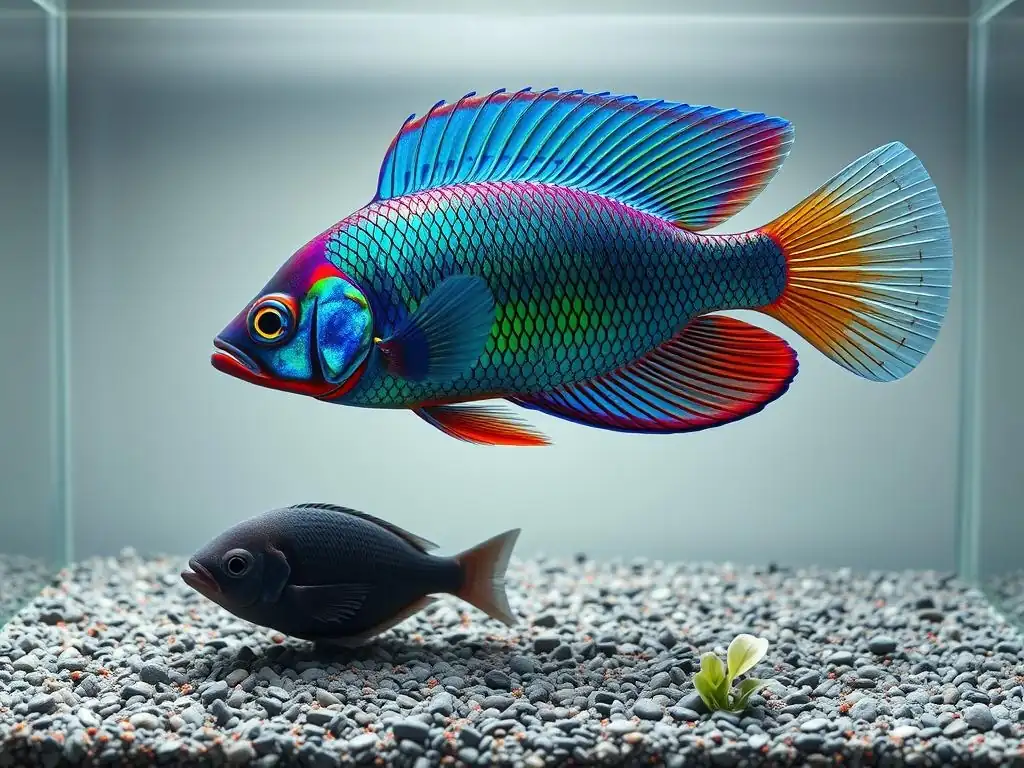
Identifying fertilized eggs is the first step in confirming successful Mbuna cichlid spawning. Fertilized eggs will appear translucent, clear, and perfectly round within the female's mouth, often with a faint yellowish tint. In contrast, unfertilized eggs will quickly turn opaque white or develop a fuzzy fungal growth within a day or two.
As the fry develop inside the female's buccal cavity, you may observe her throat area becoming increasingly distended. Around 10-14 days post-spawn, careful observation might reveal tiny eyes or even small tails wiggling within her mouth. This visible development is a strong indicator of successful fertilization and healthy embryonic growth, affirming the success of the Mbuna cichlid courtship behavior.
Maintaining Water Quality for Optimal Fry Growth
Maintaining pristine water quality is paramount for the optimal growth and survival of cichlid fry. Once the fry are released from the female's mouth, they are highly sensitive to water parameters. Implement small, frequent water changes—for example, 10% every other day—using temperature-matched and dechlorinated water to prevent sudden shifts that could stress the delicate fry.
Feeding the fry appropriately is equally crucial. They require finely crushed flake food, spirulina powder, or specialized fry foods like newly hatched baby brine shrimp. Feed very small amounts multiple times a day (3-4 times daily for optimal growth, as seen with Pseudotropheus saulosi fry fed baby brine shrimp) to ensure constant nourishment while avoiding overfeeding, which can quickly foul the water and lead to health issues.
Conclusion: Appreciating the Complexity of Cichlid Courtship
The Importance of Responsible Breeding Practices
Understanding and appreciating Mbuna cichlid courtship behavior and Peacock cichlid rituals extends beyond mere observation; it emphasizes the importance of responsible breeding practices. Aquarists must consider the welfare of their fish and the sustainability of the hobby. This includes avoiding overpopulating tanks, ensuring adequate space for adult fish and their offspring, and having a clear plan for rehoming any surplus fry.
Responsible breeding also involves maintaining healthy genetic lines within your stock. By selecting healthy, vibrant parent fish free from deformities or disease, you contribute to the overall well-being of the species in captivity. This ethical approach ensures that the passion for cichlids remains a positive and sustainable endeavor.
Further Resources for Mbuna and Peacock Cichlid Care
To deepen your understanding of Mbuna cichlid courtship behavior and the nuanced care required for these fascinating fish, continuous learning is key. Aquarium Mastery offers detailed species-specific profiles that provide comprehensive guidance on diet recommendations, tank mate compatibility, and advanced care techniques for both Mbuna and Peacock cichlids.
Beyond our extensive articles, consider joining online forums dedicated to African cichlids or local aquarium clubs. These communities offer invaluable opportunities to connect with experienced aquarists, share insights, troubleshoot challenges, and gain practical advice. Engaging with the broader cichlid community can significantly enhance your success and enjoyment in keeping and breeding these remarkable fish.
Frequently Asked Questions
What are the key differences between Mbuna and Peacock cichlid courtship behaviors?
Mbuna courtship often involves aggressive displays and rock cleaning, while Peacock courtship is typically more focused on vibrant color displays and shaking. Peacocks are generally less aggressive during courtship.
How can I identify if my Mbuna cichlids are engaging in courtship rituals?
Look for signs such as increased aggression among males, males cleaning potential spawning sites on rocks, and females showing interest in specific males. Subtle shaking can also be observed.
What water parameters are crucial for successful Mbuna cichlid breeding and courtship?
Maintaining stable water parameters is essential. pH should be between 7.8 and 8.6, water hardness should be high (GH 180-300 ppm), and temperature should be between 76-82°F (24-28°C).
What type of aquarium setup best encourages Mbuna cichlid courtship and spawning?
A tank with plenty of rock structures to provide hiding places and spawning sites is ideal. Ensure adequate filtration to maintain water quality and strong water movement to mimic their natural environment.
What should I do if I observe excessive aggression during Mbuna cichlid courtship?
Monitor the tank closely and provide ample hiding places to reduce stress. If aggression is severe, consider removing the aggressor or rearranging the tank decorations to disrupt established territories.
Final Reflection: The Enduring Dance of Life
The intricate courtship rituals of Mbuna and Peacock cichlids, as explored in this article, are not merely fascinating biological observations; they are a powerful reminder of the fundamental drive for connection and continuation that permeates all life. Understanding these complex behaviors allows us to appreciate the delicate balance of nature and the evolutionary forces shaping even the smallest creatures in our aquariums.
This exploration of Mbuna cichlid courtship behavior has underscored the remarkable diversity and sophistication present within the animal kingdom, often overlooked in our daily lives. It serves as a microcosm of the larger dance of life, highlighting the importance of communication, competition, and ultimately, cooperation in ensuring the survival of a species. The beauty of life does not reside in the absence of struggle, but in the capacity to overcome it.
This quote resonates deeply when observing the persistent and often challenging courtship displays of these vibrant fish.
As you reflect on the complex and captivating world of Mbuna and Peacock cichlid courtship, consider how these lessons of communication, perseverance, and adaptation apply to your own life. Let the vibrant displays and intricate dances of these fish inspire you to cultivate deeper connections, navigate challenges with grace, and embrace the enduring dance of life with renewed appreciation and understanding.
Dive Deeper: Transform Your Cichlid Tank Today!
Thank you for exploring the fascinating world of Mbuna and Peacock Cichlid courtship! Now that you’ve witnessed their intricate dances, it's time to bring that knowledge to life and create an even more captivating aquarium environment. Here's how you can take the next steps:
- Immediately assess your current tank setup using the behavioral cues you've learned. Are there enough hiding places? Is there excessive aggression? This is your chance to re-engineer your cichlid paradise!
- Explore specialized cichlid forums or groups and share your observations! Compare notes with fellow enthusiasts, and perhaps discover even more nuanced behaviors.
- Surprise yourself and your cichlids: Try introducing a new, carefully chosen rock structure or plant to their environment and record their reactions. You might just capture some never-before-seen displays!
What unique courtship behavior have you observed that you're eager to share with other cichlid keepers?