
Photographing Your Dwarf Cichlids: Tips for Stunning Shots

Welcome to Aquarium Mastery!
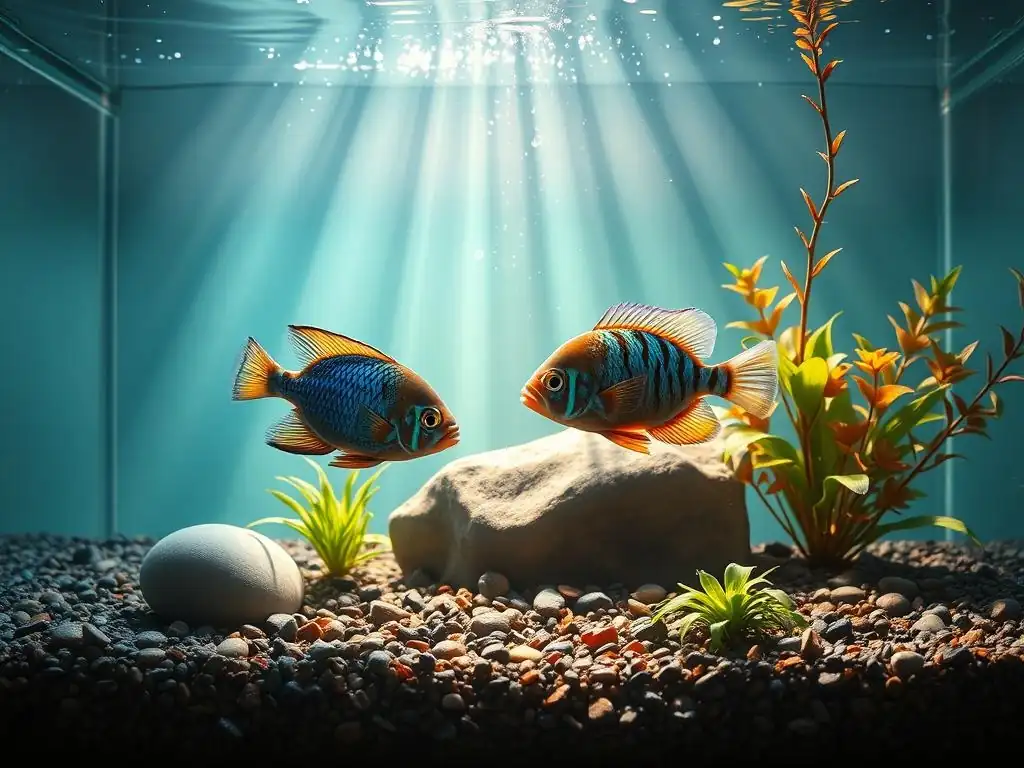
Ever wondered how to capture the vibrant personality of your dwarf cichlids in stunning detail? Dive into our guide for dwarf cichlid aquarium photography tips and discover how to transform your tank into a living art gallery. Ready to unlock the secrets to breathtaking photos? Let's get started!
- Introduction to Dwarf Cichlid Photography in Aquariums
- Essential Equipment for Aquarium Photography of Dwarf Cichlids
- Mastering Aquarium Lighting for Cichlid Photography
-
Camera Settings for Stunning Dwarf Cichlid Photos
- Aperture Settings for Depth of Field: Creating Bokeh and Sharp Details
- Shutter Speed for Sharpness: Minimizing Motion Blur of Fish
- ISO Sensitivity: Reducing Noise in Low-Light Conditions
- White Balance for Accurate Colors: Using Gray Cards and Presets
- Focusing Techniques for Cichlid Photography: Single-Point and Continuous Autofocus
- Composition Tips for Captivating Cichlid Photos
- Post-Processing Your Dwarf Cichlid Images
- Common Mistakes to Avoid in Dwarf Cichlid Photography
- Advanced Techniques for Dwarf Cichlid Photography
- Conclusion: Elevating Your Dwarf Cichlid Aquarium Photography
-
Frequently Asked Questions
- What are some basic camera settings to start with when photographing dwarf cichlids?
- How can I minimize reflections and glare when photographing my aquarium?
- What are some tips for capturing the vibrant colors of dwarf cichlids?
- How do I get my dwarf cichlids to stay still long enough to photograph them?
- What are some good composition techniques for aquarium photography?
- Final Reflection: Capturing the Essence of Miniature Majesty
- Capture the Unseen: Frame Your Cichlids' World!
Introduction to Dwarf Cichlid Photography in Aquariums
Capturing the Beauty of Your Small Cichlids: An Overview
Photographing the vibrant and often intricate world of dwarf cichlids in an aquarium presents a unique blend of challenge and reward. These small, active fish, such as the brilliant Mikrogeophagus ramirezi (Ram Cichlids) or the diverse Apistogramma species, possess stunning coloration and fascinating behaviors that can be difficult to capture with a simple snapshot. Achieving truly stunning dwarf cichlid photos requires an understanding of both photographic principles and the specific needs of aquatic subjects.
The goal of effective dwarf cichlid aquarium photography tips is to transform casual observations into professional-quality images that highlight their delicate fin structures, iridescent scales, and expressive personalities. From the subtle territorial displays of a male Pelvicachromis pulcher (Kribensis cichlid) to the intricate patterns on a female Apistogramma cacatuoides guarding her fry, each species offers a wealth of visual opportunities. Mastering the techniques discussed here will not only enhance your photographic skills but also deepen your appreciation for these captivating aquatic inhabitants.
Essential Equipment for Aquarium Photography of Dwarf Cichlids
Camera Selection for Cichlid Photography: Sensor Size and Resolution
For serious dwarf cichlid photography, a dedicated camera like a DSLR (Digital Single-Lens Reflex) or a mirrorless interchangeable-lens camera is highly recommended over a smartphone. These cameras feature significantly larger sensors, typically APS-C (around 23.6mm x 15.6mm) or full-frame (36mm x 24mm), which excel in low-light conditions and offer superior dynamic range. A larger sensor gathers more light, resulting in cleaner images with less digital noise, crucial when shooting in the often dim environment of an aquarium.
Furthermore, the resolution capabilities of these cameras, often ranging from 20 to 45 megapixels, provide ample detail for cropping and large prints. For instance, a 24-megapixel sensor can capture enough detail to allow for significant cropping (e.g., reducing the image area by 50%) while still maintaining sufficient resolution for a high-quality 8x10 inch print. This flexibility is invaluable when photographing small, fast-moving dwarf cichlids, as it allows for precise framing in post-processing.
Lenses for Capturing Detailed Cichlid Images: Macro Lenses and Extension Tubes
To truly capture the intricate details of dwarf cichlids, a macro lens is an indispensable tool. These specialized lenses are designed for close-up photography, offering a minimum focusing distance that allows for magnifications of 1:1 (life-size on the sensor) or greater. Popular choices include 60mm, 100mm, or 105mm macro lenses, which provide a comfortable working distance from the aquarium glass while still achieving incredible sharpness and detail on subjects like the delicate fins of a Ramirezi or the intricate patterns on an Apistogramma.
As an alternative or supplementary option, extension tubes can transform standard lenses into macro-capable tools. These hollow tubes mount between the camera body and the lens, effectively reducing the lens's minimum focusing distance and increasing magnification. While they do not contain optical elements, they can slightly reduce the amount of light reaching the sensor. For example, a 25mm extension tube on a 50mm lens can significantly improve close-up capabilities, making it a cost-effective way to explore dwarf cichlid aquarium photography tips without investing in a dedicated macro lens immediately.
The Importance of Lighting in Dwarf Cichlid Photography: LED vs. Strobe
Proper lighting is arguably the most critical factor in achieving vibrant and sharp dwarf cichlid photos. The ambient light from most aquarium setups is often insufficient for high-quality photography, leading to dark, noisy, or color-shifted images. External light sources are key. Continuous LED lights offer the advantage of "what you see is what you get," making it easier to compose your shot and adjust lighting angles. Look for LEDs with a high Color Rendering Index (CRI), ideally 90 or above, to ensure accurate color representation of your cichlids.
However, for freezing motion and achieving maximum color pop, external strobes (flashes) are superior. A typical speedlight can emit a burst of light as short as 1/10,000th of a second, effectively freezing even the fastest movements of a darting Apistogramma. When diffused and positioned correctly, strobes can overcome reflections and provide a powerful, consistent light source that brings out the iridescent qualities and true colors of your dwarf cichlids, making them appear almost three-dimensional.
Tripods and Stability: Using Beanbags and Suction Mounts
Camera stability is paramount to prevent motion blur, especially when using slower shutter speeds or attempting precise focus on small subjects. A traditional tripod provides excellent stability, but its bulk and limited positioning flexibility can be challenging when working around an aquarium. Standard tripods often struggle to achieve the low angles or precise proximity needed for optimal dwarf cichlid photography.
More flexible alternatives include beanbags and specialized suction cup mounts. A beanbag, placed on the tank lid or a sturdy surface adjacent to the aquarium, allows for fine adjustments in camera angle and height, conforming to uneven surfaces and providing a stable base for your lens. Suction cup mounts, designed to attach directly to the aquarium glass, offer unparalleled stability and unique perspectives, allowing you to position the camera precisely where needed to capture the perfect dwarf cichlid photo without external vibrations.
Mastering Aquarium Lighting for Cichlid Photography
Optimizing Tank Lighting for Photography: Dimming and Color Balancing
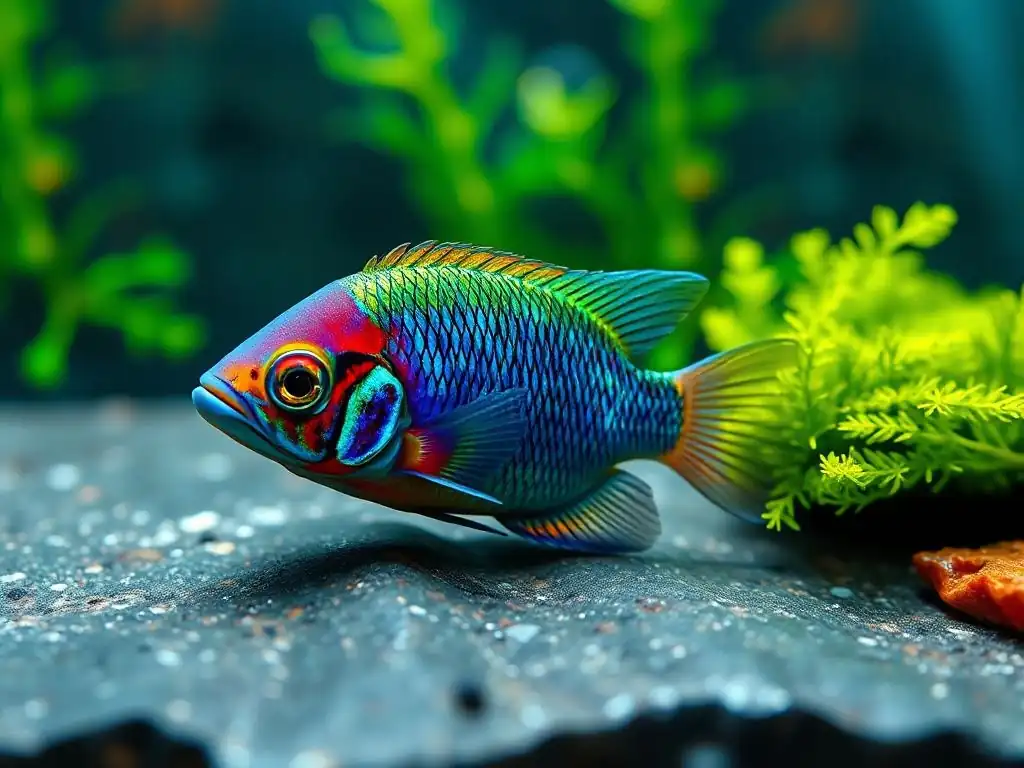
The built-in lighting of your aquarium plays a crucial role in setting the scene for your dwarf cichlid photos. Often, the tank's primary lighting can create reflections or a dominant color cast that interferes with external photographic lights. Consider dimming the tank's main lights or even turning them off entirely to allow your external lighting to become the primary source. This gives you more control over the light quality and direction.
Furthermore, pay attention to the color temperature of your tank lights. Many aquarium LEDs are strong in blue or red spectrums. If your goal is natural color reproduction for your dwarf cichlids, aim for a balanced spectrum, often around 6500K (daylight equivalent). Adjusting the tank lights' color channels (if programmable) can reduce unwanted casts, ensuring the vibrant blues, reds, and yellows of species like Apistogramma borellii are accurately rendered without artificial tinting.
Avoiding Reflections and Glare: Lens Hoods and Tank Placement
Reflections and glare are common frustrations in aquarium photography. The glass itself acts as a mirror, bouncing ambient room light, your own reflection, or even the camera's flash back into the lens. To combat this, always use a lens hood to block stray light from entering the front element of your lens. Position your camera as perpendicular to the aquarium glass as possible; shooting at an angle increases the likelihood of capturing reflections.
Additionally, controlling the environment around the tank is essential. Turn off any room lights that might reflect in the glass, and consider wearing dark clothing to minimize your own reflection. For problematic reflections, a piece of black fabric draped over yourself and the camera can create a "dark tunnel" effect, effectively blocking all extraneous light and allowing only the light from your subject (the dwarf cichlid) to reach the sensor. These dwarf cichlid aquarium photography tips significantly improve clarity.
Using External Lighting to Enhance Cichlid Colors: Diffusers and Reflectors
External lighting, whether continuous LEDs or strobes, is vital for adding dimension and vibrancy to your dwarf cichlid photos. Position these lights strategically, typically above or to the sides of the tank, rather than directly in front. Side lighting can create more dynamic shadows and highlights, emphasizing the contours of the fish and preventing a flat, two-dimensional appearance.
Crucially, always diffuse your light source. Bare flashes or LEDs produce harsh light that can create unflattering hotspots and blown-out highlights on the fish's scales. Use softboxes, umbrellas, or even simple white translucent fabric to soften the light, creating a more even and flattering illumination. Reflectors, such as white foam core boards or silver cards, can be placed on the opposite side of your main light source to bounce light back into shadowed areas, filling them in and revealing more detail on your colorful dwarf cichlids.
Camera Settings for Stunning Dwarf Cichlid Photos
Aperture Settings for Depth of Field: Creating Bokeh and Sharp Details
Aperture, measured in f-stops (e.g., f/2.8, f/8), controls the depth of field—the portion of the image that appears in sharp focus. For isolating a single dwarf cichlid and making it stand out from a busy background, a wider aperture (smaller f-number like f/2.8 to f/5.6) is ideal. This creates a shallow depth of field, resulting in a beautifully blurred background, often referred to as "bokeh," which draws the viewer's eye directly to the fish.
Conversely, if you wish to capture a group of dwarf cichlids, an entire breeding pair, or ensure that both the fish and surrounding aquascape elements (like plants or driftwood) are sharp, a narrower aperture (larger f-number like f/8 to f/11) is more appropriate. This increases the depth of field, ensuring more of the scene remains in focus. Experimentation is key to finding the balance that best suits your desired dwarf cichlid photos.
Shutter Speed for Sharpness: Minimizing Motion Blur of Fish
Dwarf cichlids are active creatures, and their rapid movements can easily lead to blurry photographs. To freeze their motion and achieve sharp images, a fast shutter speed is essential. For most active fish, a shutter speed of 1/250th of a second should be considered a minimum. For particularly energetic species or sudden movements like fin flaring or nipping, increasing the shutter speed to 1/500th or even 1/1000th of a second will guarantee crispness.
When using an external flash (strobe), the flash duration itself is often much shorter than your camera's set shutter speed (e.g., 1/8000th of a second for a typical speedlight flash). In such cases, your camera's shutter speed primarily controls the ambient light exposure, while the flash duration freezes the fish. You can often use a slightly slower shutter speed (e.g., 1/125th or 1/200th of a second, within your camera's flash sync speed) to capture more ambient tank light while the flash freezes the dwarf cichlid.
ISO Sensitivity: Reducing Noise in Low-Light Conditions
ISO sensitivity dictates how sensitive your camera's sensor is to light. A lower ISO setting (e.g., ISO 100 or 200) produces the cleanest images with the least digital noise, which appears as graininess, especially in dark areas. For optimal quality in your dwarf cichlid photos, always strive to keep your ISO as low as possible.
However, in low-light aquarium environments, increasing the ISO might be necessary to achieve a fast enough shutter speed or a suitable aperture. Modern cameras handle higher ISOs much better than older models; an ISO of 800 or 1600 might be perfectly acceptable for online sharing or smaller prints. Beyond ISO 3200, noise can become more pronounced, potentially degrading the fine details and vibrant colors of your dwarf cichlids. It's a trade-off between light gathering and image quality.
White Balance for Accurate Colors: Using Gray Cards and Presets
Accurate color representation is vital for showcasing the true beauty of dwarf cichlids, which often boast stunning blues, reds, oranges, and yellows. Incorrect white balance can result in an unnatural color cast (e.g., overly blue, green, or yellow photos). The most precise method for achieving correct white balance is to use a gray card or a white balance target placed inside the tank under your actual lighting conditions. Photograph the card, then use that image in your camera's custom white balance setting.
If a custom white balance isn't feasible, experiment with your camera's preset white balance settings. "Flash" is often a good starting point if you're using strobes. "Daylight" or "Cloudy" presets might work if you're relying on natural room light or broad-spectrum LEDs. Alternatively, you can manually set the Kelvin temperature. For instance, values around 5500K-6500K typically mimic natural daylight. Post-processing software also offers robust white balance correction, but getting it right in-camera saves time and maintains higher quality.
Focusing Techniques for Cichlid Photography: Single-Point and Continuous Autofocus
Achieving sharp focus on the small, often fast-moving eyes of dwarf cichlids is critical for a compelling image. For stationary or very slow-moving fish, single-point autofocus is highly effective. This allows you to precisely place a small autofocus point directly on the fish's eye, ensuring that the most important part of the subject is tack sharp. Many photographers use "back-button focus," separating the autofocus activation from the shutter button, which provides more control over when and where focus is acquired.
For active dwarf cichlids, especially those darting around or interacting, continuous autofocus (often called AI Servo on Canon, AF-C on Nikon/Sony) is invaluable. This mode continuously tracks the subject as it moves, maintaining focus as long as the shutter button (or back-button focus) is pressed. Combining continuous autofocus with burst mode (rapidly taking multiple shots) significantly increases your chances of capturing a perfectly sharp moment of a swimming Apistogramma or a displaying Ramirezi.
Composition Tips for Captivating Cichlid Photos
Framing Your Shot: Negative Space and Centered Composition
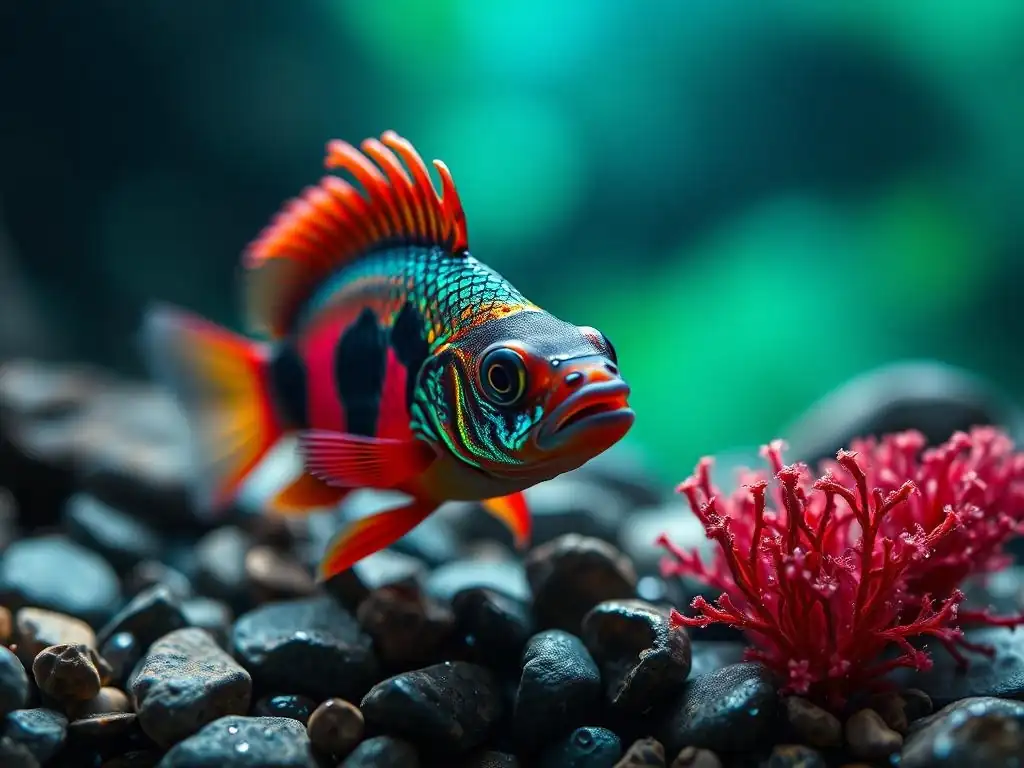
Composition dictates how elements within your frame are arranged, influencing the visual impact of your dwarf cichlid photos. While a centered composition can be powerful for a strong, isolated subject, it can sometimes feel static. Experiment with the "rule of thirds," placing your dwarf cichlid off-center along imaginary lines that divide your frame into nine equal sections. This often creates a more dynamic and engaging image.
Negative space, the empty or uncluttered areas surrounding your subject, is another powerful compositional tool. Instead of filling the entire frame with the fish, allowing some negative space can draw attention to the dwarf cichlid itself, making it stand out against a simple, blurred background. For instance, a lone Apistogramma hongsloi against a dark, plant-free background can be incredibly striking, making the fish the undeniable focal point.
Showing Cichlid Behavior: Capturing Displays and Territory Defense
Beyond static portraits, capturing the natural behaviors of your dwarf cichlids adds immense character and narrative to your photos. Be patient and observe their routines. Look for moments of fin flaring, which male cichlids perform to attract mates or intimidate rivals, showcasing their most vibrant colors and extended fins. Spawning dances, egg deposition (e.g., a female Kribensis fanning her eggs in a cave), or fry schooling around their parents are also incredibly rewarding to capture.
Territorial disputes, though sometimes brief, can offer intense, dynamic shots. A male Apistogramma defending his territory from an intruder, with fins spread and colors intensified, tells a story about their natural instincts. These action shots require quick reflexes and often a continuous autofocus mode combined with burst shooting to capture the decisive moment. Documenting these behaviors provides valuable insights and makes your dwarf cichlid aquarium photography tips more compelling.
Background Considerations: Substrate and Plant Selection
The background of your aquarium photos can either enhance or detract from your dwarf cichlids. A cluttered background filled with heaters, filter intakes, or air lines will distract the viewer from your beautiful fish. Strive for simplicity. Dark substrates, such as fine black sand, often provide an excellent contrast that makes the vibrant colors of species like Mikrogeophagus altispinosa pop.
Lush, healthy aquarium plants (e.g., Anubias, Java Fern, or Cryptocorynes) can create a natural and aesthetically pleasing backdrop. Position your fish in front of dense plant groupings to create a soft, green canvas that complements their colors. Alternatively, a completely empty background, achieved by shooting close up with a wide aperture, can isolate the dwarf cichlid dramatically. Consider the overall aesthetic and how the background contributes to the story of your dwarf cichlid photos.
Capturing the Cichlid's Personality: Identifying Unique Markings
Every dwarf cichlid, even within the same species, can have subtle variations in its markings, coloration, or fin shape that contribute to its unique "personality." Take the time to observe your individual fish and identify these distinguishing features. Perhaps one Apistogramma cacatuoides has a particularly striking pattern on its caudal fin, or a Ramirezi displays an exceptionally vibrant red patch on its flank.
Focusing on these specific characteristics in your dwarf cichlid photos can elevate them from generic fish pictures to compelling portraits of individual aquatic inhabitants. Use your macro lens to highlight the intricate scale patterns, the intensity of their eye color, or the delicate structures of their fins. These close-up details not only showcase the fish's beauty but also allow viewers to appreciate the subtle complexities that make each dwarf cichlid unique.
Post-Processing Your Dwarf Cichlid Images
Basic Editing: Exposure, Highlights, and Shadows
Post-processing is an integral part of modern dwarf cichlid aquarium photography, allowing you to refine your images and bring out their full potential. Start with basic exposure adjustments. If your image is too dark, increase the overall exposure; if it's too bright, decrease it. Next, focus on highlights and shadows. Recovering detail in blown-out highlights (e.g., reflections on scales) can be achieved by pulling down the highlight slider. Conversely, lifting the shadows can reveal hidden details in darker areas of the fish or substrate without brightening the entire image.
These initial steps ensure that the full tonal range of your dwarf cichlid photos is utilized, making sure no important details are lost in either the brightest or darkest parts of the image. Aim for a balanced histogram that avoids "clipping" (where data is lost) at either end, ensuring a rich and detailed final image.
Color Correction: Saturation and Vibrance Adjustments
While accurate white balance in-camera is ideal, color correction in post-processing allows for fine-tuning. Begin by ensuring your white balance is neutral, removing any unwanted color casts. Then, move to saturation and vibrance. Saturation globally increases the intensity of all colors in the image. While it can make colors pop, over-saturating can lead to an artificial, cartoonish look and loss of detail.
Vibrance is often a more nuanced tool for dwarf cichlid photos. It selectively boosts the intensity of muted colors while leaving already saturated colors relatively untouched. This is particularly effective for enhancing the natural, subtle hues of fish without making them look unnatural. For example, a slight increase in vibrance can bring out the reds and blues of a Ramirezi without making the background greens overly vibrant.
Even with perfect focus, images can often benefit from a touch of sharpening in post-processing. Sharpening enhances edge contrast, making details appear crisper. "Unsharp Mask" is a common sharpening tool found in most editing software (e.g., Adobe Lightroom, Photoshop). It typically involves adjusting an "Amount" (how much sharpening is applied), a "Radius" (how wide the sharpening effect spreads from the edges), and a "Threshold" (how much contrast difference is needed before sharpening is applied, to avoid sharpening noise).
Another useful tool is "Clarity." While not strictly a sharpening tool, Clarity increases mid-tone contrast, giving the image a sense of depth and "pop." Used subtly, it can make the scales and fins of your dwarf cichlids appear more defined and three-dimensional. Be careful not to over-sharpen or over-clarify, as this can introduce artifacts or an unnatural, gritty look to your dwarf cichid photos.
Removing Blemishes and Distractions: Spot Healing and Content-Aware Fill
The aquarium environment, despite best efforts, can sometimes present minor distractions in your dwarf cichlid photos. Tiny specks of detritus on the glass, a stray food pellet, or a small scratch on the tank can detract from the beauty of your subject. Tools like the "Spot Healing Brush" or "Clone Stamp" are excellent for removing these small blemishes. Simply paint over the unwanted element, and the software will intelligently replace it with surrounding pixels.
For larger or more complex distractions, such as a visible heater element, an airline tube, or a portion of an external filter, "Content-Aware Fill" (available in more advanced software like Photoshop) can be incredibly powerful. This tool analyzes the surrounding area and intelligently fills in the selected unwanted object, often seamlessly integrating with the background. These techniques are crucial dwarf cichlid aquarium photography tips for achieving a clean, professional final image.
Common Mistakes to Avoid in Dwarf Cichlid Photography
Overexposing or Underexposing Images: Clipping Highlights and Shadows
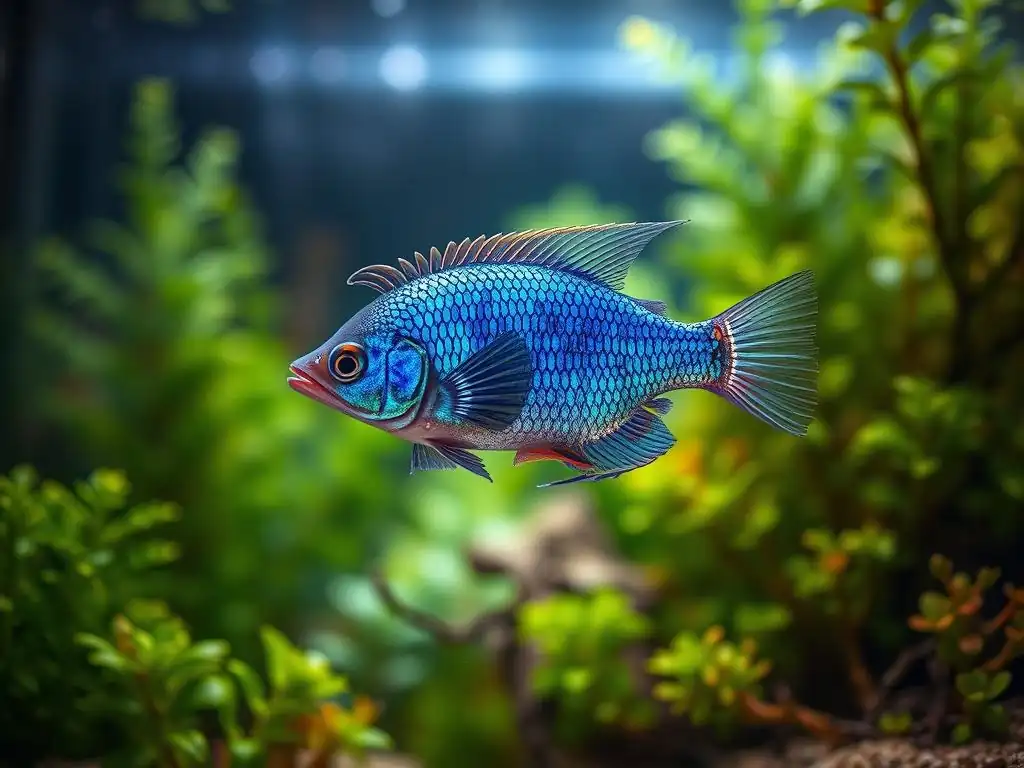
One of the most common pitfalls in photography is incorrect exposure. Overexposure occurs when too much light hits the sensor, causing bright areas (highlights) to become pure white with no detail—this is known as "clipping highlights." For example, the iridescent scales of a dwarf cichlid might appear as featureless white blobs. Conversely, underexposure means too little light, leading to dark areas (shadows) becoming pure black with no detail—"clipping shadows." This can hide the intricate patterns on a fish's body or the texture of the substrate.
Always refer to your camera's histogram, a graph that shows the tonal distribution of your image. A well-exposed image will have a histogram with data spread across the entire range without significant spikes at either the far left (clipped shadows) or far right (clipped highlights). Aim for an exposure that preserves detail in both the brightest and darkest parts of your dwarf cichlid photos.
A blurry image is often a discarded image. Poor focus is a frequent issue, especially with active subjects like dwarf cichlids. Relying solely on the default shutter button to both focus and shoot can lead to missed focus, as the camera might focus on the glass or background instead of the fish's eye. To combat this, consider using "back-button focus," which separates the autofocus activation to a dedicated button on the back of your camera. This allows you to acquire and lock focus independently, then recompose and shoot.
For mirrorless camera users, "focus peaking" is an invaluable aid. This feature highlights the in-focus areas of your image (often with a colored outline) directly on your electronic viewfinder or LCD screen, making it visually clear what is sharp. This is particularly helpful for precise manual focusing or confirming autofocus accuracy on the small, intricate details of dwarf cichlids.
Unnatural Colors: Color Casts and Over-Saturation
While the goal is to enhance the vibrant colors of your dwarf cichlids, a common mistake is overdoing it, leading to unnatural or "cartoonish" hues. This can stem from incorrect white balance in-camera, resulting in a pervasive color cast (e.g., an overly blue image due to dominant blue LEDs), or from excessive saturation adjustments in post-processing. A fish that is naturally red might appear fluorescent orange, or a blue one might look unnaturally electric.
To avoid this, prioritize accurate white balance from the start. In post-processing, use the vibrance slider more judiciously than the saturation slider, as vibrance is designed to boost less-saturated colors more subtly. Constantly compare your edited image to what you know the fish looks like in real life. The best dwarf cichlid aquarium photography tips advocate for enhancing natural beauty, not fabricating it.
Disturbing the Cichlids: Minimizing Stress and Tank Disruption
The well-being of your dwarf cichlids should always be the top priority. Rapid, sudden movements in front of the tank, bright, undirected flashes, or prolonged, intrusive presence can cause significant stress to fish. Stressed cichlids may hide, lose their vibrant coloration, or exhibit erratic behavior, making good photography impossible. Furthermore, frequent tank disruptions for photography can compromise their health.
Approach your photography sessions with patience and calm. Allow the fish to habituate to your presence. Use remote triggers for your flashes if possible to minimize your physical proximity. Avoid tapping on the glass or making sudden noises. If fish appear stressed (e.g., rapid gill movement, darting, dull colors), take a break and allow them to settle. Minimizing stress ensures the fish display their natural colors and behaviors, leading to more authentic and beautiful dwarf cichlid photos.
Advanced Techniques for Dwarf Cichlid Photography
Focus Stacking for Maximum Sharpness: Using Helicon Focus or Zerene Stacker
Focus stacking is an advanced technique particularly useful for macro photography of small subjects like dwarf cichlids, or for capturing entire aquascapes with extreme sharpness from foreground to background. It involves taking multiple images of the same subject, each focused at a slightly different depth. These individual images are then combined in specialized software to create a single composite image where everything is in sharp focus, overcoming the limitations of depth of field, especially at high magnifications.
Software like Helicon Focus or Zerene Stacker automates the alignment and blending of these images, producing a final result with incredible detail and sharpness throughout. While requiring more time and effort, this technique can elevate your dwarf cichlid photos to a professional level, revealing every intricate scale and plant leaf in stunning clarity.
Creating Blackwater Aquarium Photos: Tannins and Leaf Litter
Photographing blackwater aquariums, which mimic the natural habitats of many Apistogramma species with their tea-stained water from tannins and abundant leaf litter, presents a unique photographic challenge. The dark water can absorb light and make fish appear silhouetted or dull. The key is strategic external lighting. Use strong, diffused light sources positioned to illuminate the fish directly while maintaining the dark, mysterious ambiance of the water.
Consider backlighting with a diffused strobe to create a subtle glow around the fish, making them stand out against the dark background. Emphasize the natural elements: the textures of fallen leaves (like Catappa or Guava leaves), seed pods, and driftwood contribute significantly to the aesthetic. These elements not only provide a natural environment for your dwarf cichlids but also add depth and authenticity to your blackwater aquarium photography.
Photographing Cichlid Breeding Behavior: Documenting Egg Deposition and Fry Development
Documenting the breeding behavior of dwarf cichlids is a highly rewarding aspect of aquarium photography, offering a unique glimpse into their life cycle. This requires immense patience and keen observation. Focus on capturing key moments such as the elaborate courtship displays, the precise act of egg deposition on a leaf or in a cave (e.g., Nannacara anomala or Apistogramma species), the diligent fanning of eggs by the parents, and the subsequent emergence and schooling of the tiny fry.
Set up your camera in advance, pre-focusing on the known breeding site. Use a quiet shutter mode if your camera has one to minimize disturbance. Be prepared for long waits and quick, decisive action when the moment arrives. Capturing these intimate sequences provides not only stunning dwarf cichlid photos but also valuable visual records for fellow aquarists and enthusiasts interested in their reproductive biology.
Conclusion: Elevating Your Dwarf Cichlid Aquarium Photography
Continued Learning and Experimentation: Online Forums and Workshops
Mastering the art of dwarf cichlid aquarium photography is an ongoing journey that combines technical skill with artistic vision and a deep appreciation for your aquatic subjects. The tips provided here serve as a robust foundation, but true mastery comes from consistent practice, experimentation, and a willingness to learn. Each aquarium, each fish, and each lighting scenario presents unique variables, requiring adaptability and creative problem-solving.
To further refine your skills and stay updated on the latest dwarf cichlid aquarium photography tips, actively engage with the photography community. Explore online forums dedicated to aquatic photography or general macro photography, where you can share your work, receive constructive feedback, and learn from experienced photographers. Consider attending workshops on macro photography or even specialized aquarium photography if available. Continuous learning and experimentation will not only elevate your dwarf cichlid photos but also deepen your connection to the captivating world within your aquarium.
Frequently Asked Questions
What are some basic camera settings to start with when photographing dwarf cichlids?
Start with a fast shutter speed (1/200th of a second or faster) to freeze movement. A wide aperture (low f-number, like f/2.8 or f/4) will create a shallow depth of field, blurring the background and highlighting your subject. Increase the ISO only as needed to maintain proper exposure.
How can I minimize reflections and glare when photographing my aquarium?
Turn off room lights and use external lighting focused on the aquarium. A polarizing filter can also significantly reduce reflections on the glass. Angle the camera slightly to avoid direct reflections of yourself or surrounding objects.
What are some tips for capturing the vibrant colors of dwarf cichlids?
Ensure your aquarium lighting is optimized for color rendering. White balance is crucial; experiment with different settings or use a custom white balance based on your aquarium's lighting. Post-processing can also enhance colors, but aim for natural-looking results.
How do I get my dwarf cichlids to stay still long enough to photograph them?
Patience is key! Observe their behavior and anticipate their movements. Use a small amount of food to lure them to a specific area, but avoid overfeeding. A tripod will allow you to wait for the perfect moment without camera shake.
What are some good composition techniques for aquarium photography?
Use the rule of thirds to create visually appealing images. Consider the background and foreground elements. Look for interesting angles and perspectives, and try to capture the cichlids interacting with their environment.
Final Reflection: Capturing the Essence of Miniature Majesty
The techniques explored in this article, from mastering lighting to understanding your subject's behavior, are more than just dwarf cichlid aquarium photography tips; they are a pathway to appreciating the intricate beauty hidden within our own aquariums. In a world increasingly dominated by fleeting digital images, the ability to capture and share the unique personality of these miniature marvels becomes a powerful act of preservation and appreciation.
This journey into the world of dwarf cichlid photography has profoundly influenced my own perspective, revealing the hidden dramas and subtle nuances of a world often overlooked. It reminds us that beauty exists in the smallest of details, and that patience and observation are key to unlocking its secrets. The best and most beautiful things in the world cannot be seen or even touched - they must be felt with the heart.
- Helen Keller. This sentiment resonates deeply when we consider the delicate balance and captivating behaviors we strive to capture in our photographs.
Now, I invite you to pick up your camera, or even just your phone, and truly see your dwarf cichlids. Don't just take a picture; tell their story. Share their vibrant colors, their unique personalities, and the captivating world they inhabit. By doing so, you not only hone your photographic skills, but you also become an ambassador for these incredible creatures, inspiring others to appreciate and protect the delicate ecosystems they represent.
Capture the Unseen: Frame Your Cichlids' World!
Thank you for diving into the captivating world of dwarf cichlid photography. You've now unlocked the secrets to showcasing these vibrant fish in their best light. Ready to put your knowledge into action?
- Grab your camera and dedicate this weekend to photographing your dwarf cichlids. Experiment with different angles and lighting to capture their unique personalities.
- Share your best shots with the Aquarium Mastery community on social media, using #CichlidCaptures, and inspire fellow enthusiasts with your stunning images.
- Consider creating a short video showcasing your photography setup and techniques, offering insights to others aspiring to photograph their aquatic pets.
What's the first stunning shot you're planning to capture, and what unique detail of your cichlids do you want to highlight?