
Freshwater vs. Saltwater Aquarium Lighting: Key Differences You Must Know

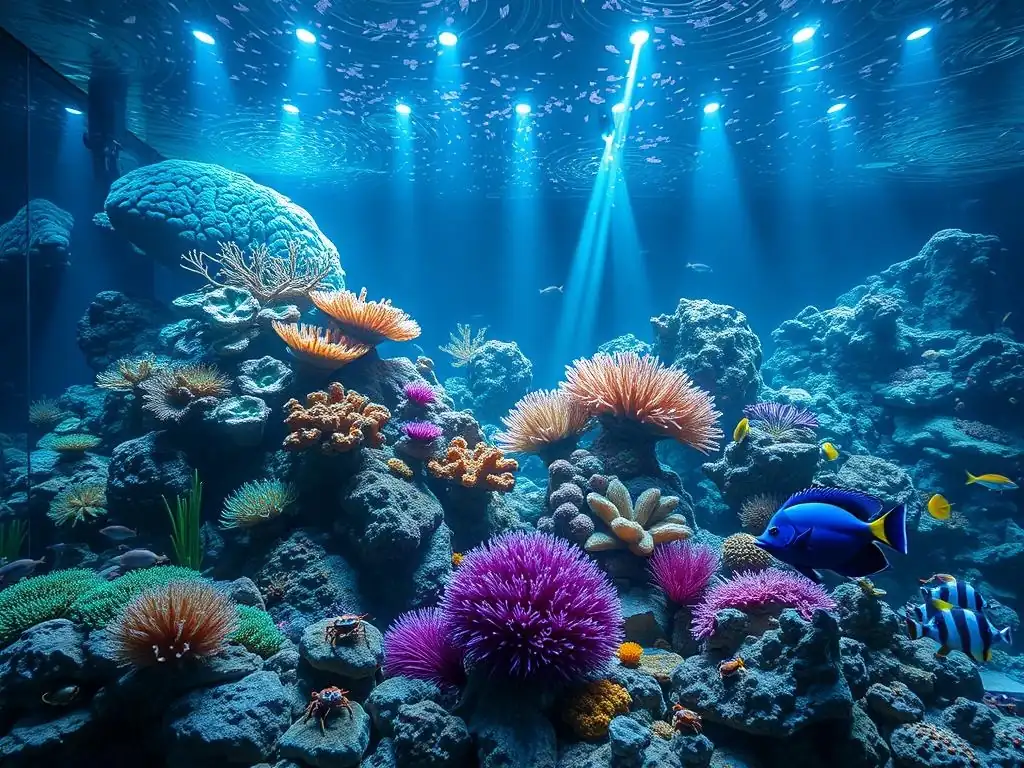
Welcome to Aquarium Mastery, where your underwater dreams take shape! Ever wondered what truly separates a thriving freshwater tank from a dazzling saltwater reef? Dive in to discover the crucial element that illuminates their differences: Saltwater aquarium lighting. This isn't just about making things pretty; it's about life and death for your coral. Intrigued? Let's shed some light on the subject!
- Understanding Aquarium Lighting Needs: Reef vs. Planted
- Saltwater Aquarium Lighting Differences: A Deep Dive
- Planted Tank Lighting: Specific Requirements
- Comparing Lighting Technologies: LED, Metal Halide, and T5 Fluorescent
- Key Differences in Light Intensity and Spectrum: Reef vs. Planted
- Choosing the Right Lighting System for Your Aquarium: A Step-by-Step Guide
- Troubleshooting Common Aquarium Lighting Issues
- Maintaining Your Aquarium Lighting System for Longevity
- Conclusion: Mastering Aquarium Lighting for a Thriving Aquatic Ecosystem
-
Frequently Asked Questions
- How does saltwater aquarium lighting differ from freshwater aquarium lighting in terms of intensity?
- Why is spectrum more crucial for saltwater aquariums compared to freshwater ones?
- What are the common types of lighting used in saltwater aquariums that are rarely seen in freshwater setups?
- How does the depth of a saltwater aquarium affect lighting requirements compared to a freshwater tank?
- What happens if you use freshwater aquarium lighting in a saltwater setup?
- Final Reflection: Illuminating the Depths
- Ignite Your Aquarium Passion!
Understanding Aquarium Lighting Needs: Reef vs. Planted
Why Proper Lighting is Crucial for Aquarium Health
Proper lighting is not merely an aesthetic choice for an aquarium; it is a fundamental pillar supporting the health and vitality of the entire aquatic ecosystem. For photosynthetic organisms, whether they are corals in a saltwater reef tank or plants in a freshwater setup, light serves as the primary energy source. Without adequate and appropriate illumination, these organisms cannot perform photosynthesis, leading to stunted growth, loss of coloration, and ultimately, decline or death. The energy derived from light drives essential biological processes, influencing everything from the metabolic rates of invertebrates to the oxygen production within the water column.
Beyond the direct biological impact, lighting also plays a critical role in the overall balance of the aquarium. It helps regulate the natural day-night cycles of fish and other inhabitants, influencing their behavior, feeding patterns, and reproductive cycles. An imbalanced or insufficient lighting regime can stress aquatic life, making them more susceptible to disease and compromising the stability of the entire tank. For instance, a lack of the correct spectrum can lead to poor plant growth in a freshwater tank, creating an environment where nuisance algae can thrive by outcompeting the struggling plants for nutrients.
Introduction to Lighting Spectrum and Intensity for Aquariums
Aquarium lighting can be broadly characterized by two key properties: spectrum and intensity. Spectrum refers to the range of light wavelengths emitted by a light source, which we perceive as different colors. Just as plants on land require specific wavelengths for photosynthesis, aquatic plants and corals have evolved to utilize particular parts of the light spectrum.
For example, blue and red wavelengths are crucial for plant growth, while blue light is particularly vital for the symbiotic algae (zooxanthellae) residing within corals. The correct spectral output ensures that the light energy provided is usable by the organisms it is intended for.
Intensity, on the other hand, measures the brightness or power of the light. In aquatic environments, intensity is often quantified by Photosynthetically Active Radiation (PAR), which specifically measures the light wavelengths (400-700 nanometers) that are useful for photosynthesis. High light intensity provides ample energy for fast-growing plants or demanding corals, while lower intensity is suitable for less demanding species.
Balancing intensity with the needs of the tank's inhabitants is crucial; too much intensity can lead to algae blooms or coral bleaching, while too little will result in starvation and poor growth. Understanding these two factors is paramount to unlocking the full potential of any aquatic environment.
Saltwater Aquarium Lighting Differences: A Deep Dive
The Unique Lighting Requirements of Corals and Invertebrates
Saltwater reef aquariums, particularly those housing stony corals, present some of the most demanding lighting requirements in the aquarium hobby. The majority of reef-building corals, such as Small Polyp Stony (SPS) corals like Acropora and Large Polyp Stony (LPS) corals like Euphyllia, host symbiotic dinoflagellates called zooxanthellae within their tissues. These zooxanthellae perform photosynthesis, converting light energy into sugars and oxygen, which they then share with their coral hosts.
This symbiotic relationship means that the coral's survival and growth are directly dependent on the quantity and quality of light provided. Different coral species, depending on their natural habitat depth and light exposure, have evolved to thrive under varying light intensities and spectral compositions. For instance, SPS corals typically require very high light, mimicking shallow reef environments, while many LPS and soft corals prefer more moderate illumination.
Beyond corals, other photosynthetic invertebrates like giant clams ( Tridacna species) also rely heavily on light to support their internal zooxanthellae. These bivalves can filter feed, but a significant portion of their nutritional needs are met through photosynthesis. Therefore, providing an appropriate light spectrum and intensity is not just about promoting vibrant colors; it's about sustaining the fundamental energy production for these animals. Understanding these specific biological needs is the cornerstone of successful saltwater aquarium lighting differences, setting them apart from their freshwater counterparts.
PAR (Photosynthetically Active Radiation) and Reef Tank Illumination
PAR, or Photosynthetically Active Radiation, is the most crucial metric for measuring light intensity in a saltwater reef aquarium. It quantifies the amount of light within the 400-700 nanometer range, which is the spectral band utilized by photosynthetic organisms like zooxanthellae. Unlike lumens or watts per gallon, PAR directly reflects the usable light energy available for photosynthesis, making it an indispensable tool for reef aquarists. Achieving the correct PAR levels across the entire tank, from the surface to the substrate, is vital for coral health and growth, as light intensity diminishes significantly with water depth.
Understanding PAR Values for Different Coral Species
Different coral species require distinct PAR ranges to thrive, reflecting their natural habitats. For example, demanding SPS corals, such as various Acropora and Montipora species, often require very high PAR levels, typically ranging from 250 to 450 µmol·m⁻²·s⁻¹ or even higher in some cases. These corals naturally inhabit shallow, brightly lit reef crests.
In contrast, most LPS corals, like Euphyllia (Torch, Hammer, Frogspawn) or Blastomussa, generally prefer moderate PAR values, usually between 100 and 250 µmol·m⁻²·s⁻¹. Soft corals, such as Zoanthids or Leather Corals, are often the most forgiving, flourishing in lower PAR environments, typically from 50 to 150 µmol·m⁻²·s⁻¹. Over-lighting corals can lead to bleaching and stress, while under-lighting results in slow growth and eventual starvation, highlighting the importance of precise PAR management.
Measuring PAR in Your Reef Tank
Accurately measuring PAR in your saltwater aquarium is essential for optimizing coral placement and ensuring all inhabitants receive appropriate light. While estimations can be made, the most reliable method involves using a dedicated PAR meter, such as an Apogee MQ-510. This device provides real-time PAR readings at various depths and locations within the tank, allowing aquarists to identify hot spots, shaded areas, and overall light distribution.
For example, a 24-inch deep tank might show a significant drop in PAR from the surface to the bottom, necessitating stronger lighting or placing demanding corals higher in the aquascape. Regular PAR measurements, especially after lighting upgrades or significant coral additions, help prevent issues like coral bleaching from excessive light or poor growth from insufficient illumination, making it a critical tool for advanced reef keeping.
Light Spectrum Considerations for Reef Tanks
The spectral composition of light is as crucial as its intensity for saltwater aquariums, particularly for promoting vibrant coral coloration and supporting zooxanthellae photosynthesis. While full-spectrum light is beneficial, specific wavelengths are particularly important for reef inhabitants. Replicating the natural light environment of a coral reef, which is dominated by blue light due to water's selective absorption of other colors, is key to success.
The Importance of Blue Light in Reef Tanks
Blue light, specifically in the range of 450-470 nanometers (nm), is paramount for saltwater reef tanks. This wavelength penetrates deepest into the water column and is most efficiently absorbed by the photosynthetic pigments (chlorophyll a and c, and peridinin) found in zooxanthellae. Providing ample blue light directly supports the energy production of these symbiotic algae, which in turn fuels coral growth and health.
Furthermore, blue light often enhances the natural fluorescence of many corals, making their vibrant colors pop under actinic (blue-heavy) lighting. Many aquarists use a dawn-to-dusk cycle that starts and ends with a strong blue period, mimicking natural sunrise and sunset conditions on the reef.
Full Spectrum LED Lighting for Reef Tanks
Modern full-spectrum LED lighting systems have revolutionized saltwater aquarium lighting by offering unparalleled control over spectral output. These fixtures typically incorporate a wide range of individual LED diodes, including cool white, royal blue, deep blue, violet, UV, red, and green. This allows aquarists to create a custom light blend that not only provides the essential blue wavelengths for coral health but also includes other colors to enhance visual appeal and ensure a balanced spectrum.
For example, a common reef tank setting might involve a high percentage of royal blue (e.g., 60-70%), combined with smaller percentages of cool white (e.g., 20-30%), and minor contributions from red, green, and UV. This customizability allows for fine-tuning the light to meet the specific needs of a diverse coral collection, from demanding SPS to more forgiving soft corals, and is a key factor in addressing saltwater aquarium lighting differences effectively.
Planted Tank Lighting: Specific Requirements
Lighting for Planted Aquariums
Freshwater planted aquariums have distinct lighting requirements that differ significantly from saltwater reef tanks. While both rely on photosynthesis, the primary photosynthetic organisms (aquatic plants) utilize light differently than zooxanthellae in corals. The goal for planted tanks is to provide the correct balance of intensity, spectrum, and duration to promote robust plant growth, vibrant coloration, and prevent nuisance algae. Over-lighting or under-lighting can both lead to significant problems, emphasizing the need for careful calibration.
The Role of Light in Plant Photosynthesis
For aquatic plants, light is the fundamental energy source for photosynthesis, the process by which they convert carbon dioxide (CO2) and water into glucose (sugar) and oxygen. Chlorophyll, the green pigment in plants, absorbs specific wavelengths of light to drive this process. The rate of photosynthesis directly impacts plant growth, stem elongation, leaf development, and root formation.
Insufficient light will lead to stunted growth, pale leaves, and eventual melting of plants. Conversely, too much light without adequate CO2 and nutrients can cause plants to "burn" or, more commonly, trigger explosive algae blooms that outcompete the plants for resources. Therefore, understanding the plant's light needs is paramount.
Choosing the Right Light Spectrum for Plants
Aquatic plants primarily utilize red and blue wavelengths for photosynthesis. Red light (around 620-700 nm) is crucial for stem elongation, flowering, and overall biomass production. Blue light (around 400-500 nm) promotes chlorophyll production, compact growth, and leaf development.
While red and blue are the most photosynthetically active, a full spectrum light that includes green and yellow wavelengths is also important. Green light (around 500-600 nm), although largely reflected by chlorophyll (which is why plants appear green), penetrates deeper into the water and contributes to the overall health and natural appearance of the plants. Many modern LED fixtures for planted tanks combine these specific wavelengths to create a balanced spectrum that maximizes plant growth and visual appeal, ensuring a vibrant freshwater ecosystem.
Lighting Intensity and Duration for Plant Growth
Achieving the right balance of light intensity and duration is critical for the success of a freshwater planted aquarium. Unlike the generally high intensity required for reef tanks, planted tanks have variable intensity needs depending on the specific plant species cultivated. Low-light plants like Anubias, Java Fern, and Mosses thrive under lower PAR levels (e.g., 15-30 µmol·m⁻²·s⁻¹), while demanding stem plants like Rotala or Ludwigia in high-tech setups may require PAR levels exceeding 50-80 µmol·m⁻²·s⁻¹.
The duration of lighting, or photoperiod, typically ranges from 8 to 10 hours per day for most planted tanks. An excessively long photoperiod, even with moderate intensity, can trigger algae growth.
CO2 Injection and Lighting Requirements
The relationship between light intensity and CO2 availability is symbiotic and crucial for robust plant growth in freshwater aquariums. In high-light planted tanks, plants photosynthesize at a much faster rate, rapidly consuming available CO2. If CO2 is not supplemented through injection, plants will quickly become carbon-limited, leading to stunted growth, melting leaves, and an increased susceptibility to algae.
For instance, a tank with a PAR of 50 µmol·m⁻²·s⁻¹ might necessitate CO2 injection at 20-30 ppm to support optimal growth. Conversely, a low-light tank with PAR below 30 µmol·m⁻²·s⁻¹ might not require CO2 injection, as ambient CO2 levels are often sufficient for slower-growing plants. Understanding this balance is key to preventing plant deficiencies and maintaining a healthy, algae-free environment.
Avoiding Algae Growth with Proper Lighting Balance
One of the most common challenges in freshwater planted tanks is managing algae, which often proliferates due to an imbalance in lighting, nutrients, or CO2. Too much light intensity, especially without sufficient CO2 and macro/micronutrients, can trigger explosive algae blooms. For example, a tank running a high PAR light for 12 hours a day without CO2 injection is highly susceptible to green spot algae or hair algae.
Similarly, an incorrect light spectrum, particularly one with too much green or yellow light relative to red and blue, can also favor algae growth over desirable plant growth. The solution often involves reducing the photoperiod to 8-9 hours, decreasing light intensity, ensuring adequate CO2 levels (if applicable), and maintaining a balanced nutrient regimen. A proper lighting balance is fundamental to promoting lush plant growth while keeping nuisance algae at bay.
Comparing Lighting Technologies: LED, Metal Halide, and T5 Fluorescent
LED Lighting for Saltwater and Freshwater Tanks: Advantages and Disadvantages
LED (Light Emitting Diode) lighting has become the dominant technology in both saltwater and freshwater aquariums due to its numerous advantages. LEDs are highly energy-efficient, consuming significantly less power than traditional lighting methods, leading to lower electricity bills. They boast an exceptionally long lifespan, often rated for 50,000 hours or more, which translates to years of use without bulb replacement.
A major benefit, especially for saltwater aquarium lighting differences, is the unparalleled control over spectrum and intensity. Many high-end LED fixtures allow users to adjust individual color channels (e.g., royal blue, cool white, red, green, UV) and program custom dawn-to-dusk cycles with ramping features, providing precise control over PAR and spectral output for specific corals or plants.
However, LEDs also have their disadvantages. The initial upfront cost for quality LED fixtures can be significantly higher than other lighting types, sometimes reaching hundreds or even thousands of dollars for large tanks. While they produce less heat than metal halides, proper heat dissipation is still necessary, and some units can run quite warm. Another consideration is the "shimmer" effect, which can be pronounced with point-source LEDs, mimicking sunlight on a reef but sometimes appearing unnatural in a planted tank. Despite these drawbacks, their efficiency, longevity, and customization options make LEDs a top choice for serious aquarists.
Metal Halide Lighting: A Powerful Option for Saltwater Tanks [Considerations and Drawbacks]
Metal Halide (MH) lighting was once the gold standard for high-intensity saltwater reef tanks, particularly for deep aquariums and demanding SPS corals. Their primary advantage lies in their ability to produce extremely high PAR values, often exceeding 500 µmol·m⁻²·s⁻¹ at the surface, and excellent light penetration, making them ideal for large or deep tanks.
Many reef keepers attest to the robust growth and natural coloration of corals under metal halides, often attributing it to the "point source" effect that creates a pronounced shimmer and excellent light distribution similar to natural sunlight. The strong intensity can drive rapid calcification in stony corals.
Despite their power, metal halides come with significant drawbacks. They generate a substantial amount of heat, often requiring active cooling solutions like chillers or fans, which increases energy consumption. Their energy efficiency is considerably lower than LEDs, leading to higher electricity bills.
Furthermore, MH bulbs have a relatively short lifespan, typically requiring replacement every 9 to 12 months, and these replacement bulbs can be quite expensive, ranging from $50 to $100 or more per bulb. They also offer limited spectral customization compared to LEDs, typically relying on specific bulb types (e.g., 10K, 14K, 20K) to achieve desired color temperatures. These factors, combined with their bulkiness, have led to a decline in their popularity as LEDs have advanced.
T5 Fluorescent Lighting: A Versatile Choice for Both Aquarium Types [Pros and Cons]
T5 fluorescent lighting, specifically High Output (HO) T5s, offers a versatile and cost-effective solution for both saltwater and freshwater aquariums. Their primary advantage is the broad, even light spread they provide, minimizing hot spots and shadowed areas within the tank. This makes them excellent for achieving uniform illumination, which is beneficial for densely planted freshwater tanks and for providing consistent PAR across a reef tank.
T5 bulbs are available in a wide range of spectral outputs (e.g., 6500K daylight, actinic blue, purple, red), allowing aquarists to mix and match bulbs to create a customized spectrum for their specific needs, whether it's plant growth or coral coloration. They are also generally more affordable than comparable LED or metal halide setups upfront.
However, T5s do have their limitations. While more efficient than older fluorescent types, they are less energy-efficient than LEDs. The bulbs have a relatively short lifespan for optimal output, typically requiring replacement every 6 to 12 months, as their intensity and spectrum degrade over time.
This ongoing replacement cost can add up. T5 fixtures can also be bulky, and while they offer spectral customization through bulb selection, they lack the dynamic control (e.g., dimming, sunrise/sunset simulation) found in advanced LED systems. Despite these cons, T5s remain a strong contender for hobbyists seeking a proven, reliable, and relatively affordable lighting solution.
Key Differences in Light Intensity and Spectrum: Reef vs. Planted
Summarizing Light Intensity Needs: Saltwater (High) vs. Freshwater (Variable)
The most pronounced of the saltwater aquarium lighting differences lies in the typical intensity requirements. Saltwater reef tanks, especially those housing demanding SPS and LPS corals, generally require significantly higher PAR levels. For instance, a successful SPS dominant reef tank might aim for PAR values between 250-450 µmol·m⁻²·s⁻¹ at the coral level to ensure robust growth and vibrant coloration, mimicking the intense sunlight of shallow reef environments. This high intensity is crucial for the zooxanthellae within the corals to photosynthesize effectively and provide sufficient energy to their hosts.
In contrast, freshwater planted tanks exhibit highly variable light intensity needs. A low-tech, low-light planted tank with species like Anubias, Java Fern, or Cryptocorynes might thrive with PAR as low as 15-30 µmol·m⁻²·s⁻¹. Conversely, a high-tech, CO2-injected planted tank aiming for rapid growth of demanding stem plants like Rotala or Ludwigia might require PAR levels in the range of 50-80 µmol·m⁻²·s⁻¹, or even slightly higher.
Exceeding these levels without adequate CO2 and nutrient supplementation in a freshwater tank almost invariably leads to severe algae issues, which are far less common at lower PAR levels. This wide range of needs underscores the distinct approaches to intensity management in the two aquarium types.
Spectral Output: Replicating Natural Light in Reef and Planted Environments
The spectral output is another critical distinguishing factor when considering saltwater aquarium lighting differences. For saltwater reef tanks, the emphasis is heavily placed on the blue end of the spectrum, particularly wavelengths between 450-470 nm. This blue light penetrates deepest into the ocean, and corals have evolved to utilize it efficiently for photosynthesis by their symbiotic zooxanthellae.
Many reef aquarists also incorporate UV (380-420 nm) and violet (420-450 nm) wavelengths to enhance coral fluorescence and further support biological processes. While white light is also used for visual appeal and a more balanced spectrum, a strong blue component is non-negotiable for coral health, often giving reef tanks a distinct blueish hue.
For freshwater planted tanks, the spectral requirements are geared towards maximizing plant photosynthesis and promoting healthy, lush growth. This typically involves a "full spectrum" light with strong peaks in both the red (620-700 nm) and blue (400-500 nm) regions. Red light is vital for stem elongation and flowering, while blue light encourages compact growth and chlorophyll production.
While green light is often considered less photosynthetically efficient for plants, it contributes to the natural appearance of the aquarium and penetrates well. The goal is to mimic terrestrial sunlight, which is balanced across the visible spectrum, rather than the predominantly blue light of marine environments. This fundamental difference in spectral targeting is paramount for successful cultivation in each respective setup.
Choosing the Right Lighting System for Your Aquarium: A Step-by-Step Guide
Assessing Your Aquarium's Needs: Corals, Plants, and Fish
The first and most critical step in selecting an aquarium lighting system is to thoroughly assess the specific needs of your tank's inhabitants. For a saltwater aquarium, identify the types of corals you plan to keep: are they demanding SPS corals like Acropora, moderate LPS corals such as Goniopora, or forgiving soft corals like Zoanthids? Each group has distinct PAR and spectral requirements.
For a freshwater planted tank, determine if you are aiming for a low-tech setup with undemanding plants like Anubias and Java Fern, or a high-tech, CO2-injected tank with light-hungry stem plants such as Rotala Macrandra. The fish species themselves generally have less stringent lighting demands than corals or plants, but extreme lighting conditions can still affect their behavior and well-being. A clear understanding of your aquatic livestock's needs will directly inform the type and power of the lighting system required.
Calculating Lighting Requirements Based on Tank Size and Depth
Once you've assessed your inhabitants, the next step is to calculate the appropriate lighting requirements based on your aquarium's physical dimensions. Tank size, particularly depth, significantly impacts how much light penetrates the water column. For a shallow saltwater frag tank (e.g., 10-12 inches deep), less powerful lighting might suffice for SPS corals than for a deep reef tank (e.g., 24-30 inches deep) of the same volume. Water absorbs light, so deeper tanks require stronger fixtures to deliver adequate PAR to the bottom.
- For Saltwater Reef Tanks: Focus on PAR values.
- Measure your tank's depth.
- Research the PAR requirements of your target corals.
- Consider fixtures known for good depth penetration. For example, a 24-inch deep tank with SPS corals might require a high-output LED fixture or metal halide to achieve 250-350 µmol·m⁻²·s⁻¹ at mid-depth.
- For Freshwater Planted Tanks: Consider PAR and overall coverage.
- Determine the height of your tank.
- Match light intensity to plant demands (low, medium, high light).
- Ensure even light distribution to prevent shaded areas. A 20-gallon long tank (shallow, wide) will have different light spread needs than a 20-gallon high (deep, narrow).
While general guidelines like "watts per gallon" still exist, especially for older fluorescent technologies (e.g., 2-3 watts/gallon for medium-light planted tanks), PAR measurements are far more accurate and recommended for precise lighting control, particularly when navigating saltwater aquarium lighting differences.
Budget Considerations for Aquarium Lighting Systems
Aquarium lighting systems can represent a significant investment, and budgeting is a crucial step in the selection process. High-end LED fixtures for large saltwater reef tanks, offering advanced features like Wi-Fi control, multi-channel customization, and superior optics, can cost upwards of $500 to $1,500 or more. While the initial outlay is substantial, their energy efficiency and long lifespan often lead to lower operating costs over time, as bulb replacements are infrequent. For example, a quality 300W LED unit might cost $700 but last 7-10 years, whereas T5 bulbs for a similar tank might cost $100 annually for replacements.
Conversely, more budget-friendly options, such as basic LED strips or T5 HO fixtures, are available for freshwater planted tanks or less demanding saltwater setups, often ranging from $50 to $300. While these may lack some advanced features, they can still provide excellent results when matched appropriately to the tank's needs.
It's important to consider not just the initial purchase price but also the ongoing costs of electricity and bulb replacements. Investing in a slightly more expensive but higher-quality fixture upfront can often save money and frustration in the long run, ensuring reliable performance and optimal conditions for your aquatic ecosystem.
Troubleshooting Common Aquarium Lighting Issues
Algae Blooms and Lighting Imbalance [Causes and Solutions]
One of the most frequent and frustrating issues faced by aquarists is the proliferation of nuisance algae, often a direct symptom of lighting imbalance. In freshwater planted tanks, excessive light intensity, an overly long photoperiod (e.g., 12+ hours), or an incorrect light spectrum (too much green/yellow for plants) can fuel rapid algae growth. For example, a common cause of green spot algae is high light with low phosphates. In saltwater reef tanks, too much light can also lead to various forms of algae, including hair algae or dinoflagellates, especially when combined with elevated nutrient levels.
Solutions for algae blooms:
- Reduce Photoperiod: Start by shortening the light cycle to 6-8 hours per day.
- Decrease Intensity: If your light is dimmable, gradually reduce its output. For non-dimmable lights, consider raising the fixture or adding a mesh screen to diffuse light.
- Nutrient Control: Ensure proper nutrient export (water changes, protein skimming for saltwater, detritus removal for freshwater) to prevent algae from having a readily available food source.
- CO2 (Planted Tanks): Increase CO2 levels to support plant growth, allowing plants to outcompete algae.
- Spectrum Adjustment: For programmable LEDs, fine-tune the spectrum to favor plant or coral growth over algae.
Coral Bleaching and Inadequate Lighting [Prevention and Recovery]
Coral bleaching, a devastating phenomenon where corals expel their symbiotic zooxanthellae, can be caused by various stressors, including inadequate lighting – both too much and too little.
- Too Much Light (Photoinhibition): Sudden exposure to very high PAR levels can overwhelm the coral's photosynthetic machinery, leading to oxidative stress and bleaching. This is common when upgrading lights without proper acclimation. For instance, moving an LPS coral from a low-light area to a spot with 300+ PAR can cause rapid bleaching.
- Too Little Light (Starvation): Conversely, insufficient PAR prevents zooxanthellae from producing enough energy, leading to the coral slowly wasting away and bleaching due to starvation. This is a subtle yet significant saltwater aquarium lighting difference.
Prevention and Recovery:
- Acclimatization: When introducing new corals or upgrading lighting, start with lower intensity or shorter photoperiods and gradually increase over several weeks. Many modern LED fixtures offer acclimation modes.
- Proper PAR Placement: Use a PAR meter to ensure corals are placed in areas with their ideal light range.
- Stable Parameters: Maintain stable water chemistry (temperature, alkalinity, calcium, magnesium) to reduce overall stress on corals.
- Nutrient Availability: Ensure adequate, but not excessive, nitrate and phosphate levels, as these are crucial for zooxanthellae health.
Adjusting Light Cycles for Optimal Aquarium Health
The duration and timing of your aquarium's light cycle, or photoperiod, are critical for the health and natural behavior of your tank's inhabitants. Most aquariums benefit from a consistent photoperiod of 8 to 12 hours per day. For instance, a common schedule might be 9 AM to 7 PM. Deviating from this, such as running lights for 14-16 hours, can stress fish and significantly increase the risk of algae blooms by providing too much energy for their growth.
For advanced setups, particularly saltwater reef tanks, implementing a dawn-to-dusk simulation with ramping features is highly beneficial. This mimics natural sunrise and sunset, gradually increasing and decreasing light intensity and shifting spectrum (e.g., starting with blue, transitioning to full spectrum, then back to blue). This gentle transition reduces stress on fish and corals, allowing them to adjust to light changes more naturally than a sudden "on/off" switch.
For example, a typical schedule might involve 30 minutes of blue light, followed by 30 minutes of mixed blue/white, 8 hours of full spectrum, and then a reverse transition. Consistency in the light cycle is paramount; avoid erratic changes to maintain a stable and thriving aquatic environment.
Maintaining Your Aquarium Lighting System for Longevity
Cleaning and Replacing Light Bulbs or LED Fixtures
Regular maintenance of your aquarium lighting system is crucial for ensuring optimal performance, light output, and longevity. Over time, dust, salt creep (in saltwater tanks), and mineral deposits from splashing water can accumulate on light fixtures and bulbs, significantly reducing light penetration and overall intensity. For example, a thin layer of salt creep on an LED lens can reduce PAR output by 10-20%.
It is recommended to gently wipe down light fixtures and lenses weekly or bi-weekly with a clean, damp cloth (unplugged for safety). For stubborn salt creep, a mild vinegar solution can be used, ensuring no liquid enters the electrical components.
Beyond cleaning, timely replacement of bulbs is essential for traditional lighting types. T5 fluorescent bulbs typically need to be replaced every 6 to 12 months, and metal halide bulbs every 9 to 12 months, even if they still appear to be working. This is because their spectral output and intensity degrade over time, impacting photosynthesis in corals and plants long before the bulb completely fails.
While LED fixtures have a much longer lifespan (often 50,000+ hours), their internal components can still degrade, and individual diodes might dim. Regular inspection and cleaning will help maintain peak performance and extend the life of your investment.
Monitoring PAR Levels and Spectrum Output Over Time
Consistent monitoring of PAR levels and spectrum output is a key aspect of advanced aquarium maintenance, particularly for saltwater reef tanks and high-tech freshwater planted tanks. Over time, even high-quality LED fixtures can experience a gradual decrease in light output due to diode degradation, and traditional fluorescent or metal halide bulbs will show a more pronounced decline in both intensity and spectral quality.
For example, a new T5 bulb might provide 100 PAR at a certain depth, but after 9 months, that same bulb might only be delivering 70 PAR. This subtle but significant reduction can lead to coral recession or stunted plant growth.
Using a PAR meter periodically (e.g., once every 3-6 months) allows aquarists to track light degradation and make informed decisions about bulb replacement or fixture adjustments. If PAR levels drop below the optimal range for your inhabitants, it's a clear signal to replace old bulbs or increase the intensity of dimmable LED fixtures.
Furthermore, while not easily measurable by hobbyists, visual cues like dulling coral colors or slow plant growth can also indicate a shift in spectral output. Maintaining a log of PAR readings helps establish a baseline and identify trends, ensuring your aquatic ecosystem consistently receives the precise light it needs to thrive.
Conclusion: Mastering Aquarium Lighting for a Thriving Aquatic Ecosystem
Mastering aquarium lighting is undoubtedly one of the most critical factors in establishing and maintaining a thriving aquatic ecosystem, whether it's a vibrant freshwater planted tank or a dynamic saltwater reef. The fundamental saltwater aquarium lighting differences, particularly in intensity and spectral needs, dictate completely different approaches to illumination. Saltwater reef tanks demand high PAR and a strong blue spectrum to support photosynthetic corals, while freshwater planted tanks require a balanced full spectrum with peaks in red and blue, and widely variable intensity depending on plant species.
Understanding these distinctions, alongside the strengths and weaknesses of various lighting technologies like LEDs, metal halides, and T5 fluorescents, empowers aquarists to make informed choices. From assessing the specific needs of your corals and plants to meticulously calculating light requirements based on tank dimensions, every step contributes to success. Furthermore, proactive troubleshooting of common issues like algae blooms or coral bleaching, combined with consistent maintenance of your lighting system, ensures longevity and peak performance. By diligently applying these principles, aquarists can create a stable, healthy, and visually stunning aquatic environment where all inhabitants can flourish.
Frequently Asked Questions
How does saltwater aquarium lighting differ from freshwater aquarium lighting in terms of intensity?
Saltwater aquariums, especially reef tanks, typically require much higher intensity lighting than freshwater tanks. This is because corals need stronger light for photosynthesis. Freshwater plants generally need significantly less intense light.
Why is spectrum more crucial for saltwater aquariums compared to freshwater ones?
The spectrum of light is vital for coral growth and coloration in saltwater aquariums. Specific wavelengths promote zooxanthellae photosynthesis. Freshwater setups are more forgiving; broader spectrum options are generally acceptable for plant growth.
What are the common types of lighting used in saltwater aquariums that are rarely seen in freshwater setups?
Metal halide and specialized LED systems are frequently used in saltwater aquariums due to their high intensity and specific spectral output. These are rarely used in freshwater, which can often use standard fluorescent or basic LED fixtures.
How does the depth of a saltwater aquarium affect lighting requirements compared to a freshwater tank?
Deeper saltwater tanks necessitate more powerful lighting to penetrate the water column and reach corals at the bottom. Freshwater tanks, being typically shallower, have less stringent lighting requirements related to depth.
What happens if you use freshwater aquarium lighting in a saltwater setup?
Using freshwater lighting in a saltwater aquarium, especially a reef tank, will likely result in poor coral growth and coloration. The light intensity and spectrum are insufficient for the corals' photosynthetic needs, leading to their decline.
Final Reflection: Illuminating the Depths
The distinctions between freshwater and saltwater aquarium lighting, as we've explored, are not merely technical specifications but reflect the profound differences in the ecosystems they sustain. Understanding these nuances is crucial for responsible aquarists, ensuring the health and vibrancy of the delicate life within their tanks. The right lighting isn't just about aesthetics; it's about providing the energy source that fuels the very foundation of these miniature underwater worlds.
This topic has profoundly influenced the hobby, pushing aquarists to become more informed and conscientious stewards of aquatic life. The evolution of aquarium lighting technology mirrors our growing understanding of the complex needs of these ecosystems. It’s a reminder that we are not simply decorating our homes, but curating living, breathing environments. In the end, we will conserve only what we love; we will love only what we understand; and we will understand only what we are taught.
- Baba Dioum. This quote encapsulates the importance of education in fostering a deeper appreciation and commitment to responsible aquarium keeping.
Now, consider the light you bring into your own life, both literally and figuratively. Are you providing the right environment for growth, for flourishing? Just as the correct lighting unlocks the beauty and health of a saltwater aquarium, so too does the right environment nurture our own potential. Let this exploration of saltwater aquarium lighting differences inspire you to reflect on the environments you create, and to cultivate spaces that allow both yourself and those around you to truly thrive.
Ignite Your Aquarium Passion!
Thank you for diving deep into the world of aquarium lighting with us! We hope you've gained a clearer understanding of the crucial differences between freshwater and saltwater setups. Now, let's illuminate your next steps:
- Plan your upgrade! Evaluate your current lighting system and identify if it's truly meeting your aquarium's needs or if it's time for a change. This is the biggest step toward a flourishing ecosystem.
- Explore unexpected light: Research using specific spectrums of light to encourage a specific growth or color morph in the plants or corals in your aquarium.
- Share the knowledge: Discuss your lighting insights and favorite lighting setups with fellow aquarists online. Your experience can help others!
What specific lighting upgrade are you considering for your aquarium to achieve optimal health and vibrancy?