
Why Do Bettas Make Bubble Nests (Even Without a Mate)?

Welcome to Aquarium Mastery, your ultimate guide to a thriving underwater world!
Ever wondered why your Betta is blowing bubbles like it's hosting a party? Dive in to discover the fascinating reason Bettas build bubble nests, even when there's no potential mate in sight! Unravel the mystery and unlock a deeper understanding of your finned friend's behavior – it's more complex than you think!
- Why Do Bettas Make Bubble Nests (Even Without a Mate)? - Aquarium Mastery
- Understanding Betta Bubble Nests: An Aquarium Mastery Guide
- Betta Fish Nesting Behavior: Instinct vs. Environment
- Why Your Male Betta is Building a Bubble Nest Without a Female
- Factors That Encourage Bubble Nesting in Male Bettas
- Can Female Bettas Build Bubble Nests?
- Interpreting Your Betta's Bubble Nest: What Does it Mean?
- How to Support Your Betta's Natural Nesting Behaviors
- Troubleshooting: When Your Betta Isn't Building a Bubble Nest
- Conclusion: Bubble Nests and Betta Well-being in the Aquarium
-
Frequently Asked Questions
- Why do bettas build bubble nests even when there isn't a female around?
- What environmental factors might encourage a betta to build a bubble nest?
- Does a betta building a bubble nest mean it is healthy and happy?
- How long does it take a betta to build a bubble nest?
- Should I remove a betta's bubble nest?
- Final Reflection: The Unseen Language of Bettas
- Unveil the Mysteries of Your Betta's Bubbles!
Why Do Bettas Make Bubble Nests (Even Without a Mate)? - Aquarium Mastery
Understanding Betta Bubble Nests: An Aquarium Mastery Guide
The Purpose of Bubble Nests in Betta Breeding
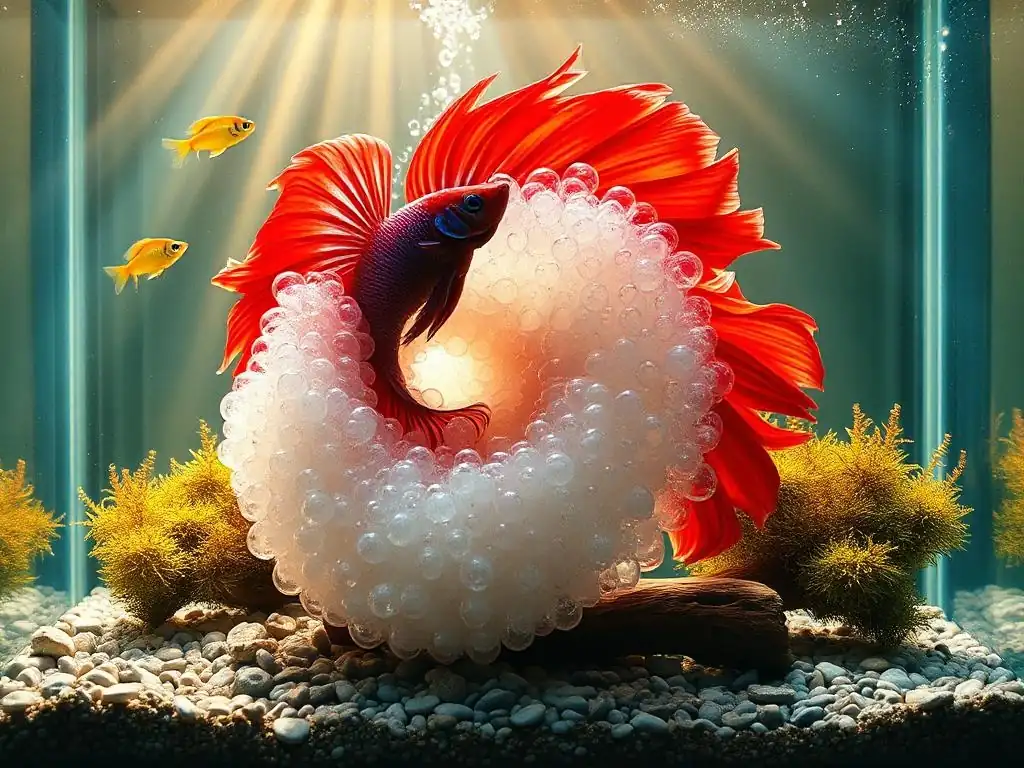
A bubble nest is a floating cluster of bubbles created by a male Betta fish, primarily for reproductive purposes. The male betta meticulously constructs this nest by taking gulps of air from the water surface, coating the air with a special mucus from his mouth, and then releasing these sticky bubbles to form a raft-like structure. In the wild, and in controlled breeding environments, this nest serves as the crucial location where the female will deposit her eggs after spawning, and where the male will diligently collect and secure them.
Once the eggs are laid and fertilized, the male Betta carefully places each tiny egg, often numbering in the hundreds (a typical spawn can range from 100 to 500 eggs), into the protective confines of the bubble nest. He then guards these eggs fiercely, constantly adjusting and repairing the nest, and even fanning the eggs to ensure proper oxygenation. This dedicated parental care continues until the fry hatch, typically within 24 to 48 hours, and for a few days afterward until they are free-swimming.
Betta Fish Bubble Nests: More Than Just Reproduction
While the primary function of a bubble nest is for breeding, male Bettas build bubble nests even when no female is present in the aquarium. This seemingly solitary act is a strong indicator of a comfortable and healthy environment, signaling that the fish feels secure enough to engage in its natural, instinctual behaviors. It suggests that the water parameters are stable, the temperature is optimal, and the Betta perceives its surroundings as safe for potential offspring.
For many aquarists, observing their Bettas build bubble nests is a rewarding sign that they are providing excellent care. It demonstrates the fish's vitality and contentment, much like a cat purring or a dog wagging its tail. Therefore, a lone male Betta constructing a robust bubble nest is less about an immediate desire for a mate and more about expressing its inherent biological programming within a suitable habitat.
Betta Fish Nesting Behavior: Instinct vs. Environment
The Role of Instinct in Bubble Nest Construction
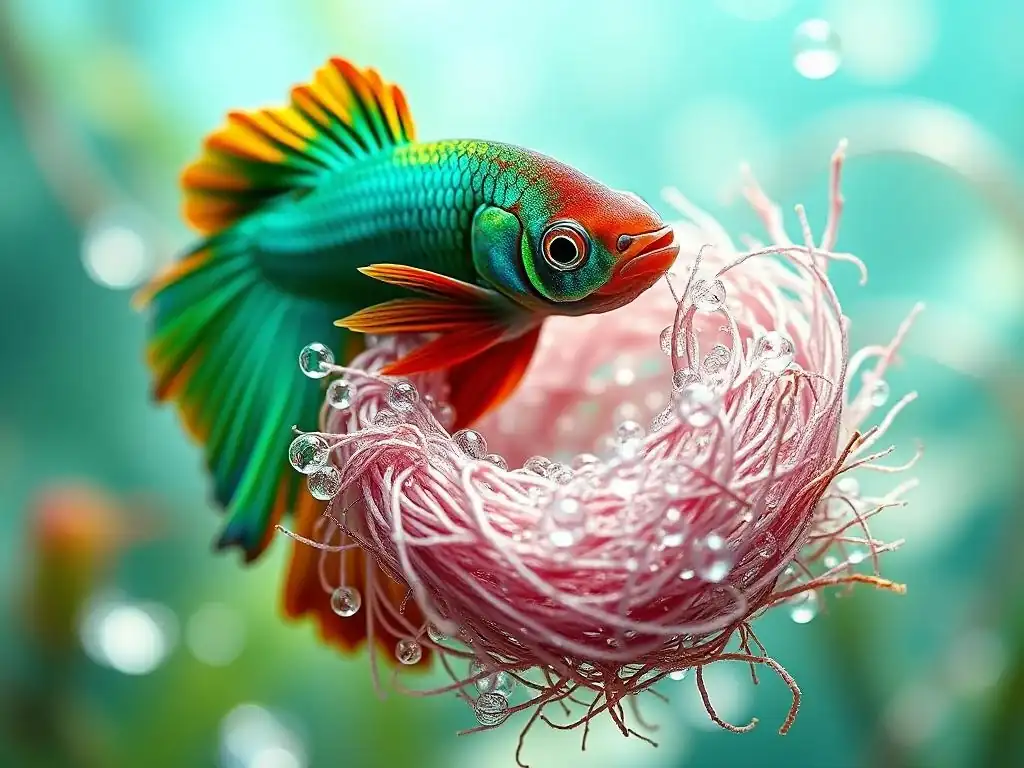
The drive for Bettas to build bubble nests is deeply ingrained in their genetic makeup, a powerful instinct honed over millennia in their natural habitats. Originating from the shallow, often stagnant waters of Southeast Asia, such as rice paddies, ditches, and floodplains, Bettas evolved to use the calm surface as a breeding ground.
The male's labyrinth organ, which allows him to breathe atmospheric air, is perfectly adapted for gathering the air bubbles needed for nest construction. This innate programming means that even in the absence of external stimuli like a female, a healthy male Betta will often revert to this fundamental behavior.
This powerful instinct highlights the species' evolutionary success. Building a bubble nest ensures that delicate eggs and fry are kept at the oxygen-rich surface, away from predators and decaying matter that might settle on the substrate below. It's a testament to the species' adaptability, allowing them to thrive in environments with fluctuating water levels and limited oxygen, making the act of Bettas building bubble nests a vital part of their survival strategy.
Environmental Factors Influencing Betta Nest Building
While instinct is the primary driver, environmental conditions play a significant role in encouraging or inhibiting a Betta's nesting activity. A calm water surface is paramount, as strong currents or excessive agitation from filters can easily disrupt and destroy a newly formed or existing bubble nest. Aquarists often observe more frequent and larger nests in tanks with gentle filtration or baffled filter outputs that minimize surface disturbance.
Furthermore, the presence of floating plants or objects provides crucial anchor points for the nest, giving the Betta a sense of security and stability for his construction. Plants like Frogbit, Dwarf Water Lettuce, or even a simple plastic leaf can serve this purpose. Stable and appropriate water parameters, including a consistent temperature typically between 78-82°F (25.5-27.8°C) and a neutral to slightly acidic pH (around 6.5-7.5), also signal to the Betta that the environment is conducive to reproduction and the successful raising of fry, thereby encouraging the natural behavior of Bettas building bubble nests.
Why Your Male Betta is Building a Bubble Nest Without a Female
Solitary Betta Nesting: A Common Occurrence
It is entirely normal for a male Betta fish to build a bubble nest even when housed alone in an aquarium. This behavior is not an indication that your Betta is lonely or "needs" a female companion. Instead, it is a strong positive sign that your fish is healthy, comfortable, and thriving in its environment. The instinct to create a nursery for potential offspring is so deeply ingrained that it manifests regardless of whether a mate is present.
Think of it as a natural expression of well-being. A Betta that is stressed, ill, or housed in poor conditions is highly unlikely to expend the energy required for such an intricate task. Therefore, if you observe your solitary Bettas build bubble nests, take it as a compliment to your care, confirming that you are providing an optimal habitat that allows your fish to exhibit its full range of natural behaviors.
Are Bubble Nests a Sign of a Happy Betta?
Yes, in most cases, the presence of a bubble nest is an excellent indicator of a happy and healthy Betta fish. This behavior is energy-intensive and requires stable, favorable conditions to occur consistently. Several key factors contribute to a Betta's contentment and readiness to build a nest:
- Water Parameters: Pristine water quality is crucial. This means ammonia and nitrite levels should be undetectable (0 ppm), and nitrates kept low, ideally below 20 ppm. A consistent water temperature, typically around 78-82°F (25.5-27.8°C), mimics their natural tropical environment and signals ideal breeding conditions. Fluctuations or poor water quality will quickly deter nesting activity.
- Tank Size: While Bettas can survive in smaller tanks, a minimum of 5 gallons (approximately 19 liters) for a single Betta is highly recommended to provide ample swimming space and stable water parameters. Larger tanks, such as 10 gallons (38 liters) or more, offer even greater stability and enrichment, further encouraging natural behaviors like nest building.
- Enrichment: A well-enriched environment, complete with live or silk plants, hiding spots (like caves or driftwood), and gentle filtration, reduces stress and provides mental stimulation. These elements create a secure and engaging habitat where the Betta feels safe enough to focus on instinctual activities. A Betta that is regularly building bubble nests is likely experiencing low stress and high environmental satisfaction.
Factors That Encourage Bubble Nesting in Male Bettas
Water Quality and Temperature: Essential for Nest Building
Optimal water quality and a stable temperature are perhaps the most critical environmental factors influencing a male Betta's propensity to build a bubble nest. Bettas are highly sensitive to water conditions, and pristine water with undetectable levels of ammonia and nitrite, and low nitrates (ideally under 20 ppm), signals a healthy and safe environment for potential offspring. Regular partial water changes, typically 25% weekly for a 5-gallon tank, are vital to maintain these conditions.
Equally important is a consistent water temperature, ideally maintained between 78-82°F (25.5-27.8°C). This temperature range is not only comfortable for the Betta but also mimics the warmer, stable conditions found in their natural breeding grounds in Southeast Asia. Fluctuating temperatures or water that is too cool can stress the fish, diverting energy away from behaviors like bubble nest construction.
Providing Suitable Hiding Places and Surface Cover
The presence of appropriate surface cover and hiding places significantly encourages Bettas build bubble nests. In their natural habitat, Bettas often construct their nests under broad leaves or among dense floating vegetation, which provides both structural support and a sense of security from predators. Replicating this in the aquarium can be achieved using various floating plants like Frogbit, Dwarf Water Lettuce, or even a simple Indian Almond Leaf floating on the surface.
These elements not only provide anchorage for the delicate bubble structure but also create a calm, shaded area that the male Betta perceives as safe for raising fry. A tank with a calm water surface, free from strong currents or excessive agitation from filters, further supports the integrity of the nest and encourages the male to invest his energy in building and maintaining it.
The Impact of Diet on Betta Breeding Behaviors
A high-quality, varied diet plays a crucial role in providing the energy and nutrients necessary for a male Betta to engage in complex behaviors such as bubble nest building. Bettas are carnivores, and their diet should reflect this, consisting of protein-rich foods. Feeding a balanced diet of high-quality Betta pellets, supplemented with frozen or live foods like bloodworms, brine shrimp, and daphnia, ensures your Betta receives all essential vitamins and minerals.
When a Betta is well-fed and healthy, it has the metabolic resources to perform instinctual actions like nest construction. A malnourished or underfed Betta will prioritize basic survival functions over breeding behaviors. Therefore, a robust feeding regimen not only contributes to the fish's overall health and vibrant coloration but also directly supports its natural inclination to Bettas build bubble nests.
Can Female Bettas Build Bubble Nests?
Rare Instances of Female Betta Nesting
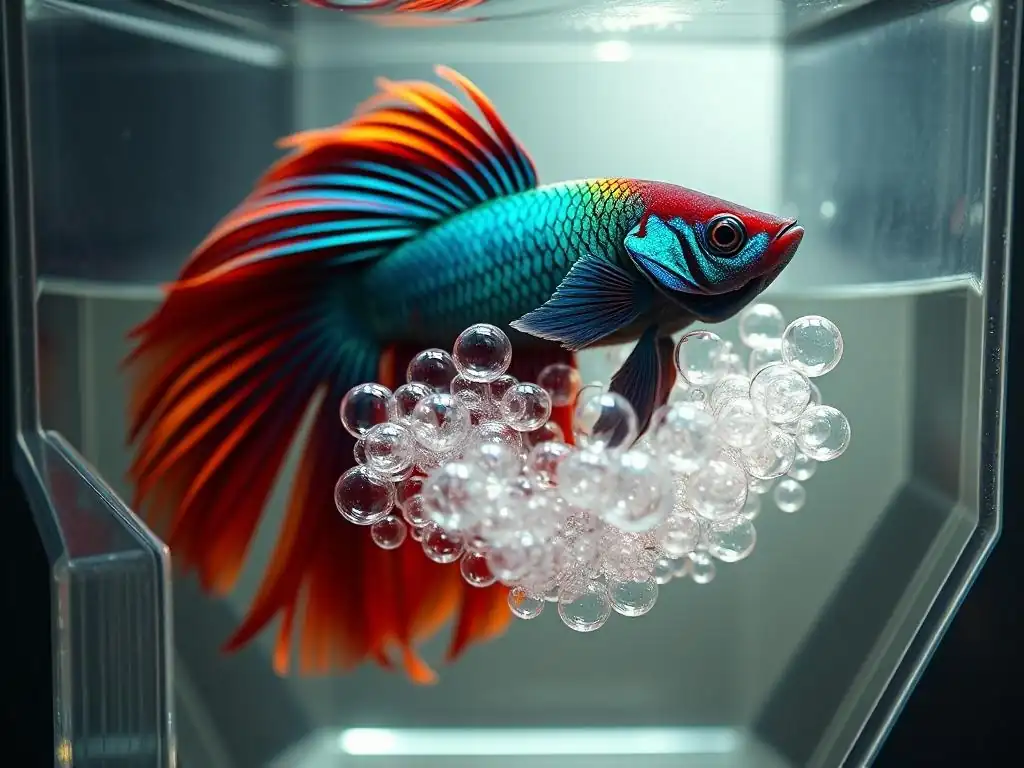
While bubble nest construction is overwhelmingly a male Betta behavior, there have been rare, anecdotal instances reported by aquarists where female Bettas appear to build small, rudimentary bubble nests. These occurrences are highly unusual and are generally not indicative of typical female Betta behavior. When they do happen, they might be attributed to hormonal imbalances, extreme comfort in the environment, or sometimes even mimicking male behavior if a female is housed alone and exposed to conditions that would otherwise trigger male nesting.
It's important to emphasize that these isolated cases are exceptions rather than the rule. The female's primary role in breeding involves developing and releasing eggs, not constructing the elaborate nest. Therefore, if you observe your Bettas build bubble nests, it is almost certainly your male.
Understanding Female Betta Behavior in the Aquarium
Female Bettas typically exhibit different behaviors when they are ready to breed. Instead of building bubble nests, they often develop prominent vertical stripes on their bodies, known as "breeding bars," which signal their receptiveness to a male. Their oviduct, a small white tube, may also become visible as they become gravid with eggs.
In a breeding setup, the female's role is to inspect the male's nest and, if satisfied, engage in the spawning embrace. She will then release her eggs, which the male will fertilize and collect for placement in the bubble nest. While female Bettas are intelligent and curious fish, exploring their environment and interacting with their surroundings, the complex, mucus-infused bubble nest construction remains a distinguishing characteristic of the male of the species.
Interpreting Your Betta's Bubble Nest: What Does it Mean?
The Size and Structure of the Bubble Nest: [Discuss factors like age, health, and genetics]
The appearance of a Betta's bubble nest can offer subtle clues about the fish's condition and environment, though it's not an exact science. Generally, a large, dense, and well-structured bubble nest indicates a healthy, energetic, and comfortable male Betta. Such a nest suggests the fish feels secure and ready to potentially breed.
- Age: Younger, sexually mature Bettas (typically 4-6 months old) might start with smaller, less organized nests, gradually building larger and more robust ones as they mature. Very old Bettas might build less frequently or smaller nests due to declining energy.
- Health: A Betta in peak health, receiving optimal nutrition and living in pristine water conditions, will have the vitality to construct an impressive nest. Conversely, a sick, stressed, or malnourished Betta is unlikely to build a nest at all, or if it does, it will be sparse and weak.
- Genetics: Like any trait, the propensity and skill for bubble nest building can vary genetically. Some Betta strains or individual fish are simply more prolific or adept at constructing nests than others, regardless of their environment. Observing your Bettas build bubble nests consistently points to their inherent genetic predisposition.
Is Ignoring the Bubble Nest a Cause for Concern?
No, ignoring the bubble nest is generally not a cause for concern. In fact, it is often the best approach. The bubble nest is a natural, instinctual behavior, and its presence indicates a healthy, content Betta. There's no need to remove it unless it's interfering with essential tank maintenance, such as performing a water change. Even then, try to be as gentle as possible, perhaps scooping out only the necessary portion or allowing it to dissipate naturally.
Constantly disrupting or removing the nest can be stressful for the male Betta, as he expends significant energy and effort in its construction. If the nest is destroyed too frequently, he might become discouraged and cease building them altogether. Therefore, allowing the nest to remain undisturbed, unless absolutely necessary, supports your Betta's natural instincts and overall well-being.
How to Support Your Betta's Natural Nesting Behaviors
Maintaining a Healthy Aquarium Environment
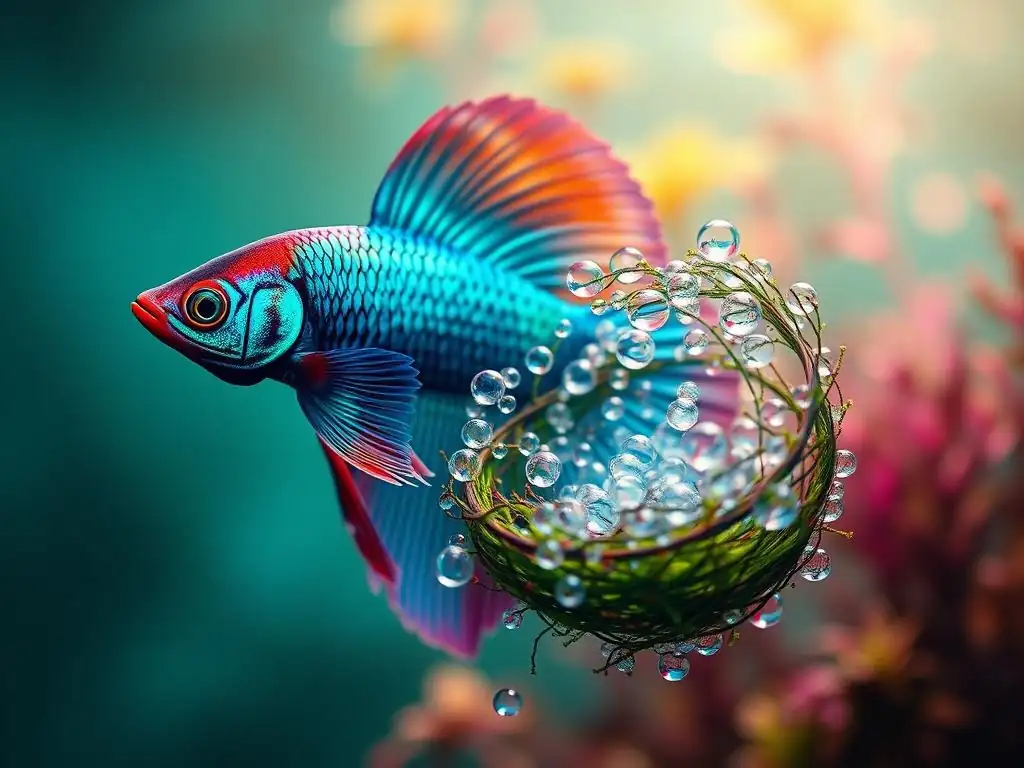
Supporting your Betta's natural nesting behaviors begins with maintaining an impeccably healthy aquarium environment. Consistent water parameters are paramount: ammonia and nitrite levels should always be at 0 ppm, and nitrates kept below 20 ppm through regular partial water changes. For a single Betta in a 5-gallon tank, a 25% water change weekly is a good benchmark. The water temperature should be stable, ideally between 78-82°F (25.5-27.8°C), as this range encourages breeding readiness.
Furthermore, ensure your filtration system provides gentle water movement, especially at the surface. Strong currents can easily break apart delicate bubble nests, discouraging the male from building them. Using a sponge filter, a baffled hang-on-back filter, or adjusting the filter output can help maintain a calm surface, providing the ideal conditions for Bettas build bubble nests.
Providing the Right Tank Mates (or No Tank Mates)
For optimal nesting behavior, the best "tank mate" for a male Betta is often no tank mate at all. Male Bettas are famously solitary and territorial, and the presence of other fish, particularly those that are fin-nippers or overly active, can cause significant stress. This stress diverts the Betta's energy away from instinctual behaviors like nest building and towards vigilance and defense.
If you choose to keep tank mates, select peaceful, bottom-dwelling species that won't compete for surface space or harass your Betta. Examples include snails (like Nerite or Mystery snails) or small, peaceful schooling fish like Otocinclus catfish in larger tanks (10 gallons or more). However, for consistent observation of Bettas build bubble nests, a dedicated single-species tank is often the most effective setup.
Avoiding Over-Maintenance of the Aquarium Surface
One of the most common mistakes aquarists make when trying to encourage bubble nesting is over-maintaining the aquarium surface. While cleanliness is crucial, constantly skimming the surface for biofilm or performing aggressive water changes that disturb the entire water column can destroy developing or existing bubble nests. This can frustrate the male Betta, who expends considerable energy building these structures.
Instead, allow a thin film of biofilm to form naturally on the surface, as this can actually provide additional stability for the bubbles. When performing water changes, try to pour the new water in gently, perhaps against the glass or onto a decoration, to minimize surface agitation. If you have floating plants, ensure they are not too densely packed, allowing some open areas for the Betta to construct his nest.
Troubleshooting: When Your Betta Isn't Building a Bubble Nest
Potential Reasons for Lack of Nesting Activity
If your male Betta isn't building bubble nests, despite appearing otherwise healthy, several factors could be at play. The most common reason is suboptimal water quality; check your ammonia, nitrite, and nitrate levels immediately. High levels of toxins or inconsistent temperatures (below 78°F or 25.5°C) can stress the fish, suppressing nesting behavior. Lack of suitable surface cover, such as floating plants or leaves, might also deter nest construction, as the Betta lacks a secure anchor point.
Other factors include excessive surface agitation from strong filters or air stones, which constantly break apart any attempts at a nest. Stress from aggressive tank mates, an overly bright environment without sufficient hiding spots, or frequent disturbances can also inhibit this behavior. Finally, some Bettas, particularly very young or very old individuals, or those with certain genetic predispositions, may simply be less inclined to build nests, even in ideal conditions.
When to Consult a Veterinarian or Experienced Aquarist
While the absence of a bubble nest isn't always a direct sign of illness, it can be a red flag if combined with other concerning symptoms. If your Betta is not building nests and also exhibits signs like lethargy, clamped fins, loss of appetite, dull coloration, fin rot, or difficulty swimming, it's crucial to consult an experienced aquarist or an aquatic veterinarian. These combined symptoms suggest an underlying health issue that needs immediate attention.
Similarly, if you've meticulously checked and optimized all environmental parameters – water quality, temperature, tank size, enrichment, and diet – and your Betta still shows no interest in building nests and appears generally unwell, professional advice is warranted. They can help diagnose potential diseases, parasites, or internal issues that might be preventing your Betta from engaging in its natural behaviors.
Conclusion: Bubble Nests and Betta Well-being in the Aquarium
Observing Bettas build bubble nests is a fascinating and typically positive indicator for any aquarist. While primarily serving a reproductive purpose in the wild, the act of constructing these delicate aerial nurseries in an aquarium, even without a female present, speaks volumes about a male Betta's health, comfort, and contentment within its environment. It's a clear signal that the water parameters are stable, the temperature is ideal, and the fish feels secure enough to express its innate instincts.
Understanding the factors that encourage this behavior—such as pristine water quality, consistent temperatures, appropriate tank size, and ample surface cover—empowers aquarists to create an optimal habitat. By providing these conditions and avoiding unnecessary disturbances, you foster a thriving environment where your Betta can exhibit its full range of natural behaviors, including the mesmerizing act of bubble nest building, confirming its overall well-being in your care.
Frequently Asked Questions
Why do bettas build bubble nests even when there isn't a female around?
Bettas build bubble nests due to instinctive behavior. It's a natural part of their reproductive cycle, even in the absence of a mate. This behavior is triggered by environmental factors and hormonal influences.
What environmental factors might encourage a betta to build a bubble nest?
Ideal water conditions, such as warm temperatures and calm water surfaces, are key. Also, the presence of floating plants or decorations can provide a stable base for nest construction.
Does a betta building a bubble nest mean it is healthy and happy?
Not necessarily, but it's often a positive sign. While nest building can indicate a healthy and sexually mature male, it's only one indicator. Overall water quality and behavior are more important.
How long does it take a betta to build a bubble nest?
The time varies greatly depending on the individual fish and the conditions. Some bettas can create a small nest in a few hours, while others may take several days or even weeks to build a more elaborate one.
Should I remove a betta's bubble nest?
It's generally best to leave the bubble nest alone unless it's interfering with the filter or significantly impacting water quality. Removing it can stress the betta, as it represents a significant investment of energy and instinct.
Final Reflection: The Unseen Language of Bettas
The exploration of why bettas build bubble nests, even without a mate, reveals a fascinating glimpse into the complex inner world of these captivating creatures. It's a reminder that even seemingly solitary actions can be deeply rooted in instinct and driven by an inherent desire to create and nurture, a drive that resonates far beyond the confines of a fish tank.
This behavior, seemingly paradoxical, underscores the profound influence of instinctual programming on all living beings. It challenges us to look beyond surface appearances and appreciate the intricate motivations that shape behavior, even when those motivations aren't immediately apparent. The only true wisdom is in knowing you know nothing.
- Socrates. This quote reminds us that there's always more to learn and understand, especially when it comes to the natural world and the creatures we share it with.
As you observe your own betta, consider the deeper implications of its bubble-nesting behavior. What unseen drives motivate its actions? What can we learn from this inherent impulse to create and nurture, even in the absence of a partner? Let this understanding inspire you to look beyond the surface in all aspects of your life, appreciating the complexity and beauty that lies beneath.
Unveil the Mysteries of Your Betta's Bubbles!
Thank you for exploring the fascinating world of betta bubble nests with us! We hope this article has shed some light on this intriguing behavior and deepened your appreciation for these captivating fish. Ready to take your betta knowledge to the next level?
Here are a few things you can do next:
- Observe: Dedicate some time to closely watch your betta's behavior over the next few days. Note any changes in nest-building frequency or size, and try to identify any triggers.
- Share: Spread the knowledge and post a picture of your betta's bubble nest in an aquarium community. Help other fish enthusiasts learn about these quirky habits!
- Discover: Consider adding a floating plant to your betta's aquarium to provide him with a more secure place to build his next nest.
What unique quirks have you observed in your own betta's bubble-nesting behavior?