
Stocking Density for Anthias: How Many is Too Many for Your Tank Size?

Welcome to Aquarium Mastery!
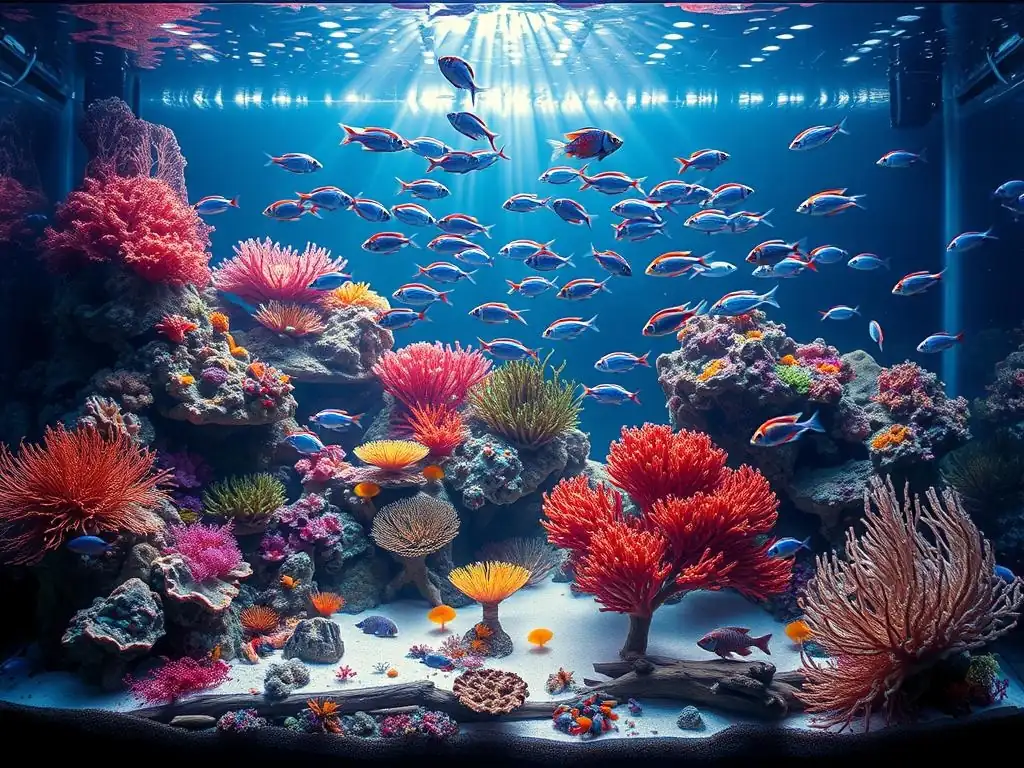
Ever wondered if you're really giving your Anthias the space they need to thrive? Dive into our comprehensive Anthias stocking density guide and unlock the secrets to a harmonious reef environment. Discover the ideal number for your tank size and avoid the common pitfalls that can stress these beautiful fish. Ready to create a thriving Anthias community? Let's explore!
- Anthias Stocking Density Guide: How Many is Too Many for Your Tank Size?
- Understanding Anthias Schooling Behavior and Tank Needs
- Calculating Anthias Stocking Density: A Practical Guide
- Anthias Compatibility: Choosing the Right Tank Mates
- Common Mistakes in Anthias Stocking and How to Avoid Them
- Best Practices for Maintaining a Healthy Anthias School
- Specific Anthias Species and Their Stocking Recommendations
- Advanced Anthias Keeping: Beyond Stocking Density
- Case Study: Successful Anthias Stocking in a 220 Gallon Reef Aquarium
- Conclusion: Mastering Anthias Stocking for a Thriving Reef Tank
-
Frequently Asked Questions
- How many Anthias can I keep in a standard 75-gallon reef tank?
- What are the most crucial factors in determining the appropriate Anthias stocking density?
- What happens if I overstock my Anthias tank?
- Are there any Anthias species that are more suitable for smaller tanks compared to others?
- What are the best practices for introducing new Anthias to an established aquarium to minimize aggression?
- Final Reflection: Finding Harmony in the Reef
- Unleash the Anthias School: Plan Your Perfect Stock Today!
Anthias Stocking Density Guide: How Many is Too Many for Your Tank Size?
Understanding Anthias Schooling Behavior and Tank Needs
Anthias are renowned for their vibrant colors and active schooling behavior, a crucial aspect of their survival in the wild. In their natural reef habitats, these fish form large aggregations, often numbering in the tens or even hundreds of individuals. This schooling instinct serves multiple purposes: it offers protection from predators through sheer numbers and confuses attackers, and it facilitates efficient foraging for zooplankton in the water column. Within these schools, a distinct social hierarchy typically exists, with one dominant male overseeing a harem of females.
Maintaining a proper schooling structure in an aquarium is paramount for the health and well-being of Anthias. When kept in insufficient numbers, typically fewer than five to seven individuals, the natural social dynamics break down. A single male, without enough females to diffuse his attention, may become overly aggressive towards the few females present, leading to constant stress, injury, or even death of the subdominant individuals.
Conversely, a group with too many males in a confined space can lead to intense territorial disputes. A well-sized school, following an appropriate anthias stocking density guide, allows aggression to be spread out, significantly reducing stress on individual fish and promoting more natural behaviors.
Anthias Natural Habitat and How It Influences Aquarium Care
Anthias species originate from the Indo-Pacific region, inhabiting the outer reef slopes, drop-offs, and deep lagoon areas. They are typically found at depths ranging from 10 to 60 meters (approximately 30 to 200 feet), where they constantly hover in the water column, feeding on microscopic zooplankton carried by currents. This environment is characterized by strong, consistent water flow, abundant hiding places within the reef structure, and a continuous supply of food.
Understanding their natural habitat directly informs their care in a captive environment. Their active, open-water swimming nature necessitates aquariums with ample horizontal swimming space, not just volume. Strong water flow, mimicking natural currents, is crucial for their well-being and helps them maintain their constant activity.
Furthermore, their continuous feeding habit on plankton means they require frequent, small meals throughout the day in the aquarium, unlike many other fish that can thrive on one or two larger feedings. Failing to provide these environmental cues can lead to stressed, lethargic, and ultimately unhealthy fish, regardless of the anthias stocking density guide followed.
Key Factors Affecting Anthias Health in Captivity
The successful keeping of Anthias in a home aquarium hinges on several critical factors, primarily revolving around water quality, diet, and the overall tank environment. Pristine and stable water parameters are non-negotiable; Anthias are highly sensitive to fluctuations in temperature, salinity, and pH, as well as elevated levels of nitrates and phosphates. Consistent parameters, such as a temperature range of 74-78°F (23-26°C) and salinity between 1.023-1.026 specific gravity, are vital for their metabolic functions and immune system.
Beyond water quality, a high-quality, varied, and frequent diet is essential. Their natural diet of zooplankton translates to a need for multiple daily feedings (3-5 times) of enriched frozen foods like mysis shrimp, brine shrimp, copepods, and high-quality pellets. The tank environment itself must provide both open swimming space and ample rockwork with hiding spots and visual barriers.
Stress, often induced by improper anthias stocking density guide application, inadequate feeding, or incompatible tank mates, significantly weakens their immune system, making them highly susceptible to common marine diseases like Ich and bacterial infections. Therefore, a holistic approach to their care is necessary for their long-term health and vibrant display.
Calculating Anthias Stocking Density: A Practical Guide
Determining Your Ideal Anthias School Size
When planning an Anthias school, the concept of "ideal" size is relative to your aquarium's capacity and the specific species you intend to keep. For most common Pseudanthias species, a minimum school of 5-7 individuals is recommended to establish a stable social hierarchy and allow for the diffusion of aggression among multiple fish. A smaller group, especially a pair or trio, often results in the dominant male relentlessly harassing the less dominant individuals, leading to severe stress and potential fatalities.
For larger tanks, increasing the school size can enhance the natural schooling display and further reduce individual stress. A common male-to-female ratio for many Anthias species is one male for every 5-10 females. It's crucial to avoid introducing multiple males into tanks smaller than approximately 150-200 gallons, as this will almost certainly lead to fatal territorial disputes.
For instance, in a 120-gallon tank, a single male Lyretail Anthias with 6-8 females would be a more stable setup than attempting to house two males. Always consider the adult size of the species when determining the maximum number of individuals in your anthias stocking density guide.
Matching Anthias Species to Your Aquarium Volume: Gallons per Fish
A general rule of thumb for Anthias stocking density often suggests 5-10 gallons per adult fish, but this is a highly generalized guideline that needs significant refinement based on species and tank dimensions. Smaller, less active species like the Dispar Anthias (Pseudanthias dispar), which typically reach 3-4 inches, might comfortably fit within the 5-8 gallons per fish range in a well-established system with robust filtration. For example, a 75-gallon tank could potentially house a school of 8-10 Dispar Anthias.
Conversely, larger and more active species such as the Lyretail Anthias (Pseudanthias squamipinnis), which can grow up to 6 inches, demand significantly more space. For these, a more conservative estimate of 10-15 gallons per fish is appropriate. A 125-gallon tank, for instance, might adequately support a school of 8-10 Lyretail Anthias, provided it offers sufficient horizontal swimming room. It's critical to remember that these are minimum recommendations; providing more volume per fish will always contribute to a healthier and less stressed environment, aligning with optimal anthias stocking density guide principles.
Considering Tank Dimensions: Length, Width, and Height
While total water volume is a primary consideration for anthias stocking density guide, the physical dimensions of the aquarium are equally, if not more, important, especially for active, open-water swimmers like Anthias. These fish require ample horizontal swimming space to exhibit their natural schooling behavior.
A tank that is long and wide provides significantly more usable swimming area than a tall, narrow tank of the same volume. For example, a 100-gallon tank measuring 48"L x 18"W x 24"H offers more suitable swimming lanes than a 100-gallon cube tank (e.g., 30"L x 30"W x 30"H), even though both hold the same volume.
Minimum length recommendations for a small school of Anthias (5-7 individuals) typically start at 48 inches (120 cm), with 72 inches (180 cm) or more being ideal for larger schools or species that reach 5-6 inches. The width of the tank is also crucial, as it allows for proper aquascaping that can create visual barriers and hiding spots while still leaving open swimming channels.
A tank with a width of at least 20-24 inches (50-60 cm) is generally preferred. While height contributes to overall volume, it's less critical for Anthias than horizontal dimensions, as they primarily occupy the middle to upper water column.
The Importance of Aquascaping for Anthias: Creating Territories
Effective aquascaping is a vital, often overlooked, component of successful anthias stocking density guide implementation. While Anthias are open-water swimmers, they still require intricate live rock structures that provide essential hiding spots, caves, and overhangs. These retreats are crucial for subdominant individuals seeking refuge from a dominant male, for newly introduced fish to acclimate, or for all fish to retreat during perceived threats or rest periods.
Furthermore, strategic placement of live rock can create visual barriers that help diffuse aggression within the school. By breaking up lines of sight, you can prevent a dominant fish from constantly seeing and harassing a subordinate. However, it's equally important to ensure that the rockwork doesn't consume too much of the open swimming space.
A balanced aquascape should feature large, open areas in the front and middle of the tank for schooling, complemented by complex structures along the back and sides. This thoughtful design ensures that while Anthias have places to hide, they also have plenty of room to exhibit their natural, active swimming behaviors.
Anthias Compatibility: Choosing the Right Tank Mates
Selecting Peaceful Tank Mates for Anthias: Avoiding Aggression
When selecting tank mates for Anthias, the primary consideration should be their peaceful nature and similar temperament. Anthias are generally docile fish, though males can be territorial with other males of their own species or similar-looking fish. Suitable tank mates include a wide range of small to medium-sized, non-aggressive reef fish. Good choices often include peaceful wrasses (e.g., fairy wrasses, flasher wrasses), small gobies, blennies, certain tangs (provided the tank is large enough for the tangs themselves), and other non-predatory, community-oriented species.
It is crucial to avoid any fish that are known for aggression, territoriality, or predatory behavior. Large predatory fish such as groupers, lionfish, or large aggressive angelfish will view Anthias as potential prey or competitors for food. Similarly, highly territorial damselfish or certain species of clownfish can stress Anthias, especially in smaller aquariums, by constantly chasing or harassing them. The goal is to create a harmonious community where all inhabitants can thrive without undue stress, which is a key element of any anthias stocking density guide.
Avoiding Overcrowding: Balancing Anthias with Other Fish Species
The challenge of anthias stocking density guide extends beyond just the Anthias themselves; it encompasses the entire bioload of the aquarium. Every fish added contributes to the overall waste production and demand on the filtration system. If you plan to keep other fish species alongside your Anthias school, you must adjust your Anthias numbers downwards to prevent overcrowding. For example, a 150-gallon tank that could comfortably house 15-20 Lyretail Anthias on its own might only be able to safely accommodate 10-12 Anthias if you also intend to keep a few tangs, wrasses, and gobies.
Overcrowding leads to a cascade of problems, including rapid deterioration of water quality, increased aggression among all tank inhabitants, and heightened susceptibility to disease due to chronic stress. To counteract the increased bioload from a mixed community, it is imperative to invest in robust filtration, including an oversized protein skimmer, potentially a refugium, and regular, consistent water changes. These measures help maintain pristine water conditions, which are essential for the health of a densely populated reef tank and crucial for the success of your anthias stocking density guide.
Coral Compatibility with Anthias: Reef Safe Considerations
One of the significant advantages of keeping Anthias in a reef aquarium is their excellent compatibility with corals. Anthias are primarily planktivores, meaning their natural diet consists of zooplankton found in the water column. This dietary preference means they generally show no interest in consuming or nipping at corals, making them widely regarded as "reef safe." They will typically ignore both stony corals (SPS and LPS) and soft corals, focusing solely on foraging for food particles suspended in the water.
While Anthias are overwhelmingly reef safe, rare anecdotal instances of individual fish occasionally nipping at very fleshy LPS corals have been reported, though this is highly uncommon and often attributed to severe underfeeding or extreme stress. To minimize any such rare occurrences, ensure your Anthias are fed frequently and adequately with a varied diet. By meeting their nutritional needs, you reduce any potential motivation for them to explore alternative food sources. Their active swimming and vibrant colors make them a captivating addition to any mixed reef aquarium, enhancing the aesthetic appeal without posing a threat to your coral inhabitants.
Common Mistakes in Anthias Stocking and How to Avoid Them
Overstocking Symptoms: Recognizing Signs of Stress in Anthias
Recognizing the signs of overstocking in Anthias is crucial for preventing long-term health issues and fatalities. One of the most immediate indicators is a noticeable change in behavior: fish may exhibit clamped fins, rapid breathing, darting movements, or excessive hiding, even during feeding times. Their vibrant coloration might fade, becoming duller or more subdued. You might observe constant chasing or nipping, particularly from the dominant male towards other Anthias, often resulting in torn fins or visible body wounds.
Beyond individual fish behavior, the school itself might fail to form or maintain cohesion. Instead of gracefully swimming together, individuals may scatter, appear agitated, or constantly attempt to escape. Unexplained, sudden deaths of seemingly healthy fish, especially subdominant individuals, are often a grim symptom of chronic stress due to overcrowding. If you observe these symptoms, it's a clear signal that your anthias stocking density guide has been exceeded, and immediate action, such as reducing the bioload or improving environmental conditions, is necessary.
Poor Water Quality Due to Overcrowding: Nitrate Buildup
A direct consequence of overstocking is the rapid deterioration of water quality, primarily manifested through elevated nitrate levels. More fish in a confined space produce a greater amount of waste (ammonia and nitrite), which, even with efficient biological filtration, converts into nitrates. While nitrates are less toxic than ammonia or nitrite, chronically high levels (consistently above 20-40 ppm) are detrimental to sensitive marine fish like Anthias.
High nitrate concentrations lead to chronic stress, suppress the fish's immune system, and make them highly susceptible to opportunistic diseases like marine Ich, fin rot, and bacterial infections. They can also contribute to excessive nuisance algae growth in the aquarium. Even with a powerful protein skimmer and robust filtration, an excessively high bioload will inevitably overwhelm the system's capacity to process waste efficiently. Regular and frequent water quality testing for ammonia, nitrite, and especially nitrate is essential for any tank, but particularly for one following a high anthias stocking density guide.
Aggression Issues in Overcrowded Anthias Tanks
Aggression is an inherent part of the social hierarchy among Anthias, but it becomes a significant problem in overcrowded tanks. In a confined space with insufficient room for escape or visual barriers, the natural dominance displays can escalate into relentless bullying and fatal aggression. The dominant male, unable to adequately spread his attention across a large enough group of females, may fixate on one or two individuals, chasing them constantly until they are exhausted, injured, or simply die from chronic stress.
Similarly, if multiple males are inadvertently introduced into a tank that is too small (e.g., less than 150-200 gallons), territorial disputes will become severe. These males, driven by instinct to establish dominance, will fight until one or more are eliminated. The lack of space prevents the submissive fish from retreating or establishing their own small territories. Such aggression not only leads to physical harm but also creates a highly stressful environment for all inhabitants, making it impossible for the Anthias school to thrive, fundamentally undermining the principles of a good anthias stocking density guide.
Best Practices for Maintaining a Healthy Anthias School
Regular Water Changes: Minimizing Nitrate Levels
Regular partial water changes are arguably the most critical maintenance practice for maintaining a healthy Anthias school, especially when adhering to a higher anthias stocking density guide. Even with robust filtration, organic waste accumulates, and essential trace elements are depleted over time. Performing weekly or bi-weekly water changes, typically ranging from 10% to 20% of the tank's total volume, helps export nitrates, phosphates, and other undesirable dissolved organic compounds while replenishing vital minerals and trace elements crucial for coral health and fish immunity.
The frequency and volume of water changes should be directly proportional to the tank's bioload. A heavily stocked Anthias tank might necessitate a 20% weekly water change, whereas a more lightly stocked system could potentially thrive with a 10-15% bi-weekly schedule. Using high-quality salt mix and RO/DI water is paramount to prevent the introduction of impurities. Consistent water changes are a proactive measure that significantly reduces stress on fish, enhances their coloration, and minimizes the risk of disease outbreaks, contributing directly to the success of your anthias stocking density guide.
Providing a Varied Diet: Meeting Anthias Nutritional Needs
Anthias are constant foragers in their natural habitat, continuously feeding on zooplankton in the water column. Replicating this feeding behavior in an aquarium is essential for their long-term health and vibrancy. They possess a high metabolism and require frequent, small feedings throughout the day – ideally 3 to 5 times. A varied diet is equally important to ensure they receive all necessary nutrients and to prevent them from becoming finicky eaters.
Optimal foods include high-quality frozen options such as mysis shrimp, enriched brine shrimp, copepods (e.g., Cyclop-Eeze), and finely chopped seafood. Supplementing with high-quality marine pellets or flakes designed for omnivores can also be beneficial. Ensuring the food is appropriately sized for their mouths is crucial. For instance, Lyretail Anthias can handle larger mysis, while Dispar Anthias might prefer smaller copepods. A well-fed Anthias school, receiving a diverse diet, will exhibit more vibrant colors, greater activity, and increased resilience against disease, reinforcing the effectiveness of your anthias stocking density guide.
Optimal Water Parameters for Anthias: Temperature, Salinity, and pH
Maintaining stable and optimal water parameters is fundamental to the health and longevity of Anthias. These fish are sensitive to fluctuations, and consistency is often more important than hitting exact numbers, as long as they are within acceptable ranges. The ideal temperature range for most Anthias species is between 74-78°F (23-26°C). Stable salinity is crucial, typically maintained at a specific gravity of 1.023-1.026 (or 33-35 ppt). The pH should be kept within the range of 8.1-8.4, which is typical for a healthy marine reef environment.
Regular testing with reliable aquarium test kits is essential to monitor these parameters. Sudden swings in temperature or salinity can cause significant stress, weakening the fish's immune system and making them vulnerable to disease. Consistent pH levels are important for overall biological stability. Furthermore, for a reef tank housing corals, maintaining stable alkalinity (8-12 dKH), calcium (400-450 ppm), and magnesium (1200-1350 ppm) is also beneficial for the fish, as these parameters contribute to the overall stability of the aquatic environment. Adherence to these parameters is a cornerstone of any successful anthias stocking density guide.
Specific Anthias Species and Their Stocking Recommendations
Lyretail Anthias (Pseudanthias squamipinnis) Stocking Guide
The Lyretail Anthias, also known as the Scalefin Anthias, is one of the most popular and readily available species. Males display striking orange and purple hues with an elongated lyre-shaped tail, while females are typically orange-yellow. They can grow to an adult size of approximately 6 inches (15 cm). Due to their active swimming nature and relatively larger size, they require substantial space. A minimum tank size of 90 gallons is recommended for a small school of 3-5 individuals, with 125 gallons or more being ideal for larger schools (6-10+).
When considering an anthias stocking density guide for Lyretails, a male-to-female ratio of 1:3-5 is generally advised. Introducing multiple males into tanks smaller than 180-200 gallons can lead to severe aggression. These fish are robust once acclimated but require pristine water quality and frequent feedings (3-5 times daily) of high-quality frozen foods like mysis shrimp. They are excellent schooling fish that will bring dynamic movement and vibrant color to a large reef aquarium.
Dispar Anthias (Pseudanthias dispar) Stocking Guide
The Dispar Anthias, often called the Peach Anthias, is a smaller and arguably more active schooling species, making it an excellent choice for a wider range of reef tanks. They typically reach an adult size of 3-4 inches (7-10 cm), with males displaying a prominent red patch on their dorsal fin and a more intense orange coloration. Their smaller size and highly social nature make them ideal for maintaining a larger school.
For a school of 5-7 Dispar Anthias, a minimum tank size of 75 gallons is often sufficient, with 100 gallons or more allowing for a more impressive and stable school of 10-15 individuals. They are generally peaceful and exhibit strong schooling behavior, especially when kept in appropriate numbers. A male-to-female ratio of 1:4-6 works well. Dispar Anthias are less prone to inter-species aggression than some larger Anthias and readily accept a varied diet of small frozen foods, making them a fantastic choice for an anthias stocking density guide aimed at active, colorful schools.
Bartlett's Anthias (Pseudanthias bartlettorum) Stocking Guide
Bartlett's Anthias are highly sought after for their striking coloration, featuring a vibrant purple body that transitions to yellow on the rear half and fins. They grow to an adult size of approximately 3.5-4 inches (9-10 cm), similar to Dispar Anthias, and are equally active. While hardy once established, they can be more sensitive during initial acclimation and require stable, pristine water conditions.
A minimum tank size of 90 gallons is recommended for a school of 5-7 Bartlett's Anthias, with larger tanks (120 gallons+) being ideal for bigger groups (8-12 individuals) to ensure adequate swimming space and reduce potential stress. Like other Pseudanthias species, they thrive in a male-to-female harem structure, typically one male per 4-6 females.
They are generally peaceful community fish but can exhibit aggression towards their own kind if kept in insufficient numbers or in an undersized tank. Providing ample hiding spots within the rockwork, alongside open swimming areas, is crucial for their well-being and helps manage any potential aggression, adhering to a robust anthias stocking density guide.
Ignitus Anthias (Odontanthias ignitus) Stocking Guide
The Ignitus Anthias, also known as the Flame Anthias, is a deeper water species and less commonly seen in the hobby compared to the Pseudanthias genus. They are known for their brilliant red-orange coloration and can reach an adult size of 5-6 inches (12-15 cm). Due to their rarer nature and typically higher price point, they are often kept as single specimens or in pairs rather than large schools.
For a single Ignitus Anthias, a minimum tank size of 75-90 gallons is recommended to provide sufficient space. If attempting a pair or small group (3-4 individuals), a tank of 125 gallons or more is essential. Unlike Pseudanthias species, Odontanthias species are not as strongly schooling; they tend to be more solitary or form loose aggregates. They require excellent water quality, robust filtration, and frequent feedings of varied, high-quality frozen foods. This anthias stocking density guide for Ignitus Anthias emphasizes individual space and pristine conditions over large school numbers.
Advanced Anthias Keeping: Beyond Stocking Density
Implementing a Quarantine Protocol for New Anthias
A rigorous quarantine protocol is an indispensable practice for any serious marine aquarist, and it is especially critical when adding new Anthias to an established display tank. Anthias are often collected from the wild and can be prone to stress-induced parasitic infections, most notably marine Ich (Cryptocaryon irritans), and various bacterial issues. Introducing an infected fish directly into your main system can devastate your existing inhabitants. A dedicated quarantine tank (QT) of at least 20-30 gallons, equipped with basic filtration (sponge filter), a heater, and PVC pipes for hiding, is essential.
New Anthias should be housed in the QT for a minimum of 3-4 weeks. During this period, observe them closely for any signs of disease, such as white spots, rapid breathing, or abnormal swimming. Prophylactic treatment for common parasites, often using copper-based medications or hyposalinity, is highly recommended to ensure the fish is parasite-free before introduction. Ensure they are actively eating and appear robust before making the transfer. This preventative measure, while an additional step, saves countless headaches and potential losses in the long run, complementing any anthias stocking density guide.
Managing Aggression in Established Anthias Schools
Even with careful adherence to an anthias stocking density guide, aggression can sometimes manifest in established Anthias schools, particularly if the hierarchy is disrupted or if conditions change. The most effective strategy to manage aggression is to introduce all Anthias simultaneously, if possible, allowing them to establish their pecking order at once. Providing abundant hiding spots and visual barriers within the aquascape helps diffuse aggression by breaking lines of sight and offering subordinate individuals places to escape.
If aggression becomes persistent and severe, leading to injury or stress, several interventions can be considered. Temporarily removing the aggressor to a separate quarantine tank for a "time-out" (e.g., for a week) can sometimes reset the hierarchy upon reintroduction. In some cases, adding more females to the school (if tank size permits) can dilute the male's aggression across a larger group. However, if aggression remains uncontrollable and threatens the well-being of other fish, rehoming the excessively aggressive individual might be the only viable solution to maintain a harmonious display.
Breeding Anthias in Captivity: Considerations and Challenges
Breeding Anthias in captivity is a challenging but rewarding endeavor, primarily achieved by advanced aquarists. While some species, particularly Lyretail and Dispar Anthias, have been successfully bred, it requires a dedicated breeding setup, precise environmental control, and the ability to culture live foods for very small larvae. Anthias are protogynous hermaphrodites, meaning all individuals are born female, and the dominant female in a group will transition into a male as needed. This makes establishing a breeding pair or harem relatively straightforward.
Successful breeding involves creating ideal spawning conditions, which typically include pristine water quality, strong water flow, and a continuous supply of food. Spawning usually occurs at dusk, with eggs being pelagic (free-floating) and extremely small. Rearing the larvae is the most significant hurdle, as they require microscopic live foods such as rotifers and copepods for their initial development. This specialized aspect of Anthias keeping goes far beyond standard anthias stocking density guide principles, requiring significant investment in time, equipment, and expertise in aquaculture.
Case Study: Successful Anthias Stocking in a 220 Gallon Reef Aquarium
Tank Specifications and Aquascaping Details
A prime example of successful Anthias stocking can be seen in a 220-gallon (approximately 72"L x 24"W x 30"H) mixed reef aquarium. This robust system is equipped with a large 75-gallon sump housing a high-performance protein skimmer rated for 300+ gallons, a refugium with chaetomorpha algae, and dual return pumps providing ample flow. Water movement within the display is further enhanced by two powerful wavemakers, generating a total flow of approximately 25 times the tank volume per hour, mimicking strong reef currents.
The aquascaping in this tank utilizes over 200 pounds of live rock, meticulously arranged to create a dynamic underwater landscape. The layout incorporates multiple large caves, overhangs, and swim-throughs, offering abundant hiding spots and visual barriers. Critically, significant open swimming channels are maintained in the front and middle sections of the tank, allowing the Anthias schools to exhibit their natural schooling behavior unimpeded. This thoughtful design balances the need for shelter with the requirement for extensive open water, a key element in this anthias stocking density guide success story.
Anthias Species and School Size
In this 220-gallon reef aquarium, a diverse and thriving Anthias population has been successfully established, adhering closely to an optimal anthias stocking density guide. The primary Anthias inhabitants consist of two distinct schools:
- A school of 15 Lyretail Anthias ( Pseudanthias squamipinnis), comprising one dominant male and fourteen vibrant females.
- A school of 8 Dispar Anthias ( Pseudanthias dispar), with one male and seven females.
This specific stocking choice leverages the tank's large volume and horizontal dimensions to accommodate the active swimming needs of both species. The male-to-female ratios for each school are carefully maintained to minimize aggression and promote a stable social hierarchy. The presence of two different Anthias species further enhances the visual appeal and dynamic movement within the aquarium, demonstrating that careful planning allows for a diverse and thriving community.
Water Parameters and Maintenance Schedule
Maintaining pristine and stable water parameters is paramount for the long-term success of this heavily stocked Anthias tank. The owner diligently monitors and maintains the following conditions:
- Temperature: Consistently 76°F (24.4°C)
- Salinity: 1.025 specific gravity
- pH: 8.2-8.3
- Nitrates: Consistently maintained below 5 ppm
- Phosphates: Maintained below 0.03 ppm
- Alkalinity, Calcium, Magnesium: Kept within optimal reef-safe ranges (e.g., 8.5 dKH, 420 ppm Ca, 1300 ppm Mg)
The maintenance schedule is rigorous: a 25-gallon (approximately 11% of total volume) water change is performed weekly, using high-quality salt mix and RO/DI water. The protein skimmer collection cup is emptied and cleaned bi-weekly, and filter socks are changed every 3-4 days. The Anthias are fed 4 times daily with a varied diet of frozen mysis shrimp, enriched brine shrimp, and a high-quality marine pellet, ensuring their high metabolic needs are met. This disciplined approach to water quality and feeding is a cornerstone of this anthias stocking density guide success.
Long-Term Health and Success of the Anthias School
After more than two years since initial stocking, the Anthias schools in this 220-gallon reef aquarium continue to thrive remarkably. All individuals exhibit vibrant, natural coloration, active schooling behavior, and robust appetites. There have been no significant issues with aggression within or between the Anthias schools, a testament to the adequate space and proper male-to-female ratios. Health-wise, the fish have remained free of common marine diseases, indicating a strong immune system supported by pristine water quality and a nutrient-rich diet.
The growth rates of the Anthias have been excellent, with individuals reaching their full adult sizes. The overall vitality of the Anthias population contributes significantly to the dynamism and beauty of the entire reef display. This case study underscores that by carefully considering tank dimensions, species-specific needs, community bioload, and rigorous maintenance, it is entirely possible to achieve a highly successful and stable anthias stocking density guide that results in a flourishing and captivating Anthias school for many years.
Conclusion: Mastering Anthias Stocking for a Thriving Reef Tank
Mastering the anthias stocking density guide is paramount for anyone aspiring to keep these captivating fish in a thriving reef aquarium. It's a nuanced process that goes far beyond simply calculating gallons per fish. Successful Anthias keeping hinges on a deep understanding of their natural schooling behaviors, social hierarchies, and their inherent need for both open swimming space and secure hiding spots. Providing an environment that mimics their natural habitat, characterized by strong water flow, pristine water quality, and frequent, varied feedings, is non-negotiable for their long-term health and vibrant display.
The key takeaways for successful Anthias stocking include:
- Adequate Tank Size: Prioritize horizontal swimming space (length and width) over just sheer volume.
- Appropriate School Size: Maintain a minimum school of 5-7 individuals for most species, adhering to optimal male-to-female ratios (typically 1 male per 3-10 females) to diffuse aggression.
- Robust Filtration & Maintenance: Invest in oversized protein skimming, potentially a refugium, and commit to consistent, large partial water changes to manage the bioload.
- Pristine Water Parameters: Maintain stable temperature, salinity, and pH, and keep nitrates and phosphates at very low levels.
- Frequent, Varied Feeding: Meet their high metabolic needs with 3-5 small feedings daily of high-quality, diverse frozen foods.
- Strategic Aquascaping: Create a balance of open swimming lanes and intricate live rock structures for retreat and visual barriers.
- Careful Tank Mate Selection: Choose peaceful, non-aggressive species that won't compete excessively for food or space.
- Quarantine New Additions: Always quarantine new Anthias to prevent disease introduction.
By diligently applying these principles and continuously observing your fish for signs of stress or aggression, you can create a captivating and harmonious Anthias display that will be a testament to your mastery of the anthias stocking density guide. A well-stocked Anthias school is not just a collection of fish; it's a dynamic, living spectacle that brings unparalleled beauty and activity to any marine aquarium.
Frequently Asked Questions
How many Anthias can I keep in a standard 75-gallon reef tank?
The general rule of thumb is one Anthias per 10 gallons, but this is a simplification. A 75-gallon tank can comfortably house a small group of 5-7 Anthias, provided filtration and water parameters are meticulously maintained and they are of the same or compatible species.
What are the most crucial factors in determining the appropriate Anthias stocking density?
Besides tank size, water quality is paramount. Maintaining pristine conditions with a robust filtration system is essential. Also, consider the species of Anthias, as some are more aggressive or need larger territories than others.
What happens if I overstock my Anthias tank?
Overstocking leads to a multitude of problems including increased bioload, poor water quality, and heightened aggression among the fish. This can result in stress, disease outbreaks, and ultimately, fish mortality.
Are there any Anthias species that are more suitable for smaller tanks compared to others?
While Anthias generally require larger tanks, some smaller species like the Dispar Anthias may be kept in slightly smaller setups. However, even with smaller species, a minimum tank size of 75 gallons is generally recommended to ensure the fish thrive.
What are the best practices for introducing new Anthias to an established aquarium to minimize aggression?
Quarantine new fish for several weeks to observe for disease. Introduce all Anthias at the same time to minimize established territories. Provide plenty of hiding places in the rockwork to allow them to escape aggression and establish their own spaces.
Final Reflection: Finding Harmony in the Reef
The delicate balance of a reef ecosystem, as explored in this guide, is not merely a theoretical concept but a tangible responsibility for every aquarist. Understanding and respecting the specific needs of Anthias, particularly their stocking density, is paramount to their health and the overall well-being of the captive environment we strive to create. Ignoring these principles leads to stress, disease, and ultimately, a diminished experience for both the fish and the keeper.
This journey into Anthias stocking has underscored the profound impact our choices have on these vibrant creatures. It reminds us that responsible reef keeping extends beyond aesthetics and delves into the ethical consideration of providing a thriving habitat. The greatness of a nation and its moral progress can be judged by the way its animals are treated.
- Mahatma Gandhi. This quote, though broad, resonates deeply with the spirit of conscientious aquarists who prioritize the welfare of their aquatic inhabitants above all else.
Now, armed with this knowledge of Anthias stocking density, I invite you to reflect on your own practices. Are you truly providing the space and environment these fish need to flourish? Let this guide be more than just information; let it be a catalyst for positive change, inspiring you to create a reef where Anthias, and all its inhabitants, can thrive in harmonious balance.
Unleash the Anthias School: Plan Your Perfect Stock Today!
Thank you for diving into the world of Anthias with us! We hope this guide has given you a clearer understanding of how to properly plan your Anthias school size for a thriving reef aquarium. Now, let's put that knowledge into action!
Here's how you can start creating your ideal Anthias setup:
- Calculate Your Personalized Anthias Capacity: Revisit the guidelines and use our calculation examples to determine the precise number of Anthias your tank can support. This is your crucial first step!
- Explore Additional Resources: Delve deeper into Anthias care with our related articles on feeding strategies and maintaining pristine water quality for these beautiful fish.
- Share Your Anthias Vision: Join the Aquarium Mastery community forum and share your planned Anthias stocking list – let's refine it together and ensure success!
What unique Anthias species are you most excited to include in your reef, and what specific considerations are you making for their long-term health and happiness?