
Apistogramma Macmasteri: RedMasked Beauty Tank & Breeding

Welcome to Aquarium Mastery!
Ever been captivated by the vibrant colors and intricate behaviors of Apistogramma macmasteri? These RedMasked beauties can truly transform your freshwater tank. But successful breeding requires more than just admiration. Dive in to uncover the secrets of Apistogramma macmasteri breeding care, from optimal tank conditions to nurturing fry, and unlock the joys of raising these stunning fish. Ready to become a master breeder?
- Apistogramma Macmasteri: Red-Masked Beauty - Tank & Breeding Guide
- Understanding Apistogramma Macmasteri: The Red-Masked Dwarf Cichlid
- Optimal Tank Setup for Apistogramma Macmasteri
- Apistogramma Macmasteri Care: Feeding and Maintenance
- Apistogramma Macmasteri Breeding: A Comprehensive Guide
- Maintaining Water Quality for Healthy Apistogramma Macmasteri
- Common Apistogramma Macmasteri Health Issues and Treatment
- Advanced Apistogramma Macmasteri Care Tips
-
Frequently Asked Questions
- What are the key requirements for successfully breeding Apistogramma macmasteri?
- What is the ideal tank size for keeping and breeding Apistogramma macmasteri?
- What type of diet is best for conditioning Apistogramma macmasteri for breeding?
- How can I tell if my Apistogramma macmasteri pair has successfully spawned?
- What are some common challenges faced when breeding Apistogramma macmasteri and how can they be overcome?
- Final Reflection: Unveiling the Secrets of Red-Masked Beauty
- Ignite Your Apisto Adventure!
Apistogramma Macmasteri: Red-Masked Beauty - Tank & Breeding Guide
Understanding Apistogramma Macmasteri: The Red-Masked Dwarf Cichlid
Origin and Natural Habitat of Apistogramma Macmasteri
Apistogramma macmasteri, often referred to as the Red-Masked Apisto, originates from South America, specifically the Meta River basin in Colombia. These dwarf cichlids are typically found in slow-moving tributaries, floodplains, and small forest streams. Their natural habitat is characterized by clear or blackwater conditions, often stained brown by tannins from decaying leaf litter, with soft, acidic water and low conductivity. The substrate usually consists of fine sand, mud, or detritus, with abundant submerged roots, fallen branches, and dense aquatic or riparian vegetation providing cover.
The water temperature in their native environment generally ranges from 24°C to 28°C (75°F to 82°F), with a pH typically between 5.0 and 6.5. This low pH and soft water are crucial factors influencing their physiology and reproductive success. The presence of leaf litter not only contributes to the water chemistry but also provides a rich microfauna, serving as a natural food source for the fish. Understanding these natural conditions is fundamental for successful Apistogramma macmasteri breeding care in a home aquarium.
Distinguishing Features: Identifying the Red-Masked Apisto
Apistogramma macmasteri is renowned for its striking coloration and distinct features, particularly the prominent red or orange "mask" that extends across its face, giving it its common name. Males are significantly larger and more colorful than females, typically reaching 7-8 centimeters (approximately 3 inches) in length, while females remain smaller, around 4-5 centimeters (2 inches). Males display an iridescent body with shades of blue, green, or gold, often featuring a distinct dark lateral stripe, and elaborate dorsal and caudal fins that can be elongated and tipped with red or orange.
Sexual dimorphism is quite pronounced in this species. Aside from size and finnage, males exhibit more vibrant patterns and colors, especially when displaying or during Apistogramma macmasteri breeding care. Females, while generally duller in their resting state, develop a vibrant yellow coloration with contrasting black markings when ready to breed or caring for fry. Their dorsal and anal fins are typically rounded compared to the males' more pointed and elongated fins, making identification straightforward for aquarists observing them for breeding purposes.
Apistogramma Macmasteri Varieties and Color Morphs
While Apistogramma macmasteri itself is a distinct species, selective breeding in the aquarium hobby has led to the development of several popular color morphs and strains, each showcasing unique enhancements of their natural beauty. Common varieties include 'Red Mask', 'Super Red', and 'Orange Flash', which emphasize and intensify the red and orange pigmentation, particularly on the face, fins, and sometimes the entire body. These cultivated forms often exhibit more vivid and extensive coloration than their wild counterparts, making them highly sought after by enthusiasts.
These varieties are primarily distinguished by the intensity and distribution of their red and orange hues, with some displaying broader red masks or more pronounced red finnage. Despite these aesthetic differences, the fundamental Apistogramma macmasteri breeding care requirements, including water parameters, diet, and tank setup, remain consistent across all known morphs. Aquarists interested in specific color patterns should research the particular strain to ensure they are acquiring the desired phenotype, as color intensity can also be influenced by diet, water quality, and overall fish health.
Optimal Tank Setup for Apistogramma Macmasteri
Aquarium Size: Minimum Requirements for Macmasteri
For a single pair of Apistogramma macmasteri, a minimum aquarium size of 20 gallons (approximately 75 liters) is recommended. This size provides sufficient territory for the pair, especially important during Apistogramma macmasteri breeding care, where the female will claim a specific area for egg-laying and fry rearing. The tank's footprint is more crucial than its height, as these are bottom-dwelling fish that require ample horizontal space to establish territories and forage.
When considering a group of Apistogramma macmasteri or a breeding trio (one male with two females), a larger tank of 30 gallons (approximately 110 liters) or more is advisable. This allows for multiple territories to be established, reducing aggression and stress among the fish. Larger tanks also offer greater stability in water parameters, which is vital for the sensitive nature of dwarf cichlids and particularly beneficial for successful Apistogramma macmasteri breeding care outcomes.
Water Parameters: Achieving Ideal Water Chemistry for Apistos
Achieving precise water parameters is paramount for the health and successful Apistogramma macmasteri breeding care. The ideal temperature range for these fish is between 24°C and 28°C (75°F to 82°F), with a stable temperature being more important than minor fluctuations within this range. A high-quality aquarium heater with a reliable thermostat is essential to maintain this consistency.
The pH should be acidic to neutral, ideally between 5.5 and 7.0. For optimal Apistogramma macmasteri breeding care, a slightly lower pH, around 6.0 to 6.5, is often preferred. Water hardness should be very soft to soft, with a general hardness (GH) of 0-8 dGH and a carbonate hardness (KH) of 0-4 dKH. Total Dissolved Solids (TDS) should ideally be kept below 150 ppm. Regular testing of these parameters is crucial to ensure they remain within the optimal range, as stable, soft, and acidic water mimics their natural habitat and reduces stress, promoting vibrant coloration and breeding readiness.
Substrate and Decor: Creating a Natural Environment
The substrate choice is critical for Apistogramma macmasteri, as they are bottom-dwellers that often sift through the substrate. A fine sand substrate, such as play sand or pool filter sand, is ideal. This allows them to exhibit natural foraging behaviors without damaging their delicate barbels and also provides a safe environment for fry to hide in. Coarse gravel should be avoided as it can injure their mouths and gills.
Extensive decor is essential to create a secure and natural environment, especially for Apistogramma macmasteri breeding care. Provide numerous hiding places using driftwood, ceramic caves, small terracotta pots, or coconut shells. These structures offer security for the female during spawning and serve as refuges for subdominant fish.
Dense plantings of live plants like Java Fern, Anubias, Cryptocoryne, and Amazon Swords further enhance the habitat by providing cover and breaking up sightlines, reducing aggression. Adding Indian almond leaves or other dried leaf litter will release beneficial tannins, lower pH, and mimic their natural blackwater environment, while also promoting the growth of microfauna for fry.
Filtration and Lighting: Maintaining a Healthy Aquarium
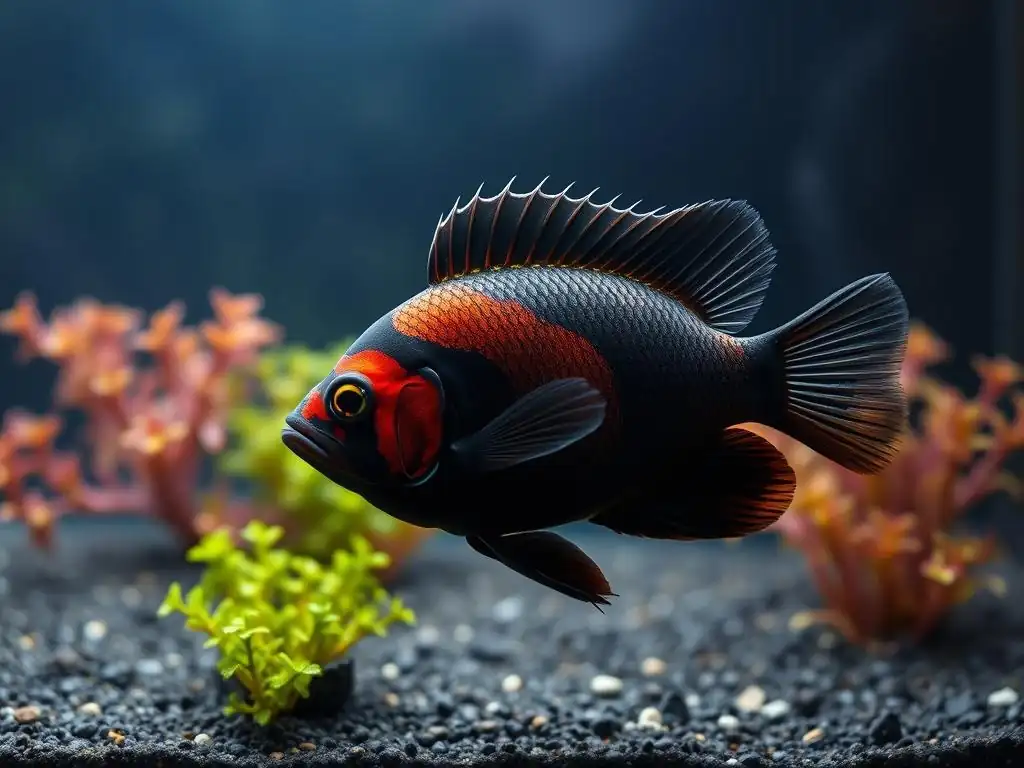
For Apistogramma macmasteri, gentle yet effective filtration is crucial. Strong water currents should be avoided, as these fish prefer calm, slow-moving waters akin to their natural habitat. Sponge filters are an excellent choice, providing biological filtration and minimal flow, making them ideal for Apistogramma macmasteri breeding care tanks where fry are present. Small hang-on-back filters with adjustable flow rates or internal filters can also be used, provided the outflow is diffused to prevent strong currents.
Lighting for an Apistogramma macmasteri tank should be moderate to dim. These fish are naturally found in shaded, tannin-stained waters, and intense lighting can cause stress and inhibit their natural behaviors. If live plants are used, choose low to moderate light plants. A photoperiod of 8-10 hours per day is generally sufficient. The combination of gentle filtration and appropriate lighting contributes significantly to a low-stress environment, which is vital for the overall health and successful Apistogramma macmasteri breeding care.
Choosing the Right Tank Mates for Apistogramma Macmasteri
When selecting tank mates for Apistogramma macmasteri, priority should be given to peaceful, small to medium-sized fish that occupy different levels of the water column and can tolerate similar soft, acidic water conditions. Ideal companions include small schooling tetras such as Neon Tetras ( Paracheirodon innesi), Cardinal Tetras ( Paracheirodon axelrodi), Ember Tetras ( Hyphessobrycon amandae), or Harlequin Rasboras ( Trigonostigma heteromorpha). These fish provide dither, making the cichlids feel more secure, and their non-aggressive nature prevents stress.
Bottom-dwelling tank mates should be chosen carefully to avoid competition with the Apistogramma macmasteri, especially during Apistogramma macmasteri breeding care. Small, peaceful catfish like Corydoras species (e.g., Corydoras panda, Corydoras pygmaeus) or Otocinclus catfish are generally suitable, as they help with algae control and do not directly compete for territory. Avoid large, boisterous, or aggressive fish, and steer clear of fin-nippers, as these can stress the Apistos and potentially injure their delicate fins. For dedicated Apistogramma macmasteri breeding care, a species-only tank is often the most successful approach to minimize disturbances and ensure the safety of eggs and fry.
Apistogramma Macmasteri Care: Feeding and Maintenance
Diet and Nutrition: What to Feed Your Red-Masked Apisto
Apistogramma macmasteri are micro-predators in their natural habitat, primarily feeding on small invertebrates and insect larvae. In the aquarium, a varied and high-quality diet is crucial for their health, vibrant coloration, and successful Apistogramma macmasteri breeding care. Live and frozen foods should form the cornerstone of their diet. Excellent options include brine shrimp, daphnia, bloodworms, blackworms, and grindal worms. These foods provide essential proteins and fats, mimicking their natural prey.
Supplementing live and frozen foods with high-quality dry foods, such as small sinking pellets or flakes specifically designed for cichlids, can provide a balanced nutritional intake. Ensure the pellets are small enough for their mouths. Feeding small amounts multiple times a day (2-3 times) is preferable to one large feeding, as it mimics their natural foraging behavior and prevents overfeeding, which can lead to water quality issues. A diet rich in carotenoids, often found in specialized color-enhancing foods, can also help to bring out their stunning red and orange pigmentation.
Water Changes and Tank Maintenance Schedule
Regular water changes are fundamental to maintaining pristine water quality, which is critical for the health and successful Apistogramma macmasteri breeding care. A weekly water change of 20-30% of the tank volume is highly recommended. For breeding tanks or tanks with a higher bioload, more frequent or larger water changes might be necessary. Always ensure that the replacement water is dechlorinated and matches the tank's temperature and parameters (pH, GH, KH) as closely as possible to prevent shock.
Beyond water changes, routine tank maintenance includes vacuuming the substrate to remove uneaten food and detritus, which helps prevent the buildup of nitrates and other pollutants. Cleaning the filter media regularly, but not excessively, is also important; rinse media in old tank water to preserve beneficial bacteria. Wiping down the tank glass to remove algae and checking all equipment (heater, filter, thermometer) for proper function should be part of a consistent maintenance schedule. A well-maintained tank significantly reduces stress on the fish, making them more resilient to disease and more likely to breed.
Recognizing and Treating Common Apistogramma Diseases
Despite diligent Apistogramma macmasteri breeding care, these dwarf cichlids can occasionally fall ill, often due to poor water quality, stress, or improper diet. Recognizing the early signs of illness is key to successful treatment. Common symptoms include clamped fins, lethargy, loss of appetite, abnormal swimming patterns, discolored patches, white spots (Ich), or frayed fins. Behavioral changes, such as hiding excessively or rubbing against decor, can also indicate a problem.
Many common diseases affecting Apistogramma macmasteri are stress-related or bacterial/parasitic in nature. Ich (white spot disease) is a frequent issue, often treatable with elevated temperatures (gradually to 30°C/86°F if tank mates allow) and specific medications. Fungal infections might appear as cotton-like growths and can be treated with antifungal medications. Bacterial infections, often manifesting as fin rot or body ulcers, require broad-spectrum antibiotics. Always isolate affected fish in a quarantine tank if possible to prevent spread and administer treatment. Maintaining excellent water quality and a stable environment is the best preventative measure against most diseases.
Apistogramma Macmasteri Breeding: A Comprehensive Guide
Setting Up a Breeding Tank for Apistogramma Macmasteri
Successful Apistogramma macmasteri breeding care often begins with a dedicated breeding tank. A 10-gallon (approximately 38 liters) or 15-gallon (57 liters) aquarium is sufficient for a single pair, providing ample space for territory establishment without being too large to manage water parameters. The tank should be equipped with a gentle sponge filter to ensure excellent biological filtration without creating strong currents that could harm delicate fry. A reliable heater is also essential to maintain a stable temperature of 26-28°C (79-82°F).
The substrate should be fine sand, allowing the fish to sift and the female to create a spawning pit if she chooses. Crucially, the tank must include several potential spawning sites. These can be small terracotta pots, coconut shells, or ceramic caves with openings just large enough for the female to enter, but too small for the male to easily follow. Dense planting, such as Java Moss or Cryptocoryne species, along with Indian almond leaves, will provide additional cover, release beneficial tannins, and create a more natural, secure environment, which encourages spawning behavior.
Identifying Male and Female Apistogramma Macmasteri
Accurate identification of male and female Apistogramma macmasteri is crucial for successful Apistogramma macmasteri breeding care. Males are typically larger and more vibrantly colored, often displaying an iridescent body with prominent red or orange markings around the head and fins. Their dorsal and anal fins are usually more elongated and pointed, and they may develop extended rays. During courtship, males will exhibit intense coloration and engage in elaborate displays to attract females.
Females are noticeably smaller and less colorful than males in their resting state, often appearing drab browns or grays. However, when ready to breed or caring for fry, their coloration dramatically shifts to a bright, intense yellow, often with contrasting black markings on their body and fins. Their fins are generally shorter and more rounded than those of the male. Observing these distinct morphological and color changes, especially the transformation to yellow, is the most reliable way to identify a female ready for Apistogramma macmasteri breeding care.
Spawning Behavior: Observing the Breeding Process
Apistogramma macmasteri exhibit fascinating spawning behavior, a highlight of dedicated Apistogramma macmasteri breeding care. Once a pair has bonded and water parameters are optimal (soft, acidic water, 26-28°C), the female will select a secluded spawning site, often a cave or terracotta pot. She will intensely clean the interior surface of her chosen site, signaling her readiness. The male will then display to the female, flaring his fins and showcasing his vibrant colors, attempting to entice her into the spawning cave.
When the female accepts the male, she will enter the cave, and he will follow. The eggs, typically numbering between 50 and 150, are laid on the ceiling or walls of the cave and are usually amber or light brown in color. The female meticulously cares for the eggs, fanning them with her fins to ensure aeration and prevent fungal growth, and aggressively defending the spawning site from any perceived threats, including the male if he becomes too intrusive. The male's role is primarily to defend the perimeter of the territory, keeping other fish away from the breeding area.
Caring for Apistogramma Macmasteri Eggs and Fry
Once the Apistogramma macmasteri eggs are laid, the female takes on the primary responsibility for their care. She will diligently guard and fan the eggs, ensuring proper oxygenation and preventing fungal growth. The eggs typically hatch within 3-5 days, depending on the water temperature. During this period, it's crucial to maintain stable water parameters and minimize disturbances to prevent the female from becoming stressed, which could lead to her abandoning or consuming the eggs.
After hatching, the fry remain in the cave as wrigglers, absorbing their yolk sacs for approximately another 4-7 days. During this stage, the female continues to protect them fiercely, often moving them to different locations within the cave for optimal safety. Once their yolk sacs are absorbed, the fry become free-swimming, and this is when the most critical phase of Apistogramma macmasteri breeding care for the fry begins, as they will require external food sources.
Raising Apistogramma Macmasteri Fry: First Foods and Growth
Once Apistogramma macmasteri fry become free-swimming, typically around 7-10 days post-hatching, their first foods are critical for their survival and rapid growth. Infusoria, a microscopic mix of single-celled organisms, is an excellent initial food source for the first few days due to the fry's tiny size. This can be cultured easily or found naturally in tanks with leaf litter. Shortly thereafter, newly hatched brine shrimp nauplii are the ideal next food, providing essential nutrients and being readily accepted by the growing fry.
Feed the fry small amounts multiple times a day, at least 3-4 times, to ensure they receive adequate nutrition. As they grow, within a few weeks, they can transition to finely crushed high-quality flake food, micro-pellets, and finely chopped frozen foods like cyclops or daphnia. Maintaining impeccable water quality through small, frequent water changes (10% daily or every other day) is paramount during this growth phase, as the fry are highly sensitive to nitrates and other pollutants. Consistent feeding and clean water are key to successful Apistogramma macmasteri breeding care and raising healthy batches of fry.
Preventing Common Fry Issues: Maintaining Water Quality
Preventing common issues during the fry stage is a critical aspect of successful Apistogramma macmasteri breeding care. The most prevalent problem encountered is poor water quality, which can lead to stunted growth, disease, and high mortality rates. Fry are extremely sensitive to ammonia, nitrite, and nitrate buildup. Therefore, daily or every-other-day small water changes (10-15%) using aged or pre-conditioned water that matches the tank's parameters are essential. Gravel vacuuming should be done gently and meticulously to remove uneaten food and waste without disturbing the delicate fry.
Overfeeding is another common issue that directly contributes to poor water quality. Feed only what the fry can consume within a few minutes, removing any uneaten food promptly. Ensuring a well-cycled tank from the start, with a mature sponge filter, provides robust biological filtration. Maintaining stable temperature and pH, and avoiding sudden fluctuations, also significantly reduces stress on the fry. Vigilance in water parameter monitoring and consistent, careful maintenance are the best defenses against common fry issues, ensuring a higher survival rate for Apistogramma macmasteri offspring.
Troubleshooting Breeding Problems: Common Challenges and Solutions
Even with meticulous Apistogramma macmasteri breeding care, challenges can arise that prevent successful spawning or fry rearing. One common problem is a lack of spawning, which can often be attributed to incompatible pairs, inadequate water parameters, or insufficient hiding/spawning sites. If a pair isn't breeding, try introducing new potential spawning caves or slightly adjusting water parameters, focusing on lower pH (5.5-6.5) and softer water (0-4 dGH) to mimic their natural breeding conditions more closely. Ensuring a high-quality, varied diet rich in live foods can also stimulate breeding.
Another frequent issue is eggs or fry disappearing. This can be due to the parents consuming them (often caused by stress, first-time breeders, or poor water quality), or other tank mates preying on them. If parents are eating the eggs, consider removing the male after spawning, or even the eggs themselves to a separate hatching tank if the female is also problematic. For community tanks, moving the breeding pair to a dedicated breeding setup before spawning is often the most effective solution to protect the vulnerable eggs and fry and maximize the success of Apistogramma macmasteri breeding care.
Maintaining Water Quality for Healthy Apistogramma Macmasteri
Importance of Water Parameters in Apistogramma Care
The precise maintenance of water parameters is of paramount importance for the long-term health and vitality of Apistogramma macmasteri. These dwarf cichlids are highly sensitive to fluctuations and deviations from their preferred soft, acidic water conditions. Stable water temperature, within the range of 24-28°C (75-82°F), is crucial for metabolic function and disease resistance. Sudden temperature swings can cause severe stress, leading to weakened immune systems and susceptibility to illnesses like Ich.
Similarly, maintaining a stable pH between 5.5 and 7.0, with a preference for the lower end for Apistogramma macmasteri breeding care, is vital. High pH or hard water can lead to osmotic stress, impacting their ability to regulate internal salts and water balance. Ammonia, nitrite, and nitrate levels must be kept at zero, zero, and below 10-20 ppm respectively, as even low concentrations of these nitrogenous wastes can be toxic and cause fin rot, gill damage, or general malaise. Consistent adherence to these parameters ensures a robust immune system and natural behaviors.
Testing Your Aquarium Water: Necessary Equipment and Frequency
Regular and accurate testing of aquarium water is non-negotiable for successful Apistogramma macmasteri care. The essential testing equipment includes a liquid-based test kit for pH, ammonia, nitrite, and nitrate. Strip tests are generally less accurate and not recommended for sensitive species like Apistos. A separate test kit for General Hardness (GH) and Carbonate Hardness (KH) is also crucial, especially if you are aiming for specific breeding parameters. A reliable thermometer is needed to monitor water temperature continuously.
For a newly set up tank, daily testing of ammonia and nitrite is required until the nitrogen cycle is fully established (typically 4-6 weeks), showing zero readings for both. Once the tank is cycled and stable, weekly testing for pH, ammonia, nitrite, and nitrate is recommended. GH and KH should be tested bi-weekly or monthly, or whenever large water changes are performed or new water sources are used. During Apistogramma macmasteri breeding care, more frequent daily testing of pH and temperature might be beneficial to ensure optimal conditions for spawning and fry development.
Methods for Maintaining Optimal Water Conditions
Maintaining optimal water conditions for Apistogramma macmasteri involves a multi-faceted approach. Regular partial water changes are the cornerstone; a 20-30% weekly water change removes accumulated nitrates and replenishes essential minerals. Always use a reliable dechlorinator for tap water. If your tap water is hard or alkaline, methods to soften and acidify it include using RO/DI (Reverse Osmosis/De-ionized) water, which is then re-mineralized to desired parameters, or employing natural methods like adding peat moss to the filter or introducing Indian almond leaves and driftwood.
Proper filtration is also key; a well-maintained biological filter (like a sponge filter or canister filter with appropriate media) effectively processes ammonia and nitrite. Avoid overfeeding, as uneaten food quickly degrades, contributing to poor water quality. Regular gravel vacuuming removes detritus and uneaten food from the substrate. Lastly, ensure the tank is not overstocked, as this directly increases the bioload and makes maintaining pristine water quality significantly more challenging, especially critical for successful Apistogramma macmasteri breeding care.
Common Apistogramma Macmasteri Health Issues and Treatment
Identifying Signs of Illness in Apistogramma Macmasteri
Recognizing the early signs of illness in Apistogramma macmasteri is vital for prompt treatment and recovery. Healthy Apistos are typically active, display vibrant coloration, have clear eyes, and exhibit good appetite. Any deviation from these norms should raise a red flag. Common signs of illness include lethargy, spending unusual amounts of time hiding, or lying on the substrate without moving. Clamped fins, where the fins are held close to the body, are a general indicator of stress or discomfort.
Physical symptoms might include faded coloration, white spots resembling salt grains (Ich), cotton-like growths (fungal infections), red streaks or ulcers on the body, or frayed/eroded fins (fin rot). Behavioral changes such as rapid breathing, scratching against decor, or abnormal swimming patterns (e.g., darting, spiraling) also point to potential health issues. A loss of appetite is another significant indicator. Early detection, often facilitated by daily observation as part of good Apistogramma macmasteri breeding care, allows for timely intervention before conditions worsen.
Treating Bacterial Infections in Apistogramma Macmasteri
Bacterial infections are a common concern in Apistogramma macmasteri, often manifesting as fin rot, body ulcers, cloudy eyes, or general bacterial septicemia (internal infection). These infections are frequently triggered by poor water quality, stress, or physical injury. Fin rot, characterized by frayed, discolored, or disintegrating fins, is one of the most visible signs. Body ulcers appear as open sores or red inflamed patches on the skin.
Treatment for bacterial infections typically involves the use of broad-spectrum antibacterial medications designed for aquarium use. It is crucial to follow the manufacturer's instructions carefully regarding dosage and duration. Before administering medication, perform a significant water change (30-50%) and ensure water parameters are optimal.
In some cases, increasing the water temperature slightly (to 28-30°C, if safe for tank mates and not exacerbating other conditions) can boost the fish's metabolism and immune response. Isolating the affected fish in a quarantine tank is highly recommended to prevent the spread of disease and allow for more precise medication delivery, which is essential for effective Apistogramma macmasteri breeding care and health management.
Addressing Parasitic Infections Affecting Apistogramma Macmasteri
Parasitic infections are another common health challenge for Apistogramma macmasteri. The most frequently encountered external parasite is Ichthyophthirius multifiliis, commonly known as Ich or white spot disease, which appears as small, white, salt-like spots on the fish's body and fins. Other external parasites include flukes (causing flashing or rubbing behavior), and velvet (appearing as a fine, dusty coating). Internal parasites, though less visible, can cause emaciation, loss of appetite, and white stringy feces.
Treatment for Ich typically involves a combination of slowly raising the water temperature to 30°C (86°F) over 24-48 hours (if compatible with tank inhabitants and plants, as high temperatures accelerate the parasite's life cycle) and using Ich-specific medications containing malachite green or formalin. For other external parasites, specific anti-parasitic medications are available. Internal parasites usually require medicated foods containing metronidazole or praziquantel.
Always ensure excellent water quality during treatment and remove carbon from the filter, as it will absorb the medication. Prompt diagnosis and treatment are essential to prevent severe damage and ensure the long-term success of Apistogramma macmasteri breeding care and overall fish health.
Advanced Apistogramma Macmasteri Care Tips
Enhancing Coloration in Apistogramma Macmasteri
To truly bring out the stunning red-masked beauty and vibrant colors of your Apistogramma macmasteri, several advanced care tips can be employed beyond basic maintenance. A high-quality, varied diet rich in carotenoids is paramount. Incorporate color-enhancing flake or pellet foods, alongside frequent feedings of live and frozen foods such as bloodworms, brine shrimp, daphnia, and cyclops. These natural food sources not only provide essential nutrients but also contain pigments that intensify red and orange hues.
Furthermore, maintaining pristine and stable water parameters, especially soft and acidic conditions (pH 5.5-6.5, GH 0-4 dGH), closely mimics their natural habitat and significantly reduces stress, allowing their true coloration to shine. The presence of tannins from Indian almond leaves or driftwood can also enhance colors by creating a more natural, subdued lighting environment and reducing stress. A dark substrate and ample hiding spots will also make the fish feel more secure, encouraging them to display their best colors rather than fading due to stress.
Creating a Biotope Aquarium for Apistogramma Macmasteri
Creating a biotope aquarium is an advanced way to provide optimal Apistogramma macmasteri care by mimicking their natural habitat as closely as possible. This involves replicating the specific environmental conditions, substrate, decor, and even plant species found in the Meta River basin of Colombia. The tank should feature a fine sand substrate, extensive driftwood, branches, and a generous layer of leaf litter (e.g., Indian almond leaves, oak leaves) to release tannins, lower pH, and provide a natural foraging ground.
Water parameters should be meticulously maintained at soft (GH 0-4 dGH), acidic (pH 5.5-6.5), and warm (24-28°C). Lighting should be subdued, perhaps with floating plants to diffuse light, replicating the shaded conditions of their native streams. Suitable plant species might include Cryptocoryne or Echinodorus species, which can tolerate low light and acidic water. This meticulous approach not only provides the best possible environment for Apistogramma macmasteri breeding care and health but also offers a beautiful and educational display that truly showcases the fish in their most natural setting.
Selective Breeding for Enhanced Traits
Selective breeding is an advanced aspect of Apistogramma macmasteri breeding care that allows experienced aquarists to enhance desirable traits, such as coloration, finnage, or even temperament, over generations. This process involves carefully selecting individuals that exhibit the most pronounced and attractive characteristics (e.g., the most intense red mask, largest fins, or most robust body shape) and breeding them together. The offspring are then evaluated, and only those displaying the desired traits most strongly are chosen for subsequent breeding.
This requires meticulous record-keeping of parentage, offspring traits, and breeding success. It also often necessitates maintaining multiple breeding lines to prevent inbreeding, which can lead to weakened genetics and reduced vitality. While challenging and time-consuming, selective breeding can result in truly stunning and unique Apistogramma macmasteri strains that surpass the beauty of wild-type specimens. This dedicated approach contributes to the preservation and diversification of this beloved dwarf cichlid within the aquarium hobby.
Frequently Asked Questions
What are the key requirements for successfully breeding Apistogramma macmasteri?
Successful breeding hinges on providing pristine water quality, a suitable spawning site like a cave or overturned pot, and a stable environment with a slightly acidic pH.
What is the ideal tank size for keeping and breeding Apistogramma macmasteri?
A minimum of 20 gallons is recommended for a pair of Apistogramma macmasteri, allowing ample space for them to establish territories and for the female to raise her fry without excessive stress.
What type of diet is best for conditioning Apistogramma macmasteri for breeding?
A varied diet rich in protein is crucial. This includes live foods like daphnia and brine shrimp, as well as high-quality frozen or flake foods designed for carnivorous fish to ensure optimal health and breeding readiness.
How can I tell if my Apistogramma macmasteri pair has successfully spawned?
The female will display intense guarding behavior near the spawning site and her coloration will intensify. Observing fry swimming around the protected area is also a clear indication of a successful spawn.
What are some common challenges faced when breeding Apistogramma macmasteri and how can they be overcome?
Common challenges include poor water quality, which can lead to egg or fry loss. Maintaining consistent water changes and using a reliable filtration system are essential for success.
Final Reflection: Unveiling the Secrets of Red-Masked Beauty
The journey into understanding Apistogramma macmasteri breeding care reveals more than just the technical aspects of keeping these vibrant fish. It highlights the delicate balance between providing the right environment and allowing nature to take its course. From water parameters to carefully chosen tank mates, each element plays a crucial role in unlocking the potential for successful breeding and witnessing the miracle of new life in our aquariums.
The allure of the Apistogramma macmasteri extends beyond its striking appearance; it's about connecting with the intricate web of life within our tanks. This journey has deepened my appreciation for the dedication and patience required to successfully breed these fish, and the profound satisfaction that comes with it. In the end, we will conserve only what we love; we will love only what we understand; and we will understand only what we are taught.
- Baba Dioum. This quote resonates deeply, reminding us that understanding and appreciating the nuances of Apistogramma macmasteri breeding is the first step towards ensuring their continued thriving in our care and beyond.
Now, as you close this article, consider the lessons learned about patience, observation, and the delicate art of creating a thriving ecosystem. Take these insights and apply them not only to your Apistogramma macmasteri tank, but also to other areas of your life. Embrace the challenge of nurturing life, and you will find a profound sense of fulfillment in witnessing the beauty and resilience of the natural world, both within and beyond the glass.
Ignite Your Apisto Adventure!
Thank you for exploring the captivating world of Apistogramma macmasteri! We hope you've enjoyed learning about these vibrant fish and are feeling inspired. Now, it's time to take your passion to the next level.
Here are a few steps to immerse yourself further:
- Start planning your own Apistogramma macmasteri tank! Consider the size, plants, and tank mates to create the perfect environment for these Red Masked Beauties.
- Share this article with fellow aquarium enthusiasts to spread the word about these amazing fish and perhaps inspire a local fish club discussion.
- Research a lesser-known Apistogramma species – challenge yourself to learn something new about these incredible fish!
What unique plant combination will you use to showcase the colors of your Apistogramma macmasteri?