
Filtration for Dwarf Cichlids: Keeping Water Pristine for Sensitive Species

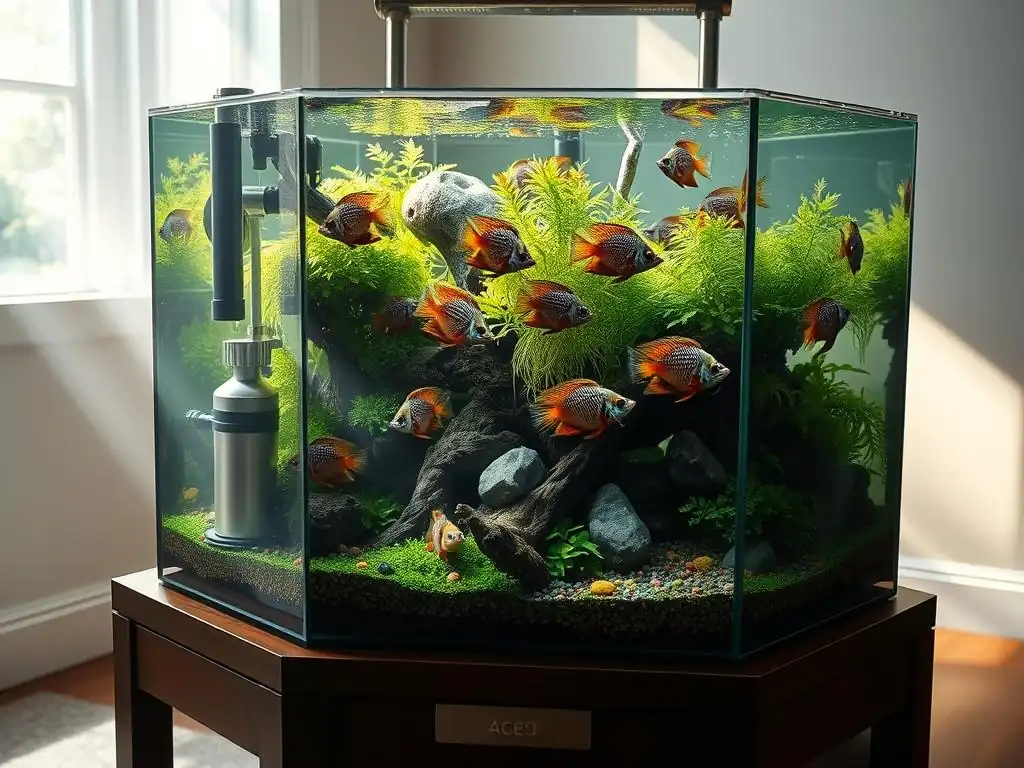
Welcome to Aquarium Mastery!
Ever wondered how to achieve crystal-clear water that's perfect for your delicate dwarf cichlids? Maintaining optimal water quality is crucial for their health and vibrant colors, but it can be tricky. Dive in as we unravel the secrets of dwarf cichlid tank filtration, exploring the best methods to keep your aquatic environment thriving and your cichlids happy. Ready to unlock the key to a pristine dwarf cichlid aquarium?
- Filtration for Dwarf Cichlids: Maintaining Optimal Water Quality
- Understanding the Importance of Filtration for Dwarf Cichlid Tanks
- Types of Filters Suitable for Dwarf Cichlid Tanks
- The Nitrogen Cycle and Biological Filtration in Dwarf Cichlid Aquariums
- Mechanical Filtration: Removing Particulate Matter in Cichlid Tanks
- Chemical Filtration: Addressing Specific Water Quality Issues in Dwarf Cichlid Aquariums
- Maintaining Optimal Water Parameters for Dwarf Cichlids Through Filtration
- Choosing the Right Filter Media for Your Dwarf Cichlid Tank
- Optimizing Water Flow in a Dwarf Cichlid Aquarium
- Troubleshooting Common Filtration Issues in Dwarf Cichlid Tanks
- Best Practices for Dwarf Cichlid Tank Filtration Maintenance
- Recommended Filters for Dwarf Cichlid Tanks
- Using Reverse Osmosis (RO) Water with Remineralization for Dwarf Cichlids.
-
Frequently Asked Questions
- What type of filtration is best for a Dwarf Cichlid tank?
- How often should I perform water changes in a Dwarf Cichlid tank?
- What filter media should I use in my Dwarf Cichlid tank filter?
- Can I use an undergravel filter in a Dwarf Cichlid tank?
- How can I tell if my Dwarf Cichlid tank filter is working correctly?
- Final Reflection: The Crystal Clarity of Care
- Nurture Your Cichlids: Cultivate Crystal-Clear Waters Today!
Filtration for Dwarf Cichlids: Maintaining Optimal Water Quality
Understanding the Importance of Filtration for Dwarf Cichlid Tanks
Why Proper Filtration is Crucial for Dwarf Cichlid Health
Proper filtration is the cornerstone of a healthy aquarium, and for sensitive species like dwarf cichlids, its importance cannot be overstated. A robust dwarf cichlid tank filtration system diligently removes physical debris, neutralizes harmful toxins, and supports the beneficial bacterial colonies vital for the nitrogen cycle.
Without effective filtration, uneaten food and fish waste quickly decompose, leading to a rapid accumulation of ammonia and nitrite – compounds highly toxic to fish, even at concentrations as low as 0.25 ppm. This toxic environment stresses fish, weakens their immune systems, and makes them highly susceptible to diseases such as fin rot, bacterial infections, and ich.
Beyond simply removing waste, filtration contributes significantly to the overall well-being and longevity of dwarf cichlids. Consistent water clarity, stable water parameters, and the absence of pollutants reduce stress, encourage natural behaviors like breeding, and enhance their vibrant coloration. Many dwarf cichlid species, such as Apistogramma cacatuoides or Mikrogeophagus ramirezi, originate from pristine, slow-moving waters, making them particularly intolerant of even slight water quality degradation. Therefore, investing in and meticulously maintaining appropriate dwarf cichlid tank filtration is not just good practice, but essential for their survival and thriving.
The Unique Water Quality Needs of Dwarf Cichlids: Soft, Acidic Water
Dwarf cichlids, encompassing popular species like German Blue Rams, Bolivian Rams, various Apistogramma species, and Kribensis cichlids, largely hail from soft, acidic water environments. For instance, many Apistogramma species are found in the blackwater rivers of the Amazon basin, where water parameters can be as low as pH 4.5-6.5 and general hardness (GH) near 0-3 dGH.
Similarly, Pelvicachromis pulcher (Kribensis) often inhabit slightly harder but still soft to moderately hard water with a pH around 6.5-7.5 in West Africa. Understanding these natural conditions is paramount for successful dwarf cichlid tank filtration, as the filtration system must help maintain these specific parameters.
Maintaining soft, acidic water is not merely about mimicking their natural habitat; it directly impacts their physiology, breeding success, and overall health. Hard, alkaline water (e.g., pH 7.5+ and GH 10+ dGH) can cause chronic stress, leading to suppressed immune systems and a reduced lifespan.
For breeding, specific water parameters are often critical, with many Apistogramma species requiring very soft, acidic conditions for successful egg hatching and fry development. Therefore, the selection of filtration media and methods must align with the goal of achieving and stabilizing these sensitive water characteristics, making it a specialized aspect of dwarf cichlid tank filtration.
Types of Filters Suitable for Dwarf Cichlid Tanks
Sponge Filters: Gentle Filtration for Delicate Fish
Sponge filters are among the simplest and most effective filtration methods for dwarf cichlid tanks, particularly for smaller setups or breeding tanks. They operate by drawing water through a porous sponge using an air pump, providing both mechanical and biological filtration. As water passes through the sponge, solid particles are trapped, and the vast surface area of the sponge provides an ideal substrate for beneficial nitrifying bacteria to colonize. Their primary advantage for dwarf cichlids lies in their remarkably gentle water flow, which mimics the calm, slow-moving waters these fish prefer in their natural habitats.
These filters are highly efficient at biological filtration due to their extensive surface area, making them excellent choices for maintaining stable ammonia and nitrite levels in tanks up to approximately 20-30 gallons. Their low cost, ease of setup, and minimal maintenance requirements also contribute to their popularity.
Furthermore, the absence of strong currents or powerful suction makes them incredibly safe for sensitive species and, crucially, for the delicate fry of breeding dwarf cichlids, preventing them from being drawn into the filter. This gentle yet effective dwarf cichlid tank filtration method is often recommended for the most sensitive species, such as wild-caught Apistogramma or Nanochromis.
Benefits of Sponge Filters for Dwarf Cichlid Aquariums: Fry-Safe and Gentle
One of the most significant advantages of sponge filters for dwarf cichlid aquariums is their inherent "fry-safe" design. The slow intake and fine pores of the sponge material prevent even the smallest fry from being pulled into the filtration system, which is a common concern with more powerful filters.
This makes sponge filters an indispensable tool for aquarists aiming to breed dwarf cichlids like Apistogramma agassizii or Mikrogeophagus altispinosus, where parents often guard their eggs and newly hatched fry. The gentle water movement also ensures that the fry are not stressed by strong currents, allowing them to swim and feed naturally.
Beyond fry safety, the gentle nature of sponge filters directly benefits the adult dwarf cichlids themselves. Many species, particularly the more delicate Apistogramma varieties, are easily stressed by turbulent water flow, which can lead to shyness, reduced feeding, and increased susceptibility to disease. Sponge filters create a tranquil environment, promoting natural behaviors and reducing overall stress levels. This calm water also helps to keep fine detritus suspended longer, allowing the filter to effectively process it. For optimal dwarf cichlid tank filtration where minimal disturbance is key, sponge filters are an unparalleled choice.
Setting Up and Maintaining a Sponge Filter in a Cichlid Tank
Setting up a sponge filter is straightforward, making it accessible even for novice aquarists. First, connect the filter to an air pump using standard airline tubing. Ensure the air pump is appropriately sized for the tank volume and consider adding a check valve to prevent water back-siphoning into the pump during power outages.
Place the sponge filter securely in the aquarium, ensuring the air stone or diffuser is submerged and producing fine bubbles. Before introducing dwarf cichlids, it is crucial to cycle the filter for several weeks, allowing beneficial bacteria to colonize the sponge. This can be done via a fishless cycle using an ammonia source, which ensures the dwarf cichlid tank filtration system is biologically mature before fish are added.
Maintaining a sponge filter is equally simple but requires attention to detail to preserve the beneficial bacterial colonies. Approximately every one to two weeks, or when water flow visibly decreases, gently squeeze the sponge to dislodge trapped detritus. Crucially, always perform this cleaning in a bucket of discarded aquarium water during a regular water change.
Never rinse the sponge under tap water, as the chlorine and chloramine present in treated tap water will kill the beneficial bacteria essential for biological filtration, potentially leading to an ammonia or nitrite spike. This simple maintenance routine ensures continuous and effective dwarf cichlid tank filtration.
Hang-On Back (HOB) Filters: A Versatile Option for Dwarf Cichlids
Hang-On Back (HOB) filters are a popular and versatile choice for many aquariums, including dwarf cichlid setups, especially for tanks ranging from 10 to 75 gallons. These external filters hang on the back rim of the aquarium, drawing water up an intake tube from inside the tank, passing it through various media compartments, and then returning the filtered water via a waterfall-like spillway. HOB filters typically offer compartments for mechanical (e.g., sponges, floss), biological (e.g., bio-rings, ceramic media), and chemical (e.g., activated carbon, peat moss) filtration, providing a comprehensive solution in a compact design.
Their ease of installation and accessibility for media changes make them a convenient option. Many modern HOB filters also feature adjustable flow rates, which is a significant advantage for dwarf cichlid tanks. While some models can produce a strong current, the ability to reduce the flow allows aquarists to tailor the water movement to the preferences of these sensitive fish, preventing undue stress. This adaptability makes HOB filters a strong contender for effective dwarf cichlid tank filtration, balancing convenience with performance.
Choosing the Right HOB Filter for Your Tank Size and Flow Rate
Selecting the appropriate HOB filter for a dwarf cichlid tank involves considering both the tank's volume and the desired water flow rate. While filter manufacturers often provide GPH (gallons per hour) ratings and recommended tank sizes, it's generally advisable to choose a filter rated for a slightly larger tank than your actual setup. For example, for a 20-gallon dwarf cichlid tank, a filter rated for 30-40 gallons might provide better overall turnover and media capacity, supporting a healthy bioload. This ensures efficient mechanical and biological dwarf cichlid tank filtration.
However, the flow rate is paramount for dwarf cichlids. A filter with a high GPH might create excessive turbulence, which can stress these fish. Look for HOB filters that offer adjustable flow rates, allowing you to dial down the output to a gentle current. If your chosen filter lacks this feature or is still too strong, simple modifications like adding a pre-filter sponge over the intake or baffling the output with a small sponge or piece of plastic can effectively reduce the current. The goal is to achieve adequate filtration without creating a "washing machine" effect in the aquarium.
Optimizing HOB Filter Performance for Dwarf Cichlids: Adding Peat Moss
Optimizing HOB filter performance for dwarf cichlids often involves customizing the filter media to meet their specific water chemistry needs. Many HOB filters come with disposable cartridges that combine mechanical and chemical media (like activated carbon), but these can be limiting. For dwarf cichlids, consider replacing or supplementing these cartridges with specialized media that help replicate their soft, acidic blackwater environments.
A highly effective optimization is to incorporate aquarium-grade peat moss into one of the media compartments. Peat moss naturally leaches humic acids and tannins, which gradually lower the pH and soften the water, creating conditions highly favorable for many Apistogramma species, Rams, and other blackwater dwarf cichlids. Place a small bag of peat moss in an area where water flows through it consistently, such as replacing the carbon insert.
Regularly monitor your tank's pH and GH levels, as the effect of peat can vary depending on its type and the initial water parameters. This chemical filtration strategy is a valuable component of comprehensive dwarf cichlid tank filtration.
Canister Filters: Powerful Filtration for Larger Dwarf Cichlid Setups
Canister filters represent a powerful and highly efficient solution for dwarf cichlid tanks, especially for larger setups (typically 40 gallons and above) or when pristine water quality is a non-negotiable priority. These external, sealed units are typically placed below the aquarium, drawing water from the tank via an intake tube and returning it through an output tube. Their design allows for multi-stage filtration, with water passing through various media trays, enabling comprehensive mechanical, biological, and chemical filtration.
The primary advantages of canister filters include their substantial media capacity, quiet operation, and ability to process large volumes of water with precision. This robust filtration capability ensures stable water parameters and exceptional water clarity, creating an optimal environment for even the most sensitive dwarf cichid species. While they require a larger initial investment and slightly more involved maintenance compared to HOBs, their superior performance and less frequent cleaning schedule often make them a worthwhile choice for dedicated dwarf cichlid enthusiasts.
Advantages of Canister Filters in Dwarf Cichlid Keeping: High Media Capacity
One of the most compelling advantages of canister filters in dwarf cichlid keeping is their exceptionally high media capacity. Unlike HOB filters, which have limited space, canister filters feature multiple, often stackable, media baskets or trays.
This design allows aquarists to customize the filtration media extensively, incorporating generous amounts of biological media (e.g., ceramic rings, bio-balls, sintered glass), fine mechanical filtration (e.g., filter floss, fine sponges), and specialized chemical media (e.g., peat moss, Purigen, activated carbon). This extensive capacity ensures a massive surface area for beneficial bacteria, leading to superior biological dwarf cichlid tank filtration and highly stable nitrogen cycle management.
The large media volume also translates to less frequent maintenance. While HOB filters might require weekly or bi-weekly rinsing of mechanical media, a well-set-up canister filter for a dwarf cichlid tank can often go for 1-3 months between cleanings, depending on the bioload. This reduced disturbance is beneficial for both the fish and the aquarist. Furthermore, the ability to precisely layer different media types ensures optimal water flow through each stage, maximizing the efficiency of the entire dwarf cichlid tank filtration process.
Selecting and Setting Up a Canister Filter for a Cichlid Aquarium
When selecting a canister filter for a dwarf cichlid aquarium, consider the tank volume and the filter's GPH rating. Similar to HOBs, it's often beneficial to choose a filter rated for a slightly larger tank than your own to ensure ample filtration capacity and flow adjustability. For example, for a 40-gallon dwarf cichlid tank, a canister filter rated for 50-75 gallons might offer better performance and media options.
Pay attention to features like quick-disconnect valves (for easier maintenance), self-priming capabilities, and robust media baskets. While canister filters offer powerful flow, many models allow for flow rate adjustments, or you can use spray bars on the output to diffuse the current and create a gentle flow, which is ideal for dwarf cichlids.
Setting up a canister filter involves placing the unit below the aquarium (in a cabinet or stand), connecting the intake and output hoses, and carefully routing them into the tank. Ensure all connections are secure to prevent leaks. After assembly, the filter typically needs to be primed to remove air and fill with water before starting.
Once running, it's crucial to allow ample time for the filter to cycle and establish a robust biological filter before introducing dwarf cichlids. This process usually takes 4-6 weeks in a fishless cycle, ensuring the dwarf cichlid tank filtration system is fully functional and safe for inhabitants.
Internal Filters: Compact Filtration Solutions for Smaller Tanks
Internal filters are compact, submersible units designed to operate entirely within the aquarium. They are particularly well-suited for smaller dwarf cichlid tanks, typically ranging from 5 to 15 gallons, or as supplementary filtration in larger setups. Most internal filters consist of a small submersible pump that draws water through a filter cartridge or sponge, providing mechanical and some biological filtration. While they generally have lower flow rates and media capacity compared to HOB or canister filters, their compact size and ease of integration make them a practical choice for nano tanks or breeding setups where space is limited.
Their design allows for easy placement and removal for cleaning. Many internal filters also come with adjustable flow rate nozzles or spray bars, which is a key feature for dwarf cichlid tanks, allowing aquarists to control the water movement to prevent strong currents that can stress these sensitive fish. While less powerful than their external counterparts, a well-chosen and properly maintained internal filter can provide adequate dwarf cichlid tank filtration for modest bioloads, contributing to clear water and stable parameters.
Using Internal Filters Effectively in Dwarf Cichlid Tanks: Placement and Flow
Effective use of internal filters in dwarf cichlid tanks hinges on careful placement and precise flow adjustment. Position the filter in a discreet corner or along the back wall of the aquarium, ensuring it doesn't obstruct swimming space or create an unsightly focal point. The goal is to maximize water circulation throughout the tank without generating strong, direct currents that can exhaust or stress the fish. Placing it near the heater can also help distribute warmth more evenly.
Most internal filters offer adjustable flow rates, which is crucial for dwarf cichlids. Set the flow to the lowest effective rate that still ensures good water movement and filtration. For example, a 10-gallon tank might only need an effective flow of 20-30 GPH.
If the filter's output is still too concentrated, consider attaching a spray bar or a small piece of sponge to diffuse the flow and create a gentler, more widespread current. Additionally, placing a pre-filter sponge over the intake can protect small fry from being drawn into the filter and help trap larger debris, enhancing the mechanical dwarf cichlid tank filtration.
The Nitrogen Cycle and Biological Filtration in Dwarf Cichlid Aquariums
Establishing a Healthy Biological Filter for Cichlids
The nitrogen cycle is the backbone of any healthy aquarium ecosystem, and for dwarf cichlids, establishing a robust biological filter is paramount. This natural process involves beneficial bacteria converting harmful ammonia (from fish waste, uneaten food, and decaying plant matter) into less harmful nitrite, and then converting nitrite into relatively benign nitrate. Without a functioning biological filter, ammonia and nitrite quickly accumulate to toxic levels, causing severe stress, organ damage, and ultimately death for sensitive dwarf cichlid species.
To establish a healthy biological filter, aquarists must "cycle" their tank. The preferred method for dwarf cichlid tanks is fishless cycling, which avoids exposing fish to dangerous ammonia and nitrite spikes. This involves adding a pure ammonia source (e.g., household ammonia without surfactants) or a small amount of fish food to the tank to initiate the cycle.
Over several weeks, beneficial bacteria will colonize all surfaces, especially porous filter media, processing the ammonia and nitrite. Regular testing of ammonia, nitrite, and nitrate levels will indicate when the cycle is complete (ammonia and nitrite consistently at 0 ppm, with nitrate present), signifying that the dwarf cichlid tank filtration system is biologically mature and safe for inhabitants.
Maintaining Biological Filtration: Avoiding Disruptions: Over-Cleaning
Once established, maintaining the biological filter's integrity is as crucial as establishing it. The beneficial bacteria that convert ammonia and nitrite reside primarily on the surfaces of your filter media and tank decorations. Disrupting these colonies can lead to a "mini-cycle," where ammonia and nitrite levels temporarily spike, endangering your dwarf cichlids. A common mistake is over-cleaning filter media, particularly rinsing it under chlorinated tap water. Chlorine and chloramine, present in most municipal water supplies, are lethal to these delicate bacterial cultures.
To avoid disruptions, always clean filter media gently using old aquarium water siphoned from the tank during a water change. This removes trapped detritus without killing the beneficial bacteria. For multi-stage filters, it's advisable to clean biological media sparingly (e.g., every few months) and never simultaneously with other media. For instance, if you clean your mechanical filter floss one week, wait a few weeks before lightly rinsing your biological media. This staggered approach ensures that a significant portion of the bacterial colony remains intact, providing continuous and stable biological dwarf cichlid tank filtration.
Mechanical Filtration: Removing Particulate Matter in Cichlid Tanks
The Role of Mechanical Filtration in Water Clarity
Mechanical filtration is the physical removal of suspended particulate matter from the aquarium water column. This includes visible debris such as uneaten food, fish waste, decaying plant matter, and general detritus. Its primary and most obvious role is to maintain crystal-clear water, enhancing the aesthetic appeal of your dwarf cichlid tank. However, its importance extends far beyond just clarity.
By physically trapping and removing these particles before they have a chance to decompose, mechanical filtration significantly reduces the organic load on the biological filter. This preventative action helps to minimize the production of ammonia and nitrite, thereby contributing to more stable and healthier water parameters for sensitive dwarf cichlids. A well-functioning mechanical dwarf cichlid tank filtration system prevents cloudy water, reduces the frequency of biological filter crashes caused by excessive organic waste, and ultimately supports the overall efficiency of your entire filtration setup.
Choosing the Right Mechanical Filtration Media: Foam, Floss, and Sponges
Selecting the appropriate mechanical filtration media is essential for effective debris removal in dwarf cichlid tanks. The most common and effective media types include foam pads, filter floss, and various grades of sponges. Coarse sponges are typically used as the first stage of mechanical filtration, trapping larger particles and preventing them from clogging subsequent, finer media. These are durable and can be rinsed and reused many times.
Following coarse media, finer mechanical filtration is often employed to polish the water. Filter floss, also known as filter wool or batting, is highly effective at trapping very small particulate matter, leading to sparkling clear water. However, floss tends to clog more quickly and often needs to be replaced rather than just rinsed, typically every 1-4 weeks depending on the bioload.
Fine pore sponges also serve this purpose and are more reusable than floss. Layering these media – coarse to fine – ensures that particles are removed progressively, maximizing the efficiency and longevity of your dwarf cichlid tank filtration system.
Chemical Filtration: Addressing Specific Water Quality Issues in Dwarf Cichlid Aquariums
When to Use Chemical Filtration for Cichlids: Adjusting pH and Removing Tannins
Chemical filtration utilizes specialized media to remove dissolved impurities, odors, discoloration, and specific chemical compounds from the water. For dwarf cichlids, chemical filtration plays a crucial role in addressing specific water quality issues that mechanical and biological filtration cannot resolve alone. One primary application is the removal of undesirable odors or discoloration caused by decaying organic matter or tannins. While tannins (which stain the water brown) are often beneficial for dwarf cichlids, some aquarists prefer clearer water, and chemical filtration can achieve this.
More significantly, chemical filtration can be employed to adjust water chemistry to meet the precise needs of dwarf cichlids, particularly for species that thrive in soft, acidic conditions. Media like peat moss can naturally lower pH and water hardness, mimicking the blackwater environments of their natural habitats. Additionally, chemical media can remove medications after treatment, absorb pollutants like heavy metals, or reduce nitrates in specific situations. Knowing when and how to deploy chemical dwarf cichlid tank filtration is key to fine-tuning water parameters.
Types of Chemical Filtration Media and Their Applications
Various types of chemical filtration media are available, each with specific applications for maintaining optimal water quality in dwarf cichlid tanks. Understanding their functions allows aquarists to tailor their filtration system to address particular water chemistry challenges or preferences. The most common types include activated carbon and peat moss, both of which serve distinct, yet valuable, purposes in a dwarf cichlid setup.
Beyond these, other specialized chemical media exist, such as ion-exchange resins (e.g., Purigen), which excel at removing organic waste and polishing water, or phosphate removers, which can control nuisance algae. The choice of chemical media should always be driven by specific water quality goals and regular water parameter testing to ensure desired effects are achieved without unintended consequences. Effective chemical dwarf cichlid tank filtration is about targeted solutions for specific needs.
Activated Carbon for Removing Impurities
Activated carbon is a widely used chemical filtration media renowned for its ability to adsorb dissolved organic compounds, odors, and discoloration from aquarium water. It works by having a highly porous structure with a vast surface area, allowing it to chemically bind to a wide range of impurities. For dwarf cichlid tanks, activated carbon can be beneficial for polishing the water, removing any lingering odors, or clearing up discoloration caused by tannins if a crystal-clear aesthetic is desired. It is also excellent for removing residual medications after a treatment period.
However, activated carbon has limitations. Its adsorptive capacity is finite, typically becoming saturated within 2-4 weeks, after which it needs to be replaced. Once saturated, it can no longer adsorb impurities and may even begin to leach previously adsorbed substances back into the water if left in the filter. Furthermore, continuous use of activated carbon can remove beneficial trace elements and plant nutrients, which might not be ideal for planted dwarf cichlid tanks. Therefore, it's often used intermittently or replaced regularly as part of a comprehensive dwarf cichlid tank filtration strategy.
Peat Moss for Lowering pH and Softening Water
Peat moss is an invaluable chemical filtration media for aquarists aiming to replicate the soft, acidic, blackwater conditions preferred by many dwarf cichlids, such as Apistogramma species, German Blue Rams, and other South American dwarf cichlids. Aquarium-grade peat moss naturally releases humic acids, tannins, and other organic compounds as water flows through it. These compounds work to gradually lower the pH and reduce the general hardness (GH) of the water, creating a more natural and beneficial environment for these sensitive fish. The tannins also impart a slight amber tint to the water, which many species appreciate.
To use peat moss, place it in a media bag within your filter's chemical media compartment (e.g., in a canister filter tray or HOB filter slot). It's crucial to monitor the pH and GH of your tank water regularly, as the effect of peat can vary depending on its type and the initial water parameters. Peat moss typically needs replacement every 4-6 weeks, or when its pH-lowering effect diminishes. This targeted chemical filtration is a cornerstone of advanced dwarf cichlid tank filtration for species requiring very specific water parameters.
Maintaining Optimal Water Parameters for Dwarf Cichlids Through Filtration
Water Changes and Their Impact on Water Quality
While filtration systems are crucial for processing waste and maintaining water clarity, regular water changes remain the single most important practice for maintaining optimal water parameters in a dwarf cichlid tank. Filtration systems, particularly biological filters, effectively convert harmful ammonia and nitrite into less toxic nitrate. However, nitrates accumulate over time and are not removed by standard mechanical or biological filtration. High nitrate levels (consistently above 20 ppm) can cause chronic stress, suppress immune systems, and inhibit breeding in sensitive dwarf cichlids.
Water changes dilute accumulated nitrates and other dissolved organic compounds that even the most efficient dwarf cichlid tank filtration cannot completely eliminate. They also replenish essential trace elements and minerals that are consumed by fish, plants, and beneficial bacteria. For dwarf cichlid tanks, a recommended schedule is typically 25-30% weekly water changes, especially in smaller tanks or those with a higher bioload. This consistent dilution prevents the buildup of toxins and ensures a consistently healthy environment, working in synergy with your filtration system.
Monitoring Water Parameters Regularly: pH, Ammonia, Nitrite, Nitrate
Consistent monitoring of key water parameters is indispensable for successful dwarf cichlid keeping and for evaluating the effectiveness of your dwarf cichlid tank filtration. Regular testing provides vital insights into the health of your aquarium's ecosystem and allows for prompt intervention if issues arise. The most critical parameters to monitor include:
- pH: For many dwarf cichlids, aiming for a pH range of 5.0-6.5 is ideal, though some species tolerate slightly higher (up to 7.5).
- Ammonia (NH3/NH4+): Should always be 0 ppm. Any detectable ammonia indicates a problem with the biological filter or overfeeding/overstocking.
- Nitrite (NO2-): Should also always be 0 ppm. Like ammonia, its presence signals an incomplete nitrogen cycle.
- Nitrate (NO3-): Should ideally be kept below 10-20 ppm through regular water changes.
Effective biological filtration ensures ammonia and nitrite remain at zero. Mechanical filtration reduces the organic load, preventing spikes. Chemical filtration, particularly using peat moss, directly influences pH and hardness. Regular testing (e.g., weekly or bi-weekly) helps identify trends, confirms the efficiency of your dwarf cichlid tank filtration, and indicates when adjustments to maintenance routines or filtration media are necessary.
Choosing the Right Filter Media for Your Dwarf Cichlid Tank
Selecting Filter Media Based on Your Needs: Biological, Mechanical, Chemical
Choosing the right filter media is paramount to constructing an effective dwarf cichlid tank filtration system that meets the specific needs of these sensitive fish. Filtration is generally categorized into three types: mechanical, biological, and chemical, and a balanced approach incorporating all three is typically the most beneficial.
- Mechanical Media: Focuses on physically removing particulate matter. Examples include coarse sponges (for larger debris), fine sponges, and filter floss (for polishing water). These should be easily accessible for frequent cleaning or replacement.
- Biological Media: Provides a large surface area for beneficial bacteria to colonize and perform the nitrogen cycle. Excellent choices include ceramic rings, bio-balls, and sintered glass media (e.g., Seachem Matrix), which offer extensive porous surfaces for bacterial growth.
- Chemical Media: Addresses specific water chemistry issues. Activated carbon removes odors and discoloration. Peat moss lowers pH and softens water, ideal for blackwater dwarf cichlids. Ion-exchange resins like Purigen remove dissolved organic waste.
The selection should be tailored to your tank size, bioload, and the specific water parameters required by your dwarf cichlid species.
Layering Filter Media for Enhanced Filtration
For multi-compartment filters such as canister filters or many HOB models, layering filter media correctly is crucial for maximizing efficiency and longevity. The optimal flow path for water through the filter ensures that each stage performs its function effectively without hindering the others. The general principle is to place mechanical media first, followed by biological media, and finally chemical media.
A typical layering order would be:
- Coarse Mechanical Filtration: A coarse sponge or foam pad should be the first media the water encounters. This traps larger debris, preventing it from clogging finer media downstream.
- Fine Mechanical Filtration: Following the coarse layer, a fine filter floss pad or fine-pore sponge removes smaller particles, further clarifying the water and protecting the biological media.
- Biological Filtration: After mechanical filtration has removed most particulate matter, water flows through biological media (e.g., ceramic rings, bio-balls). This ensures the surface area is available for beneficial bacteria, not clogged with detritus.
- Chemical Filtration: The final stage is chemical media (e.g., peat moss, activated carbon, Purigen). By this point, the water is mechanically clear and biologically detoxified, allowing the chemical media to work optimally on dissolved impurities.
This layering ensures that your dwarf cichlid tank filtration system operates at peak performance, providing pristine and stable water conditions.
Optimizing Water Flow in a Dwarf Cichlid Aquarium
Understanding the Importance of Water Circulation
Water circulation is a vital, yet often overlooked, aspect of aquarium health and filtration efficiency. Proper water movement ensures that oxygen is evenly distributed throughout the tank, preventing stagnant areas where anaerobic bacteria could thrive and harmful gases could accumulate. It also helps to distribute heat from the heater, maintaining a consistent temperature across the entire aquarium. Furthermore, good circulation continuously moves fish waste, uneaten food, and other detritus towards the filter intake, allowing the mechanical filtration to capture these particles before they decompose and contribute to the organic load.
However, for dwarf cichlids, the type of water circulation is critical. While adequate flow is necessary, strong, turbulent currents are detrimental. Many dwarf cichlid species, such as Apistogramma and Mikrogeophagus, originate from slow-moving streams or calm backwaters. Replicating these conditions is essential for their well-being. Excessive current can stress these fish, making them expend unnecessary energy swimming against the flow, leading to exhaustion, shyness, and increased susceptibility to disease. Therefore, optimizing water flow in a dwarf cichlid tank filtration setup means finding a balance between sufficient movement and gentle conditions.
Achieving Proper Water Flow with Your Filter: Avoiding Strong Currents
Achieving proper water flow in a dwarf cichlid aquarium while avoiding strong currents requires careful consideration of your chosen filter's output. For canister filters and many HOB filters, the GPH (gallons per hour) rating can often be higher than ideal for dwarf cichlids. A good general guideline for dwarf cichlid tanks is a turnover rate of 3-5 times the tank volume per hour. For example, a 20-gallon tank would ideally have an effective flow of 60-100 GPH.
If your filter's output is too powerful, several methods can be employed to diffuse the current:
- Adjustable Flow Rates: Many modern HOB and canister filters come with adjustable flow controls. Utilize these to dial down the flow to a gentle setting.
- Spray Bars: A spray bar attachment on the filter's output spreads the water flow over a wider area, reducing the direct force of the current.
- Baffling: Simple modifications like placing a pre-filter sponge over the filter output, or strategically positioning decorations or plants, can help break up and diffuse strong currents.
- Filter Type: Consider using sponge filters or internal filters with low, adjustable flow for smaller tanks, as they naturally produce gentler currents.
The key is to observe your fish; if they are constantly struggling against the current, or hiding more than usual, the flow is likely too strong and needs adjustment for optimal dwarf cichlid tank filtration.
Troubleshooting Common Filtration Issues in Dwarf Cichlid Tanks
Cloudy Water and Filtration Problems
Cloudy water is a common issue in aquariums and often points directly to a filtration problem or an imbalance in the tank's ecosystem. For dwarf cichlid tanks, identifying the specific cause of cloudiness is crucial for effective resolution. Common culprits include:
- Bacterial Blooms: Often seen in newly set up tanks (new tank syndrome) or established tanks after a disruption (e.g., over-cleaning the filter, overfeeding). The water appears milky or hazy as beneficial bacteria multiply rapidly in response to excess ammonia or organic waste.
- Suspended Particulate Matter: This results in a fine, dusty cloudiness and indicates insufficient mechanical filtration. It can be caused by inadequate filter media, clogged media, or insufficient water turnover.
- Algae Blooms: Green cloudiness usually signifies an excess of nutrients (nitrates, phosphates) and/or too much light, leading to a rapid proliferation of suspended algae.
To resolve cloudy water:
- For bacterial blooms: Reduce feeding, perform small, frequent water changes (e.g., 10-15% daily for a few days), and ensure your biological filter is intact. Avoid aggressive filter cleaning.
- For suspended particles: Check your mechanical dwarf cichlid tank filtration. Rinse or replace clogged filter floss/sponges. Consider adding finer mechanical media or increasing the filter's GPH if it's too low for the tank size.
- For algae blooms: Reduce lighting duration, perform water changes, and address nutrient sources (e.g., reduce feeding, ensure plants are thriving).
High Ammonia or Nitrite Levels: Identifying the Cause
High ammonia or nitrite levels (any reading above 0 ppm) are critical indicators of a failing biological filter and pose an immediate threat to your sensitive dwarf cichlids. These toxins cause severe stress, burn gills, and can quickly lead to fish illness and death. Identifying the cause swiftly is paramount for effective intervention. Common reasons for spikes include:
- New Tank Syndrome: The biological filter is not yet established in a newly set up tank.
- Over-cleaning the Filter: Rinsing biological media with tap water or replacing all media at once kills beneficial bacteria.
- Overfeeding: Excess uneaten food decomposes, overwhelming the biological filter.
- Overstocking: Too many fish produce more waste than the filter can process.
- Medication Use: Certain medications can harm beneficial bacteria.
- Power Outage/Filter Malfunction: Extended periods without filter operation can cause bacteria to die off.
To address high ammonia or nitrite:
- Immediate Action: Perform a large water change (50% or more) using dechlorinated water to dilute the toxins.
- Reduce Bioload: Temporarily reduce feeding to a minimum or stop entirely for a day or two.
- Check Filter: Ensure the filter is running properly and not clogged. Gently rinse mechanical media in old tank water if necessary, but do not clean biological media aggressively.
- Add Bacteria: Use a reputable beneficial bacteria supplement (e.g., Seachem Stability, API Quick Start) to help re-establish the biological filter.
- Review Stocking: Consider if your tank is overstocked for your dwarf cichlid tank filtration capacity.
Best Practices for Dwarf Cichlid Tank Filtration Maintenance
Regular Filter Cleaning and Maintenance Schedule
Consistent and appropriate filter cleaning is fundamental to the long-term success of dwarf cichlid tank filtration. Establishing a regular maintenance schedule helps prevent filter clogs, ensures optimal performance, and maintains stable water parameters. The frequency of cleaning depends on the filter type, tank size, and bioload.
- HOB Filters: Mechanical media (sponges, filter floss) should typically be rinsed or replaced every 1-2 weeks. Biological media should be disturbed as little as possible, perhaps a gentle rinse in old tank water every 1-2 months.
- Canister Filters: Due to their larger media capacity, canister filters generally require less frequent cleaning, often every 1-3 months. When cleaning, address mechanical media thoroughly, and lightly rinse biological media in old tank water.
- Sponge Filters: Gently squeeze the sponge in a bucket of old tank water every 1-2 weeks to remove trapped detritus.
Crucially, always use old aquarium water for rinsing filter media to preserve the beneficial bacteria. Never clean all filter media at once, especially biological media, to avoid crashing the nitrogen cycle. Staggering cleaning activities ensures continuous biological filtration, vital for sensitive dwarf cichlids.
Replacing Filter Media When Necessary
Knowing when to replace filter media is as important as knowing when to clean it. Different types of media have different lifespans and replacement schedules within a dwarf cichlid tank filtration system.
- Mechanical Media:
- Filter Floss: Often needs frequent replacement (e.g., every 1-4 weeks) as it clogs quickly and is difficult to clean thoroughly.
- Sponges/Foam Pads: Can be rinsed repeatedly and last for many months to a year or more. Replace only when they start to break down or lose their porosity.
- Chemical Media:
- Activated Carbon: Becomes saturated and ineffective after 2-4 weeks. It should be replaced regularly if continuous chemical filtration is desired.
- Peat Moss: Its pH-lowering and water-softening effects diminish over time. Replace every 4-6 weeks or when water parameters indicate its exhaustion.
- Other Resins (e.g., Purigen): Follow manufacturer's instructions for regeneration or replacement.
- Biological Media:
- Ceramic Rings, Bio-balls, Sintered Glass: These are designed for long-term use and rarely need replacement unless they become physically damaged or completely clogged beyond cleaning. If replacement is necessary, do it in stages over several weeks to avoid disrupting the biological filter.
Always ensure you have replacement media on hand to maintain continuous and effective dwarf cichlid tank filtration.
Recommended Filters for Dwarf Cichlid Tanks
For dwarf cichlid tanks, selecting the right filter type is crucial for maintaining the stable, pristine water conditions these sensitive fish require. The best choice often depends on the tank size, specific species kept, and whether breeding is a goal.
For smaller dwarf cichlid setups, typically 10 to 20 gallons, a high-quality sponge filter or a compact Hang-On Back (HOB) filter with adjustable flow is highly recommended. Sponge filters are particularly excellent for breeding tanks due to their gentle water movement and fry-safe design, ensuring that delicate Apistogramma or Ram fry are not inadvertently drawn into the filter. If opting for an HOB, choose one that allows for easy customization of media, such as replacing standard carbon cartridges with beneficial peat moss for blackwater species, and ensure its flow can be significantly reduced to prevent stressing the fish.
For medium to larger dwarf cichlid tanks, generally 20 gallons and above, a more powerful HOB filter or a small to medium-sized canister filter provides superior filtration capacity and versatility. Look for HOB models that offer multiple media compartments, allowing for robust biological filtration and the inclusion of chemical media like peat moss.
Canister filters, while requiring a higher initial investment, offer the most extensive media capacity, quiet operation, and precise control over water parameters, making them ideal for larger setups or for aquarists dedicated to keeping wild-caught or highly sensitive dwarf cichlid species that demand the highest water quality standards. Regardless of the type, prioritizing adjustable flow and media customization is key to effective dwarf cichlid tank filtration.
Using Reverse Osmosis (RO) Water with Remineralization for Dwarf Cichlids.
For advanced dwarf cichlid keeping, particularly with highly sensitive or wild-caught species that demand very specific water parameters, using Reverse Osmosis (RO) water with subsequent remineralization is an increasingly popular and effective strategy. RO water is produced by forcing tap water through a semi-permeable membrane, which removes nearly all dissolved solids, including minerals, heavy metals, chlorine, and other impurities.
The result is almost pure water, typically with a General Hardness (GH) of 0 dGH and a pH close to 7.0 (though it lacks buffering capacity, so its pH can fluctuate easily). This provides a "blank slate" from which to precisely build the ideal water chemistry for your dwarf cichlids.
Since RO water is devoid of essential minerals, it must be remineralized before use in an aquarium. This involves adding specific mineral supplements designed for soft water or blackwater fish.
These remineralizers typically add back crucial trace elements and general hardness (GH) minerals without significantly increasing carbonate hardness (KH) or pH, allowing aquarists to fine-tune parameters like GH to a precise 1-3 dGH and pH to 5.0-6.5, which is often ideal for species like wild Apistogramma or Dicrossus filamentosus. This method allows for unparalleled control over water parameters, eliminating variability from tap water sources and providing the most stable and naturalistic environment possible for demanding dwarf cichlid species, making it a cornerstone of precision dwarf cichlid tank filtration and water management.
Frequently Asked Questions
What type of filtration is best for a Dwarf Cichlid tank?
For Dwarf Cichlids, a gentle yet effective filtration system is key. Sponge filters, canister filters with adjustable flow, or even Hang-On-Back (HOB) filters modified for reduced flow are all good options. The aim is to maintain water quality without creating excessive currents.
How often should I perform water changes in a Dwarf Cichlid tank?
Regular water changes are crucial. Aim for 25-50% water changes every 1-2 weeks. This helps to remove nitrates and maintain a stable environment, preventing stress and disease in your delicate Dwarf Cichlids.
What filter media should I use in my Dwarf Cichlid tank filter?
A combination of mechanical, chemical, and biological filtration media is ideal. Sponge filters for mechanical, activated carbon for chemical, and ceramic rings or bio-balls for biological filtration are all excellent choices. Remember to cycle the filter properly before adding your fish.
Can I use an undergravel filter in a Dwarf Cichlid tank?
While possible, undergravel filters are generally not recommended for Dwarf Cichlids. They can be difficult to clean effectively and can disrupt the substrate, potentially releasing harmful gases and disturbing sensitive root systems.
How can I tell if my Dwarf Cichlid tank filter is working correctly?
Monitor your water parameters regularly using a test kit. Ammonia and nitrite levels should be consistently at 0 ppm, and nitrate levels should be kept low. Clear water and healthy fish behavior are also indicators of a well-functioning filter.
Final Reflection: The Crystal Clarity of Care
The journey to understanding optimal dwarf cichlid tank filtration is more than just a technical exercise; it's a commitment to creating thriving ecosystems for these sensitive creatures. The principles of biological, mechanical, and chemical filtration, carefully balanced and tailored to the specific needs of these fish, directly translate into their health, vibrancy, and longevity. The impact of neglecting these fundamentals is readily apparent in stressed fish, algae blooms, and ultimately, a compromised aquatic environment.
This exploration of dwarf cichlid care has profoundly underscored the interconnectedness of all elements within an aquarium. From the substrate to the water parameters, every detail contributes to the overall well-being of these miniature marvels. In nature, there is no such thing as waste. In an aquarium, we must strive to emulate that perfect balance.
This quote reminds us that responsible aquarium keeping is about more than just aesthetics; it's about understanding and respecting the delicate balance of nature within a closed system.
Now, as you consider the information presented, I invite you to reflect on your own practices. Are you providing your dwarf cichlids with the pristine environment they deserve? Take the time to assess your current filtration system, research the specific needs of your chosen species, and commit to creating a tank that not only showcases their beauty but also supports their health and happiness. The rewards of such dedication are immeasurable, offering a glimpse into the fascinating world of these captivating fish and the satisfaction of providing them with a truly thriving home.
Nurture Your Cichlids: Cultivate Crystal-Clear Waters Today!
Thank you for diving into the world of dwarf cichlid filtration! We hope you've discovered valuable insights to keep your aquatic companions thriving. Now, let's put that knowledge into action:
- Implement a tailored filtration strategy: Begin by evaluating your tank’s specific needs and adjusting your filter system accordingly. It is key for the health of the cichlids.
- Delve deeper: Explore innovative filtration methods, like incorporating aquatic plants for a natural touch, to ensure a balanced and thriving environment.
- Share your wisdom: Engage with fellow aquarists on our forum and exchange practical tips for maintaining pristine water conditions.
What's one immediate adjustment you can make to your filtration system this week to better cater to your cichlids' sensitive needs?