
Common Angelfish Breeding Mistakes & How to Avoid Them

Welcome to Aquarium Mastery!
Ever dreamt of witnessing the graceful dance of angelfish courtship and the miracle of new life in your own aquarium? Our Angelfish Breeding Troubleshooting Guide dives deep into the common pitfalls that can thwart even experienced aquarists. Discover the secrets to successful breeding and unlock the potential for a thriving angelfish family. Intrigued? Let's unravel the mysteries together and transform your tank into a breeding paradise!
- Common Angelfish Breeding Mistakes & How to Avoid Them: An AquariumMastery.com Guide
- Angelfish Breeding Troubleshooting Guide: Avoiding Common Pitfalls
- Understanding Angelfish Breeding Basics: A Prerequisite for Success
- Mistake #1: Ignoring Water Quality Issues During Angelfish Breeding
- Mistake #2: Inadequate Angelfish Breeding Tank Setup
- Mistake #3: Poor Angelfish Pair Selection and Compatibility Issues
- Mistake #4: Improper Angelfish Egg Care and Incubation
-
Mistake #5: Angelfish Fry Care Problems: Nutrition and Environment
- Feeding Angelfish Fry the Wrong Food: Choosing Appropriate First Foods (e.g., Baby Brine Shrimp, Microworms)
- Overfeeding Angelfish Fry: Preventing Water Quality Degradation
- Maintaining Proper Water Temperature for Angelfish Fry Development
- Ignoring Angelfish Fry Size Variation: Separating Larger Fry to Prevent Cannibalism
- Mistake #6: Lack of Patience During the Angelfish Breeding Process
- Advanced Angelfish Breeding Techniques: Troubleshooting Persistent Issues
- Angelfish Breeding Troubleshooting: A Summary of Key Takeaways
-
Frequently Asked Questions
- What are some common mistakes new aquarists make when trying to breed Angelfish?
- How important is water quality for successful Angelfish breeding?
- What type of spawning surface is best for Angelfish?
- My Angelfish laid eggs, but they turned white. What happened?
- What do I do after the Angelfish eggs hatch?
- Final Reflection: Nurturing the Future Generation of Angelfish
- Unlock Angelfish Breeding Success Today!
Common Angelfish Breeding Mistakes & How to Avoid Them: An AquariumMastery.com Guide
Angelfish Breeding Troubleshooting Guide: Avoiding Common Pitfalls
Embarking on the journey of Angelfish breeding can be incredibly rewarding, yet it often presents a unique set of challenges for aquarists. From the initial pairing of fish to the delicate care of newly hatched fry, numerous factors can lead to setbacks. This comprehensive Angelfish breeding troubleshooting guide aims to illuminate the most common mistakes made by breeders and provide actionable strategies to overcome them, ensuring a higher success rate in your breeding endeavors.
Understanding these potential pitfalls before they occur is crucial. Many common issues, such as poor water quality or incorrect tank setup, can be prevented with proper planning and consistent maintenance. By adopting a proactive approach and learning from the experiences of others, you can significantly reduce stress on your fish and increase the likelihood of healthy, thriving Angelfish fry. This guide will serve as your essential resource for navigating the complexities of Angelfish reproduction.
Understanding Angelfish Breeding Basics: A Prerequisite for Success
Before delving into the common errors, it's vital to establish a strong foundation in the fundamental requirements for successful Angelfish breeding. A thorough understanding of their environmental needs, proper tank configuration, and how to select compatible breeding pairs forms the bedrock upon which all successful breeding attempts are built. Without this prerequisite knowledge, even the most dedicated efforts can falter.
This foundational knowledge is not just about meeting minimum requirements; it's about optimizing conditions to encourage natural spawning behavior and support the delicate life cycle of Angelfish from egg to fry. By mastering these basics, you'll be better equipped to identify and rectify issues, turning potential failures into valuable learning experiences within your Angelfish breeding troubleshooting journey.
Essential Water Parameters for Angelfish Breeding: Temperature, pH, and Hardness
Temperature plays a pivotal role in encouraging Angelfish to spawn and ensuring the healthy development of their eggs. While Angelfish can tolerate a range of temperatures, a stable environment between 78-82°F (25.5-27.8°C) is generally considered ideal for breeding. This slightly elevated temperature mimics the warmer conditions of their natural Amazonian habitat during spawning seasons, stimulating reproductive activity and accelerating the metabolic processes crucial for egg development. Fluctuations outside this optimal range can stress the breeding pair, leading to a reluctance to spawn or even the consumption of eggs.
Alongside temperature, pH and water hardness are critical for Angelfish breeding success. Angelfish typically prefer soft to moderately hard water with a slightly acidic to neutral pH, ideally within the range of 6.0-7.0. Water hardness, measured in dGH (degrees of General Hardness), should ideally be between 3-8 dGH (approximately 50-140 ppm). Maintaining these parameters consistently is more important than hitting exact numbers, as sudden shifts can be detrimental. Inconsistent pH or overly hard water can inhibit fertilization, weaken egg shells, or even cause developmental issues in the fry, making regular testing and stable conditions paramount.
Setting Up the Angelfish Breeding Tank: Size, Substrate, and Filtration
The size of the breeding tank is a fundamental consideration, often overlooked by novice breeders. A dedicated breeding tank of at least 20-30 gallons (75-113 liters) is recommended for a single Angelfish pair.
This provides ample space for the pair to establish territory, reduces stress from overcrowding, and minimizes aggression, which can be particularly prevalent during spawning. A bare-bottom tank or one with a very thin layer of inert sand is often preferred for breeding setups, as it simplifies cleaning and allows for easier collection of fry once they become free-swimming, preventing the accumulation of waste that can foul the water.
When it comes to substrate and filtration, simplicity and gentleness are key. Angelfish prefer to lay their eggs on smooth, vertical surfaces. Ideal spawning sites include pieces of slate, broad-leafed artificial plants like Amazon Swords (ensure they are soft and have no sharp edges), or dedicated spawning cones made of ceramic or PVC.
Filtration should be robust enough to maintain water quality but gentle enough not to disturb delicate eggs or newly hatched fry. A well-cycled sponge filter is an excellent choice for an Angelfish breeding tank, providing efficient biological filtration without creating strong currents that could dislodge eggs or harm the tiny fry. Avoid power filters with strong outflows unless baffled, and refrain from using chemical filtration that might remove beneficial elements.
Selecting the Right Angelfish Breeding Pair: Identifying Healthy and Compatible Angels
Identifying healthy and potentially fertile Angelfish is the first step in successful pair selection. Look for fish that are robust, active, and display vibrant coloration characteristic of their variety. Their fins should be fully extended, free of tears or nips, and their eyes clear.
Avoid fish with clamped fins, labored breathing, white spots (Ich), or any other visible signs of disease, as unhealthy fish are unlikely to breed successfully and may pass on ailments. Angelfish typically reach sexual maturity and are most fertile between 8 and 18 months of age, with some individuals breeding well into their second or third year.
Compatibility is just as crucial as individual health. Angelfish often form pairs naturally when kept in a group of 6-8 or more juveniles. Once a pair bonds, they will typically swim together, defend a chosen territory, and engage in courtship behaviors such as "lip-locking" (gentle mouth-to-mouth pushing) or fin-flaring displays.
Attempting to force a pair by simply placing a male and female together, especially if they haven't bonded naturally, often leads to aggression, stress, and a failure to spawn. Observe your fish carefully for these natural pairing cues; a truly compatible pair will exhibit a harmonious relationship vital for a successful Angelfish breeding troubleshooting process.
Mistake #1: Ignoring Water Quality Issues During Angelfish Breeding
One of the most detrimental mistakes in Angelfish breeding is neglecting water quality, particularly during the critical stages of egg and fry development. The delicate nature of Angelfish eggs and newly hatched fry makes them incredibly vulnerable to even trace amounts of harmful compounds. Many breeders focus solely on temperature and pH, forgetting the continuous threat posed by nitrogenous waste products.
Poor water quality is a primary reason for failed hatches, deformities, and high fry mortality rates. Even if eggs are laid and fertilized, they will not develop properly in a polluted environment. This oversight necessitates constant vigilance and proactive measures, making water quality management a cornerstone of any effective Angelfish breeding troubleshooting guide.
The Impact of Ammonia and Nitrites on Angelfish Eggs and Fry
Ammonia (NH3) and nitrites (NO2-) are highly toxic compounds that are devastating to Angelfish eggs and fry, even at very low concentrations. Ammonia, a byproduct of fish waste and uneaten food, can cause severe gill damage and internal organ failure. Levels as low as 0.25 ppm can be lethal to sensitive fry, and even lower concentrations can lead to developmental deformities, impaired growth, and increased susceptibility to disease. Eggs exposed to ammonia may fail to hatch or produce weak, non-viable fry.
Nitrites, the product of ammonia breakdown, are also highly poisonous. They interfere with the blood's ability to carry oxygen, effectively suffocating the fish from the inside. While perhaps slightly less acutely toxic than ammonia, nitrite levels above 0.0 ppm are still extremely dangerous for developing eggs and young fry. Both ammonia and nitrite spikes are common Angelfish breeding problems, often resulting from overfeeding, insufficient filtration, or inadequate water changes. Regular testing for these compounds is non-negotiable for successful Angelfish breeding.
Maintaining Pristine Water Conditions: Frequent Water Changes and Filtration Strategies
Maintaining pristine water conditions is paramount for Angelfish breeding success, especially once eggs have hatched and fry are present. Frequent, small water changes are far more effective and less stressful than infrequent large ones. A regimen of 20-25% water changes every 2-3 days, or even daily small changes (5-10%) once fry are free-swimming and consuming food, is often recommended. Always use dechlorinated water that is temperature-matched to the tank to prevent shocking the delicate eggs and fry. These regular changes dilute accumulated nitrates and replenish essential trace minerals.
Beyond water changes, effective filtration is critical. A gentle, well-cycled sponge filter is the preferred choice for Angelfish breeding tanks. It provides excellent biological filtration, breaking down harmful ammonia and nitrites, without creating strong currents that could dislodge eggs or sweep away tiny fry.
Mechanical filtration is also provided by the sponge, trapping particulate matter. It's important to clean the sponge filter regularly by gently squeezing it out in a bucket of old tank water, never tap water, to preserve the beneficial bacterial colony. Avoid overfeeding, as uneaten food quickly decomposes and contributes to water degradation, adding to the Angelfish breeding troubleshooting challenges.
Avoiding pH Swings: Buffering Your Angelfish Breeding Tank
Sudden and drastic fluctuations in pH can be incredibly stressful and even lethal for Angelfish, particularly during the sensitive breeding and fry development stages. While Angelfish prefer a pH range of 6.0-7.0 for breeding, consistency is more important than hitting an exact number. A stable pH prevents osmotic shock, which can damage gill tissues and internal organs, leading to stress, disease susceptibility, or a refusal to breed. Regular testing, ideally daily during the breeding cycle, allows for early detection of any undesirable shifts.
To prevent pH swings, avoid using chemical pH adjusters unless absolutely necessary, as they can cause rapid and unpredictable changes. Instead, focus on using consistent source water and, if needed, incorporating natural buffering agents. For instance, if your tap water has a very low buffering capacity (KH), it might be prone to pH drops.
Using aged, dechlorinated water or adding a small amount of a pH-neutral buffer (like crushed coral in a filter bag, though sparingly as it raises pH and hardness) can help stabilize the environment. Ensuring the breeding tank is properly cycled with established beneficial bacteria also contributes to pH stability by processing nitrogenous waste.
Mistake #2: Inadequate Angelfish Breeding Tank Setup
Beyond water parameters, the physical setup of the Angelfish breeding tank plays a significant role in success. Many common Angelfish breeding problems stem from environmental deficiencies that stress the fish, hinder spawning, or compromise the safety of eggs and fry. An inadequate tank setup can lead to aggression, failed spawns, or even the consumption of eggs by the parents themselves.
Addressing these setup mistakes is a crucial component of any effective Angelfish breeding troubleshooting guide. By optimizing the physical environment, breeders can create a secure and conducive space that encourages natural behavior and maximizes the chances of a successful spawn.
Insufficient Space for Angelfish Breeding: Overcrowding and Stress
A common Angelfish breeding mistake is attempting to breed a pair in a tank that is too small or in a community tank. While Angelfish can sometimes spawn in a community setting, the chances of successful egg and fry survival are significantly reduced due to predation and stress. More importantly, a breeding tank that is undersized (e.g., anything less than 20 gallons for a single pair) can lead to severe stress and heightened aggression between the pair, especially if the female is not ready to spawn or after the eggs have been laid.
Stress from insufficient space manifests as constant chasing, fin nipping, and a reluctance to engage in courtship behaviors. This chronic stress can suppress spawning, lead to unfertilized eggs, or cause the parents to eat their eggs or fry. Providing ample room, such as a 29-gallon tall tank, allows the pair to establish a clear territory, reduces perceived threats, and provides necessary space for the future free-swimming fry, creating a more harmonious environment essential for consistent breeding.
Choosing the Wrong Spawning Substrate: Rough Rocks, Plastic Plants with Sharp Edges
The type of surface provided for egg deposition is critical for Angelfish breeding. Angelfish prefer smooth, vertical surfaces where their eggs can securely adhere without damage. A frequent mistake is using rough, abrasive rocks or plastic plants with sharp edges as spawning sites. These materials can easily damage the delicate egg membranes during deposition, leading to unfertilized eggs or fungal infections. Furthermore, parents can injure their fins or bodies while fanning and guarding the eggs on an inappropriate surface.
The ideal spawning substrate should be smooth, clean, and easily removable for artificial incubation if desired. Common choices include pieces of slate, broad-leafed artificial plants (e.g., large Amazon Sword imitations made of soft plastic), or commercially available ceramic spawning cones. Some breeders even use vertical sections of PVC pipe. The surface should be positioned in a relatively calm area of the tank, allowing the parents easy access and reducing the risk of eggs being dislodged by currents.
Lack of Hiding Places for the Female Angelfish: Minimizing Stress and Aggression
Even in a dedicated breeding tank, aggression can occur between a male and female Angelfish, particularly if the male is overly dominant or if the female is not yet ready to spawn. A significant oversight in tank setup is failing to provide adequate hiding places for the female. Without refuge, a persistently harassed female can become severely stressed, leading to fin damage, exhaustion, a refusal to spawn, or even death. This is a common Angelfish breeding problem that can be easily remedied.
To minimize stress and aggression, incorporate tall, dense artificial plants or strategically placed pieces of driftwood that create visual barriers and secure hiding spots. These elements allow the female to retreat and de-stress when feeling overwhelmed, providing a break from the male's advances. This not only protects the female but also helps maintain a healthier, more balanced dynamic between the pair, increasing the likelihood of successful spawning and egg care. The ability to escape provides a sense of security that is vital for breeding success.
Mistake #3: Poor Angelfish Pair Selection and Compatibility Issues
The success of Angelfish breeding hinges significantly on the quality and compatibility of the chosen pair. Many breeding attempts falter not due to environmental factors, but because the fish themselves are not suitable candidates. Mistakes in pair selection can lead to unfertilized eggs, aggression, or a complete lack of spawning activity.
Understanding how to identify healthy, mature, and compatible Angelfish is a crucial aspect of this Angelfish breeding troubleshooting guide. By making informed choices at this initial stage, breeders can avoid many frustrating setbacks and significantly improve their chances of producing viable offspring.
Breeding Angelfish That Are Too Young or Too Old
One common Angelfish breeding mistake is attempting to breed fish that are outside their optimal reproductive age. Angelfish typically reach sexual maturity and are most fertile between 8 and 18 months of age. Breeding fish younger than 6-8 months often results in several issues: smaller clutches of eggs, a higher percentage of unfertilized eggs, and inexperienced parents who may eat their eggs or fry. These younger fish may also lack the physical maturity to successfully carry and lay a large clutch of eggs.
Conversely, while Angelfish can live for 10-15 years, their breeding productivity generally declines after 2-3 years of age. Older fish may produce fewer eggs, exhibit lower fertilization rates, and show reduced parental care. They may also be more susceptible to health issues that impact their breeding capacity. For consistent and robust breeding results, focusing on Angelfish within their prime reproductive window is essential, typically between 8 months and 2.5 years old.
Ignoring Visual Cues of Angelfish Health and Fertility
Overlooking the subtle visual cues of Angelfish health and fertility is a significant oversight in pair selection. A healthy, fertile Angelfish should exhibit a robust, full body shape without any signs of emaciation or bloating. Their coloration should be vibrant and consistent with their variety, and their fins should be erect, undamaged, and free of any cloudiness or tears. Look for clear, bright eyes and active, alert behavior. These physical indicators reflect overall well-being and the energy reserves needed for successful breeding.
Beyond general health, specific cues indicate breeding readiness. A female Angelfish ready to spawn will often show a noticeably swollen abdomen, particularly around the vent area, indicating the presence of eggs. Her ovipositor (a small, blunt tube) will also become more prominent and extended. For males, the breeding tube (papilla) will be smaller and pointed. Observing these physical changes, alongside typical courtship behaviors like cleaning a spawning site or lip-locking, provides strong indicators of a pair's readiness and fertility, helping to avoid failed attempts and making your Angelfish breeding troubleshooting more effective.
Dealing with Aggression Between Angelfish Breeding Pairs: Separation and Reintroduction Techniques
Aggression between an Angelfish breeding pair is a common and disheartening problem, often leading to stress, injury, or a complete cessation of breeding activity. This aggression can stem from incompatibility, one fish not being ready to spawn, or an overly dominant male. If one fish is consistently chasing, nipping fins, or preventing the other from eating, intervention is necessary to prevent serious harm and ensure the pair's well-being.
One effective Angelfish breeding troubleshooting technique for managing aggression is temporary separation. Using a tank divider to physically separate the male and female for a few days can sometimes "reset" their dynamic. This allows both fish to de-stress and recover from any nips. After a few days, remove the divider and observe their reintroduction carefully. If aggression immediately resumes or worsens, the pair may be genuinely incompatible, and it might be necessary to replace one or both fish to achieve successful Angelfish breeding. Sometimes, simply rearranging tank décor can also break up established territories and reduce aggression upon reintroduction.
Mistake #4: Improper Angelfish Egg Care and Incubation

Once Angelfish eggs are laid, the critical period of incubation begins, and this phase is fraught with potential pitfalls. Many successful spawns end in failure due to improper care of the delicate eggs, leading to fungal infections, lack of oxygen, or neglect. Understanding the specific needs of Angelfish eggs is paramount for a successful hatch.
Proper egg care, whether by the parents or through artificial incubation, is a key component of any comprehensive Angelfish breeding troubleshooting guide. Addressing these common mistakes ensures a higher percentage of viable eggs develop into healthy fry.
Failing to Protect Angelfish Eggs from Fungus: Using Methylene Blue or Antifungal Treatments
One of the most common and devastating Angelfish breeding mistakes is allowing fungal infections to decimate an egg clutch. Unfertilized eggs, or those that have died, quickly develop a white, fuzzy fungal growth. This fungus rapidly spreads to healthy, fertilized eggs, consuming them and leading to the loss of the entire clutch within days. This is particularly prevalent when parents are inexperienced and fail to properly fan and clean the eggs, or when eggs are artificially incubated without protection.
To combat fungus, especially in artificial incubation setups, a common and effective Angelfish breeding troubleshooting method is the addition of a mild antifungal agent. Methylene blue is widely used; adding it to the incubation water at a very dilute concentration (e.g., 1-2 drops per gallon until the water is a light blue tint) can significantly inhibit fungal growth. Alternatively, commercially available antifungal treatments specifically designed for fish eggs can be used according to product instructions. Regularly removing any visibly fungused (white, opaque) eggs with tweezers or a small siphon also helps prevent the spread.
Incorrect Water Flow Around Angelfish Eggs: Ensuring Oxygenation Without Disrupting the Clutch
Angelfish eggs, like all developing embryos, require a constant supply of oxygen to survive and develop properly. Stagnant water around the egg clutch is a recipe for disaster, leading to oxygen deprivation and rapid fungal growth. However, providing too strong a water flow is equally detrimental, as it can dislodge the delicate eggs from their spawning surface, preventing them from hatching. Achieving the correct balance is a critical aspect of egg care.
In an artificial incubation setup, the ideal water flow is achieved by positioning an air stone near the egg clutch. The air stone should create a gentle, steady stream of bubbles that causes the water to circulate softly over the eggs without directly blasting them. This gentle current ensures adequate oxygenation and helps prevent detritus from settling on the eggs. If the parents are caring for the eggs, they will instinctively fan the clutch with their pectoral fins, providing this vital water movement and keeping the eggs clean.
Neglecting to Remove Unfertilized Angelfish Eggs: Preventing Fungal Spread
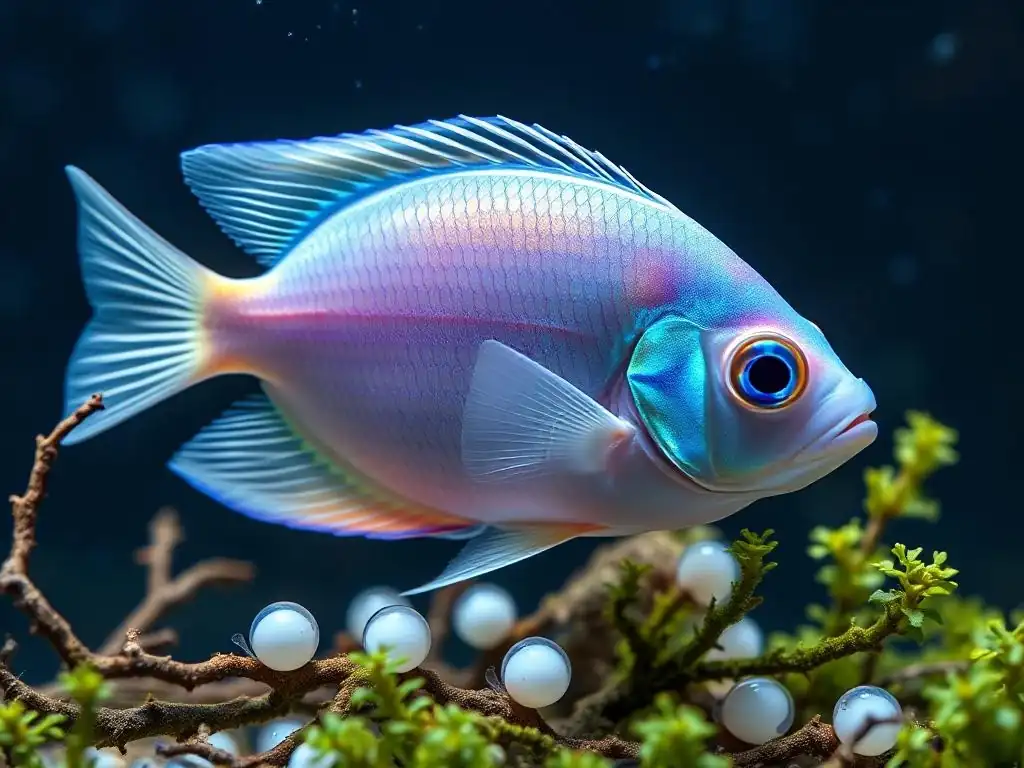
A significant contributor to failed egg clutches is the presence of unfertilized eggs, which quickly become breeding grounds for fungus. Within 24-48 hours after spawning, unfertilized eggs will typically turn opaque white, contrasting sharply with the translucent, clear appearance of healthy, fertilized eggs. These dead eggs are highly susceptible to fungal colonization, and once fungus takes hold, it can rapidly spread to and consume the viable eggs, wiping out the entire batch.
Proactive removal of these fungused or unfertilized eggs is crucial. If the Angelfish parents are caring for the eggs, they will often consume these non-viable eggs themselves. However, if the parents are inexperienced, or if the eggs are being artificially incubated, manual intervention is necessary. Using a soft siphon tube or a pair of fine tweezers, carefully remove any white, fuzzy eggs as soon as they are spotted. This simple, yet critical, step is a key component of Angelfish breeding troubleshooting, significantly increasing the survival rate of the healthy eggs.
Mistake #5: Angelfish Fry Care Problems: Nutrition and Environment
Successfully hatching Angelfish eggs is only half the battle; the care of the newly hatched fry presents its own unique set of challenges. The tiny, delicate fry have specific nutritional and environmental needs that, if not met, can lead to high mortality rates. Many breeders find their efforts falter at this crucial stage.
Addressing these common fry care problems is essential for anyone following an Angelfish breeding troubleshooting guide. Proper feeding and maintaining a stable, pristine environment are paramount to raising healthy, thriving Angelfish to maturity.
Feeding Angelfish Fry the Wrong Food: Choosing Appropriate First Foods (e.g., Baby Brine Shrimp, Microworms)
One of the most common Angelfish breeding mistakes during the fry stage is providing inappropriate food. Newly hatched Angelfish fry are incredibly small and have very particular dietary requirements once they become free-swimming, typically around 4-7 days post-hatch when their yolk sacs are absorbed. They require extremely tiny, highly nutritious live foods that they can easily consume and digest. Attempting to feed them standard flake food or pellets, even finely crushed, will almost certainly lead to starvation and high mortality.
The gold standard for Angelfish fry's first food is freshly hatched baby brine shrimp (Artemia nauplii). These tiny crustaceans are highly nutritious, swim actively, and are perfectly sized for the fry's mouths. Other excellent options include microworms, which are also small and rich in protein. Some breeders may use infusoria or specialized liquid fry foods for the first day or two before transitioning to baby brine shrimp. The key is to ensure the food is small enough for their mouths and provides the high protein content necessary for rapid initial growth.
Overfeeding Angelfish Fry: Preventing Water Quality Degradation
While it's crucial to provide enough food for rapidly growing Angelfish fry, overfeeding is an equally dangerous and common Angelfish breeding problem. Fry require frequent, small meals (e.g., 3-5 times a day) due to their high metabolism and rapid growth. However, any uneaten food quickly decomposes in the warm, often low-flow environment of a fry tank, leading to a rapid and dangerous deterioration of water quality.
Decomposing food releases ammonia, which, as previously discussed, is highly toxic to delicate fry. Even small spikes can cause mass mortality. To prevent this, feed only what the fry can consume within 5-10 minutes. Observe carefully after each feeding; if food remains, reduce the amount for the next feeding. Combining careful feeding practices with regular, small water changes (e.g., 10-15% daily) is essential to dilute any accumulated waste and maintain the pristine water conditions critical for fry survival and growth.
Maintaining Proper Water Temperature for Angelfish Fry Development
Consistent and optimal water temperature is as crucial for Angelfish fry development as it is for spawning adults. Maintaining a stable temperature within the ideal range, typically 78-82°F (25.5-27.8°C), is vital for rapid and healthy growth. Fluctuations outside this range can stress the delicate fry, slow their metabolism and growth rates, and significantly increase their susceptibility to common fry diseases like velvet or Ich.
To ensure stability, use a reliable, properly sized aquarium heater with an accurate thermostat. Position the heater where it can provide even heat distribution throughout the fry tank. Regularly monitor the water temperature with a separate, accurate thermometer to confirm the heater is functioning correctly. Consistent temperature not only promotes faster growth but also strengthens the fry's immune system, making them more resilient to environmental challenges and contributing significantly to successful Angelfish breeding troubleshooting.
Ignoring Angelfish Fry Size Variation: Separating Larger Fry to Prevent Cannibalism
Even within a single clutch, Angelfish fry will exhibit natural variations in growth rates. Some will grow faster and larger than their siblings due to genetic factors, more aggressive feeding, or simply being stronger. Ignoring this size disparity is a common Angelfish breeding mistake that can lead to significant losses due to competition and, in some cases, cannibalism. Larger fry will outcompete smaller ones for food, leading to stunted growth and eventual starvation for the weaker individuals.
To maximize the survival and growth rate of the entire batch, it is often necessary to "grade" the fry. This involves periodically (e.g., weekly, starting from 2-3 weeks post-hatch) siphoning out the largest fry and moving them to a separate grow-out tank. This reduces competition within the original tank and prevents the larger fry from preying on their smaller siblings. This proactive management of fry size variation is a critical Angelfish breeding troubleshooting technique that can dramatically increase the number of Angelfish successfully raised to juvenile size.
Mistake #6: Lack of Patience During the Angelfish Breeding Process
One of the most common, yet often overlooked, Angelfish breeding mistakes is a simple lack of patience. Aquarists, eager for results, may rush the process, over-intervene, or become discouraged too quickly. Angelfish breeding is not an instant gratification hobby; it requires understanding the natural rhythms of the fish and allowing them the time and space to perform their biological functions.
Patience is a virtue in Angelfish breeding troubleshooting. Rushing or constant disturbance can undo weeks of careful preparation, leading to stress, failed spawns, or even the parents consuming their eggs. A calm, observant approach is often the most effective strategy for long-term success.
Expecting Immediate Results: Understanding the Angelfish Breeding Cycle
Many novice breeders expect their Angelfish pair to spawn immediately after being placed in a breeding tank, or to successfully raise a clutch on their first attempt. This expectation is a common Angelfish breeding problem. The reality is that it can take weeks, or even months, for a pair to fully bond, become comfortable in their new environment, and feel secure enough to lay their first viable clutch of eggs. Even once they start spawning, first-time parents often make mistakes, such as eating their eggs due to inexperience, stress, or simply not knowing what to do.
Understanding the Angelfish breeding cycle means recognizing that initial failures are part of the learning process for both the fish and the aquarist. Provide a stable, quiet environment, consistent water parameters, and ample time for the pair to settle in. Don't be discouraged by early setbacks; many pairs require several attempts before they successfully produce and raise a clutch of fry. Patience allows the fish to mature into their roles as parents and ultimately leads to more consistent and rewarding breeding success.
Over-Intervention: Trusting the Parents (When Appropriate) or Performing Artificial Hatching
A common Angelfish breeding mistake driven by impatience or anxiety is over-intervention. While it's tempting to constantly check on the eggs or move them at the first sign of trouble, excessive disturbance can stress the breeding pair, leading them to abandon or even consume their clutch. Experienced Angelfish parents will diligently clean the spawning site, fan the eggs to provide oxygen and prevent fungus, and fiercely guard their fry once they hatch. Trusting their natural instincts, when appropriate, is vital.
However, knowing when to intervene is also a critical part of Angelfish breeding troubleshooting. If a pair consistently eats their eggs, or if you are breeding in a community tank where eggs are at risk, artificial incubation is a viable and often necessary strategy. This involves carefully moving the eggs to a separate, dedicated hatching tank where they can be protected and monitored. The key is to observe the parents' behavior closely; intervene only when there's clear evidence of neglect, consistent egg consumption, or an unmanageable fungal outbreak, rather than out of simple eagerness.
Advanced Angelfish Breeding Techniques: Troubleshooting Persistent Issues
Even with the best basic practices, some Angelfish breeding challenges persist. When common troubleshooting methods don't yield results, or when seeking to maximize yields, advanced techniques become necessary. These methods often involve more direct intervention or manipulation of environmental factors to encourage spawning or ensure the survival of eggs and fry.
These advanced Angelfish breeding troubleshooting techniques can be invaluable for experienced aquarists facing stubborn issues or those looking to expand their breeding operations. They offer solutions for situations where natural processes may be insufficient or problematic.
Artificial Incubation of Angelfish Eggs: A Step-by-Step Guide
Artificial incubation is a common and highly effective Angelfish breeding troubleshooting technique, particularly useful when parents are inexperienced and consistently eat their eggs, or when breeding in a community tank where eggs would be predated. This method involves carefully removing the egg clutch from the breeding tank and transferring it to a separate, dedicated hatching environment. This allows for controlled conditions and protection from parental consumption or other tank inhabitants.
To perform artificial incubation, set up a small (e.g., 5-10 gallon) tank with water from the breeding tank, a gentle sponge filter, and an air stone. Carefully remove the spawning surface (slate, cone, or plant leaf) with the eggs attached. Place it in the incubation tank, ensuring the eggs are fully submerged. Add a few drops of methylene blue (enough to tint the water light blue) as an antifungal agent.
Position the air stone to create a gentle current that washes over the eggs without directly blasting them, ensuring optimal oxygenation. Maintain the temperature at 78-80°F (25.5-26.7°C). The eggs should hatch within 2-3 days, and the fry will become free-swimming within another 4-7 days.
Inducing Spawning in Angelfish: Adjusting Water Temperature and Performing Large Water Changes
If a bonded Angelfish pair is reluctant to spawn despite optimal basic conditions, environmental manipulation can often induce breeding behavior. One effective technique is to simulate natural seasonal changes that trigger spawning in their native habitats. A gradual increase in water temperature is a common method. For example, if your tank is normally kept at 76°F (24.4°C), slowly raise the temperature over a few days to 80-82°F (26.7-27.8°C). This subtle rise can mimic the onset of warmer, rainy seasons, which often signals ideal breeding conditions in the wild.
Another powerful spawning trigger is performing a large water change with slightly cooler, softer water. A 50% water change using water that is 2-4°F cooler than the tank temperature and potentially slightly softer (if your source water allows) can simulate a natural rainfall event. This sudden influx of fresh, cooler water is a well-known spawning trigger for many cichlids, including Angelfish. Ensure the new water is thoroughly dechlorinated and that the pH and hardness parameters remain within the acceptable breeding range. Repeating this technique every few days can often stimulate a stubborn pair into spawning.
Angelfish Breeding Troubleshooting: A Summary of Key Takeaways
Successfully breeding Angelfish is a rewarding endeavor that requires a blend of scientific understanding, meticulous care, and a good deal of patience. This comprehensive Angelfish breeding troubleshooting guide has highlighted the most common pitfalls encountered by aquarists, from foundational errors in tank setup and water parameters to critical mistakes in egg and fry care. Recognizing these challenges and understanding how to proactively address them is the cornerstone of achieving consistent success in your breeding projects.
Prioritizing Water Quality, Proper Setup, and Patient Observation for Successful Angelfish Breeding.
At the heart of successful Angelfish breeding lies the unwavering commitment to pristine water quality. Maintaining stable temperature (78-82°F), ideal pH (6.0-7.0), and absolutely zero ammonia or nitrites is non-negotiable for the health of both parents and delicate fry. This is coupled with a thoughtfully designed breeding tank, providing adequate space (20-30 gallons for a pair), appropriate spawning surfaces, and essential hiding places to minimize stress and aggression. These foundational elements create a secure and conducive environment, significantly reducing the likelihood of common Angelfish breeding problems.
Beyond the physical parameters, patient and keen observation is paramount. Understanding the subtle cues of Angelfish behavior, from pair bonding and courtship rituals to parental care or neglect, allows for timely intervention. Whether it's removing fungused eggs, transitioning fry to appropriate first foods like baby brine shrimp, or knowing when to opt for artificial incubation, a calm and methodical approach is key. By consistently prioritizing water quality, ensuring a proper setup, and practicing patient observation, aquarists can navigate the complexities of Angelfish breeding, overcome challenges, and ultimately enjoy the immense satisfaction of raising healthy, vibrant Angelfish fry.
Frequently Asked Questions
What are some common mistakes new aquarists make when trying to breed Angelfish?
New aquarists often fail to provide optimal water parameters and a suitable spawning surface. They might also interfere too much during the breeding process.
How important is water quality for successful Angelfish breeding?
Water quality is crucial. Angelfish require pristine water conditions with stable pH, temperature, and minimal nitrates for successful egg development and fry survival.
What type of spawning surface is best for Angelfish?
Angelfish prefer smooth, vertical surfaces like slate, plastic spawning cones, or even broad-leaved plants. The surface should be thoroughly cleaned before being introduced to the breeding tank.
My Angelfish laid eggs, but they turned white. What happened?
White eggs usually indicate infertile eggs or a fungal infection. Ensure you have a proven pair and maintain excellent water quality to help prevent fungal growth.
What do I do after the Angelfish eggs hatch?
Once the fry are free-swimming, start feeding them newly hatched brine shrimp or commercially available fry food. Maintain excellent water quality with frequent small water changes.
Final Reflection: Nurturing the Future Generation of Angelfish
The challenges outlined in this guide, from water quality to parental care, underscore the delicate balance required for successful angelfish breeding. Understanding and addressing these common mistakes is not just about increasing breeding success; it's about ensuring the health and vitality of future generations of these magnificent fish. By proactively troubleshooting potential issues, we contribute to the sustainability and well-being of angelfish populations in our aquariums and beyond.
The journey of breeding angelfish is a microcosm of the larger challenges we face in nurturing life and fostering growth. It demands patience, observation, and a willingness to learn from our mistakes. The rewards, however, are immeasurable, witnessing the miracle of life unfold before our eyes. The best way to learn is to do; the worst way to teach is to talk.
This old adage rings especially true in the realm of angelfish breeding, where hands-on experience and careful observation are paramount.
Now, armed with this knowledge, consider how you can apply these lessons of careful observation, proactive problem-solving, and unwavering dedication to other areas of your life. Whether it's nurturing a relationship, cultivating a skill, or pursuing a dream, remember the dedication and attention to detail required to successfully breed angelfish. Embrace the challenges, learn from your mistakes, and strive to create an environment where growth and flourishing are not just possible, but inevitable.
Unlock Angelfish Breeding Success Today!
Thank you for diving into the world of Angelfish breeding! We hope this article has shed light on common pitfalls and empowered you with the knowledge to succeed. Now, let's translate that knowledge into action!
Here are a few steps you can take right now:
- Immediately assess your current setup for potential mistakes highlighted in this article. Addressing these issues promptly can significantly improve your chances of successful breeding.
- Explore the Aquarium Mastery community forum to share your experiences and learn from other Angelfish enthusiasts. Help someone else avoid common mistakes!
- Consider researching rare Angelfish color variations and planning a future breeding project to produce unique offspring!
What's the first change you'll make to your Angelfish breeding setup based on what you learned?