
Decorator Crabs: Masters of Camouflage in the Marine Aquarium

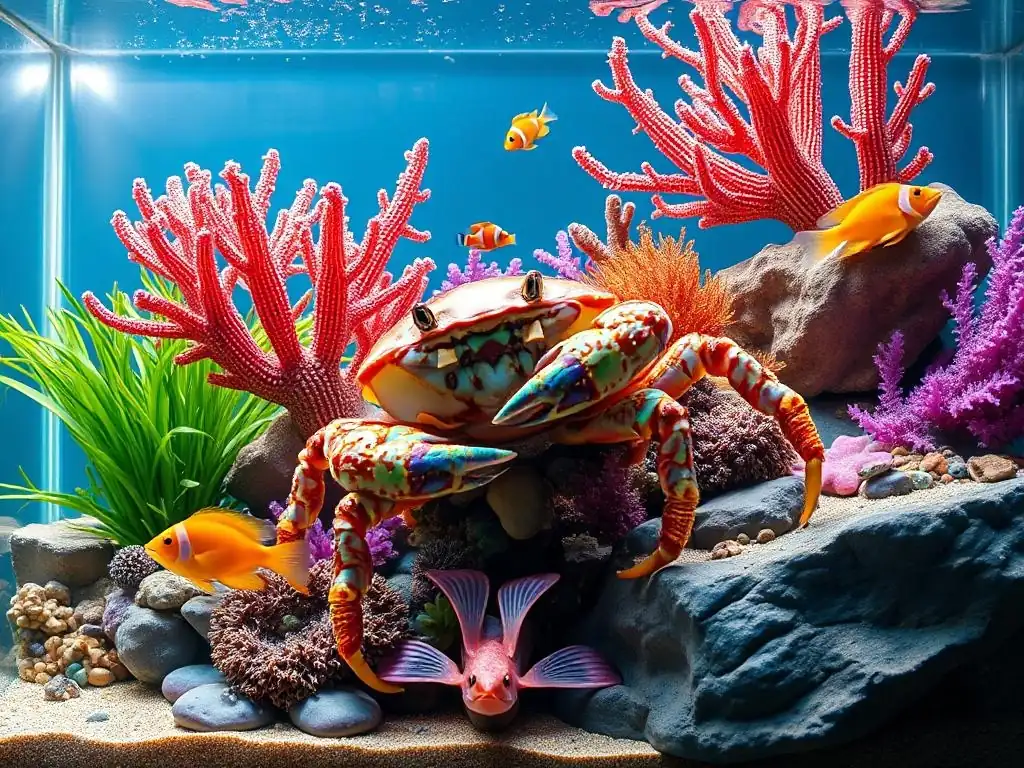
Welcome to Aquarium Mastery!
Ever wondered how to turn your marine aquarium into a living art installation? Dive into the fascinating world of Decorator Crabs! These tiny masters of camouflage add unparalleled intrigue to your tank. But setting up the perfect environment for these unique creatures requires a bit of know-how. Ready to unravel the secrets to a thriving Decorator Crabs Aquarium Setup and watch your reef come alive? Let's get started!
- Introduction to Decorator Crabs for Saltwater Aquariums
- Decorator Crab Species Suitable for Home Aquariums
- Setting Up a Thriving Decorator Crab Aquarium
- Decorator Crab Diet and Feeding
- The Art of Decoration: Encouraging Natural Behavior
- Maintaining a Healthy Decorator Crab Aquarium
- Potential Challenges and Considerations
- Breeding Decorator Crabs in Captivity: A Rare Achievement
- Decorator Crabs: A Rewarding Addition to Your Saltwater Tank
- Conclusion: Mastering the Art of Decorator Crab Aquarium Setup
-
Frequently Asked Questions
- What are Decorator Crabs and why are they interesting for aquariums?
- Are Decorator Crabs suitable for beginner aquarists?
- What size aquarium is recommended for keeping Decorator Crabs?
- What type of decorations should I include in a Decorator Crab aquarium setup?
- What are some potential challenges when keeping Decorator Crabs?
- Final Reflection: The Art of Adaptation
- Unleash Your Inner Reef Artist!
Introduction to Decorator Crabs for Saltwater Aquariums
What are Decorator Crabs and Why Keep Them?
Decorator crabs, primarily belonging to the family Majidae (spider crabs), are fascinating marine invertebrates renowned for their unique habit of attaching various materials to their bodies for camouflage and defense. Unlike typical crabs that rely solely on their hard exoskeletons for protection, these crabs actively seek out and affix pieces of their environment—such as sponges, algae, hydroids, and even small anemones—using specialized hooked bristles called setae on their carapaces and legs. This behavior makes them exceptionally intriguing inhabitants for a marine aquarium setup, offering a dynamic display of natural adaptation.
Keeping decorator crabs in a home aquarium provides aquarists with a rare opportunity to observe complex behaviors that are rarely seen with other invertebrates. Beyond their captivating camouflage artistry, many species also contribute to the tank's ecosystem as part of the clean-up crew, scavenging for detritus and uneaten food. Their presence can enhance the biodiversity and visual interest of a well-maintained decorator crabs aquarium setup, making them a unique and rewarding addition for enthusiasts seeking something beyond the ordinary.
The Unique Camouflage Behavior of Decorator Crabs
The camouflage behavior of decorator crabs is a sophisticated adaptive strategy driven by survival instincts. These crabs meticulously select materials from their surroundings—be it a vibrant piece of macroalgae, a fragment of sponge, or even a tiny hydroid colony—and expertly trim them to size before securing them to their carapaces. The hooked setae act like Velcro, allowing the crabs to firmly attach these items, effectively breaking up their outline and blending seamlessly with their environment. For instance, a Camposcia retusa might be nearly indistinguishable from a sponge-covered rock when fully adorned.
This intricate decorating process serves multiple vital purposes. Primarily, it provides protection from predators such as larger fish, octopuses, and other opportunistic feeders, making the crab appear as an inedible part of the substrate. Secondly, for some species, the attached organisms (like stinging hydroids or anemones) can offer an additional layer of chemical or physical defense.
As decorator crabs grow, they periodically molt their exoskeletons. This necessitates a complete re-decoration process, as the old "costume" is shed along with the shell, offering aquarists a recurring spectacle of their natural ingenuity and highlighting the importance of providing ample decoration materials in any decorator crabs aquarium setup.
Decorator Crab Species Suitable for Home Aquariums
Popular Decorator Crab Species Profiles: Mithrax sculptus, Stenorhynchus seticornis, Camposcia retusa
Several decorator crab species are suitable for a home marine aquarium setup, each with unique characteristics. Mithrax sculptus, commonly known as the Emerald Crab, is a popular choice due to its vibrant green color and reputation as an excellent algae eater. While not as overtly "decorating" as some other species, they do exhibit some camouflaging behavior by allowing algae to grow on their shells. These crabs typically reach an adult size of about 2 inches (5 cm) across the carapace and are widely available, fitting well into a general reef decorator crabs aquarium setup.
Another notable species is Stenorhynchus seticornis, the Arrow Crab, recognized by its long, pointed rostrum and slender legs. While they may not actively attach materials like true decorator crabs, their long, thin bodies and often cryptic coloration provide effective natural camouflage, allowing them to blend into rockwork. Arrow Crabs can grow to a body length of 2-3 inches (5-7.5 cm) and a leg span exceeding 6 inches (15 cm). They are generally peaceful but can be opportunistic predators on bristle worms or small, slow-moving invertebrates, a consideration for a mixed reef decorator crabs aquarium setup.
For aquarists seeking a true decorator, Camposcia retusa, the Spider Crab, is an excellent example. This species is an avid decorator, meticulously covering its body with sponges, hydroids, and other available materials. They are smaller and more delicate than Emerald Crabs, typically reaching a carapace size of 1-2 inches (2.5-5 cm). Their extensive decorating behavior makes them highly engaging to observe, but they require a well-established tank with a consistent supply of appropriate decorative items to thrive in a specialized decorator crabs aquarium setup.
Temperament and Compatibility: Choosing the Right Decorator Crab
When selecting decorator crabs for your aquarium, understanding their temperament and compatibility with other tank inhabitants is crucial for a harmonious marine environment. Most decorator crabs are generally peaceful scavengers, primarily focused on foraging for detritus and algae. However, some species, particularly if underfed, can become opportunistic predators. For instance, while Mithrax sculptus is largely reef-safe, larger individuals or those lacking sufficient food may occasionally nip at soft corals or polyps, a behavior to monitor in a coral-rich decorator crabs aquarium setup.
Compatibility with fish is generally good, as most fish species do not perceive decorator crabs as food, especially if the crabs are adequately camouflaged. However, very aggressive or large predatory fish (e.g., triggerfish, puffers) might pose a threat. Compatibility with other invertebrates requires more careful consideration. Decorator crabs can sometimes compete for food with shrimp, snails, or other crabs, and aggression can occur if resources are scarce. It is advisable to observe interactions closely, especially during feeding times, to ensure all inhabitants are thriving in the decorator crabs aquarium setup.
Setting Up a Thriving Decorator Crab Aquarium
Aquarium Size and Tank Setup for Decorator Crabs
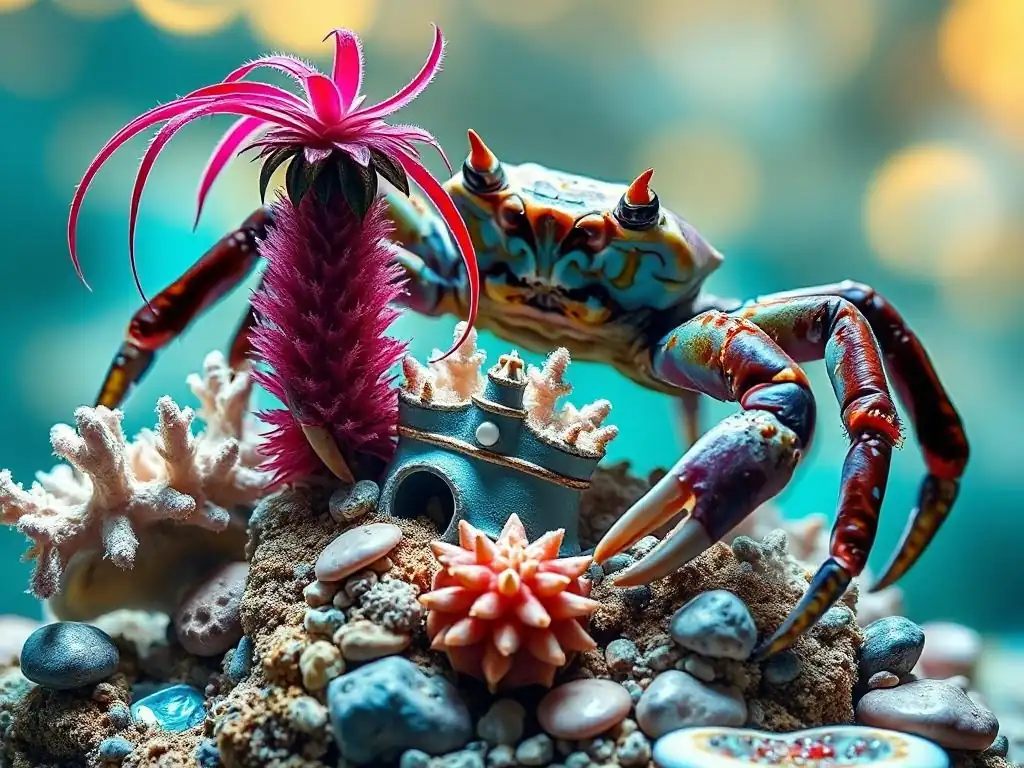
The ideal aquarium size for decorator crabs depends largely on the species and the aquarist's goals for their decorator crabs aquarium setup. Smaller species, such as Camposcia retusa, can thrive in nano reef tanks as small as 10-20 gallons (38-76 liters), provided water parameters are stable and ample decoration materials are available. Larger species like Mithrax sculptus or Stenorhynchus seticornis would benefit from tanks of 30 gallons (114 liters) or more to allow for adequate foraging space and interaction with other tank mates. The emphasis should always be on stability and appropriate environmental enrichment rather than just sheer volume.
A successful decorator crabs aquarium setup requires a well-designed internal structure. Providing plenty of live rock is paramount, as it offers numerous hiding spots, climbing opportunities, and surfaces for algae and sponges to grow, which are vital for the crabs' natural decorating behavior. Ensure that rock formations are stable and secured to prevent collapses, which could injure or trap the crabs. Additionally, a secure lid is essential, as many crabs, including decorator crabs, are adept escape artists and can easily climb out of an open tank.
Essential Water Parameters for Decorator Crab Health
Maintaining stable and pristine water parameters is fundamental to the health and longevity of decorator crabs in any marine aquarium setup. The ideal temperature range for most decorator crabs is 72-78°F (22-26°C), mimicking their natural tropical reef habitats. Salinity should be kept consistent at a specific gravity of 1.023-1.026. Fluctuations in salinity can be particularly stressful for invertebrates, especially during the vulnerable molting process.
Key chemical parameters also require careful monitoring. The pH should be maintained between 8.1 and 8.4, and alkalinity (dKH) between 8 and 12. Calcium levels are crucial for exoskeleton formation and molting, ideally maintained at 400-450 ppm, with magnesium at 1250-1350 ppm to aid in calcium uptake. Ammonia and nitrite levels must always be undetectable (0 ppm), and nitrates should be kept below 10-20 ppm. Regular testing and consistent water changes are indispensable for ensuring these parameters remain within optimal ranges, directly contributing to the success and vitality of a decorator crabs aquarium setup.
Substrate and Rockwork: Providing Decoration Opportunities
The choice of substrate and the arrangement of rockwork are critical elements in creating a thriving decorator crabs aquarium setup, directly influencing their ability to exhibit natural behaviors. A sand bed or fine gravel substrate is generally suitable, allowing for some burrowing and providing a natural environment for detritus accumulation, which many crabs will forage upon. A depth of 1-2 inches (2.5-5 cm) is often sufficient, though some species might appreciate slightly deeper areas for occasional partial burial.
The strategic placement of live rock is arguably the most important aspect of the tank's hardscape for decorator crabs. Live rock provides not only essential hiding spots and territories but also serves as a natural source for many of the materials these crabs use for decoration, such as sponges, coralline algae, and various filamentous algae.
Creating varied rock formations with plenty of crevices, overhangs, and open surfaces encourages exploration and offers ample opportunities for the crabs to select and attach their chosen adornments. A well-structured rockscape is key to a stimulating and functional decorator crabs aquarium setup, promoting their unique camouflage artistry.
Decorator Crab Diet and Feeding
What Do Decorator Crabs Eat in the Aquarium?
Decorator crabs are primarily omnivorous scavengers in their natural habitats, consuming a varied diet of detritus, algae, small invertebrates, and decaying organic matter. This natural foraging behavior makes them valuable members of the clean-up crew in a marine aquarium setup. In the home aquarium, their diet should reflect this omnivorous nature to ensure they receive all necessary nutrients. They will readily consume uneaten fish food, including high-quality flake foods and sinking pellets.
To supplement their scavenging, it is beneficial to offer specific foods. Frozen foods such as mysis shrimp, brine shrimp, and finely chopped pieces of clam, squid, or fish are readily accepted and provide essential proteins and fats. For instance, a small decorator crab might consume 2-3 mysis shrimp every other day. Ensuring a varied diet not only meets their nutritional needs but also encourages active foraging behavior, contributing to a dynamic and healthy decorator crabs aquarium setup.
Supplementing Their Diet: Ensuring Nutritional Needs are Met
While decorator crabs are excellent scavengers, relying solely on uneaten fish food may not always meet all their nutritional requirements, especially for a successful decorator crabs aquarium setup. Supplementing their diet is crucial for their long-term health, particularly for strong exoskeleton development and successful molting. Calcium is a vital mineral for crabs, and while some is absorbed from the water, offering calcium-rich foods can be beneficial. Examples include small pieces of clam or oyster, which are naturally high in calcium.
Furthermore, providing a variety of frozen foods like spirulina-enriched brine shrimp or formulas designed for invertebrates can ensure they receive a broad spectrum of vitamins and trace elements. If you have shy decorator crabs or they are in a competitive tank with faster feeders, target feeding with a long tong or pipette can ensure they receive their share. This focused approach to feeding helps prevent nutrient deficiencies and supports robust growth, making your decorator crabs aquarium setup more resilient.
Avoiding Overfeeding: Maintaining Water Quality
While ensuring decorator crabs receive adequate nutrition is important, avoiding overfeeding is equally critical for maintaining optimal water quality in a marine aquarium setup. Overfeeding can quickly lead to an accumulation of uneaten food, which breaks down into harmful nitrates and phosphates. These elevated nutrient levels can stress invertebrates, promote undesirable algae growth, and ultimately compromise the overall health of the decorator crabs aquarium setup.
It is best to feed decorator crabs sparingly, offering small portions once every day or every other day, and observing how quickly the food is consumed. If there is uneaten food after 15-20 minutes, it indicates you are feeding too much. Promptly remove any uneaten food to prevent it from decaying. A balanced feeding regimen, coupled with regular water changes and efficient filtration, will ensure a stable and healthy environment for your decorator crabs, reducing the risk of water quality issues.
The Art of Decoration: Encouraging Natural Behavior
Providing Suitable Decoration Materials: Sponges, Algae, and More
To truly appreciate the unique behavior of decorator crabs, it is essential to provide them with an ample and varied supply of suitable decoration materials within their marine aquarium setup. Live rock, already present in most reef tanks, often comes adorned with beneficial algae, coralline algae, and even small sponges, all of which are prime candidates for a crab's "wardrobe." Small, healthy fragments of non-toxic macroalgae, such as Chaetomorpha or Caulerpa, can be introduced and allowed to grow on rockwork, offering a readily available source of green camouflage.
Beyond naturally occurring growths, aquarists can also offer small, healthy pieces of sponges (ensuring they are not dying or decaying, as this can pollute the water) or even inert, non-toxic plastic fragments designed for aquarium use, though natural materials are always preferred. The key is to provide variety and accessibility. A well-stocked decorator crabs aquarium setup with diverse textures and colors allows the crabs to express their natural inclination to adorn themselves, leading to fascinating and ever-changing displays of their camouflaging artistry.
Observing and Understanding Decorator Crab Decoration Patterns
Observing the decoration patterns of decorator crabs offers a unique insight into their individual preferences and adaptive strategies within a marine aquarium setup. Each crab, even within the same species, may exhibit distinct choices in the materials they select and how they attach them. Some crabs might prefer dense, uniform coverage, meticulously applying small pieces to completely obscure their carapace. Others might opt for a more sparse arrangement, strategically placing larger items to break up their outline, such as a single prominent sponge fragment or a piece of macroalgae.
The process itself is captivating: a crab will often use its claws to tear or cut a piece of material to size, then carefully manipulate it to attach it to the hooked setae on its shell or legs. This behavior is particularly pronounced after a molt, when the crab sheds its old, decorated exoskeleton and must create an entirely new "costume."
Understanding these patterns not only enhances the aquarist's appreciation for these creatures but also provides clues about their health and comfort level in the decorator crabs aquarium setup. A crab that is actively decorating is generally a healthy and thriving one.
Creating a Stimulating Environment for Camouflage
Creating a stimulating environment is paramount to encouraging the natural camouflage and decorating behaviors of decorator crabs in a marine aquarium setup. Beyond providing ample decoration materials, the overall tank layout and conditions play a significant role. A varied rockscape with numerous crevices, caves, and overhangs offers the crabs diverse surfaces to explore and hide within, mimicking their natural rocky reef habitats. These structures also provide varied lighting and flow zones, which can influence where different types of algae or sponges might grow, offering a broader palette for the crabs.
Moderate water flow, consistent with reef tank conditions, can help to gently move detritus and small food particles, encouraging the crabs to forage actively across the rockwork. Stable lighting cycles, typically 10-12 hours of light per day, support the growth of photosynthetic organisms that the crabs might use for decoration. Minimizing disturbance from overly aggressive tank mates and ensuring a peaceful environment also contributes to the crabs feeling secure enough to engage in their decorating rituals. A thoughtfully designed decorator crabs aquarium setup fosters the natural instincts of these unique invertebrates.
Maintaining a Healthy Decorator Crab Aquarium
Regular Water Changes and Monitoring Water Quality
Maintaining a healthy decorator crabs aquarium setup hinges on consistent water quality management, with regular water changes and diligent monitoring being cornerstone practices. Decorator crabs, like most marine invertebrates, are highly sensitive to fluctuations in water parameters and the accumulation of pollutants. Performing weekly or bi-weekly water changes, typically 10-20% of the total tank volume, helps to replenish essential trace elements, reduce nitrate and phosphate levels, and generally maintain a pristine environment.
Beyond water changes, consistent monitoring of key parameters is non-negotiable. Regular testing for salinity (specific gravity 1.023-1.026), pH (8.1-8.4), alkalinity (8-12 dKH), calcium (400-450 ppm), and magnesium (1250-1350 ppm) is crucial. Ammonia and nitrite should always be at zero, and nitrates kept as low as possible, ideally below 10-20 ppm.
For example, in a 30-gallon tank, a 5-gallon weekly water change is a good starting point. Any significant deviation from these optimal ranges can stress the crabs, potentially leading to molting issues or increased susceptibility to disease, underscoring the importance of meticulous water quality in a decorator crabs aquarium setup.
Identifying and Treating Common Decorator Crab Diseases
Decorator crabs are generally hardy invertebrates, but like all aquarium inhabitants, they can succumb to illness, often as a result of poor water quality or stress in their marine aquarium setup. Identifying symptoms early is key to successful intervention. Common signs of distress or disease include lethargy, prolonged inactivity even when stimulated, loss of appetite, discoloration (unusual paleness or darkening), and the presence of white spots or fuzzy growths, which might indicate fungal or bacterial infections. While crabs can regenerate lost limbs during molting, a sudden, unexplained loss of multiple limbs can be a sign of severe stress.
Specific treatments for decorator crab diseases are often limited, as many common fish medications are toxic to invertebrates, particularly copper-based ones. Therefore, the primary approach to treatment is prevention through maintaining impeccable water quality and stable parameters. If a crab shows signs of illness, the first step should always be to re-test all water parameters and perform a water change if necessary. Isolating the affected crab in a dedicated quarantine tank with pristine water can also help prevent the spread of any potential pathogens and reduce competition for resources, aiding recovery in a controlled decorator crabs aquarium setup.
Preventing Parasites and Infections in Decorator Crabs
Preventing parasites and infections is a critical aspect of maintaining a healthy decorator crabs aquarium setup, as these can quickly compromise the well-being of these sensitive invertebrates. The most effective preventative measure is a robust quarantine protocol for all new arrivals. Any new decorator crabs, live rock, or corals should be quarantined in a separate tank for a period of 2-4 weeks. During this time, they can be observed for any signs of disease, parasites, or unwanted hitchhikers that could potentially harm the existing tank inhabitants.
Furthermore, meticulous inspection of any new live rock or coral frags before introduction to the main display tank is advised. Some parasites or unwanted organisms can be inadvertently introduced this way. Maintaining excellent water quality and providing a nutritious diet will significantly boost the decorator crabs' immune systems, making them more resilient to potential pathogens. It is also crucial to avoid using copper-based medications or any other chemicals known to be harmful to invertebrates in the main display tank, as these are highly toxic to decorator crabs and can cause severe health issues or death.
Potential Challenges and Considerations
Decorator Crabs and Coral Reef Compatibility
While many decorator crabs are considered "reef-safe" and are often desirable additions to a coral reef aquarium setup, their compatibility with corals requires careful consideration. Most species, particularly the smaller ones, primarily scavenge for detritus and algae, posing little direct threat to corals. However, some species, such as larger Emerald Crabs ( Mithrax sculptus), if underfed or if their natural food sources are scarce, may occasionally nip at soft corals, polyps, or even zoanthids. This behavior is usually driven by hunger rather than malicious intent.
Another consideration is the potential for decorator crabs to inadvertently damage corals through their movements. Larger or clumsier individuals might knock over unsecured coral frags or brush against delicate polyps, causing irritation or even physical damage. More uniquely, some decorator crabs might actually attempt to "decorate" with coral fragments, pulling off small pieces to attach to their shells. While this is rare, it's a testament to their decorating drive. Therefore, closely observing their behavior and ensuring they are well-fed are key to maintaining harmony in a mixed reef decorator crabs aquarium setup.
Competition with Other Invertebrates
Competition for food and space is a significant consideration when introducing decorator crabs into a marine aquarium setup that already houses other invertebrates. While decorator crabs are generally peaceful, they are opportunistic scavengers, and their foraging habits can put them in direct competition with other clean-up crew members like snails, hermit crabs, and various shrimp species. During feeding times, faster or more aggressive invertebrates might outcompete decorator crabs for offered foods, potentially leading to undernourishment for the crabs.
Monitoring interactions, especially around food, is crucial. If competition is observed, target feeding the decorator crabs with a pipette or tongs can ensure they receive adequate nutrition. Furthermore, ensuring there are enough hiding spots and ample foraging territory within the decorator crabs aquarium setup can help mitigate competition for space. While minor squabbles are normal, persistent aggression or signs of starvation in any invertebrate warrant intervention to maintain a balanced and healthy community.
Molting Issues in Decorator Crabs
Molting is a critical and vulnerable process for decorator crabs, allowing them to grow and repair themselves, but it also presents potential challenges in a marine aquarium setup. During molting, the crab sheds its old, rigid exoskeleton, emerging in a soft, pliable state before its new shell hardens. Issues such as incomplete molts, where the crab struggles to fully shed its old shell, are common and often fatal. These problems are typically indicative of poor water quality, especially insufficient calcium or magnesium levels, or a lack of iodine in the water column.
A decorator crab preparing to molt will often become reclusive, hiding for several days. It is crucial not to disturb them during this period. After molting, the old exoskeleton (exuvia) should not be immediately removed, as the crab may consume it to reabsorb vital calcium and other minerals. Ensuring stable water parameters, particularly calcium and alkalinity, and providing a calcium-rich diet are essential preventative measures for successful molts. A decorator crabs aquarium setup with consistent, high-quality parameters significantly reduces the risk of molting complications, which are a leading cause of invertebrate loss.
Breeding Decorator Crabs in Captivity: A Rare Achievement
Understanding the Decorator Crab Life Cycle
Understanding the decorator crab life cycle reveals why breeding them in captivity is generally a rare and challenging achievement in a marine aquarium setup. Like many marine crustaceans, decorator crabs undergo a complex metamorphosis, starting as tiny, planktonic larvae. After mating, the female crab carries the eggs externally under her abdomen until they hatch. The newly hatched larvae are typically in a zoea stage, which is microscopic and free-swimming, feeding on even tinier plankton such as microalgae and rotifers.
These zoea larvae then progress through several molts, transforming into different larval stages, including a megalopa stage, which resembles a miniature crab but is still planktonic. Each larval stage has specific environmental and dietary requirements that are incredibly difficult to replicate consistently in a home aquarium. Only after passing through all larval stages do they metamorphose into a benthic (bottom-dwelling) juvenile crab. The high mortality rates during the delicate planktonic larval stages are the primary barrier to successful captive breeding of decorator crabs in a typical marine aquarium setup.
Creating Breeding Conditions: Challenges and Solutions
Creating the ideal breeding conditions for decorator crabs in captivity presents significant challenges, making successful propagation a rare feat for even experienced aquarists. The primary hurdles lie in the specific requirements of their microscopic, planktonic larval stages. These larvae demand precise water parameters, including salinity, temperature, and pH, that can fluctuate from those suitable for adult crabs. Furthermore, they require specific, live food sources, such as particular species of phytoplankton and rotifers, in exact concentrations and sizes, which are difficult to culture and maintain.
Solutions for these challenges typically involve a dedicated breeding setup separate from the main decorator crabs aquarium setup. This would include multiple tanks: one for the breeding pair, and specialized larval rearing tanks equipped with gentle aeration, precise temperature control, and often green water cultures of live microalgae.
Preventing predation on the fragile larvae by filtration systems or other tank inhabitants is also critical. While a few commercial facilities and highly dedicated hobbyists have achieved success with some marine crab species, the complexity and resource intensity mean that breeding decorator crabs remains largely in the realm of advanced aquaculture rather than typical home aquarium practice.
Decorator Crabs: A Rewarding Addition to Your Saltwater Tank
Observing the Beauty of Camouflage and Natural Behavior
Adding decorator crabs to your saltwater tank offers a uniquely rewarding experience, primarily through the captivating observation of their natural camouflage behavior. Unlike many static reef inhabitants, decorator crabs are constantly engaged in an active, dynamic process of self-adornment, meticulously selecting, trimming, and attaching materials from their surroundings. Watching a crab carefully position a piece of macroalgae or a sponge fragment on its carapace is a testament to their remarkable intelligence and adaptability.
This continuous act of re-decoration, especially after molting, provides a source of ongoing fascination for aquarists. The subtle movements, the strategic choices of materials, and the way they blend seamlessly into their environment create a living, evolving display that is both aesthetically pleasing and scientifically intriguing. A well-managed decorator crabs aquarium setup allows these unique behaviors to flourish, transforming your tank into a dynamic ecosystem where the art of disguise is on full display.
The Ecological Role of Decorator Crabs in a Reef System
Beyond their captivating camouflage, decorator crabs play a valuable ecological role within a balanced reef system, contributing to the overall health and stability of a marine aquarium setup. Primarily, many species function as part of the clean-up crew, diligently scavenging for detritus, uneaten food, and nuisance algae. This helps to break down organic waste, reducing the nutrient load in the water column and preventing the buildup of harmful substances like nitrates and phosphates. For instance, an Emerald Crab can significantly assist in controlling bubble algae.
Their presence also contributes to the biodiversity of the tank, introducing another layer of complexity and natural interaction. By foraging and sifting through the substrate or rockwork, they help to aerate the sand bed and expose hidden detritus for further breakdown. In a thriving decorator crabs aquarium setup, these invertebrates act as silent, industrious workers, promoting a cleaner, more stable environment while simultaneously offering a unique window into the intricate adaptations of marine life.
Conclusion: Mastering the Art of Decorator Crab Aquarium Setup
Mastering the art of a decorator crabs aquarium setup is a rewarding endeavor that brings a unique blend of natural artistry and ecological benefit to your marine habitat. As we've explored, success hinges on a few key pillars: selecting appropriate species, meticulously maintaining pristine water parameters, providing a varied and nutritious diet, and crucially, offering ample opportunities and materials for their innate decorating behaviors. From the bustling Emerald Crab to the delicate Spider Crab, each species brings its own charm and set of considerations for the dedicated aquarist.
By understanding their unique camouflage strategies, ensuring optimal tank conditions for molting, and recognizing their role as fascinating clean-up crew members, you can create a thriving environment where these masters of disguise truly shine. While challenges like molting issues or compatibility concerns may arise, a proactive approach to water quality and thoughtful tank design will mitigate most risks. Ultimately, a well-executed decorator crabs aquarium setup is not just a display of marine life, but a dynamic stage for observing one of nature's most intricate and beautiful adaptations, offering endless fascination for years to come.
Frequently Asked Questions
What are Decorator Crabs and why are they interesting for aquariums?
Decorator crabs are fascinating invertebrates known for their unique behavior of attaching materials from their environment to their shells for camouflage. This makes them interesting additions to a marine aquarium.
Are Decorator Crabs suitable for beginner aquarists?
Generally, no. Decorator crabs require a stable and established marine environment and can be sensitive to water parameter fluctuations, making them better suited for experienced aquarists.
What size aquarium is recommended for keeping Decorator Crabs?
A minimum of 30 gallons is typically recommended for a single decorator crab. This provides enough space for them to forage and establish their territory, as well as maintain good water quality.
What type of decorations should I include in a Decorator Crab aquarium setup?
Provide a variety of materials like live rock, small shells, algae, and sponges. These will allow the crab to decorate itself and create its desired camouflage.
What are some potential challenges when keeping Decorator Crabs?
Challenges include compatibility with other tank inhabitants, ensuring adequate food supply (they are scavengers), and preventing them from over-decorating and harming corals or other delicate organisms.
Final Reflection: The Art of Adaptation
The intricate world of decorator crabs, as we've explored, is not merely a fascinating biological study, but a powerful testament to the unyielding force of adaptation in the face of environmental pressures. Their elaborate camouflage, meticulously crafted from their surroundings, serves as a stark reminder of the ingenuity found within the natural world, and its relevance extends far beyond the confines of a marine aquarium.
This captivating behavior, so readily observable even within the controlled environment of an aquarium, has deeply influenced my understanding of the delicate balance within ecosystems. Observing these creatures, constantly adapting and evolving their defenses, underscores the importance of providing them with the most natural and enriching environment possible. Adaptability is not imitation. It means power of resistance and assimilation.
- Mahatma Gandhi. This quote resonates deeply when considering the decorator crab; its survival hinges not on mere mimicry, but on a dynamic and responsive interaction with its surroundings.
As we conclude this exploration of decorator crabs and their aquarium setup, I invite you to consider the lessons these miniature artists impart. How can we, like these creatures, become more attuned to our own environments, more resourceful in our adaptations, and more mindful of the delicate ecosystems we inhabit? Let us strive to create not just aesthetically pleasing aquariums, but thriving microcosms that reflect the beauty and resilience of the natural world, both within our tanks and beyond.
Unleash Your Inner Reef Artist!
Thank you for diving into the fascinating world of decorator crabs! Now that you've learned about their incredible camouflage skills and unique behaviors, it's time to bring that inspiration to life. Here are some ways you can further explore the decorator crab and its fascinating world:
- Consider responsibly adding a decorator crab to your reef tank. Research their specific needs and ensure a suitable environment. Remember that ethical sourcing and a thriving ecosystem are paramount!
- Explore the fascinating world of marine invertebrates! Deepen your knowledge by researching other unusual and beneficial species for your aquarium.
- Share your newfound decorator crab knowledge! Educate your friends and fellow aquarists about the importance of these creatures and the ecosystems they inhabit.
What innovative decorations will you use to create a truly unique habitat for these captivating camouflage artists? Share your ideas in the comments below!