
Fish to AVOID with Corydoras: Protecting Your Gentle Bottom Dwellers

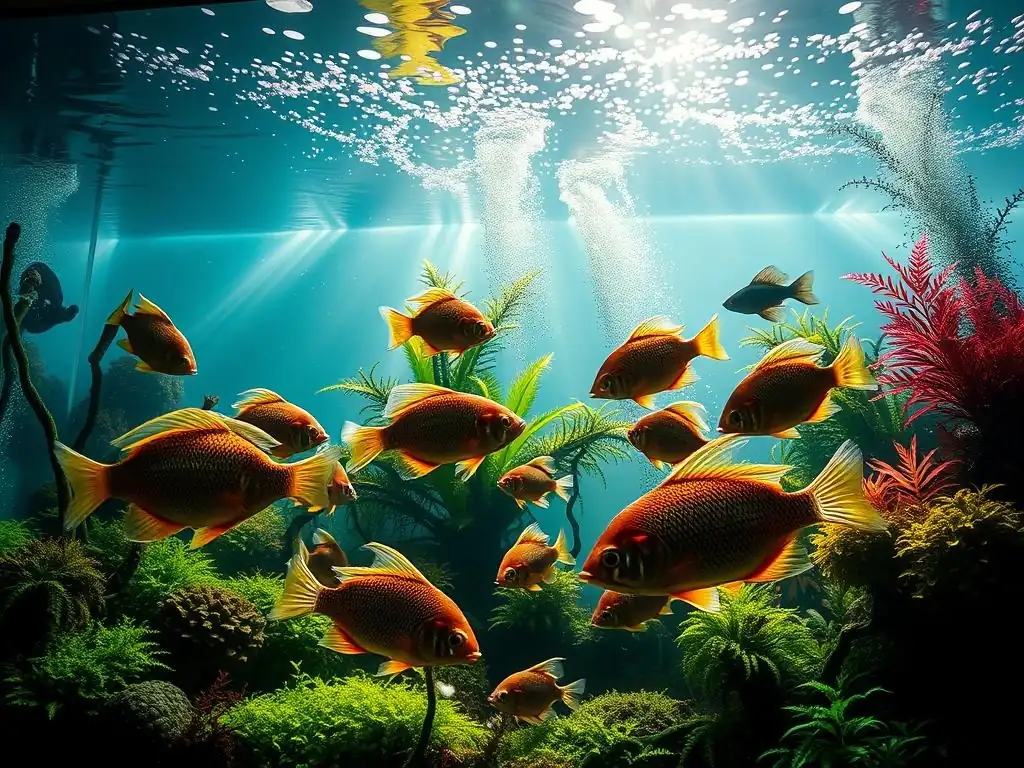
Welcome to Aquarium Mastery, where we help you build thriving aquatic ecosystems!
Ever wondered if your Corydoras are truly safe in their tank? These gentle bottom dwellers are a joy to keep, but choosing the wrong tank mates can lead to serious problems. Dive into our comprehensive guide on Corydoras tank compatibility problems and discover which fish to absolutely avoid to ensure a peaceful and healthy life for your Corydoras. Ready to safeguard your Corydoras? Let's explore!
- Understanding Corydoras Temperament and Tank Mate Needs
-
Fish to Avoid: Identifying Potential Problems
- Aggressive Fish: Minimizing Bullying and Stress
- Predatory Fish: Preventing Corydoras from Becoming Prey
- Fin-Nipping Fish: Protecting Corydoras Fins and Health
- Overly Active Fish: Reducing Competition for Resources
- Territorial Fish: Avoiding Unnecessary Conflict
- Fish with Similar Feeding Habits: Ensuring Adequate Food for Corydoras
- Fish Requiring Different Water Parameters: Maintaining a Stable Environment
- Large Fish: Preventing Accidental Harm
- Creating a Safe and Harmonious Aquarium Environment for Corydoras
-
Frequently Asked Questions
- What types of fish are generally not recommended to keep with Corydoras?
- Why is it important to consider tank mates carefully when keeping Corydoras?
- Are there any specific fish families that are known to cause problems with Corydoras?
- How can I tell if my Corydoras are being bullied or stressed by their tank mates?
- What should I do if I notice compatibility problems between my Corydoras and other fish in my tank?
- Final Reflection: Ensuring Harmony in the Corydoras Community
- Safeguard Your Corydoras: Take Action Now!
Understanding Corydoras Temperament and Tank Mate Needs
Corydoras: Peaceful Community Tank Inhabitants
Corydoras, often affectionately known as "Corys," are among the most popular and cherished freshwater aquarium inhabitants due to their peaceful demeanor and industrious bottom-dwelling habits. These small, armored catfish are primarily found in South American rivers and streams, where they spend their days sifting through substrate for food. Ranging in size from about 1 inch (2.5 cm) for species like the Pygmy Corydoras ( Corydoras pygmaeus) to approximately 3 inches (7.5 cm) for the Bronze Corydoras ( Corydoras aeneus), their gentle nature makes them ideal candidates for community tanks, provided their tank mates are chosen carefully.
Their social nature means Corydoras thrive in groups of at least six or more individuals of their own species. When kept in adequate numbers, they exhibit schooling behavior, which provides security and encourages natural activity. They are not fast swimmers and prefer to spend their time foraging on the tank bottom, using their sensitive barbels to explore the substrate. This specialized foraging behavior, combined with their calm temperament, makes them particularly vulnerable to stress, injury, and competition if housed with inappropriate tank mates, leading to common Corydoras tank compatibility problems.
Key Considerations for Corydoras Tank Compatibility
Ensuring the well-being of Corydoras hinges on selecting tank mates that align with their specific needs and temperament. Several factors must be meticulously considered to prevent Corydoras tank compatibility problems. Firstly, the temperament of potential tank mates is paramount; overly aggressive or territorial fish will stress Corydoras, leading to hiding, refusal to eat, and increased susceptibility to disease.
Secondly, water parameters are crucial. Corydoras generally prefer soft to moderately hard water with a pH range of 6.0 to 7.5 and temperatures between 72-78°F (22-26°C). Tank mates requiring vastly different conditions, such as very hard, alkaline water, will create an unstable environment detrimental to the Corydoras' health. Furthermore, considering feeding habits and activity levels is vital. Fast-eating, bottom-dwelling fish can outcompete Corydoras for food, while highly active fish can disrupt their calm foraging, contributing significantly to Corydoras tank compatibility problems over time.
Fish to Avoid: Identifying Potential Problems
Aggressive Fish: Minimizing Bullying and Stress
Aggressive fish pose a direct threat to the peaceful Corydoras, often leading to severe stress, physical injury, and even death. Even if direct attacks are not observed, constant bullying can cause Corydoras to become withdrawn, hide excessively, refuse to feed, and develop stress-related illnesses. Their small size and lack of defensive mechanisms make them easy targets for more assertive species.
Examples of highly aggressive fish to avoid include most larger Cichlids, such as the Convict Cichlid ( Amatitlania nigrofasciata) or certain African Cichlid species. While some dwarf cichlids like German Blue Rams ( Mikrogeophagus ramirezi) can sometimes coexist in very large, well-planted tanks, their territorial nature during breeding periods makes them a significant risk for the bottom-dwelling Corydoras. A single male Convict Cichlid, for instance, can terrorize a school of six Corydoras in a 30-gallon tank, leading to constant fin nipping and preventing them from accessing food.
Predatory Fish: Preventing Corydoras from Becoming Prey
One of the most critical Corydoras tank compatibility problems arises when housing them with predatory fish that view them as potential food. Even if a Corydoras is too large to be immediately swallowed, attempts by a predator can cause severe internal injuries or fatal stress. This is particularly true for smaller Corydoras species like the Pygmy Corydoras.
Large, predatory species like Oscar fish ( Astronotus ocellatus), Flowerhorn Cichlids, and various larger Catfish species (e.g., Redtail Catfish Phractocephalus hemioliopterus) should never be housed with Corydoras. An Oscar, for example, which can grow to over 12 inches (30 cm), will readily consume any fish small enough to fit into its mouth. Even a relatively sturdy Bronze Corydoras, measuring around 2.5 inches (6 cm), would be considered prey by a mature Oscar, leading to inevitable conflict and loss.
Fin-Nipping Fish: Protecting Corydoras Fins and Health
Fin-nipping is a common Corydoras tank compatibility problem that can lead to chronic stress, infections, and reduced quality of life. Corydoras have delicate fins, and their barbels are essential for foraging. Repeated nipping damages these sensitive structures, making it difficult for them to feed and navigate. Injured fins are also highly susceptible to bacterial and fungal infections, which can quickly become fatal.
The most notorious fin-nippers to avoid include Tiger Barbs ( Puntigrus tetrazona) and Serpae Tetras ( Hyphessobrycon eques). While these fish are often sold as community fish, their energetic and sometimes aggressive behavior, especially if not kept in large enough schools themselves, can lead them to harass slower-moving, long-finned tank mates. A school of 8-10 Tiger Barbs in a 20-gallon tank can relentlessly nip at the fins of a school of Corydoras, causing visible damage within days and leading to chronic stress that weakens their immune system.
Overly Active Fish: Reducing Competition for Resources
While not directly aggressive, overly active fish can create a stressful environment for Corydoras by constantly zipping around the tank, disrupting their calm foraging, and outcompeting them for food. Corydoras are relatively slow-moving and prefer a tranquil environment, particularly when sifting through the substrate. High-energy tank mates can make them feel insecure and prevent them from accessing adequate nutrition.
Examples of overly active fish that can cause Corydoras tank compatibility problems include certain larger Danios like the Giant Danio ( Devario aequipinnatus) and some species of Rainbowfish, especially if the tank size is insufficient to accommodate their high activity levels. A group of 5-6 Giant Danios, each growing up to 4 inches (10 cm), can create a frantic environment in a 29-gallon tank, causing Corydoras to retreat and miss out on sinking food, even if the Danios don't directly target them.
Territorial Fish: Avoiding Unnecessary Conflict
Territorial fish establish and defend a specific area of the tank, often the bottom, which directly conflicts with the bottom-dwelling nature of Corydoras. Any fish entering their perceived territory, regardless of intention, will be chased or harassed, leading to constant stress and potential injury for the Corydoras. This is a significant source of Corydoras tank compatibility problems.
Common culprits include Red-tailed Black Sharks ( Epalzeorhynchos bicolor) and Rainbow Sharks ( Epalzeorhynchos frenatum). These species, while striking in appearance, are known for their strong territorial instincts, especially as they mature. A single Red-tailed Black Shark, which can grow up to 6 inches (15 cm), will typically claim a cave or a specific rock formation as its territory and aggressively chase any fish, including Corydoras, that venture too close. This constant harassment can make Corydoras reluctant to leave their hiding spots, affecting their feeding and overall health.
Fish with Similar Feeding Habits: Ensuring Adequate Food for Corydoras
Another subtle but significant Corydoras tank compatibility problem arises when tank mates have similar bottom-feeding habits but are more aggressive or faster eaters. Corydoras are slow, methodical foragers. If housed with more dominant bottom-dwellers, they can be outcompeted for sinking pellets, wafers, or leftover food, leading to malnutrition and stunted growth over time.
Common Plecos ( Hypostomus plecostomus), while often sold as "algae eaters," can grow very large (over 12 inches or 30 cm) and consume vast amounts of food, including sinking foods meant for Corydoras. Other types of Loaches, such as the YoYo Loach ( Botia almorhae), can also be very fast eaters at the bottom. A single 12-inch Common Pleco can easily consume the entirety of a sinking wafer within minutes, leaving little to no food for a school of six 2-inch Corydoras, especially in a tank smaller than 75 gallons.
Fish Requiring Different Water Parameters: Maintaining a Stable Environment
Maintaining stable and appropriate water parameters is fundamental for any fish's health, and Corydoras are no exception. Housing Corydoras with fish that require significantly different water chemistry (pH, hardness) or temperature can lead to chronic stress, weakened immune systems, and increased susceptibility to diseases for one or both species. This environmental mismatch is a silent contributor to Corydoras tank compatibility problems.
A prime example is African Cichlids from the Rift Lakes (e.g., Mbunas, Peacocks), which thrive in hard, alkaline water with a pH typically ranging from 7.8 to 8.5 and temperatures around 78-82°F (26-28°C). Corydoras, however, prefer softer, slightly acidic to neutral water (pH 6.0-7.5) and slightly cooler temperatures. Attempting to house these two groups together would necessitate a compromise in water parameters that would stress both species, manifesting as faded colors, clamped fins, and increased disease outbreaks like "red spot disease" in Corydoras.
Large Fish: Preventing Accidental Harm
Even if a large fish is not inherently aggressive or predatory, its sheer size and bulk can pose an accidental threat to smaller, delicate Corydoras. During rapid movements, sudden turns, or feeding frenzies, a large fish can inadvertently bump into, injure, or even crush a Corydoras. This is particularly true in smaller tanks where space is limited.
Examples include very large Goldfish (though their temperate nature generally makes them unsuitable for tropical Corydoras anyway), large Plecos, and other sizable Catfish species. A 10-inch Common Pleco, for instance, when startled or during a vigorous feeding, could unintentionally collide with a 2-inch Corydoras. Such an impact, even if not fatal, could cause internal injuries or severe stress, leading to long-term health issues or directly contributing to Corydoras tank compatibility problems.
Creating a Safe and Harmonious Aquarium Environment for Corydoras
Selecting Compatible Tank Mates
Creating a safe and harmonious environment for Corydoras begins with careful selection of tank mates. Prioritize peaceful, non-aggressive species that occupy different levels of the water column and do not compete directly for bottom-dwelling food. Ideal companions include small, peaceful schooling fish such as Neon Tetras ( Paracheirodon innesi), Cardinal Tetras ( Paracheirodon axelrodi), Ember Tetras ( Hyphessobrycon amandae), and Harlequin Rasboras ( Trigonostigma heteromorpha).
Other suitable options include small, peaceful Danios like Celestial Pearl Danios ( Danio margaritatus), Guppies ( Poecilia reticulata), Platies ( Xiphophorus maculatus), and some Dwarf Gourami species ( Trichogaster lalius) or Honey Gouramis ( Trichogaster chuna). Ensure that any chosen tank mate shares similar water parameter requirements (temperature, pH, hardness) with Corydoras. For example, a 20-gallon long tank could comfortably house a school of 10 Neon Tetras and 6 Bronze Corydoras, providing ample space and minimizing Corydoras tank compatibility problems.
Observing and Monitoring Fish Behavior
Once new fish are introduced, continuous observation and monitoring of fish behavior are crucial to ensure a harmonious environment and address any emerging Corydoras tank compatibility problems. Pay close attention to signs of stress in your Corydoras, such as rapid breathing, excessive hiding, clamped fins, faded coloration, reluctance to feed, or any visible injuries like nipped fins or body scrapes.
Observe interactions between all tank inhabitants, especially during feeding times. If you notice any consistent aggression towards your Corydoras, or if they appear stressed for prolonged periods, be prepared to intervene by separating the aggressive fish or rehoming one of the species. Regularly checking water parameters (ammonia, nitrite, nitrate, pH, temperature) at least once a week also helps ensure a stable and healthy environment, which reduces stress and prevents conditions that might exacerbate Corydoras tank compatibility problems.
Quarantine New Fish
A fundamental step in preventing Corydoras tank compatibility problems and ensuring the health of your established aquarium is to quarantine all new fish before introducing them to the main tank. A separate quarantine tank, typically 10-20 gallons (38-76 liters) for most community fish, allows you to observe new arrivals for signs of illness or aggressive behavior without risking the health of your existing inhabitants.
Quarantine new fish for a minimum of 2-4 weeks. During this period, monitor them closely for symptoms of common fish diseases like Ich ( Ichthyophthirius multifiliis), Velvet ( Oodinium), or bacterial infections like fin rot. This time also allows you to assess their temperament and feeding habits. By quarantining, you drastically reduce the risk of introducing pathogens or aggressive individuals into your Corydoras' home, thereby proactively preventing significant Corydoras tank compatibility problems and maintaining a healthy, peaceful community.
Frequently Asked Questions
What types of fish are generally not recommended to keep with Corydoras?
Generally, aggressive or predatory fish are a poor match. Avoid species known for nipping fins or bullying smaller, peaceful fish.
Why is it important to consider tank mates carefully when keeping Corydoras?
Corydoras are peaceful and vulnerable. Improper tank mates can cause stress, injury, or even death to these gentle bottom dwellers.
Are there any specific fish families that are known to cause problems with Corydoras?
Yes, certain Cichlids can be problematic due to their aggressive territorial behavior. Also, some larger Loaches can compete for food and bully Corydoras.
How can I tell if my Corydoras are being bullied or stressed by their tank mates?
Signs of stress include hiding excessively, reduced activity levels, and loss of appetite. You might also observe physical injuries like torn fins.
What should I do if I notice compatibility problems between my Corydoras and other fish in my tank?
The first step is to separate the incompatible fish. You may need to re-home the aggressor or create a separate tank for the Corydoras to thrive.
Final Reflection: Ensuring Harmony in the Corydoras Community
The insights shared throughout this article highlight the crucial importance of thoughtful tankmate selection when keeping Corydoras catfish. Understanding potential compatibility issues is not just about preventing aggression or competition; it's about fostering an environment where these gentle bottom dwellers can thrive and exhibit their natural behaviors, contributing to a healthier and more vibrant aquarium ecosystem. Ignoring these considerations can lead to stress, illness, and ultimately, a diminished quality of life for these fascinating creatures.
This careful consideration extends beyond the confines of our aquariums and reflects a broader responsibility we have towards the animals in our care. The well-being of our Corydoras, and indeed all our aquatic pets, is directly tied to our understanding and respect for their specific needs. The greatness of a nation and its moral progress can be judged by the way its animals are treated.
- Mahatma Gandhi. This quote resonates deeply when we consider the ethical implications of carelessly introducing incompatible species into a shared environment, potentially causing unnecessary suffering.
Now, armed with this knowledge, I encourage you to reflect on your own aquariums and the choices you make. Are you truly creating a harmonious environment for all your inhabitants? Take the time to research, observe, and adjust as needed. By prioritizing the well-being of your Corydoras, and by extension, all your aquatic companions, you contribute to a more compassionate and responsible approach to fishkeeping, enriching both their lives and your own.
Safeguard Your Corydoras: Take Action Now!
Thank you for diving into the world of Corydoras and learning how to keep these peaceful scavengers safe. Now, let's ensure your aquarium remains a haven for your little friends.
Here are some actionable steps you can take to protect your Corydoras:
- Immediately review your tank's inhabitants and identify any potentially aggressive fish. Research their temperaments and adjust your stocking plan accordingly.
- Share this article with fellow aquarium enthusiasts to spread awareness about the importance of peaceful tankmates for Corydoras.
- Consider adding more hiding places like caves or dense plants to give your Corydoras extra security and reduce stress.
What proactive step will you take today to create a more harmonious environment for your Corydoras?