
Acan Feeding Response: How to Tell if Your Corals are Thriving

Welcome to Aquarium Mastery!
Ever wondered if your Acan corals are truly happy and healthy? Beyond the vibrant colors, understanding their feeding response is key to a thriving reef. Dive into our comprehensive guide and unlock the secrets to ensuring your Acans are not just surviving, but flourishing in your care. Let's uncover the subtle signs that indicate a successful feeding routine and optimize your coral's well-being!
- Understanding Acan Coral Health Through Feeding Response
- Identifying a Healthy Acan Feeding Response
- Factors Affecting Acan Coral Feeding Response
- Troubleshooting Poor or Absent Acan Feeding Response
- Best Practices for Feeding Acan Corals
- Recognizing the Signs of a Thriving Acan Coral Colony
- Conclusion: Mastering Acan Coral Care Through Observation
-
Frequently Asked Questions
- How can I tell if my Acan coral is exhibiting a healthy feeding response?
- What types of food elicit the best feeding response in Acan corals?
- How often should I feed my Acan corals to encourage a strong feeding response?
- What might cause a weak or absent feeding response in Acan corals?
- Can observing the Acan coral feeding response help me troubleshoot potential aquarium problems?
- Final Reflection: The Vibrant Language of Acan Corals
- Ignite Your Acan's Glow: Discover the Secret to Vibrant Colors!
Understanding Acan Coral Health Through Feeding Response
What is the Acan Feeding Response? A Key Indicator of Coral Health
The Acan feeding response refers to the active and observable process by which Acanthastrea corals capture and ingest food particles from their surrounding water column. This process typically involves the inflation and extension of the coral's polyps, followed by the deployment and movement of tiny tentacles that sweep the water for potential food items. Once a food particle, such as zooplankton or finely chopped meaty foods, is detected and captured, the tentacles guide it towards the central oral disc, where the mouth opens to engulf and ingest the nutrient.
Observing a robust Acan coral feeding response is paramount for aquarists because it serves as a direct indicator of the coral's physiological health and vitality. A healthy Acan should readily exhibit this behavior when food is introduced, showcasing its metabolic activity and energy reserves. Conversely, a diminished or absent Acan feeding response often signals underlying stress, ranging from inadequate water parameters to the presence of pests or disease, making it a critical diagnostic tool for proactive coral care.
Why is Observing the Acan Feeding Response Important?
Observing the Acan feeding response is not merely an interesting spectacle; it is a fundamental aspect of effective coral husbandry. This observation provides an early warning system for potential issues within the aquarium, often before more severe symptoms like tissue recession or bleaching become apparent. For instance, a subtle decline in the Acan coral feeding response might precede a significant shift in water chemistry or the onset of a parasitic infestation, allowing the aquarist to intervene promptly.
Furthermore, consistent observation of the Acan feeding response enables aquarists to fine-tune their coral's husbandry practices, including feeding frequency, food type, and portion sizes. A well-fed Acan coral, exhibiting a strong feeding response, typically demonstrates faster growth rates and more vibrant coloration.
For example, thriving Acanthastrea colonies can exhibit new polyp budding and skeletal growth of approximately 0.5 to 1 centimeter per month under optimal conditions, a direct result of efficient nutrient uptake facilitated by a healthy feeding response. This active engagement with food ensures the coral receives the necessary energy for calcification and tissue maintenance, leading to a more resilient and aesthetically pleasing colony.
Identifying a Healthy Acan Feeding Response
Recognizing the Initial Signs of Feeding in Acan Corals
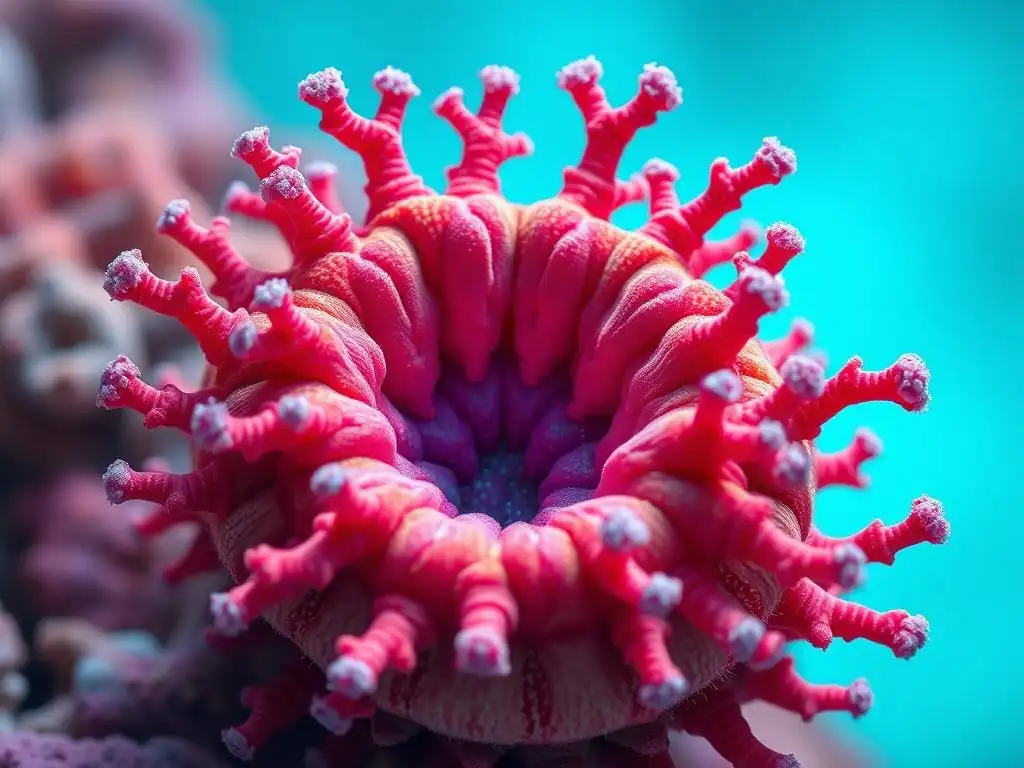
The initial signs of a healthy Acan feeding response are often subtle but distinct. When food is introduced into the aquarium, healthy Acanthastrea polyps typically begin to inflate or "puff up" within 5 to 15 minutes, appearing plumper and more turgid than their resting state. This inflation is a preparatory step, increasing the surface area for food capture. Simultaneously, the coral's small, often translucent tentacles may become more apparent, subtly extending and retracting in a searching motion, indicating an "alertness" to the presence of nutrients in the water column.
This preparatory phase is crucial because it demonstrates the coral's immediate physiological readiness to accept food. A strong initial Acan coral feeding response suggests that the coral is not under significant stress and has sufficient energy reserves to engage in active predation. Conversely, if polyps remain deflated or tentacles show no discernible movement after 20-30 minutes of food introduction, it may indicate a problem that warrants further investigation.
The Polyp Extension: A Visual Cue of a Healthy Acan
Following the initial inflation, a healthy Acan coral will exhibit significant polyp extension, a critical visual cue of its robust feeding capability. During this phase, the polyps extend outward from the skeletal base, often appearing fully inflated and "fleshy." This extension maximizes the coral's ability to capture food particles from the water column. A well-extended Acan polyp, when fully inflated and ready to feed, might extend approximately 0.5 to 1 centimeter from its base, showcasing its readiness to actively engage with nutrients.
This full polyp extension is distinct from the more subtle nocturnal extension some corals exhibit. For feeding, the polyps are not just elongated but also appear robust and often have their feeding tentacles clearly visible and active. A vigorous and consistent polyp extension during feeding times is a strong indicator of a thriving Acan coral, as it reflects adequate energy levels and a healthy physiological state.
Color Changes During Feeding: What to Look For
While not as dramatic as polyp extension, subtle color changes can also be observed in a healthy Acan during its feeding response. As the coral's metabolic activity increases in anticipation of and during food ingestion, some aquarists report a slight intensification of the coral's natural coloration or a subtle "glow." This might be attributed to increased activity of the coral's zooxanthellae, which are symbiotic algae that contribute to the coral's vibrant hues and provide energy through photosynthesis.
More noticeably, the central oral disc, or "mouth," of each polyp may become more prominent and defined. This area might appear as a slightly darker or more distinct spot in the center of the polyp, preparing to open and engulf food. Conversely, if an Acan coral shows signs of bleaching or significant color loss during or after feeding, it is an atypical response and could indicate severe stress, possibly from inappropriate lighting or water parameters.
The "Mouth" Response: Observing Tentacles and Ingestion
The most definitive sign of a successful Acan coral feeding response is the active "mouth" response, involving coordinated tentacle movement and visible ingestion. Once a food particle makes contact with the extended tentacles, they will actively grasp and guide it towards the central oral pore. This process can be remarkably fast; a small mysis shrimp, for instance, might be captured by tentacles and visibly moved towards the mouth within seconds of contact.
The central mouth, typically a small slit or opening on the oral disc, will then visibly widen to engulf the food particle. After ingestion, the mouth will constrict, indicating the successful consumption of the food. Observing this precise and efficient coordination of tentacles and mouth action confirms that the Acan coral is not only receptive to food but is also effectively processing it, which is crucial for its long-term health and growth.
Factors Affecting Acan Coral Feeding Response
Water Quality Parameters and Their Impact on Acan Feeding
Optimal water quality parameters are foundational for a robust Acan coral feeding response. Key parameters include stable salinity (ideally 1.025-1.026 specific gravity), a consistent temperature range (76-78°F or 24.5-25.5°C), and balanced levels of alkalinity (8-10 dKH), calcium (400-450 ppm), and magnesium (1300-1400 ppm). Deviations from these ideal ranges can quickly stress Acans, diminishing their feeding drive. For example, a sudden drop in alkalinity by even 1 dKH can significantly reduce the Acan coral feeding response within hours, as the coral expends energy on maintaining internal homeostasis rather than feeding.
While Acans can tolerate some levels of nitrates (5-10 ppm) and phosphates (0.03-0.08 ppm), excessively high concentrations of these nutrients (e.g., nitrates above 20 ppm or phosphates above 0.1 ppm) can inhibit feeding and overall health due to poor water quality and the potential for nuisance algae growth, which competes with the coral for resources and can irritate its polyps. Maintaining pristine and stable water conditions is therefore paramount to ensure a consistent and vigorous Acan coral feeding response.
Lighting Requirements and Feeding Behavior in Acans
Acanthastrea corals are classified as large polyp stony (LPS) corals and rely on both photosynthesis (via their symbiotic zooxanthellae) and heterotrophic feeding for their energy needs. They generally prefer moderate lighting conditions, with a Photosynthetically Active Radiation (PAR) range typically between 75 and 150. Too little light can lead to pale coloration and a reduced Acan coral feeding response, as the coral may lack the energy reserves provided by photosynthesis to engage in active predation.
Conversely, excessive light can cause stress, leading to bleaching, polyp retraction, and a reluctance to feed. This is because the coral's zooxanthellae can produce harmful reactive oxygen species under high light, forcing the coral to expel them. An Acan under appropriate lighting will have its zooxanthellae thriving, providing a significant portion of the coral's daily energy requirements, which in turn supports the metabolic demands of an active Acan coral feeding response.
Proper Flow and Its Role in Nutrient Delivery
Proper water flow is another critical factor influencing the Acan coral feeding response. Acans thrive in moderate, indirect flow that gently sways their polyps without causing them to retract or struggle. The ideal flow pattern ensures that food particles are delivered directly to the coral's extended polyps and tentacles, while also carrying away metabolic waste products. Too much direct or turbulent flow can physically damage the polyps, prevent them from fully extending, or even cause them to retract completely, making effective feeding impossible.
On the other hand, insufficient flow can lead to stagnant areas where detritus and uneaten food accumulate around the coral, potentially suffocating it or promoting nuisance algae growth. A balanced flow ensures optimal nutrient delivery and waste removal, directly supporting the coral's ability to extend its polyps, deploy its tentacles, and exhibit a strong Acan coral feeding response. Observing the gentle, consistent sway of the polyps is a good indicator that the flow is appropriate.
The Importance of a Stable Environment for Optimal Feeding
Beyond individual parameters, the overall stability of the aquarium environment is paramount for an optimal Acan coral feeding response. Acans, like many corals, are highly sensitive to sudden fluctuations in their environment. Rapid changes in temperature (e.g., swings of more than 1-2°F within a few hours), large and infrequent water changes, or the introduction of new equipment that drastically alters flow or light can all trigger significant stress.
When stressed, a coral's energy is diverted from non-essential functions like feeding towards survival mechanisms, resulting in a reduced or absent Acan coral feeding response. Maintaining a consistent routine for lighting, temperature, and water chemistry minimizes stress and allows the coral to allocate its energy towards growth, coloration, and consistent feeding. A stable tank environment fosters predictable behavior and promotes a reliable Acan coral feeding response over the long term, contributing significantly to the colony's overall health and longevity.
Troubleshooting Poor or Absent Acan Feeding Response
Identifying Potential Causes of a Lack of Feeding Response
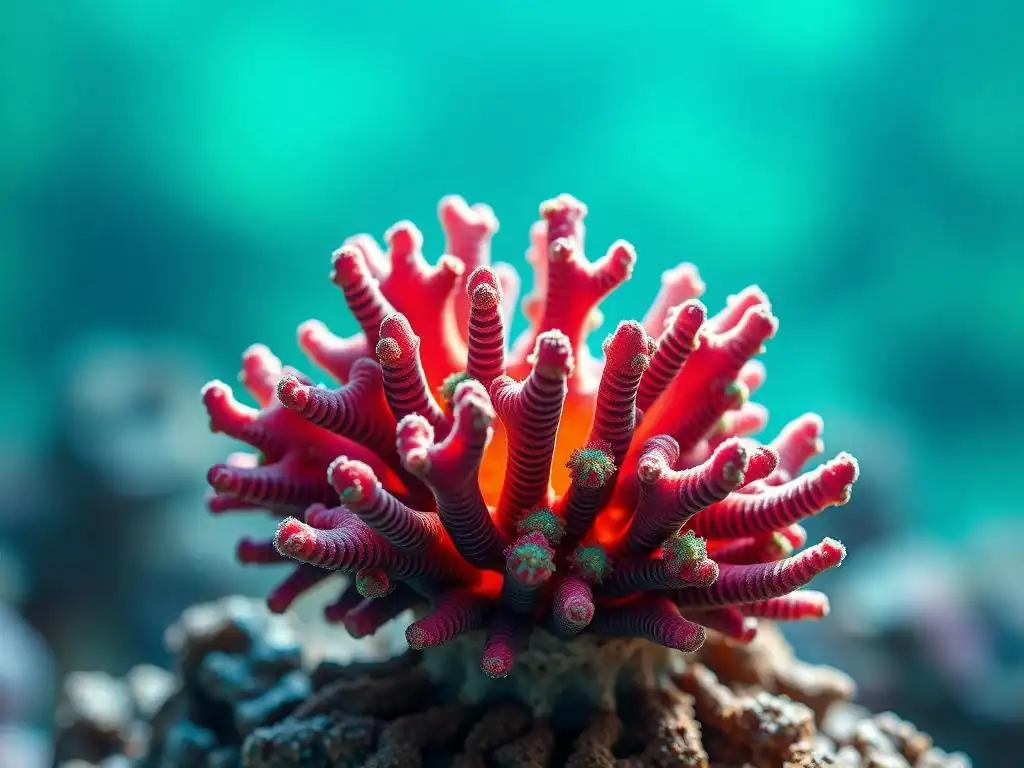
A diminished or absent Acan coral feeding response is a clear signal that something in the aquarium environment is amiss. Identifying the root cause requires a systematic approach, starting with the most common culprits.
Inadequate Water Parameters: Testing and Adjustment
The first step in troubleshooting is to meticulously test all critical water parameters. This includes salinity, temperature, alkalinity, calcium, magnesium, nitrates, and phosphates. For instance, if alkalinity drops from its ideal range of 8-10 dKH to below 7 dKH, Acan polyps may "deflate" and hinder calcification, directly impacting their ability to extend and feed.
Similarly, ammonia or nitrite, even in trace amounts (0 ppm), are highly toxic and will immediately shut down an Acan coral feeding response. Use reliable test kits and perform tests regularly, ideally weekly for key parameters, to catch deviations early. Compare current readings to the optimal ranges for Acanthastrea corals to pinpoint any discrepancies.
Insufficient Lighting: Evaluating Light Intensity and Spectrum
Both too little and too much light can negatively impact the Acan coral feeding response. If your Acan appears pale or its polyps are consistently retracted and it shows no interest in food, it might be receiving insufficient PAR (Photosynthetically Active Radiation). Conversely, if it's bleaching or showing signs of stress like excessive retraction, the light might be too intense.
Ideally, Acanthastrea corals thrive in PAR values between 75 and 150. Consider using a PAR meter to accurately measure your light intensity at the coral's level. If a PAR meter is unavailable, observe other corals in the tank for signs of light stress and adjust fixture height or intensity settings gradually.
Inappropriate Flow: Optimizing Water Movement
Water flow directly impacts the Acan coral feeding response by delivering food and removing waste. Observe your Acan's polyps: are they being blasted by direct flow, causing them to retract? Or is the flow too weak, allowing detritus to settle on the coral? Too strong a flow can tear delicate polyps, while too weak a flow prevents food particles from reaching the coral effectively. A good flow should cause the polyps to gently sway without excessive agitation. Repositioning powerheads, adjusting their intensity, or adding diffusers can help create the ideal moderate, indirect flow that encourages polyp extension and feeding.
Pests and Diseases Affecting Acan Coral Feeding
Pests and diseases are often overlooked causes of a poor Acan coral feeding response. Common pests that can irritate or consume Acans include various types of flatworms (like Convolutriloba retrogemma), nudibranchs (though less common for Acanthastrea than some other corals), or even predatory snails. Symptoms beyond a lack of feeding include tissue recession, visible lesions, or unusual growths. A thorough visual inspection of the coral, especially around its base and between polyps, is crucial. For example, if you spot small, often camouflaged flatworms on the coral's tissue, they can directly irritate the polyps, preventing the Acan coral feeding response.
Solutions to Improve Acan Feeding Response
Once potential causes for a poor Acan coral feeding response are identified, targeted solutions can be implemented to restore the coral's vitality. Patience and gradual adjustments are key to avoid further stressing the coral.
Adjusting Water Chemistry for Optimal Coral Health
If water parameters are off, gradual adjustments are necessary. For instance, if alkalinity is low (e.g., 6 dKH), increase it slowly by no more than 0.5-1 dKH per day using a balanced alkalinity supplement until it reaches the target range of 8-10 dKH. Similarly, calcium and magnesium should be adjusted gradually.
For salinity issues, make small, incremental adjustments with RO/DI water or saltwater mix. Regular small water changes (e.g., 10% weekly) can also help stabilize parameters and reduce accumulated nitrates and phosphates, which can inhibit the Acan coral feeding response. Consistency in water parameters is far more beneficial than rapid corrections.
Implementing Proper Lighting Strategies
To optimize lighting, begin by confirming your light fixture's recommended settings for LPS corals. If PAR is too low (e.g., below 75), gradually increase the light intensity or duration over several days or weeks, observing the Acan's response. Conversely, if PAR is too high (e.g., above 150) or if the coral shows signs of bleaching, lower the light intensity or raise the fixture. Aim for a PAR range of 75-150 for Acanthastrea corals. A gradual increase of 5-10% intensity per week is a safe method to allow the coral to adapt and encourage a healthy Acan coral feeding response.
Refining Flow Patterns to Enhance Nutrient Uptake
To refine flow, observe how the water moves around your Acan. If polyps are closed or being pushed excessively, reposition powerheads or add wavemakers to create a more diffuse, indirect flow. If detritus is settling, indicating insufficient flow, consider adding a small powerhead or adjusting existing ones to create gentle turbulence. The goal is to ensure that food particles gently swirl past the extended polyps without blasting them. Experiment with different powerhead angles and positions until the polyps exhibit a gentle sway and remain fully extended, ready for a strong Acan coral feeding response.
Addressing Pest Infestations and Diseases
If pests are identified, immediate action is crucial. For flatworms, a coral dip (e.g., using a product like Revive Coral Dip, following manufacturer instructions) can often remove them. A typical dip might last 10-15 minutes, after which the coral is rinsed and returned to the tank. For more persistent issues or suspected diseases, consult with experienced aquarists or a veterinarian specializing in aquatic organisms. Always quarantine new corals for several weeks before introducing them to your main display tank to prevent the introduction of pests and diseases, thus safeguarding your existing Acan coral colonies and their feeding responses.
Best Practices for Feeding Acan Corals
Selecting the Right Food for Acan Corals
Acanthastrea corals are carnivorous and thrive on a diet of appropriately sized, nutrient-rich foods. Ideal food choices include frozen mysis shrimp, enriched brine shrimp, finely chopped pieces of seafood (such as shrimp or fish), and specialized coral pellets or liquid foods designed for LPS corals. The particle size is crucial; it should be small enough for the coral's mouth to engulf, typically ranging from 0.5 to 2 millimeters.
Examples of commercially available foods that promote a strong Acan coral feeding response include Reef Roids, Rod's Food, and PE Mysis. Providing a varied diet ensures your Acans receive a full spectrum of essential nutrients, supporting their growth and vibrant coloration.
Optimal Feeding Schedules and Techniques for Acans
For robust growth and consistent vitality, Acan corals benefit from being fed 2-3 times per week. For maintenance, once a week may suffice. The timing of feeding can also influence the Acan coral feeding response; many aquarists find that Acans extend their polyps more fully and exhibit a stronger feeding response when fed at night or when the aquarium lights are dimmed, mimicking their natural nocturnal feeding behavior.
Before feeding, it is highly recommended to turn off powerheads and return pumps for 10-15 minutes to allow the food to settle directly onto the corals and prevent it from being immediately dispersed into the water column. This ensures that the food is readily available for the corals to capture.
Target Feeding vs. Broadcast Feeding: Which is Best?
When feeding Acan corals, aquarists typically choose between target feeding and broadcast feeding, each with its own advantages.
- Target feeding involves using a pipette or turkey baster to deliver food directly to each individual coral polyp. This method minimizes waste, ensures that each coral receives an adequate portion of food, and allows the aquarist to directly observe the Acan coral feeding response of specific polyps. It is particularly beneficial for shy or smaller colonies, ensuring they don't miss out on nutrition.
- Broadcast feeding, conversely, involves dispersing food into the water column, allowing the corals to capture particles as they drift by. This method is less time-consuming and can feed all corals and filter feeders in the tank simultaneously. However, it results in more waste, can contribute to higher nutrient levels, and makes it harder to ensure specific corals receive sufficient food.
For Acanthastrea corals, target feeding is generally preferred. It ensures precise nutrient delivery, allowing for direct observation of the Acan coral feeding response and promoting optimal growth and health without excessively polluting the water column.
Preventing Overfeeding and Maintaining Water Quality
While feeding is essential for Acan health, overfeeding can quickly lead to significant water quality issues. Excess uneaten food decomposes, contributing to nutrient spikes (especially nitrates and phosphates), which can fuel nuisance algae blooms and stress corals. To prevent overfeeding, feed small amounts and closely observe the Acan coral feeding response. Only offer what the corals can consume within 15-20 minutes. Any uneaten food remaining after this period should be siphoned out to maintain water quality.
In conjunction with controlled feeding, regular water changes (e.g., 10-20% bi-weekly) are crucial for exporting excess nutrients and maintaining stable parameters. Furthermore, utilizing effective filtration methods such as a robust protein skimmer, a refugium, carbon dosing, or granular ferric oxide (GFO) can help manage nutrient levels and ensure a clean, healthy environment that supports a consistent Acan coral feeding response.
Recognizing the Signs of a Thriving Acan Coral Colony
Healthy Growth Patterns and Coloration
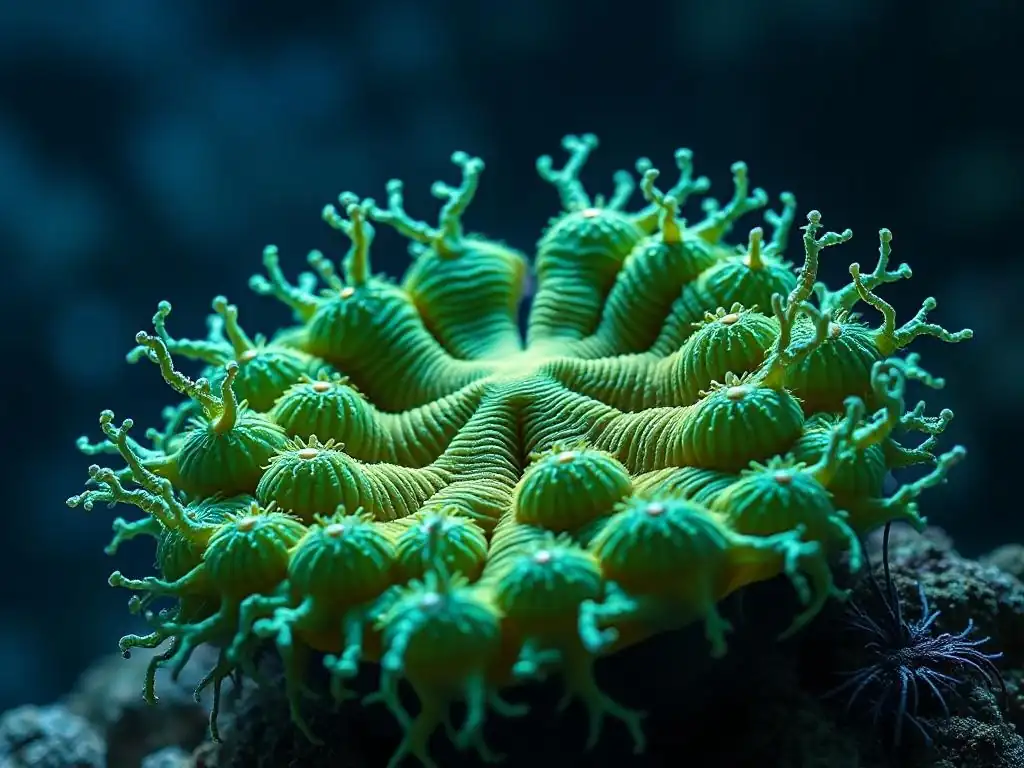
A thriving Acan coral colony exhibits clear signs of health, with healthy growth patterns and vibrant coloration being among the most noticeable. Growth in Acanthastrea corals manifests as the budding of new polyps, an increase in the size of existing polyps, and visible skeletal growth along the edges of the colony. Under optimal conditions, a healthy Acan colony might add 1-2 new polyps per month, or show noticeable expansion in colony diameter.
The coral's coloration should be consistent, deep, and true to its specific morph, with no signs of fading, bleaching, or dullness. Rich, vibrant colors indicate healthy zooxanthellae populations and efficient pigment production, reflecting the coral's overall vitality and successful nutrient uptake.
Consistent and Vigorous Feeding Response
The most reliable and dynamic indicator of a thriving Acan coral colony is a consistent and vigorous Acan coral feeding response. When food is introduced, healthy Acans should readily extend their polyps, actively deploy their tentacles, and efficiently capture and ingest food particles every time. This robust and predictable behavior demonstrates the coral's abundant energy reserves, strong metabolic processes, and overall well-being. A colony that consistently exhibits a strong Acan coral feeding response is actively taking in the necessary nutrients for calcification, tissue repair, and growth, confirming its excellent state of health.
Absence of Disease or Pest Infestation
A thriving Acan coral colony will also be free from any visible signs of disease or pest infestation. This includes the absence of tissue recession (where the coral tissue pulls away from the skeleton), unusual lesions, white patches, or any visible growths that are not part of the coral's natural structure. Furthermore, the colony should be free of common coral pests such as flatworms, nudibranchs, or other parasitic organisms that can irritate or consume coral tissue.
The skeletal base should be clean, without any significant overgrowth of nuisance algae or cyanobacteria, which can indicate poor water quality or a stressed coral. Regular visual inspections are essential to ensure the continued absence of these detrimental factors.
Conclusion: Mastering Acan Coral Care Through Observation
Key Takeaways for a Healthy and Thriving Acan Coral
Mastering Acan coral care hinges significantly on diligent observation, particularly of their feeding response. The Acan coral feeding response is an invaluable diagnostic tool, offering immediate insights into the coral's health and the stability of its environment. Key takeaways for fostering a healthy and thriving Acan colony include maintaining consistently stable water parameters—salinity, temperature, alkalinity, calcium, and magnesium—within their optimal ranges.
Equally important are providing appropriate moderate lighting and ensuring balanced, indirect water flow that delivers nutrients without causing stress. Finally, regular, targeted feeding with suitable, nutrient-rich foods is essential to meet their heterotrophic needs and support their robust growth and vibrant coloration.
The Long-Term Benefits of Understanding Acan Feeding Response
Understanding and consistently observing the Acan coral feeding response offers profound long-term benefits for the aquarist and the coral colony alike. It enables proactive problem-solving, allowing you to identify and address potential issues like nutrient deficiencies, water quality fluctuations, or pest infestations at their earliest stages, preventing minor issues from escalating into severe health crises.
This informed approach leads to enhanced growth rates, more vibrant and stable coloration, and significantly increased longevity and resilience of your Acanthastrea colonies. Ultimately, mastering the nuances of the Acan feeding response deepens your connection to these captivating organisms, fostering a more rewarding and successful reef-keeping experience built on careful and informed husbandry.
Frequently Asked Questions
How can I tell if my Acan coral is exhibiting a healthy feeding response?
A healthy Acan feeding response typically involves the polyps extending and reaching for food. You should observe a noticeable inflation and movement towards the offered food source. This demonstrates the coral is actively seeking nutrition and thriving.
What types of food elicit the best feeding response in Acan corals?
Acan corals respond well to small, meaty foods like mysis shrimp, brine shrimp, and finely chopped seafood. Target feeding with a nutrient-rich coral food designed for LPS corals is also highly effective. The size of the food should be appropriate for their polyp size.
How often should I feed my Acan corals to encourage a strong feeding response?
While Acan corals benefit from supplemental feeding, overfeeding can be detrimental. Target feed them 2-3 times per week, observing their reaction and adjusting the frequency as needed. Consider the overall nutrient levels in your aquarium.
What might cause a weak or absent feeding response in Acan corals?
Poor water quality, including high nitrate or phosphate levels, can inhibit a healthy feeding response. Also, stress from insufficient lighting, incorrect salinity, or aggressive tank mates can suppress their appetite.
Can observing the Acan coral feeding response help me troubleshoot potential aquarium problems?
Yes, a sudden decline in feeding response often indicates an underlying issue. It can be an early warning sign of water chemistry problems, disease, or stress from other inhabitants. Regular observation helps in proactive tank management.
Final Reflection: The Vibrant Language of Acan Corals
The intricacies of the Acan coral feeding response, as we've explored, are not merely biological curiosities but vital indicators of reef health and the delicate balance of our marine ecosystems. Understanding these subtle cues allows us to become more responsible aquarists and advocates for coral conservation, ensuring these vibrant organisms continue to flourish.
This journey into the world of Acan corals has underscored the profound connection between observation and responsible stewardship. It's a reminder that even the smallest creatures can teach us valuable lessons about resilience and the interconnectedness of life. In the end, we will conserve only what we love; we will love only what we understand; and we will understand only what we are taught.
- Baba Dioum's words resonate deeply, urging us to continue learning and sharing our knowledge to protect these underwater wonders.
Now, armed with a deeper understanding of the Acan coral feeding response, I invite you to reflect on your own role in preserving our planet's biodiversity. Consider how you can apply this knowledge, whether through responsible aquarium practices, supporting conservation efforts, or simply spreading awareness. Let's all strive to be active participants in ensuring a thriving future for these magnificent corals and the ecosystems they support.
Ignite Your Acan's Glow: Discover the Secret to Vibrant Colors!
Thank you for diving into the world of Acan feeding with us! We hope you've gained valuable insights into observing and understanding your corals' feeding response. Now, let's translate that knowledge into action to unlock their full potential.
Here are a few ways to take your Acan care to the next level:
- Commit to a weekly observation of your Acans' feeding behavior. Note the polyp extension, coloration changes, and any visible ingestion of food. This consistent monitoring is key.
- Consider experimenting with different small-sized food particles like reef roids or finely crushed flake food. Track which ones elicit the strongest feeding response.
- Share your findings! Join the Aquarium Mastery community forums and post photos or videos of your Acans feeding. Help others learn and troubleshoot.
What surprising feeding behavior have you observed in your Acans that you think other reef keepers should know about?