
Lighting Your Angelfish Tank: More Than Just Illumination

Welcome to Aquarium Mastery!
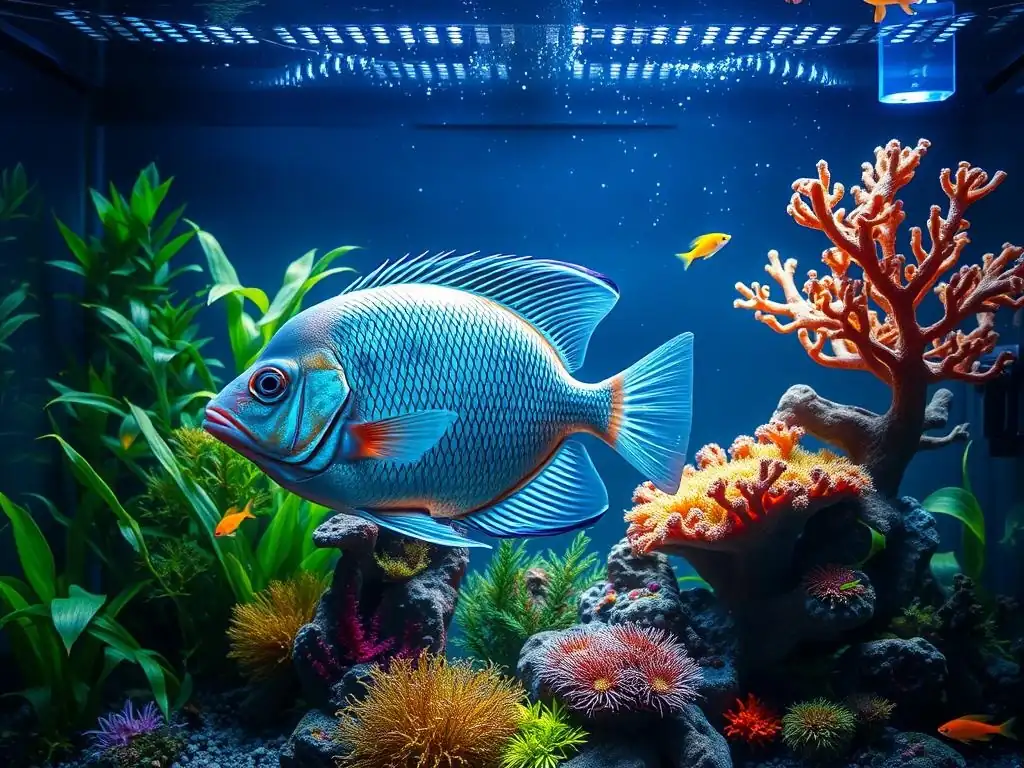
Ever wondered if your angelfish are truly thriving under their current lighting? Unlocking the secret to optimal illumination is key to their health, color, and overall well-being. Dive into our comprehensive Angelfish Tank Lighting Guide and discover how to create the perfect underwater paradise for your finned friends. Get ready to transform your aquarium from simply lit to brilliantly alive!
- Understanding the Importance of Lighting for Angelfish in Reef Aquariums
- Reef Tank Lighting Guide: Choosing the Right Light for Your Angelfish and Corals
- Setting Up Your Reef Tank Lighting System
- The Impact of Lighting on Reef Tank Ecosystem
- Troubleshooting Common Reef Tank Lighting Issues
- Advanced Reef Tank Lighting Techniques
- Frequently Asked Questions
- Final Reflection: Illuminating the Angelfish World
- Spark Joy: Ignite Your Angelfish's World Today!
Understanding the Importance of Lighting for Angelfish in Reef Aquariums
Why Proper Reef Tank Lighting is Crucial for Angelfish and Coral Health
The vitality of a reef aquarium hinges significantly on its lighting, a factor often underestimated beyond mere aesthetics. For angelfish thriving within a reef environment, the health of the corals and the overall stability of the ecosystem directly impact their well-being. Proper illumination fuels the symbiotic algae, zooxanthellae, living within coral tissues, providing up to 90% of the coral's energy requirements through photosynthesis. Without adequate light, corals starve, leading to bleaching, tissue recession, and eventually death, which destabilizes the entire reef system that angelfish inhabit.
Furthermore, a well-lit reef tank fosters a robust microfauna and microflora, contributing to the natural food chain and water purification processes. This thriving ecosystem provides angelfish with natural foraging opportunities and a stress-reduced habitat. Conversely, an ailing reef due to improper lighting can lead to poor water quality, increased algal blooms, and a general decline in the environment, making angelfish more susceptible to disease and stress. Therefore, a comprehensive angelfish tank lighting guide must emphasize the foundational role of light for the entire reef.
The Role of Light Spectrum in Angelfish and Coral Coloration
Light spectrum refers to the specific wavelengths of light emitted by a fixture, measured in nanometers (nm) and often characterized by color temperature in Kelvin (K). For reef aquariums, the blue and actinic ranges (approximately 400-470nm) are paramount, as these wavelengths are most efficiently absorbed by zooxanthellae for photosynthesis and also stimulate the vibrant fluorescent proteins within corals. A typical reef tank might utilize fixtures providing a color temperature between 10,000K and 20,000K, often with a significant blue component.
While angelfish themselves do not photosynthesize, the appropriate light spectrum enhances their natural coloration and vibrancy, making their iridescent scales and intricate patterns truly pop against the backdrop of a healthy reef. Beyond visual appeal, a balanced spectrum supports the overall health and growth of corals, which in turn creates a more natural and thriving environment for the angelfish. Corals that fluoresce under specific blue light conditions contribute to the dynamic visual experience, creating an environment that closely mimics their natural habitat and reduces stress for the angelfish.
Reef Tank Lighting Guide: Choosing the Right Light for Your Angelfish and Corals
Selecting the Optimal Light Spectrum for Reef Aquariums with Angelfish
Choosing the optimal light spectrum for a reef aquarium housing angelfish involves balancing the biological needs of corals with the aesthetic preferences of the aquarist. A common strategy involves a blend of blue/actinic light, which is crucial for coral photosynthesis and fluorescence, and full-spectrum white light (ranging from 10,000K to 20,000K) to provide a balanced visual appeal and support broader photosynthetic processes. Many successful reef keepers aim for a blue-to-white ratio of approximately 2:1 or 3:1, providing a vibrant, deep blue appearance that accentuates coral colors while still delivering the necessary energy for growth.
Specific wavelengths are vital; for instance, chlorophyll a and c (found in zooxanthellae) have peak absorption in the blue (around 440nm) and red (around 675nm) regions. While red light penetrates water less effectively, blue light penetrates deeply, making it the workhorse of reef tank lighting. The ideal spectrum should promote robust coral growth and coloration, which subsequently ensures a stable and healthy habitat for angelfish. This considered approach is a cornerstone of any effective angelfish tank lighting guide.
PAR (Photosynthetically Active Radiation) and Reef Tank Lighting: What You Need to Know
PAR, or Photosynthetically Active Radiation, quantifies the amount of light within the visible spectrum (400-700nm) that is available for photosynthesis. It is a critical metric for reef aquarists because it directly measures the light energy accessible to corals' symbiotic zooxanthellae. Unlike general light intensity, PAR specifically focuses on the wavelengths that drive biological processes. PAR values decrease significantly with distance from the light source and water depth, making fixture height and tank depth crucial considerations.
Understanding PAR is vital for providing adequate light for various coral types. For instance, soft corals and Large Polyp Stony (LPS) corals generally thrive in PAR ranges of 50-150 µmol·m⁻²·s⁻¹, while Small Polyp Stony (SPS) corals, known for their demanding light requirements, often need 200-450+ µmol·m⁻²·s⁻¹. While angelfish do not have direct PAR requirements, ensuring corals receive optimal PAR levels leads to their robust health and growth, contributing to a stable and thriving reef environment, which is paramount for the long-term well-being of the angelfish. A PAR meter is often considered an indispensable tool for precise light measurement.
Types of Aquarium Lights Suitable for Reef Tanks with Angelfish: A Comparison
LED Lighting for Reef Tanks with Angelfish: Advantages and Disadvantages
LED (Light Emitting Diode) lighting has become the dominant choice for reef aquariums due to its numerous advantages. Modern LED fixtures offer exceptional energy efficiency, consuming significantly less power than traditional lighting types, which can translate to notable savings on electricity bills. Their lifespan is remarkably long, often exceeding 50,000 hours, drastically reducing the frequency and cost of bulb replacements. Furthermore, many high-end LED units feature customizable spectrums, dimming capabilities, and programmable controllers, allowing aquarists precise control over light intensity and color, including the simulation of natural dawn and dusk cycles. This level of control is invaluable for fine-tuning an angelfish tank lighting guide setup.
However, LED lighting also presents some disadvantages. The initial investment for quality LED fixtures can be substantially higher than other lighting options, ranging from a few hundred to over a thousand dollars for a comprehensive setup. Some early or lower-quality LED fixtures suffered from a "disco ball" effect, where individual color points were visible, or lacked a truly balanced spectrum for optimal coral growth. While these issues have largely been addressed by leading manufacturers, the quality and performance of LED units can vary widely across brands.
Metal Halide Lighting for Reef Tanks with Angelfish: A Detailed Look
Metal Halide (MH) lighting was once considered the gold standard for high-intensity reef aquariums, particularly for demanding SPS corals. These lights are renowned for their intense light output and excellent water penetration, often creating a captivating "shimmer" effect reminiscent of natural sunlight on the ocean floor. With the right choice of bulb (e.g., 10,000K, 14,000K, or 20,000K), metal halides can provide a broad and powerful spectrum that promotes vigorous coral growth.
Despite their intensity, metal halides come with significant drawbacks. They produce a substantial amount of heat, often requiring the use of a chiller to prevent water temperature fluctuations, especially in warmer climates. Their energy consumption is considerably higher than LEDs, contributing to higher operating costs. Furthermore, metal halide bulbs have a limited lifespan, typically requiring replacement every 6-12 months to maintain optimal spectrum and intensity, with individual bulbs costing anywhere from $50 to over $100. While powerful, their lack of fine-tuned control compared to modern LEDs makes them less favored for many contemporary angelfish tank lighting guide setups.
T5 Fluorescent Lighting for Reef Tanks with Angelfish: Is it Still a Good Option?
T5 (High-Output Fluorescent) lighting remains a viable and popular option for many reef aquarists, particularly for mixed reef tanks or those focusing on LPS and soft corals. T5 fixtures offer excellent spectrum control through the strategic mixing of different color temperature bulbs (e.g., blue, actinic, daylight, purple). This allows aquarists to tailor the spectrum precisely to their corals' needs and aesthetic preferences.
T5s also provide a very even light spread across the tank, minimizing shading and ensuring consistent illumination for all inhabitants, including angelfish. Their initial cost is often lower than high-end LED units, making them a budget-friendly entry point for reef keeping.
However, T5 lighting does have its limitations. While more energy-efficient than metal halides, they consume more power than LEDs. T5 bulbs also degrade in spectrum and intensity over time, necessitating replacement every 9-12 months, a recurring cost. They produce more heat than LEDs, though significantly less than metal halides, and generally offer less dimming control and programmability compared to advanced LED systems. Despite these points, T5s are a proven technology that can still yield stunning results in an angelfish reef tank when properly maintained and managed.
Setting Up Your Reef Tank Lighting System
Determining the Correct Light Intensity for Angelfish and Corals
Establishing the correct light intensity is paramount for the health of both corals and the angelfish inhabiting the reef tank. The ideal intensity is highly dependent on the specific types of corals being kept; soft corals generally require lower PAR values (e.g., 50-100), while SPS corals demand much higher intensities (e.g., 250-450+). Overly intense light can lead to coral bleaching, where the zooxanthellae are expelled, while insufficient light causes corals to "brown out" and eventually starve due to lack of photosynthetic energy.
For angelfish, while they don't have direct light intensity needs, an overly bright tank can cause stress, leading to hiding behavior and reduced activity. It's crucial to observe the behavior of both corals and fish when adjusting intensity. Using a PAR meter is the most accurate way to determine light levels at various depths and locations within the tank.
When introducing new corals or upgrading lighting, a gradual acclimation process is essential, typically starting with lower intensity and slowly increasing it over several weeks to prevent shock. This careful adjustment is a key part of any comprehensive angelfish tank lighting guide.
Positioning Your Aquarium Lights for Optimal Coverage and Minimizing Shading
Proper positioning of your aquarium lights is critical to ensure uniform light distribution and maximize penetration throughout the reef tank. Lights should be mounted at a height that allows for broad coverage across the entire tank footprint, minimizing "hot spots" directly under the fixture and dark, shaded areas at the edges. For most LED and T5 fixtures, a mounting height of 6-12 inches above the water surface is common, though this can vary based on the fixture's optics and the desired PAR levels. Metal halides often require greater heights due to their intense, concentrated output.
Consider the aquascape when positioning lights. Tall rock structures or large coral colonies can cast shadows on areas below, depriving lower-lying corals of essential light. Adjusting the light fixture's angle or incorporating multiple light sources can help mitigate shading. The goal is to provide consistent illumination to all photosynthetic inhabitants, promoting uniform growth and vibrant coloration throughout the reef, creating a visually appealing and healthy environment for your angelfish.
Lighting Schedules for Reef Tanks: Mimicking Natural Light Cycles
Mimicking the natural light cycles of a tropical reef is fundamental for the well-being of both corals and angelfish. A typical reef tank lighting schedule involves a total photoperiod of 10-12 hours, with a 6-8 hour peak intensity period. Consistency is key; sudden, abrupt changes in light can stress both fish and corals. Modern controllers and dimmers allow for sophisticated simulation of sunrise and sunset, gradually increasing light intensity in the morning and decreasing it in the evening.
A common approach is a staggered schedule: 2-3 hours of actinic (blue) light to simulate dawn, followed by 6-8 hours of full-spectrum white light (with blue still active), then 2-3 hours of actinic-only light for dusk before complete darkness. This gradual transition reduces stress on angelfish, preventing startling behavior, and allows corals to slowly acclimate to changing light conditions throughout the day. A well-planned lighting schedule ensures a stable and natural rhythm for the entire reef ecosystem, which is a vital component of any effective angelfish tank lighting guide.
The Impact of Lighting on Reef Tank Ecosystem
How Lighting Affects Algae Growth in Reef Aquariums
While essential for corals, lighting is also a primary driver of nuisance algae growth in reef aquariums. Excessive light intensity or an overly long photoperiod, particularly when combined with elevated nutrient levels (nitrates and phosphates), provides ideal conditions for the proliferation of undesirable algae such as green hair algae, diatoms, and cyanobacteria (red slime algae). These fast-growing algae can quickly outcompete corals for light and nutrients, suffocating them and degrading the aesthetics of the tank.
Controlling nuisance algae requires a multi-faceted approach where lighting plays a crucial role. Adhering to a sensible photoperiod (e.g., 10-12 hours maximum), using appropriate light intensity for the tank's inhabitants, and ensuring robust nutrient export mechanisms (e.g., protein skimming, refugiums, regular water changes) are all vital. If algae blooms persist, reducing the light intensity or shortening the photoperiod can often help bring them under control. A balanced lighting approach is critical to prevent algae from overwhelming the reef and stressing angelfish by reducing their available space and visual clarity.
The Relationship Between Lighting and Coral Growth in Reef Tanks with Angelfish
The relationship between lighting and coral growth is direct and profound. Photosynthesis, driven by appropriate light spectrum and intensity, provides the majority of energy for stony corals to calcify and soft corals to grow their tissues. Different coral types have varying light requirements; SPS corals, for example, typically exhibit optimal growth under higher PAR levels and specific blue-heavy spectrums, while many LPS and soft corals can thrive under more moderate lighting.
Robust coral growth, facilitated by proper lighting, contributes significantly to the stability and maturity of the reef ecosystem. Healthy corals help maintain water quality by absorbing excess nutrients and providing oxygen during the day. This creates a more stable and natural environment for angelfish, reducing stress and providing ample natural hiding spots and foraging areas. Conversely, inadequate or excessive lighting will lead to stunted coral growth, tissue loss, and a compromised environment for all tank inhabitants, underscoring the importance of this relationship in an angelfish tank lighting guide.
Water Chemistry and Lighting: Maintaining a Balanced Reef Tank Environment
Lighting directly influences several critical aspects of reef tank water chemistry, primarily through its role in photosynthesis. During the light cycle, corals and algae actively photosynthesize, consuming carbon dioxide (CO2) from the water and releasing oxygen. This process leads to a natural increase in pH during the day. As corals grow under optimal light, they also consume alkalinity (carbonate hardness) and calcium for calcification, necessitating regular supplementation and monitoring of these parameters.
Conversely, during the dark cycle, photosynthesis ceases, and respiration becomes the dominant process, leading to a slight decrease in pH as CO2 is released. This natural diurnal pH swing is normal, but extreme fluctuations can stress angelfish and corals. Proper lighting schedules, including gradual sunrise/sunset simulations, help manage these daily shifts. Maintaining stable alkalinity (e.g., 8-12 dKH) and calcium (e.g., 400-450 ppm) levels is crucial to support the calcification driven by light, ensuring a balanced and healthy reef environment for your angelfish.
Troubleshooting Common Reef Tank Lighting Issues
Identifying and Addressing Algae Blooms Caused by Excessive Lighting
Identifying algae blooms caused by excessive lighting typically involves observing rapid and widespread growth of undesirable algae such as bright green hair algae, brown diatoms, or red slime algae (cyanobacteria) on rocks, sand, and tank glass. These blooms often appear shortly after increasing light intensity or extending the photoperiod. Corals might also show signs of stress, such as bleaching or receding tissue, if the light is too intense for their specific needs.
To address these issues, first, verify your photoperiod; it should not exceed 10-12 hours of total light. If using dimmable lights, gradually reduce the intensity by 10-20% over a week or two. Ensure your nutrient control methods (protein skimming, refugium, water changes) are adequate, as light fuels algae only when nutrients are present. In severe cases, a temporary 3-day blackout can help reset the tank, but monitor angelfish closely during this period. Regularly cleaning the glass and siphoning visible algae can also assist in removal.
Dealing with Low Light Conditions and Their Effects on Angelfish and Corals
Low light conditions in a reef tank can manifest in several ways, particularly affecting corals. Common signs include corals "browning out" (losing their vibrant colors), exhibiting slow or no growth, or showing signs of tissue recession. Zooxanthellae, deprived of sufficient light for photosynthesis, will struggle to provide energy to their coral hosts. While angelfish aren't directly affected by low light, a dull, unproductive reef environment can indirectly impact their well-being by reducing overall tank health and visual appeal.
To remedy low light, first, confirm your light fixture is appropriate for your tank size and coral types. Check the age of T5 or metal halide bulbs, as their intensity and spectrum degrade over time, requiring replacement every 9-12 months. For LED systems, gradually increase the intensity by 10-15% per week, observing coral response. Ensure the lights are mounted at an optimal height to maximize penetration and spread. Using a PAR meter to measure actual light levels at various points in the tank is crucial for accurate diagnosis and adjustment, ensuring your angelfish tank lighting guide is on point.
Light Acclimation for New Angelfish and Corals: Preventing Shock and Stress
Light acclimation is a critical step when introducing new corals to an existing reef tank, moving corals within a tank, or upgrading to a more powerful lighting system. Corals, especially stony corals, are highly sensitive to sudden changes in light intensity. Abrupt exposure to significantly higher light levels can cause severe stress, leading to bleaching (expulsion of zooxanthellae), tissue necrosis, or even death. While angelfish don't require light acclimation in the same way, a stable and gradually changing environment benefits their overall health and reduces stress.
Several methods facilitate proper acclimation:
- Gradual Intensity Increase: For new light fixtures, start with
50-60%intensity and slowly increase by5-10%weekly over4-8weeks. - Shaded Placement: Place new corals in lower light areas or shaded spots within the tank initially, gradually moving them to their desired location over time.
- Mesh Screens/Window Screen: Temporarily place layers of mesh window screen over the tank or directly under the light to diffuse intensity. Remove layers gradually.
- Observe Closely: Monitor corals for signs of stress (closed polyps, browning, bleaching) and adjust intensity accordingly. This measured approach ensures a smooth transition for all inhabitants.
Advanced Reef Tank Lighting Techniques
Using Dimmers and Controllers for Precise Lighting Control
Modern reef tank lighting, particularly LED systems, often incorporates advanced dimmers and programmable controllers. These sophisticated tools allow aquarists an unprecedented level of precise control over every aspect of their lighting. Rather than simple on/off switches, dimmers enable granular adjustment of light intensity, from 0% to 100%, across multiple color channels (e.g., blue, white, red, green). This means the aquarist can tailor the exact light output to the specific needs of their corals and the aesthetic preference for their angelfish tank lighting guide setup.
Controllers further enhance this precision by allowing aquarists to program complex lighting schedules. This includes setting specific intensity levels for different times of the day, creating custom spectrum blends, and even simulating weather patterns like cloud cover. This level of control is invaluable for fine-tuning the photosynthetic processes for optimal coral growth, managing algae, and providing a dynamic, natural environment that reduces stress for all inhabitants, including the angelfish. Many controllers are app-enabled, offering remote management and real-time adjustments.
Simulating Sunrise and Sunset for a Natural Reef Environment
One of the most significant advantages of modern programmable lighting controllers is the ability to simulate natural sunrise and sunset cycles. Instead of an abrupt "lights on" or "lights off" moment, the controller gradually ramps up light intensity in the morning, mimicking the dawn, and slowly ramps down in the evening, simulating dusk. This transition typically involves starting with low-intensity blue light, slowly introducing white and other spectrums, peaking, and then reversing the process.
This gradual change offers several substantial benefits for a reef tank containing angelfish. It significantly reduces stress on fish, preventing them from being startled by sudden light shifts. Corals also benefit from this slow acclimation to changing light conditions, allowing their zooxanthellae to adjust. Furthermore, a natural sunrise/sunset simulation promotes more natural behaviors in angelfish and other tank inhabitants, making them more active and less prone to hiding. It also enhances the overall aesthetic appeal of the aquarium, providing a more immersive and realistic viewing experience.
The Benefits of Moonlight LEDs in Reef Tanks
Moonlight LEDs are very low-intensity, deep blue lights typically used during the dark cycle of a reef tank. Their primary purpose is not for photosynthesis, as their intensity is far too low, but rather for observation and to provide a subtle visual cue during the nocturnal period. These lights mimic the faint glow of moonlight penetrating the ocean's surface, offering a calming ambiance for the tank.
The benefits of incorporating moonlight LEDs into an angelfish tank lighting guide setup include:
- Nocturnal Observation: They allow aquarists to observe the tank's nocturnal inhabitants, such as certain invertebrates, without disturbing them with bright lights.
- Reduced Stress: For angelfish and other diurnal fish, the subtle moonlight prevents them from being startled by complete darkness or sudden light changes if the main lights come on unexpectedly. It provides a sense of security during their resting period.
- Natural Behavior: Some research suggests that a consistent moonlight cycle may influence certain natural behaviors, including coral spawning, though this area requires further study.
- Aesthetic Appeal: Moonlights add a serene, captivating visual dimension to the tank during evening hours, enhancing the overall viewing experience.
Frequently Asked Questions
How much light does an angelfish tank need?
Angelfish don't require intense lighting. A moderate level is sufficient, typically around 2-3 watts per gallon, considering the tank's depth and the presence of live plants. Consider the needs of your tank mates too.
What type of lighting is best for an angelfish tank?
LED lighting is generally recommended for angelfish tanks due to its energy efficiency and customizable spectrum. It allows you to adjust the intensity and color to suit your angelfish and any live plants in the aquarium.
Can too much light harm my angelfish?
Yes, excessive lighting can stress angelfish, potentially leading to health issues or algae blooms. Observe your angelfish for signs of stress such as hiding or faded coloration.
Does lighting affect plant growth in an angelfish tank?
Absolutely! Proper lighting is crucial for plant photosynthesis and growth. Choose a spectrum that supports plant health while remaining comfortable for your angelfish, such as a full-spectrum LED.
How often should I replace the lighting in my angelfish tank?
LED lights are long-lasting, but their intensity decreases over time. Depending on the type, you might need to replace them every 1-3 years, or when you notice a significant reduction in brightness or plant growth slowing.
Okay, I understand. Here's a final reflection crafted for your article "Lighting Your Angelfish Tank: More Than Just Illumination," optimized for the keyword "Angelfish tank lighting guide" and following your specified structure:
Final Reflection: Illuminating the Angelfish World
The journey through the nuances of angelfish tank lighting reveals that it's far more than just a functional necessity; it's about creating a thriving aquatic ecosystem. Understanding the specific needs of these majestic creatures, from fostering plant growth to showcasing their vibrant colors, is crucial for responsible fishkeeping and a truly captivating aquarium experience.
This exploration has underscored how profoundly lighting impacts the health and well-being of angelfish. The ability to replicate their natural environment, even within the confines of a glass tank, is a testament to our dedication as aquarists. In nature, light is the architect of life; in the aquarium, we become the architects of light.
This quote encapsulates the responsibility we bear to provide optimal conditions for our angelfish to flourish.
Now, armed with this "Angelfish tank lighting guide," I encourage you to reflect on your own aquarium setup. Are you truly illuminating the potential of your angelfish and their environment? Take the time to assess your current lighting system, consider the needs of your plants and fish, and strive to create a balanced and beautiful underwater world. Your angelfish will thank you for it, and the rewards of a healthy, vibrant aquarium will be immeasurable.
Spark Joy: Ignite Your Angelfish's World Today!
Thank you for diving into the fascinating world of angelfish lighting! We hope you’ve gained valuable insights into creating the perfect aquatic environment for your finned friends. Now, let's take that knowledge and put it into action!
Here are some ways you can bring your angelfish tank to life:
- Immediately assess your current lighting setup: Is it truly meeting your angelfish's needs, or is an upgrade in order? Take action now to improve their well-being.
- Delve deeper into the aquatic plant kingdom! Research which low-light plants will thrive under your chosen lighting and add a touch of natural beauty to your tank.
- Share your newfound lighting expertise! Connect with fellow aquarists in online forums or social media groups and help them illuminate their own angelfish tanks.
What’s one small lighting adjustment you can make this week to significantly improve your angelfish's habitat?