
Lobophytum (Devil's Hand) Leather Care: A Unique & Hardy Addition

Welcome to Aquarium Mastery!
Ever wondered if you could add a touch of the exotic to your reef tank without all the fuss? Lobophytum leathers, also known as Devil's Hand corals, might just be your answer. Dive into our article and uncover essential Lobophytum leather care tips, learning how to nurture these unique and hardy corals to vibrant health. Are you ready to master the art of keeping these fascinating soft corals? Let's explore!
- Understanding Lobophytum Leather Corals: An Introduction
- Essential Lobophytum Leather Care Tips for a Thriving Reef
- Placement Strategies for Lobophytum Leather Corals in Your Reef Aquarium
- Identifying and Addressing Common Lobophytum Leather Coral Problems
- Propagating Lobophytum Leather Corals: Expanding Your Collection
- Maintaining a Healthy Lobophytum Leather: A Long-Term Care Perspective
- Lobophytum Leather Coral: A Summary of Key Care Considerations
-
Frequently Asked Questions
- What are the essential conditions for keeping Lobophytum leather coral healthy in an aquarium?
- How often should I perform water changes to maintain a healthy Lobophytum leather coral?
- What common problems affect Lobophytum leather corals, and how can I address them?
- Are there specific water parameters I should monitor closely for Lobophytum leather coral?
- What type of lighting is best suited for Lobophytum leather coral in a reef tank?
- Final Reflection: Embracing the Resilience of Lobophytum
- Cultivate Your Underwater Oasis: Take the Next Step!
Understanding Lobophytum Leather Corals: An Introduction
What is a Lobophytum Coral? Identifying the Devil's Hand
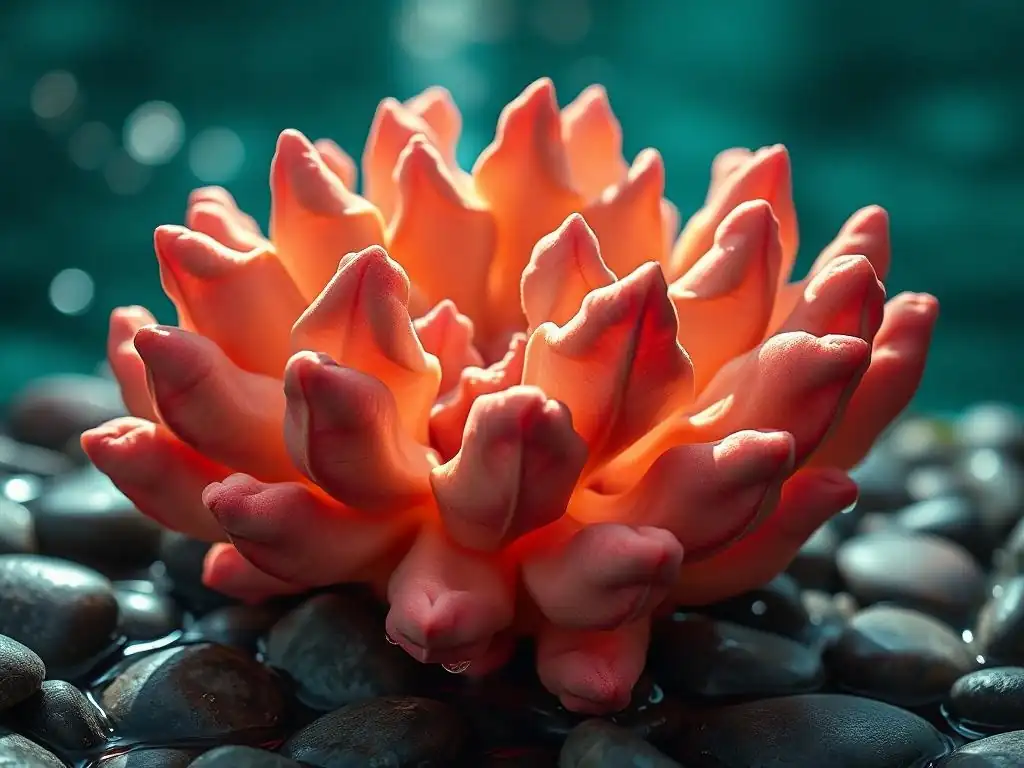
Lobophytum corals, commonly known as Devil's Hand or Finger Leather corals, are a popular and distinctive genus of soft corals belonging to the family Alcyonacea. Unlike stony corals, they lack a rigid calcium carbonate skeleton, instead possessing a fleshy, leathery texture supported by microscopic calcareous spicules called sclerites. This unique structure gives them their characteristic appearance, often featuring broad, lobed, or finger-like projections that can range in color from various shades of brown and tan to vibrant greens and creams, depending on the specific species and lighting conditions.
These fascinating corals are colonial organisms, meaning they are composed of many individual polyps working together. Each polyp is small and retractable, extending to filter feed and photosynthesize when conditions are favorable. When polyps are retracted, the coral takes on a more solid, leathery appearance. Their resilience and unique morphology make them a captivating addition to many reef aquariums, offering a dynamic visual element as their polyps sway gently in the water current.
Why Choose a Lobophytum Leather for Your Reef Tank? Benefits and Considerations
Choosing a Lobophytum leather coral for your reef tank offers numerous advantages, particularly for aquarists seeking a hardy and visually appealing soft coral. Their robust nature makes them exceptionally forgiving of minor fluctuations in water parameters, a characteristic that often appeals to both novice and experienced hobbyists. They are less demanding than many Small Polyp Stony (SPS) or Large Polyp Stony (LPS) corals, making them an excellent choice for those looking to expand their coral collection without the intensive care requirements associated with more sensitive species.
Beyond their hardiness, Lobophytum corals contribute significantly to the aesthetic diversity of a reef aquarium. Their unique shapes and the constant motion of their extended polyps add a dynamic element to the aquascape. Furthermore, they can grow to a considerable size, effectively filling in space and creating a mature, established look relatively quickly. Integrating Lobophytum leather care tips into your routine will ensure these corals thrive, offering a beautiful and resilient centerpiece for your aquatic environment.
Essential Lobophytum Leather Care Tips for a Thriving Reef
Water Parameters for Optimal Lobophytum Health: Maintaining Stability
Maintaining stable water parameters is paramount for the long-term health and vitality of Lobophytum leather corals. While these corals are known for their tolerance, significant or rapid fluctuations can still induce stress, leading to polyp retraction or tissue recession. Regular testing and consistent maintenance, such as bi-weekly water changes of 10-15%, help to replenish essential trace elements and remove accumulated nitrates and phosphates, which can inhibit coral growth at high levels.
Ensuring that your aquarium's water chemistry remains within optimal ranges is a cornerstone of effective Lobophytum leather care. Aim for consistency rather than chasing exact numbers, as sudden changes are often more detrimental than slight deviations. Implementing a routine testing schedule, perhaps weekly for key parameters, allows you to catch and correct any imbalances before they become problematic for your coral inhabitants.
Specific Gravity, Alkalinity, Calcium, and Magnesium Requirements
For specific gravity, Lobophytum corals thrive in a range of 1.024 to 1.026. Maintaining this salinity level is crucial for their osmoregulation and overall physiological function, with a stable reading of 1.025 often cited as ideal for a mixed reef. Alkalinity, which measures the water's buffering capacity, should be kept between 8 to 12 dKH (degrees of carbonate hardness). Although Lobophytum corals do not build a stony skeleton, alkalinity is still vital for their metabolic processes and the general health of the reef ecosystem.
Calcium levels should ideally be maintained between 400 to 450 ppm (parts per million), and magnesium between 1250 to 1350 ppm. While these parameters are more critical for calcifying corals like SPS and LPS, keeping them within these recommended ranges supports the overall stability of the reef environment and ensures that the Lobophytum has access to all necessary elements for optimal growth and health. Regular testing, perhaps monthly for calcium and magnesium, will help you manage these levels effectively.
Lighting Needs for Lobophytum Leather Corals: Finding the Sweet Spot
Lobophytum leather corals are photosynthetic, deriving the majority of their energy from the symbiotic algae called zooxanthellae residing within their tissues. This means that adequate lighting is a fundamental component of their care. They are generally considered moderate light corals, meaning they do not require the intense illumination demanded by many SPS corals, but they also won't thrive in dimly lit conditions.
Providing the right amount of light is a delicate balance; too little light can lead to browning or fading, while excessive light can cause bleaching or tissue stress. Observing your coral's polyp extension and coloration can offer clues about its lighting satisfaction. When you're providing appropriate Lobophytum leather care tips, remember that a gradual acclimation to new lighting conditions is always recommended to prevent shock.
PAR Levels and Light Spectrum Recommendations
For optimal growth and health, Lobophytum leather corals generally require PAR (Photosynthetically Active Radiation) levels ranging from 50 to 150 PAR. When introducing a new Lobophytum, starting it in a lower PAR area (e.g., 50-75 PAR) and gradually moving it to a brighter spot over several weeks can help prevent light shock. Established colonies can comfortably thrive in the 100-150 PAR range, exhibiting robust polyp extension and vibrant coloration.
Regarding light spectrum, a full-spectrum light with a strong blue component (around 450-470nm) is highly beneficial, as this spectrum is most efficiently utilized by zooxanthellae for photosynthesis. While they are forgiving, high-quality LED, T5, or even metal halide lighting systems can all be suitable. Many aquarists find that a spectrum emphasizing blues and actinics enhances the coral's natural pigmentation, particularly for green or yellow varieties, making them pop in the aquarium.
Flow Requirements for Devil's Hand Leather Corals: Ensuring Proper Circulation
Proper water flow is a critical, yet often underestimated, aspect of Lobophytum leather care. These corals thrive in moderate to strong, turbulent, and indirect water flow. The key is turbulence rather than a direct, laminar blast. A gentle, random flow pattern ensures that all parts of the coral receive adequate circulation, preventing "dead spots" where detritus can settle and cause tissue irritation or necrosis.
Adequate water movement also plays a vital role in the coral's physiological processes. It facilitates the exchange of gases, delivers essential nutrients, and helps remove waste products from the coral's surface. Without sufficient flow, Lobophytum polyps may remain retracted, and the coral can appear dull or unhealthy.
Preventing Detritus Build-up and Promoting Polyp Extension
One of the primary benefits of proper flow for Devil's Hand leather corals is the prevention of detritus accumulation. Lobophytum corals have a leathery, often convoluted surface that can easily trap uneaten food particles, shed layers, and other organic debris. If detritus settles on the coral for extended periods, it can lead to bacterial infections and localized tissue necrosis, jeopardizing the coral's health. Moderate, turbulent flow effectively sweeps away these particles, keeping the coral's surface clean.
Furthermore, appropriate water flow directly promotes full polyp extension. The gentle swaying motion created by the flow encourages the polyps to emerge, allowing them to maximize light absorption for photosynthesis and to potentially capture any available planktonic food. Corals in insufficient flow often exhibit poor polyp extension, appearing shrunken or "closed up." Aim to position powerheads or wavemakers to create chaotic, multidirectional flow patterns rather than a single, strong stream.
Feeding Lobophytum Leather Corals: Supplementation Strategies
Lobophytum leather corals, like many other soft corals, primarily derive their nutritional requirements through photosynthesis via their symbiotic zooxanthellae. This means that if your lighting is adequate, direct target feeding is generally not a strict necessity for their survival. However, while they are largely self-sufficient, providing supplemental nutrition can significantly enhance their growth rate, coloration, and overall vitality, contributing to more robust Lobophytum leather care.
Their large polyp structure, though often retracted during the day, can still capture very fine particulate matter from the water column. Therefore, while not mandatory, occasional broadcast feeding of the entire tank with appropriate foods can be beneficial.
Understanding the Role of Zooxanthellae
The symbiotic relationship between Lobophytum corals and zooxanthellae algae is the cornerstone of their energy acquisition. These microscopic algae live within the coral's tissues and perform photosynthesis, converting light energy into sugars and other organic compounds that the coral utilizes for growth and metabolic functions. In return, the coral provides the zooxanthellae with a protected environment and access to waste products like carbon dioxide and nitrogenous compounds. This efficient partnership means that as long as your lighting is sufficient, your Lobophytum coral will meet most of its energy needs.
Despite this primary reliance on photosynthesis, Lobophytum corals are facultative filter feeders. They can absorb dissolved organic matter and capture very fine particulate foods such as phytoplankton, zooplankton, or commercially prepared coral foods (e.g., Reef-Roids, Polyp-Lab Reef-Roids) from the water column. Broadcast feeding these fine particles once or twice a week, perhaps after the main lights are off to encourage polyp extension, can provide supplementary nutrition that boosts growth and enhances the coral's overall health and resilience.
Placement Strategies for Lobophytum Leather Corals in Your Reef Aquarium
Optimal Placement within the Tank: Considering Lighting and Flow
Strategic placement of your Lobophytum leather coral is crucial for its long-term health and to maximize its aesthetic appeal within your reef aquarium. Given their moderate lighting and flow requirements, the mid-to-upper sections of the rockscape are often ideal. Position the coral where it receives diffused, moderate light and consistent, turbulent water flow, avoiding areas of direct, harsh laminar flow that could irritate its delicate tissues.
Consider the coral's potential adult size when choosing its initial location. Lobophytum can grow quite large, with some specimens reaching 8-12 inches (20-30 cm) or more in diameter. Ensure there is ample space around the coral, allowing for its expansion without shading or coming into contact with other inhabitants. Providing sufficient room for growth is a key aspect of successful Lobophytum leather care tips.
Avoiding Aggression: Placement Relative to Other Corals
While Lobophytum corals are generally peaceful and do not possess stinging tentacles like many LPS or SPS corals, they can exhibit a form of chemical aggression known as allelopathy. They release chemical compounds, primarily terpenes, into the water column to inhibit the growth of competing corals, particularly other soft corals and even some stony corals. This chemical warfare can stress or even cause necrosis in sensitive neighbors if not managed properly.
To mitigate this, it is advisable to provide a buffer zone of at least 4-6 inches (10-15 cm) between your Lobophytum and other corals, especially those known to be sensitive. Regular water changes and the use of fresh activated carbon in your filtration system are excellent strategies to absorb these released chemicals and maintain water quality, reducing their impact on other tank inhabitants. By understanding and addressing this potential for chemical competition, you can ensure a harmonious mixed reef environment.
Identifying and Addressing Common Lobophytum Leather Coral Problems
Recognizing Signs of Stress: Polyp Recession and Color Changes
Early detection of stress is vital for effective Lobophytum leather care. One of the most common and immediate signs of stress is prolonged polyp recession. While Lobophytum corals naturally retract their polyps during their shedding process or when disturbed, continuous retraction for more than a day or two, especially without a visible waxy film, indicates an underlying issue. This can be accompanied by a general "deflated" or shrunken appearance of the coral's body.
Another key indicator of stress is a change in coloration. A healthy Lobophytum typically maintains a consistent and vibrant color, whether it's brown, tan, or green. If the coral starts to appear significantly paler (bleaching) or develops a dull, dark brown or grayish hue, it suggests that the zooxanthellae are stressed or dying, often due to improper lighting, water parameters, or elevated nitrates/phosphates. Addressing these signs promptly by testing water parameters and assessing lighting/flow can prevent further decline.
Common Pests and Diseases Affecting Lobophytum Corals
Lobophytum leather corals are generally robust and less susceptible to pests and diseases compared to some other coral types, but they are not entirely immune. One of the most notable pests that can target soft corals, including Lobophytum, are certain species of nudibranchs, specifically Phyllodesmium nudibranchs. These specialized predators often camouflage themselves to match the coral, making them difficult to spot until an infestation is well underway.
Bacterial infections can also affect Lobophytum corals, often appearing as slimy patches or localized tissue necrosis, typically black or brown in color. These infections can be triggered by poor water quality, physical damage, or prolonged stress. While specific treatments vary, maintaining pristine water conditions and ensuring optimal flow are crucial first steps in combating these issues, forming an essential part of comprehensive Lobophytum leather care tips.
Treating Nudibranchs and Bacterial Infections
Treating Phyllodesmium nudibranch infestations primarily involves manual removal. If you spot these pests, use tweezers to carefully remove them from the coral and the tank. A freshwater dip (using dechlorinated RO/DI water matched to tank temperature and pH, for 30-60 seconds) or a coral dip (e.g., iodine-based dips) can also help dislodge and kill remaining nudibranchs or their eggs. Quarantining new corals before introducing them to your main display tank is a highly effective preventative measure against these and other pests.
For suspected bacterial infections, improving water quality is paramount. Increase water change frequency, ensure excellent filtration, and optimize water flow around the affected coral to prevent detritus accumulation. In severe cases, a targeted antibiotic dip (e.g., using Furan-2 or similar broad-spectrum aquarium antibiotics, following product instructions carefully) may be considered, but this should be a last resort and performed in a separate container to avoid affecting the main tank's beneficial bacteria.
Dealing with Lobophytum Shedding: A Natural Process Explained
One common behavior that often concerns new aquarists is the natural shedding process of Lobophytum leather corals, also known as "sloughing." This is a completely normal and healthy part of their life cycle, serving as a self-cleaning mechanism. During this process, the coral produces a thin, waxy, or slimy film over its surface, and its polyps will retract, making the coral appear dull or shrunken. This layer helps the coral shed accumulated detritus, algae, and waste products that have built up on its leathery surface.
The shedding process typically lasts from a few days to a week, though it can sometimes extend longer. During this time, it's important not to intervene or disturb the coral. Ensure good water flow around the coral, as this helps the shed layer detach and drift away cleanly. Once the old layer has sloughed off, the coral will fully extend its polyps, appearing refreshed and vibrant. Understanding this natural cycle is a key aspect of proper Lobophytum leather care, preventing unnecessary worry or intervention.
Propagating Lobophytum Leather Corals: Expanding Your Collection
Fragging Lobophytum: A Step-by-Step Guide
Propagating Lobophytum leather corals is a relatively straightforward process, making them an excellent candidate for fragging to expand your collection or share with other hobbyists. Their soft, fleshy nature means no specialized bone cutters are required, unlike stony corals. The key is to work quickly and cleanly to minimize stress to both the mother colony and the frag.
To frag a Lobophytum, first, gather your tools: a sharp, clean scalpel or razor blade, a cutting board (non-porous and dedicated for aquarium use), gloves for protection, and a container of tank water. Gently remove the mother colony from the aquarium and place it on the cutting board in a shallow amount of tank water. Identify a healthy lobe or finger-like projection that is at least 1-2 inches (2.5-5 cm) in size.
Make a quick, clean cut through the base of the chosen piece. Rinse both the mother colony and the new frag briefly in clean tank water before returning the mother colony to its original spot.
Ensuring Successful Healing and Attachment of Frags
After fragging, the most critical phase is the healing and attachment of the new Lobophytum frag. Unlike stony corals that can be glued directly, Lobophytum frags are best attached using non-toxic methods that allow the coral to naturally adhere. Place the freshly cut frag in a low-flow, low-light area of the tank for a few days to allow the cut surface to heal and begin to form a "foot."
Once the cut area appears less raw (typically 3-7 days), you can attach the frag to a small piece of live rock or a frag plug. The most common method involves using a rubber band (aquarium-safe) to gently secure the frag to the rock/plug, ensuring it's not too tight to cut into the tissue. Alternatively, some hobbyists use toothpicks inserted through the base of the frag into a hole in the frag plug.
Within 1-3 weeks, the frag should begin to encrust and attach itself. Once securely attached, the rubber band can be removed, and the frag can be moved to its desired location with appropriate lighting and flow, completing the Lobophytum leather care process for your new colony.
Maintaining a Healthy Lobophytum Leather: A Long-Term Care Perspective
Regular Maintenance and Observation: Preventing Problems Before They Arise
Long-term success with Lobophytum leather corals hinges on consistent and proactive maintenance, rather than reactive problem-solving. Regular water changes are fundamental, with a 10-20% water change every two to four weeks being a widely accepted standard. This replenishes essential trace elements, removes accumulated nitrates and phosphates, and helps maintain overall water quality. Consistent testing of key parameters—such as alkalinity, calcium, and magnesium weekly or bi-weekly—allows for early detection of any imbalances.
Beyond water chemistry, daily visual observation of your Lobophytum is crucial. Look for full polyp extension, vibrant coloration, and the absence of any visible signs of stress like tissue recession or unusual slime. Pay attention to its shedding cycle, ensuring the old layer detaches cleanly. Addressing minor issues like localized detritus build-up or a slight shift in flow before they escalate can prevent major problems, showcasing the effectiveness of attentive Lobophytum leather care tips.
Addressing Common Issues: Rapid Tissue Necrosis (RTN) and Slow Tissue Necrosis (STN)
While Lobophytum corals are generally hardy, they are not immune to severe tissue loss syndromes like Rapid Tissue Necrosis (RTN) and Slow Tissue Necrosis (STN), though RTN is significantly less common in soft corals than in SPS corals. RTN manifests as a sudden, rapid melting away of coral tissue, often occurring within hours. It's usually triggered by extreme stress events such as drastic water parameter swings, prolonged exposure to air, or severe temperature shocks. If RTN occurs, immediately isolate the affected coral and perform large water changes to stabilize the system.
STN, on the other hand, is a more gradual process where the coral tissue slowly recedes over days or weeks, often starting from the base or edges. This is typically indicative of chronic stress factors, such as sustained poor water quality (e.g., high nitrates/phosphates), insufficient or excessive flow, or persistent bacterial infections. Addressing STN involves identifying and rectifying the underlying cause. Improving water parameters, optimizing flow, and ensuring adequate light are critical steps. In some cases, fragging healthy tissue from the unaffected parts of the coral may be necessary to save a portion of the colony.
Lobophytum Leather Coral: A Summary of Key Care Considerations
Quick Guide to Successful Lobophytum (Devil's Hand) Leather Care
For successful Lobophytum (Devil's Hand) leather care, prioritize stability and consistency. These resilient soft corals thrive in moderate lighting conditions, ideally within a PAR range of 50-150. They require moderate to strong, turbulent, and indirect water flow to prevent detritus accumulation and promote full polyp extension. Maintaining stable water parameters is crucial: specific gravity between 1.024-1.026, alkalinity 8-12 dKH, calcium 400-450 ppm, and magnesium 1250-1350 ppm. Regular testing and consistent water changes are key to parameter stability.
Placement should account for their potential large size and their allelopathic tendencies, requiring a buffer zone of at least 4-6 inches (10-15 cm) from other corals. While primarily photosynthetic, occasional supplemental feeding with fine particulate foods can enhance vitality. Regular observation for signs of stress like prolonged polyp recession or color changes, coupled with prompt corrective action, will ensure your Lobophytum remains a thriving and captivating centerpiece in your reef aquarium.
Advanced Techniques: Optimizing Growth and Coloration
While Lobophytum corals are forgiving, advanced aquarists can employ techniques to truly optimize their growth and enhance their coloration beyond basic survival. Fine-tuning the light spectrum, particularly emphasizing the blue and violet wavelengths (e.g., 420-470nm), can stimulate the production of specific fluorescent proteins, leading to more vibrant green or yellow hues. Experimenting with slightly higher PAR levels, within the recommended range, can also encourage faster growth, provided other parameters are meticulously maintained.
Consistent nutrient control, keeping nitrates below 10 ppm and phosphates below 0.05 ppm, contributes to cleaner water and can prevent browning, allowing the coral's natural colors to shine through. Furthermore, while often replenished by water changes, some advanced hobbyists may consider targeted dosing of trace elements like iodine, strontium, and molybdenum, which are utilized by soft corals for various metabolic processes. However, these advanced Lobophytum leather care tips should only be attempted once core parameters are perfectly stable, as overdosing can be detrimental.
Frequently Asked Questions
What are the essential conditions for keeping Lobophytum leather coral healthy in an aquarium?
Lobophytum corals thrive with moderate water flow and moderate lighting. They also require stable water parameters including salinity, calcium, and alkalinity.
How often should I perform water changes to maintain a healthy Lobophytum leather coral?
Regular water changes are crucial. Aim for 10-20% water changes every 1-2 weeks to replenish trace elements and reduce nutrient buildup.
What common problems affect Lobophytum leather corals, and how can I address them?
Common issues include shedding, which is natural, and bacterial infections. Ensure good water quality and consider iodine dips for infections.
Are there specific water parameters I should monitor closely for Lobophytum leather coral?
Yes, maintain stable levels of alkalinity (8-11 dKH), calcium (400-450 ppm), and magnesium (1250-1350 ppm). Regular testing is essential.
What type of lighting is best suited for Lobophytum leather coral in a reef tank?
Lobophytum generally prefers moderate lighting, like T5s or LEDs. Acclimatize the coral slowly to avoid bleaching from intense light.
Final Reflection: Embracing the Resilience of Lobophytum
The preceding exploration of Lobophytum leather care, while seemingly niche, underscores a broader truth: appreciation for the unique and resilient thrives on informed understanding. Just as we've delved into the specific needs of this hardy coral, so too must we cultivate a deeper awareness of the delicate ecosystems, both natural and metaphorical, that surround us. This isn't just about keeping a coral alive; it's about fostering a mindset of mindful stewardship.
The journey of understanding Lobophytum care has been more than just a technical exercise; it's been a reminder of the beauty and complexity hidden within seemingly simple organisms. This journey has highlighted the importance of patience and observation, qualities that extend far beyond the reef tank. In the end, we will conserve only what we love; we will love only what we understand; and we will understand only what we are taught.
- Baba Dioum. This quote perfectly encapsulates the spirit of this article, emphasizing that knowledge is the key to appreciation and, ultimately, conservation.
Now, consider how this principle of informed care can be applied to other aspects of your life. What "Lobophytum" – what unique and resilient element – in your own world deserves your dedicated attention? Take a moment to reflect on the ecosystems you inhabit, the relationships you nurture, and the passions you pursue. By embracing the same principles of observation, understanding, and dedicated care that we've applied to Lobophytum, you can cultivate thriving environments in every corner of your life.
Cultivate Your Underwater Oasis: Take the Next Step!
Thank you for diving into the world of Lobophytum leather corals! We hope you've gained valuable insights into caring for these hardy and unique additions to any reef aquarium. Now, it's time to transform that knowledge into action.
- Actively Monitor your Lobophytum's response to your current lighting conditions. Observe its polyp extension and overall color; adjusting accordingly is crucial.
- Share your newfound knowledge! Discuss your experiences and insights with fellow reef enthusiasts on forums or social media groups.
- Consider carefully experimenting with different flow rates to optimize your Lobophytum's growth and health.
Ready to share your Lobophytum care tips with the Aquarium Mastery community?