
Advanced Water Testing for Shrimp Tanks: Beyond the Basic Test Kits

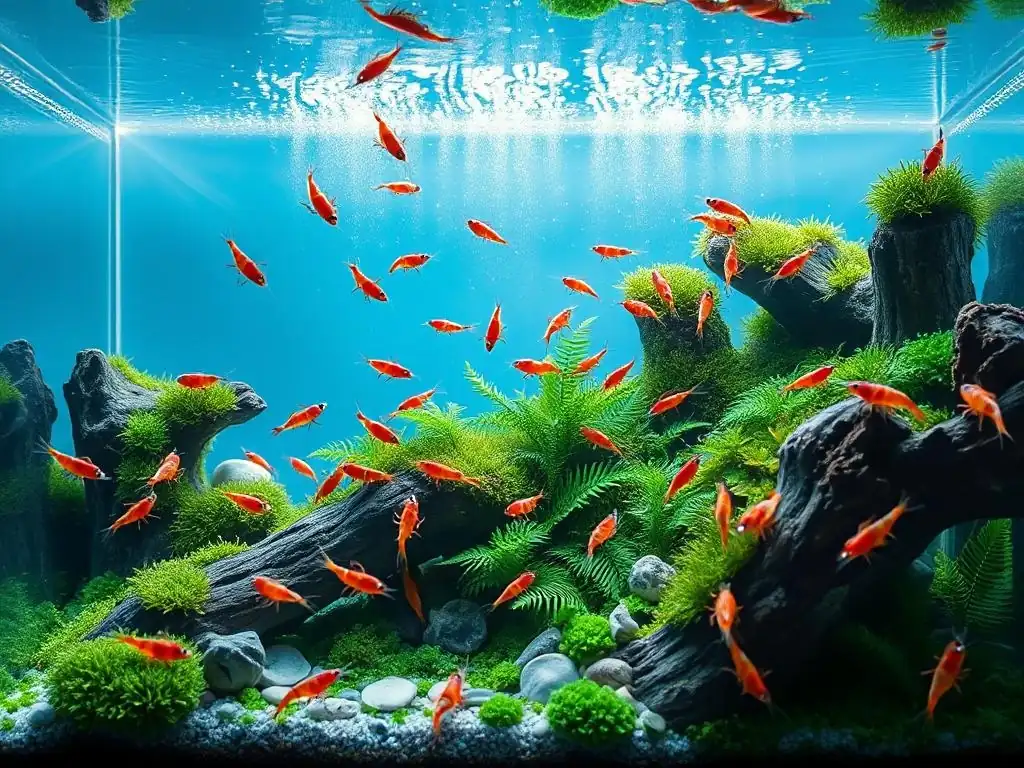
Welcome to Aquarium Mastery!
Ever wonder if your shrimp tank water is truly perfect, even when the tests seem normal? Dive into our expert guide, " Advanced Water Testing for Shrimp Tanks: Beyond the Basic Test Kits," and unlock the secrets to a thriving shrimp environment. Discover the subtle nuances that standard kits often miss and learn how to fine-tune your water chemistry for optimal shrimp health and breeding success. Ready to go beyond the basics? Let's get started!
- Advanced Water Testing for Shrimp Tanks: Ensuring Optimal Health and Breeding
- Why Advanced Shrimp Tank Water Testing Matters
-
Essential Advanced Water Tests for Shrimp Keepers
- Measuring Ammonia and Nitrite with Greater Accuracy for Shrimp Safety
- Achieving Accurate Nitrate Readings in Planted Shrimp Tanks
- The Role of GH and KH Testing in Shrimp Tank Stability
- The Importance of pH Monitoring and Stability for Shrimp
- Measuring Total Dissolved Solids (TDS) and its Relationship to Shrimp Health
- Advanced Testing Methods and Equipment for Shrimp Tanks
- Interpreting Advanced Water Test Results for Shrimp Tanks
- Maintaining Water Quality Through Advanced Testing and Management
- Case Studies: Solving Shrimp Tank Problems with Advanced Water Testing
- Conclusion: Mastering Water Chemistry for a Thriving Shrimp Tank
-
Frequently Asked Questions
- What are the most important water parameters to test in a shrimp tank?
- How often should I test my shrimp tank water?
- Are liquid test kits or test strips more accurate for shrimp tanks?
- What do I do if my water parameters are outside the ideal range for shrimp?
- Can I rely solely on my local fish store's water testing for my shrimp tank?
- Final Reflection: Cultivating Clarity in Your Shrimp Sanctuary
- Unlock the Secrets of Your Shrimp Tank!
Advanced Water Testing for Shrimp Tanks: Ensuring Optimal Health and Breeding
Why Advanced Shrimp Tank Water Testing Matters
Understanding the Limitations of Basic Water Test Kits for Shrimp
While readily available basic liquid test kits, such as the API Freshwater Master Test Kit, are excellent starting points for new aquarists, they often fall short in providing the precision required for sensitive inhabitants like freshwater shrimp. These kits typically offer broad colorimetric scales, where distinguishing between, for example, 0 ppm and 0.25 ppm ammonia can be challenging, yet that slight difference can be critical for shrimp.
Furthermore, their resolution for parameters like GH (General Hardness) and KH (Carbonate Hardness) might be in increments of 1 or 2 dGH/dKH, which isn't precise enough when dealing with species that thrive within very narrow ranges.
Many basic shrimp tank water testing tips focus primarily on the nitrogen cycle (ammonia, nitrite, nitrate), which is fundamental but insufficient. They often overlook the nuances of mineral content and buffering capacity, which are paramount for shrimp health.
For instance, a basic pH test strip might indicate a pH of "7.0-7.5," but a sudden shift from 7.0 to 7.5, or vice-versa, can be highly stressful for shrimp, even if both readings fall within the "acceptable" range of the strip. This lack of granular data makes it difficult to proactively identify and address subtle water chemistry shifts before they become life-threatening.
The Importance of Precise Water Parameters for Shrimp Health and Breeding
Shrimp, particularly Caridina species like Crystal Red or Taiwan Bees, are incredibly sensitive to fluctuations in water parameters. Unlike many fish, their osmoregulation (the process of maintaining salt and water balance) is highly dependent on stable water chemistry. Even slight deviations in pH, GH, or KH can lead to osmotic shock, molting difficulties, or weakened immune systems, making them susceptible to disease. For example, a GH outside their optimal range (e.g., below 4 dGH for Caridina) can severely impair their ability to form a new exoskeleton after molting, often resulting in death.
For successful breeding, precise parameters are not just beneficial but essential. Neocaridina shrimp generally thrive and reproduce well within a GH range of 6-8 dGH (approximately 100-140 ppm) and a KH of 3-5 dKH (approximately 50-90 ppm), with a pH of 7.0-7.5.
Caridina species, on the other hand, often require softer, more acidic water, typically with a GH of 4-6 dGH (70-100 ppm), a KH of 0-1 dKH (0-18 ppm), and a pH between 5.8-6.8. Maintaining these exact ranges consistently, as advised by advanced shrimp tank water testing tips, directly impacts egg viability, shrimplet survival rates, and the overall reproductive success of the colony.
Essential Advanced Water Tests for Shrimp Keepers
Measuring Ammonia and Nitrite with Greater Accuracy for Shrimp Safety
While ammonia and nitrite should ideally be undetectable in any established aquarium, shrimp are particularly intolerant of even trace amounts. Basic liquid tests might register "0 ppm" when, in fact, there could be minute concentrations (e.g., 0.05 ppm) that are highly stressful to shrimp. For instance, some studies suggest that ammonia concentrations as low as 0.01 ppm can cause gill damage and stress in sensitive aquatic invertebrates over time. Nitrite, while slightly less acutely toxic than ammonia, can still cause significant harm at concentrations above 0.1 ppm, leading to "brown blood disease" by impairing oxygen transport in their hemolymph.
To achieve greater accuracy, advanced shrimp tank water testing tips recommend using specific low-range liquid test kits from brands like Seachem (e.g., Seachem Ammonia Alert or Free Ammonia Test) or Salifert, which are designed to detect much lower concentrations. These kits often provide readings in parts per billion (ppb) or very precise parts per million (ppm), allowing keepers to identify nascent issues before they escalate. Consistent monitoring of these parameters, especially during tank cycling or when introducing new shrimp, is crucial to prevent silent killers from decimating a colony.
Achieving Accurate Nitrate Readings in Planted Shrimp Tanks
Nitrates, the end product of the nitrogen cycle, are generally less toxic than ammonia or nitrite, but high levels can still stress shrimp, inhibit breeding, and even cause death in sensitive species. While a general guideline for fish is to keep nitrates below 20-40 ppm, for Caridina shrimp, a target of below 10 ppm is often recommended, and for Neocaridina, below 20 ppm is ideal. However, in heavily planted shrimp tanks, achieving accurate nitrate readings can be challenging. Plant consumption of nitrates can lead to false lows, or conversely, decaying plant matter can rapidly increase levels.
Some liquid nitrate test kits can be prone to interference from tannins or humic acids, common in tanks with driftwood or active substrates, leading to skewed results. To circumvent this, advanced shrimp tank water testing tips suggest using dedicated low-range nitrate kits or performing tests after a partial water change to get a baseline. Regular testing, perhaps weekly, helps track trends. If nitrates consistently climb despite dense plant growth, it indicates an imbalance in waste production versus nutrient consumption, often signaling overfeeding or insufficient water changes.
The Role of GH and KH Testing in Shrimp Tank Stability
Understanding General Hardness (GH) and its Impact on Shrimp
General Hardness (GH) measures the concentration of dissolved divalent metallic ions, primarily calcium and magnesium, in the water. These minerals are absolutely vital for shrimp, as they are used to build their exoskeletons during the molting process. If GH is too low, shrimp can suffer from failed molts, often getting stuck in their old shell, a condition known as Soft Shell Syndrome, which is usually fatal. Conversely, if GH is too high, it can lead to osmotic stress, making it difficult for the shrimp to regulate water balance within their bodies.
For Neocaridina shrimp, an optimal GH range is typically 6-8 dGH (degrees of General Hardness), which equates to approximately 100-140 parts per million (ppm). For Caridina species, which prefer softer water, the ideal GH is often lower, around 4-6 dGH (70-100 ppm). Precise GH testing is critical for shrimp keepers, as maintaining these specific levels ensures proper exoskeleton formation and overall physiological health. Advanced shrimp tank water testing tips emphasize not just meeting these ranges but also ensuring their stability.
Carbonate Hardness (KH) and its Buffering Capacity in Shrimp Tanks
Carbonate Hardness (KH), also known as alkalinity, measures the concentration of bicarbonate and carbonate ions in the water. These ions act as a crucial buffer against rapid pH swings. In simple terms, KH helps stabilize the pH, preventing drastic drops (pH crashes) or spikes that can be highly detrimental to shrimp. For Neocaridina shrimp, a KH of 3-5 dKH (50-90 ppm) is generally recommended to provide sufficient buffering capacity and maintain a stable pH of 7.0-7.5.
However, for sensitive Caridina shrimp, the ideal KH is often very low, typically 0-1 dKH (0-18 ppm). These species thrive in slightly acidic conditions (pH 5.8-6.8) that are naturally achieved with active, buffering substrates (like ADA Amazonia or Controsoil) which consume KH. A higher KH for Caridina can prevent the substrate from lowering the pH effectively and can also cause osmotic stress. Understanding and precisely managing KH is therefore a cornerstone of advanced shrimp tank water testing tips, as it directly impacts pH stability and overall shrimp well-being.
The Importance of pH Monitoring and Stability for Shrimp
Understanding Optimal pH Ranges for Different Shrimp Species (Neocaridina vs. Caridina)
pH, a measure of the acidity or alkalinity of water, is a critical parameter for shrimp health. However, for shrimp, stability is often more important than hitting a specific number, though optimal ranges do exist. Rapid pH fluctuations, even by 0.2 units, can cause severe stress, leading to lethargy, loss of color, erratic swimming, and ultimately, death. This is because sudden changes disrupt their delicate internal osmoregulation and enzyme functions.
The optimal pH range varies significantly between shrimp species. Neocaridina shrimp (e.g., Cherry Shrimp, Blue Dream) are quite adaptable and generally thrive in a pH range of 6.5-8.0, with 7.0-7.5 often being ideal for breeding. Caridina shrimp (e.g., Crystal Red, Black King Kong), on the other hand, require a more acidic environment, typically a pH of 5.5-7.0, with many breeders aiming for 6.0-6.5. Achieving and maintaining these specific pH levels, often in conjunction with precise KH and GH control, is a fundamental aspect of advanced shrimp tank water testing tips for species-specific care.
Measuring Total Dissolved Solids (TDS) and its Relationship to Shrimp Health
Total Dissolved Solids (TDS) is a measurement of the combined concentration of all inorganic and organic substances dissolved in water. While it doesn't specify individual minerals or pollutants, it provides a quick, holistic snapshot of the overall mineral content and purity of the water. A TDS meter essentially measures the electrical conductivity of the water, which correlates directly with the amount of dissolved ions. For shrimp, TDS acts as a general indicator of osmotic pressure and mineral balance.
The ideal TDS range varies by shrimp species. For Neocaridina shrimp, a TDS of 150-250 ppm is commonly recommended. For Caridina shrimp, the range is often lower, between 80-180 ppm, depending on the specific type and their origin. A sudden drop in TDS (e.g., after a large water change with pure RO water) or a rapid increase (due to evaporation concentrating minerals, or over-remineralization) can cause osmotic shock. Monitoring TDS regularly, even daily for sensitive Caridina, is a simple yet powerful shrimp tank water testing tip that helps ensure the water's overall suitability for your shrimp.
Advanced Testing Methods and Equipment for Shrimp Tanks
Liquid Reagent Test Kits: Pros, Cons, and Best Practices
Liquid reagent test kits, such as those from API, Seachem, Salifert, and JBL, are the backbone of advanced water testing for aquarists. Their primary advantage is superior accuracy compared to test strips, providing more precise readings for parameters like ammonia, nitrite, nitrate, GH, KH, and pH. Many brands offer dedicated low-range kits for sensitive parameters, crucial for shrimp. They also typically have a longer shelf life for reagents than test strips, if stored properly.
However, liquid kits come with their own set of considerations. They can be time-consuming to use, involving multiple steps, precise drops, and waiting periods for color development. The interpretation of color charts can also be subjective, especially under different lighting conditions.
Best practices include: always using clean test tubes, ensuring reagents are not expired, following instructions meticulously (e.g., shaking bottles, specific wait times), and reading results against a white background in consistent lighting. Logging results consistently helps identify trends and validate the effectiveness of any water parameter adjustments. These kits form the core of reliable shrimp tank water testing tips.
Digital Meters: Accuracy, Calibration, and Maintenance for Reliable Readings
Digital meters represent the pinnacle of accuracy and convenience for certain water parameters. pH meters provide instantaneous, highly precise pH readings, eliminating subjective color interpretation. TDS (Total Dissolved Solids) meters offer quick snapshots of overall mineral content, and EC (Electrical Conductivity) meters are similar, often used interchangeably with TDS for shrimp keepers. The main pros are their speed, ease of use, and unparalleled precision, often displaying values to two decimal places.
The critical aspects of using digital meters are calibration and maintenance. pH meters, in particular, require regular calibration using buffer solutions (e.g., pH 4.0, 7.0, and 10.0) to ensure accuracy. Without proper calibration, readings can drift significantly over time, rendering them useless. Probes also need to be kept moist in storage solution and cleaned periodically to prevent mineral buildup. While the initial investment might be higher, the reliability and ease of data collection make digital meters an invaluable tool for precise shrimp tank water testing tips, especially for serious shrimp breeders.
Using Test Strips Wisely: Limitations and Appropriate Use Cases
Test strips are the most convenient and fastest method for water parameter checking, offering a quick overview of multiple parameters simultaneously. They are inexpensive and user-friendly, making them popular for beginners or for quick, routine checks. However, their primary limitation is accuracy. The color pads can be difficult to interpret precisely, and they are highly susceptible to environmental factors like humidity and temperature, which can degrade the reagents rapidly once the container is opened. Their shelf life after opening is often much shorter than liquid kits.
Given their limitations, test strips are best used for general, rapid spot checks rather than for precise parameter management in sensitive shrimp tanks. For instance, they can be useful for a quick daily check to confirm no drastic changes have occurred or to provide a rough estimate before a major water change. However, for critical parameters like GH, KH, and precise pH for Caridina shrimp, or for diagnosing subtle water quality issues, advanced shrimp tank water testing tips strongly recommend liquid reagent kits or digital meters for their superior reliability.
Interpreting Advanced Water Test Results for Shrimp Tanks
Identifying and Correcting Ammonia Spikes in Shrimp Tanks
Any detectable ammonia (>0 ppm) in an established shrimp tank is an immediate red flag and requires prompt action. Shrimp are extremely sensitive to ammonia, and even levels as low as 0.05 ppm can cause significant stress, leading to lethargy, erratic swimming, gasping at the surface, or rapid, uncoordinated movements. Common causes include overfeeding, decaying organic matter (dead plants or shrimp), a new tank that hasn't fully cycled, or a crashed biological filter.
Upon detecting ammonia, the first and most crucial step is an immediate, significant water change—typically 50-70% with temperature-matched, dechlorinated water. Adding an ammonia detoxifier (e.g., Seachem Prime) can temporarily neutralize the ammonia while the biological filter recovers. Reduce or cease feeding for a few days to minimize waste production. Check filter media for clogs and ensure proper aeration. Re-test ammonia levels frequently (every 12-24 hours) until they consistently read 0 ppm. This aggressive approach is vital in any shrimp tank water testing tips for ammonia emergencies.
Managing Nitrates Effectively in Heavily Planted Tanks
Even in heavily planted shrimp tanks, where plants actively consume nitrates, levels can still climb if waste production outpaces plant uptake. If advanced testing reveals nitrates consistently above 10-20 ppm for Neocaridina or above 5-10 ppm for Caridina, it indicates an accumulation of organic waste. Symptoms of high nitrates in shrimp can include reduced activity, dull coloration, and reluctance to breed.
Effective management involves a multi-pronged approach. Regular, appropriately sized water changes (e.g., 20-30% weekly) are the primary method to dilute nitrates. Ensure your tank has sufficient fast-growing plants (e.g., Hornwort, Pothos grown emersed, floating plants) to act as nitrate sponges. Reduce feeding to prevent excess food from decaying. Regularly clean the substrate surface to remove detritus. If nitrates remain stubbornly high, consider adding nitrate-absorbing filter media as a temporary measure, but focus on addressing the root cause of the excess organic load.
Adjusting GH and KH for Optimal Shrimp Health and Breeding
Interpreting GH and KH results involves comparing them to the specific needs of your shrimp species. If GH is too low (e.g., 3 dGH for Neocaridina), shrimp may struggle with molting. If GH is too high (e.g., 10 dGH for Caridina), it can cause osmotic stress. Similarly, low KH for Neocaridina (e.g., 1 dKH) puts the tank at risk of pH crashes, while high KH for Caridina (e.g., 3 dKH) can prevent their preferred low pH and cause stress.
To adjust GH and KH, particularly when using Reverse Osmosis (RO) or Deionized (DI) water, specific remineralizers are used. For Neocaridina, products like SaltyShrimp GH/KH+ add both general and carbonate hardness, allowing precise control. For Caridina, SaltyShrimp GH+ adds only general hardness, as these shrimp prefer minimal to no KH. To decrease GH/KH, the primary method is to use RO/DI water for water changes, as it contains no minerals. Incorporating active buffering substrates (like ADA Amazonia) for Caridina tanks naturally lowers pH and KH over time. Consistent shrimp tank water testing tips for GH/KH are essential for successful breeding.
Troubleshooting pH Fluctuations and Instability
If your pH tests show erratic fluctuations (e.g., swinging by 0.5 units or more within a day) or are consistently outside the optimal range for your shrimp, it's a sign of instability. For Neocaridina, this often points to insufficient buffering capacity (low KH). For Caridina, it might indicate an exhausted buffering substrate, inconsistent water changes, or CO2 fluctuations (if injected). Symptoms in shrimp include darting, lethargy, loss of color, and ultimately, death.
The primary troubleshooting step is to test your KH. If KH is too low for Neocaridina (below 3 dKH), it needs to be increased gradually using a GH/KH remineralizer. For Caridina tanks, ensure your active substrate is still effective; if not, it may need replacement. Maintain consistent water change practices, always using remineralized RO/DI water for Caridina. If injecting CO2, ensure a stable rate of injection and monitor pH with a controller. Avoid adding tap water directly if its parameters are inconsistent. Small, frequent water changes with properly prepared water minimize stress from parameter shifts.
Understanding TDS Fluctuations and Their Implications
TDS fluctuations are a common observation when performing advanced shrimp tank water testing tips. A sudden drop in TDS (e.g., from 200 ppm to 100 ppm) usually indicates a large water change with water of lower mineral content (like pure RO water). A gradual increase in TDS without intervention (e.g., from 150 ppm to 250 ppm over a week) often signals accumulating pollutants, evaporating water concentrating minerals, or over-remineralization. Both rapid drops and spikes can cause osmotic shock in sensitive shrimp.
The implications of TDS fluctuations are directly related to the shrimp's osmoregulation. Too low TDS can mean insufficient minerals for molting, while too high TDS can make it difficult for shrimp to expel excess water from their bodies. Monitor TDS regularly (daily for Caridina, weekly for Neocaridina) to identify trends.
If TDS is climbing rapidly, it's a strong indicator that a water change is needed, or that there's excessive organic load. If TDS drops too low after a water change, adjust your remineralization process to match the target TDS more closely. Consistent TDS is key to a stable shrimp environment.
Maintaining Water Quality Through Advanced Testing and Management
Establishing a Regular Water Testing Schedule for Shrimp Tanks
A consistent and detailed water testing schedule is paramount for the long-term health and breeding success of shrimp. For sensitive Caridina species, a daily check of TDS is advisable, while weekly tests for GH, KH, pH, and nitrates are crucial. For hardier Neocaridina shrimp, weekly testing of TDS, GH, KH, pH, and nitrates is generally sufficient. Ammonia and nitrite should only be tested if the tank is new, if new shrimp have been added, or if there are signs of distress.
Maintaining a log of your water test results is an invaluable shrimp tank water testing tip. Record the date, time, parameter values, and any actions taken (e.g., water change volume, addition of remineralizer). This log allows you to identify trends over time, predict potential issues before they become critical, and evaluate the effectiveness of your maintenance routines or interventions. It transforms water testing from a chore into a powerful diagnostic tool.
Water Change Strategies Based on Advanced Test Results
Water changes are the most effective tool for managing water quality in shrimp tanks, and their frequency and volume should be directly informed by your advanced test results. If nitrate levels are consistently climbing, or if TDS is steadily increasing, it indicates a need for more frequent or larger water changes. For sensitive shrimp, small, frequent water changes (e.g., 10-15% twice a week) are often preferred over large, infrequent ones (e.g., 30-50% once a month), as they minimize drastic parameter shifts and reduce stress.
Always use temperature-matched and properly dechlorinated water. For Caridina shrimp, consistently using remineralized Reverse Osmosis (RO) or Deionized (DI) water is critical to maintain their specific low GH/KH and pH requirements. Employing a drip acclimation method for water changes, where new water is slowly dripped into the tank, further minimizes stress from sudden changes in temperature or water chemistry. This meticulous approach to water changes is a cornerstone of effective shrimp tank water testing tips.
Using Water Conditioners and Additives Responsibly
Water conditioners and additives play a significant role in maintaining optimal shrimp tank conditions, but they must be used responsibly and based on precise test results. A high-quality dechlorinator that also neutralizes chloramines and heavy metals (e.g., Seachem Prime) is essential for every water change. For RO/DI water, specific mineral supplements (e.g., SaltyShrimp GH/KH+ for Neocaridina, SaltyShrimp GH+ for Caridina) are necessary to restore vital minerals to target levels.
However, avoid the temptation to add unnecessary chemicals or "magic potions." Every additive should have a clear purpose supported by your water test data. Overdosing mineral supplements can lead to dangerously high TDS levels, while using products not specifically formulated for shrimp can introduce harmful substances. Always measure your tank's volume accurately and follow dosing instructions precisely. Using products specifically designed for shrimp, guided by advanced shrimp tank water testing tips, ensures their safety and well-being.
The Role of Substrate and Filtration in Water Quality
The choice of substrate and the type of filtration significantly impact water quality and stability in a shrimp tank. For Caridina shrimp, active buffering substrates (e.g., ADA Amazonia, Controsoil) are often used. These soils naturally lower and stabilize pH and KH, creating the soft, acidic conditions these shrimp prefer. For Neocaridina, inert substrates like sand or gravel are suitable, as they don't alter water parameters. Regardless of type, the substrate provides a vast surface area for beneficial bacteria to colonize, contributing to biological filtration.
For filtration, sponge filters are highly recommended for shrimp tanks. Their gentle flow is safe for tiny shrimplets, and their large surface area provides excellent biological filtration. Canister filters or hang-on-back filters can also be used, but their intakes must be covered with pre-filter sponges to prevent shrimplets from being sucked in. Regular, gentle cleaning of filter media (rinsing in old tank water) is crucial to maintain biological filtration without crashing the nitrogen cycle, ensuring a stable environment as per advanced shrimp tank water testing tips.
Case Studies: Solving Shrimp Tank Problems with Advanced Water Testing
Case Study 1: Diagnosing and Resolving Shrimp Molting Issues
Scenario: A hobbyist with a 10-gallon Neocaridina tank observed several adult shrimp dying shortly after attempting to molt. They often appeared stuck in their old shells, or the new shell was malformed. Basic water tests (ammonia, nitrite, nitrate, pH) consistently showed "acceptable" levels.
Advanced Testing and Resolution: Utilizing advanced shrimp tank water testing tips, the hobbyist invested in a liquid GH/KH test kit and a TDS meter. Initial GH readings were consistently low at 3 dGH (approximately 50 ppm), significantly below the ideal 6-8 dGH for Neocaridina. The KH was also low at 2 dKH.
This indicated insufficient calcium and magnesium for proper exoskeleton formation. The resolution involved gradually increasing the GH by adding SaltyShrimp GH/KH+ remineralizer during weekly 15% water changes with RO/DI water, aiming for 6 dGH (100 ppm). Within three weeks, molting issues became rare, and the colony began to thrive, with successful molts observed regularly.
Case Study 2: Preventing Shrimp Deaths Due to Water Quality Problems
Scenario: A breeder of high-grade Caridina shrimp in a 20-gallon tank experienced unexplained, sudden deaths among adult shrimp. Basic tests confirmed zero ammonia and nitrite, and low nitrates (around 5 ppm). However, shrimp appeared lethargic and occasionally darted erratically.
Advanced Testing and Resolution: Implementing advanced shrimp tank water testing tips, the breeder used a digital pH meter and a TDS meter. The pH meter revealed daily swings from 6.0 in the morning to 7.5 by evening, despite using an active substrate. The TDS meter showed significant fluctuations, dropping from 180 ppm to 100 ppm after a water change with pure RO water, then slowly climbing back up over days.
This indicated pH instability due to inconsistent water changes and possibly an aging buffering substrate. The solution involved replacing the active substrate, using only precisely remineralized RO water (SaltyShrimp GH+ to 120 ppm TDS) for small, daily 5% drip water changes, and installing a CO2 controller to stabilize pH. Within a week, shrimp activity improved dramatically, and deaths ceased, demonstrating the power of precise parameter control.
Case Study 3: Optimizing Water Parameters for Successful Shrimp Breeding
Scenario: A hobbyist with a healthy colony of Blue Dream Neocaridina shrimp noticed a lack of berried females and very few shrimplets, despite seemingly good conditions. The tank had been established for six months.
Advanced Testing and Resolution: Following comprehensive shrimp tank water testing tips, the hobbyist performed detailed tests for GH, KH, and pH. While the shrimp were surviving, the tests revealed a GH of 9 dGH (150 ppm), a KH of 6 dKH (100 ppm), and a pH of 8.0. These parameters, though within the general tolerance range, were not optimal for breeding for Neocaridina, which prefer slightly softer, more neutral water for reproduction.
The hobbyist gradually adjusted the water parameters by performing 10% weekly water changes using a mix of tap water and RO/DI water, aiming for a GH of 6 dGH (100 ppm), a KH of 3 dKH (50 ppm), and a pH of 7.2. Within two months of maintaining these optimized parameters, the number of berried females significantly increased, and shrimplet survival rates soared, leading to a thriving population.
Conclusion: Mastering Water Chemistry for a Thriving Shrimp Tank
Mastering water chemistry through advanced water testing is not merely an optional upgrade for shrimp keepers; it is an essential practice for ensuring the optimal health, vibrant coloration, and prolific breeding of these delicate invertebrates. Moving beyond basic test kits to embrace precise measurements of GH, KH, pH, and TDS, alongside accurate nitrogen cycle monitoring, provides aquarists with the granular data needed to truly understand their aquatic environment.
Implementing these advanced shrimp tank water testing tips allows for proactive problem-solving, preventing common issues like molting complications, osmotic shock, and pH crashes before they decimate a colony. By understanding the specific needs of different shrimp species and meticulously adjusting water parameters, you create a stable, thriving habitat that mirrors their natural preferences. This dedication to detailed water quality management is the ultimate key to cultivating a successful and rewarding shrimp keeping experience.
Frequently Asked Questions
What are the most important water parameters to test in a shrimp tank?
The most crucial parameters are ammonia, nitrite, nitrate, and pH. Ensuring these are within safe ranges is vital for shrimp survival and breeding success.
How often should I test my shrimp tank water?
Initially, test daily during the tank cycling process. Once established, test weekly or bi-weekly, and immediately if you notice any changes in shrimp behavior or appearance.
Are liquid test kits or test strips more accurate for shrimp tanks?
Generally, liquid test kits are more accurate than test strips. They offer a more precise reading, which is essential for the sensitive nature of shrimp.
What do I do if my water parameters are outside the ideal range for shrimp?
Address the issue immediately. Common solutions include water changes, adjusting filtration, or using appropriate water conditioners to correct the imbalance.
Can I rely solely on my local fish store's water testing for my shrimp tank?
While helpful, it's best to test your water at home. This allows for frequent monitoring and quicker response to changes, preventing potential shrimp losses.
Okay, here's a final reflection designed to conclude your article, "Advanced Water Testing for Shrimp Tanks: Beyond the Basic Test Kits," optimized for the keyword "Shrimp tank water testing tips" and following the structure you provided:
Final Reflection: Cultivating Clarity in Your Shrimp Sanctuary
The journey into advanced water testing, as we've explored, isn't just about numbers; it's about fostering a deeper understanding of the delicate ecosystem within your shrimp tank. The knowledge gained from these sophisticated methods empowers you to proactively address potential imbalances, ensuring the health and vibrancy of your shrimp colony far beyond what basic test kits can reveal.
This pursuit of optimal water quality profoundly impacts the entire aquascaping hobby. It reminds us that responsible shrimp keeping is an exercise in mindful stewardship, demanding constant learning and adaptation. The best way to predict the future is to create it.
This quote, often attributed to Peter Drucker, resonates deeply here, as diligent water testing allows us to shape a healthier future for our aquatic companions.
Now, armed with these advanced shrimp tank water testing tips, I encourage you to reflect on your own practices. How can you elevate your approach to water quality management? What new insights can you glean from these advanced techniques? Embrace the challenge, experiment with these methods, and witness the transformative impact on your shrimp's well-being. Your dedication to creating a pristine aquatic environment will undoubtedly be rewarded with a thriving and captivating shrimp sanctuary.
Unlock the Secrets of Your Shrimp Tank!
Thank you for diving deep into the world of advanced water testing! We hope you've gained valuable insights into creating the perfect aquatic environment for your shrimp. Now, let's put that knowledge into action.
Here are a few things you can do to elevate your shrimp-keeping game:
- Invest in a professional-grade water testing kit and begin regularly monitoring parameters like GH, KH, and TDS to maintain optimal balance.
- Explore local aquarium clubs or online forums to share your testing results and learn from other shrimp enthusiasts.
- Try experimenting with different substrate mixes and monitor the impact on your water parameters – document your findings and share the effects!
What specific parameter are you most curious about mastering to create the ultimate shrimp paradise?