
Unlocking Vibrant Coral Growth: The Ultimate Guide to HighTech Reef Tank Lighting

Welcome to Aquarium Mastery!
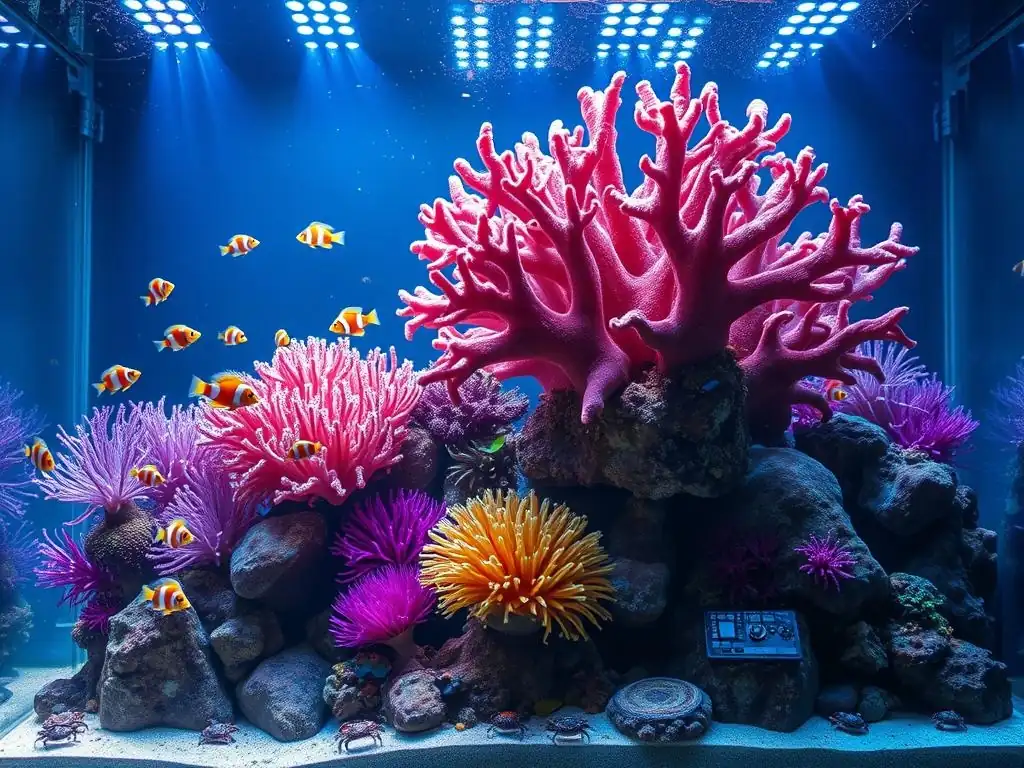
Ever wondered how to unlock the secret to truly vibrant coral growth and a thriving reef ecosystem? You're in the right place! Dive into our latest guide and discover HighTech Reef Lighting Tips that will revolutionize your aquarium. Curious to learn how to achieve stunning colors and optimal health for your corals? Let's illuminate the path to aquarium excellence!
- Understanding High-Tech Reef Lighting and Coral Growth
-
Key Features to Consider When Choosing High-Tech Reef Lighting
- PAR (Photosynthetically Active Radiation): The Essential Measurement
- Spectrum: Replicating Natural Sunlight for Optimal Coral Health
- Color Temperature (Kelvin): Achieving the Desired Reef Aesthetic
- Controllability: Programmable Lighting Schedules and Dimming Capabilities
- Efficiency and Longevity: Investing in Quality Reef Lighting
- High-Tech Reef Lighting Options: A Comparative Analysis
- Best High-Tech Reef Lighting Systems for Different Tank Sizes
- Optimizing Your High-Tech Reef Lighting Setup for Maximum Growth
- Troubleshooting Common High-Tech Reef Lighting Issues
- High-Tech Reef Lighting: Maintaining a Thriving Reef Ecosystem
-
Frequently Asked Questions
- What is HighTech reef lighting and why is it important?
- How do I choose the right HighTech lighting system for my reef tank?
- What is PAR and why is it important for HighTech reef lighting?
- How often should I replace my HighTech reef lighting bulbs or LEDs?
- What are some common mistakes to avoid with HighTech reef lighting?
- Final Reflection: Illuminating the Future of Reef Keeping
- Ignite Your Reef: Take the Next Step Towards Thriving Corals!
Understanding High-Tech Reef Lighting and Coral Growth
Why High-Tech Lighting Matters for Your Reef Aquarium
For corals to truly flourish and exhibit their full, vibrant potential, the right lighting is not just beneficial—it's absolutely essential. Unlike basic aquarium lights that merely illuminate the tank, high-tech reef lighting provides the precise intensity, spectrum, and photoperiod necessary to support the complex photosynthetic processes within corals. This level of control is crucial for demanding species like Small Polyp Stony (SPS) corals, which rely heavily on light for calcification and structural integrity, differentiating a thriving reef from one merely surviving. Without specialized high-tech reef lighting tips, corals may exhibit slow growth, poor coloration, or even begin to recede.
The direct impact of inadequate lighting on corals can be severe, ranging from a lack of vibrant coloration, often referred to as "browning out," to more critical issues like coral bleaching, where the symbiotic zooxanthellae are expelled. High-tech reef lighting, however, allows aquarists to meticulously replicate the optimal light conditions found on natural coral reefs, which are typically bright and spectrally rich.
For instance, many Acropora species, a popular SPS coral, require Photosynthetically Active Radiation (PAR) levels often exceeding 300 µmol/m²/s at the coral surface to maintain their intricate branching structures and brilliant blues and greens. Achieving such specific and high PAR values consistently across a reef tank is only possible with advanced high-tech reef lighting solutions.
The Science Behind Coral Photosynthesis and Light Spectrum
At the heart of coral health lies a fascinating symbiotic relationship between the coral polyp and microscopic algae called zooxanthellae, which live within the coral's tissues. These zooxanthellae perform photosynthesis, converting light energy into sugars, which serve as a primary food source for the coral. In return, the coral provides a protected environment and essential compounds for the algae. This intricate partnership dictates the coral's energy budget and, consequently, its growth rate and ability to display its characteristic vibrant colors. Understanding this process is fundamental to implementing effective high-tech reef lighting tips.
While zooxanthellae utilize a broad spectrum of light for photosynthesis, certain wavelengths are absorbed more efficiently. Specifically, blue light (around 450-470nm) and, to a lesser extent, red light (around 620-670nm) are critical for chlorophyll absorption. High-tech reef lighting systems are engineered to provide strong peaks in these crucial blue wavelengths, often incorporating royal blue (450nm), blue (470nm), and violet (400-420nm) LEDs.
The violet spectrum, for example, is known to stimulate specific fluorescent proteins within corals, enhancing their "pop" under actinic light. A balanced full spectrum, including small amounts of green (500-570nm) and red (620-700nm), ensures that all photosynthetic pigments receive adequate energy, supporting overall coral health and contributing to the visual appeal of the reef.
Identifying Your Reef Tank's Lighting Needs: A Step-by-Step Guide
Determining the precise lighting requirements for your reef tank is a critical first step in achieving a thriving coral ecosystem. This process is not one-size-fits-all, as factors such as tank dimensions, water depth, and the specific types of corals you intend to keep significantly influence the necessary light intensity and coverage.
For instance, a shallow 20-gallon nano tank predominantly housing soft corals like Zoanthids will have vastly different lighting needs compared to a deep 180-gallon tank dedicated to high-light demanding Acropora colonies. Deeper tanks, in particular, require more powerful high-tech reef lighting fixtures to effectively penetrate the water column, as light intensity diminishes significantly with depth.
To accurately assess your tank's needs, begin by researching the specific PAR requirements of your target corals. Soft corals generally thrive in PAR levels between 25-75 µmol/m²/s, while Large Polyp Stony (LPS) corals typically prefer 50-150 µmol/m²/s. SPS corals, being the most light-demanding, often require 250-450 µmol/m²/s or even higher at the very top of the tank.
Consider the footprint of your tank and how light will spread to all areas where corals will be placed. Investing in or borrowing a PAR meter to take actual measurements once lights are installed is an invaluable high-tech reef lighting tip, ensuring that each coral receives its optimal light dose and allowing for precise placement based on their specific needs.
Key Features to Consider When Choosing High-Tech Reef Lighting
PAR (Photosynthetically Active Radiation): The Essential Measurement
PAR, or Photosynthetically Active Radiation, is the most crucial metric when evaluating high-tech reef lighting for coral growth. It measures the amount of light in the 400-700 nanometer wavelength range, which is the specific spectrum that photosynthetic organisms, including the zooxanthellae within corals, utilize for energy production.
Unlike lumens or watts, which describe light output for human vision or electrical consumption, PAR directly quantifies the biologically usable light for your corals. Understanding and measuring PAR is paramount, as too little light will starve corals, while too much can lead to light shock or bleaching, making it a cornerstone of effective high-tech reef lighting tips.
The intensity of PAR varies significantly not only with the light fixture's power but also with its distance from the water surface and the depth within the tank. For example, a high-quality LED fixture might produce 500 µmol/m²/s directly under it at the surface, but this can drop to 150 µmol/m²/s at a depth of 24 inches due to water absorption and light spread.
This necessitates careful planning of light fixture placement and power settings to ensure that each coral receives its ideal PAR level. Aquarists often use a PAR meter to map out light levels at various locations and depths within their tank, allowing them to precisely position corals according to their light requirements, ensuring optimal growth and coloration.
Spectrum: Replicating Natural Sunlight for Optimal Coral Health
The spectrum of light refers to the specific wavelengths emitted by a light source, and for reef aquariums, replicating the natural spectrum of sunlight penetrating ocean waters is vital for coral health and aesthetics. Natural reef environments receive a full spectrum of light, but water preferentially absorbs red and yellow wavelengths, leaving a predominantly blue-shifted spectrum at typical coral depths.
High-tech reef lighting systems are designed to mimic this, providing strong peaks in the blue and royal blue wavelengths (450-470nm) which are most efficiently used by zooxanthellae for photosynthesis. These systems also often include violet/UV (400-420nm) to enhance coral fluorescence and subtle amounts of green and red for a balanced, visually appealing tank.
While blue light is foundational, a truly balanced spectrum contributes to overall coral vitality and can influence specific coloration. For instance, a light fixture with a strong violet component can make certain corals 'pop' with intense fluorescent greens and purples.
Conversely, an excess of red or green light, while sometimes enhancing specific coral hues, can also fuel undesirable algae growth if not carefully managed. The best high-tech reef lighting solutions offer multiple independent color channels, allowing aquarists to fine-tune the spectral output to optimize for growth, color enhancement, or a preferred aesthetic, providing unparalleled control over their reef environment through advanced high-tech reef lighting tips.
Color Temperature (Kelvin): Achieving the Desired Reef Aesthetic
Color temperature, measured in Kelvin (K), describes the perceived color of the light. In reef aquariums, common color temperatures range from about 10,000K to 20,000K, reflecting the blue shift seen in natural reef waters. Lower Kelvin values (e.g., 10,000K) appear cooler white with a slight yellow tint, while higher values (e.g., 20,000K) lean towards a deep blue or actinic appearance. The choice of color temperature is often a balance between personal aesthetic preference and the biological needs of the corals, as different Kelvin settings can dramatically alter the visual impact of your reef tank.
It's important to understand that while a higher Kelvin setting (e.g., 20,000K) might make fluorescent corals glow brilliantly, it often achieves this by emphasizing blue wavelengths at the expense of other essential parts of the spectrum, potentially leading to lower overall PAR in the white spectrum. Many aquarists find a harmonious balance around 14,000K to 18,000K, which provides a pleasing blue tint reminiscent of deep ocean water while still delivering sufficient white light for clarity and robust coral growth.
Modern high-tech reef lighting systems often allow for dynamic adjustment of color temperature through independent channel control, giving hobbyists the flexibility to dial in their desired look without compromising coral health, making this a key component of effective high-tech reef lighting tips.
Controllability: Programmable Lighting Schedules and Dimming Capabilities
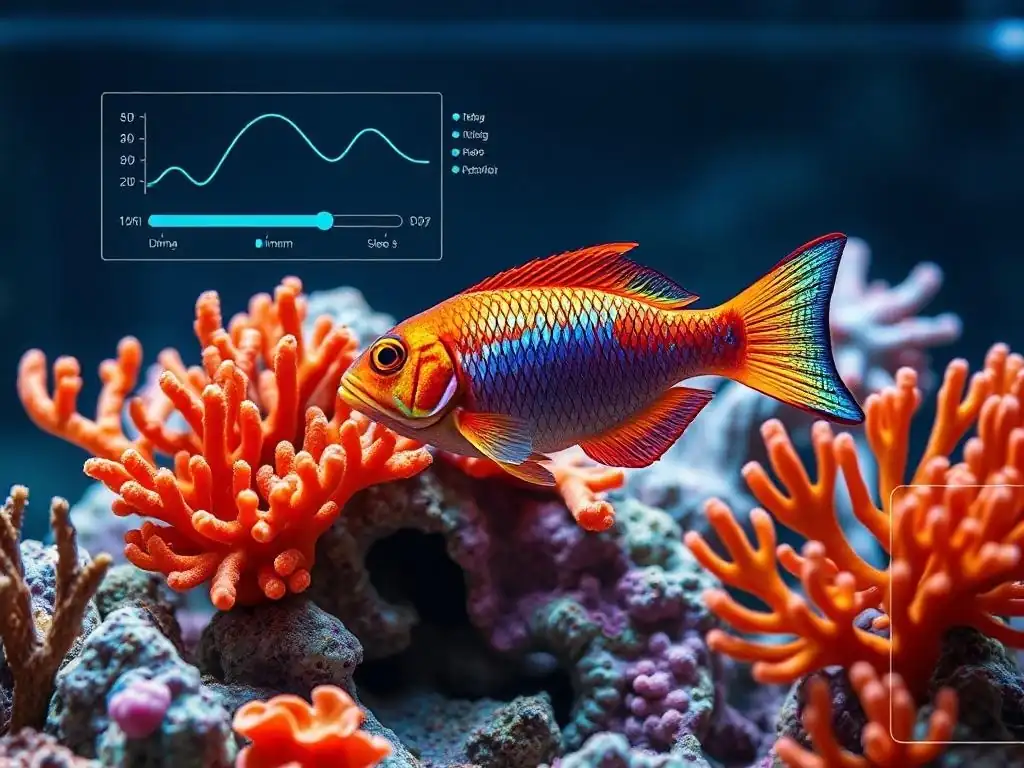
Advanced controllability is a defining feature of high-tech reef lighting and a significant advantage over traditional setups. The ability to program precise daily light cycles, simulating natural sunrise, peak intensity, and sunset, dramatically reduces stress on corals compared to abrupt on/off transitions. Many premium systems offer sophisticated features like cloud simulation, lunar cycles, and even lightning storm effects, further mimicking the dynamic natural reef environment. This level of programmability allows for a smooth acclimation process for new corals and a consistent, stress-free environment for established colonies.
Beyond simple on/off timing and dimming, true high-tech reef lighting offers independent control over various color channels. For instance, a fixture might have separate channels for royal blue, cool white, red, green, and UV LEDs. This granular control allows aquarists to fine-tune the spectrum to optimize for specific coral coloration, growth rates, or to highlight particular fluorescence.
Increasing the royal blue channel, for example, can significantly enhance the 'pop' of fluorescent proteins, while boosting the cool white channel can increase overall PAR for faster growth. This unparalleled customization is what truly elevates high-tech reef lighting tips from basic illumination to advanced coral husbandry.
Efficiency and Longevity: Investing in Quality Reef Lighting
While the initial investment in high-tech reef lighting can be substantial, its long-term benefits in terms of energy efficiency and longevity often provide significant savings and peace of mind. Modern LED fixtures, for example, consume considerably less power than traditional T5 fluorescent or metal halide setups. A high-end LED unit designed for a medium-sized tank might draw around 100-150 watts, whereas a comparable T5 or metal halide system could easily consume 200-400 watts, leading to significantly lower electricity bills over time. This efficiency is a core advantage when considering high-tech reef lighting tips for sustainable operation.
Furthermore, the lifespan of quality high-tech LED components is remarkably long. Premium LEDs are typically rated for 50,000 hours or more before experiencing significant degradation, which translates to many years of consistent performance without the need for bulb replacements. In contrast, T5 fluorescent bulbs require replacement every 9-12 months to maintain optimal output and spectrum, and metal halide bulbs typically need replacement every 6-12 months. This extended lifespan of LEDs not only reduces ongoing operational costs but also minimizes maintenance hassle, making a strong case for investing in durable, high-quality high-tech reef lighting systems.
High-Tech Reef Lighting Options: A Comparative Analysis
LED Reef Lights: The Dominant Choice
LED (Light Emitting Diode) reef lights have emerged as the undisputed dominant choice in modern reef aquariums, largely due to their unparalleled efficiency, precise controllability, and remarkable spectral flexibility. These systems allow aquarists to fine-tune virtually every aspect of their lighting, from intensity and photoperiod to specific color wavelengths, providing a level of customization previously unattainable. This precision makes them ideal for supporting the most demanding coral species and achieving vibrant coloration, embodying the cutting edge of high-tech reef lighting tips.
Beyond their superior control, LEDs offer several practical advantages. They produce significantly less heat compared to metal halides, reducing the need for extensive tank cooling solutions. Their exceptionally long lifespan means years of use without costly bulb replacements, leading to substantial long-term savings on maintenance and electricity. The continuous advancements in LED chip technology and optics are constantly pushing the boundaries of what's possible, making them the preferred choice for aquarists seeking the most advanced and flexible high-tech reef lighting solutions available.
AI Prime 16HD - Features, Benefits, and Target Corals
The AquaIllumination (AI) Prime 16HD is a popular, compact, and highly versatile LED fixture, particularly favored for nano and smaller reef tanks, or as supplemental lighting in larger setups. It features 16 LEDs across 7 independently controllable color channels, including cool white, blue, royal blue, violet, UV, red, and green. Its standout "HD" (HyperDrive) technology allows the fixture to dynamically reallocate power from unused color channels to those currently in use, maximizing the output and efficiency of the desired spectrum. Control is intuitive via a dedicated smartphone app, connecting via Wi-Fi.
This fixture is an excellent choice for a wide range of corals, from easy-to-keep soft corals (e.g., Zoanthids, Mushrooms) and most Large Polyp Stony (LPS) corals (e.g., Euphyllia, Acanthastrea) to even moderately demanding Small Polyp Stony (SPS) corals (e.g., Montipora, some Acropora frags) when appropriately positioned. For a 20x20 inch footprint, a single AI Prime 16HD can deliver PAR levels ranging from 80-250 µmol/m²/s at 12-18 inches deep, making it capable of supporting robust growth and vibrant coloration across a mixed reef in a smaller tank.
Its compact size and powerful performance make it a go-to for compact high-tech reef lighting tips.
Radion G6 XR15 - Advanced Spectrum Control and Connectivity
The EcoTech Marine Radion G6 XR15 represents a premium tier of high-tech reef lighting, renowned for its sophisticated spectral control, advanced optics, and seamless wireless connectivity. The G6 series introduces refined LED clusters and TIR (Total Internal Reflection) lenses that enhance light spread and penetration. It offers distinct "Blue" and "Pro" spectrum options, allowing aquarists to prioritize maximum fluorescence (Blue) or a balanced spectrum for growth and color (Pro). Control is facilitated through EcoTech's intuitive Mobius app, enabling complex programming and integration with other EcoTech equipment like Vortech pumps and Vectra return pumps.
The Radion G6 XR15 is highly capable of supporting a full spectrum of corals, including the most light-demanding SPS species, within its recommended coverage area of approximately 24x24 inches. At a mounting height of 8-10 inches above the water, it can deliver PAR values often exceeding 350-400 µmol/m²/s at 18 inches deep directly under the fixture, with excellent spread across the footprint. Its precise dimming capabilities (down to 0.1%) and multi-channel control allow for meticulous customization of the light environment, making it a top-tier choice for aquarists seeking advanced high-tech reef lighting tips and superior performance.
Reefi Uno 2.0 Pro - High PAR Output and Spread
The Reefi Uno 2.0 Pro is an emerging contender in the high-tech LED market, quickly gaining recognition for its exceptionally high PAR output and remarkably even light spread across its footprint. This fixture typically features a large, densely packed cluster of high-power LEDs combined with advanced secondary optics designed to homogenize the light and minimize shadowing. It offers multiple independent color channels (e.g., Hyper Violet, Cool White, Blue, Royal Blue, Green, Red) and is controlled via a dedicated app, allowing for comprehensive daily programming and spectral tuning.
The Uno 2.0 Pro is particularly well-suited for aquarists with medium to large tanks who require significant light penetration and broad coverage, especially for demanding SPS-dominated systems. A single Reefi Uno 2.0 Pro can effectively cover a tank footprint of approximately 30x30 inches, delivering impressive PAR values.
At 18-24 inches deep, it can consistently provide PAR levels well over 300-450 µmol/m²/s, enabling robust growth and vibrant coloration for even the most light-hungry corals like Acropora and Montipora. Its ability to combine high output with excellent spread makes it a strong choice for those prioritizing raw power and uniform illumination in their high-tech reef lighting tips.
T5 Reef Lighting: A Proven and Reliable Option
T5 (Fluorescent) lighting, specifically High-Output (HO) T5 bulbs, represents a proven and highly reliable option for reef aquariums, maintaining a strong following despite the rise of LEDs. T5 fixtures are valued for their exceptional, even light spread, which minimizes shadowing and ensures uniform illumination across the entire tank. This diffuse light quality is often credited with promoting consistent growth and coloration throughout coral colonies, particularly for SPS corals where shadowing can be a concern.
A typical T5 setup involves a multi-bulb fixture (e.g., 4, 6, or 8 bulbs) where different spectrum bulbs are combined to create a full, balanced light. Common bulb types include various shades of blue (e.g., Actinic, Blue Plus), white (e.g., Coral Plus, AquaBlue Special), and specialty bulbs (e.g., Purple Plus) to achieve the desired spectral output and aesthetic.
While T5s require more frequent bulb replacement (typically every 9-12 months) and consume more power than LEDs, their lower initial cost and long-standing track record of success in growing all types of corals make them a compelling alternative for many aquarists seeking reliable high-tech reef lighting tips.
ATI Sunpower Dimmable - Wide Spectrum and Even Light Distribution
The ATI Sunpower Dimmable fixture is widely regarded as the pinnacle of T5 reef lighting technology, known for its superior German engineering, highly efficient individual parabolic reflectors, and robust dimmable ballasts. Unlike traditional T5 fixtures, the dimmable feature allows for sophisticated programming, including gradual sunrise and sunset effects, and precise intensity control, bridging some of the functionality gaps with modern LEDs. Each bulb has its own reflector, maximizing light capture and directing it efficiently into the tank, which is a key factor in its impressive performance.
ATI Sunpower units, especially the 6-bulb and 8-bulb versions, are capable of delivering exceptional PAR levels and incredibly even light distribution across their specified footprints. For instance, a 48-inch 8-bulb ATI Sunpower fixture can effectively cover a 48x24 inch tank, providing consistent PAR values that easily support demanding SPS corals.
Many aquarists report outstanding growth rates, vibrant coloration, and a natural, shimmering aesthetic when using ATI Sunpower fixtures. While the need for bulb replacement every 9-12 months adds to the ongoing cost, the consistent and proven performance makes it a top choice for those prioritizing uniform light distribution and established high-tech reef lighting tips.
Metal Halide Reef Lighting: The Traditional Powerhouse (Considerations)
Metal Halide (MH) lighting was once the undisputed "powerhouse" of reef aquarium illumination, serving as the gold standard for high-PAR, deep-penetrating light for many years. These fixtures produce an incredibly intense, point-source light, creating a dramatic shimmering effect on the sandbed and rockwork that many aquarists find visually appealing. Their ability to deliver very high PAR values made them indispensable for growing even the most light-hungry SPS corals in deep tanks.
However, metal halide lighting comes with several significant considerations that have led to their decline in popularity compared to LEDs. MH bulbs generate substantial heat, often requiring dedicated chillers or robust cooling fans, which increases energy consumption. They are also less energy-efficient overall, with a single 250W or 400W bulb consuming considerable electricity.
Furthermore, MH bulbs degrade relatively quickly, requiring replacement every 6-12 months as their spectrum shifts and intensity diminishes. They also lack the fine-tuned spectral control and individual channel adjustability offered by modern LEDs. While still capable of growing magnificent corals, the operational costs and lack of advanced programmability mean they are now often supplemented with T5s or LEDs in hybrid setups, rather than being the sole high-tech reef lighting solution.
Best High-Tech Reef Lighting Systems for Different Tank Sizes
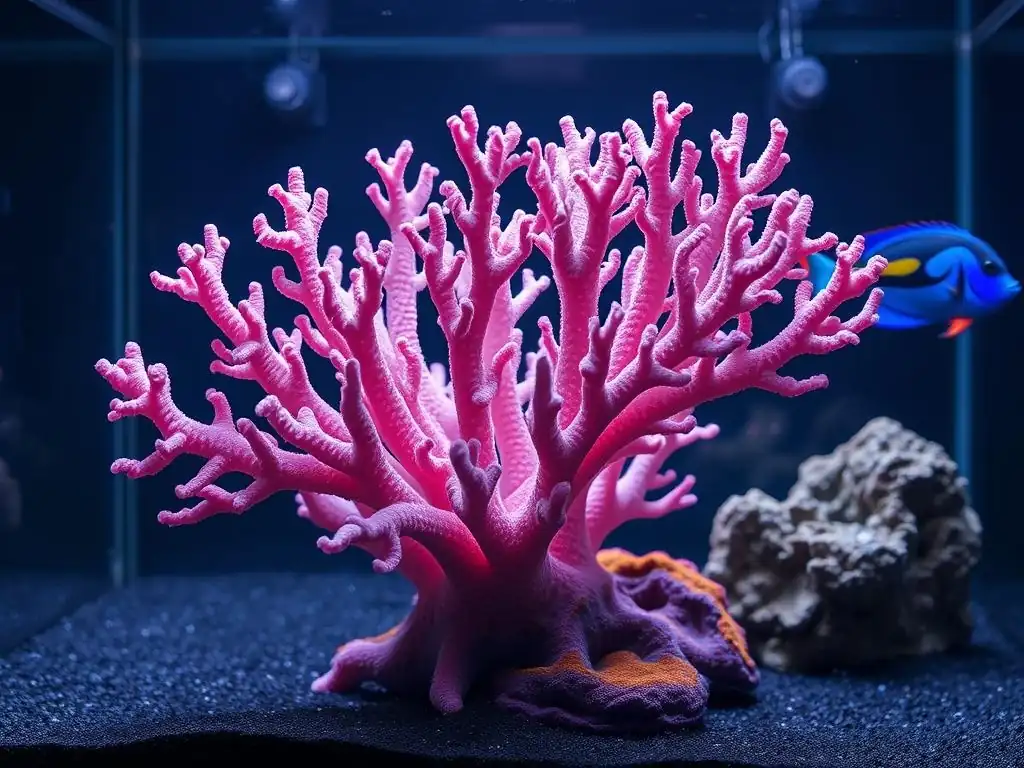
Lighting Recommendations for Nano Reef Tanks (Under 30 Gallons)
For nano reef tanks, typically ranging from 10 to 30 gallons and often with depths of 12 to 18 inches, the primary considerations for high-tech reef lighting are compactness, minimal heat output, and sufficient, yet not overpowering, light for smaller coral colonies. Overpowering a nano tank can quickly lead to light burn or excessive algae growth due to the smaller water volume and closer proximity of corals to the light source. The goal is to provide adequate PAR for desired coral types without overwhelming the system.
Compact LED fixtures are unequivocally the best choice for nano reefs. The AI Prime 16HD is an outstanding option due to its small footprint (approximately 5x5 inches), powerful output, and full programmability via a smartphone app. It can provide ample PAR (e.g., 80-200 µmol/m²/s) for a mix of soft corals, LPS, and even some smaller SPS frags.
Other excellent choices include the Kessil A80 Tuna Blue or Kessil A160WE Tuna Blue, known for their unique 'shimmer' effect and robust build. These units allow nano aquarists to achieve vibrant coral growth and coloration, providing targeted high-tech reef lighting tips for these smaller, often desktop-sized, systems.
Lighting Recommendations for Medium-Sized Reef Tanks (30-75 Gallons)
Medium-sized reef tanks, typically ranging from 30 to 75 gallons with depths often between 18 and 24 inches, require more substantial high-tech reef lighting to ensure even coverage and sufficient PAR for a diverse coral population. A single powerful LED unit or a pair of smaller, strategically placed units is often ideal to achieve comprehensive illumination without creating significant shadowed areas. The increased water volume and potential for larger coral colonies necessitate greater light penetration and spread compared to nano tanks.
For these tanks, versatile LED options are highly recommended. The EcoTech Marine Radion G6 XR15 is an excellent choice for tanks up to 24x24 inches, providing exceptional PAR spread and advanced spectral control. For larger medium tanks or those with a wider footprint, the AquaIllumination Hydra 32HD offers similar features and robust performance.
Many aquarists find that a single Hydra 32HD can adequately cover a 30x24 inch footprint. For those preferring T5s, a 4-bulb or 6-bulb ATI Sunpower fixture would provide excellent, uniform coverage and support robust growth for a mixed reef, delivering reliable high-tech reef lighting tips for this popular tank size range.
Lighting Recommendations for Large Reef Tanks (75+ Gallons)
Large reef tanks, encompassing volumes of 75 gallons and up (often 24-30+ inches deep and 48-72+ inches long), present the most significant challenge for high-tech reef lighting. These tanks require substantial power and broad coverage to effectively penetrate the deep water column and illuminate a wide footprint, especially if housing light-demanding SPS corals. Relying on a single, undersized fixture will inevitably lead to dark spots and poor coral health in various areas of the tank.
For large tanks, a multi-fixture LED setup or high-output T5 solutions are necessary. For LEDs, deploying multiple EcoTech Marine Radion G6 XR30s is a common and highly effective strategy (e.g., two XR30s for a 48-inch tank, three for a 60-72 inch tank). Alternatively, multiple AquaIllumination Hydra 64HDs offer similar capabilities and excellent performance.
The Reefi Uno 2.0 Pro units, known for their high PAR output, can also be deployed in multiples for very high-intensity SPS-dominated systems. For T5 enthusiasts, an 8-bulb ATI Sunpower fixture spanning the length of the tank (e.g., two 48-inch 8-bulb units for a 96-inch tank) will provide exceptional, even light distribution. Combining high-intensity LEDs with supplemental T5s (hybrid systems) is also a popular and highly effective strategy for achieving maximum growth and coloration in large, demanding SPS-dominated tanks, representing the pinnacle of advanced high-tech reef lighting tips.
Optimizing Your High-Tech Reef Lighting Setup for Maximum Growth
Mounting and Placement: Achieving Even Light Distribution
The physical mounting and precise placement of your high-tech reef lighting fixtures are just as critical as the choice of the light itself for achieving even light distribution and optimal coral growth. Lights mounted too low can create intense "hot spots" directly beneath them, leading to light burn on corals, while lights mounted too high will significantly reduce the PAR reaching your corals and can cause excessive shadowing.
The ideal mounting height typically ranges from 8 to 14 inches above the water surface, but this can vary depending on the fixture's optics, its spread, and the overall depth of your tank.
For tanks utilizing multiple high-tech reef lighting fixtures, ensuring even spacing is paramount to minimize dark spots and maximize uniform coverage across the entire aquascape. Strategically positioning each fixture to slightly overlap its light footprint with adjacent units can help create a more consistent PAR map throughout the tank. For single, powerful units, aim to center them over the main coral scape or adjust their position to best cover the areas where your most light-demanding corals reside. Sometimes, angling fixtures slightly can also help direct light into difficult-to-reach areas, ensuring that all corals receive adequate illumination for robust growth.
Acclimation: Gradually Introducing Corals to Intense Lighting
The process of acclimating new corals to the intense light of a high-tech reef aquarium is absolutely critical for their survival and long-term health. Corals, especially those coming from lower-light environments such as frag tanks or local fish stores, can suffer severe light shock if abruptly exposed to high PAR levels. This shock can manifest as bleaching, tissue recession, or even complete necrosis, as their symbiotic zooxanthellae are overwhelmed by the sudden increase in light energy. A slow, gradual introduction allows the zooxanthellae to adapt and proliferate, preventing damage.
Many advanced high-tech reef lighting systems come equipped with built-in acclimation modes that automatically ramp up light intensity over a period of several weeks, typically 4 to 6 weeks. If your system lacks this feature, you can manually reduce the initial intensity (e.g., to 30-50% of your target PAR) and gradually increase it by 5-10% weekly.
Alternatively, placing new corals lower in the tank or in shaded areas of the rockwork for the first few weeks can provide a natural acclimation zone. This careful, patient approach to light acclimation is one of the most fundamental high-tech reef lighting tips for ensuring the successful integration of new corals into your thriving reef.
Monitoring Coral Health and Adjusting Lighting Parameters
Optimizing your high-tech reef lighting setup is an ongoing process that requires diligent monitoring of your corals' health and appearance. Regularly inspecting your corals for signs of stress or thriving is crucial. Look for indicators of good health such as excellent polyp extension, vibrant and stable coloration, and visible signs of growth (e.g., new growth tips on SPS corals, expansion of LPS polyps). These visual cues provide invaluable feedback on whether your lighting parameters are appropriate for the specific species you are keeping.
Conversely, signs of stress demand immediate attention and adjustment. If corals are paling or bleaching, it often indicates too much light, prompting a reduction in intensity or duration. If corals are browning out (due to an overabundance of zooxanthellae attempting to cope with insufficient light) or exhibiting very slow growth, it may suggest that light intensity or a specific spectral component needs to be increased.
Always make small, incremental adjustments to your high-tech reef lighting parameters, allowing your corals several days to a week to adapt before making further changes. Documenting these changes and your corals' responses helps refine your approach over time, leading to more effective high-tech reef lighting tips.
Using a PAR Meter: Fine-Tuning Your Lighting for Optimal Results
While manufacturer specifications and community recommendations provide a good starting point, a PAR meter is the ultimate tool for truly fine-tuning your high-tech reef lighting setup and ensuring optimal results. A PAR meter provides objective, real-time data on the actual light intensity reaching your corals at various depths and locations within your tank, eliminating guesswork and allowing for precise adjustments. This is particularly important because light intensity can vary significantly across an aquascape due to rockwork, tank dimensions, and light spread characteristics.
To effectively use a PAR meter, take measurements at the top, middle, and bottom of your rockwork, as well as directly above specific coral colonies. Use these measurements to precisely position corals according to their known light requirements: place high-light demanding SPS corals in areas receiving 250-450 µmol/m²/s, LPS corals in areas with 50-150 µmol/m²/s, and soft corals in lower light zones of 25-75 µmol/m²/s.
If measurements show areas are too bright or too dim, adjust your light's intensity, duration, or mounting height accordingly. This data-driven approach is one of the most advanced and effective high-tech reef lighting tips for maximizing coral growth and maintaining a healthy, vibrant reef.
Troubleshooting Common High-Tech Reef Lighting Issues
Identifying and Addressing Light Burn in Corals
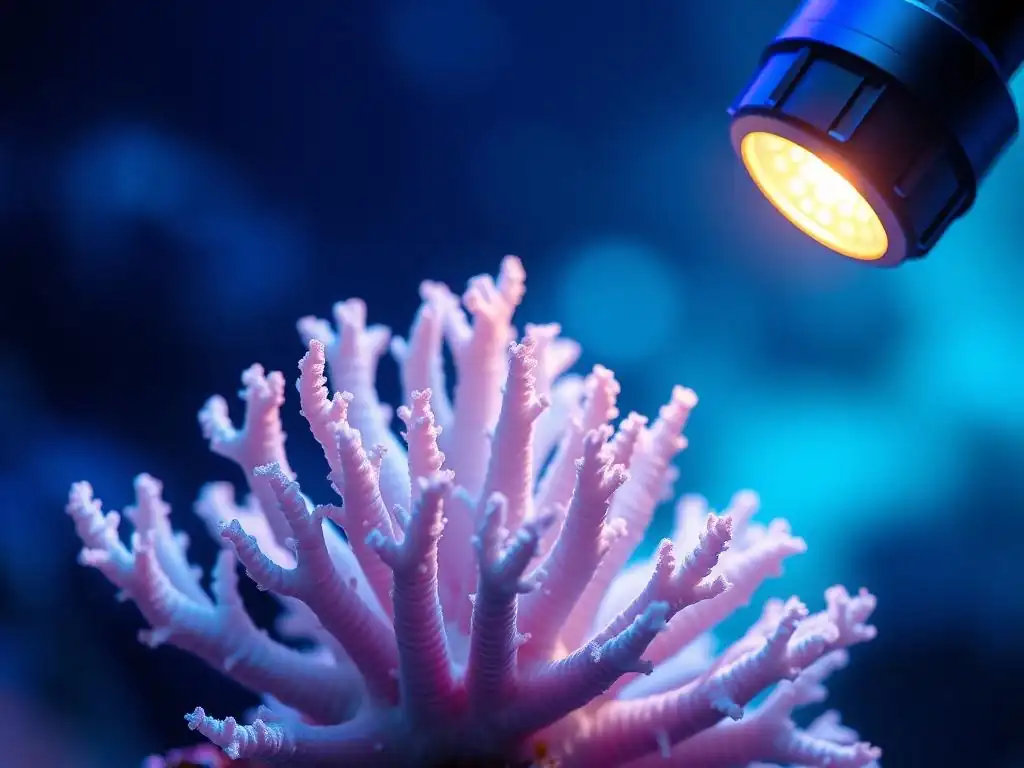
Light burn is a common issue in reef aquariums, particularly when introducing new corals to a high-tech reef lighting setup or increasing light intensity too rapidly. Symptoms typically include corals appearing stark white or bleached on their tips or upper surfaces, often accompanied by tissue recession. This occurs when the zooxanthellae within the coral's tissue are exposed to excessively high PAR levels, causing them to produce more reactive oxygen species than the coral can handle, leading to cellular damage and expulsion of the algae.
Addressing light burn requires immediate action. The first step is to reduce the light intensity, either by dimming your high-tech reef lighting fixture, shortening the photoperiod, or both. Alternatively, you can move the affected coral to a lower-light area of the tank, such as a shaded spot on the rockwork or lower on the sandbed.
It is crucial to ensure proper acclimation for all new corals, especially those coming from less intense lighting environments. Regularly using a PAR meter to confirm appropriate light levels for each coral species is the best preventative measure to avoid light burn and maintain coral health, making it a vital component of effective high-tech reef lighting tips.
Dealing with Algae Blooms Caused by Improper Lighting
While high-tech reef lighting is essential for coral growth, improper use can inadvertently contribute to undesirable algae blooms. Factors such as an excessively long photoperiod (e.g., 12+ hours), overly high light intensity (especially in tanks with elevated nutrient levels), or an imbalanced spectrum with too much red or green light can fuel the rapid proliferation of various nuisance algae, including diatoms, dinoflagellates, and hair algae. Algae compete with corals for resources and can quickly detract from the aesthetic appeal of your reef.
To combat algae blooms caused by lighting issues, several adjustments can be made. First, reduce your photoperiod to a more appropriate 8-10 hours per day. Second, ensure that your high-tech reef lighting spectrum is predominantly blue and royal blue, with only small, controlled amounts of red and green, as these wavelengths are often more readily utilized by nuisance algae.
Beyond lighting adjustments, it is critical to address underlying nutrient issues (nitrates and phosphates) through regular water changes, effective protein skimming, and other nutrient export methods. Optimizing your high-tech reef lighting tips in conjunction with rigorous nutrient control is key to maintaining a clean and thriving reef ecosystem.
Maintaining Your High-Tech Reef Lighting System for Longevity
Investing in a high-tech reef lighting system is a significant commitment, and proper maintenance is essential to ensure its longevity and consistent performance. One of the most common issues affecting light output is the accumulation of salt creep, dust, and algae on the light's lenses or diffusers. This buildup can significantly reduce the amount of light penetrating the water, effectively diminishing your PAR levels and impacting coral health. Regular cleaning of these surfaces is therefore paramount.
For fixtures with active cooling (fans), it is crucial to periodically check that the fans and air vents are free from dust and salt buildup. Blocked vents can lead to overheating, which can shorten the lifespan of the LEDs and other electronic components. Use a soft, lint-free cloth and deionized water or a manufacturer-recommended lens cleaner for cleaning.
Additionally, routinely inspect power cords and connections for any signs of wear or corrosion. Adhering to these simple maintenance practices ensures that your high-tech reef lighting system continues to operate at peak efficiency for many years, protecting your investment and supporting a thriving reef.
High-Tech Reef Lighting: Maintaining a Thriving Reef Ecosystem
Exploring the Future of Reef Lighting Technology
The landscape of high-tech reef lighting is constantly evolving, with new innovations consistently pushing the boundaries of what's possible in coral husbandry. The future is likely to bring even greater levels of integration with smart home systems, allowing for seamless control and automation of your entire aquarium setup. We can anticipate more granular spectral control, potentially down to individual LED wavelength tuning, offering aquarists unprecedented precision in replicating natural light conditions and optimizing for specific coral responses. Advanced optics will continue to improve, promising even better light spread, penetration, and efficiency, reducing power consumption while maximizing PAR delivery.
Emerging trends also point towards more sophisticated sensor integration, with AI-driven systems potentially adjusting light parameters in real-time based on live data from the tank, such as coral health metrics, water chemistry, or even environmental conditions. Wireless connectivity and app-based control will become the standard, making complex programming more accessible and intuitive. Innovations in LED chip technology, such as higher efficiency diodes and broader spectrum emitters, will continue to deliver more PAR per watt and a more complete spectrum for coral photosynthesis and fluorescence, continually refining and expanding the scope of effective high-tech reef lighting tips.
Making the Right Choice for Your Reef: A Recap of Key Considerations
Choosing the right high-tech reef lighting system is one of the most impactful decisions you will make for the health, vibrancy, and long-term success of your coral reef aquarium. There is no single "best" light; rather, the ideal choice depends on a careful assessment of your specific tank size, the types of corals you intend to keep, your budget, and the desired level of control and aesthetic. Prioritizing features such as Photosynthetically Active Radiation (PAR) output and spread, a balanced and tunable spectrum, and advanced controllability (programmable schedules, dimming capabilities) is paramount.
Ultimately, investing in quality high-tech reef lighting is not merely an expense but a foundational investment in the vitality and beauty of your underwater ecosystem. By understanding the science behind coral photosynthesis, carefully assessing your tank's unique needs, and applying these comprehensive high-tech reef lighting tips, you empower your corals to exhibit their most vibrant colors and robust growth. A well-lit reef is a thriving reef, ensuring years of enjoyment from your stunning and dynamic aquatic masterpiece.
Frequently Asked Questions
What is HighTech reef lighting and why is it important?
HighTech reef lighting refers to advanced lighting systems, like LEDs and metal halides, designed to provide the specific light spectrum and intensity needed for optimal coral photosynthesis and growth. It's crucial for replicating natural reef environments.
How do I choose the right HighTech lighting system for my reef tank?
Consider factors such as tank size, coral species (SPS vs. LPS), and budget. LEDs offer energy efficiency and customizable spectrums, while metal halides provide intense light for deep tanks. Research specific PAR requirements!
What is PAR and why is it important for HighTech reef lighting?
PAR stands for Photosynthetically Active Radiation. It measures the amount of light available for photosynthesis. Ensuring adequate PAR levels is critical for coral health, growth, and coloration.
How often should I replace my HighTech reef lighting bulbs or LEDs?
Metal halide bulbs typically need replacement every 6-12 months to maintain optimal output. LEDs have a longer lifespan, but their intensity can degrade over time. Monitor coral health and adjust as needed.
What are some common mistakes to avoid with HighTech reef lighting?
Avoid excessive light intensity, which can bleach corals. Also, ensure proper acclimation when introducing new lighting. Use a light meter to measure PAR and adjust accordingly.
Final Reflection: Illuminating the Future of Reef Keeping
The journey into high-tech reef lighting reveals not just a path to vibrant coral growth, but also a deeper understanding of the delicate ecosystems we strive to replicate. In a world increasingly aware of environmental fragility, the ability to sustainably cultivate thriving coral reefs within our own homes becomes a powerful statement, a testament to our commitment to preserving these underwater wonders.
This exploration has profoundly influenced my perspective on responsible reef keeping. Witnessing the transformative power of optimized lighting, and understanding its intricate relationship with coral health, underscores the importance of continuous learning and adaptation in this hobby. In the end, we will conserve only what we love; we will love only what we understand; and we will understand only what we are taught.
- Baba Dioum's words resonate deeply, reminding us that education and understanding are the cornerstones of effective conservation, even within the confines of our own reef tanks.
As you embark on your own journey with high-tech reef lighting, I encourage you to embrace the spirit of experimentation and continuous learning. Let the knowledge gained here illuminate not only your coral, but also your understanding of the intricate balance of life within our oceans. By sharing your experiences and contributing to the collective knowledge of the reefing community, you become an active participant in shaping a brighter, more sustainable future for these precious ecosystems.
Ignite Your Reef: Take the Next Step Towards Thriving Corals!
Thanks for diving deep into the world of high-tech reef tank lighting! We hope this guide has empowered you with the knowledge to cultivate a vibrant and healthy coral ecosystem. Now, let's translate that knowledge into action.
Here's how you can continue your reefing journey:
- Implement a Test Week: Based on your research in the article, start with a single week of trying one of the more novel lighting options to compare results to your current setup. Dedicate that week to only testing the new lighting and comparing to your current PAR, visual results, and the coral reactions.
- Share your insights! Post photos of your reef tank's progress on social media using #AquariumMastery and inspire fellow reefers.
- Explore our other articles! Find advanced strategies for nutrient control and coral propagation on AquariumMastery.com.
What's one small change you can make to your lighting schedule this week to give your corals a boost?