
CO2 Injection Unveiled: The Secret Weapon for Explosive Plant Growth

Welcome to Aquarium Mastery!
Ready to unlock the secret to lush, vibrant aquatic plants? You've come to the right place. Dive into our guide and discover everything you need to know about CO2 injection aquarium setup. From choosing the right equipment to mastering the art of balanced fertilization, prepare to transform your underwater world into a thriving ecosystem. Curious to see how? Let's get started!
- CO2 Injection for Planted Aquariums: A Comprehensive Guide
- Understanding CO2's Role in Aquatic Plant Growth
- CO2 Injection System Setup: A Detailed Guide
- Advantages of CO2 Injection in Planted Aquariums
- Troubleshooting Common CO2 Injection Problems
- Alternative CO2 Supplementation Methods
- Maintaining Your CO2 System for Optimal Performance
- Advanced CO2 Strategies for Experienced Aquascapers
-
Frequently Asked Questions
- What is CO2 injection, and why is it important for planted aquariums?
- How does a CO2 injection aquarium setup work?
- Is CO2 injection safe for my fish?
- How do I determine the right amount of CO2 to inject into my aquarium?
- What are some common problems associated with CO2 injection, and how can I troubleshoot them?
- Final Reflection: Breathing Life into Aquatic Ecosystems
- Ignite Your Aquarium: Unleash the Power of CO2!
CO2 Injection for Planted Aquariums: A Comprehensive Guide
Understanding CO2's Role in Aquatic Plant Growth
Why CO2 is Essential for Photosynthesis in Freshwater Aquariums
In a freshwater aquarium, carbon dioxide (CO2) is an indispensable element for the process of photosynthesis, which is how aquatic plants convert light energy into chemical energy for growth. Similar to terrestrial plants absorbing CO2 from the atmosphere, submerged plants require dissolved CO2 from the water column. Without sufficient CO2, even with optimal lighting and nutrients, plants cannot effectively photosynthesize, leading to stunted growth, yellowing leaves, and eventual decline. This makes CO2 a primary limiting factor for achieving lush, vibrant plant growth in a high-tech planted aquarium.
The natural availability of CO2 in most tap water is remarkably low, often ranging from 0 to 5 parts per million (ppm). While fish respiration and organic decomposition contribute some CO2, these sources are typically insufficient to meet the demands of a densely planted tank, especially one with high light intensity. High light prompts plants to photosynthesize more vigorously, rapidly depleting the limited ambient CO2. An effective CO2 injection aquarium setup directly addresses this deficiency, ensuring a consistent and abundant supply of carbon for robust plant metabolism and development.
The Impact of CO2 Concentration on Plant Health and Growth Rate
Maintaining an optimal CO2 concentration, generally between 20-30 ppm, significantly accelerates the growth rate of aquatic plants. With ample CO2, plants can efficiently utilize the available light and nutrients, leading to noticeably faster biomass production—often a 3 to 5 times increase in growth compared to non-CO2 injected tanks.
For instance, fast-growing stem plants like Rotala rotundifolia can show visible growth daily, extending several inches per week, while carpeting plants such as Hemianthus callitrichoides 'Cuba' (HC Cuba) will form dense, compact carpets within weeks rather than months. This enhanced growth often results in a phenomenon known as "pearling," where tiny bubbles of oxygen are visibly released from plant leaves, indicating vigorous photosynthesis.
Conversely, insufficient CO2 levels can severely impede plant health. Plants will exhibit stunted growth, pale or transparent leaves, and an inability to fully utilize the light provided, leading to wasted energy. More critically, a lack of CO2 weakens plants, making them more susceptible to algae outbreaks.
Algae, being less demanding of CO2, often outcompete struggling plants for available nutrients when CO2 is scarce. Common issues like Black Beard Algae (BBA) or Green Spot Algae (GSA) frequently proliferate in tanks with fluctuating or low CO2, highlighting the critical role of a stable CO2 injection aquarium setup in maintaining a balanced ecosystem.
CO2 Injection System Setup: A Detailed Guide
Selecting the Appropriate CO2 System Components
CO2 Cylinder Size Based on Aquarium Volume and Plant Load
The CO2 cylinder, often referred to as a tank or bottle, stores pressurized carbon dioxide. Selecting the correct size is crucial for convenience and cost-effectiveness. Common sizes include 2.5 lb, 5 lb, 10 lb, and 20 lb.
For a moderately planted 50-gallon aquarium operating at 25 ppm CO2 for 8 hours daily, a 5 lb cylinder might last approximately 3 to 6 months. A smaller 2.5 lb cylinder would typically last only 1 to 2 months in the same setup, necessitating more frequent refills. Larger aquariums, such as a densely planted 120-gallon tank, would benefit from a 10 lb or 20 lb cylinder, which could last 4 to 8 months, reducing the hassle of constant refilling.
The actual consumption rate of CO2 is heavily influenced by factors beyond just tank volume, including plant density, lighting intensity, and desired CO2 concentration. A high-light, heavily planted aquascape, like an 'iwagumi' style layout dominated by demanding foreground plants such as Eleocharis parvula (Dwarf Hairgrass), will consume CO2 at a much higher rate than a low-tech setup featuring slow-growing plants like Anubias barteri or Java Fern. Therefore, it is prudent to consider a slightly larger cylinder if your aquascape plans involve a very dense plant mass or high-intensity lighting, ensuring consistent availability for your CO2 injection aquarium setup.
Regulator Features: Solenoid Valves, Needle Valves, and Pressure Gauges
The CO2 regulator is the brain of the CO2 injection aquarium setup, reducing the extremely high pressure from the cylinder (typically 800-1000 PSI) to a safe, usable working pressure (usually 30-60 PSI). A critical feature is the integrated solenoid valve, which allows for automated on/off control of the CO2 flow. This valve is typically connected to the aquarium's light timer, ensuring CO2 is supplied only during the photoperiod when plants are actively photosynthesizing, thereby conserving CO2 and preventing dangerous CO2 buildup at night when plants respire.
Another essential component of the regulator is the needle valve, which provides precise, fine-tuned control over the CO2 bubble count, allowing aquarists to adjust the delivery rate to achieve the desired CO2 parts per million (ppm) in the water. High-quality regulators also feature dual pressure gauges: one to monitor the cylinder pressure, indicating how much CO2 remains, and another to display the working pressure, ensuring a consistent output. Investing in a robust regulator with these features is paramount for maintaining stable CO2 levels, preventing dangerous fluctuations, and ensuring the longevity and safety of your CO2 injection aquarium setup.
Diffuser Types: Ceramic Discs, Inline Diffusers, and CO2 Reactors
CO2 diffusers are responsible for dissolving the gas into the aquarium water, making it available for plants. The most common type is the ceramic disc diffuser, which forces CO2 through a porous ceramic material, producing a stream of fine, mist-like bubbles. These are generally effective for smaller to medium-sized tanks (up to 50-75 gallons) and should be placed in an area of high water flow, such as under a filter outflow, to maximize distribution and dissolution. While visible, their affordability and simplicity make them a popular choice for many basic CO2 injection aquarium setups.
For larger aquariums (75+ gallons) or those where visible equipment is undesirable, inline diffusers and CO2 reactors offer superior dissolution efficiency. Inline diffusers are installed directly into the aquarium filter's return line, dissolving CO2 before it even enters the display tank, resulting in no visible bubbles. CO2 reactors, on the other hand, are highly efficient devices that mix CO2 with water internally, achieving near 100% dissolution.
These are often used in very large or heavily planted tanks where maximizing CO2 uptake is critical. While more complex to install, these advanced dissolution methods are key to optimizing a high-performance CO2 injection aquarium setup.
Installation and Initial Setup
Connecting CO2 Tubing and Fittings Securely
Properly connecting the CO2 tubing and fittings is crucial for preventing leaks and ensuring the safety of your CO2 injection aquarium setup. Unlike standard air line tubing, which can expand and burst under pressure, CO2-rated tubing (typically polyurethane or PVC) is specifically designed to withstand the higher working pressures (30-60 PSI) of a CO2 system. It is imperative to use this specialized tubing for all connections from the regulator to the diffuser.
Begin by securely attaching the regulator to the CO2 cylinder, ensuring the threads align perfectly to prevent cross-threading and leaks. Use a wrench to tighten firmly but avoid over-tightening. Next, connect the CO2 tubing to the regulator's output, the solenoid (if separate), the needle valve, the bubble counter, and finally, the diffuser, ensuring each connection is snug.
For barbed fittings, a small hose clamp can provide extra security. Always incorporate a check valve between the bubble counter and the diffuser to prevent aquarium water from siphoning back into the regulator when the CO2 is off, which could cause significant damage.
Calibrating the Bubble Counter for Accurate Dosage
The bubble counter provides a visual means to monitor the CO2 flow rate, typically measured in "bubbles per second" (BPS). While not an absolute measure (as bubble size can vary between different counters), it serves as a reliable reference for consistent dosing. To prepare the bubble counter, fill it about two-thirds full with clean water; some advanced models may recommend mineral oil. Ensure the connections on both ends are secure to prevent CO2 leaks or water siphoning.
Once the system is connected, slowly open the needle valve on the regulator to initiate CO2 flow. Begin with a very low bubble rate, such as 1 bubble every 3 to 5 seconds for smaller tanks (e.g., 10-gallon) or 1 to 2 BPS for medium-sized tanks (e.g., 50-gallon). Observe the bubbles rising through the water in the counter. Over the next few days, you will gradually increase the bubble rate while closely monitoring your fish and the CO2 drop checker. This cautious, incremental approach is essential for safely calibrating your CO2 injection aquarium setup and preventing CO2 overdose.
Optimizing Diffuser Placement for Efficient CO2 Distribution
The strategic placement of your CO2 diffuser is paramount for maximizing CO2 dissolution and ensuring even distribution throughout the aquarium. The ideal location is typically in an area of high water flow, such as directly underneath the outflow of your canister filter or a powerhead. This ensures that the fine CO2 bubbles are rapidly dispersed throughout the entire water column, increasing their contact time with the water and preventing localized pockets of high or low CO2. Avoid placing the diffuser in stagnant areas or dead spots where CO2 might accumulate without proper circulation.
While good water flow is essential, it's also important to manage surface agitation. Excessive surface agitation, caused by a strong filter outflow breaking the water surface or vigorous air stone use during CO2 injection, can lead to significant CO2 off-gassing.
This reduces the efficiency of your CO2 injection, as much of the gas escapes into the atmosphere before it can dissolve. Aim for moderate surface movement that facilitates gas exchange without causing excessive turbulence, striking a balance that maintains optimal CO2 levels (e.g., 25 ppm) while still providing adequate oxygenation for your fish, crucial for an effective CO2 injection aquarium setup.
Fine-Tuning CO2 Levels for Specific Plant Species
Using a Drop Checker to Monitor CO2 Concentration
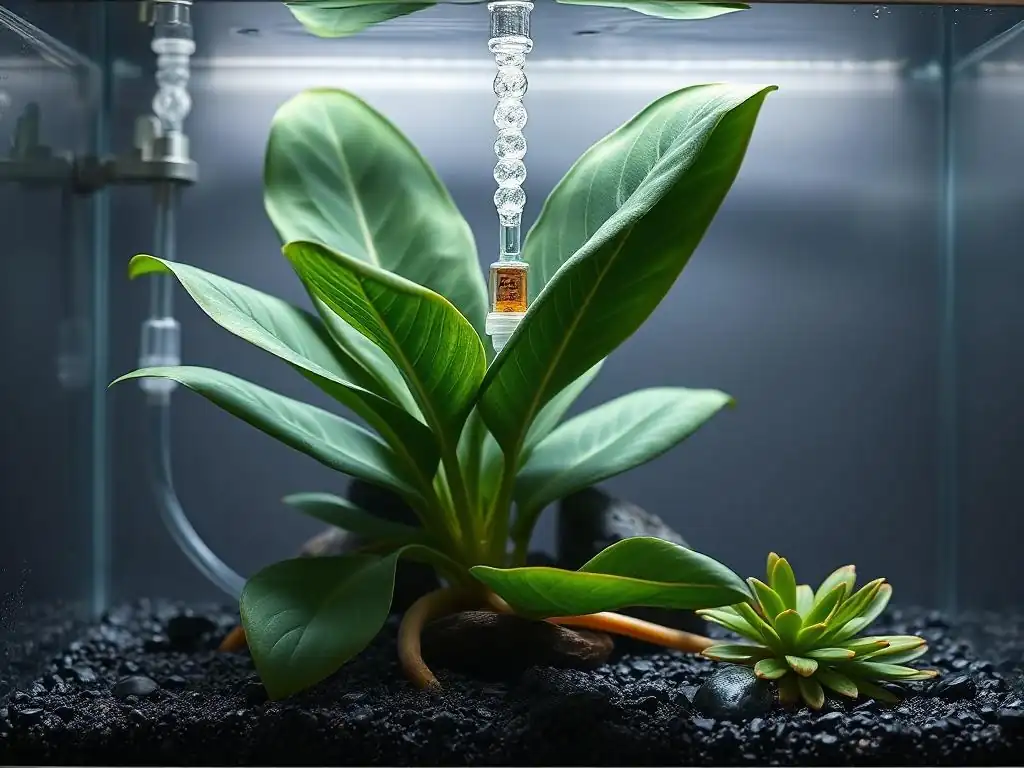
A CO2 drop checker is an indispensable tool for continuously monitoring the dissolved CO2 levels in your aquarium water. This small glass device contains a specialized indicator solution (typically bromothymol blue mixed with a 4 dKH reference solution) that changes color based on the CO2 concentration. The solution is sealed within the drop checker, separated from the aquarium water by an air pocket, allowing CO2 gas to equilibrate into the indicator solution and alter its pH, thus changing its color.
The color of the indicator solution provides a clear visual cue: blue indicates insufficient CO2 (below 20 ppm), green signifies optimal CO2 levels (between 20-30 ppm), and yellow indicates excessive CO2 (above 35 ppm), which can be dangerous for aquatic livestock. For an accurate reading, place the drop checker on the opposite side of the aquarium from your CO2 diffuser, as this provides a more representative average CO2 level across the tank.
Allow at least 2-3 hours for the drop checker to stabilize and reflect the current CO2 concentration after the CO2 system has been turned on. Consistent monitoring with a drop checker is fundamental to safely and effectively manage your CO2 injection aquarium setup.
Adjusting Bubble Count to Achieve Desired CO2 PPM
Adjusting the CO2 bubble count to achieve the desired parts per million (ppm) is an iterative process that requires patience and careful observation. Based on your drop checker's reading, if it shows blue (indicating low CO2), slowly increase your bubble count by a small increment, such as 0.5 to 1 bubble per second, using the needle valve on your regulator. After each adjustment, allow several hours, or ideally a full day, for the CO2 levels to stabilize throughout the tank and for the drop checker to accurately reflect the new concentration.
The goal is to gradually reach and maintain a stable green color on your drop checker during the entire photoperiod. For example, a 75-gallon aquarium might require 3-5 bubbles per second to achieve 25 ppm, but this rate varies significantly depending on factors like water circulation, surface agitation, and plant density. Avoid making large, sudden adjustments, as rapid increases in CO2 can cause sudden pH drops, leading to severe stress or even fatality for your fish and invertebrates. A methodical approach ensures a safe and effective CO2 injection aquarium setup.
Recognizing and Preventing CO2 Toxicity in Fish and Invertebrates
Excessively high CO2 levels in an aquarium can be detrimental, even fatal, to fish and invertebrates. The primary danger stems from the CO2 dissolving into carbonic acid, which lowers the water's pH. While plants thrive in slightly acidic conditions, a rapid or extreme drop in pH can cause acute stress to fish, impairing their ability to absorb oxygen from the water even if oxygen levels are otherwise adequate.
Signs of CO2 toxicity include fish gasping at the surface, rapid gill movement, erratic or lethargic swimming, and loss of appetite. Invertebrates like shrimp and snails are often more sensitive and may show distress or perish before fish do.
To prevent CO2 toxicity, always ensure your CO2 system is turned off 1 to 2 hours before your aquarium lights go out. This prevents CO2 buildup during the dark period when plants are not photosynthesizing and consuming CO2, but rather respiring and releasing CO2 themselves. Adequate surface agitation, especially at night, is crucial for promoting gas exchange and off-gassing excess CO2.
Many aquarists use an air stone on a timer to provide additional aeration during the night or when CO2 is off. Diligently monitoring your drop checker and immediately reducing CO2 flow or increasing surface agitation if the drop checker turns yellow are critical steps in maintaining a safe and balanced CO2 injection aquarium setup.
Advantages of CO2 Injection in Planted Aquariums
Accelerated Plant Growth and Biomass Production
One of the most immediate and significant benefits of implementing a CO2 injection aquarium setup is the dramatic acceleration of plant growth. With an ample and consistent supply of dissolved carbon dioxide, aquatic plants can photosynthesize at their peak capacity, leading to rapid cell division and expansion.
This often translates into a visible increase in plant biomass, with many species growing several times faster than they would in a non-CO2 enriched environment. For example, a plant that might take months to fill out a section of the tank without CO2 could achieve the same density in a matter of weeks with proper CO2 supplementation, allowing aquascapers to achieve their desired layouts much more quickly.
This enhanced growth is not just about speed; it also results in healthier, more robust plants. Stem plants develop thicker stems and larger, more numerous leaves, while carpeting plants form dense, lush mats that completely cover the substrate. The increased photosynthetic efficiency means plants can better utilize available light and nutrients, leading to stronger root systems and overall vitality. This accelerated growth cycle also means plants can recover more quickly from trimming or transplanting, contributing to a more resilient and dynamic planted aquarium.
Enhanced Plant Coloration and Nutrient Uptake
Beyond mere growth, CO2 injection significantly contributes to the vibrant coloration of aquatic plants. When plants receive optimal CO2, their metabolic processes are boosted, allowing them to efficiently produce the pigments responsible for their rich reds, deep greens, and other striking hues. For instance, red plants like Alternanthera reineckii 'Mini' or Ludwigia repens 'Rubin' will exhibit more intense and saturated red tones under adequate CO2 levels compared to their paler appearance in low-CO2 environments. This is because CO2 enables the plant to better process other essential nutrients, including iron, which is crucial for red pigment development.
Furthermore, a sufficient CO2 supply enhances the plant's ability to absorb and utilize other vital macronutrients (like Nitrogen, Phosphorus, and Potassium) and micronutrients (such as Iron, Manganese, and Boron) from the water column or substrate. When carbon is readily available, the plant's metabolic pathways are optimized, making nutrient uptake more efficient. This synergistic effect means that fertilizers become more effective, as plants can fully exploit the nutrients provided, leading to overall healthier plants that are less susceptible to nutrient deficiencies and more resistant to common diseases, elevating the aesthetic appeal of any CO2 injection aquarium setup.
Suppression of Algae Growth Through Plant Competition
A well-managed CO2 injection aquarium setup is one of the most effective strategies for naturally suppressing algae growth. This is achieved through a principle known as competitive exclusion. When plants are provided with optimal CO2, they grow vigorously and rapidly, outcompeting algae for essential light and nutrient resources. Healthy, fast-growing plants act as a powerful biological filter, efficiently absorbing nitrates, phosphates, and other compounds that algae rely on for proliferation. This effectively starves the algae, preventing their establishment and spread.
In contrast, in tanks with insufficient CO2, plants struggle to grow, leaving an abundance of light and nutrients available for opportunistic algae. Common nuisance algae such as Green Spot Algae (GSA), Hair Algae, or Black Beard Algae (BBA) often thrive in low-CO2, high-light conditions where plants are compromised. By ensuring consistent CO2 levels, aquarists empower their plants to dominate the ecosystem, creating an environment where algae find it difficult to flourish. This proactive approach to algae control is far more effective and sustainable than reactive measures, making CO2 injection a cornerstone of long-term algae prevention in planted tanks.
Troubleshooting Common CO2 Injection Problems
Locating and Repairing CO2 Leaks in the System
CO2 leaks are a common issue in pressurized CO2 injection aquarium setups and can lead to wasted gas, inconsistent plant growth, and even dangerous cylinder depletion. The most frequent points of leakage include connections at the regulator, solenoid valve, needle valve, bubble counter, and diffuser, as well as cracks or loose fittings in the CO2 tubing itself. A tell-tale sign of a leak is a rapidly depleting CO2 cylinder, even with a seemingly stable bubble count, or a hissing sound near the equipment.
To locate a leak, perform a simple "soap test." Mix a concentrated solution of dish soap and water. With the CO2 system running, apply the soapy water to all connections, fittings, and along the length of the tubing. Look for bubbles forming in the soap solution, which indicate a gas leak. Once a leak is identified, tighten the fitting, replace faulty O-rings or washers, re-wrap threaded connections with plumber's tape, or replace damaged tubing. Ensuring all components are CO2-rated and properly installed is crucial for a secure and efficient CO2 injection aquarium setup.
Stabilizing Inconsistent CO2 Delivery Rates
Inconsistent CO2 delivery rates can lead to fluctuating CO2 levels in the aquarium, stressing both plants and fish. This instability often manifests as an erratic bubble count in the bubble counter or an unpredictable drop checker reading. Common causes include a faulty or low-quality needle valve that struggles to maintain a steady flow, debris obstructing the diffuser, or pressure fluctuations within the regulator itself. A poorly sealed connection can also allow small, intermittent leaks that affect the flow.
To stabilize the delivery, first ensure your regulator's needle valve is of high quality and designed for fine adjustments; some cheaper models are notoriously difficult to dial in. Clean your diffuser regularly to prevent mineral buildup from impeding bubble formation. Check all connections for leaks as described above. If the issue persists, the regulator itself might be faulty or nearing the end of its lifespan, especially if the working pressure gauge fluctuates wildly. Investing in a reliable, well-built regulator is key to achieving consistent and stable CO2 delivery for a successful CO2 injection aquarium setup.
Managing pH Fluctuations Caused by CO2 Injection
CO2 dissolves in water to form carbonic acid, which naturally lowers the pH of the aquarium water. While a slight pH drop (e.g., from 7.5 to 6.8) is normal and beneficial for many aquatic plants, excessive or rapid pH fluctuations can be detrimental to fish and invertebrates. A sudden drop in pH, often caused by too much CO2 injected too quickly, can lead to pH shock, stressing or even killing sensitive livestock. This is particularly problematic in tanks with low KH (carbonate hardness), which provides buffering capacity against pH swings.
To manage pH fluctuations, always introduce CO2 gradually, increasing the bubble count incrementally over several days while monitoring with a drop checker. Ensure your tank has adequate KH (typically 3-6 dKH for planted tanks) to buffer against pH swings. If your tap water has very low KH (e.g., 0-1 dKH), consider using a KH booster product to raise it.
It's also vital to turn off CO2 1-2 hours before the lights go out, as plants stop consuming CO2 at night, allowing it to build up and cause a dangerous pH drop. Proper aeration at night can help off-gas excess CO2, ensuring a stable environment for your CO2 injection aquarium setup.
Alternative CO2 Supplementation Methods
Liquid Carbon Products: Glutaraldehyde and Alternatives
Liquid carbon supplements, primarily glutaraldehyde-based solutions (often marketed as "liquid CO2"), offer a convenient alternative to pressurized CO2 injection, particularly for smaller tanks or those where a full CO2 system is impractical. These products work by providing a source of bioavailable carbon that plants can utilize for photosynthesis, similar to how they use dissolved CO2. They are dosed daily directly into the aquarium water, offering a simple "pour and go" solution without the need for complex equipment.
While liquid carbon products can support moderate plant growth and are effective at inhibiting some forms of algae, they do not provide the same level of explosive growth seen with a pressurized CO2 injection aquarium setup. The carbon provided is not true CO2, and the concentration of bioavailable carbon is typically much lower than what a pressurized system can deliver.
Moreover, some aquarists report that certain sensitive fish and invertebrate species may react negatively to glutaraldehyde, especially if overdosed. They serve as a good entry-level option or for low-tech setups, but are not a substitute for a dedicated CO2 system in high-tech planted aquariums.
DIY CO2 Generators: Yeast-Based Systems and Citric Acid Systems
DIY CO2 generators offer a cost-effective and accessible method for CO2 supplementation, making CO2 injection more attainable for hobbyists on a budget. The most common type is the yeast-based system, which uses a mixture of sugar, yeast, and water in a bottle to produce CO2 through fermentation. This gas is then routed into the aquarium via airline tubing and a diffuser. These systems are simple to set up and maintain, costing very little to run, but they offer inconsistent CO2 output, which decreases as the sugar supply depletes, typically lasting 1-3 weeks per batch.
More advanced DIY options include citric acid and baking soda systems, which react to produce CO2 under pressure. These systems can provide a more stable and higher pressure output than yeast systems, often allowing for finer bubble diffusers. While still more affordable than pressurized systems, they require more frequent refills of the reactants and lack the precise control and reliability of a professional CO2 injection aquarium setup. Both DIY methods are best suited for smaller tanks (under 20-30 gallons) or for hobbyists experimenting with CO2 before committing to a full pressurized system.
Maintaining Your CO2 System for Optimal Performance
Regular Cleaning of Diffusers and Tubing
Regular maintenance is crucial for ensuring the optimal performance and longevity of your CO2 injection aquarium setup. Diffusers, especially ceramic disc types, are prone to clogging over time due to a buildup of algae, bacteria, and mineral deposits from the aquarium water. A clogged diffuser will produce fewer, larger bubbles, significantly reducing CO2 dissolution efficiency. It is recommended to clean ceramic diffusers every 2-4 weeks by soaking them in a dilute bleach solution (e.g., 1 part bleach to 10 parts water) for several hours, then rinsing thoroughly and soaking in a dechlorinator solution before reinstallation.
CO2 tubing, particularly the section submerged in the aquarium, can also accumulate algae and biofilm, which might impede flow or lead to blockages. Periodically inspect the tubing for any signs of discoloration or buildup. If necessary, disconnect the tubing and clean it with a small brush or by flushing with a cleaning solution. Keeping these components clean ensures consistent CO2 flow, maximizes dissolution, and prevents unnecessary strain on your regulator, contributing to the overall efficiency of your CO2 injection system.
Safe CO2 Cylinder Handling and Refilling Procedures
Safe handling of CO2 cylinders is paramount, as they contain gas under high pressure (up to 1000 PSI). Always secure the cylinder upright, preferably strapped to a stand or wall, to prevent it from tipping over, which could damage the valve or regulator. Never expose the cylinder to excessive heat or direct sunlight. When transporting the cylinder for refilling, ensure it is securely placed in your vehicle to prevent rolling or falling.
Refilling procedures typically involve exchanging your empty cylinder for a full one at a local welding supply store, paintball shop, or specialized aquarium store. Before disconnecting the regulator, ensure the cylinder valve is fully closed and release any residual pressure in the lines. When attaching a full cylinder, always use a wrench to tighten the regulator connection firmly, but avoid overtightening. After connecting, slowly open the cylinder valve to pressurize the system. Regular inspection of the cylinder for any damage or rust is also advisable to ensure its integrity within your CO2 injection aquarium setup.
Monitoring Water Parameters for Long-Term Stability
Beyond the immediate CO2 parameters, continuous monitoring of other key water parameters is essential for the long-term stability and success of a CO2 injection aquarium setup. The increased CO2 levels can influence pH, so regular pH testing (e.g., weekly) is important to ensure it remains within a safe range for your livestock (typically 6.5-7.5 for most planted tanks). Carbonate hardness (KH) is also critical, as it acts as a buffer against pH swings; maintaining a stable KH (e.g., 3-6 dKH) helps prevent dangerous pH crashes.
Furthermore, with accelerated plant growth due to CO2, plants will rapidly consume macronutrients (Nitrates, Phosphates, Potassium) and micronutrients (Iron, Trace Elements). Therefore, regular testing for these parameters and adjusting your fertilization regimen accordingly is vital. Weekly or bi-weekly tests for nitrates and phosphates can help determine if your dosing is adequate. Consistent water changes (e.g., 25-30% weekly) are also important to replenish minerals, remove waste, and maintain overall water quality, ensuring a balanced and thriving ecosystem alongside your CO2 injection system.
Advanced CO2 Strategies for Experienced Aquascapers
Integrating CO2 Controllers for Precise Regulation
For experienced aquascapers seeking the utmost precision and automation in their CO2 injection aquarium setup, integrating a CO2 controller is a significant upgrade. A CO2 controller, often referred to as a pH controller, uses a sensitive pH probe submerged in the aquarium water to continuously measure the pH. Based on a user-defined target pH (which correlates directly to a specific CO2 ppm given the tank's KH), the controller automatically turns the CO2 solenoid valve on or off.
This provides unparalleled stability and accuracy, ensuring CO2 levels remain consistently within the optimal range (e.g., 25-30 ppm) without constant manual adjustment. For instance, if the pH rises above the target, the controller activates the CO2; if it drops too low, it shuts off the CO2. This eliminates the guesswork associated with bubble counters and drop checkers, reduces the risk of CO2 toxicity, and maximizes plant growth efficiency. While an initial investment, a CO2 controller offers peace of mind and superior control for high-demand planted tanks.
Utilizing CO2 Reactors for Maximum Dissolution Efficiency
CO2 reactors represent the pinnacle of CO2 dissolution technology for planted aquariums, offering near 100% dissolution efficiency compared to the 50-80% typically achieved by ceramic diffusers. Unlike diffusers that release bubbles into the tank, reactors are sealed units (often placed inline with a canister filter's return line or as standalone units) where CO2 gas is injected and mixed thoroughly with aquarium water before it re-enters the display tank. This internal mixing chamber, often with bio-balls or baffling, forces the CO2 bubbles to travel a longer, more turbulent path, allowing almost all the gas to dissolve.
The primary benefit of reactors is the absence of visible CO2 bubbles in the display tank, maintaining a pristine aquascape aesthetic. More importantly, their high efficiency means less CO2 is wasted, leading to more stable CO2 levels and more economical cylinder usage. For very large aquariums (e.g., 100+ gallons) or extremely densely planted setups with high CO2 demands, a CO2 reactor is often the most effective solution for achieving and maintaining optimal CO2 concentrations without over-dosing, making it an essential component for high-performance CO2 injection aquarium setup.
Optimizing Nutrient Dosing in Conjunction with CO2 Injection
With a high-performance CO2 injection aquarium setup, plants grow at an accelerated rate, which in turn leads to a significantly higher demand for essential macronutrients (Nitrogen, Phosphorus, Potassium) and micronutrients (Iron, Manganese, Boron, etc.). In a non-CO2 injected tank, nutrient deficiencies might take weeks to appear; with CO2, they can manifest in days. Therefore, optimizing your nutrient dosing regimen becomes crucial to support this rapid growth and prevent deficiencies that can lead to stunted plants or algae outbreaks.
Experienced aquascapers often employ a "Estimative Index" (EI) or "PPS Pro" dosing method, which involves providing a slight excess of all necessary nutrients through regular, comprehensive liquid fertilization. This ensures that plants always have access to what they need, preventing any nutrient from becoming a limiting factor. Regular water changes (e.g., 50% weekly for EI) help reset nutrient levels and prevent buildup. Tailoring the dosing schedule and amounts to the specific plant load and growth rate of your CO2-enriched tank is essential for achieving the lush, vibrant aquascape that CO2 injection promises.
Frequently Asked Questions
What is CO2 injection, and why is it important for planted aquariums?
CO2 injection is the process of adding carbon dioxide to an aquarium. It's crucial because aquatic plants need CO2 for photosynthesis, just like terrestrial plants. Without sufficient CO2, plant growth will be severely limited.
How does a CO2 injection aquarium setup work?
A typical CO2 injection setup involves a CO2 tank, a regulator to control the gas flow, tubing, a diffuser to dissolve the CO2 into the water, and often a drop checker to monitor CO2 levels. These components work together to deliver a consistent supply of CO2.
Is CO2 injection safe for my fish?
Yes, when done correctly. It's crucial to monitor CO2 levels carefully, as excessive CO2 can harm fish. A drop checker and careful observation of your fish's behavior are essential to maintain a safe and healthy balance.
How do I determine the right amount of CO2 to inject into my aquarium?
The optimal CO2 level depends on factors like tank size, plant mass, and lighting intensity. Start with a low dose and gradually increase it while monitoring your drop checker and observing your plants for signs of healthy growth, aiming for a level of around 30 ppm.
What are some common problems associated with CO2 injection, and how can I troubleshoot them?
Common issues include leaks in the system, inconsistent CO2 delivery, and excessive CO2 levels. Regularly check connections, calibrate your regulator, and monitor your drop checker to troubleshoot these problems.
Final Reflection: Breathing Life into Aquatic Ecosystems
The exploration of CO2 injection as a catalyst for explosive plant growth in aquariums transcends mere hobbyist tinkering; it represents a deeper understanding of the delicate balance within these miniature ecosystems. What began as a quest for vibrant, lush underwater landscapes has unveiled a powerful tool for manipulating and optimizing plant health, mirroring broader ecological principles applicable far beyond the glass walls of a fish tank.
This journey into the world of CO2 injection has profoundly influenced my perspective on the interconnectedness of life. Witnessing firsthand the transformative power of this seemingly simple element has instilled a deeper appreciation for the intricate dance between light, nutrients, and carbon dioxide. The best time to plant a tree was 20 years ago. The second best time is now.
This ancient proverb resonates deeply, reminding us that even small actions, like optimizing CO2 levels, can yield significant and lasting results in the long run.
Now, I invite you to reflect on the lessons learned. Consider how you can apply the principles of balance and optimization, not only in your aquarium but also in other aspects of your life. Embrace the power of understanding the fundamental elements that drive growth and vitality, and dare to cultivate your own vibrant ecosystem, both within and beyond the glass.
Ignite Your Aquarium: Unleash the Power of CO2!
Thanks for diving into the world of CO2 injection and its incredible impact on aquatic plants! You've now got the knowledge to transform your aquarium into a thriving underwater jungle. Ready to see the magic happen?
Here's how to take the next step:
- Master the Basics: Start small, test frequently, and get ready for a whole new level of plant growth—the key is consistent, careful adjustment!
- Dive deeper! Uncover the secret of aquatic soil to give a boost to you plants.
- Share your success. Post your before-and-after shots on social media using #AquariumMasteryCO2 and inspire fellow aquarists.
What's one specific plant you're most excited to see flourish with the help of CO2? Let us know in the comments below!