
Hornwort Mastery: Floating Wonder or Background Filler? Care & Control

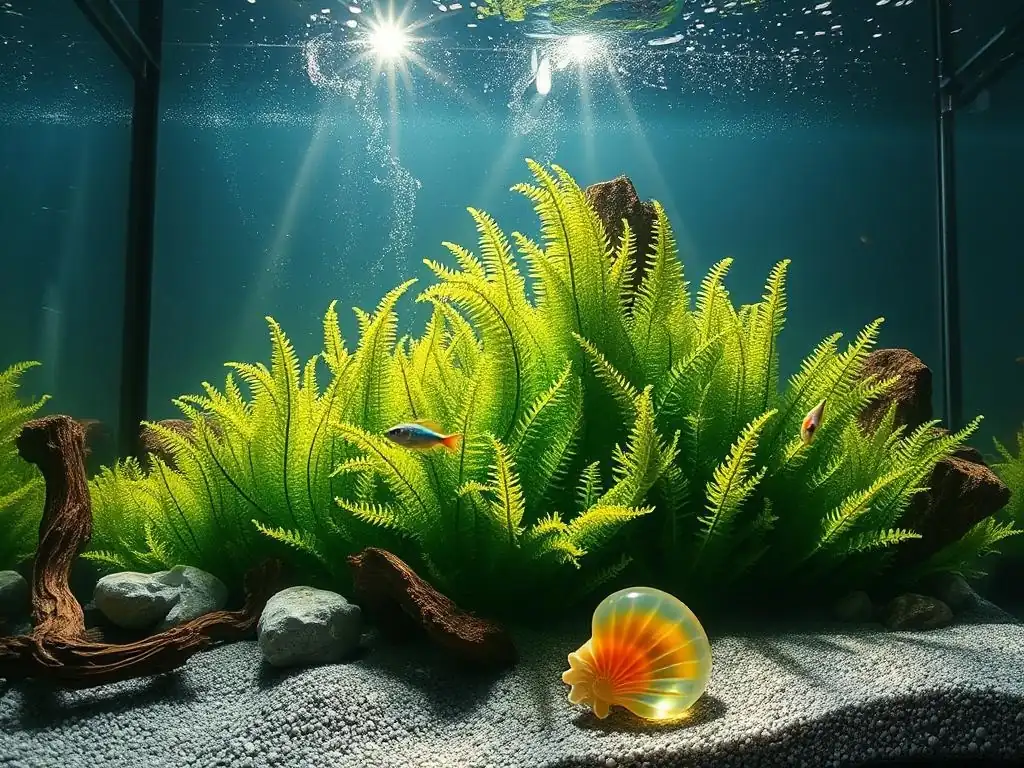
Welcome to Aquarium Mastery!
Ever wondered if hornwort is the secret weapon your aquarium needs, or if it's destined to become an unruly, floating mess? Dive in and discover our comprehensive guide to Floating Hornwort Care Tips. Unlock the secrets to thriving hornwort, whether you envision it as a graceful floater or a lush background element. Ready to master the art of hornwort and create a stunning aquatic display? Let's get started!
- Understanding Hornwort: An Introduction to Ceratophyllum demersum
- Floating Hornwort Care Tips: Essential Guidelines for Success
- Controlling Hornwort Growth: Preventing Overgrowth in Your Aquarium
- Hornwort as a Floating Plant: Advantages and Disadvantages
- Hornwort as a Background Plant: Creating a Green Backdrop
- Choosing Tank Mates for Hornwort: Compatible Species and Considerations
- Beyond the Basics: Advanced Hornwort Care Techniques
- Troubleshooting Hornwort Issues: A Quick Reference Guide
-
Frequently Asked Questions
- How do I properly float hornwort in my aquarium?
- What are the benefits of floating hornwort versus planting it?
- What water parameters are ideal for floating hornwort care?
- How do I control the growth of floating hornwort?
- What are common problems encountered when floating hornwort and how do I address them?
- Final Reflection: Embracing the Unassuming Power of Hornwort
- Unleash the Potential of Hornwort in Your Aquarium!
Understanding Hornwort: An Introduction to Ceratophyllum demersum
What is Hornwort? Identifying Characteristics and Benefits
Hornwort, scientifically known as Ceratophyllum demersum, is a widely recognized and resilient aquatic plant popular among freshwater aquarists. It is characterized by its stiff, needle-like leaves that grow in whorls around a central stem, giving it a somewhat bushy or feathery appearance. Unlike many other aquatic plants, Hornwort is free-floating by nature and does not develop true roots to anchor itself to the substrate. Its lack of a traditional root system contributes to its adaptability, allowing it to thrive in various water conditions and making it an excellent choice for both beginners and experienced hobbyists.
This robust plant offers numerous benefits to a freshwater aquarium ecosystem. Its dense foliage provides excellent hiding spots and a sense of security for fry and small, shy fish species, such as Endler's Livebearers or Neon Tetras, significantly reducing their stress levels. Furthermore, Hornwort is a highly efficient nutrient absorber, readily consuming excess nitrates, phosphates, and other dissolved organic compounds from the water column. This natural filtration capability helps to inhibit algae growth and maintain pristine water quality, contributing to a healthier and more stable environment for all inhabitants.
Hornwort's Role in the Freshwater Aquarium Ecosystem
Hornwort plays a crucial role in maintaining ecological balance within a freshwater aquarium. As a fast-growing plant, it actively participates in the nitrogen cycle by uptaking nitrates, a byproduct of fish waste and decaying organic matter. This process not only purifies the water but also helps prevent the accumulation of harmful toxins, which can be detrimental to fish health. For instance, in a 20-gallon tank with a moderate fish load, a healthy clump of Hornwort can process a significant portion of daily nitrate production, often reducing the need for frequent large water changes.
Beyond its chemical contributions, Hornwort also provides essential biological and physical benefits. It acts as a natural oxygenator, releasing oxygen into the water during photosynthesis, which is vital for the respiration of fish and beneficial bacteria. The intricate structure of its leaves also offers a large surface area for the colonization of beneficial nitrifying bacteria, further enhancing the biological filtration capacity of the aquarium. Moreover, its presence can help stabilize water temperature fluctuations and provide a natural foraging ground for herbivorous or omnivorous fish, which might graze on the plant itself or the micro-organisms living on its surface.
Floating Hornwort Care Tips: Essential Guidelines for Success
Optimizing Water Parameters for Hornwort Growth
Ideal Temperature and pH for Thriving Hornwort
For optimal growth and vitality, Hornwort thrives within a specific range of water parameters, making floating hornwort care tips relatively straightforward. The ideal temperature for Ceratophyllum demersum is between 60°F and 82°F (15°C and 28°C). While it can tolerate slightly cooler or warmer conditions for short periods, prolonged exposure outside this range can lead to stunted growth or even plant decay. For example, maintaining a consistent temperature around 72°F (22°C) often results in vigorous growth and vibrant green foliage, showcasing its full potential.
Regarding pH, Hornwort is quite adaptable, preferring a range from 6.0 to 8.0. This wide tolerance means it can flourish in both slightly acidic and moderately alkaline water, accommodating a broad spectrum of freshwater fish and invertebrate setups. However, a stable pH is more critical than hitting a precise number within this range. Sudden, drastic shifts in pH can stress the plant, leading to shedding or browning. Aquarists often find Hornwort performs exceptionally well in tanks with a pH of 6.8 to 7.5, which also suits most common community fish.
Lighting Requirements: How Much Light Does Hornwort Need?
When considering floating hornwort care tips, understanding its lighting needs is crucial. Hornwort is not particularly demanding when it comes to light intensity, making it suitable for a variety of setups, from low-tech to moderately lit tanks. It can thrive under low to moderate lighting conditions, typically requiring about 10 to 20 lumens per liter or 0.25 to 0.5 watts per liter (using older fluorescent equivalencies). Excessive light, especially without adequate CO2 and nutrient levels, can sometimes lead to algae growth on its leaves or cause the plant to turn pale.
For optimal growth, providing 8 to 12 hours of light per day is generally recommended. A simple LED light fixture designed for planted aquariums, set to a moderate intensity, will usually suffice. For instance, a 20-gallon tank with a 15-watt LED light running for 10 hours daily provides ample illumination for robust Hornwort development. Observe the plant's response; if it appears leggy or its color dulls, a slight increase in light duration or intensity might be beneficial. Conversely, if algae begins to form on the plant, reducing light intensity or duration should be considered.
Hornwort Placement: Floating vs. Planted - Which is Best?
Hornwort's versatility allows it to be used in two primary ways: floating freely at the surface or anchored to the substrate. The "best" method largely depends on your aquarium's specific needs, aesthetic preferences, and the behavior of your tank inhabitants. Floating hornwort care tips often emphasize its benefits as a surface plant, providing immediate shade and cover, and acting as a natural nitrate sponge right where excess nutrients tend to accumulate from surface feeding. This free-floating habit also makes it easily adjustable or removable for maintenance.
Conversely, anchoring Hornwort can create a lush, green background or midground effect, mimicking a rooted plant without the complexities of a true root system. While it doesn't root, it can be gently tucked into substrate, weighted down with plant weights, or attached to driftwood or rocks. This method offers a more structured look and can prevent the plant from drifting into filter intakes. However, when planted, it may shed more needles, especially if disturbed, as it is not naturally designed to be anchored.
Planting Hornwort: A Guide to Anchoring Without Damage
Although Hornwort is a rootless, floating plant, it can be successfully anchored to create a background or midground feature. The key is to avoid damaging its delicate stems. One common method involves gently pushing the bottom portion of a Hornwort stem into the substrate, allowing the gravel or sand to hold it loosely in place. Do not bury the stem too deeply, as this can cause the buried portion to rot due to lack of light and oxygen. A depth of 1-2 inches is usually sufficient to provide stability.
Alternatively, you can use plant weights, lead-free strips designed for aquatic plants, to gently wrap around the base of a Hornwort bunch. These weighted bunches can then be placed directly on the substrate or tucked into crevices in hardscape elements like driftwood or rocks. Another effective technique is to use fishing line or cotton thread to loosely tie a clump of Hornwort to a piece of aquarium-safe rock or wood.
Over time, the Hornwort may develop rhizoid-like structures that can loosely attach to the surface, providing additional stability. Remember that even when anchored, Hornwort will still absorb nutrients primarily from the water column, so floating hornwort care tips regarding water column fertilization still apply.
Nutrient Requirements: Fertilizing Hornwort for Lush Growth
Understanding Macronutrient and Micronutrient Needs
While Hornwort is often touted as a "nutrient hog" that can thrive in relatively lean conditions by consuming fish waste, providing a balanced supply of essential nutrients will significantly enhance its growth and vibrancy. Like all plants, Hornwort requires both macronutrients and micronutrients. Macronutrients, needed in larger quantities, include Nitrogen (N), Phosphorus (P), and Potassium (K).
Nitrogen is crucial for leaf development and overall growth, phosphorus aids in energy transfer and root (or pseudo-root) development, and potassium supports general plant health and disease resistance. In a moderately stocked aquarium, fish waste often provides sufficient nitrogen and phosphorus, but potassium can become limiting.
Micronutrients, required in smaller trace amounts, are equally vital for Hornwort's metabolic processes. These include elements like Iron (Fe), Manganese (Mn), Zinc (Zn), Boron (B), and Molybdenum (Mo). Iron, for instance, is essential for chlorophyll production, and a deficiency can lead to yellowing leaves. While some micronutrients may be present in tap water or introduced via fish food, dedicated liquid fertilizers often provide a comprehensive blend. Adequate nutrient availability, combined with proper floating hornwort care tips, ensures lush, green growth and prevents deficiencies.
Choosing the Right Aquarium Fertilizer for Hornwort
When selecting a fertilizer for Hornwort, consider its rootless nature and its primary method of nutrient absorption: directly from the water column. Therefore, liquid fertilizers are generally more effective than root tabs, which are designed for rooted plants. Look for an "all-in-one" liquid fertilizer that provides a balanced blend of macro and micronutrients. Brands like Seachem Flourish, API Leaf Zone, or NilocG Aquatics' Thrive are popular choices among aquarists and offer comprehensive nutrient profiles.
For tanks with low to moderate fish loads, a general liquid fertilizer dosed once or twice a week, following the manufacturer's recommendations, is usually sufficient. If your tank is heavily planted or has very few fish, you might need to supplement with additional potassium or iron, as these are often the first nutrients to become depleted.
Always start with a lower dose and observe your Hornwort's response to avoid over-fertilization, which can lead to algae issues. Consistent dosing, as part of your floating hornwort care tips regimen, will ensure your Hornwort receives the continuous supply of nutrients it needs for vigorous growth.
Common Hornwort Problems and Solutions
Algae Growth on Hornwort: Prevention and Treatment
Algae growth on Hornwort is a common issue, often indicating an imbalance in the aquarium environment. Brown diatom algae or green spot algae can cling to the needles, hindering photosynthesis and making the plant look unsightly.
The primary causes are typically excessive light duration or intensity, coupled with an imbalance in nutrient levels (e.g., too much light with insufficient CO2 or fluctuating macronutrients). For instance, if your tank receives 14 hours of intense light daily and you notice a brown film on your Hornwort, reducing the photoperiod to 10 hours and ensuring consistent nutrient dosing can often resolve the issue.
To prevent algae, optimize your lighting to 8-10 hours of moderate intensity and maintain stable water parameters. Ensure a consistent supply of CO2 if running a high-tech setup, and dose liquid fertilizers regularly to outcompete algae for nutrients. For existing algae, manual removal by gently swishing the Hornwort in tank water or carefully rubbing the affected areas can help.
Introducing algae-eating tank mates like Amano shrimp ( Caridina multidentata) or Otocinclus catfish ( Otocinclus affinis) can also be effective biological controls. In severe cases, a blackout period of 2-3 days (no light, no feeding) can significantly reduce algae without harming the Hornwort or fish.
Hornwort Browning: Identifying the Cause and Corrective Measures
Browning of Hornwort needles is a clear sign of distress and can stem from several factors, often related to nutrient deficiencies or environmental stress. One common cause is a lack of sufficient light, particularly if the plant is densely packed and lower sections are shaded. Overly high temperatures or sudden temperature fluctuations can also stress the plant, leading to browning. For example, if your heater malfunctions and the temperature spikes to 85°F (29°C) for an extended period, you might observe widespread browning.
To correct browning, first, assess your lighting. Ensure adequate light penetration to all parts of the Hornwort, especially if it's forming a dense mat. If temperatures are unstable, invest in a reliable heater and thermometer to maintain a steady range between 60-82°F (15-28°C). Nutrient deficiencies, particularly potassium or iron, can also cause browning. Dosing a comprehensive liquid fertilizer that includes these micronutrients can often reverse the browning and restore the plant's vibrant green color. Pruning heavily browned sections will encourage new, healthy growth.
Dealing with Hornwort Shedding and Needle Drop
Excessive shedding or "needle drop" is a common complaint among Hornwort keepers, and while some shedding is natural, significant loss indicates an underlying problem. The most frequent cause is a drastic change in water parameters, such as sudden shifts in pH, temperature, or hardness. For instance, if you perform a large water change with water significantly different from your tank's parameters, Hornwort might react by shedding a multitude of its delicate needles. Mechanical stress, like frequent handling or strong water currents, can also dislodge needles.
To minimize shedding, focus on maintaining stable water conditions. Perform smaller, more frequent water changes (e.g., 20-30% weekly) rather than large, infrequent ones. Ensure new water is temperature-matched and dechlorinated. If you've recently introduced CO2, gradually acclimate the plant to the new conditions. Reduce strong direct currents that buffet the plant. While Hornwort is known to shed some needles naturally, particularly when adapting to a new environment, healthy plants will quickly replace lost foliage with new growth. Regular cleaning of the substrate and filter to remove shed needles will prevent them from decomposing and contributing to nutrient spikes.
Controlling Hornwort Growth: Preventing Overgrowth in Your Aquarium
Pruning Techniques: How to Trim Hornwort Effectively
Hornwort is a remarkably fast-growing plant, and effective pruning is essential to prevent it from completely overrunning an aquarium. The simplest and most common pruning technique involves physically removing excess stems. You can either gently pull out entire strands from a floating clump or snip off sections of stems using sharp aquarium scissors. When trimming, aim to remove about 20-30% of the plant mass at a time, focusing on older, less vibrant stems or those that are becoming too long.
To maintain a desired shape or density, regular pruning, perhaps weekly or bi-weekly depending on growth rate, is more effective than infrequent, drastic cuts. For floating Hornwort, simply scoop out excess material with a net or your hand. For anchored Hornwort, carefully snip the stems above the desired height. Discard the trimmed pieces responsibly, as even small fragments can regrow. Consistent pruning not only controls size but also encourages bushier growth and ensures light penetration to plants below, contributing to overall aquarium health and aesthetics.
Managing Hornwort Density: Maintaining a Balanced Aquarium
Managing Hornwort density is crucial for maintaining a balanced aquarium ecosystem, particularly given its rapid growth rate. An overly dense mat of floating Hornwort can block light from reaching plants below, potentially stunting their growth and even causing them to perish. It can also reduce gas exchange at the water surface, impacting oxygen levels. The goal is to strike a balance where Hornwort provides its benefits (nutrient absorption, shelter) without becoming a nuisance.
One effective strategy is to dedicate a specific area of the tank for floating Hornwort, using airline tubing or a floating plant ring to contain it. This prevents it from spreading throughout the entire surface. For example, in a 40-gallon breeder tank, dedicating a 6x6 inch corner to Hornwort allows it to thrive while leaving ample open water for fish and light for other plants.
Regularly removing excess biomass, as often as once a week in highly fertile tanks, is key. This consistent removal exports nutrients from the system, helping to prevent algae and maintain water quality. Consider selling or giving away excess trimmings to other hobbyists to avoid waste.
Propagation Methods: How to Multiply Your Hornwort Plants
Hornwort is one of the easiest aquatic plants to propagate, primarily through fragmentation. This natural characteristic contributes to its rapid spread and makes it simple for aquarists to multiply their stock or share with others. The plant readily grows new shoots from any healthy stem section, without the need for specialized equipment or hormones. This ease of propagation is a significant advantage, allowing hobbyists to quickly establish a dense Hornwort presence in new tanks or replace older, less vigorous sections.
The propagation process is straightforward: simply cut a healthy piece of Hornwort stem, at least 3-4 inches long, from an existing plant. Each cut section will continue to grow as an independent plant. This method ensures that even if a part of your Hornwort sheds or breaks off, it has the potential to become a new, thriving plant, further enhancing its resilience and utility in the aquarium.
Propagating Hornwort from Cuttings: A Step-by-Step Guide
Propagating Hornwort from cuttings is exceptionally simple and requires no special tools beyond a sharp pair of aquarium scissors or even just your fingers.
- Select Healthy Stems: Choose vigorous, green stems from your existing Hornwort plant that show no signs of browning or decay. Aim for stems that are at least 4-6 inches in length to give the new plant a good start.
- Make the Cut: Using clean aquarium scissors or by simply pinching firmly with your fingers, snip off the chosen stem section. Make sure the cut is clean to minimize damage to the parent plant.
- Introduce to Water: Place the newly cut Hornwort section directly into the aquarium water. It will naturally float. If you wish to anchor it, gently tuck the cut end into the substrate or use a plant weight as described in the "Planting Hornwort" section.
- Monitor Growth: The new cutting will immediately begin to absorb nutrients from the water column and continue growing. Within a few days to a week, you should notice signs of new growth, particularly if your floating hornwort care tips include consistent nutrient dosing and appropriate lighting. Regular trimming of the new plant will encourage bushier growth.
Hornwort as a Floating Plant: Advantages and Disadvantages
Benefits of Using Hornwort as a Floating Plant
Utilizing Hornwort as a floating plant offers numerous advantages that contribute significantly to a healthy and stable aquarium environment. Firstly, its rapid growth and dense structure provide immediate and effective natural filtration. Floating Hornwort readily absorbs excess nitrates, phosphates, and other dissolved organic compounds directly from the water column, helping to maintain pristine water quality and inhibit nuisance algae growth. For example, in a 30-gallon tank with moderate fish stock, a large floating clump of Hornwort can process up to 10-15 ppm of nitrates per week, reducing the need for extensive water changes.
Secondly, floating Hornwort offers excellent cover and security for various aquatic inhabitants. Its intricate network of leaves creates natural hiding spots for shy fish species, such as Dwarf Gouramis or Celestial Pearl Danios, reducing their stress levels. It's also an ideal nursery for fry, providing both shelter from adult fish and a surface for infusoria to grow, which serves as a natural food source for the tiny fish. Furthermore, it can help diffuse intense aquarium lighting, creating shaded areas preferred by certain fish and preventing excessive light from reaching the substrate, which can trigger algae blooms.
Potential Drawbacks of Floating Hornwort
Despite its many benefits, using Hornwort as a floating plant does come with a few potential drawbacks that aquarists should be aware of. Its exceptionally fast growth rate, while beneficial for nutrient export, means it can quickly cover the entire water surface, blocking light from reaching plants below and potentially reducing gas exchange. This requires frequent and diligent pruning, sometimes as often as once a week, to prevent it from becoming an overwhelming presence in the tank. Neglecting this maintenance can lead to stunted growth of other plants and lower oxygen levels, especially overnight.
Another consideration is its tendency to shed needles, particularly when initially introduced to a new tank or if conditions are unstable. These shed needles can accumulate on the substrate, potentially decaying and contributing to the bioload if not regularly siphoned out during water changes. While generally harmless, excessive shedding can be unsightly and requires more frequent substrate cleaning. Additionally, dense floating Hornwort can sometimes interfere with surface skimmers or hang-on-back filter intakes, requiring careful placement or containment to avoid operational issues.
Hornwort as a Background Plant: Creating a Green Backdrop
Benefits of Using Hornwort as a Background Plant
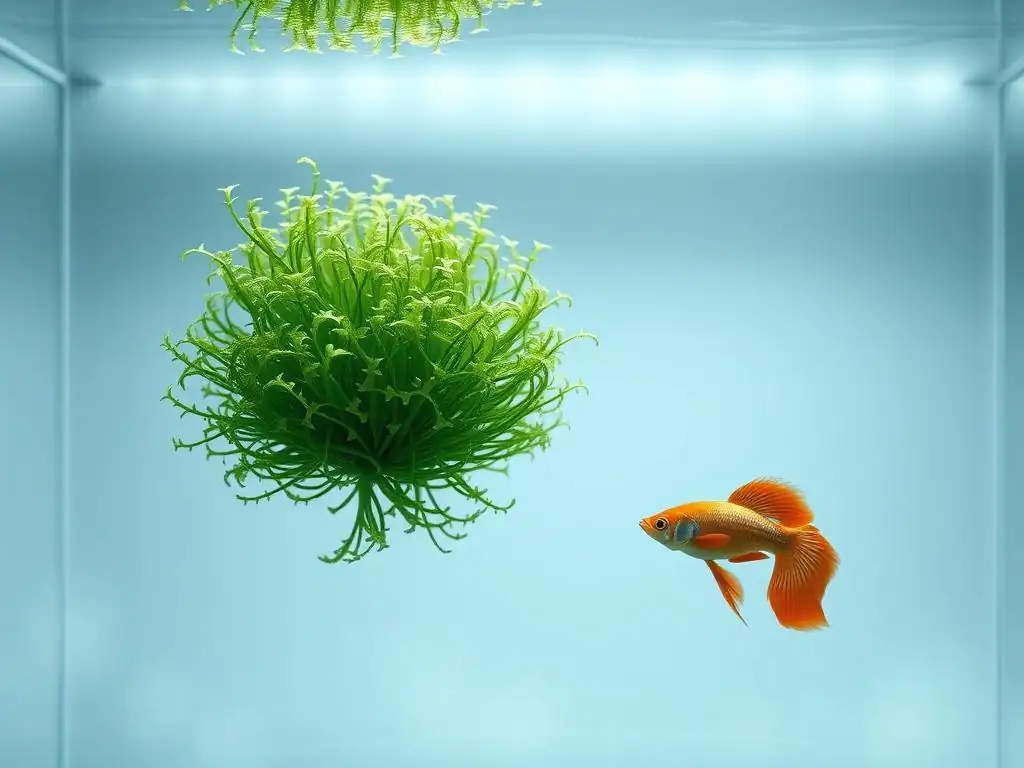
Using Hornwort as a background plant, despite its natural floating habit, offers unique aesthetic and environmental benefits. When anchored or weighted down, Hornwort can create a lush, dense green wall that provides an immediate and vibrant backdrop for your aquarium. Unlike many true rooted background plants, Hornwort does not require a nutrient-rich substrate or deep burial, making it a flexible choice for various substrate types, from sand to gravel. Its feathery texture adds a dynamic visual element that contrasts well with broader-leafed plants.
Beyond aesthetics, Hornwort in the background still performs its vital ecological functions. It continues to absorb nitrates and other excess nutrients directly from the water column, contributing to water clarity and quality throughout the tank. Its dense structure provides excellent hiding places for fish and invertebrates, such as shrimp or small catfish, allowing them to feel secure while still being visible from the front of the tank. Furthermore, a tall, dense Hornwort background can help to diffuse light, creating a more naturalistic environment and providing shaded areas that certain fish species, like many types of tetras, appreciate.
Potential Drawbacks of Using Hornwort as a Background Plant
While using Hornwort as a background plant can be visually appealing, it does present some potential drawbacks compared to its floating application. The primary challenge is its lack of a true root system. Hornwort is not designed to be rooted, and when pushed into the substrate, the buried portions of the stem can sometimes rot due to insufficient light and oxygen, leading to shedding of needles and potential water quality issues if decay is widespread. This means it may not always stay firmly anchored and can occasionally become dislodged, floating to the surface.
Another disadvantage is the increased likelihood of needle shedding when Hornwort is anchored. Disturbance from fish, maintenance activities, or simply the plant's natural adaptation to being "planted" can cause more needles to drop compared to when it's free-floating. These shed needles can accumulate on the substrate, requiring more frequent vacuuming to prevent decomposition and nutrient spikes. Furthermore, its rapid growth rate means that even when anchored, it will quickly grow upwards, requiring regular trimming to maintain a tidy background and prevent it from reaching the surface and shading other plants.
Choosing Tank Mates for Hornwort: Compatible Species and Considerations
Fish That Benefit from Hornwort's Presence
Many freshwater fish species greatly benefit from the presence of Hornwort in their aquarium, whether it's floating or anchored. Its dense foliage provides essential cover and security, which is particularly beneficial for shy or small fish. Livebearers such as Guppies, Mollies, and Swordtails thrive in tanks with Hornwort, as it offers excellent hiding spots for their fry, significantly increasing their survival rate. For instance, a breeding tank for Guppies with ample floating Hornwort can see fry survival rates increase from less than 10% to over 50%.
Other fish that appreciate Hornwort include various small schooling fish like Neon Tetras, Cardinal Tetras, and Rummy-Nose Tetras, which feel more secure when they have places to retreat. Betta fish also enjoy resting on its leaves near the surface. Invertebrates like various shrimp species (e.g., Cherry Shrimp, Amano Shrimp) and snails also benefit, as Hornwort provides ample surface area for biofilm and micro-organisms to graze upon. Even bottom dwellers like Corydoras catfish appreciate the shade and sense of security it provides.
Fish That May Damage or Consume Hornwort
While Hornwort is generally quite robust, certain fish species may damage or consume it, making them less ideal tank mates if your goal is to maintain lush, intact Hornwort. Large, boisterous cichlids, such as Oscar fish or Green Terrors, are known for uprooting or tearing apart plants, including Hornwort, due to their digging behaviors and sheer size. For example, a mature Oscar in a 55-gallon tank could easily decimate a Hornwort clump within days.
Herbivorous fish with a strong appetite for plant matter can also pose a threat. Silver Dollars, for instance, are notorious for consuming most soft-leaved plants, and while Hornwort is somewhat stiff, large Silver Dollar schools can still graze on it. Goldfish, particularly common and comet varieties, are also known plant eaters and will readily nibble on Hornwort, especially if other food sources are scarce. While some fish may occasionally pick at it, these specific species are more likely to cause significant damage or outright consumption, making them incompatible if the preservation of your Hornwort is a priority.
Beyond the Basics: Advanced Hornwort Care Techniques
CO2 Injection and Hornwort Growth: Is it Necessary?
CO2 injection is often a staple in high-tech planted aquariums, but for Hornwort, it is generally not necessary and can even be detrimental if not managed carefully. Hornwort is a non-CO2 demanding plant, meaning it can efficiently utilize carbon from the water column, often extracting it from bicarbonates (biogenic decalcification). This ability allows it to thrive in low-tech setups without supplemental CO2. In fact, Hornwort can grow so rapidly without CO2 injection that it becomes a challenge to control its growth.
While Hornwort can survive and even grow under CO2 injection, excessive CO2 levels or rapid fluctuations can sometimes stress the plant, leading to increased shedding or stunted growth. If you are running a high-tech tank with CO2 for other demanding plant species, Hornwort will likely benefit from the increased carbon availability and grow even more vigorously. However, if Hornwort is your primary plant, investing in a CO2 system is likely an unnecessary expense. Focus instead on stable water parameters, adequate lighting, and consistent nutrient dosing as part of your floating hornwort care tips for optimal results.
Using Hornwort in Walstad Tanks and Low-Tech Setups
Hornwort is an excellent choice for Walstad tanks and other low-tech aquarium setups due to its minimal requirements and significant benefits. In a Walstad-style tank, which relies on a soil substrate capped with sand/gravel and natural processes rather than high-tech equipment, Hornwort thrives by absorbing nutrients directly from the water column. Its rapid growth helps to quickly consume excess nutrients leached from the soil, preventing algae blooms and maintaining water clarity. For example, in a 10-gallon Walstad tank, a modest amount of floating Hornwort can act as the primary nutrient export mechanism, keeping nitrates consistently below 5 ppm.
In general low-tech setups, characterized by no CO2 injection, moderate lighting, and minimal fertilization, Hornwort is one of the most reliable and forgiving plants. Its ability to extract carbon from bicarbonates, coupled with its adaptability to a wide range of water parameters, makes it incredibly resilient. It provides instant biomass, oxygenation, and filtration without the need for complex maintenance routines. This makes it an ideal "starter plant" for beginners and a staple for those seeking a natural, self-sustaining aquarium environment.
Troubleshooting Hornwort Issues: A Quick Reference Guide
Yellowing Needles: Symptom, Cause, Solution
Symptom: Hornwort needles turning pale green to yellow, often starting from older growth or entire stems.
Cause: The most common cause of yellowing Hornwort is a nutrient deficiency, particularly nitrogen or iron. Nitrogen is crucial for overall plant health and green coloration, while iron is essential for chlorophyll production. Insufficient lighting can also contribute, as the plant cannot photosynthesize effectively to utilize available nutrients. For example, if your nitrate test reads 0 ppm for an extended period, nitrogen deficiency is highly likely.
Solution:
- Nutrient Supplementation: Dose a comprehensive liquid fertilizer that includes both macronutrients (especially nitrogen) and micronutrients (especially iron). If your tank has a low bio-load, consider a nitrogen-specific supplement.
- Adjust Lighting: Ensure your Hornwort receives adequate light (8-10 hours of moderate intensity). If it's densely packed, thin it out to allow light penetration to all parts.
- Increase Bio-load (Carefully): In very low-stocked tanks, a slight increase in fish or snail population can naturally boost nitrogen levels.
- Observe Water Parameters: Test your water for nitrates and iron levels to confirm deficiencies.
Stunted Growth: Symptom, Cause, Solution
Symptom: Hornwort stems are short, new growth appears very slowly, or the plant simply stops growing, failing to achieve its typical vigorous growth rate.
Cause: Stunted growth usually points to a lack of essential resources or unfavorable environmental conditions. Common culprits include insufficient lighting, inadequate nutrient availability (especially potassium or phosphorus), or very unstable water parameters (e.g., fluctuating pH or temperature). High levels of certain toxins, though rare in well-maintained tanks, can also inhibit growth. For instance, if your tank temperature swings by 10°F (5.5°C) daily, Hornwort will struggle to grow consistently.
Solution:
- Optimize Lighting: Ensure sufficient light intensity and duration (8-10 hours). Consider upgrading to a more appropriate LED light if your current setup is very dim.
- Consistent Fertilization: Regularly dose a balanced liquid fertilizer to ensure a steady supply of all macro and micronutrients. Pay attention to potassium, which is often a limiting factor.
- Stabilize Water Parameters: Maintain consistent temperature (60-82°F / 15-28°C) and pH (6.0-8.0). Avoid sudden, drastic changes during water changes.
- Check for Inhibitors: Ensure no copper-based medications or other harmful chemicals are present in the water.
Excessive Shedding: Symptom, Cause, Solution
Symptom: A large number of Hornwort needles detaching from the stems and floating in the water or settling on the substrate.
Cause: Excessive shedding is Hornwort's primary response to stress or sudden changes in its environment. The most frequent causes are rapid shifts in water parameters (e.g., pH shock, significant temperature changes, or drastic changes in water hardness), physical disturbance (e.g., frequent handling, strong direct filter outflow), or adaptation to a new tank environment. While some shedding is normal, a sudden increase is a red flag. For example, moving Hornwort from a soft, acidic tank to a hard, alkaline one without acclimation will almost certainly result in significant needle drop.
Solution:
- Acclimation: When introducing new Hornwort, allow it to acclimate slowly to your tank's water parameters, similar to how you would acclimate fish.
- Maintain Stable Parameters: Perform smaller, more frequent water changes (e.g., 20-30% weekly) using temperature-matched, dechlorinated water. Avoid large, infrequent changes that can shock the plant.
- Reduce Physical Stress: Position filters so that strong outflows do not directly blast the Hornwort. Handle the plant gently during maintenance.
- Remove Decaying Material: Siphon out shed needles regularly to prevent them from decomposing and impacting water quality.
- Patience: If shedding occurs after introduction to a new tank, often the plant is simply adapting. As long as new growth appears, it should recover.
Frequently Asked Questions
How do I properly float hornwort in my aquarium?
To float hornwort, simply place it in the tank. It doesn't need to be planted. Ensure there's adequate light; floating plants can shade the bottom. Avoid dense clumping to ensure good water circulation.
What are the benefits of floating hornwort versus planting it?
Floating hornwort provides excellent surface cover for fry and helps reduce algae by absorbing excess nutrients. It also adds a natural, shaded environment for certain fish species. Planting can sometimes lead to rot if the base is buried too deeply.
What water parameters are ideal for floating hornwort care?
Hornwort is quite adaptable, but thrives in temperatures between 60-82°F (15-28°C). It prefers slightly acidic to neutral pH (6.0-7.5). Good water quality is essential, so regular water changes are important.
How do I control the growth of floating hornwort?
Hornwort can grow rapidly. Regularly trim the plant to prevent it from blocking too much light or overcrowding the surface. Remove excess trimmings to maintain healthy water parameters.
What are common problems encountered when floating hornwort and how do I address them?
Hornwort can sometimes shed its needles if stressed. This is often due to sudden changes in water parameters or poor water quality. Ensure stable conditions and address any underlying water chemistry issues.
Final Reflection: Embracing the Unassuming Power of Hornwort
The journey through understanding hornwort, as we've explored, reveals more than just floating hornwort care tips. It highlights the often-overlooked value of simplicity and resilience in our aquariums, and by extension, in our lives. This humble plant, so readily available and easily dismissed, offers a powerful lesson in adaptability and the beauty of natural balance.
Hornwort's enduring presence in aquariums speaks volumes about its practical benefits and its subtle influence on the aquatic ecosystem. My own experience with hornwort has shown me that even the simplest organisms can play a crucial role in creating a thriving environment. The best things in life are free. The second best are very, very expensive.
- Coco Chanel. While Chanel was speaking of fashion, the sentiment rings true here: hornwort, a readily available and inexpensive plant, provides invaluable benefits to the aquarium ecosystem.
Now, consider how you can apply these lessons of adaptability and resilience to your own aquarium keeping, and perhaps even to your life. Let the unassuming power of hornwort inspire you to appreciate the simple solutions, to embrace the challenges, and to cultivate a thriving environment, both within your tank and within yourself.
Unleash the Potential of Hornwort in Your Aquarium!
Thanks for diving into the world of hornwort! We hope this guide has given you the knowledge to either make this plant thrive or manage it effectively in your aquascape. Now it's time to put that knowledge into action.
Here are a few things you can do right now:
- Test a new lighting setup with your hornwort to see if you can maximize its growth or strategically limit it in specific areas.
- Experiment with planting styles: try anchoring hornwort with weights to create unique aquascapes, or let it float freely for a natural look.
- Share your own hornwort experiences and tips with fellow aquarists on aquarium forums – help others learn from your successes (and challenges! ).
Ready to try something new with hornwort in your aquarium? What innovative aquascaping idea will you test first?