
pH, KH, and CO2: Understanding Their Crucial Interplay in Planted Tanks

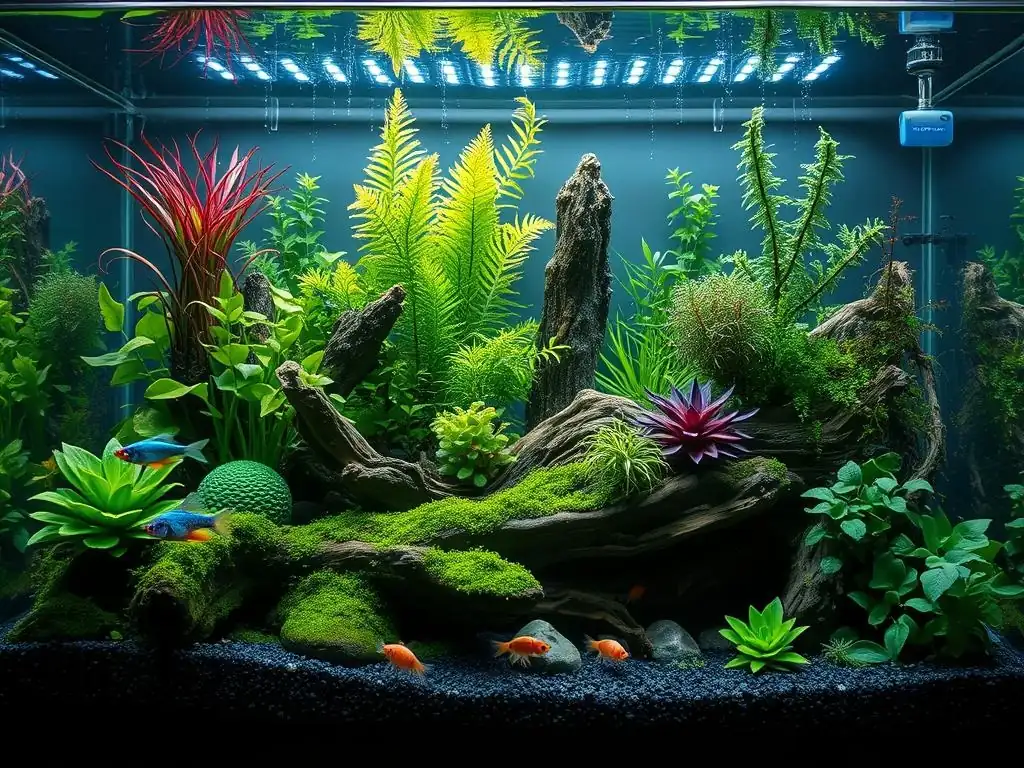
Welcome to Aquarium Mastery!
Ever wondered how to achieve that perfectly balanced ecosystem in your planted aquarium? Dive in and uncover the secrets to mastering pH, KH, and CO2, the critical trifecta for thriving aquatic plants. This article unravels their fascinating interplay, offering practical insights to help you create a vibrant and flourishing underwater world. Are you ready to unlock the full potential of your planted tank? Let's get started!
- Understanding the Key Water Parameters in Planted Aquariums
- pH in Planted Tanks: A Detailed Explanation
- KH (Carbonate Hardness): Buffering Capacity Explained
- CO2 (Carbon Dioxide): The Plant's Essential Nutrient
- The Relationship Between pH, KH, and CO2: The Equilibrium
- Troubleshooting pH, KH, and CO2 Imbalances in Planted Tanks
- Maintaining Stable Water Parameters for Long-Term Success
-
Frequently Asked Questions
- How do pH, KH, and CO2 relate to each other in a planted aquarium?
- What is KH and why is it important for a planted tank?
- How does CO2 injection affect the pH in a planted aquarium?
- What pH level is generally recommended for a planted aquarium?
- How can I adjust KH to achieve the desired pH and CO2 levels in my planted tank?
- Final Reflection: The Delicate Balance of Life
- Unlock the Secrets of Thriving Aquatic Plants!
Understanding the Key Water Parameters in Planted Aquariums
Why pH, KH, and CO2 Matter for Thriving Aquatic Plants
For any aquarist aiming for a lush, vibrant planted aquarium, understanding the triumvirate of pH, KH, and CO2 is not merely beneficial but absolutely essential. These three parameters are intricately linked and directly influence the health, growth rate, and overall vitality of aquatic plants. Without optimal levels and a stable balance, plants can exhibit stunted growth, nutrient deficiencies, and even melt, while fish can suffer from stress or toxicity.
Carbon dioxide ( CO2) is the primary carbon source for aquatic plants, crucial for the process of photosynthesis, which converts light energy into chemical energy for growth. pH, a measure of acidity or alkalinity, dictates the availability of essential nutrients and the form of certain compounds in the water, directly impacting a plant's ability to absorb them. KH, or carbonate hardness, acts as a vital buffer, stabilizing the pH and preventing sudden, harmful fluctuations, particularly in CO2-injected systems.
The Interconnectedness of Water Chemistry in Planted Tanks
The relationship between pH, KH, and CO2 in a planted tank is a delicate equilibrium, often referred to as the CO2-bicarbonate buffer system. When CO2 dissolves in water, it forms carbonic acid ( H2CO3), which naturally lowers the pH. The KH (carbonate and bicarbonate ions) in the water then works to neutralize this acid, resisting the pH drop and maintaining stability. This buffering capacity is critical because plants require a consistent environment, and rapid pH swings can cause significant stress.
Understanding this interplay allows aquarists to manipulate one parameter to influence another, particularly when injecting CO2. For instance, increasing CO2 will tend to lower pH, but the extent of this drop is mitigated by the tank's KH level. A higher KH provides greater buffering capacity, meaning more CO2 can be added before the pH drops significantly, which is beneficial for achieving optimal CO2 concentrations (typically 20-30 ppm) without endangering fish. Conversely, low KH can lead to dangerous pH crashes with even moderate CO2 injection, highlighting why this trio must be considered as a unified system for successful planted tank management.
pH in Planted Tanks: A Detailed Explanation
What is pH and How Does it Affect Aquatic Plants?
pH is a scale used to specify the acidity or basicity of an aqueous solution, ranging from 0 to 14, with 7 being neutral. A pH below 7 indicates acidity, while a pH above 7 indicates alkalinity. In a planted aquarium, pH directly influences the bioavailability of nutrients for aquatic plants.
For example, essential micronutrients like iron (Fe) and manganese (Mn) are more readily available to plants in slightly acidic conditions (pH 6.5-7.0). If the pH is too high (e.g., above 7.5), these critical nutrients can precipitate out of solution, becoming "locked out" and unavailable for plant uptake, leading to deficiencies like chlorosis (yellowing leaves).
Conversely, an overly acidic environment (e.g., below pH 6.0) can also be detrimental. While some plants tolerate lower pH, extreme acidity can inhibit the activity of beneficial bacteria in the biological filter, compromising the nitrogen cycle and leading to ammonia or nitrite accumulation. Furthermore, the form of ammonia changes with pH; at higher pH, more toxic unionized ammonia ( NH3) is present, posing a severe threat to fish. Maintaining a stable and appropriate pH is therefore crucial not just for plant health but for the entire aquatic ecosystem within a planted tank.
Ideal pH Range for Planted Aquariums
For the vast majority of aquatic plants commonly kept in planted tanks, an ideal pH range typically falls between 6.5 and 7.5. This slightly acidic to neutral range is generally considered optimal for several reasons. Within this pH window, most essential plant nutrients remain soluble and readily absorbable, minimizing the risk of nutrient deficiencies. It also strikes a balance that is comfortable for many popular aquarium fish species, such as tetras, rasboras, and corydoras, which often thrive in similar conditions.
While a general range is provided, it's worth noting that some specific plant species or biotope setups might prefer slightly different pH levels. For instance, plants from very soft, acidic waters might thrive closer to pH 6.0-6.5, while others from harder, more alkaline waters might tolerate up to pH 7.8. However, consistency is often more important than hitting an exact number. Sudden and drastic pH swings, regardless of the starting point, are far more detrimental to both plants and fish than maintaining a stable pH slightly outside the "ideal" range.
Factors Influencing pH Levels in Planted Tanks
Several factors contribute to the pH levels observed in a planted aquarium, and understanding these influences is key to maintaining stability. The source water's pH and buffering capacity (KH) are fundamental, as they set the baseline for your tank's chemistry. Beyond that, the substrate choice, the presence of certain decor items, and even routine maintenance practices all play a significant role in shaping the tank's pH.
Substrates and Their Impact on pH
The type of substrate used in a planted tank can have a profound effect on pH. Inert substrates, such as most sands or gravels, generally have little to no impact on water chemistry once thoroughly rinsed. However, active or buffering substrates, commonly referred to as "aquasoils" or "plant soils," are specifically designed to lower pH and soften water. Brands like ADA Aqua Soil or Fluval Stratum are composed of calcined clay and other organic materials that absorb minerals from the water, reducing KH and consequently lowering pH, typically to a range of pH 6.0-6.8. These substrates are highly beneficial for plants that thrive in soft, acidic conditions and for effectively utilizing CO2 injection. Conversely, substrates containing crushed coral or aragonite will actively raise pH and KH due to their calcium carbonate content, making them unsuitable for most planted tank setups aiming for lower pH.
Driftwood and Leaf Litter: Lowering pH Naturally
Natural decor elements like driftwood and certain types of leaf litter (e.g., Indian almond leaves, oak leaves) can also influence pH. As these materials slowly decompose in the aquarium, they release tannins and humic acids into the water. These organic acids act as natural pH depressors, gradually lowering the pH and slightly softening the water.
This effect is generally mild and gradual, contributing to a more stable, slightly acidic environment that many planted tank inhabitants appreciate. The resulting "blackwater" tint is also aesthetically pleasing to many aquarists and can have mild anti-bacterial properties. However, new driftwood can release significant amounts of tannins initially, potentially causing a more noticeable pH drop, which typically diminishes over time.
The Role of Water Changes in pH Stability
Regular partial water changes are a cornerstone of planted tank maintenance, and they play a critical role in maintaining pH stability. By replacing a portion of the tank water with fresh, conditioned source water, you are effectively resetting the water chemistry towards that of your tap or prepared water. If your tap water has a stable pH and adequate KH, consistent water changes help to replenish buffering capacity that might be consumed by biological processes (like nitrification) or CO2 injection, thus preventing a gradual pH decline. Conversely, if your tap water's pH or KH is significantly different from your target tank parameters, large or frequent water changes can cause pH fluctuations. It is crucial to test your source water to understand its inherent properties and how it will interact with your tank's existing chemistry. Using reverse osmosis (RO) water, often remineralized to specific parameters, offers the most control over water chemistry and pH stability.
KH (Carbonate Hardness): Buffering Capacity Explained
Defining KH: What it Measures and Why It's Important
KH, or carbonate hardness, is a measure of the concentration of carbonate and bicarbonate ions dissolved in water. It is often expressed in degrees of carbonate hardness (dKH) or parts per million (ppm). Unlike general hardness (GH), which measures calcium and magnesium ions, KH specifically quantifies the water's ability to resist changes in pH. This is its primary importance in a planted tank: it acts as a crucial buffer against pH fluctuations.
Without sufficient KH, the pH of your aquarium water can become highly unstable and prone to drastic swings. For instance, the natural biological processes within the tank, such as nitrification (the conversion of ammonia to nitrate by beneficial bacteria), produce acids that consume alkalinity. Similarly, the injection of CO2 for plant growth introduces carbonic acid. If there isn't enough KH present to neutralize these acids, the pH can crash rapidly, leading to highly stressful and potentially fatal conditions for both fish and plants. A stable KH level ensures a more resilient and predictable planted tank pH KH CO2 environment.
KH as a Buffer: Preventing Drastic pH Swings in Planted Tanks
The buffering action of KH is fundamental to maintaining a stable planted tank pH KH CO2 balance. Carbonate and bicarbonate ions act like sponges, absorbing excess acids introduced into the water. When CO2 dissolves and forms carbonic acid, or when acids are produced by the nitrogen cycle, these bicarbonate ions react with the acid, converting it into less harmful forms and preventing a sharp drop in pH. This chemical reaction essentially "uses up" the bicarbonate ions, which is why KH levels can gradually decline over time in an active aquarium, especially one with CO2 injection.
A higher KH value means the water has a greater capacity to neutralize acids, making the pH more stable and less susceptible to sudden changes. For planted tanks, especially those utilizing CO2 injection, a KH level of 3-8 dKH (approximately 53-143 ppm) is commonly recommended. This range provides sufficient buffering to allow for effective CO2 utilization without risking a pH crash, while also keeping the water soft enough for many common aquatic plants and fish. Lower KH values (e.g., 1-2 dKH) make the tank highly vulnerable to pH instability, often leading to rapid pH drops, especially overnight when plants consume less CO2 and the CO2 builds up.
Measuring KH in Your Planted Aquarium: Test Kits and Methods
Accurately measuring KH is straightforward and essential for responsible planted tank management. The most common and reliable method for home aquarists involves using a liquid titration test kit. These kits typically involve adding drops of a reagent to a water sample until a color change occurs, indicating the point at which all carbonate and bicarbonate ions have been neutralized. Each drop usually corresponds to 1 dKH (or a specific ppm value, depending on the kit), allowing for a precise measurement of your water's buffering capacity.
For instance, if it takes 5 drops to achieve the color change, your water has a KH of 5 dKH. It is recommended to test KH weekly, or more frequently if you are adjusting CO2 levels or have a newly set up tank. While test strips exist, they generally offer lower accuracy and precision compared to liquid titration kits, making them less ideal for monitoring critical parameters like KH in a sensitive planted tank environment. Consistent and accurate measurement is vital for maintaining the desired planted tank pH KH CO2 equilibrium.
Maintaining Optimal KH Levels for Healthy Plant Growth
Maintaining optimal KH levels is crucial for both plant health and overall tank stability. As discussed, sufficient KH prevents pH crashes and ensures efficient CO2 utilization. However, KH levels can fluctuate due to CO2 injection, biological processes, and water changes. Therefore, knowing how to adjust them is an important skill for any planted tank enthusiast.
Increasing KH Levels: Using Buffers Safely
If your KH levels are consistently too low (e.g., below 3 dKH), you can safely increase them using various methods. The simplest and most common method is to add sodium bicarbonate, readily available as baking soda. Approximately 1 teaspoon of baking soda per 10 gallons of water can raise KH by about 2-3 dKH, though this can vary based on the initial water parameters.
It is crucial to add baking soda gradually, dissolving it in a small amount of tank water first, and then slowly pouring it into the tank while monitoring the KH and pH to avoid sudden shifts. Commercial KH boosters, specifically formulated for aquariums, are also available and provide a more precise way to raise carbonate hardness without introducing other unwanted compounds. Always follow the manufacturer's instructions for these products.
Decreasing KH Levels: Water Changes and Other Techniques
Decreasing KH is typically required when your source water is naturally very hard, or if you've accidentally overdosed a KH booster. The most effective and safest way to lower KH is through partial water changes using softer water. This often means using reverse osmosis (RO) water or deionized (DI) water, which have virtually no KH (or GH).
You can then remineralize the RO/DI water to your desired KH (and GH) levels using commercial remineralizers. Other natural methods that can slightly reduce KH include the addition of driftwood or peat, which release humic acids, or the use of active substrates that absorb minerals. However, these methods provide less precise control than using RO/DI water with remineralization.
CO2 (Carbon Dioxide): The Plant's Essential Nutrient
Why CO2 is Crucial for Photosynthesis in Aquatic Plants
Carbon dioxide ( CO2) is arguably the most critical nutrient for the vigorous growth of aquatic plants, serving as the primary carbon source for photosynthesis. Just like terrestrial plants absorb CO2 from the air, submerged aquatic plants absorb dissolved CO2 from the water. During photosynthesis, plants use light energy to convert CO2 and water into glucose (their food) and oxygen. The chemical equation for photosynthesis is 6CO2 + 6H2O + Light Energy → C6H12O6 (glucose) + 6O2. Without sufficient CO2, plants cannot efficiently photosynthesize, leading to stunted growth, pale leaves, and a general decline in health.
In a typical aquarium without supplemental CO2 injection, the amount of dissolved CO2 is often very low, usually ranging from 2-5 ppm. This is generally insufficient to support the dense, vibrant growth desired in a high-tech planted tank. By providing supplemental CO2 to achieve levels typically between 20-30 ppm, aquarists can dramatically accelerate plant growth, enhance coloration, and enable plants to outcompete algae for available nutrients, creating a more stable and aesthetically pleasing planted tank pH KH CO2 ecosystem.
CO2 Injection Systems for Planted Aquariums: A Comprehensive Overview
To achieve optimal CO2 levels for robust plant growth, supplemental CO2 injection systems are widely employed in planted aquariums. These systems vary in complexity, cost, and consistency, catering to different levels of aquarist commitment and tank sizes. Understanding the different types and their components is crucial for successful CO2 management.
Types of CO2 Systems: DIY vs. Pressurized
The two primary types of CO2 injection systems are DIY (Do-It-Yourself) and pressurized CO2 systems. DIY systems typically involve a yeast and sugar mixture in a bottle, producing CO2 through fermentation. These are inexpensive to set up, costing as little as $10-20 for the basic components. However, they offer inconsistent CO2 output, are difficult to control precisely, and require frequent mixture changes (typically every 2-4 weeks). They are generally only suitable for very small tanks (under 20 gallons) or as a temporary solution.
Pressurized CO2 systems, on the other hand, utilize a high-pressure CO2 cylinder, a regulator with gauges (to control output pressure), a needle valve (for fine-tuning bubble rate), and often a solenoid valve (to turn CO2 on/off with a timer). While the initial investment is higher (ranging from $150 to $500+), pressurized systems provide a consistent, precise, and highly controllable CO2 supply, making them ideal for medium to large planted tanks and for achieving stable planted tank pH KH CO2 parameters. A standard 5 lb CO2 cylinder can last several months to over a year for a typical 50-gallon tank.
CO2 Diffusers: Maximizing CO2 Dissolution
Once CO2 is released from the cylinder, it needs to be efficiently dissolved into the aquarium water for plants to absorb it. This is where CO2 diffusers come into play. The goal is to break the CO2 gas into the finest possible bubbles to maximize surface area for dissolution. Common types include:
- Ceramic Diffusers: These are the most popular, using a porous ceramic disc to produce a fine mist of
CO2bubbles. They are affordable and effective for most tanks. - Inline Diffusers/Atomizers: These are installed directly into the return line of an external canister filter. They atomize
CO2into extremely fine bubbles before the water re-enters the tank, offering excellent dissolution efficiency and keeping the diffuser out of sight. - CO2 Reactors: These are often larger, internal or external devices that force
CO2bubbles to mix thoroughly with tank water, achieving near 100% dissolution. They are highly efficient but can be more expensive and take up more space.
The choice of diffuser depends on tank size, budget, and desired aesthetic, but all aim to ensure that the injected CO2 is available to the plants rather than simply bubbling out of the water.
Monitoring CO2 Levels: Drop Checkers and Testing
Accurate monitoring of CO2 levels is crucial to ensure plants receive adequate carbon without endangering fish. The primary tool for this is the CO2 drop checker. A drop checker is a small glass or acrylic device filled with an indicator solution (typically bromothymol blue) and a specific amount of water with a known KH (usually 4 dKH). The CO2 from the aquarium gas diffuses into the air pocket of the drop checker and then into the indicator solution, changing its color based on the dissolved CO2 concentration.
The color guide for drop checkers is as follows:
- Blue: Insufficient
CO2(below 20 ppm) - Green: Optimal
CO2(20-30 ppm) - Yellow: Excess
CO2(above 30 ppm), potentially dangerous for fish
While drop checkers are convenient, they have a lag time of 1-2 hours to reflect current CO2 levels. For more immediate and precise measurements, some advanced aquarists use pH probes connected to controllers, which can directly measure pH and infer CO2 levels, or even control CO2 injection based on target pH. Regularly checking your drop checker (e.g., an hour after lights and CO2 turn on) is a simple and effective way to maintain the desired planted tank pH KH CO2 balance.
Safe CO2 Levels for Fish and Plants: Avoiding Toxicity
Finding the sweet spot for CO2 levels is paramount for a successful planted tank. The generally accepted optimal range for plant growth is 20-30 ppm (parts per million) of dissolved CO2. Within this range, most aquatic plants thrive, exhibiting vigorous growth and vibrant coloration. However, exceeding this range, particularly above 30-35 ppm, can quickly become toxic to fish.
High CO2 levels reduce the water's pH, which can stress fish. More critically, excessive CO2 can displace oxygen in the water and interfere with a fish's ability to absorb oxygen from its gills, leading to suffocation. Symptoms of CO2 overdose in fish include rapid breathing, gasping at the surface, lethargy, and erratic swimming. If these signs are observed, immediate action is required: increase surface agitation (e.g., with an air stone or powerhead), perform a partial water change, and reduce or turn off the CO2 injection. Monitoring CO2 with a drop checker and observing fish behavior are key to maintaining a safe yet highly productive planted tank pH KH CO2 environment.
The Relationship Between pH, KH, and CO2: The Equilibrium
Understanding the CO2-KH-pH Relationship Chart
The interplay between CO2, KH, and pH in a planted aquarium is a fundamental concept for achieving stable water parameters. This relationship is often visualized using a CO2-KH-pH chart, which is an invaluable tool for aquarists. This chart illustrates how these three parameters are mathematically linked in the CO2-bicarbonate buffer system. By knowing any two of these values, you can estimate the third. For example, if you measure your tank's KH and pH, you can use the chart to determine the approximate concentration of dissolved CO2 in parts per million (ppm).
While these charts provide a useful guideline, it's important to remember they are based on theoretical models and assume that CO2 and carbonates are the only factors influencing pH. In a real-world aquarium, other organic acids, phosphates, and nitrates can slightly affect pH, leading to minor deviations from the chart's predictions. Nevertheless, the CO2-KH-pH chart remains an excellent starting point for targeting optimal CO2 levels and understanding the dynamic balance of your planted tank pH KH CO2 system.
How CO2 Injection Affects pH and KH in Planted Tanks
The injection of supplemental CO2 into a planted tank directly impacts both pH and, indirectly, KH. When CO2 gas dissolves in water, it reacts to form carbonic acid ( H2CO3). This carbonic acid then dissociates, releasing hydrogen ions ( H+), which are the primary drivers of acidity. Consequently, an increase in dissolved CO2 will lead to a decrease in the water's pH. This is a natural and expected phenomenon in CO2-injected tanks.
The KH (carbonate hardness) plays a crucial role in buffering this pH drop. The bicarbonate ions that constitute KH will react with the newly formed hydrogen ions, neutralizing them and resisting a sharp pH decline. This means that tanks with higher KH will experience a smaller pH drop for a given amount of CO2 injection compared to tanks with lower KH. While CO2 injection primarily affects pH, prolonged and significant CO2 levels, combined with biological processes, can slowly consume KH over time, making regular KH monitoring essential for maintaining planted tank pH KH CO2 stability.
Using KH to Estimate CO2 Levels in Your Aquarium
One of the most practical applications of the CO2-KH-pH relationship is using your measured KH and pH to estimate the dissolved CO2 concentration in your aquarium. This method is widely used, particularly in conjunction with CO2 drop checkers. Here's how it works:
- Measure your tank's KH: Use a reliable liquid titration test kit to determine your carbonate hardness in dKH. For example, let's say your
KHis 4 dKH. - Measure your tank's pH: Use an accurate liquid pH test kit or a calibrated pH probe. Let's say your
pHis 6.8. - Consult a CO2-KH-pH Chart: Find the intersection of your measured
KH(e.g., 4 dKH) andpH(e.g., 6.8). This intersection will indicate the approximateCO2level. In this example, 4 dKH and pH 6.8 typically correspond to approximately 30 ppm ofCO2, which is within the optimal range for planted tanks.
This method allows you to fine-tune your CO2 injection rate to achieve the desired 20-30 ppm target. It's a more precise way to manage CO2 than simply counting bubbles, as different diffusers and tank setups will dissolve CO2 at varying efficiencies. Regularly checking these three parameters together provides a comprehensive understanding of your planted tank pH KH CO2 balance.
Troubleshooting pH, KH, and CO2 Imbalances in Planted Tanks
Common Problems: pH Crashes, KH Depletion, and CO2 Overdoses
Despite careful planning, imbalances in pH, KH, and CO2 are common challenges in planted tanks. A pH crash is one of the most dangerous, where the pH drops rapidly and drastically (e.g., from 6.8 to 5.0 overnight). This usually occurs in tanks with critically low KH (often below 2 dKH), where the buffering capacity is exhausted, allowing acids from CO2 injection or natural biological processes to overwhelm the system. Symptoms include fish gasping at the surface, rapid breathing, lethargy, and in severe cases, death.
KH depletion is often the precursor to a pH crash. Over time, KH is consumed by biological filtration (nitrification) and CO2 injection. If not replenished through water changes or buffering agents, the tank loses its ability to stabilize pH. CO2 overdoses occur when too much CO2 is injected, pushing levels above 30-35 ppm. While great for plants, this can cause severe distress to fish, leading to similar symptoms as a pH crash due to oxygen deprivation and acidosis. Recognizing these issues quickly is vital for the health of your planted tank pH KH CO2 ecosystem.
Diagnosing the Root Cause of Water Chemistry Issues
When faced with symptoms of imbalance, a systematic approach to diagnosis is crucial. Do not make assumptions; test your water parameters.
- Test pH, KH, and CO2 immediately: Use reliable liquid test kits for
pHandKH. ForCO2, check your drop checker's color. If the drop checker is yellow,CO2is too high. IfpHis very low andKHis also low, you likely have apH crashdue to insufficient buffering. - Check your CO2 injection system: Verify that the bubble count on your regulator's bubble counter matches your usual setting. Ensure the solenoid valve is working correctly and not stuck open. Check for leaks in the
CO2lines or connections. - Examine your water change routine: Have you skipped water changes recently? Is your source water's
KHorpHsignificantly different from your tank's? Large, infrequent water changes with vastly different water parameters can cause shock. - Consider recent tank additions: New driftwood can release tannins, lowering
pH. New substrates might bufferpHdifferently than expected. - Observe fish and plant behavior: Fish gasping is a strong indicator of low oxygen or high
CO2/lowpH. Stunted plant growth or melting can indicate insufficientCO2or nutrient lockout due to incorrectpH.
By methodically checking these points, you can pinpoint the underlying cause of your planted tank pH KH CO2 imbalance.
Step-by-Step Solutions for Restoring Balance in Your Planted Tank
Once the root cause is diagnosed, specific actions can be taken to restore balance to your planted tank pH KH CO2 system. Always act cautiously and make small adjustments to avoid further stress.
Adjusting CO2 Injection Rates
If a CO2 overdose is suspected (yellow drop checker, fish gasping), immediately turn off the CO2 injection. Increase surface agitation using an air stone or by lowering the filter outflow to break the water surface. This helps degas excess CO2 and increases oxygen exchange. Monitor fish closely. Once stable, gradually reintroduce CO2 at a lower bubble rate, checking the drop checker and fish behavior daily until the optimal green color is achieved. If CO2 is too low (blue drop checker, poor plant growth), slowly increase the bubble rate, again monitoring for fish distress and observing the drop checker's color change over 1-2 hours.
Performing Partial Water Changes
Water changes are powerful tools for correcting imbalances. If pH has crashed due to low KH, a partial water change (e.g., 25-50%) with fresh, conditioned water of known stable pH and adequate KH can quickly dilute problematic water and replenish buffering capacity. Ensure the new water's parameters are as close as possible to your desired tank parameters to minimize shock. For general maintenance and preventing KH depletion, regular weekly or bi-weekly 25-30% water changes are recommended, using water with a stable KH of 3-5 dKH.
Using Chemical Buffers (With Caution)
Chemical buffers are commercial products designed to raise KH and stabilize pH. While they can be effective in emergencies or for targeted adjustments, they should be used with extreme caution and only after understanding their specific effects. Products containing sodium bicarbonate or potassium bicarbonate are common for raising KH. Always follow the manufacturer's instructions precisely, add in small increments, and retest parameters frequently. Overdosing buffers can cause rapid pH and KH spikes, which can be just as harmful as crashes. For consistent planted tank pH KH CO2 stability, addressing the root cause (e.g., consistent water changes with appropriate source water) is preferable to relying solely on chemical buffers.
Maintaining Stable Water Parameters for Long-Term Success
Regular Testing: Monitoring pH, KH, and CO2
Consistent monitoring of your planted tank pH KH CO2 parameters is the cornerstone of long-term success. It's not enough to set up your system and forget about it; these parameters are dynamic and will shift over time. Regular testing allows you to detect subtle changes before they become major problems.
- Daily: Observe your
CO2drop checker. Is it green? Are your fish behaving normally? This quick visual check is your first line of defense. - Weekly: Perform full tests for
pHandKHusing reliable liquid test kits. Record these results to track trends. If you're using aCO2system, cross-reference yourpHandKHwith aCO2chart to estimate your actualCO2ppm. This helps confirm your drop checker's reading and ensures yourCO2injection is dialed in correctly. - Monthly/Bi-monthly: Test your source water (tap or RO/DI) for
pHandKH. Water parameters can change seasonally or if your municipality alters its water treatment. Knowing your source water is crucial for effective water changes.
This routine testing provides the data needed to make informed adjustments and maintain a thriving planted tank pH KH CO2 environment.
Water Change Schedules: Maintaining Stability
Regular partial water changes are perhaps the most effective and fundamental practice for maintaining stable water parameters in a planted tank. While plants consume nitrates, they don't remove everything, and other compounds can accumulate over time.
- Replenishing Minerals: Water changes replenish essential minerals, including those contributing to
KHandGH, which are consumed by plants and biological processes. This helps preventKHdepletion and subsequentpHinstability. - Diluting Waste: They remove accumulated nitrates, phosphates, and other dissolved organic compounds that can contribute to algae growth or stress fish.
- Resetting Parameters: Consistent water changes with source water that has stable
pHandKHhelps to gently nudge the tank's parameters back towards the ideal range, counteracting any gradual shifts caused by tank processes.
A common schedule for planted tanks is a 25-30% water change weekly or bi-weekly. The exact frequency and volume depend on tank size, stocking density, plant mass, and CO2 injection levels. Always use temperature-matched, dechlorinated water for changes to minimize stress on tank inhabitants.
Choosing the Right Substrate and Decor for Water Chemistry
The initial setup of your planted tank significantly impacts its long-term water chemistry. The choice of substrate and decor elements plays a crucial role in determining your inherent planted tank pH KH CO2 balance.
- Substrates: As discussed, inert substrates (e.g., sand, gravel) have minimal impact on
pHandKH. Active substrates (aquasoils), however, are designed to bufferpHdown to an acidic range (e.g., pH 6.0-6.8) and consumeKH, creating ideal conditions for many high-tech planted tanks andCO2injection. Conversely, substrates containing calcium carbonate (e.g., crushed coral, aragonite) will actively raisepHandKH, making them unsuitable for most planted tank setups. - Decor: Natural driftwood releases tannins and humic acids, which can gently lower
pHand soften water over time, contributing to a more acidic environment. Rocks like Seiryu stone can leach minerals and slightly increaseGHandKH, thus raisingpH. Choosing decor that aligns with your desiredpHandKHparameters from the outset will minimize the need for chemical adjustments later on, fostering a more stable and natural environment for your plants and fish.
The Importance of a Healthy Biological Filter
While not directly a pH, KH, or CO2 parameter, a healthy biological filter is intrinsically linked to the stability of these parameters in a planted tank. The biological filter, composed of beneficial bacteria, performs nitrification – the conversion of toxic ammonia ( NH3) to nitrite ( NO2-), and then to less harmful nitrate ( NO3-). This process is essential for removing fish waste and decaying organic matter.
However, nitrification is an acid-producing process. Specifically, it consumes carbonate hardness ( KH). If your biological filter is robust and highly active, it will steadily consume KH, potentially leading to a gradual decline in your tank's buffering capacity. If KH drops too low, the tank becomes vulnerable to pH crashes, especially in CO2-injected systems. Therefore, maintaining a well-established and efficient biological filter through proper cycling and regular maintenance is crucial not only for water purity but also for understanding and managing the slow consumption of KH that impacts your overall planted tank pH KH CO2 equilibrium.
Frequently Asked Questions
How do pH, KH, and CO2 relate to each other in a planted aquarium?
These three parameters are intrinsically linked. CO2 levels directly influence pH. KH (carbonate hardness) acts as a buffer, resisting pH changes caused by CO2. Understanding this balance is crucial for plant health.
What is KH and why is it important for a planted tank?
KH, or carbonate hardness, measures the concentration of carbonate and bicarbonate ions in the water. It's important because it acts as a pH buffer, preventing rapid pH swings that can stress or kill fish and plants.
How does CO2 injection affect the pH in a planted aquarium?
Injecting CO2 into a planted aquarium lowers the pH. This is because CO2 dissolves in water to form carbonic acid. The goal is to achieve a stable and plant-appropriate CO2 level without causing drastic pH fluctuations.
What pH level is generally recommended for a planted aquarium?
The ideal pH range for most planted tanks is between 6.5 and 7.0. However, this can vary depending on the specific plant and fish species you are keeping. Research is key.
How can I adjust KH to achieve the desired pH and CO2 levels in my planted tank?
You can raise KH by adding bicarbonate of soda (baking soda). Lowering KH is more challenging and often involves using RO (reverse osmosis) water or water softening resins to dilute the KH. Always make adjustments gradually.
Final Reflection: The Delicate Balance of Life
The intricate dance between pH, KH, and CO2, as explored throughout this article, isn't just a scientific curiosity confined to glass boxes; it's a microcosm reflecting the fragile ecosystems that sustain life on a grander scale. Understanding these parameters in our planted tanks allows us to appreciate the delicate balance required for thriving aquatic environments, a balance increasingly threatened in the natural world. This knowledge empowers us to become better stewards, not just of our aquariums, but of the planet itself.
The journey into understanding pH, KH, and CO2 has been more than just a technical exercise; it's been a reminder of the interconnectedness of all things. Witnessing the vibrant growth of plants and the flourishing of aquatic life within a balanced tank is a deeply rewarding experience, one that fosters a profound respect for the natural world. As the renowned aquascaper Takashi Amano once said: To know Mother Nature, is to love her smallest creations.
This sentiment underscores the importance of understanding and nurturing even the smallest ecosystems, for they hold valuable lessons about resilience and harmony.
Now, armed with a deeper understanding of planted tank chemistry, I encourage you to reflect on the principles discussed and apply them not only to your aquarium, but also to your broader understanding of environmental stewardship. Consider the impact of your choices, both within your tank and beyond. Strive to create a balanced and thriving environment, not just for your aquatic inhabitants, but for the world around you. The lessons learned in a planted tank can inspire a more conscious and sustainable way of living.
Unlock the Secrets of Thriving Aquatic Plants!
Thanks for diving deep into the fascinating world of planted aquariums! You've now got a solid grasp of how pH, KH, and CO2 dance together to create the perfect environment for your underwater garden. Ready to put your knowledge to the test?
Here are a few things you can do now:
- Calculate your CO2 levels! Grab your pH and KH test kits and use an online calculator to dial in the perfect balance.
- Research unusual plants that can benefit from specific CO2 levels, and consider adding one to your tank.
- Share your newfound understanding! Help a fellow aquarist on a forum or in a local club by explaining the pH, KH, and CO2 relationship.
What's the first adjustment you're planning to make in your tank based on what you've learned?