🪸 Coral Health Issues: Pests, Diseases & Parameter Imbalances
Welcome to Aquarium Mastery’s comprehensive guide to coral health issues, including aquarium pests, coral diseases, bleaching, tissue loss, algae problems, and unstable reef tank parameters. This subcategory is designed to help saltwater aquarists identify symptoms early, understand the underlying causes, and choose practical solutions for maintaining vibrant, resilient corals. Explore expert guidance on reef aquarium water chemistry, nutrient control, quarantine, coral recovery, and long-term prevention for soft corals, LPS corals, SPS corals, and mixed reef systems.
🔍 Identifying Coral Pests and Infestations
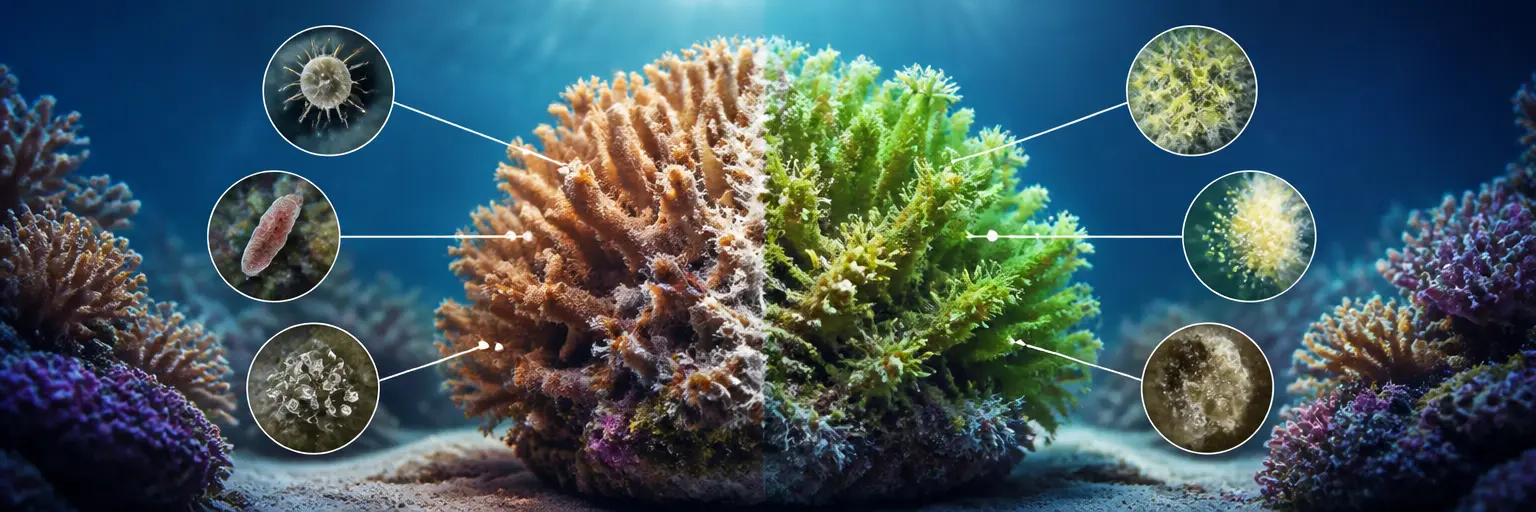
Coral pests can spread quickly through a reef aquarium and may cause polyp retraction, faded coloration, tissue damage, poor growth, or unexplained coral decline. Articles in this section cover common threats such as flatworms, nudibranchs, red bugs, sea spiders, vermetid snails, asterina starfish, and predatory snails. Readers will learn how to distinguish pest damage from ordinary stress, mechanical injury, or poor water quality.
Expect practical advice on inspecting new corals, using coral dips, quarantining frags, and monitoring affected colonies. You will also find information about safe pest removal, biological controls, repeat treatments, and preventing reinfestation. These guides emphasize careful observation and responsible treatment so aquarists can protect beneficial reef life while addressing harmful organisms.
🦠 Coral Diseases, Infections and Tissue Loss
Coral disease can appear as sloughing tissue, discolored patches, white lesions, rapid recession, exposed skeleton, or persistent failure to extend polyps. This subcategory explains common conditions such as brown jelly disease, rapid tissue loss, bacterial infections, bleaching-related decline, and localized necrosis. Clear symptom-based guidance can help reef keepers decide whether a coral needs isolation, fragging, dipping, improved flow, or closer observation.
Readers can expect recommendations for setting up a coral quarantine tank, reducing cross-contamination, and supporting recovery through stable temperature, salinity, lighting, and circulation. Information is presented with an emphasis on prevention, because early detection and prompt action are often more effective than treating advanced coral disease in a display aquarium.
⚗️ Water Parameter Imbalances and Coral Stress
Unstable or unsuitable reef tank parameters are among the most common causes of coral stress. Guides in this section explore the effects of alkalinity swings, incorrect calcium and magnesium levels, unstable pH, salinity changes, temperature fluctuations, phosphate imbalance, nitrate extremes, and low dissolved oxygen. Understanding these relationships helps aquarists connect visible coral symptoms with measurable water chemistry problems.
Expect practical testing and adjustment strategies for both new and established saltwater aquariums. Topics may include selecting reliable test kits, establishing a testing schedule, making gradual corrections, calibrating dosing systems, and avoiding sudden changes. The goal is to create consistent reef conditions that support calcification, coloration, polyp extension, and healthy coral growth.
🌿 Algae, Cyanobacteria and Competing Organisms
Algae outbreaks and cyanobacteria can cover coral tissue, block light, trap detritus, and reduce access to nutrients and water flow. Aquarium Mastery’s guides address nuisance algae, diatoms, dinoflagellates, hair algae, bubble algae, and red slime cyanobacteria. Readers will learn how excessive nutrients, weak circulation, inadequate maintenance, old lighting, and biological imbalance can contribute to persistent growth.
Solutions focus on correcting the cause rather than relying only on algae removers. Expect advice about nutrient testing, manual removal, filtration, refugiums, protein skimming, clean-up crews, lighting adjustments, and improved flow. Each approach should be adapted to the aquarium’s livestock and maturity, with changes made carefully to avoid creating additional stress for corals.
💡 Lighting, Flow and Placement Problems
Corals depend on suitable light intensity, spectrum, and water movement, but their requirements vary by species and aquarium position. This section explains how light shock, insufficient lighting, excessive PAR, poor flow, turbulent circulation, and direct pump damage can lead to bleaching, tissue recession, closed polyps, or weak growth.
Readers can expect guidance on acclimating corals to reef lighting, measuring or estimating PAR, selecting appropriate placement, and adjusting powerhead direction. You will also learn how to recognize the difference between light stress and nutrient or disease-related symptoms, making it easier to troubleshoot coral problems systematically.
🧪 Nutrient Management for Healthy Corals
Both excessive and deficient nutrients can negatively affect coral health. Very high nitrate and phosphate levels may encourage algae and reduce coloration, while ultra-low nutrient conditions can contribute to pale corals, starvation, and unstable reef biology. Articles in this area explain how to maintain balanced nitrate, phosphate, amino acid, and trace element conditions without chasing perfectly sterile water.
Expect recommendations for feeding, water changes, protein skimming, chemical media, refugiums, and controlled nutrient export. These resources are intended to help aquarists build a stable nutrient strategy suited to soft coral tanks, LPS systems, SPS aquariums, and mixed reefs. Consistent testing and gradual adjustments are emphasized over sudden corrective measures.
🛡️ Coral Quarantine, Treatment and Prevention
A strong quarantine and prevention routine can dramatically reduce the risk of introducing pests and diseases to a reef display. This section covers coral inspection, isolation tanks, dipping procedures, observation periods, dedicated equipment, and safe acclimation. It also explains why dipping alone may not eliminate eggs, hidden pests, or bacterial problems.
Readers will find practical methods for building a repeatable coral quarantine protocol and maintaining biosecurity between tanks. Preventive care, stable water quality, regular visual checks, and accurate records can make coral health management more predictable and help protect valuable colonies and frags.
❓ Frequently Asked Questions About Coral Health Issues
What are the most common signs of unhealthy coral?
Common warning signs include closed polyps, bleaching, fading color, tissue recession, exposed skeleton, holes, lesions, excessive mucus, poor growth, and sudden changes in behavior. Check water parameters and inspect the coral for pests before choosing a treatment.
How can I tell whether coral damage is caused by pests or poor water quality?
Pests may leave visible organisms, eggs, bite marks, webbing, or localized damage, while water quality problems often affect multiple corals or cause widespread stress. Test temperature, salinity, alkalinity, calcium, magnesium, nitrate, and phosphate, and inspect the coral after dark when many pests become active.
Should I quarantine every new coral?
Quarantining new corals is strongly recommended because pests and diseases can be introduced even when a frag appears healthy. A dedicated quarantine tank, careful inspection, coral dip, and observation period provide better protection than adding new specimens directly to the display aquarium.
What reef tank parameters are most important for coral health?
Stable salinity, temperature, alkalinity, calcium, magnesium, pH, nitrate, and phosphate are essential. Exact targets vary by aquarium type and coral species, but consistency is generally more important than chasing a single ideal number.
How quickly should I correct an abnormal coral parameter?
Correct most parameter problems gradually, especially salinity, alkalinity, calcium, and magnesium. Sudden changes can create additional stress. If a result seems unusual, confirm it with a reliable test, identify the cause, and make controlled adjustments while observing the corals closely.