🌿 Aquatic Plant Problems: Nutrient Deficiencies & Algae Issues
Healthy aquatic plants are essential for a balanced, attractive aquarium, but even experienced aquarists can encounter yellow leaves, transparent foliage, stunted growth, melting plants, or persistent algae. This subcategory on Aquarium Mastery provides practical guidance for diagnosing and solving aquatic plant nutrient deficiencies and algae problems in freshwater planted tanks, low-tech aquariums, high-tech aquascapes, and community setups. Explore evidence-based advice on aquarium plant care, water chemistry, lighting, carbon dioxide, fertilization, and long-term tank stability.
🌱 Identifying Common Aquatic Plant Nutrient Deficiencies
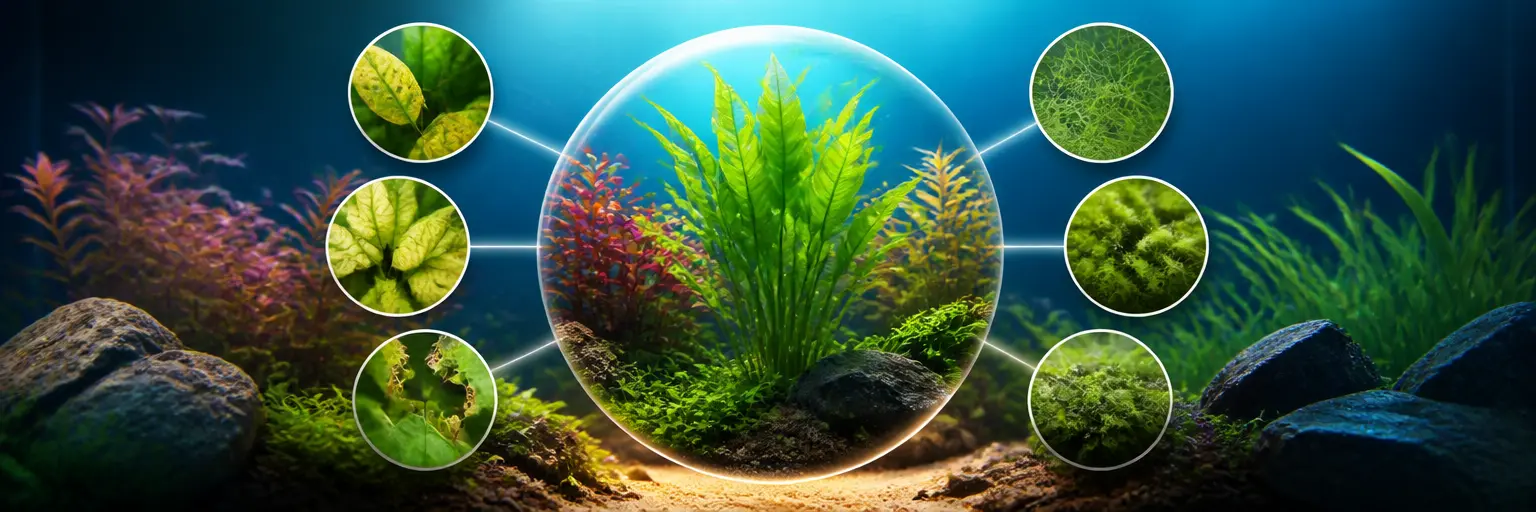
Learn how to recognize visual signs of plant nutrient deficiencies, including pale new growth, yellowing older leaves, pinholes, curled foliage, weak roots, and slow development. Detailed troubleshooting helps distinguish nitrogen, potassium, iron, magnesium, calcium, and micronutrient deficiencies so you can respond with the correct solution instead of adding unnecessary fertilizer.
Articles explain how nutrient mobility affects whether symptoms appear on new or mature leaves, while also considering water hardness, substrate quality, plant species, and aquarium bioload. You will discover how to compare plant symptoms with reliable indicators such as water tests, growth patterns, and recent maintenance changes.
💧 Aquarium Fertilization and Water Chemistry Solutions
Effective planted aquarium fertilization requires balance. Find guidance on choosing liquid fertilizers, root tabs, all-in-one products, and targeted supplements for freshwater aquarium plants. Content covers macronutrients such as nitrogen, phosphorus, and potassium, along with essential trace elements including iron and other micronutrients.
Readers can also learn how pH, GH, KH, nitrate levels, phosphate, water changes, and substrate composition influence plant health. Consistent dosing and observation are emphasized to help prevent both nutrient starvation and excess nutrients that may encourage algae growth.
💡 Lighting, CO₂, and Plant Growth Imbalances
Lighting and carbon dioxide are major factors in aquatic plant health. Explore how excessive aquarium lighting can trigger algae, while insufficient light may cause weak, stretched, or deteriorating plants. Guidance is suitable for LED aquarium lights, planted tank lighting schedules, low-light plants, and demanding aquascaping species.
Learn how CO₂ injection, liquid carbon products, surface agitation, and gas exchange affect photosynthesis and plant growth. These resources explain how to create a stable relationship between light, nutrients, and CO₂ rather than changing several variables at once and making troubleshooting more difficult.
🟢 Diagnosing and Controlling Aquarium Algae
Discover solutions for common algae problems, including green spot algae, brown diatoms, hair algae, thread algae, black beard algae, blue-green cyanobacteria, and green water. Each type may have different causes, such as excessive light, unstable nutrients, poor circulation, excess organics, or insufficient maintenance.
Recommended strategies include manual removal, improved filtration, optimized lighting duration, appropriate water changes, better circulation, algae-eating aquarium inhabitants, and careful nutrient management. The focus is on long-term algae control rather than temporary fixes that may return the problem within days.
🪴 Plant Melting, Poor Growth, and Recovery
Plant melting is common after newly purchased aquatic plants are introduced to a different aquarium environment. Learn how to distinguish normal transition melt from serious root damage, disease, nutrient deficiency, or unsuitable growing conditions. Guidance covers popular aquarium plants such as Anubias, Java fern, Cryptocoryne, Vallisneria, Amazon swords, stem plants, and carpeting species.
Readers will find practical recovery steps, including trimming damaged leaves, checking the planting depth, improving root nutrition, stabilizing water parameters, and allowing healthy new growth to develop. These methods help restore a struggling planted aquarium while avoiding unnecessary replanting or chemical treatments.
🧪 Aquarium Plant Troubleshooting Guides and Prevention Tips
Use structured troubleshooting guides to investigate aquarium plant problems step by step. Topics include testing aquarium water, reviewing maintenance routines, checking filter flow, inspecting plant roots, evaluating livestock waste, and identifying recent changes to lighting, fertilizer, substrate, or water sources.
Preventive care is equally important. Build a sustainable routine with regular water changes, equipment checks, plant pruning, glass cleaning, appropriate feeding, and consistent fertilizer dosing. Stable aquarium conditions are often more effective than aggressive corrections when managing nutrient deficiencies and algae issues.
❓ Frequently Asked Questions About Aquatic Plant Problems
Why are my aquarium plant leaves turning yellow?
Yellow leaves may result from nitrogen, potassium, iron, or magnesium deficiencies, but they can also indicate poor lighting, old leaves, transplant stress, or unsuitable water conditions. Check whether the yellowing affects new or mature leaves, test water parameters, and review your fertilization and maintenance routine before making changes.
How can I tell whether algae is caused by too much light?
Excessive light often produces rapid algae growth, especially when lighting intensity or duration is high compared with available CO₂ and nutrients. Reduce the photoperiod gradually, avoid direct sunlight, improve circulation, and ensure plants receive balanced nutrition. A consistent schedule is usually more effective than frequent lighting changes.
Can too much fertilizer cause algae in a planted aquarium?
Fertilizer does not automatically create algae, but excess nutrients combined with strong light, inadequate plant growth, or poor maintenance can contribute to algae issues. Dose according to plant demand, monitor nitrate and phosphate, perform regular water changes, and remove decaying leaves and excess organic waste.
What should I do when a new aquarium plant melts?
Many plants grown above water melt when converted to submerged growth. Remove soft or decaying leaves, keep healthy roots and stems, maintain stable water parameters, and provide suitable light and nutrients. Avoid uprooting the plant repeatedly, as recovery may require several weeks.
Are algae-eating fish and invertebrates a complete solution?
Algae-eating shrimp, snails, and fish can help control visible algae, but they cannot replace proper aquarium care. Choose compatible species and address the underlying cause through balanced lighting, water changes, filtration, circulation, feeding, and plant maintenance. A complete approach provides more reliable long-term algae prevention.