
Lighting for Mushroom Corals: Finding Their Happy Place

Welcome to Aquarium Mastery!
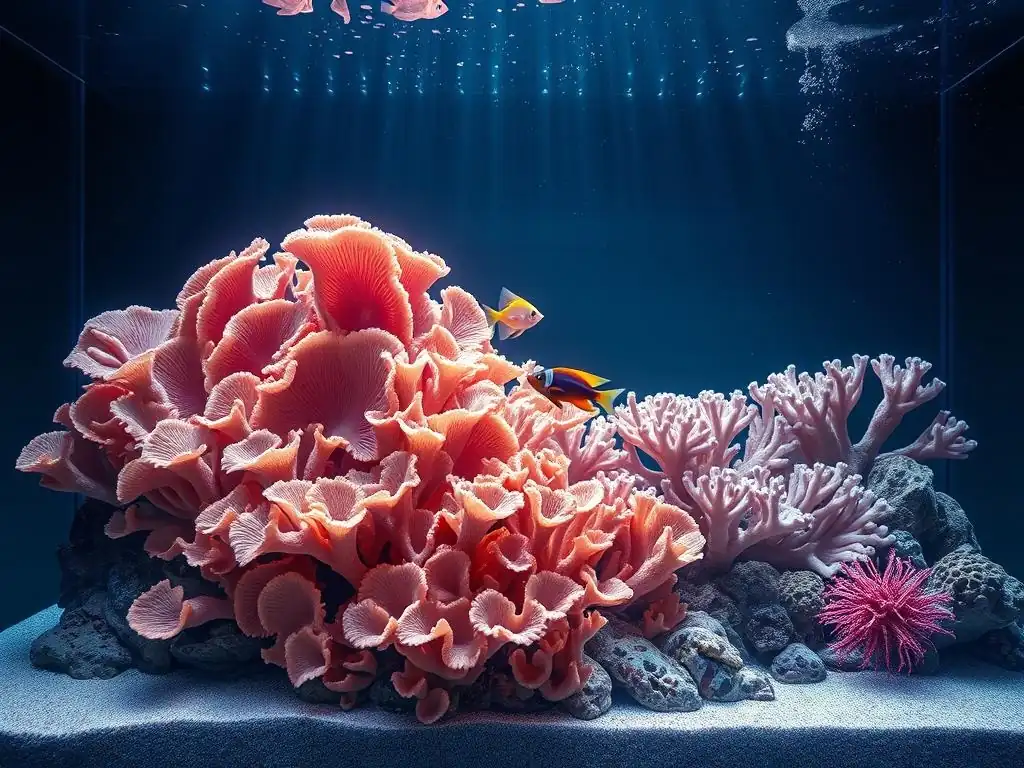
Ever wondered how to unlock the vibrant colors and flourishing growth of your mushroom corals? You're in the right place! This comprehensive mushroom coral lighting guide dives deep into creating the perfect illuminated environment for these fascinating invertebrates. Get ready to discover the secrets to keeping your mushroom corals thriving and adding a spectacular touch to your reef tank. Intrigued? Let's illuminate the path to success!
- Understanding Mushroom Coral Lighting Needs for a Vibrant Reef Tank
- Types of Lighting Suitable for Mushroom Corals
- PAR (Photosynthetically Active Radiation) and Mushroom Corals
- Identifying Signs of Improper Lighting in Mushroom Corals
- Placement Strategies for Mushroom Corals Based on Lighting
- Fine-Tuning Your Lighting for Optimal Mushroom Coral Growth and Color
- Troubleshooting Common Mushroom Coral Lighting Problems
- Conclusion: Achieving Optimal Lighting for Your Mushroom Corals
-
Frequently Asked Questions
- What type of lighting is generally recommended for mushroom corals?
- How can I tell if my mushroom corals are getting too much light?
- Is it necessary to acclimate mushroom corals to new lighting when I introduce them to my tank?
- What is the ideal PAR (Photosynthetically Active Radiation) range for mushroom corals?
- Can I keep mushroom corals under lower lighting conditions?
- Final Reflection: Illuminating the Path to Thriving Reefs
- Ignite Your Reef: Cultivate Thriving Mushroom Corals!
Understanding Mushroom Coral Lighting Needs for a Vibrant Reef Tank
Why Proper Lighting is Crucial for Soft Coral Health and Growth
Proper lighting is fundamentally crucial for the long-term health and vibrant growth of mushroom corals, such as Discosoma, Rhodactis, and Ricordea species. These fascinating soft corals, like many other photosynthetic invertebrates, host symbiotic algae called zooxanthellae within their tissues. These zooxanthellae perform photosynthesis, converting light energy into sugars and other organic compounds that the mushroom coral then utilizes for up to 90% of its nutritional needs. Without adequate and appropriate lighting, the zooxanthellae cannot photosynthesize efficiently, leading to a significant energy deficit for the coral.
Furthermore, insufficient or excessive lighting can cause severe stress to mushroom corals. Under-lighting can lead to etiolation, where the coral stretches its stalk or expands its disc abnormally in an attempt to increase its surface area for light absorption. Conversely, over-lighting can cause photoinhibition, where the zooxanthellae become damaged, leading to the expulsion of these vital symbionts, a process commonly known as bleaching. A healthy mushroom coral, under optimal lighting, can not only maintain its vibrant coloration but also exhibit robust growth and even propagate new "daughter" polyps, with some Discosoma species splitting every few months.
The Impact of Light Spectrum on Soft Coral Coloration
The light spectrum plays a pivotal role in not only facilitating photosynthesis but also in enhancing the natural coloration of mushroom corals. Different wavelengths of light penetrate water at varying depths and are absorbed differently by the pigments within the coral's zooxanthellae and its own tissues.
For instance, blue light, typically in the 450-470 nanometer (nm) range, is particularly important as it penetrates deepest into the water column and is efficiently absorbed by chlorophyll a and c, key photosynthetic pigments. Many mushroom corals, especially Ricordea florida and certain Rhodactis species, exhibit stunning fluorescence under blue-rich lighting, which highlights their vibrant greens, blues, and oranges.
Beyond photosynthesis, specific spectral peaks can influence the expression of fluorescent proteins within the coral itself, contributing to their diverse and often iridescent hues. A balanced spectrum, incorporating blue, royal blue, and a lesser amount of white (around 6500K-10000K), along with trace amounts of red and green, can bring out the full chromatic potential of a mushroom coral.
For example, some Rhodactis mushrooms show their best reds and purples when a small amount of warm white or purple spectrum is included, whereas Discosoma mushrooms often display their most intense blues and greens under a predominantly blue spectrum, making spectrum choice a crucial part of any mushroom coral lighting guide.
Types of Lighting Suitable for Mushroom Corals
LED Lighting for Soft Corals: Efficiency and Control
LED (Light Emitting Diode) lighting has become the predominant choice for reef aquariums, and it is exceptionally well-suited for mushroom corals due to its efficiency, control, and longevity. Modern LED fixtures offer unparalleled control over both intensity and spectrum, allowing aquarists to precisely dial in the light conditions optimal for their specific mushroom coral species. Compared to traditional lighting methods, LEDs consume significantly less power, often reducing energy consumption by up to 70% when replacing older halide systems, leading to lower operating costs and less heat transfer to the aquarium water.
The fine-tuned control offered by LED systems means that beginners can start with very low intensity and gradually increase it, minimizing shock to new mushroom corals. Advanced users can program intricate daily light cycles, including dawn-to-dusk simulations and moonlight phases, which can mimic natural reef conditions and promote healthier coral behavior. Many high-end LED units also offer individual color channel control, allowing for custom blends of blue, royal blue, white, red, and green diodes, which is invaluable for optimizing both the growth and aesthetic appearance of diverse mushroom coral collections.
Choosing the Right LED Spectrum for Soft Coral Growth
When selecting an LED spectrum for mushroom corals, the primary focus should be on blue and royal blue wavelengths, as these are critical for zooxanthellae photosynthesis and also enhance the natural fluorescence of many mushroom species. A common and effective spectrum for mushroom corals typically consists of a high percentage of blue and royal blue (e.g., 70-80%), supplemented with cool white (e.g., 10,000K or 14,000K), and small amounts of red, green, and UV.
For instance, a basic yet effective LED spectrum might utilize a ratio of 70% blue/royal blue, 20% white, and 10% other colors (red, green, UV) to provide a balanced environment without overwhelming these low-to-moderate light corals.
The exact blend can be fine-tuned based on the specific mushroom species and desired aesthetic. For example, a Ricordea yuma might exhibit more vibrant reds and oranges with a slightly higher proportion of warm white or red diodes, while a common Discosoma mushroom will pop more under a heavier blue bias.
It's crucial to avoid overly intense white light, as this can easily bleach mushroom corals, which are adapted to lower light environments. Many aquarists find success by running their white channels at a much lower intensity compared to their blue channels, often at a ratio of 1:3 or 1:4.
Adjusting LED Intensity for Optimal Soft Coral Health
Adjusting LED intensity for optimal mushroom coral health requires careful observation and a gradual approach. Mushroom corals are generally considered low to moderate light corals, meaning they do not require, and often suffer from, the high light intensities needed by some Small Polyp Stony (SPS) corals.
When introducing new mushroom corals or a new LED fixture, it's best to start with a very low intensity, often as low as 20-30% of the fixture's maximum output, especially for the white channels. This slow acclimation period allows the zooxanthellae within the coral's tissues to adapt to the new light environment without experiencing shock or bleaching.
Over several weeks, the intensity can be gradually increased by small increments, typically 5% every few days, while closely observing the coral's response. Signs of happiness include full expansion, vibrant coloration, and a lack of retraction during the photoperiod. Conversely, retraction, bleaching, or a pale appearance indicates that the light is too intense and should be reduced.
Many common mushroom corals ( Discosoma, Rhodactis) thrive when LED fixtures are run at 20-40% of their maximum intensity, depending on the fixture's power and tank depth, whereas some Ricordea species might tolerate slightly higher levels. This gradual adjustment is a key aspect of any effective mushroom coral lighting guide.
T5 Lighting for Soft Corals: A Balanced Approach
T5 (Fluorescent) lighting, while less common for new setups than LEDs, remains a highly effective and balanced approach for illuminating mushroom corals. T5 fixtures provide an excellent, even spread of light across the entire aquarium, minimizing hot spots and shading that can sometimes occur with point-source LED lighting.
This even distribution is particularly beneficial for tanks with a diverse arrangement of mushroom corals, ensuring that all specimens receive consistent illumination. T5 systems have a proven track record of promoting healthy growth and vibrant coloration in soft corals, often preferred by those seeking a more "natural" look to their tank's illumination.
The consistent light output and broad spectrum capabilities of T5 bulbs make them a reliable choice for mushroom corals. While they require more frequent bulb replacement than LEDs (typically every 9-12 months to maintain optimal output), the initial cost of T5 fixtures can be lower, and the replacement bulbs are generally affordable, ranging from $20-$30 per bulb depending on brand and spectrum. Their ability to deliver a full, even spectrum makes them a strong contender for a successful mushroom coral lighting guide, especially for those who prefer a simpler, less programmable lighting solution.
T5 Bulb Combinations for Enhanced Soft Coral Color
Achieving enhanced coloration and robust growth in mushroom corals with T5 lighting involves selecting the right combination of bulbs. For mushroom corals, a spectrum rich in actinic blue and royal blue wavelengths is essential, supplemented with a daylight or specific color-enhancing bulb. A popular and effective combination for a mushroom-dominated tank often includes a ratio of 2:1 or 3:1 blue to white bulbs. For example, a four-bulb fixture might run two Actinic bulbs (e.g., ATI Blue Plus or Giesemann Actinic+) alongside one 10,000K Daylight bulb (e.g., ATI Aquablue Special) and one Purple Plus bulb (e.g., ATI Purple Plus).
The Actinic bulbs provide the crucial blue spectrum for photosynthesis and fluorescence, making the mushroom corals glow. The 10,000K Daylight bulb adds a necessary dose of full-spectrum white light, supporting overall coral health and providing a balanced visual appearance. The Purple Plus bulb, with its blend of blue, red, and violet, can significantly enhance the reds, pinks, and purples in certain mushroom species like Rhodactis and Ricordea, bringing out their full chromatic range. Experimentation with different bulb brands and combinations can yield subtle but noticeable differences in coral appearance and growth.
Maintaining T5 Lighting Systems for Consistent Performance
Consistent performance from T5 lighting systems for mushroom corals hinges on regular maintenance. The most critical aspect is the timely replacement of T5 bulbs. While bulbs may continue to emit light beyond their recommended lifespan, their spectral output and intensity degrade significantly over time, typically after 9-12 months of use. Running old bulbs can lead to diminished coral health, reduced growth, and dull coloration, as the PAR output can drop by 20-30% in a year. Establishing a consistent replacement schedule, perhaps replacing one or two bulbs every 3-4 months on a rotation, ensures a stable light environment.
Beyond bulb replacement, maintaining the fixture itself is important. Reflectors, which direct light into the tank, can accumulate salt creep and dust, drastically reducing light efficiency. Cleaning reflectors regularly, perhaps monthly or bi-monthly, can prevent a 15-20% reduction in light output. Ensuring proper ventilation for the fixture also prevents overheating, which can shorten bulb life and affect overall performance. Keeping the acrylic or glass splash shield clean is also crucial, as a dirty shield can block a significant amount of light from reaching the mushroom corals below.
PAR (Photosynthetically Active Radiation) and Mushroom Corals
What is PAR and Why Does it Matter for Soft Corals?
PAR, or Photosynthetically Active Radiation, is a crucial metric in reef keeping that measures the amount of light within the visible spectrum (400-700 nanometers) that is available for photosynthesis. It is typically expressed in micromoles per square meter per second (µmol/m²/s) and quantifies the number of photons striking a specific area per second. For mushroom corals, understanding PAR is paramount because it directly correlates with the energy available to their symbiotic zooxanthellae for food production. Unlike simply looking at Watts or lumens, PAR provides a direct measure of usable light for corals.
Knowing the PAR levels at different depths and locations within your aquarium allows for precise placement of mushroom corals according to their specific light requirements. Without a PAR meter, aquarists are often guessing, which can lead to either under-lighting (resulting in stretching or dullness) or over-lighting (leading to bleaching or retraction). By measuring PAR, aquarists can confirm that their mushroom corals are receiving adequate, but not excessive, light, optimizing their health, growth, and vibrant coloration. This precise measurement is an invaluable component of any comprehensive mushroom coral lighting guide.
Recommended PAR Levels for Different Soft Coral Species
Mushroom corals are generally considered low to moderate light corals, and their optimal PAR requirements can vary slightly depending on the species and individual colony. For most common Discosoma and Rhodactis mushrooms, a PAR range of 30-70 µmol/m²/s is typically ideal. Within this range, they will exhibit good expansion, maintain vibrant colors, and show consistent growth. Placing these species on the sand bed or lower rock work often puts them squarely within this preferred PAR range.
Ricordea florida and some of the more intensely colored Rhodactis or Discosoma strains might tolerate or even prefer slightly higher PAR levels, ranging from 80-100 µmol/m²/s. However, it is always safer to start at the lower end of the recommended range and gradually increase if the coral shows signs of needing more light, such as stretching or a dull appearance. Exceeding 120-150 µmol/m²/s for extended periods can quickly lead to stress and bleaching for most mushroom corals, as their zooxanthellae are not adapted to such high intensities.
PAR Meter: A Tool for Measuring Light Intensity in Your Reef Tank
A PAR meter is an indispensable tool for any serious reef aquarist, particularly when aiming for optimal mushroom coral health. This specialized device measures the Photosynthetically Active Radiation directly within the water column, providing real-time, objective data on light intensity at various points in your tank. While professional-grade PAR meters can be a significant investment, often costing upwards of $200-$300, many local fish stores offer rental services for a nominal fee, typically $20-$50 per day, making them accessible for periodic measurements.
To use a PAR meter effectively, it's recommended to take readings at different depths and locations throughout the aquarium, including the sand bed, mid-water, and near the surface. This creates a "light map" of your tank, allowing you to identify areas of high, moderate, and low PAR. For mushroom corals, specifically target the areas where you intend to place them and adjust your lighting fixture's height or intensity settings until the desired PAR range (e.g., 40-70 µmol/m²/s) is achieved at those specific locations. This empirical approach eliminates guesswork and is crucial for a successful mushroom coral lighting guide.
Adjusting Lighting Based on PAR Readings for Soft Corals
Adjusting lighting based on PAR readings for mushroom corals is a methodical process that prioritizes the coral's well-being. Once you have mapped the PAR levels in your tank, you can strategically position your mushroom corals in areas that fall within their recommended PAR range (e.g., 40-70 µmol/m²/s for most common varieties).
If your overall tank's PAR is too high for mushroom corals, you can either raise your light fixture, reduce its intensity (if using dimmable LEDs), or place the corals in shaded areas or lower in the tank. For example, if a Discosoma mushroom is currently receiving 120 µmol/m²/s, its light intensity should be reduced by 40-50% to reach the optimal 60-70 µmol/m²/s range.
Conversely, if PAR readings are too low (e.g., below 20-30 µmol/m²/s) in areas where you want to place mushroom corals, you might consider lowering your light fixture, increasing its intensity, or moving the corals to higher, brighter locations. Any adjustments to lighting intensity or height should be made gradually, in small increments (e.g., 5-10% intensity change per week), allowing the mushroom corals ample time to acclimate. Continuous monitoring of the coral's behavior and coloration after each adjustment is essential to ensure they are thriving in their new light environment.
Identifying Signs of Improper Lighting in Mushroom Corals
Soft Corals Bleaching Due to Excessive Light
One of the most alarming signs of excessive light in mushroom corals is bleaching. Bleaching occurs when the mushroom coral expels its symbiotic zooxanthellae, which are responsible for its vibrant coloration and much of its energy production. When exposed to PAR levels significantly higher than their tolerance (e.g., sustained readings above 150 µmol/m²/s for common Discosoma or Rhodactis), the zooxanthellae become stressed and produce harmful reactive oxygen species. In self-defense, the coral ejects them, leading to a loss of color, making the coral appear pale, translucent, or even white.
A Discosoma mushroom might turn translucent or lose its vibrant color within 24-48 hours of being exposed to excessively high PAR levels. While some corals can recover from bleaching if the light intensity is quickly reduced, prolonged exposure can lead to starvation and eventual death, as the coral loses its primary food source. Therefore, observing any pallor or loss of natural color in your mushroom corals should prompt an immediate assessment of your lighting intensity and duration.
Soft Corals Stretching and Elongating Due to Insufficient Light
Conversely, insufficient lighting can also manifest in distinct ways in mushroom corals. When mushroom corals are not receiving enough Photosynthetically Active Radiation (PAR) for their zooxanthellae to photosynthesize efficiently, they may exhibit a phenomenon known as etiolation, or stretching and elongating. This behavior is the coral's attempt to increase its surface area exposed to light or to physically "reach" for more intense light. For example, a Rhodactis mushroom might develop an abnormally long stalk or flatten and spread its disc unusually wide and thin to maximize light absorption.
If a mushroom coral consistently appears retracted, refuses to fully open, or looks dull despite otherwise good water parameters, it could be a sign of insufficient light. This stretching indicates that the coral is struggling to meet its energetic demands, often occurring when PAR levels drop below 20-30 µmol/m²/s for an extended period. Addressing this requires either moving the mushroom coral to a brighter location within the tank or gradually increasing the light intensity of your fixture, making it a critical aspect of mushroom coral lighting guide troubleshooting.
Changes in Soft Coral Coloration as an Indicator of Lighting Issues
Beyond bleaching and stretching, subtle changes in mushroom coral coloration can serve as early indicators of lighting issues, even before more severe symptoms appear. If a mushroom coral that was previously vibrant begins to appear dull, faded, or develops a brownish tint, it often points to a problem with either the intensity or spectrum of your lighting. For instance, a vibrant blue Ricordea florida might turn brownish if its lighting lacks sufficient blue spectrum (450-470nm) or if overall PAR is too low, as the zooxanthellae pigments may become more dominant than the coral's natural fluorescent proteins.
Similarly, if a red or orange mushroom coral starts to lose its intensity or appears washed out, it could indicate either too much light (fading pigments) or an imbalanced spectrum that doesn't adequately support the expression of those specific colors. Conversely, an overly green or brown appearance in a mushroom that should be more colorful can suggest that the coral is producing more zooxanthellae in an attempt to compensate for insufficient light, or that the light spectrum is not conducive to its natural vibrant pigments. Regularly observing these subtle shifts in hue is crucial for proactive lighting adjustments.
Placement Strategies for Mushroom Corals Based on Lighting
Placing Soft Corals in Moderate-Light Areas of the Tank
Effective placement of mushroom corals is paramount to their long-term success, and it must be directly correlated with their lighting requirements. As low to moderate light corals, mushroom corals thrive in areas of the aquarium where PAR levels are within their optimal range, typically 40-70 µmol/m²/s. This often means placing them on the sand bed, lower rock work, or in shaded areas created by larger rock structures or other corals higher in the tank. For example, many aquarists successfully place Discosoma mushrooms directly on the substrate, where they can spread and form colonies without being overwhelmed by intense light.
When planning your aquascape, consider creating ledges or caves that naturally offer lower light zones suitable for mushroom corals. This not only benefits the corals but also adds depth and interest to the tank. It's important to remember that light intensity decreases significantly with depth and with distance from the light source. Therefore, a mushroom coral placed on a rock near the top of the tank might receive far too much light, even if the overall fixture intensity is moderate, necessitating its placement much lower down or in a shaded nook.
Acclimating New Soft Corals to Lighting
Acclimating new mushroom corals to your aquarium's lighting system is a critical step to prevent shock and ensure a smooth transition. Even if your tank's lighting is within the recommended PAR range for mushroom corals, a sudden change from their previous environment (e.g., a dimly lit frag tank at a local fish store) can be detrimental.
A common acclimation strategy involves initially placing new mushroom corals in a very shaded spot within your tank, such as under an overhang or on the sand bed in a corner, where PAR levels are significantly lower than their target range, for 3-5 days.
During this initial period, closely observe the coral for signs of stress or happiness. If it expands fully and appears healthy, you can begin to gradually move it to its desired, brighter location over the course of 1-2 weeks. Each move should be small, perhaps a few inches at a time, allowing the coral to adjust to the incrementally increasing light intensity. This slow, methodical approach minimizes the risk of bleaching or retraction, giving the zooxanthellae time to adapt to the new light environment. This careful acclimation is a cornerstone of any effective mushroom coral lighting guide.
Considering Water Flow in Relation to Lighting
While lighting is paramount, considering water flow in relation to lighting is also crucial for the health and appearance of mushroom corals. Although not directly a lighting parameter, proper flow ensures that the coral's surface is constantly bathed in fresh, nutrient-rich water and that waste products are efficiently removed, which indirectly supports their ability to utilize light for photosynthesis.
Mushroom corals generally prefer moderate, indirect water flow. Strong, direct flow can cause them to retract, detach from their substrate, or even be physically damaged, which in turn reduces their surface area exposed to light and hampers their ability to photosynthesize.
When placing mushroom corals, ensure they are not directly in the path of a powerhead or return pump outlet. Instead, aim for broad, turbulent flow that gently washes over the coral without causing it to constantly wave violently. For example, a gentle, indirect flow ensures nutrient delivery and waste removal without stressing the coral. This optimal flow allows the mushroom coral to remain fully expanded, maximizing its light absorption and maintaining a healthy, vibrant appearance, making it an important consideration alongside light intensity in a comprehensive mushroom coral lighting guide.
Fine-Tuning Your Lighting for Optimal Mushroom Coral Growth and Color
Observing Your Soft Corals and Making Adjustments
The most effective mushroom coral lighting guide relies heavily on consistent, diligent observation of your actual corals. While PAR meters provide quantitative data, the ultimate indicator of optimal lighting is the coral's behavior and appearance. Daily observation of mushroom expansion, foot attachment, and color vibrancy provides more reliable feedback than solely relying on PAR meters. A happy mushroom coral will fully expand its disc, often showing a slightly inflated or turgid appearance, and maintain its natural, vibrant coloration. They should remain attached firmly to their substrate and not retract unnecessarily during the photoperiod.
If you notice a mushroom coral consistently retracting, shrinking, or losing its color, it's a clear signal that adjustments are needed. Begin by checking your water parameters to rule out other issues, then consider your lighting. Is it too intense, causing the coral to bleach or retract? Or is it too dim, leading to stretching or dullness? Make small, incremental changes to intensity or placement, and observe the coral's response over several days before making further adjustments. This iterative process of observation and adjustment is key to fine-tuning your lighting for long-term mushroom coral success.
The Importance of Gradual Lighting Changes
The biological processes within mushroom corals, particularly their zooxanthellae, are highly sensitive to sudden changes in light intensity or spectrum. Abrupt shifts can lead to significant stress, photoinhibition, or even coral death. Therefore, the importance of gradual lighting changes cannot be overstated. Whether you are upgrading your lighting system, introducing new corals, or simply adjusting intensity based on PAR readings, all changes should be made incrementally over days or even weeks. For example, increasing LED intensity by more than 5-10% per week can shock mushroom corals, leading to retraction or bleaching.
When installing a new, more powerful light fixture, it's advisable to start with a significantly reduced intensity (e.g., 20-30% of maximum output) and slowly ramp it up over a period of 4-6 weeks. Similarly, if you are changing bulb types in a T5 system, consider a phased replacement or a slightly reduced photoperiod initially. This slow, methodical approach allows the zooxanthellae to naturally adjust their photosynthetic machinery and pigment concentrations, preventing damage and promoting a smooth adaptation to the new light environment.
Supplementing Lighting with Proper Water Chemistry
While lighting is a primary driver for mushroom coral health and growth, its effectiveness is intrinsically linked to stable and optimal water chemistry. Even the most perfectly tuned mushroom coral lighting guide will fall short if essential water parameters are neglected. Mushroom corals, like all corals, require stable alkalinity (7-9 dKH), calcium (400-450 ppm), and magnesium (1250-1350 ppm) to facilitate calcification and overall metabolic processes. Although soft corals are less demanding than SPS corals in terms of calcification rates, these parameters are still vital for their skeletal structure and general well-being.
Furthermore, maintaining low levels of nitrates (typically under 10 ppm) and phosphates (under 0.03 ppm) is crucial. While mushroom corals can tolerate slightly higher nutrient levels than some other corals, excessive nutrients, especially when combined with high light, can lead to nuisance algae growth directly on the coral's surface, shading it and competing for resources. Providing a pristine and stable water environment allows mushroom corals to efficiently utilize the light energy for growth, coloration, and propagation, ensuring they thrive in your reef tank.
Troubleshooting Common Mushroom Coral Lighting Problems
Addressing Algae Growth on Soft Corals Due to Excess Light
One common issue observed in reef tanks, particularly on mushroom corals, is the growth of nuisance algae directly on their discs or stalks. While algae growth can be indicative of elevated nutrient levels (nitrates and phosphates), if water parameters are otherwise in check, it often points to excessive light intensity. If green film algae or diatoms consistently grow on the disc of your Discosoma mushrooms, it's often a sign of excessive PAR (e.g., above 100 µmol/m²/s) combined with elevated nutrients, as the high light fuels rapid algal proliferation on the coral's surface.
To address this, first confirm your nutrient levels. If they are acceptable, focus on reducing your lighting. This can involve lowering the intensity of your LED fixture, reducing the photoperiod (e.g., from 10 hours to 8 hours), or moving the affected mushroom coral to a more shaded area of the tank. Sometimes, simply creating a small overhang with a piece of rock can provide enough shade to alleviate the problem. Regularly siphoning out detritus and performing consistent water changes will also help reduce the nutrient load that fuels the algae.
Dealing with Pale or Dull Soft Corals
If your mushroom corals appear pale, dull, or have lost their vibrant coloration, it's a strong indication that they are not receiving adequate or appropriate lighting. This can be due to insufficient overall light intensity (low PAR), an incorrect light spectrum (lacking crucial blue wavelengths), or a photoperiod that is too short. For example, a Rhodactis mushroom that appears pale or washed out might be receiving insufficient blue light or overall PAR below 30 µmol/m²/s, suggesting an increase in the blue spectrum or slight overall intensity.
To troubleshoot, first check your light fixture's settings. If using LEDs, consider gradually increasing the intensity, particularly the blue and royal blue channels. If using T5s, ensure your bulbs are not past their useful life (typically 9-12 months) and that your bulb combination includes sufficient actinic or blue-plus bulbs. You might also try extending your photoperiod by 30-60 minutes, observing the coral's response. Finally, ensure the mushroom coral is not being shaded by other corals or rockwork, and consider relocating it to a slightly brighter spot if necessary.
Specific Soft Coral Lighting Recommendations
For optimal health and vibrant coloration of most mushroom corals, a general guideline is to aim for PAR levels between 40-70 µmol/m²/s. This range provides sufficient energy for their zooxanthellae without causing stress or bleaching. The spectrum should be rich in blue (450-470nm) and royal blue wavelengths, which are crucial for photosynthesis and enhancing the coral's natural fluorescence. A balanced mix with some cool white (10,000K-14,000K) and minimal red/green can also be beneficial for overall growth and visual appeal.
A photoperiod of 8-10 hours is generally recommended for mushroom corals. This duration allows for ample photosynthesis without promoting excessive algae growth. When using LED lighting, consider a gradual ramp-up and ramp-down period (e.g., 1-2 hours for dawn/dusk simulation) to mimic natural light cycles and reduce stress. For T5s, ensure bulbs are replaced every 9-12 months to maintain consistent PAR and spectrum. Ultimately, observation is key: a mushroom coral lighting guide provides a starting point, but your corals' specific responses will dictate the fine-tuning.
Conclusion: Achieving Optimal Lighting for Your Mushroom Corals
Frequently Asked Questions
What type of lighting is generally recommended for mushroom corals?
Mushroom corals typically thrive under moderate lighting. Avoid extremely intense light, as this can cause them to bleach or become stressed. LEDs and T5 fluorescent lights are popular choices.
How can I tell if my mushroom corals are getting too much light?
Signs of too much light include the coral shrinking in size, turning pale or bleached, or refusing to open. Adjust your lighting intensity or move the coral to a shaded area if you observe these symptoms.
Is it necessary to acclimate mushroom corals to new lighting when I introduce them to my tank?
Yes, acclimation is crucial. Slowly introduce them to the new lighting environment to prevent shock. You can gradually increase the intensity or duration of the light exposure over several days.
What is the ideal PAR (Photosynthetically Active Radiation) range for mushroom corals?
While it can vary, a good starting point for mushroom corals is generally between 50-150 PAR. This range provides sufficient light for photosynthesis without being overly intense. Monitoring your corals' health is the best indicator.
Can I keep mushroom corals under lower lighting conditions?
Yes, mushroom corals are relatively adaptable and can often tolerate lower lighting. However, they might not display their brightest colors or grow as quickly. Observation is key to ensuring their health and vibrancy.
Final Reflection: Illuminating the Path to Thriving Reefs
The insights shared in this Mushroom Coral Lighting Guide are more crucial than ever, as reef ecosystems face unprecedented challenges. Understanding the specific lighting needs of these vibrant invertebrates is not merely a matter of aesthetics; it's a fundamental step towards responsible reef keeping and contributing to the preservation of these delicate underwater environments. The knowledge presented here empowers aquarists to create thriving habitats, fostering resilience in the face of global environmental changes.
This journey into the world of mushroom coral lighting has profoundly underscored the interconnectedness of our actions and the health of our reefs. Witnessing the vibrant colors and robust growth of these corals under optimal lighting conditions is a deeply rewarding experience, reinforcing the importance of informed and conscientious care. In the end, we will conserve only what we love; we will love only what we understand; and we will understand only what we are taught.
- Baba Dioum. This quote perfectly encapsulates the spirit of this guide, highlighting the power of education in fostering a love for and commitment to protecting our reefs.
Now, armed with this knowledge, I encourage you to reflect on your own role in the reef keeping community. Consider how you can apply these principles to create a more sustainable and enriching environment for your mushroom corals, and in doing so, contribute to the long-term health of our planet's precious coral reefs. Let the light guide you, not just in illuminating your tank, but in illuminating your path towards responsible and impactful reef keeping.
Ignite Your Reef: Cultivate Thriving Mushroom Corals!
Thanks for diving deep into the captivating world of mushroom corals! Now that you're armed with the knowledge to understand their lighting needs, it's time to put your expertise into action and create the perfect environment for these vibrant inhabitants.
Ready to watch your mushroom corals flourish? Here’s how to get started:
- Dial in Your Lighting: Use what you’ve learned here to fine-tune your reef tank's lighting intensity and spectrum. Observe your corals closely for signs of bleaching or excessive shading, and adjust accordingly.
- Share the Knowledge: Help other reef keepers by sharing this article with your friends and online communities.
- Document Your Success: Start a reef journal and track your mushroom coral growth! Recording your lighting parameters, water quality, and coral behavior will provide valuable data for future adjustments and help you unlock even greater success.
What's one small change you can make to your reef's lighting today to better support your mushroom corals?