
T5 Lighting for SPS: Is It Still the Gold Standard for Unmatched Color and Growth?

Welcome to Aquarium Mastery!
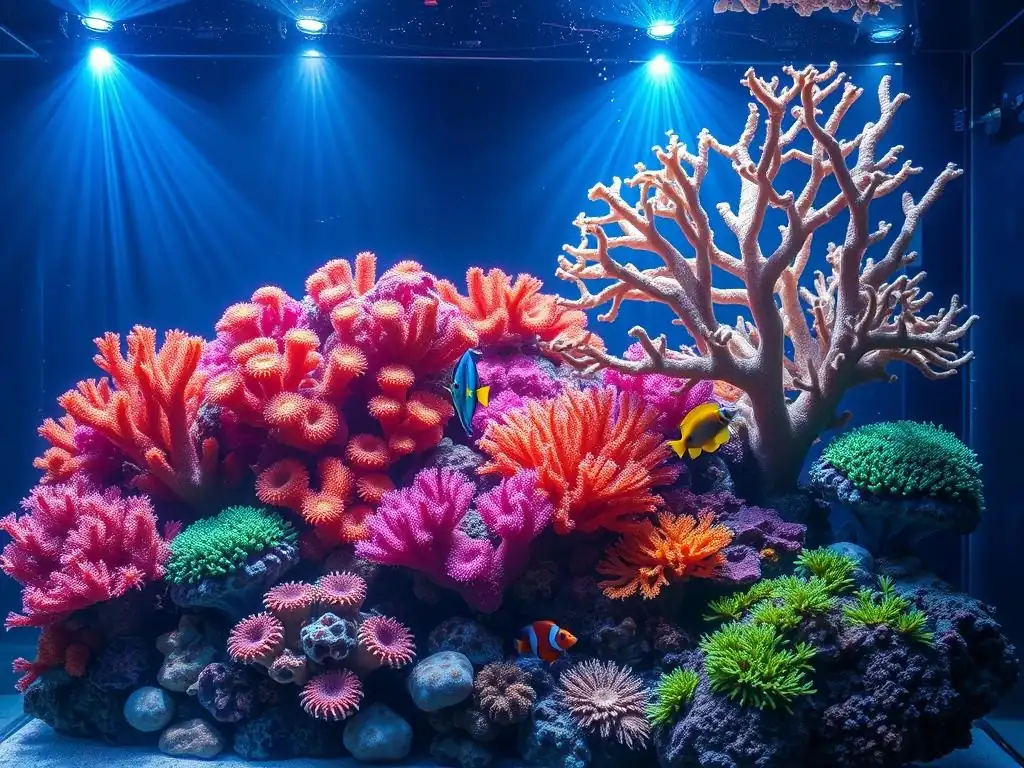
Dive into the vibrant world of coral keeping! Ever wondered if T5 lighting can still unlock the most stunning colors and explosive growth in your SPS corals? We're about to explore whether this technology remains the gold standard, revealing the secrets to achieving unparalleled results in your reef tank. Get ready to illuminate your knowledge and elevate your coral game!
- SPS Coral Lighting: Choosing the Right Technology for Growth and Color
- Introduction: Understanding the Importance of Optimal Lighting for SPS Corals
- Understanding SPS Coral Lighting Requirements: A Foundation for Success
- Lighting Technologies: A Deep Dive
- Comparing Lighting Technologies for SPS Coral Growth and Color
- Optimizing Lighting for SPS Corals: Achieving Peak Performance
- Lighting and SPS Coral Coloration: Achieving Vibrant Hues
- Lighting Maintenance: Ensuring Long-Term Performance and Stability
- SPS Coral Growth Under Different Lighting Technologies: Examples and Case Studies
- The Future of SPS Coral Aquarium Lighting
- Conclusion: Key Considerations for SPS Reef Aquarium Lighting
-
Frequently Asked Questions
- How effective is T5 lighting for SPS coral growth compared to more modern LED options?
- What are the key advantages of using T5 lighting for SPS corals, particularly in terms of color rendition?
- What are the drawbacks of using T5 lighting for SPS coral aquariums?
- What specific T5 bulb combinations are generally recommended for optimal SPS coral health and coloration?
- How should I properly maintain T5 lighting fixtures to ensure optimal performance and longevity for my SPS coral aquarium?
- Final Reflection: The Enduring Glow of T5
- Ignite Your SPS Reef: The Next Step is Yours!
SPS Coral Lighting: Choosing the Right Technology for Growth and Color
Introduction: Understanding the Importance of Optimal Lighting for SPS Corals
Optimal lighting is arguably the single most critical environmental factor for the successful growth and vibrant coloration of Small Polyp Stony (SPS) corals in a reef aquarium. Unlike their soft coral counterparts, SPS corals, such as Acropora, Montipora, and Seriatopora, rely heavily on symbiotic dinoflagellates, zooxanthellae, for their energy needs.
These zooxanthellae perform photosynthesis, converting light energy into sugars that fuel the coral's metabolic processes, skeletal growth, and vibrant pigmentation. Without adequate and appropriate illumination, SPS corals will slowly decline, exhibit poor color, and ultimately perish, making the selection of a robust and suitable lighting system paramount for any dedicated SPS aquarist.
The quest for the "gold standard" in SPS coral lighting has evolved significantly over the years, with various technologies vying for the top spot. Historically, metal halide lamps dominated the high-end reefkeeping scene, celebrated for their intense output and natural shimmer. Following their reign, T5 fluorescent lighting emerged as a formidable contender, offering a unique blend of uniform light spread and customizable spectrum that proved highly effective for SPS coral t5 lighting setups.
More recently, LED technology has surged forward, promising unprecedented control, energy efficiency, and longevity. Understanding the nuances of each lighting type and how they specifically cater to the demanding requirements of SPS corals is essential for achieving a thriving and visually stunning reef display.
Understanding SPS Coral Lighting Requirements: A Foundation for Success
The Importance of PAR (Photosynthetically Active Radiation) for SPS Growth
Photosynthetically Active Radiation (PAR) measures the amount of light available for photosynthesis, specifically light within the 400 to 700 nanometer wavelength range. For SPS corals, maintaining an appropriate PAR level is fundamental for their energy production and calcification.
While exact PAR requirements can vary slightly between different SPS species and even within the same species depending on its origin and acclimation, a general range for healthy SPS growth in a home aquarium is typically between 250 to 450 PAR at the coral's surface. Corals at the very top of a reef might thrive in PAR levels exceeding 500, while those lower down might prefer closer to 200-300 PAR.
Insufficient PAR will lead to coral bleaching, slow growth, and eventual tissue recession, as the zooxanthellae cannot produce enough energy. Conversely, excessive PAR can also be detrimental, causing photoinhibition or "burning" of the coral tissue, leading to stress and potential death. Aquarists often use PAR meters to map the light intensity across their tanks, ensuring that different zones receive appropriate light levels for the specific SPS corals placed there.
For instance, an Acropora valida might thrive at 400 PAR in the upper third of the tank, while a Montipora digitata might be perfectly happy at 300 PAR in the mid-section. Achieving a consistent and appropriate PAR distribution is a key advantage offered by many modern lighting systems, including optimized SPS coral t5 lighting fixtures.
Color Spectrum and Its Impact on SPS Coral Coloration
Beyond mere intensity, the specific wavelengths of light, known as the color spectrum, play a pivotal role in both the photosynthetic efficiency of zooxanthellae and the expression of vibrant colors in SPS corals. Zooxanthellae primarily absorb light in the blue (420-470 nm) and red (620-670 nm) regions of the spectrum. Blue light, in particular, penetrates water most effectively and is crucial for the primary photosynthetic processes. Most reef aquarists aim for a predominantly blue spectrum, often supplemented with other wavelengths to achieve a balanced look and promote coral health.
The stunning colors of SPS corals are not solely from zooxanthellae; they also stem from various fluorescent and non-fluorescent proteins produced by the coral host itself. These proteins are often stimulated or regulated by specific wavelengths of light.
For example, purple and pink hues in corals are frequently enhanced by deep blue and UV-A (380-420 nm) wavelengths, while green and yellow colors can be boosted by warmer whites and green light. A well-chosen spectrum, such as the balanced blends achievable with a specific SPS coral t5 lighting bulb combination, can significantly enhance these natural pigments, transforming dull browns into electric blues, vibrant greens, and fiery reds.
Balancing Light Intensity and Spectrum for Optimal SPS Health
Achieving optimal SPS health and coloration is a delicate dance between providing sufficient light intensity (PAR) and the correct color spectrum. Neither factor can be optimized in isolation. A high PAR level with a poor spectrum will not yield the desired results, just as a perfect spectrum at insufficient intensity will lead to starved corals. For instance, an SPS coral might receive 350 PAR, but if the spectrum is heavily skewed towards red, it might not photosynthesize efficiently and could appear dull. Conversely, a tank with high blue light but only 100 PAR will also struggle to support SPS.
The goal is to provide a comprehensive spectrum that mimics natural sunlight in its most beneficial aspects, focusing on the critical blue wavelengths while incorporating other colors to support the full range of zooxanthellae pigments and coral host proteins. This balanced approach ensures that corals receive the necessary energy for growth while simultaneously exhibiting their most vibrant potential.
Many successful SPS aquariums utilize a blend of blue-heavy bulbs or LEDs, often complemented by white, purple, or green channels, to create an ideal environment. For example, a common SPS coral t5 lighting setup might combine multiple blue bulbs with one or two white bulbs to achieve both high PAR and stunning color rendition.
Lighting Technologies: A Deep Dive
Metal Halide Lighting for SPS Aquariums
Metal Halide (MH) lighting systems were once considered the undisputed king of reef aquarium illumination, particularly for SPS corals, due to their intense light output and natural shimmer. These lamps use an electric arc through a mixture of gaseous metal halides to produce light. They are characterized by their single-point light source, which creates strong shadows and a captivating "shimmer" effect on the sandbed and corals, mimicking natural sunlight filtered through water ripples.
Advantages of Metal Halide Lighting Systems for SPS Aquariums
One of the primary advantages of metal halide lighting for SPS aquariums is their exceptional PAR output, capable of penetrating deep into large tanks and providing ample light for even the most demanding Acropora species. A single 250W or 400W metal halide bulb can deliver PAR levels exceeding 500 at the water surface, with significant penetration to depths of 24-30 inches.
Furthermore, the concentrated light source creates a distinctive shimmer, a highly sought-after aesthetic that many aquarists find irreplaceable. Certain MH bulbs, particularly those with a 10,000K or 20,000K color temperature, offer a broad, natural spectrum that promotes excellent coral growth and can bring out a wide array of coral colors, especially when paired with actinic supplementation.
Disadvantages of Metal Halide Lighting Systems
Despite their benefits, metal halide systems come with several significant drawbacks. They are notorious for generating substantial heat, often requiring active cooling solutions such as chillers or powerful fans to prevent aquarium overheating, especially in enclosed canopies. This heat production translates to high energy consumption; a 400W MH fixture consumes 400 watts plus ballast losses, often leading to considerable electricity bills.
Bulb replacement is also a recurring and costly expense, as MH bulbs typically need to be replaced every 9-12 months to maintain optimal PAR and spectrum, with prices ranging from $60 to $150 per bulb. Lastly, their lack of precise spectrum control (without adding supplemental lighting) and dimmability limits their flexibility compared to newer technologies.
T5 Lighting for SPS Aquariums
T5 (High Output) fluorescent lighting emerged as a popular alternative to metal halides, offering a more diffuse light source with excellent color rendition and even light spread. T5 bulbs are long, thin fluorescent tubes available in various lengths (e.g., 24", 36", 48") and wattages (e.g., 24W, 39W, 54W). Fixtures typically house multiple bulbs, allowing aquarists to create custom spectrums by combining different bulb types. This customization capability makes SPS coral t5 lighting setups particularly versatile for achieving specific aesthetic and growth goals.
Advantages of T5 Lighting Systems for SPS Aquariums
One of the most significant advantages of SPS coral t5 lighting is its superior light spread and uniformity across the aquarium. Unlike point-source metal halides, T5 fixtures distribute light more evenly, reducing hot spots and shadowed areas, which benefits corals placed at various depths and locations. This even distribution helps ensure consistent growth across the entire SPS colony.
T5 bulbs are available in a wide array of color temperatures and spectrums, including actinic, blue plus, coral plus, and daylight bulbs, allowing aquarists to precisely tune their spectrum for optimal coral coloration and growth. For instance, a common combination for a vibrant SPS tank might include a mix of ATI Blue Plus and Coral Plus bulbs, often in a 3:1 or 4:1 ratio of blue to white/pink.
Furthermore, T5s produce less heat than metal halides and are generally more energy-efficient for comparable PAR output, making them a more cost-effective option in terms of daily running costs. Many aquarists still consider a well-designed SPS coral t5 lighting system to be a benchmark for achieving stunning coral coloration.
Disadvantages of T5 Lighting Systems
Despite their many benefits, T5 lighting systems do have some drawbacks. The most notable is the recurring cost and hassle of bulb replacement. T5 bulbs lose intensity and shift their spectrum over time, requiring replacement every 9-12 months for optimal performance, with individual bulb costs typically ranging from $15 to $30. This annual expense can add up significantly over the lifespan of the aquarium.
Unlike metal halides, T5s produce very little shimmer, which some aquarists miss. While dimmable ballasts are available, the level of precise control and programmability (e.g., sunrise/sunset, cloud simulations) is generally less sophisticated than with advanced LED systems. Finally, T5 fixtures themselves can be somewhat bulky, especially for larger tanks requiring many bulbs, which might impact the aesthetic of an open-top setup.
LED (Light Emitting Diode) lighting has rapidly become the dominant technology in reef aquariums due to its energy efficiency, longevity, and unparalleled control capabilities. Modern LED fixtures for SPS corals are often highly customizable, allowing aquarists to adjust individual color channels (e.g., royal blue, blue, green, red, UV) and program elaborate lighting schedules.
Advantages of LED Lighting Systems for SPS Aquariums
The primary advantages of LED lighting for SPS aquariums include extreme energy efficiency, consuming significantly less power than metal halides or T5s for comparable PAR output. LEDs also boast an exceptionally long lifespan, with diodes typically rated for 50,000 hours or more, virtually eliminating the need for regular bulb replacement and its associated costs for many years. This longevity translates to lower long-term maintenance expenses.
Furthermore, LED fixtures offer incredible control over spectrum and intensity, allowing aquarists to fine-tune light output for specific coral needs, create dynamic lighting effects (like sunrise/sunset simulations and cloud cover), and even acclimate corals slowly to new light conditions. They produce very little heat that transfers to the water, reducing the need for chillers, and their compact design often makes for a sleek, modern aesthetic above the tank.
Disadvantages of LED Lighting Systems
The most significant disadvantage of LED lighting is the high initial purchase cost. High-quality LED fixtures suitable for demanding SPS corals can range from several hundred to over a thousand dollars, representing a substantial upfront investment compared to T5 or metal halide setups. While LEDs offer immense control, achieving a truly uniform spread of light can be challenging, especially with fixtures that use individual lenses.
This can lead to "hot spots" directly under the diodes and shadowed areas, potentially causing uneven growth or bleaching if not properly managed through diffusion or careful placement. Some aquarists also find that the point-source nature of many LEDs, while creating shimmer, can produce a "disco ball" effect with distinct color separation on the sandbed, which is not universally appealing. Finally, the vast array of options and complex programming can present a steep learning curve for new users.
Comparing Lighting Technologies for SPS Coral Growth and Color
Color Rendition and Coverage: Metal Halide vs. T5 vs. LED
When evaluating lighting technologies for SPS corals, color rendition and coverage are critical. Metal halides, with their single, intense point source, provide exceptional shimmer and can deliver a very natural, broad spectrum depending on the bulb. However, their coverage can be uneven, leading to shadows and requiring careful coral placement or multiple fixtures for larger tanks. The shimmer is highly prized, mimicking natural sunlight.
SPS coral t5 lighting systems excel in providing uniform coverage and excellent color rendition. The diffuse nature of T5 bulbs ensures even PAR distribution across the entire tank, minimizing hot spots and providing consistent light to all corals.
The ability to mix and match various T5 bulb types (e.g., Blue Plus, Coral Plus, Actinic, Purple Plus) allows for precise customization of the spectrum, often leading to incredibly vibrant and natural-looking coral colors without the distinct color separation sometimes seen with LEDs. Many aquarists argue that a well-tuned SPS coral t5 lighting setup provides the most aesthetically pleasing and natural coloration.
LED lighting offers the most flexible color rendition, with individual channels allowing for virtually any spectrum combination. However, achieving truly uniform coverage can be challenging, and some cheaper or poorly designed LED fixtures can create a "spotlight" effect or distinct color "banding" on corals and the substrate. While advanced LED fixtures often incorporate diffusers to mitigate this, some aquarists find the shimmer produced by LEDs to be less natural or too intense compared to metal halides.
Energy Efficiency and Controllability: Metal Halide vs. T5 vs. LED
Energy efficiency is a significant factor in long-term reefkeeping costs. Metal halide systems are the least energy-efficient, converting a substantial portion of their energy into heat rather than usable light. A 400W MH system can consume over 400 watts of power plus additional wattage for cooling. Controllability is also limited; most MH fixtures are simply on/off, with dimmable ballasts being less common and adding complexity.
SPS coral t5 lighting systems offer improved energy efficiency over metal halides, producing more light per watt and less waste heat. While not as efficient as LEDs, they are a solid middle ground. Controllability for T5s is generally limited to on/off functions via timers, though some high-end fixtures offer dimming capabilities. Spectrum control is achieved by selecting specific bulbs, which requires physical replacement to change the overall light profile.
LED lighting reigns supreme in both energy efficiency and controllability. Modern LED fixtures can achieve high PAR output with significantly lower wattage consumption compared to T5s or MH. For example, a high-end 200W LED fixture might provide comparable PAR to a 400W MH or a 6-bulb T5 fixture. Their advanced controllers allow for precise dimming, individual color channel adjustment, and sophisticated programmable schedules that simulate natural light cycles, offering unparalleled flexibility and customization.
PAR Output and Spectrum Control: Metal Halide vs. T5 vs. LED
PAR output and spectrum control are central to SPS coral health. Metal halides provide immense PAR, often reaching 500+ PAR at the water surface from a single fixture, making them suitable for deep tanks. Spectrum control is limited to the bulb chosen, though different Kelvin ratings (e.g., 10,000K, 20,000K) offer some variation, and actinic supplementation is common.
SPS coral t5 lighting systems deliver excellent and uniform PAR output across the entire fixture's footprint. A typical 6-8 bulb T5 fixture can easily produce 300-450 PAR at a depth of 20-24 inches, which is ideal for most SPS corals. Their strength lies in spectrum control through bulb combinations; aquarists can tailor the light recipe with specific blue, actinic, and white bulbs to optimize both growth and coloration. This granular control over the overall spectrum is a key reason for the continued popularity of SPS coral t5 lighting.
LEDs offer the most variable PAR output, ranging from low-power entry-level units to incredibly powerful fixtures. High-end LEDs can easily exceed 500 PAR. Their unparalleled spectrum control, through multiple individually addressable color channels (e.g., royal blue, cool white, red, green, UV), allows for precise tuning down to the nanometer in some cases. This enables aquarists to experiment with different spectral blends to optimize specific coral pigments or growth rates.
Long-Term Cost Analysis: Metal Halide vs. T5 vs. LED Lifespan and Maintenance
The long-term cost of a lighting system extends beyond the initial purchase price to include energy consumption and recurring maintenance. Metal halide systems have a high energy draw and costly annual bulb replacements (typically $60-$150 per bulb), making them the most expensive to operate over time. A 400W MH system running 10 hours a day could cost over $150 annually in electricity (at $0.10/kWh) plus bulb costs.
SPS coral t5 lighting systems represent a middle ground. Their energy consumption is lower than MH, but they require annual bulb replacements (typically $15-$30 per bulb). For a 6-bulb fixture, this could mean an annual cost of $90-$180 for bulbs alone, in addition to electricity costs. While not as cheap to run as LEDs, their initial cost is often lower than high-end LEDs, making them a popular choice for budget-conscious aquarists seeking proven results.
LED lighting, despite its high initial cost, generally offers the lowest long-term operating expenses. Their energy efficiency significantly reduces electricity bills, and the long lifespan of the diodes (often 5-10 years before significant degradation) virtually eliminates recurring bulb replacement costs for many years. While some high-end LED fixtures might have replacement parts like fans or power supplies, these are typically less frequent and less costly than annual bulb changes for T5 or MH. Over a 5-year period, the total cost of ownership for a quality LED system often becomes more economical than T5 or MH.
Optimizing Lighting for SPS Corals: Achieving Peak Performance
Choosing the Right Bulbs/Fixtures: Spectrum and Intensity Considerations
Selecting the appropriate bulbs or fixtures is the foundational step in optimizing lighting for SPS corals. For SPS coral t5 lighting systems, this means carefully choosing a combination of bulb types to achieve the desired spectrum and intensity. A popular and effective T5 bulb combination often includes a mix of blue-heavy bulbs (e.g., ATI Blue Plus, Giesemann Actinic Plus) for core photosynthetic activity and fluorescence, complemented by white or pink bulbs (e.g., ATI Coral Plus, Giesemann Super Actinic, KZ New Gen) to provide a fuller spectrum and enhance specific coral pigments.
A common setup for a 48-inch, 6-bulb T5 fixture might be two Blue Plus, one Coral Plus, two Actinic Plus, and one Purple Plus, providing a balanced spectrum with strong blue emphasis. The number of bulbs dictates the overall intensity (PAR), so larger or deeper tanks may require more bulbs or a higher wattage fixture.
For LED systems, the choice involves selecting a fixture with enough power and a suitable array of individually controllable color channels. High-quality LED units designed for SPS typically feature multiple royal blue, blue, cool white, red, green, and UV diodes. The aquarist then programs the intensity of each channel to create a custom spectrum.
Metal halide users primarily choose between 10,000K, 14,000K, or 20,000K bulbs, often supplementing with T5 or LED actinic strips to enhance blue wavelengths and fluorescence. Regardless of the technology, the goal is to provide sufficient PAR (typically 250-450) with a spectrum rich in the blue wavelengths crucial for zooxanthellae, while also supporting the coral's inherent coloration.
Fixture Selection: Reflectors, Ballasts, and Lenses
The quality of the fixture itself plays a crucial role in maximizing light output and distribution. For SPS coral t5 lighting, the efficiency of the reflectors behind each bulb is paramount. Individual parabolic reflectors, often made from highly polished aluminum, are superior to shared or flat reflectors as they direct almost all the light downwards into the tank, significantly increasing PAR output and reducing light spill. High-quality electronic ballasts are also essential for T5s, ensuring stable power delivery, maximizing bulb lifespan, and minimizing flicker.
With LED fixtures, the design of the lenses and optics is critical for light spread and minimizing "hot spots." Diffused lenses help blend the light from individual diodes, creating a more uniform PAR field and reducing the "disco ball" effect. Active cooling systems (fans) are important in high-power LED units to prevent overheating of the diodes, which can reduce their lifespan and efficiency. For metal halides, the reflector design (e.g., parabolic, hammerhead) impacts light spread and shimmer, and a good quality ballast is necessary for stable operation.
Mounting Height and Light Placement: Minimizing Hotspots and Shadows
Proper mounting height and light placement are essential for achieving optimal light distribution and preventing issues like bleaching or shading. The ideal mounting height varies depending on the light source and tank depth. For SPS coral t5 lighting, fixtures are typically mounted 6 to 10 inches above the water surface to ensure good spread and intensity without excessive light spill. Placing them too low can create hot spots, while too high can significantly reduce PAR.
LED fixtures often require greater mounting heights, sometimes 12 to 18 inches above the water, especially if they are powerful and lack diffusion, to spread the light evenly and reduce the intensity of "hot spots" directly beneath the diodes. Metal halide fixtures are also typically mounted higher, generally 10 to 18 inches, to allow for better light spread and to reduce heat transfer to the water.
Regardless of the technology, the aim is to ensure that all SPS corals receive their target PAR levels without being overexposed or excessively shaded. Using a PAR meter to map the light field is highly recommended to identify and correct any problematic areas.
Integrating Supplemental Lighting: Combining Technologies for Optimal Results
In some advanced reef setups, aquarists choose to integrate supplemental lighting to combine the best aspects of different technologies. This is particularly common with metal halide and LED systems, where T5s are often added as actinic supplements. For example, a powerful metal halide fixture might be augmented with two or four T5 actinic bulbs on the sides to enhance blue coloration and fluorescence, filling in spectral gaps and improving overall coverage.
Similarly, LED fixtures, especially those with narrow optics, can be supplemented with T5 bulbs to improve light spread and uniformity, helping to eliminate shadows and provide a more even PAR field. A popular hybrid setup combines a core LED unit with surrounding SPS coral t5 lighting bulbs.
This allows for the precise control and efficiency of LEDs, while the T5s provide the broad, uniform spread and specific spectral peaks that some aquarists believe are critical for optimal SPS growth and color. This hybrid approach offers a powerful synergy, often delivering results that exceed what any single technology might achieve on its own.
Lighting and SPS Coral Coloration: Achieving Vibrant Hues
The Role of Specific Wavelengths in SPS Color Expression
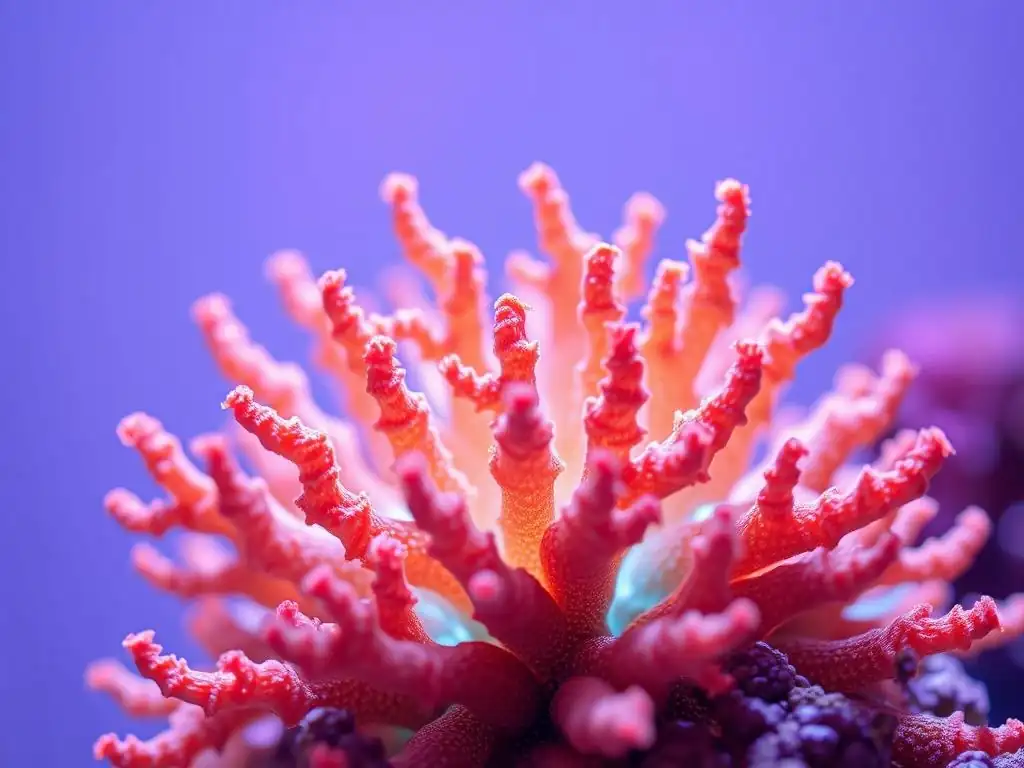
The vibrant and diverse colors of SPS corals are largely attributed to the presence of various fluorescent and non-fluorescent proteins within their tissues. These proteins interact with specific wavelengths of light, either absorbing and re-emitting light at a different wavelength (fluorescence) or simply reflecting certain colors.
Blue light, particularly in the 420-470 nm range, is crucial not only for photosynthesis but also for stimulating the production of many green, yellow, and red fluorescent proteins. For instance, royal blue (around 450nm) and violet/UV-A (380-420nm) wavelengths are particularly effective at "popping" the blues and purples in corals like Acropora millepora and Montipora undata.
While blue light is foundational, other wavelengths also contribute significantly. Green light (around 520nm) can enhance yellow and green pigments, and a touch of red (620-670nm) can bring out warmer tones, though too much red can encourage nuisance algae. The goal is to provide a balanced spectrum that not only supports the zooxanthellae but also triggers the coral host's genetic potential for producing these stunning chromoproteins. For example, a coral that appears brown under white light might reveal brilliant green or purple under strong blue or UV-A illumination, indicating the presence of fluorescent proteins.
Bulb/LED Combinations for Enhanced Coloration: Proven Strategies
Achieving peak coloration in SPS corals often involves strategic combinations of light sources. For SPS coral t5 lighting setups, a common and highly effective strategy is to heavily bias the spectrum towards blue. A popular recipe for a 6-bulb fixture might include four "Blue Plus" type bulbs (intense 460nm blue), one "Actinic Plus" (a blend of blue and UV-A), and one "Coral Plus" (a balanced white/blue/pink mix).
This combination provides a strong blue foundation for fluorescence and photosynthesis, with just enough white to make the tank viewable and bring out warmer colors. Many aquarists report exceptional coloration, particularly deep blues, purples, and greens, with such a configuration.
With LED lighting, the flexibility is even greater. Aquarists can program specific channels to emphasize certain colors. For vibrant blues and purples, maximizing royal blue and UV channels is key. Adding controlled amounts of green and red can enhance other pigments without promoting nuisance algae. For example, a successful LED program might run royal blue and blue channels at 80-100%, UV at 50-70%, white at 30-50%, and red/green at 5-10% during peak hours. Some aquarists also use supplemental LED strips with very specific wavelengths (e.g., pure violet) to target specific coral coloration goals.
Monitoring and Adjusting Lighting to Optimize Color
Optimizing coral coloration is an ongoing process that requires careful monitoring and adjustment. Corals communicate their health and light preferences through their appearance. If corals appear pale or bleached, it could indicate too much light, leading to zooxanthellae expulsion. Conversely, if they appear dark or brown, it might suggest insufficient light or an overabundance of zooxanthellae trying to compensate. Dull colors often point to a suboptimal spectrum.
When introducing new corals or making significant lighting changes, a slow acclimation process is crucial. For instance, if upgrading to a more powerful SPS coral t5 lighting system, start with shorter photoperiods or higher mounting heights and gradually increase intensity over several weeks. Observe the coral's polyp extension, tissue color, and overall vibrancy.
Small, incremental adjustments to the spectrum or intensity, followed by a few days of observation, allow the coral to adapt and reveal its true colors. Maintaining stable water parameters, especially alkalinity, calcium, and magnesium, is also vital, as these directly impact the coral's ability to produce its colorful proteins.
Lighting Maintenance: Ensuring Long-Term Performance and Stability
Bulb/Diode Replacement Schedule: Maintaining Optimal Light Output
Consistent light output is crucial for the long-term health and stability of an SPS reef aquarium. All light sources degrade over time, losing intensity (PAR) and shifting their spectrum. For SPS coral t5 lighting, bulbs typically need to be replaced every 9-12 months.
While a bulb might still illuminate beyond this period, its PAR output can drop by 20-30% or more, and its spectral quality can diminish significantly, impacting coral growth and color. Replacing all bulbs simultaneously is often recommended to maintain a consistent light environment. Many aquarists mark their calendar for annual T5 bulb changes, often coinciding with a major tank maintenance session.
Metal halide bulbs also require annual replacement, as their output degrades similarly. LED diodes, on the other hand, have a much longer lifespan, often rated for 50,000 hours or more. This means a high-quality LED fixture might not require diode replacement for 5-10 years, significantly reducing long-term maintenance costs. However, even LEDs can experience some degradation over time, and it's wise to monitor their output, especially after several years of continuous use. Checking manufacturer specifications for expected lifespan and PAR retention is a good practice.
Cleaning and Maintaining Fixtures: Preventing Degradation
Regular cleaning and maintenance of lighting fixtures are essential to ensure optimal performance and prevent premature degradation. Salt creep, dust, and evaporated water residues can accumulate on reflectors, lenses, and bulb surfaces, significantly reducing light transmission. For SPS coral t5 lighting fixtures, it's important to periodically wipe down the bulbs and reflectors with a clean, damp cloth (after unplugging the unit and allowing it to cool). Dust accumulation on the top of the fixture can also block cooling vents and lead to overheating, reducing bulb lifespan.
LED fixtures should have their lenses or diffusers wiped clean regularly to prevent salt and dust buildup. Ensuring that cooling fans (if present) are free of debris and operating correctly is vital for LED longevity. For metal halide fixtures, cleaning the bulb and reflector is also important. Always ensure the fixture is unplugged and cool before performing any cleaning or maintenance to prevent electrical shock or burns. A clean fixture can maintain up to 10-20% more light output than a neglected one, directly translating to better coral health.
Troubleshooting Common Lighting Issues
Common lighting issues can range from minor annoyances to critical failures. For T5 fixtures, common problems include flickering bulbs (often indicating a failing ballast or a bulb nearing the end of its life), bulbs not igniting (check connections, then ballast or bulb), or uneven light (due to dirty reflectors or aged bulbs). If a new T5 bulb doesn't light up, try it in a different slot or with a different ballast to diagnose.
LED issues can include individual diodes failing (requiring module replacement in some fixtures), flickering (often a power supply issue), or connectivity problems with controllers. If an LED channel stops responding, check the controller connection and then the power supply for that channel. Metal halide problems often involve bulbs failing to ignite (ballast or igniter issue), flickering, or dimming (bulb nearing end of life). Always consult the manufacturer's troubleshooting guide for specific fixture models. Promptly addressing lighting issues ensures that your SPS corals continue to receive the stable and optimal light they require for thriving.
SPS Coral Growth Under Different Lighting Technologies: Examples and Case Studies
Growth Rates Under Metal Halide, T5, and LED Lighting
All three primary lighting technologies—metal halide, T5, and LED—are capable of supporting robust SPS coral growth, provided that appropriate PAR levels and a suitable spectrum are maintained. Historically, metal halides were the gold standard for rapid Acropora growth due to their high intensity. Many hobbyists reported average growth rates of 1.5 to 2.5 cm per month for fast-growing Acropora species like A. millepora or A. tenuis under optimized 250W or 400W MH setups, particularly with 10,000K or 14,000K bulbs.
SPS coral t5 lighting systems have also consistently demonstrated excellent growth rates, often comparable to metal halides, but with the added benefit of more uniform growth across entire colonies due to their diffuse light spread. Aquarists using 6-8 bulb T5 fixtures over 24-inch deep tanks frequently observe Acropora growth of 1-2 cm per month, with Montipora species often growing even faster, sometimes reaching 2-3 cm per month under optimal conditions. The even PAR distribution from T5s ensures that all parts of a colony, even those slightly shadowed, receive sufficient light for calcification.
LED technology, particularly advanced full-spectrum fixtures, has also proven highly effective for SPS growth. Early LED systems sometimes struggled with uneven growth due to "hot spots," but modern fixtures with improved optics and diffusion can achieve growth rates on par with or even exceeding T5 and MH. Many reefers report similar growth rates of 1-2 cm per month for fast-growing Acropora under high-end LED systems, often with the added benefit of enhanced coloration due to precise spectrum control. The key across all technologies is to deliver the right PAR and spectrum without stressing the coral.
Case Study: Successful SPS Reef Tanks Utilizing Different Lighting Technologies
Consider a successful 120-gallon SPS-dominated reef tank (48"x24"x24") initially lit by a 6-bulb 48" SPS coral t5 lighting fixture (4x Blue Plus, 2x Coral Plus). The aquarist consistently maintained PAR levels between 300-400 across the top two-thirds of the tank. Over an 18-month period, Acropora valida frags grew from 1-inch nubs to 6-inch colonies, exhibiting vibrant blue and green coloration. Montipora capricornis encrusted a significant portion of the back wall, growing at an average rate of 2.5 cm per month in diameter. The uniform light spread from the T5s resulted in dense, bushy growth with minimal internal shading.
In another instance, a similar 120-gallon tank was lit by a 400W 20,000K metal halide with two supplemental 36" T5 actinic bulbs. This setup produced intense shimmer and rapid growth, with Acropora tenuis frags reaching 5-inch diameter colonies within 15 months, averaging 1.8 cm of linear growth per month. The high PAR directly under the MH allowed for very dense growth, though corals on the periphery required strategic placement to ensure adequate light.
Finally, a third 120-gallon tank utilized two high-end LED fixtures (e.g., Radion XR30s). After careful acclimation and programming (with peak PAR around 380-420), Acropora microclados showed excellent deep blue coloration and grew from 1-inch frags to 4-inch colonies in 14 months, averaging 1.2 cm per month. The precise control allowed the aquarist to fine-tune the color to enhance specific pigments. These examples illustrate that success is achievable with any of the main lighting types, provided the specific needs of SPS corals are met.
Comparing Growth Rates: Examining the Impact of Various Lighting Methods
While specific growth rates can vary wildly based on water chemistry, flow, feeding, and specific coral species, it's generally observed that when PAR and spectrum are optimized, the maximum growth potential of SPS corals is largely similar across metal halide, T5, and high-end LED systems. The differences often lie in the type of growth and coloration achieved.
Metal halides tend to produce very dense, robust colonies, particularly directly under the light, due to their intense, penetrating PAR. However, this can also lead to more shading issues within the colony. SPS coral t5 lighting, with its uniform spread, often results in more evenly grown, bushy colonies with less internal shading, making them excellent for maximizing tissue growth across the entire colony.
LEDs, with their highly customizable spectrum, can often unlock unique and vibrant coloration that might be harder to achieve with fixed-spectrum bulbs, while also supporting strong growth, especially with the latest generation of fixtures. Ultimately, the "best" lighting method for growth often comes down to the aquarist's preference for shimmer, fixture aesthetics, control, and long-term operating costs, as all can deliver impressive results if properly managed.
The Future of SPS Coral Aquarium Lighting
Innovations in Lighting Technology
The field of aquarium lighting is continually evolving, with significant innovations driven primarily by LED technology. We are seeing a trend towards more sophisticated control systems, often integrating with smart home platforms, allowing for incredibly precise programming of light cycles, weather simulations, and even spectral shifts throughout the day to mimic natural conditions.
Hybrid fixtures, combining the best aspects of LEDs and T5s, are also gaining popularity. These fixtures often feature a core LED array for programmable control and efficiency, surrounded by T5 bulbs to provide uniform spread and a broad, proven spectrum, offering a "best of both worlds" solution for SPS coral t5 lighting enthusiasts looking for an upgrade.
Advancements in LED diode technology are leading to more efficient, powerful, and spectrally refined LEDs, including new generations of UV and violet diodes that further enhance coral fluorescence and coloration. Miniaturization and improved optics are also making LED fixtures more aesthetically pleasing and better at distributing light evenly. While metal halide technology has largely plateaued, T5 technology continues to be refined with more efficient ballasts and a wider array of specialized bulbs, maintaining its relevance in the face of LED dominance.
The Role of Each Technology in the Modern Reef Aquarium
In the modern reef aquarium landscape, each lighting technology continues to play a distinct role. Metal halides, while less common for new setups, are still favored by a niche group of hobbyists who prioritize their intense shimmer and raw power for very deep tanks or those seeking a traditional look. Their ability to deliver massive PAR from a single point source remains a unique advantage.
SPS coral t5 lighting remains a steadfast and highly respected choice, particularly for aquarists who value uniform light spread, proven growth, and exceptional color rendition through customizable bulb combinations. Many experienced SPS keepers continue to rely on T5s, or T5/LED hybrids, citing their consistent and predictable results for dense, colorful SPS colonies. The "gold standard" argument for SPS coral t5 lighting is still very much alive among this group, especially concerning overall coral vibrancy and consistent growth across the entire display.
LEDs are undoubtedly the future, offering unparalleled control, energy efficiency, and longevity. They are the go-to choice for tech-savvy aquarists and those building new, large, or highly customized reef systems. As prices become more competitive and technology matures, LEDs will likely become the dominant choice for the vast majority of reef keepers, providing the ultimate flexibility for growth, color, and dynamic lighting effects.
Selecting the Right Lighting Option for Your SPS Tank
Selecting the right lighting option for an SPS tank today involves a careful consideration of budget, aesthetic preferences, desired level of control, and long-term maintenance commitment. If your priority is maximum control, energy efficiency, and minimal long-term bulb replacement, and you have a higher initial budget, high-end LEDs are likely the best choice. They offer the most flexibility for future adjustments and dynamic lighting.
If you prioritize proven, uniform growth and exceptional, natural coloration with a more moderate initial investment and are comfortable with annual bulb changes, a dedicated SPS coral t5 lighting system remains an outstanding option. Many experienced reefers still find T5s to be the most reliable and aesthetically pleasing for SPS. For those seeking a blend of both, a T5/LED hybrid fixture offers a compelling compromise, combining the best attributes of both worlds. Ultimately, the "best" lighting is the one that allows you to successfully grow and color your SPS corals while fitting within your personal preferences and budget.
Conclusion: Key Considerations for SPS Reef Aquarium Lighting
Key Takeaways: Choosing the Best Lighting for Your SPS Tank.
Choosing the ideal lighting for a thriving SPS reef aquarium boils down to a few critical considerations. Firstly, understanding the fundamental needs of SPS corals—specifically their high PAR requirements (typically 250-450 PAR) and their reliance on a balanced spectrum rich in blue wavelengths (420-470 nm) for both photosynthesis and color expression—is paramount. Without these foundational elements, no lighting technology, regardless of its sophistication, will yield optimal results.
Secondly, each lighting technology—metal halide, T5, and LED—offers distinct advantages and disadvantages. Metal halides provide intense, penetrating light with natural shimmer but come with high heat output and operating costs. SPS coral t5 lighting systems excel in uniform light spread and customizable spectrum for vibrant coloration and consistent growth, though they require annual bulb replacements. LEDs offer unparalleled control, energy efficiency, and longevity, but often involve a higher initial investment and can present challenges in light diffusion.
Finally, the "gold standard" for SPS coral t5 lighting is not a static concept but rather a dynamic one, influenced by continuous advancements in technology and individual aquarist preferences. While T5s have held a strong claim to this title due to their proven track record of producing stunning growth and color, modern high-end LEDs now offer comparable, if not superior, results with added benefits of control and efficiency.
The best lighting solution for your SPS tank will ultimately be the one that aligns with your budget, aesthetic goals, and willingness to manage the specific maintenance requirements of the chosen system, ensuring your corals receive the precise light they need to flourish and display their most spectacular hues.
Frequently Asked Questions
How effective is T5 lighting for SPS coral growth compared to more modern LED options?
While LEDs have advanced, T5 lighting remains highly effective for SPS coral growth. It provides a broad spectrum and even light distribution, crucial for many SPS species.
What are the key advantages of using T5 lighting for SPS corals, particularly in terms of color rendition?
T5s excel at color rendition, often producing more vibrant and natural colors in SPS corals compared to some LED setups. This is due to the full spectrum output.
What are the drawbacks of using T5 lighting for SPS coral aquariums?
T5s require more frequent bulb replacements compared to LEDs, and they also generate more heat, potentially impacting tank temperature and increasing energy costs.
What specific T5 bulb combinations are generally recommended for optimal SPS coral health and coloration?
Common recommendations include combining blue-actinic bulbs with daylight bulbs to mimic natural sunlight. Experimentation is key to finding the right spectral balance.
How should I properly maintain T5 lighting fixtures to ensure optimal performance and longevity for my SPS coral aquarium?
Regularly clean the reflectors and replace bulbs every 6-12 months to maintain optimal light output. Proper ventilation is also crucial to prevent overheating.
Final Reflection: The Enduring Glow of T5
The debate surrounding SPS coral lighting continues to evolve with each technological advancement, yet the enduring legacy of T5 lighting remains undeniable. While LEDs and other options offer compelling alternatives, the unique spectral output and proven track record of T5s in fostering vibrant color and robust growth in SPS corals solidify its place as a benchmark against which all other lighting systems are measured, even today.
The influence of T5 lighting on the reefing hobby is profound, shaping our understanding of coral physiology and influencing the aesthetic standards we hold dear. My own journey in reef keeping began with T5s, and the vibrant hues they unlocked in my SPS corals instilled a deep appreciation for the delicate balance of light and life. The best and most beautiful things in the world cannot be seen or even touched - they must be felt with the heart.
- Helen Keller, a sentiment that resonates deeply when witnessing the breathtaking beauty of a thriving SPS reef illuminated by T5s.
As we navigate the ever-changing landscape of reef aquarium technology, let us not forget the lessons learned from the golden age of T5 lighting. Take a moment to reflect on the principles of spectral balance and intensity that made T5s so successful, and consider how these principles can inform your own lighting choices, regardless of the technology you ultimately embrace. The pursuit of a healthy and vibrant reef is a journey, and the enduring glow of T5s serves as a guiding light, illuminating the path towards success.
Ignite Your SPS Reef: The Next Step is Yours!
Thank you for exploring the world of T5 lighting for SPS corals with us. We hope this article has provided valuable insights into whether T5 technology still holds its own as the gold standard. Now, let's put that knowledge into action!
- Evaluate your current lighting: Assess whether upgrading to, or supplementing with, T5s is the key to unlocking even more vibrant colors and growth in your SPS corals.
- Share your T5 journey: Post photos and discuss your current setup on our forum, showing how T5 lighting has helped your SPS corals thrive.
- Research a lesser-known coral species: Expand your knowledge by researching a less common SPS coral and its specific lighting requirements, broadening your reefing horizons.
What unexpected benefits have you observed by using T5 lighting that others should consider?