
Lighting Requirements for Healthy Leather Corals: A Deep Dive

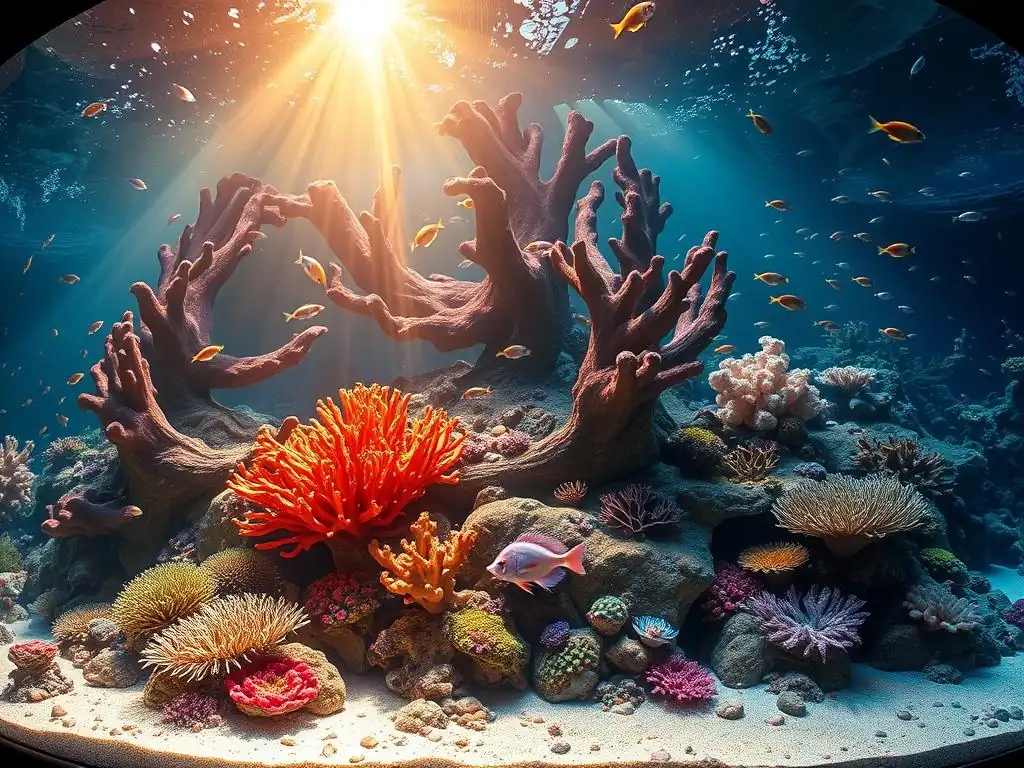
Welcome to Aquarium Mastery!
Ever wondered if your leather coral is truly thriving, or just surviving, under its current lighting? In this deep dive, we're unlocking the secrets to optimal illumination in our Leather Coral Lighting Guide. Discover the nuances of spectrum, intensity, and photoperiods to ensure your soft corals flourish. Ready to illuminate the path to a vibrant reef tank? Let's begin!
- Understanding Leather Coral Lighting Needs for Optimal Growth
- The Spectrum of Light and Leather Coral Photosynthesis
- Different Types of Aquarium Lighting for Leather Corals
- Determining the Right Light Intensity for Your Leather Corals
- Leather Coral Placement and Lighting
- Common Lighting Problems and Solutions for Leather Corals
- Maintaining Optimal Lighting Conditions for Long-Term Leather Coral Health
- Leather Coral Lighting Guide: A Summary of Best Practices
-
Frequently Asked Questions
- What type of lighting is generally recommended for leather corals?
- How can I tell if my leather coral is getting too much light?
- What happens if my leather coral doesn't get enough light?
- How important is the spectrum of light for leather corals?
- How often should I replace my aquarium lights to maintain optimal conditions for leather corals?
- Final Reflection: Illuminating the Path to Coral Health
- Ignite Your Reef: Cultivate Thriving Leather Corals Now!
Understanding Leather Coral Lighting Needs for Optimal Growth
Why Proper Lighting is Crucial for Leather Coral Health
Proper lighting is not merely an aesthetic choice for a reef aquarium; it is the fundamental energy source for leather corals. These fascinating soft corals, like many other corals, harbor symbiotic algae called zooxanthellae within their tissues. These microscopic algae perform photosynthesis, converting light energy into sugars and oxygen, which the coral then utilizes for up to 90% of its metabolic needs. Without adequate and appropriate lighting, the zooxanthellae cannot produce enough energy, leading to coral stress, bleaching, stunted growth, and ultimately, decline.
Beyond just survival, optimal lighting significantly influences a leather coral's vibrancy and form. The right spectrum and intensity encourage healthy zooxanthellae populations, which in turn contribute to the coral's unique coloration and robust polyp extension. A well-lit leather coral will exhibit strong, consistent growth, often shedding its waxy outer layer regularly, a natural process indicating good health and aiding in the removal of accumulated waste and algae.
Introduction to Leather Corals: A Quick Overview
Leather corals, belonging primarily to genera such as Sarcophyton, Sinularia, and Lobophytum, are a popular choice among aquarists for their distinctive appearance and relative hardiness compared to Small Polyp Stony (SPS) or Large Polyp Stony (LPS) corals. They are characterized by their soft, leathery texture and often have a tree-like, mushroom, or encrusting growth form. Their popularity stems not only from their unique aesthetics but also from their adaptability, making them suitable for both beginner and experienced reef keepers.
Despite their reputation for being robust, successful long-term husbandry of leather corals hinges on understanding their specific environmental requirements, particularly their lighting needs. While they are generally considered moderate-light corals, providing the correct "leather coral lighting guide" ensures they can thrive, showcasing their full potential for growth and vibrant coloration within the captive reef environment. Their photosynthetic nature means that light is the single most critical factor for their energy acquisition and overall well-being.
The Spectrum of Light and Leather Coral Photosynthesis
Understanding PAR (Photosynthetically Active Radiation) for Leather Corals
PAR, or Photosynthetically Active Radiation, refers to the specific range of light wavelengths (400-700 nanometers) that photosynthetic organisms, including the zooxanthellae within leather corals, can utilize for photosynthesis. Unlike lumens or watts, which measure light intensity perceived by the human eye or energy consumption, PAR directly quantifies the light available for coral growth. For most leather corals, an ideal PAR range typically falls between 50 and 150 µmol·m⁻²·s⁻¹ (micromoles per square meter per second).
Measuring PAR with a dedicated PAR meter is the most accurate way to assess the light intensity reaching your leather corals at various depths and locations within the aquarium. This objective data removes guesswork, allowing aquarists to precisely tailor their lighting setup.
For instance, a Sarcophyton toadstool coral might thrive at 80-120 PAR in the mid-section of a tank, while a Sinularia finger leather could comfortably sit slightly higher at 100-150 PAR. Consistent PAR values across the coral's surface prevent localized stress and promote uniform growth, making a PAR meter an invaluable tool for any serious leather coral lighting guide.
The Role of Light Spectrum in Leather Coral Coloration
The spectrum of light, referring to the specific wavelengths present in the light source, plays a crucial role not only in photosynthesis but also in enhancing the natural coloration and fluorescence of leather corals. While a full spectrum of light is beneficial, certain wavelengths are more critical. Blue light, specifically in the 450-480 nm range, is highly absorbed by zooxanthellae and is essential for their photosynthetic efficiency. This blue light also excites fluorescent proteins within the coral's tissue, leading to the vibrant greens, yellows, and even purples that many leather corals display under actinic (blue) lighting.
Beyond blue, a balanced spectrum that includes white light (encompassing red, green, and other blue wavelengths) is vital for overall coral health and for rendering the coral's true colors visible to the human eye. Red and green wavelengths, while less critical for direct photosynthesis than blue light, contribute to the overall health of the zooxanthellae and can influence the production of accessory pigments in some coral species. Achieving the right spectral balance ensures that the coral receives all necessary wavelengths for robust health and allows its natural beauty to be fully appreciated in the aquarium.
Best Light Spectrum for Leather Coral Growth and Vibrant Colors
For optimal growth and vibrant coloration in leather corals, a balanced light spectrum that mimics natural sunlight, with an emphasis on blue wavelengths, is generally recommended. A common and effective approach in a "leather coral lighting guide" involves a combination of white light (typically in the 6,500K to 10,000K range) and blue or actinic light. Many successful setups utilize a blue-to-white ratio of approximately 1:1 or 2:1, meaning for every unit of white light, there are one or two units of blue light.
For example, a fixture with a significant proportion of 450-470 nm blue LEDs combined with 6,500K or 10,000K white LEDs provides an excellent spectral profile. Some advanced LED fixtures also incorporate small amounts of violet (400-420 nm), cyan (490-500 nm), and red (620-670 nm) wavelengths, which can further enhance color rendition and contribute to a more complete spectrum for long-term coral health. This comprehensive spectrum supports the full range of photosynthetic pigments and fluorescent proteins, promoting strong growth and maximizing the aesthetic appeal of your leather corals.
Different Types of Aquarium Lighting for Leather Corals
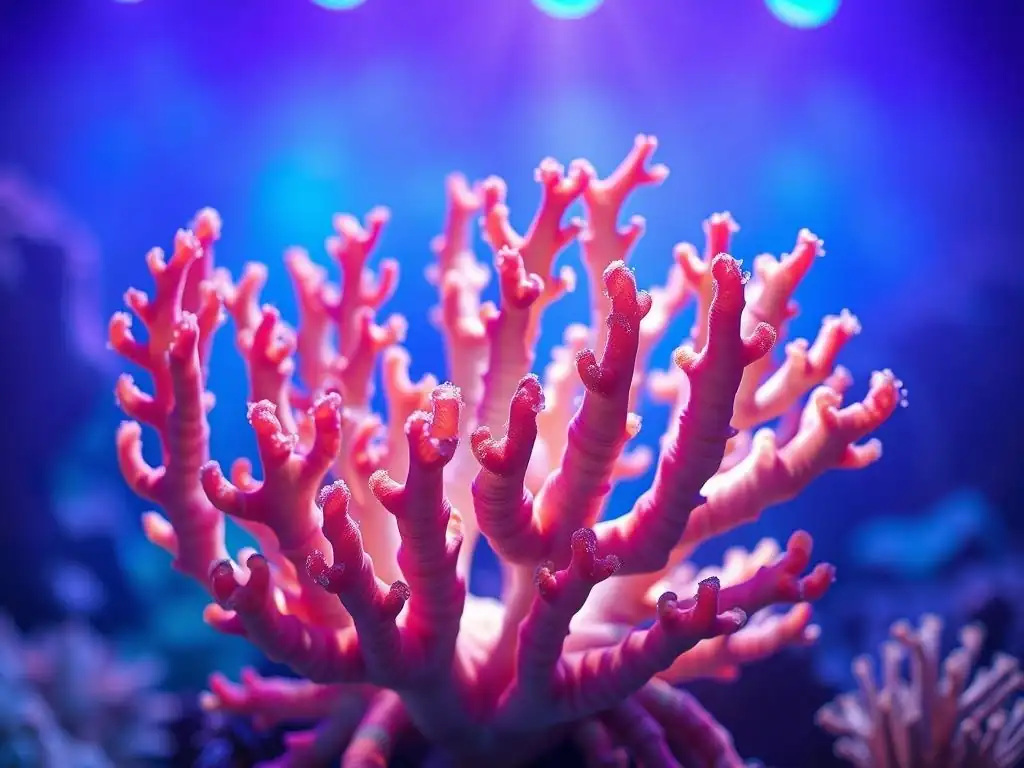
LED Lighting for Leather Corals: Pros and Cons
LED (Light Emitting Diode) lighting has become the dominant technology in reef aquariums due to its numerous advantages for leather corals. The primary benefits include exceptional energy efficiency, significantly lower heat output compared to older technologies, and a remarkably long lifespan, often exceeding 50,000 hours, which translates to years of maintenance-free operation. Modern LED fixtures offer unparalleled control over spectrum and intensity, allowing aquarists to precisely tune the light to their leather coral lighting guide requirements, including dimming capabilities and programmable sunrise/sunset cycles.
However, LED lighting also has some drawbacks. The initial cost of a high-quality LED fixture can be substantially higher than other lighting types, sometimes ranging from $300 to over $1000 for a single unit. While LEDs offer great intensity, some fixtures can create "hot spots" of concentrated light if not properly diffused, potentially stressing corals directly beneath them. Additionally, selecting the right LED fixture requires careful research, as not all units provide the necessary spectrum and PAR levels for healthy coral growth, with cheaper models sometimes lacking crucial wavelengths.
T5 Lighting for Leather Corals: A Reliable Option?
T5 (Fluorescent) lighting, specifically T5 High Output (T5HO) bulbs, remains a highly reliable and popular choice for illuminating leather corals. One of the main advantages of T5 lighting is its excellent and even light spread across the entire aquarium, minimizing "hot spots" and shadows that can occur with point-source lighting like some LEDs or metal halides. T5 fixtures are generally more affordable than high-end LEDs, and the ability to mix and match different spectrum bulbs (e.g., blue, white, purple) provides good flexibility in tailoring the light to specific needs.
Despite their reliability, T5 lighting has some notable disadvantages. T5 bulbs need to be replaced regularly, typically every 9 to 12 months, as their spectrum and intensity degrade over time, adding to ongoing operational costs. They also produce more heat than LEDs, which can necessitate the use of chillers in warmer climates, increasing energy consumption. While they offer good spectrum control through bulb choices, they lack the fine-tuned dimming and programming capabilities of advanced LED systems, making them less adaptable for dynamic lighting schedules.
Metal Halide Lighting for Leather Corals: Is it Still Relevant?
Metal Halide (MH) lighting was once the gold standard for reef aquariums, particularly for deep tanks or those housing demanding SPS corals, due to its exceptional intensity and penetration. For leather corals, metal halides can provide ample light, often creating a natural "shimmer" effect that many aquarists appreciate. Their broad, powerful spectrum can support robust photosynthetic activity, making them a viable option for a comprehensive leather coral lighting guide, especially in larger setups where light needs to reach significant depths.
However, the relevance of metal halide lighting has significantly diminished with the advent and advancement of LED technology. MH fixtures generate a substantial amount of heat, often requiring powerful cooling fans or chillers to maintain stable water temperatures, which increases energy consumption. The bulbs themselves have a relatively short lifespan, typically needing replacement every 6 to 9 months, and they are expensive. Furthermore, MH fixtures are bulky and consume considerable electricity, making them less appealing for the average aquarist seeking an efficient and compact lighting solution compared to modern LEDs.
Determining the Right Light Intensity for Your Leather Corals
Assessing Your Leather Coral Species' Specific Lighting Needs
While leather corals are generally categorized as moderate-light corals, there can be variations in specific lighting needs among different species within the Sarcophyton, Sinularia, and Lobophytum genera. For instance, a large Sarcophyton toadstool coral might thrive in a PAR range of 80-150 µmol·m⁻²·s⁻¹, often placed in the mid-to-lower section of a tank with high-intensity lighting. In contrast, a Sinularia finger leather or a Lobophytum may prefer slightly lower PAR, perhaps in the 70-120 µmol·m⁻²·s⁻¹ range, and can be placed in the mid-to-upper sections of a tank with more diffused light.
Observing your specific leather coral's behavior is paramount in fine-tuning its lighting. Healthy leather corals typically exhibit good polyp extension during the photoperiod, maintain consistent coloration, and grow steadily. If a coral appears pale, stretched, or shows poor polyp extension, it might be receiving insufficient light. Conversely, if it bleaches, shrinks, or excessively sloughs tissue, it could be getting too much light. Understanding these subtle cues, combined with general guidelines, is crucial for developing an effective "leather coral lighting guide" tailored to your unique specimens.
Using a PAR Meter to Measure Light Intensity in Your Aquarium
Using a PAR meter is the most accurate and objective method for measuring the Photosynthetically Active Radiation (PAR) levels at various locations within your aquarium. Instead of relying on subjective visual assessment, a PAR meter provides precise data in micromoles per square meter per second (µmol·m⁻²·s⁻¹), which directly correlates to the light energy available for your leather corals. This tool allows you to map out the light intensity at different depths and positions, ensuring that each coral receives its optimal amount of light.
To use a PAR meter effectively, submerge its sensor at various points where your leather corals are or will be placed. Take readings at different depths, from the sandbed to the water surface, and also at different horizontal positions across the tank. For example, you might find a reading of 180 PAR directly under your LED fixture 6 inches from the surface, but only 70 PAR at 18 inches deep in a corner.
This data empowers you to make informed decisions about coral placement or to adjust your light fixture's intensity or height. While a PAR meter can be an investment (often costing $200-$600), many local fish stores offer rental services, making it accessible for a one-time setup assessment.
Adjusting Light Intensity Based on Leather Coral Behavior
Adjusting light intensity based on the visible behavior of your leather corals is a critical aspect of successful husbandry. If a leather coral is receiving too much light, it may exhibit signs of stress such as bleaching (losing color due to the expulsion of zooxanthellae), excessive shrinking or retraction, or frequent and prolonged periods of sloughing its waxy outer layer.
In severe cases, tissue necrosis (white, dead patches) can appear. To address this, gradually dim your lights, raise the light fixture, or move the coral to a more shaded area in the tank, making small adjustments (e.g., 5-10% intensity change) over several days to a week.
Conversely, signs of insufficient lighting for leather corals include pale or dull coloration, poor polyp extension even when water parameters are stable, and a noticeable lack of growth over several weeks or months. The coral might also appear "stretched" as if reaching for light. In these instances, slowly increase your light intensity, lower the light fixture, or move the coral to a brighter spot in the aquarium. Always make changes incrementally, observing the coral's response over a few days before making further adjustments. Patience is key, as corals can take time to adapt to new light levels.
Leather Coral Placement and Lighting
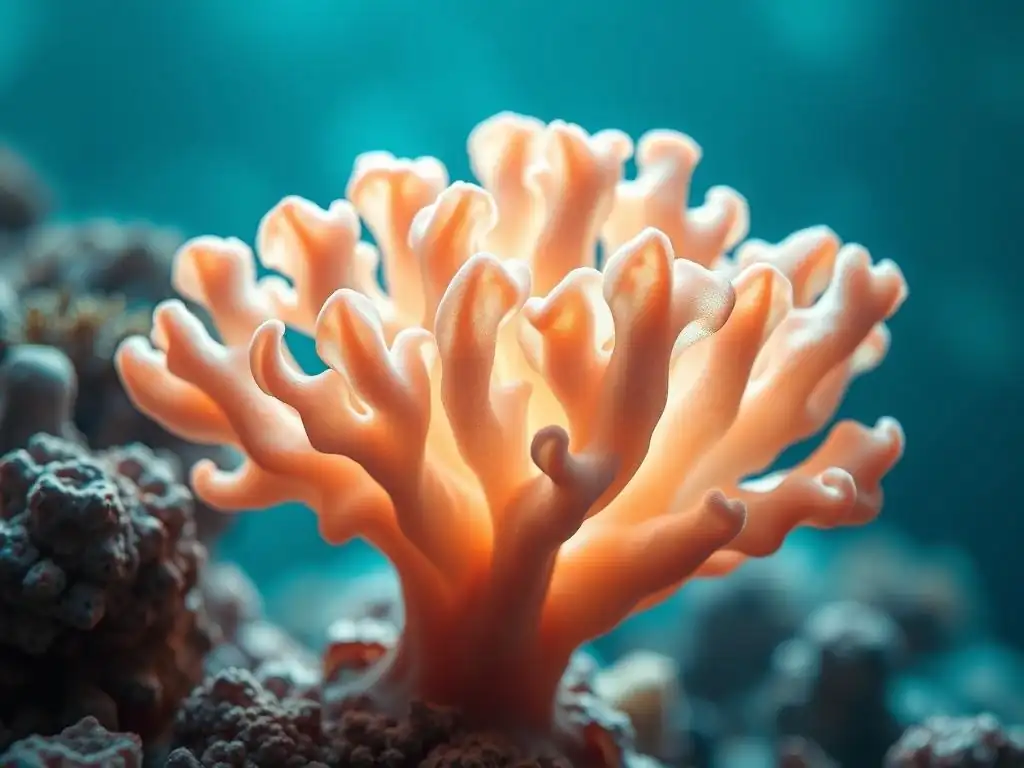
Optimal Placement Strategies for Leather Corals Under Different Lighting Systems
Optimal placement of leather corals within your aquarium is crucial to ensure they receive the appropriate light intensity, especially under varying lighting systems. For high-intensity LED or Metal Halide setups, leather corals generally thrive in the mid-to-lower sections of the tank, where PAR levels are typically in the 80-150 µmol·m⁻²·s⁻¹ range. For example, a large Sarcophyton toadstool could be placed on an aquascape ledge about 15-20 inches below the water surface. This allows them to benefit from the light without being overwhelmed by direct, intense exposure.
Under T5 fluorescent lighting, which provides a more even and diffused light spread, leather corals can often be placed higher in the tank, from the mid-to-upper sections, to ensure they receive adequate PAR. A Sinularia finger leather might be happy 8-12 inches below the surface under a 4-bulb T5 fixture. Always consider the specific PAR requirements of your leather coral species and the penetration capabilities of your chosen lighting system. Avoid placing them directly under intense hotspots, and ensure they have ample space for growth without shading other corals or being shaded themselves.
Avoiding Light Shock in Newly Introduced Leather Corals
When introducing new leather corals to your aquarium, preventing light shock is paramount to their successful acclimation. Light shock occurs when a coral, accustomed to a lower light environment (e.g., at the retailer or frag tank), is suddenly exposed to significantly higher PAR levels in your display tank. This can lead to rapid bleaching, tissue recession, and even death. The best approach is a gradual acclimation process.
Start by placing newly acquired leather corals in a lower light area of your tank, perhaps on the sandbed or in a shaded spot, where PAR levels are considerably lower than their ultimate desired placement. Over a period of 2 to 4 weeks, slowly move the coral incrementally higher or to brighter locations, or gradually increase your light fixture's intensity if it has dimming capabilities (e.g., increasing by 5-10% PAR each week).
Observing the coral for signs of stress, such as excessive retraction, bleaching, or sloughing, during this period will guide your acclimation speed, ensuring a smooth transition for your new leather coral.
Adapting Leather Corals to Higher or Lower Light Levels
Adapting existing leather corals to significant changes in light levels, whether increasing or decreasing intensity, requires a slow and patient approach to prevent stress. If you are upgrading your lighting system to a more powerful one, or moving a leather coral to a brighter spot, the process should mirror that of acclimating new corals. Begin by reducing the light intensity to a level comparable to or slightly higher than what the coral was previously accustomed to, then gradually increase it over several weeks. A common guideline is to increase PAR by no more than 10-15% per week.
Conversely, if a leather coral is showing signs of too much light and needs to be moved to a lower light area or if your lighting intensity needs to be reduced, the same principle of gradual change applies. Slowly dim the lights or move the coral to a more shaded spot over a similar timeframe.
Constant observation of the coral's polyp extension, color, and overall appearance is critical. Any signs of stress, such as persistent retraction or bleaching, indicate that the change is too rapid, and the adjustment process should be slowed down until the coral shows signs of recovery and adaptation.
Common Lighting Problems and Solutions for Leather Corals
Identifying Signs of Insufficient Lighting in Leather Corals
Insufficient lighting is a common issue that can plague leather corals, hindering their growth and diminishing their vibrant appearance. One of the most noticeable signs is a pale or dull coloration, where the coral loses its characteristic hues and appears washed out. This occurs because the zooxanthellae, which provide the coral's color and energy, are not photosynthesizing effectively due to lack of light. Another key indicator is poor polyp extension; even when water parameters are ideal, the coral's polyps may remain retracted or only partially extended, indicating it's not receiving enough energy to fully expand.
Furthermore, leather corals suffering from inadequate light may exhibit slow or no growth over several months, failing to expand in size or develop new folds. In some cases, they might appear to "stretch" or elongate their stems, seemingly reaching upwards in an attempt to get closer to the light source. If these symptoms are observed, it's crucial to consult a leather coral lighting guide, measure PAR levels, and consider increasing light intensity or relocating the coral to a brighter spot in the aquarium, always making changes gradually to avoid shocking the coral.
Recognizing and Addressing Excessive Lighting Issues in Leather Corals
Excessive lighting is equally, if not more, detrimental to leather corals than insufficient light and can lead to severe stress or even death. The most alarming sign of too much light is bleaching, where the coral turns stark white or very light brown.
This happens because the zooxanthellae, overwhelmed by the intense light, begin to produce harmful reactive oxygen species and are expelled by the coral, leading to a loss of color and energy source. Another common symptom is excessive sloughing of the waxy outer layer; while normal for leather corals, frequent or prolonged shedding can indicate stress from high light.
Other signs include persistent retraction of polyps, even during the optimal photoperiod, or the appearance of white, necrotic patches on the coral's tissue. If these symptoms are observed, immediate action is required. The primary solution is to reduce the light intensity.
This can be achieved by dimming your lights (if using LEDs), raising the light fixture higher above the water, or moving the affected leather coral to a more shaded area within the tank, such as under an overhang or lower on the sandbed. Implement these changes gradually to allow the coral time to recover and adapt, typically over several days to a week.
Beyond direct issues of too much or too little light, several other lighting-related problems can affect leather corals. One frequent issue is the proliferation of nuisance algae (e.g., green hair algae, diatoms) on the coral's surface. While high nutrients are often the primary cause, excessive light intensity or an extended photoperiod can exacerbate algae growth, outcompeting the coral. The solution involves verifying appropriate PAR levels, reducing the photoperiod to 8-10 hours, and diligently controlling nutrient levels (e.g., nitrates below 10 ppm, phosphates below 0.05 ppm).
Another common problem is a general lack of vigor or "melting" of a leather coral, even when light seems appropriate. After ruling out water quality issues (e.g., unstable alkalinity or low calcium), consider the light spectrum. An unbalanced spectrum, lacking crucial blue wavelengths or having too much red light, can hinder proper photosynthesis.
Adjusting the light spectrum by adding more blue bulbs (for T5s) or increasing blue channel intensity (for LEDs) can often rectify this. Remember to make any adjustments incrementally, perhaps a 5% change in intensity or a slight shift in spectrum every few days, observing the coral's response closely.
Maintaining Optimal Lighting Conditions for Long-Term Leather Coral Health
Regular Maintenance of Aquarium Lighting Fixtures
Regular maintenance of your aquarium lighting fixtures is crucial for ensuring consistent and optimal light delivery to your leather corals. Over time, salt creep, dust, and grime can accumulate on light lenses, reflectors, and bulbs, significantly reducing light output. For example, a dirty lens can block 10-20% of light, directly impacting the PAR reaching your corals. It is recommended to wipe down light lenses and reflectors weekly with a clean, damp cloth. For T5 or Metal Halide fixtures, ensure reflectors are clean and free of corrosion to maximize light reflection.
Furthermore, for T5 and Metal Halide systems, adhering to a strict bulb replacement schedule is vital. T5 bulbs typically need to be replaced every 9-12 months, and Metal Halide bulbs every 6-9 months, even if they still appear to be working. This is because their spectrum and intensity degrade over time, often becoming less efficient in the critical wavelengths needed for photosynthesis. For all fixture types, regularly inspect wiring for fraying, ensure cooling fans are clean and operational, and check for any signs of water damage or corrosion, which can compromise safety and performance.
Monitoring Water Parameters and Their Impact on Lighting
While lighting is a primary factor for leather coral health, stable and optimal water parameters are equally critical and directly influence how effectively corals can utilize the light they receive. Key parameters to monitor include alkalinity (7-9 dKH), calcium (400-450 ppm), and magnesium (1300-1400 ppm). Although leather corals do not build a stony skeleton like LPS or SPS corals, maintaining these parameters is essential for their overall metabolic functions, enabling them to efficiently process the energy derived from light.
Moreover, nutrient levels, specifically nitrates (ideally below 10 ppm) and phosphates (ideally below 0.05 ppm), and water clarity significantly impact light penetration. High nutrient levels can lead to excessive nuisance algae growth on tank surfaces and even directly on the coral, blocking light and competing for resources. Regular water changes, effective mechanical filtration, and the use of activated carbon (changed monthly) help maintain crystal-clear water, maximizing light penetration and ensuring your leather corals receive the full benefit of your lighting system, as outlined in any comprehensive "leather coral lighting guide."
Ensuring Consistent Lighting for Leather Corals
Consistency in lighting is paramount for the long-term health and stability of leather corals. Maintaining a consistent photoperiod, typically ranging from 8 to 12 hours per day, is essential. Erratic on/off times can stress corals, disrupting their natural circadian rhythms and the photosynthetic processes of their zooxanthellae. Using reliable digital timers or an aquarium controller is highly recommended to ensure precise and consistent lighting schedules.
Modern LED fixtures often offer advanced programming capabilities, including sunrise and sunset ramp-up/ramp-down features. Utilizing these features, where light intensity gradually increases in the morning and decreases in the evening, mimics natural light cycles and significantly reduces stress on leather corals. This gentle transition prevents the sudden shock of lights turning on or off abruptly, which can cause polyps to retract. Ensuring this consistent and natural light cycle is a cornerstone of any effective "leather coral lighting guide" for robust and thriving corals.
Leather Coral Lighting Guide: A Summary of Best Practices
Choosing the Right Lighting System for Your Leather Corals
Selecting the appropriate lighting system is the cornerstone of a successful leather coral display. When making your choice, consider your tank's size and depth, your budget, and your desired level of control. For most aquarists, modern LED fixtures offer the best balance of energy efficiency, long lifespan, and unparalleled control over spectrum and intensity, allowing precise tuning to meet your leather coral lighting guide needs. Proven T5 fluorescent systems remain a reliable and more affordable option, providing excellent diffused light, though they require regular bulb replacement.
Regardless of the system chosen, the goal is to provide Photosynthetically Active Radiation (PAR) levels typically ranging from 50 to 150 µmol·m⁻²·s⁻¹ for most leather coral species. Ensure the chosen fixture can deliver a balanced spectrum, emphasizing crucial blue wavelengths (450-480 nm) combined with full-spectrum white light, to promote both robust growth and vibrant coloration. Researching specific fixture capabilities and reading reviews from other leather coral keepers can provide valuable insights.
Implementing a Proper Acclimation Process
A proper acclimation process is vital for the successful introduction of new leather corals or when making significant changes to your aquarium lighting. The principle is "start low, go slow." Begin by placing newly acquired leather corals in a lower light area of your tank, such as on the sandbed or in a shaded spot, where PAR levels are significantly reduced. This minimizes the risk of light shock, which can cause immediate and severe stress.
Over the next two to four weeks, gradually move the coral to its desired, brighter location, or incrementally increase the intensity of your light fixture. A common practice is to increase the light intensity by no more than 10-15% per week, closely observing the coral for any signs of stress such as bleaching, excessive retraction, or tissue loss. Patience during this period is key, allowing the leather coral ample time to adapt its zooxanthellae population to the new light environment, ensuring its long-term health and vitality.
Regularly Monitoring and Adjusting Lighting Parameters
Maintaining optimal lighting conditions for leather corals is an ongoing process that requires regular monitoring and occasional adjustments. Daily observation of your leather coral's health and behavior is paramount: look for consistent polyp extension, vibrant coloration, and steady growth. Any deviation from these norms, such as prolonged retraction, paleness, or excessive sloughing, should prompt an investigation into potential lighting issues.
If available, using a PAR meter periodically (e.g., every 3-6 months) can provide objective data on your light output and help identify any degradation or inconsistencies. Based on your observations and PAR readings, make small, incremental adjustments to your light intensity, duration, or the coral's placement within the tank. Avoid drastic changes, as sudden shifts can shock the coral. Consistent photoperiods, regular cleaning of light fixtures, and maintaining stable water parameters are also integral parts of this continuous monitoring, ensuring your leather corals thrive under the best possible conditions.
Frequently Asked Questions
What type of lighting is generally recommended for leather corals?
Leather corals thrive under moderate to high intensity lighting. This often translates to LEDs, metal halides, or T5 fluorescent lamps depending on the depth and size of your tank.
How can I tell if my leather coral is getting too much light?
Signs of overexposure include bleaching or paling of the coral's color, as well as excessive slime production. You might also observe contracted polyps refusing to extend.
What happens if my leather coral doesn't get enough light?
Insufficient light can lead to browning or darkening of the coral, lack of growth, and even tissue recession. The coral might also struggle to maintain its vibrant color.
How important is the spectrum of light for leather corals?
The blue spectrum is particularly crucial for leather corals, as it aids in photosynthesis by their zooxanthellae. A full spectrum light that includes blue is highly beneficial for their health and coloration.
How often should I replace my aquarium lights to maintain optimal conditions for leather corals?
The lifespan of aquarium lights varies, but you should generally replace your bulbs or LEDs every 6-12 months for optimal performance. This ensures the light spectrum and intensity remain sufficient for healthy coral growth.
Final Reflection: Illuminating the Path to Coral Health
The intricacies of leather coral care, as explored in this guide, are not merely academic exercises; they represent a crucial understanding of the delicate balance within our marine ecosystems. The health of these corals, and indeed the entire reef environment, is inextricably linked to our awareness and responsible practices. By mastering the nuances of leather coral lighting, we actively contribute to the preservation of these vital underwater landscapes.
This journey into the photosynthetic needs of leather corals has underscored the profound impact of informed stewardship. Witnessing the vibrant colors and thriving ecosystems that result from proper lighting is a testament to the power of knowledge and dedication. In the end, we will conserve only what we love; we will love only what we understand; and we will understand only what we are taught.
- Baba Dioum. This quote encapsulates the essence of our exploration: understanding the specific needs of these corals allows us to cultivate a deeper appreciation and, ultimately, a stronger commitment to their well-being.
Now, armed with this knowledge of optimal leather coral lighting, I invite you to reflect on your own role in this intricate web of life. Consider how you can apply these principles, whether in your own aquarium or by advocating for responsible reef management practices. Let the light of understanding guide your actions, illuminating a brighter future for these magnificent creatures and the oceans they call home.
Ignite Your Reef: Cultivate Thriving Leather Corals Now!
Thanks for exploring the fascinating world of leather coral lighting with us! We hope this article has given you the insights you need to nurture these beautiful corals. Ready to put your newfound knowledge into action?
Here are some ways to enhance your leather coral's environment:
- Immediately assess your current lighting setup. Are your leather corals showing signs of inadequate or excessive light? Adjust accordingly!
- Share your leather coral success stories or ask questions in our Aquarium Mastery community forum. Help others learn and grow!
- Consider documenting your coral's growth with time-lapse photography. Could sharing its progress online inspire others?
What specific lighting adjustment will you make this week to optimize the health of your leather corals?