
Montipora Growth Rates Demystified: What to Expect and How to Maximize Expansion

Welcome to Aquarium Mastery!
Ever wondered about the secrets behind vibrant and rapid Montipora coral growth rates? You've come to the right place! Dive in to uncover the factors influencing their expansion and discover expert tips to maximize the beauty of these stunning SPS corals in your reef tank. Let's unlock the potential of your Montipora and transform your aquarium into a thriving underwater paradise!
- Understanding Montipora Coral Growth: An Introduction for Reef Aquarists
- Factors Influencing Montipora Coral Growth Rates in Reef Tanks
- Expected Montipora Coral Growth Rates: Species and Variations
- Maximizing Montipora Coral Growth: Practical Tips and Techniques
- Troubleshooting Slow or Stalled Montipora Growth
- Montipora Coral Fragging and Growth: Propagation Techniques
- Case Studies: Examples of Successful Montipora Growth in Reef Aquariums
- Advanced Techniques for Accelerating Montipora Coral Growth
- Conclusion: Achieving Optimal Montipora Coral Growth in Your Reef Tank
-
Frequently Asked Questions
- How quickly can I expect a Montipora coral to grow in my aquarium?
- What are the most important factors influencing Montipora coral growth rates?
- What type of lighting is best for maximizing Montipora coral growth?
- How often should I test my water parameters to ensure healthy Montipora growth?
- What are some common signs that my Montipora coral is not growing properly?
- Final Reflection: Cultivating Coral Futures
- Unleash Your Montipora's Full Potential!
Understanding Montipora Coral Growth: An Introduction for Reef Aquarists
Montipora corals are a highly diverse genus of small polyp stony (SPS) corals, beloved by reef aquarists for their vibrant colors, varied growth forms, and generally robust nature. They are often considered a gateway SPS coral due to their slightly more forgiving care requirements compared to the notoriously demanding Acropora species. Understanding the factors that influence Montipora coral growth rates is paramount for any aquarist aiming to cultivate a thriving, expansive colony within their reef tank.
The growth rate of Montipora corals, like all stony corals, is a complex interplay of environmental factors, genetics, and the overall health of the reef system. From encrusting plates and swirling caps to delicate branching structures, each Montipora species exhibits a unique aesthetic, but their underlying biological processes for calcification and tissue accretion are similar. By optimizing the conditions within the aquarium, hobbyists can significantly enhance their Montipora coral growth rates, leading to more rapid development and a visually stunning display.
Factors Influencing Montipora Coral Growth Rates in Reef Tanks
Lighting's Role in Montipora Expansion
Lighting is arguably the most critical environmental factor dictating Montipora coral growth rates. As photosynthetic organisms, Montipora corals rely heavily on light energy, specifically the Photosynthetically Active Radiation (PAR) spectrum, to fuel their symbiotic zooxanthellae. These algae convert light into sugars, which are then utilized by the coral for metabolic processes, including calcification and tissue growth. Optimal PAR levels for Montipora typically range from 200 to 400 µmol/m²/s, with some species tolerating higher intensities if properly acclimated.
Insufficient or excessive lighting can both hinder Montipora expansion. Too little light will starve the zooxanthellae, leading to pale coloration, slow growth, and eventual starvation. Conversely, too much light can cause photoinhibition or bleaching, where the coral expels its zooxanthellae, resulting in a dramatic reduction in Montipora coral growth rates and potential mortality. For instance, a Montipora digitata colony receiving 250 PAR might show a growth rate of 1.0 cm per month, while the same species under only 120 PAR might only grow 0.3 cm per month, demonstrating the direct correlation between adequate light and accelerated expansion.
The Impact of Water Chemistry on Montipora Growth
Stable and optimal water chemistry parameters are foundational for robust Montipora coral growth rates. The primary building blocks for their calcium carbonate skeleton are calcium, alkalinity (carbonate hardness), and magnesium. Ideal ranges for these parameters are typically: Calcium 400-450 ppm, Alkalinity 7-9 dKH, and Magnesium 1250-1350 ppm. Maintaining these levels consistently is more important than hitting exact numbers, as rapid fluctuations can stress corals and halt growth.
Magnesium plays a crucial role in ensuring that calcium and alkalinity remain soluble and available for calcification, preventing their precipitation. If magnesium levels are too low, calcium and alkalinity can precipitate out of solution, making them unavailable for the coral.
For example, a tank consistently maintained with alkalinity at 8.0 dKH, calcium at 420 ppm, and magnesium at 1300 ppm might see Montipora cap frags expand by 1.5 cm in diameter per month. In contrast, a tank experiencing weekly alkalinity swings from 6.0 dKH to 10.0 dKH, even with target averages, would likely exhibit negligible Montipora coral growth rates or even tissue recession due to the constant stress.
Flow and Circulation: Optimizing Conditions for Montipora Coral
Water flow and circulation are vital for Montipora coral growth rates, serving multiple critical functions. Proper flow ensures the efficient delivery of nutrients, such as calcium, alkalinity, and trace elements, directly to the coral's polyps. It also facilitates the removal of metabolic waste products, which can accumulate around the coral tissue and inhibit growth if not effectively dispersed. Furthermore, turbulent, varied flow helps to keep the coral's surface free from detritus and algae, which can smother polyps and reduce light penetration.
Montipora corals generally prefer moderate to strong, turbulent water flow rather than direct, laminar flow. Laminar flow can cause tissue damage or prevent polyps from fully extending and feeding. Achieving random, chaotic flow patterns through the strategic placement of multiple powerheads or wavemakers can significantly enhance Montipora expansion.
A Montipora digitata colony positioned in an area with insufficient, stagnant flow (e.g., less than 15 times tank volume turnover per hour) may appear pale and exhibit slow tip growth of only 0.2 cm per week. However, the same coral in a well-circulated environment with 25-30 times tank volume turnover, featuring oscillating pumps, could achieve 0.8 cm of linear growth per week, showcasing the profound impact of optimal water movement on Montipora coral growth rates.
Nutrient Levels and Their Effect on Montipora Growth
The balance of nutrient levels, specifically nitrates and phosphates, significantly impacts Montipora coral growth rates and coloration. While SPS corals thrive in low-nutrient environments, often referred to as Ultra-Low Nutrient Systems (ULNS), an absolute lack of nutrients can sometimes lead to starvation and slowed growth, particularly for corals that rely more on heterotrophic feeding. Conversely, elevated nutrient levels can cause browning of corals due to an overabundance of zooxanthellae (symbiotic algae), reduce light penetration, and promote nuisance algae growth, all of which hinder Montipora expansion.
For optimal Montipora health and growth, target nitrate levels are typically below 5 ppm, and phosphate levels below 0.05 ppm. Many successful SPS tanks maintain nitrates between 1-3 ppm and phosphates between 0.02-0.04 ppm, providing just enough "food" without encouraging algae.
For instance, a Montipora undata in a tank with nitrates consistently at 8 ppm and phosphates at 0.1 ppm might show dull coloration and encrusting growth of only 0.3 cm per month. If these nutrient levels are brought down and stabilized to 2 ppm nitrate and 0.03 ppm phosphate, the same coral could exhibit brighter colors and an increased Montipora coral growth rate of 0.7 cm per month, demonstrating the delicate balance required for vigorous expansion.
Expected Montipora Coral Growth Rates: Species and Variations
Montipora Cap Growth Rate: A Closer Look
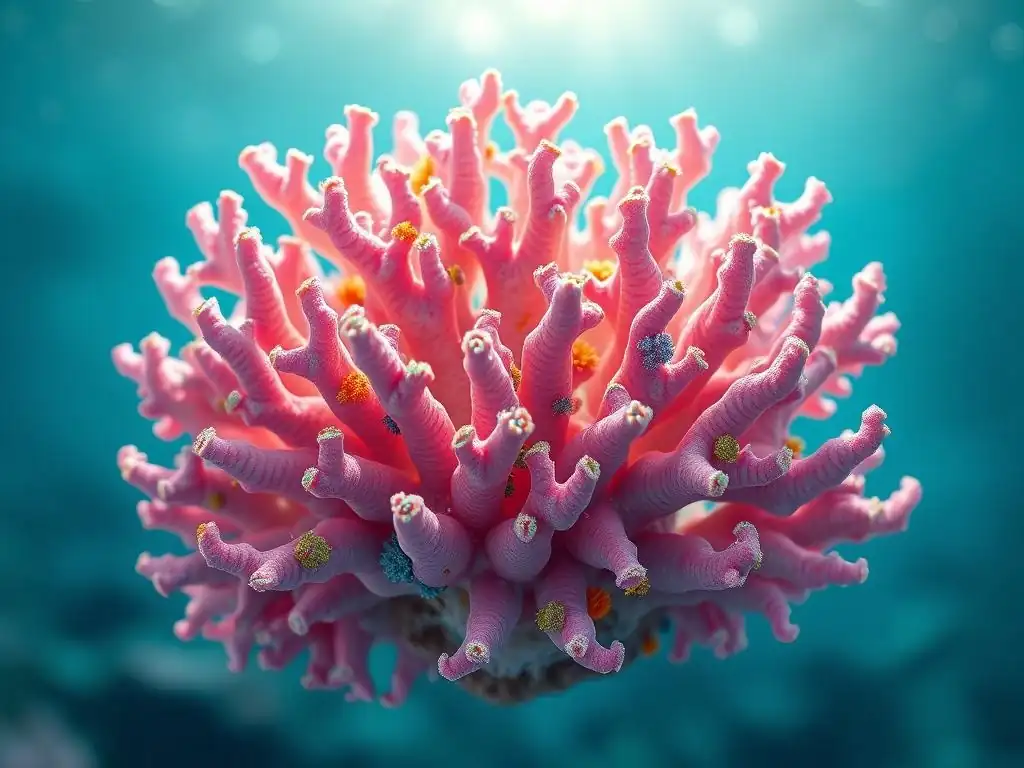
Montipora capricornis, commonly known as Montipora cap, is one of the most popular and widely available Montipora species, characterized by its plating or encrusting growth form. These corals grow by expanding outwards, forming shelf-like structures that can eventually layer over each other. Under ideal conditions, Montipora cap growth rates can be quite impressive.
A healthy Montipora cap frag, starting at around 3-5 cm in diameter, can typically expand its radius by 1-2 cm per month. This means a small frag could double its diameter in just 2-3 months, given optimal water parameters, lighting, and flow. For example, a 5 cm Montipora cap frag could grow to 9 cm in diameter within two months, establishing a prominent feature in the reef scape and demonstrating excellent Montipora coral growth rates.
Montipora Digitata Growth Rate: What to Anticipate
Montipora digitata is a branching Montipora species, recognized by its finger-like projections that extend upwards and outwards. This species is often celebrated for its relatively fast linear growth, making it a favorite for aquarists looking to quickly fill vertical space in their aquariums. Its growth appears more dramatic than plating species due to its three-dimensional expansion.
Under highly stable and optimized conditions, Montipora digitata growth rates can reach 0.5 to 1.5 cm of linear extension per branch tip per month. A small frag of Montipora digitata, perhaps 3-4 cm tall, can often double its height and begin developing multiple new branches within 3-4 months. For instance, a well-placed Montipora digitata frag might add 1 cm to its longest branch each month, while also developing several new secondary branches, rapidly transforming into a bushy colony and showcasing high Montipora coral growth rates.
Montipora Undata Growth Rate: Considerations for Optimal Expansion
Montipora undata is another plating or encrusting Montipora, similar in form to Montipora cap, but often distinguished by its more irregular, undulating surface. While beautiful, some aquarists report that its Montipora coral growth rates can be slightly slower or more deliberate than the common Montipora capricornis, though this can vary significantly between specific strains and tank conditions.
Expected Montipora undata growth rates typically range from 0.5 to 1.5 cm in diameter expansion per month. This species particularly benefits from consistent water chemistry, as instability can quickly lead to tissue recession or stalled growth. A 4 cm Montipora undata frag, given stable parameters (e.g., alkalinity at 8.0 dKH, calcium at 420 ppm), could reasonably expand to 7 cm in diameter within three months, steadily encrusting its frag plug and beginning to spread onto the rockwork, demonstrating a steady, albeit sometimes slower, Montipora coral growth rate.
Comparing Growth Rates Across Different Montipora Species
When comparing Montipora coral growth rates across different species, it's important to consider their inherent growth forms. Branching species like Montipora digitata often appear to grow "faster" due to their significant linear extension, rapidly increasing their height and width with new branches. Plating and encrusting species, such as Montipora capricornis and Montipora undata, expand horizontally, covering more surface area.
Generally, under optimal conditions, Montipora digitata can add 1-1.5 cm of linear growth per month, while Montipora capricornis and Montipora undata can increase their diameter by 1-2 cm per month. However, the total biomass increase can be significant for all. A 5 cm Montipora digitata might reach 15 cm in height and width within 6-8 months, while a 5 cm Montipora cap could expand to 20 cm in diameter in the same timeframe. Ultimately, achieving maximum Montipora coral growth rates for any species hinges on providing a stable, nutrient-balanced, and well-lit environment.
Maximizing Montipora Coral Growth: Practical Tips and Techniques
Achieving Optimal Lighting for Enhanced Growth
To maximize Montipora coral growth rates, ensuring optimal lighting is crucial. For LED systems, aim for a PAR range of 250-350 µmol/m²/s at the coral's level, adjusting based on the specific Montipora species and its acclimation. Gradual acclimation is key; if upgrading lighting or introducing a new coral, start with lower intensity or shorter photoperiods and increase slowly over several weeks to prevent shock or bleaching.
Maintain a consistent photoperiod, typically 10-12 hours, with a gradual ramp-up and ramp-down cycle to simulate natural dawn and dusk. Regularly clean light fixtures and tank glass to ensure maximum light penetration. For example, a reef keeper who gradually increased their LED intensity from 180 PAR to 300 PAR over a month observed their Montipora cap's growth rate accelerate from 0.8 cm/month to 1.5 cm/month, demonstrating the positive impact of proper light tuning.
Maintaining Ideal Water Parameters for Montipora
Consistent maintenance of calcium, alkalinity, and magnesium is paramount for maximizing Montipora coral growth rates. Regular testing (e.g., 2-3 times per week for alkalinity, weekly for calcium and magnesium) allows for precise adjustments. Automated dosing systems for two-part solutions or the Balling method are highly recommended for stability, especially in growing SPS tanks with high calcium and alkalinity demands.
Aim to keep alkalinity within a tight range, ideally 7.5-8.5 dKH, to prevent stress from swings. For example, a tank that implemented a continuous dosing system to maintain alkalinity at 8.0 dKH and calcium at 420 ppm saw a Montipora digitata colony add an average of 1.2 cm of new growth per month, a significant improvement over previous sporadic manual dosing which resulted in only 0.5 cm/month. Salinity should also be kept stable at 1.025-1.026 specific gravity.
Providing Adequate Flow for Healthy Coral Development
Optimizing water flow is essential for robust Montipora coral growth rates. Position powerheads or wavemakers to create turbulent, multi-directional flow patterns that reach all parts of the coral, preventing dead spots where detritus can accumulate. Avoid direct, constant laminar flow, which can be detrimental. Aim for a total tank turnover of 20-30 times the tank volume per hour, using multiple smaller pumps rather than one large one for better distribution.
Regularly clean powerheads to maintain their efficiency. Observing polyp extension and detritus accumulation around the coral can indicate if flow is adequate. For instance, a reef aquarist who added an additional 1000 GPH powerhead to their 50-gallon tank, increasing turnover from 15x to 25x, reported a noticeable increase in polyp extension and a 20% acceleration in their Montipora undata's encrusting growth rate over two months.
Effective Nutrient Management for Accelerated Expansion
Effective nutrient management is a cornerstone for maximizing Montipora coral growth rates. While maintaining low nitrates (<5 ppm) and phosphates (<0.05 ppm) is ideal, avoid "zeroing out" these parameters completely, as some nutrients are beneficial for coral health. Regular partial water changes (e.g., 10-20% bi-weekly) are crucial for nutrient export and replenishing trace elements.
Utilize a high-quality protein skimmer sized appropriately for your tank, and ensure it is cleaned regularly to maintain efficiency. Consider the use of a refugium with macroalgae (e.g., Chaetomorpha) or passive nutrient removers like GFO or biopellets if nutrient levels consistently trend high. A tank that successfully reduced its nitrates from 10 ppm to 2 ppm over a month through increased skimming and a refugium observed a 15% improvement in their Montipora cap's expansion rate and better coloration.
The Role of Supplements in Boosting Montipora Growth
Beyond the core parameters, certain supplements can play a beneficial role in boosting Montipora coral growth rates and overall vitality. Amino acids are increasingly popular, believed to provide essential building blocks for coral tissue and enhance coloration. Dosing trace elements like strontium, iodine, and potassium, often depleted in active reef systems, can also support calcification and metabolic processes.
Always follow manufacturer recommendations for dosing and introduce new supplements gradually, observing coral response. Overdosing can be detrimental. For example, a hobbyist who consistently dosed a reputable amino acid blend at 1 ml per 100 liters daily reported not only more vibrant coloration in their Montipora colonies but also a subtle yet measurable increase in Montipora coral growth rates, estimated at an additional 0.1-0.2 cm of linear growth per month for their Montipora digitata.
Troubleshooting Slow or Stalled Montipora Growth
Identifying Potential Causes of Slow Growth
When Montipora coral growth rates slow down or stall, a systematic approach to troubleshooting is essential. Begin by meticulously re-testing all primary water parameters: alkalinity, calcium, magnesium, salinity, nitrates, and phosphates. Compare these readings to ideal ranges and note any significant deviations or inconsistencies over time. For instance, if alkalinity is swinging by more than 1.0 dKH within a 24-hour period, it's a strong indicator of stress.
Next, assess lighting: check the age of bulbs (if using T5s or halides), verify PAR levels at the coral's position, and ensure the photoperiod is consistent. Observe water flow: are the polyps fully extended, or are they retracted? Is detritus settling on the coral? Finally, conduct a thorough visual inspection for signs of pests like Montipora eating nudibranchs or flatworms, or diseases such as tissue necrosis, which can rapidly halt Montipora expansion.
Addressing Common Water Quality Issues
Once water quality issues are identified as a cause for slow Montipora coral growth rates, corrective action must be taken gradually. If alkalinity, calcium, or magnesium are low, increase dosing slowly over several days to a week to avoid shocking the corals. For example, if alkalinity is 6.5 dKH, increase it by no more than 0.5 dKH per day until it reaches the target range of 7.5-8.5 dKH.
If nitrates or phosphates are elevated, implement increased frequency or volume of water changes (e.g., 20% twice a week) combined with reduced feeding. Ensure protein skimmer is operating optimally and consider adding or increasing the use of chemical filtration media like GFO or activated carbon. A tank that brought its nitrates down from 15 ppm to 3 ppm over three weeks via daily 10% water changes and GFO addition saw a Montipora digitata colony, which had stalled for two months, resume its growth at a rate of 0.8 cm per month.
Tackling Pests and Diseases Affecting Montipora
Pests and diseases are significant threats to Montipora coral growth rates. Montipora eating nudibranchs (ME Nudis) and Montipora eating flatworms are notorious for consuming coral tissue, leading to recession and eventual death if untreated. Regularly inspect new corals before introduction (quarantine is ideal) and dip them in a coral-specific antiseptic solution.
If an infestation is confirmed, manual removal of visible pests can be effective for small colonies. For larger infestations, specific chemical treatments (e.g., a short-term bath in a product like Coral RX or a dedicated flatworm/nudibranch treatment) may be necessary, always following instructions carefully. A Montipora cap that was losing tissue at 0.5 cm per week due to ME Nudis recovered completely and resumed its typical 1.5 cm/month Montipora coral growth rate after a series of dips and manual removal over a two-week period.
Adjusting Lighting and Flow to Stimulate Growth
Incorrect lighting or flow can severely impede Montipora coral growth rates. If lighting is too low, gradually increase the intensity or photoperiod over several weeks. If it's too high, raise the light fixture, reduce intensity, or move the coral to a shadier spot. Always observe the coral's response; bleaching indicates too much light, while browning and poor extension can signal too little.
For flow issues, reposition powerheads to eliminate dead spots and create more turbulent, indirect flow. Adding an additional powerhead or using a wavemaker can dramatically improve circulation. For example, moving a Montipora undata frag from a low-flow area (where it was growing 0.2 cm/month) to a section of the tank with robust, turbulent flow (around 25-30x tank turnover) often results in a visible increase in polyp activity and an acceleration of its encrusting Montipora coral growth rate to 0.8-1.0 cm/month within a month.
Montipora Coral Fragging and Growth: Propagation Techniques
Fragging Montipora: A Step-by-Step Guide
Fragging Montipora corals is a straightforward process that encourages new growth and allows aquarists to propagate their colonies. Essential tools include bone cutters for branching species (like Montipora digitata) or a Dremel tool with a diamond cutting wheel for plating/encrusting species (like Montipora cap or undata). Always wear eye protection and gloves.
For branching Montipora, select a healthy branch at least 3-5 cm long and make a clean cut. For plating Montipora, carefully cut a piece approximately 2x2 cm from the edge of a healthy colony. After cutting, dip the frag in a coral dip solution for 5-10 minutes to clean and disinfect it, then rinse in tank water. This process minimizes stress and promotes healing, allowing the new frag to quickly establish its own Montipora coral growth rate.
Promoting Rapid Growth in Newly Fragged Montipora
To promote rapid Montipora coral growth rates in newly fragged pieces, provide them with optimal and stable environmental conditions. Place frags in an area of the tank with moderate, stable flow and appropriate PAR levels (often slightly lower than the parent colony initially, then gradually moved up). Maintain pristine water parameters, especially alkalinity, calcium, and magnesium, as these are crucial for the initial calcification process of the frag plug and new tissue growth.
Consistent feeding with amino acids or other coral foods can also provide additional energy for recovery and growth. For instance, a Montipora digitata frag, when placed in a frag rack with 250 PAR and consistent water chemistry (Alk 8.0 dKH, Ca 420 ppm), can begin to show new tissue growth over the frag plug within 1-2 weeks and start linear extension of 0.5 cm per month within 4-6 weeks.
Attaching Frags for Optimal Expansion
Proper attachment of Montipora frags is vital for their long-term health and optimal Montipora coral growth rates. Use cyanoacrylate gel (super glue gel) to securely attach the frag to a frag plug or directly onto the live rock. For plating Montipora, ensure the frag is placed on a flat, stable surface that allows for outward expansion without obstruction.
Consider the future growth of the coral when selecting a placement location. Provide ample space around the frag, typically 10-15 cm for plating Montipora, to allow it to expand without shading or stinging neighboring corals. A Montipora cap frag securely attached to a flat piece of rock with adequate surrounding space can establish quickly and begin to encrust outwards at its maximum potential rate of 1.5-2 cm per month, forming a beautiful, unhindered colony.
Case Studies: Examples of Successful Montipora Growth in Reef Aquariums
Case Study 1: High-Intensity Lighting and Regular Water Changes
In a 120-gallon mixed reef aquarium, the owner focused on providing high-intensity LED lighting, maintaining a consistent PAR of 350-400 µmol/m²/s at the Montipora level, coupled with a rigorous water change schedule. The tank received 20% bi-weekly water changes, supplemented by a three-part dosing system to maintain alkalinity at 8.2 dKH, calcium at 430 ppm, and magnesium at 1300 ppm. Nitrates were consistently below 2 ppm, and phosphates below 0.02 ppm.
Under these conditions, a small 4 cm diameter Montipora capricornis frag grew into a sprawling 20 cm colony within 8 months, demonstrating an average expansion of 2 cm in diameter per month. A Montipora digitata frag, initially 5 cm tall, developed into a bushy 18 cm tall colony with multiple branches in the same period, adding an average of 1.6 cm of linear growth per month. This highlights how precise lighting and consistent nutrient export can significantly accelerate Montipora coral growth rates.
Case Study 2: Balanced Nutrient Levels and Strong Water Flow
A 75-gallon SPS-dominant tank achieved impressive Montipora coral growth rates by prioritizing balanced nutrient levels and turbulent water flow. The tank utilized T5HO lighting, providing a moderate PAR of 280-320 µmol/m²/s. Water flow was approximately 30 times tank volume per hour, generated by two oscillating powerheads creating chaotic flow patterns. Nutrient levels were maintained slightly higher than typical ULNS, with nitrates at 3-4 ppm and phosphates at 0.03-0.04 ppm, achieved through careful feeding and a robust protein skimmer. Daily dosing of amino acids was also implemented.
In this setup, a Montipora undata frag, about 3 cm across, encrusted its frag plug and spread onto the rockwork, increasing its diameter by an average of 1.2 cm per month, displaying vibrant coloration. A Montipora digitata colony, approximately 6 cm tall, added 1.0 cm of linear growth per month, with excellent polyp extension. This case demonstrates that a slightly elevated but stable nutrient profile, combined with strong, varied flow, can also lead to impressive Montipora coral growth rates, potentially by providing more sustenance for tissue development.
Advanced Techniques for Accelerating Montipora Coral Growth
Carbon Dosing and Its Effects on Montipora
Carbon dosing, typically involving the addition of organic carbon sources like vinegar or vodka, is an advanced technique used to reduce nitrates and phosphates by fueling bacterial growth. These bacteria consume excess nutrients and are then removed by protein skimming. While primarily aimed at nutrient control, stable ultra-low nutrient environments created by carbon dosing can indirectly accelerate Montipora coral growth rates by improving water clarity and reducing competitive algae.
However, precise dosing is critical; overdosing can lead to bacterial blooms, cloudy water, and oxygen depletion, which can harm corals. A reef keeper who implemented a gradual carbon dosing regimen to reduce nitrates from 10 ppm to below 1 ppm over a two-month period observed a subsequent 10-15% increase in the expansion rate of their Montipora capricornis, as the cleaner water allowed for more efficient light penetration and reduced stress from higher nutrients.
Utilizing Amino Acids for Enhanced Coloration and Growth
Amino acids are the building blocks of proteins and are vital for coral tissue growth and repair. While corals primarily obtain energy from photosynthesis, supplemental amino acids can provide readily available nutrients, particularly for heterotrophic feeding, which can directly contribute to enhanced Montipora coral growth rates and coloration. Many commercial coral foods contain a blend of essential amino acids.
Regular, measured dosing of amino acid supplements can lead to more robust polyp extension and deeper, more vibrant colors in Montipora corals. For example, a reef aquarist who began dosing a commercial amino acid product at the recommended 1-2 ml per 100 liters daily noticed that their Montipora digitata, which was previously growing at 0.8 cm/month, began to consistently add 1.0 cm of growth per month, alongside a visible intensification of its green coloration over a three-month period.
The Balling Method and Its Impact on Skeletal Growth
The Balling method, a popular dosing regimen, involves adding separate solutions of calcium chloride, sodium bicarbonate, and a magnesium supplement, often with trace elements. Unlike simpler two-part systems, the Balling method aims to maintain a complete ionic balance in the aquarium, replenishing not just the major elements but also essential minor and trace elements crucial for robust skeletal development.
The comprehensive and stable ionic environment created by a well-managed Balling method directly supports accelerated calcification, leading to significantly improved Montipora coral growth rates. By precisely balancing all key ions, this method minimizes ionic imbalances that can stress corals and hinder growth. A reef system that transitioned from basic two-part dosing to a meticulously calibrated Balling method reported a 20-25% increase in the Montipora cap growth rate over six months, with colonies showing denser skeletal structure and faster expansion, attributed to the enhanced stability and complete availability of all necessary ions for skeletal growth.
Conclusion: Achieving Optimal Montipora Coral Growth in Your Reef Tank
Achieving optimal Montipora coral growth rates in a reef tank is a rewarding endeavor that hinges on a holistic approach to aquarium husbandry. It requires a deep understanding of the key environmental factors: stable and appropriate lighting, pristine water chemistry with balanced calcium, alkalinity, and magnesium, and dynamic, turbulent water flow. Nutrient management, maintaining low but not absent nitrates and phosphates, also plays a crucial role in both growth and coloration.
By diligently monitoring parameters, making consistent adjustments, and considering advanced techniques like amino acid supplementation or the Balling method, aquarists can significantly accelerate the expansion of their Montipora colonies. Patience, keen observation, and a commitment to providing a stable, thriving environment are the ultimate keys to unlocking the full growth potential and vibrant beauty of these captivating SPS corals in any reef aquarium.
Frequently Asked Questions
How quickly can I expect a Montipora coral to grow in my aquarium?
Montipora growth rates vary significantly depending on the species and tank conditions. Generally, under ideal conditions, you can expect to see noticeable growth within a few months. Some faster-growing species can achieve significant expansion within a year.
What are the most important factors influencing Montipora coral growth rates?
The most critical factors are water quality, particularly stable alkalinity, calcium, and magnesium levels. Sufficient lighting, proper water flow, and the absence of pests are also essential for optimal growth.
What type of lighting is best for maximizing Montipora coral growth?
Montipora corals generally thrive under strong lighting, such as metal halides or high-output LEDs. The specific lighting requirements will vary depending on the species, but providing adequate intensity is crucial.
How often should I test my water parameters to ensure healthy Montipora growth?
Regular water testing is vital. Ideally, you should test alkalinity, calcium, and magnesium at least once a week, and nitrates and phosphates every two weeks. This helps maintain stable water chemistry, crucial for growth.
What are some common signs that my Montipora coral is not growing properly?
Signs of inhibited growth include color fading or browning, tissue recession, and a lack of new skeletal growth. These issues often indicate problems with water parameters, lighting, or water flow that need addressing.
Final Reflection: Cultivating Coral Futures
The insights shared in this article, detailing the intricacies of Montipora coral growth rates, are not merely academic observations. They represent a crucial understanding for reef keepers and conservationists alike, especially as coral reefs face unprecedented environmental challenges. By grasping the factors that influence Montipora expansion, we empower ourselves to create thriving reef ecosystems, both in our personal aquariums and, hopefully, in the wild.
The journey of understanding Montipora growth is a microcosm of our broader relationship with the natural world. It reminds us that even seemingly small actions, like optimizing water parameters or providing adequate lighting, can have a profound impact on the health and vitality of a delicate ecosystem. As Jacques Cousteau so eloquently stated, The sea, once it casts its spell, holds one in its net of wonder forever.
This wonder, and the responsibility it entails, should guide our efforts to protect and cultivate these underwater gardens.
Now, armed with this knowledge, consider the role you can play in fostering a healthier future for coral reefs. Whether you're a seasoned aquarist or simply a passionate advocate for marine conservation, take the lessons learned here and apply them to your own sphere of influence. Let's work together, one frag at a time, to ensure the vibrant beauty of Montipora corals, and the reefs they inhabit, continue to flourish for generations to come.
Unleash Your Montipora's Full Potential!
Thank you for exploring the fascinating world of Montipora growth! We hope you've gained valuable insights to nurture your corals. Now, let's put that knowledge into action and watch your Montipora thrive.
Here are a few ways to accelerate your Montipora's growth and share the beauty:
- Start a growth journal! Track your Montipora's progress with photos and notes, adjusting parameters as needed.
- Experiment with targeted feeding! Research specific Montipora needs and try small, localized feedings of appropriate nutrients.
- Share your growth secrets! Start a thread on our forum, describing your lighting, flow, and feeding regimen. Let's learn from each other.
What's the single biggest change you're planning to implement to boost your Montipora's growth this week?