
The Zoanthid Lighting Spectrum: Unlocking Peak Coloration & Growth

Welcome to Aquarium Mastery!
Ever wondered how to unlock the true vibrant colors of your Zoanthids? Dive into the fascinating world of the Zoanthid lighting color spectrum and discover the secrets to achieving peak coloration and optimal growth. This is just the beginning; prepare to master the art of coral care!
- Understanding Zoanthid Lighting Needs for Optimal Health and Color
- Decoding the Zoanthid Lighting Color Spectrum
- Recommended Lighting Spectrum for Zoanthids: Achieving the Ideal Balance
- Types of Aquarium Lighting Suitable for Zoanthids
- Fine-Tuning Your Zoanthid Lighting Schedule
- Troubleshooting Common Lighting-Related Issues in Zoanthids
- Advanced Lighting Techniques for Zoanthid Collectors
- Conclusion: Mastering Zoanthid Lighting for a Vibrant Reef Aquarium
-
Frequently Asked Questions
- What is the ideal Zoanthid lighting color spectrum for optimal growth and coloration?
- How does the Zoanthid lighting color spectrum affect their coloration?
- Can too much light damage Zoanthids, even with the correct Zoanthid lighting color spectrum?
- What types of lights are best for achieving the correct Zoanthid lighting color spectrum?
- How often should I adjust the Zoanthid lighting color spectrum in my aquarium?
- Final Reflection: Illuminating the Depths of Zoanthid Beauty
- Ignite Your Zoanthids: Witness Explosive Color!
Understanding Zoanthid Lighting Needs for Optimal Health and Color
Why Proper Lighting is Crucial for Zoanthid Growth and Coloration
Proper lighting is fundamentally crucial for the health, growth, and vibrant coloration of zoanthids. These soft corals host microscopic, photosynthetic algae called zooxanthellae within their tissues. These symbiotic algae are the primary powerhouses, converting light energy into sugars and other organic compounds through photosynthesis, which can provide up to 90% of the zoanthid's nutritional requirements. Without an adequate zoanthid lighting color spectrum and intensity, the zooxanthellae cannot photosynthesize efficiently, leading to a cascade of negative effects on the coral.
Insufficient or incorrect lighting can manifest as stunted growth, dull or fading coloration, and in severe cases, the expulsion of zooxanthellae, a process known as bleaching. When zoanthids bleach, they lose their primary food source and become highly susceptible to disease and eventual death.
Conversely, providing the optimal zoanthid lighting color spectrum fuels robust metabolic processes, promotes the development of new polyps, and enhances the expression of the coral's natural fluorescent pigments, resulting in the stunning visual appeal that aquarists seek. For instance, zoanthid colonies maintained under ideal lighting conditions can often double their polyp count within a few months, whereas those in suboptimal light might show minimal growth or even shrink.
The Relationship Between Zoanthids and Light: A Symbiotic Approach
The relationship between zoanthids and light is a classic example of mutualistic symbiosis. The zoanthid provides a stable, protected environment for the zooxanthellae, along with essential nutrients like carbon dioxide and nitrogenous waste products. In return, the zooxanthellae supply the zoanthid with the majority of its energy needs in the form of photosynthetically derived sugars and amino acids. This intricate partnership means that the quality and quantity of light directly dictate the success of the zooxanthellae, and consequently, the health of the zoanthid.
The effectiveness of this symbiotic energy transfer is highly dependent on the zoanthid lighting color spectrum. Different wavelengths of light penetrate water at varying depths, and zooxanthellae, primarily containing chlorophyll a and c, along with accessory pigments like peridinin, are specifically adapted to absorb certain parts of this spectrum. Blue and red wavelengths are typically most effective for photosynthesis. While zoanthids can capture some particulate food from the water column, their primary energy source remains light, highlighting why understanding and providing the correct lighting conditions is paramount for cultivating thriving zoanthids in a reef aquarium.
Decoding the Zoanthid Lighting Color Spectrum
Photosynthetic Pigments in Zoanthids: The Key to Color Expression
The vibrant and diverse colors of zoanthids are a result of a complex interplay between the photosynthetic pigments within their symbiotic zooxanthellae and the zoanthid's own fluorescent proteins (FPs). Zooxanthellae primarily contain chlorophylls (a and c) and carotenoids (like peridinin), which absorb light energy, particularly in the blue (around 450 nm) and red (around 660 nm) regions of the zoanthid lighting color spectrum, to drive photosynthesis. These pigments are essential for the coral's metabolic energy.
Beyond the photosynthetic pigments, zoanthids possess their own unique fluorescent proteins. These proteins absorb light at one wavelength (e.g., blue light) and re-emit it at a longer wavelength (e.g., green, yellow, or red), creating the dazzling "pop" and glow that makes zoanthids so desirable. For example, a zoanthid with green FPs might absorb blue light at 480 nm and emit green light at 510 nm.
The specific zoanthid lighting color spectrum provided directly influences the expression and vibrancy of these FPs. Intense blue light, for instance, is highly effective at exciting many of these fluorescent proteins, making the zoanthid's colors appear more saturated and brilliant to the human eye.
PAR (Photosynthetically Active Radiation) and Zoanthids: What You Need to Know
PAR stands for Photosynthetically Active Radiation, which refers to the specific range of light wavelengths (typically 400 to 700 nanometers) that photosynthetic organisms, including zoanthids, use for their biological processes. While PAR measures the intensity of light available for photosynthesis, it does not describe the quality or zoanthid lighting color spectrum of that light. A high PAR reading with an imbalanced spectrum can still be detrimental, just as a low PAR with an ideal spectrum may not be sufficient.
Zoanthids generally thrive in a moderate PAR range. For most common morphs, a PAR level between 50 to 150 µmol/m²/s is considered optimal. Some more light-demanding or highly colored morphs might tolerate up to 200-250 µmol/m²/s once fully acclimated, but exceeding this can quickly lead to stress or bleaching.
It is crucial to measure PAR at the actual coral level using a dedicated PAR meter, as light intensity diminishes significantly with depth and distance from the light source. For example, an LED fixture providing 200 µmol/m²/s at 12 inches might only deliver 80 µmol/m²/s at 24 inches, necessitating careful placement of zoanthids based on their light requirements.
Recommended Lighting Spectrum for Zoanthids: Achieving the Ideal Balance
Blue Light's Impact on Zoanthid Color: Enhancing Fluorescence
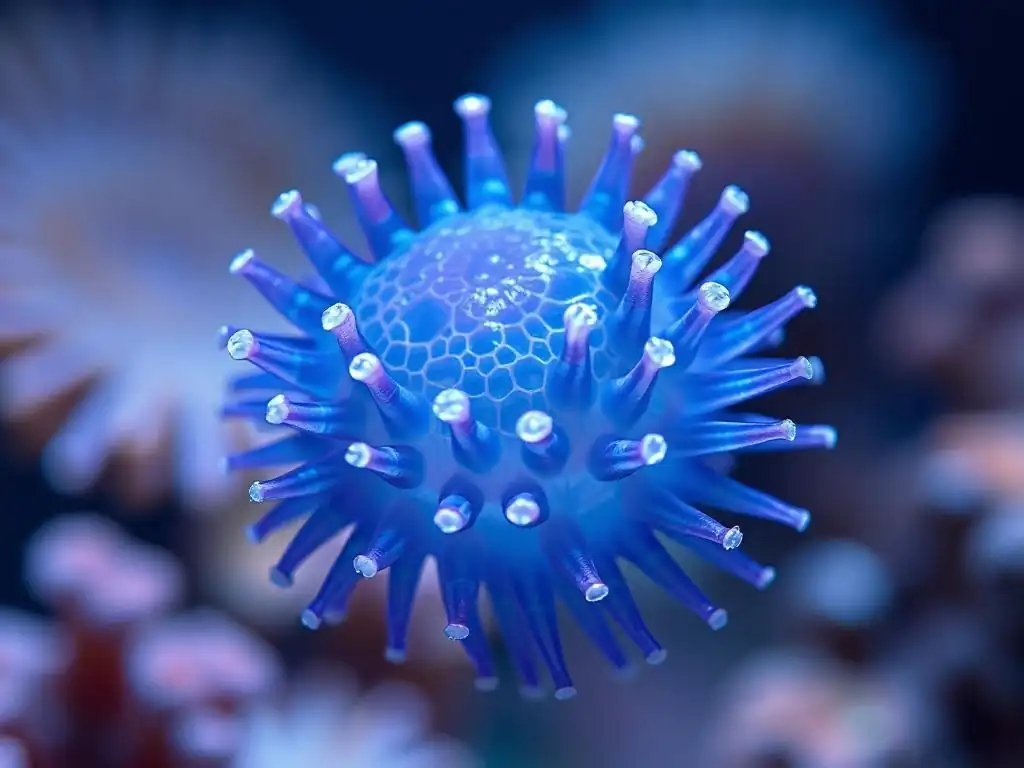
Blue light plays a paramount role in the zoanthid lighting color spectrum, serving both vital biological and aesthetic functions. Wavelengths in the blue spectrum, particularly royal blue (440-450 nm) and blue (460-470 nm), are highly efficient for photosynthesis by zooxanthellae. These wavelengths penetrate water most effectively, making them crucial for corals in deeper parts of the reef. From an aesthetic perspective, blue light is exceptional at exciting the fluorescent proteins within zoanthid tissues, causing them to glow with intense greens, reds, and oranges, making their colors truly "pop" under aquarium lighting.
Many aquarists aim for a predominantly blue-shifted zoanthid lighting color spectrum, often mimicking the deep blue light found in marine environments. This is typically achieved by using lighting fixtures that can deliver a Kelvin temperature between 14,000K and 20,000K, which is rich in blue wavelengths.
A common approach with LED systems is to run blue channels at a significantly higher intensity than white channels, perhaps a 3:1 or 4:1 ratio of blue to white, to maximize fluorescence and provide optimal photosynthetic light. This emphasis on blue light is key to unlocking the full coloration potential of many popular zoanthid morphs.
Red Light's Role in Zoanthid Growth: Supporting Photosynthesis
While blue light is dominant for zoanthid coloration and primary photosynthesis, red light also plays a supporting yet crucial role in the zoanthid lighting color spectrum for overall growth. Chlorophylls, the primary photosynthetic pigments, absorb both blue and red light effectively. Including a small percentage of red wavelengths (typically 600-700 nm, with a peak around 660 nm for deep red) can enhance the overall efficiency of photosynthesis, contributing to more robust and faster growth in zoanthids.
However, caution is advised when incorporating red light. Excessive red light in the zoanthid lighting color spectrum can encourage the proliferation of nuisance algae, such as cyanobacteria or green hair algae, which can quickly outcompete corals for space and nutrients. Therefore, red LEDs or bulbs should be used sparingly, often comprising only 5-10% of the total spectral output in an aquarium. A balanced approach, where red light complements the dominant blue and white light, is essential to promote healthy zoanthid growth without fostering undesirable algal blooms.
The Importance of Full Spectrum Lighting for Zoanthid Health
While blue and red wavelengths are critical, providing a full zoanthid lighting color spectrum is paramount for long-term zoanthid health and resilience. A truly full spectrum includes not only blue and red but also violet/UV (380-420 nm), green (500-550 nm), and yellow/orange wavelengths. Mimicking natural sunlight as closely as possible ensures that all types of photosynthetic pigments and fluorescent proteins have the specific wavelengths they need to function optimally.
A comprehensive zoanthid lighting color spectrum supports diverse biological processes beyond just primary photosynthesis. For example, violet and UV wavelengths can aid in the expression of certain fluorescent proteins and may offer protective benefits against excessive light intensity.
Green and yellow light, while not as efficiently used by zooxanthellae for photosynthesis, still contribute to a more natural viewing experience and can be utilized by other beneficial photosynthetic organisms in the reef ecosystem. Modern LED fixtures often offer multiple channels (e.g., royal blue, cool white, warm white, red, green, UV) allowing aquarists to precisely tune the zoanthid lighting color spectrum to achieve a balanced and optimal environment that promotes both vibrant color and sustained growth.
Types of Aquarium Lighting Suitable for Zoanthids
LED Lighting for Zoanthids: Efficiency and Control
LED (Light Emitting Diode) lighting has become the most popular and versatile choice for reef aquariums, including those housing zoanthids. LEDs offer significant advantages in terms of energy efficiency, lifespan, and unparalleled control over light intensity and the zoanthid lighting color spectrum. Modern LED fixtures allow for sophisticated programming, enabling aquarists to simulate natural dawn-to-dusk cycles, cloud cover, and even lightning storms, providing a highly dynamic and natural environment for zoanthids.
Benefits of LED Lighting Systems for Zoanthid Tanks
LED lighting systems offer numerous benefits for zoanthid tanks. Firstly, their energy efficiency is remarkable, often reducing electricity consumption by 30-60% compared to traditional lighting methods, leading to substantial long-term savings on utility bills. Secondly, LEDs boast an extended lifespan, typically rated for 50,000 to 100,000 hours, meaning they can last for many years without significant degradation in output, drastically reducing bulb replacement costs.
Thirdly, the customizability of LED fixtures is a game-changer; advanced models feature multiple independently controllable color channels (e.g., royal blue, cool white, warm white, red, green, UV), allowing aquarists to fine-tune the zoanthid lighting color spectrum precisely to enhance specific zoanthid colors or optimize photosynthetic efficiency. This precise control also means less heat is transferred to the water column, often negating the need for chillers in many setups.
Choosing the Right LED Fixture for Your Zoanthids
Selecting the appropriate LED fixture for your zoanthids involves considering several key factors to ensure optimal performance. First, assess the PAR output capabilities of the fixture; it must be able to deliver adequate Photosynthetically Active Radiation at the desired depth for your zoanthids, generally aiming for 50-150 µmol/m²/s.
Second, prioritize fixtures with comprehensive spectral control, ideally those offering multiple distinct color channels (e.g., royal blue, cool white, red, green, and UV) to allow for precise tuning of the zoanthid lighting color spectrum. Third, ensure the fixture has robust dimming capabilities, which are essential for proper coral acclimation and for fine-tuning intensity over time.
Lastly, research brand reputation and user reviews to ensure reliability and consistent performance. For instance, for a standard 24-inch deep reef tank, an LED fixture capable of delivering adjustable PAR across that depth, with strong blue and white channels, would be a suitable choice for a thriving zoanthid collection.
T5 Lighting for Zoanthids: Proven Performance
T5 fluorescent lighting remains a highly effective and popular choice for zoanthid aquariums, known for its proven performance in promoting both vibrant color and robust growth. Unlike point-source LED or metal halide lights, T5 bulbs provide excellent, even light spread across the entire tank footprint, minimizing hot spots and shaded areas. Their strength lies in the ability to combine different spectral bulbs to create a customized zoanthid lighting color spectrum that precisely meets the needs of corals.
T5 Bulb Combinations for Optimal Zoanthid Color and Growth
The versatility of T5 lighting for zoanthids comes from the ability to mix and match various bulb types to achieve a tailored zoanthid lighting color spectrum. For optimal zoanthid color and growth, a common strategy involves combining actinic (blue) bulbs, which enhance fluorescence and provide crucial wavelengths for zooxanthellae, with daylight (white) bulbs, which offer a broader spectrum for overall growth and natural viewing.
A popular combination for a 4-bulb T5 fixture over a zoanthid-dominant tank might include two ATI Blue Plus bulbs for intense blue and fluorescence, one ATI Coral Plus bulb for a balanced blue-white spectrum, and one ATI Aquablue Special for crisp white light and additional growth support. It is crucial to replace T5 bulbs every 9-12 months, as their spectral output degrades over time, even if they still appear to be fully functional, ensuring a consistent and effective zoanthid lighting color spectrum is maintained.
Metal Halide Lighting for Zoanthids: A Powerful Option (Use with Caution)
Metal halide lighting, while less common for zoanthid-specific tanks today due to the rise of LEDs, remains a powerful option capable of delivering extremely high PAR levels and an impressive shimmer effect. These lights are single-point sources that can create intense light fields, making them suitable for tanks with diverse coral populations, including some of the more light-demanding zoanthid morphs. However, their use requires significant caution due to their inherent characteristics.
Considerations for Using Metal Halides in Zoanthid Aquariums
When considering metal halide lighting for zoanthid aquariums, several factors require careful attention. Firstly, heat management is paramount: metal halides produce substantial heat, often requiring a chiller to prevent dangerous temperature spikes in the aquarium, especially in smaller or enclosed setups. Secondly, intensity control is less precise than with LEDs; dimming is not a standard feature, so light intensity is primarily managed by bulb wattage, fixture height, and photoperiod.
Thirdly, metal halide bulbs degrade relatively quickly and require replacement every 6-12 months to maintain their optimal zoanthid lighting color spectrum and intensity. Finally, due to their high intensity, zoanthids under metal halides often need to be placed lower in the tank or acclimated very slowly to prevent bleaching. For example, a 250W 14,000K metal halide bulb can provide ample PAR for a 36x36-inch area, but monitoring coral response and tank temperature is critical.
Fine-Tuning Your Zoanthid Lighting Schedule
Photoperiod for Zoanthids: How Many Hours of Light Do They Need?
Determining the ideal photoperiod, or the duration of light exposure, is essential for zoanthids. Most zoanthids thrive on a daily photoperiod ranging from 8 to 12 hours. A common and effective practice is to provide 10 hours of main, full-intensity lighting. This can be preceded and followed by 1-2 hours of very dim blue light, often referred to as "moonlight" or a dawn/dusk simulation, which helps ease the transition from dark to full light and vice-versa.
Consistency is key; maintaining a regular on/off schedule is more beneficial than erratic light periods, as it allows the zoanthids and their symbiotic algae to establish a stable photosynthetic rhythm. For instance, a typical schedule might involve dim blue light from 8:00 AM to 9:00 AM, full zoanthid lighting color spectrum from 9:00 AM to 7:00 PM, followed by dim blue light from 7:00 PM to 8:00 PM, and then complete darkness or very subtle moonlight until the next cycle. Adhering to such a consistent photoperiod contributes significantly to the zoanthid's overall health and vitality.
Acclimation to New Lighting: Preventing Zoanthid Shock
Acclimation is a critical step when introducing new zoanthids to an aquarium or when upgrading existing lighting to a more powerful system. Zoanthids are sensitive to sudden changes in light intensity and zoanthid lighting color spectrum, and abrupt transitions can lead to stress, bleaching, or even death. The goal of acclimation is to gradually introduce the corals to the new lighting conditions, allowing their zooxanthellae to adjust and prevent shock.
There are several effective methods for acclimation. If using LED lighting, the easiest approach is to start with a significantly lower intensity (e.g., 30-40% of the target PAR) and gradually increase it by 5-10% weekly over a period of several weeks, closely monitoring the zoanthid's response. For non-dimmable lights, raising the light fixture higher above the water, or placing layers of screen mesh (like window screen) between the light and the coral, can effectively reduce light intensity.
As the zoanthid acclimates, the light can be lowered or layers of mesh removed. This slow, methodical approach minimizes stress and ensures the zoanthids can adapt successfully to their new zoanthid lighting color spectrum and intensity.
Monitoring Zoanthid Response to Lighting Changes
Vigilant monitoring of your zoanthids' response to lighting changes is essential for maintaining their health and vibrancy. Zoanthids provide clear visual cues regarding their comfort level with the current light intensity and zoanthid lighting color spectrum. Daily observation can help identify signs of stress or thriving, allowing for timely adjustments.
Signs of too much light include:
- Closing up or shrinking: Polyps may remain closed for extended periods or appear smaller than usual.
- Browning out: The zoanthid may appear dull brown due to an overproduction or concentration of zooxanthellae trying to protect themselves from excessive light.
- Bleaching: Loss of color, appearing pale or translucent, indicates the expulsion of zooxanthellae.
Signs of too little light include:
- Stretching: Polyps may become elongated or spindly, reaching upwards in an attempt to get closer to the light source.
- Dull coloration: Colors may appear muted or less vibrant than expected.
- Failure to open fully: Polyps may not fully extend, remaining partially closed.
When zoanthids are thriving, they will exhibit vibrant coloration, full polyp extension, and noticeable new growth. For instance, if a "Rasta" zoanthid colony, known for its bright green and orange, begins to look washed out and pale within a week of a lighting adjustment, it strongly suggests light stress, indicating a need to reduce intensity or adjust the zoanthid lighting color spectrum.
Zoanthid Color Fading: Identifying the Cause and Finding Solutions
Zoanthid color fading is a common and concerning issue for aquarists, often indicative of an imbalance in lighting conditions or water chemistry. The primary causes are typically either too much or too little light, or an incorrect zoanthid lighting color spectrum. When exposed to excessive light intensity, zoanthids may expel their symbiotic zooxanthellae (bleaching) as a protective mechanism, leading to a pale or translucent appearance.
Conversely, if light is insufficient, zoanthids might "brown out" by producing more zooxanthellae to compensate for the lack of energy, or simply lose their vibrant hues due to inadequate energy for pigment production. Elevated levels of nitrates and phosphates can also contribute to color fading by stressing the coral.
To address color fading, first assess your lighting parameters. If bleaching is observed, gradually reduce the light intensity by dimming the fixture, raising it, or moving the zoanthid to a shaded area. If browning out or dullness is evident, slowly increase the light intensity. Ensure your zoanthid lighting color spectrum is balanced, with a strong blue component to enhance fluorescent pigments.
Simultaneously, test your water parameters for nitrates and phosphates; if elevated, perform water changes or enhance filtration to bring them down. For example, if your "Utter Chaos" zoanthids, famous for their bright orange and green, start to look washed out, measure the PAR at their location. If it consistently reads above 200 µmol/m²/s, a reduction in light intensity is likely warranted.
Excessive Algae Growth Due to Improper Lighting
Excessive algae growth is a widespread nuisance in reef aquariums, and improper lighting is a significant contributing factor, particularly when combined with high nutrient levels. When the photoperiod is too long, the light intensity is too high, or the zoanthid lighting color spectrum is unbalanced (especially with an overabundance of red or green wavelengths for prolonged periods), nuisance algae can flourish. Algae, being photosynthetic organisms, compete directly with corals for light and nutrients, potentially suffocating zoanthids and degrading the aesthetic of the tank.
To combat algae stemming from lighting issues, several adjustments can be made. First, reduce your photoperiod; if running 12 hours, try reducing it to 10 hours. Second, lower your overall light intensity, especially if PAR levels are excessively high.
Third, review your zoanthid lighting color spectrum; ensure it is predominantly blue-white, limiting the percentage of red and green channels, as these can disproportionately benefit nuisance algae. Simultaneously, address any underlying nutrient issues by performing regular water changes, enhancing mechanical filtration, and reducing feeding. For instance, if you notice a rapid proliferation of green hair algae on your rocks and sand within weeks of a lighting change, first check your photoperiod, then re-evaluate if your zoanthid lighting color spectrum contains an excessive amount of red or green light.
Zoanthid Stretching: A Sign of Insufficient Light
Zoanthid stretching is a clear and unmistakable indicator of insufficient light. When zoanthids do not receive adequate Photosynthetically Active Radiation (PAR) or the effective zoanthid lighting color spectrum they need, their polyps and stalks will elongate and become spindly. This "stretching" is an adaptive mechanism, where the coral attempts to grow taller and reach closer to the light source in an effort to maximize light absorption for their symbiotic zooxanthellae.
If you observe your zoanthid polyps becoming unusually tall, thin, or leggy, it is a strong signal that they are not receiving enough light. The solution is straightforward: gradually increase the light intensity over the zoanthid colony or relocate the colony to a higher position in the aquarium where PAR levels are greater.
Ensure that the spectral output includes sufficient blue and white light, as these are crucial for zoanthid health and photosynthetic efficiency. For example, a colony of "Gobstopper" zoanthids, typically known for their compact growth, might start exhibiting unusually long stalks, growing upwards by 0.5 to 1 inch over a month, clearly indicating a need for more intense or better-directed light.
Advanced Lighting Techniques for Zoanthid Collectors
Using Light to Enhance Specific Zoanthid Color Morphs
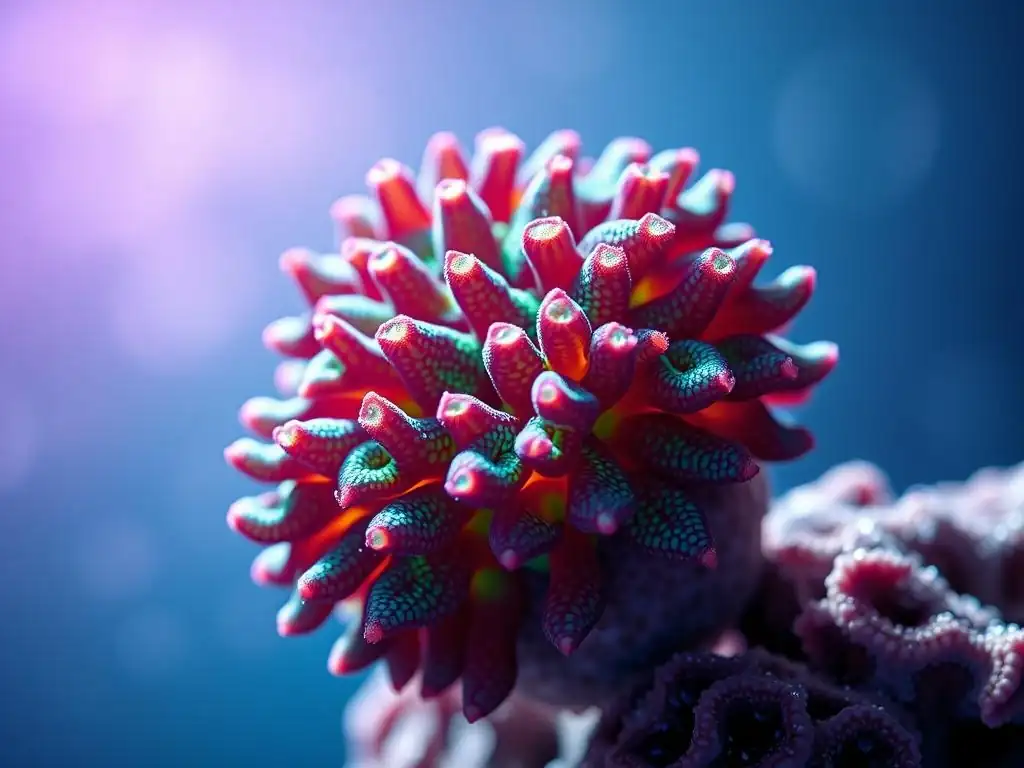
For dedicated zoanthid collectors, understanding how to manipulate the zoanthid lighting color spectrum can unlock even greater vibrance and unique expressions in specific morphs. Different zoanthid morphs possess varying compositions of fluorescent proteins (FPs), each responding optimally to distinct wavelengths. To maximize the "pop" of highly fluorescent morphs, increasing the blue spectrum, particularly royal blue (440-450 nm) and violet/UV (380-420 nm), can significantly intensify their glow. These wavelengths are highly effective at exciting the FPs, making greens, reds, and oranges appear more saturated.
While caution is always advised to prevent nuisance algae, subtle increases in specific wavelengths can sometimes enhance certain colors. For instance, a very slight bump in yellow or orange light might bring out specific hues in certain morphs, but this requires careful observation.
Advanced hobbyists with multi-channel LED fixtures can fine-tune these channels during peak viewing hours. For example, to make "Vampire Slayer" zoanthids (known for their vibrant red and green) truly fluoresce, some might run their blue channels at 90-100% and their violet/UV channels at 10-20% during daytime, while keeping white channels at a moderate 30-50% to maintain overall balance.
Experimenting with Different Lighting Intensities for Unique Results
Beyond spectral tuning, advanced zoanthid collectors often experiment with subtle variations in lighting intensity (PAR) to achieve unique growth forms and color presentations. While a general PAR range is recommended, pushing the boundaries slightly, within reason, can yield interesting results. Higher PAR levels (e.g., 150-200 µmol/m²/s for resilient morphs) can sometimes lead to more compact growth and incredibly intense, saturated coloration, as the zoanthids produce denser concentrations of fluorescent pigments as a form of photoprotection. However, this approach carries a higher risk of bleaching if not executed carefully and with proper acclimation.
Conversely, some collectors might intentionally place certain zoanthid morphs in slightly lower PAR areas (e.g., 60-70 µmol/m²/s) to encourage larger polyp extension and more "flowy" appearances, or to bring out more subtle color variations that might be washed out under higher intensity. This experimental approach demands meticulous observation and a willingness to adjust parameters based on the zoanthid's response.
For instance, a collector might place a small frag of "Raptor's Rainbow" zoanthids in a slightly lower PAR area (e.g., 60 µmol/m²/s) to encourage larger polyp extension, while simultaneously placing another frag of the same morph in a higher PAR area (e.g., 120 µmol/m²/s) to observe if colors become more saturated, documenting the differences over several weeks.
Conclusion: Mastering Zoanthid Lighting for a Vibrant Reef Aquarium
Mastering the zoanthid lighting color spectrum is undeniably one of the most critical aspects of successfully cultivating these vibrant soft corals in a reef aquarium. It transcends merely providing light; it involves a nuanced understanding of intensity (PAR), spectral quality, and photoperiod to support the intricate symbiotic relationship between zoanthids and their zooxanthellae. Achieving the ideal balance ensures not only their survival and growth but also unlocks their full potential for breathtaking coloration and fluorescence.
The journey to a truly vibrant zoanthid collection is one of continuous learning and observation. By carefully selecting appropriate lighting technology, meticulously tuning the zoanthid lighting color spectrum, and diligently monitoring your corals' responses to every adjustment, you empower your zoanthids to thrive. The reward is a dynamic, colorful display that is a testament to your dedication and understanding of these fascinating marine invertebrates, transforming your reef aquarium into a captivating underwater masterpiece.
Frequently Asked Questions
What is the ideal Zoanthid lighting color spectrum for optimal growth and coloration?
The ideal spectrum typically includes a balance of blue and white light, often around 14,000K to 20,000K. This range promotes photosynthesis and enhances the vibrant colors of your Zoanthids.
How does the Zoanthid lighting color spectrum affect their coloration?
Different wavelengths within the spectrum influence the production of specific pigments. Supplying the right lighting color spectrum encourages the expression of brighter and more diverse colors in your Zoanthids.
Can too much light damage Zoanthids, even with the correct Zoanthid lighting color spectrum?
Yes, excessive light intensity, even within the ideal spectrum, can cause bleaching or stress in Zoanthids. Acclimation and careful monitoring are crucial.
What types of lights are best for achieving the correct Zoanthid lighting color spectrum?
LEDs are highly recommended due to their controllability and efficiency in producing specific wavelengths. T5 fluorescent lights are also a viable option for providing a balanced spectrum.
How often should I adjust the Zoanthid lighting color spectrum in my aquarium?
Generally, adjustments aren't needed frequently. Only change the Zoanthid lighting color spectrum if you see signs of stress or color loss in your Zoanthids.
Final Reflection: Illuminating the Depths of Zoanthid Beauty
The journey through understanding the Zoanthid lighting color spectrum has revealed more than just optimal growth parameters; it's unveiled a pathway to unlocking the vibrant potential hidden within these captivating corals. The knowledge we've explored is not merely academic; it's a practical tool that empowers reef aquarists to cultivate breathtaking displays, pushing the boundaries of what's possible within the confines of our tanks.
This exploration has profoundly influenced my appreciation for the delicate balance within reef ecosystems and the power of informed intervention. Witnessing the transformation of dull, lackluster Zoanthids into radiant jewels under the right light is a testament to the profound impact of understanding their specific needs. The beauty of the natural world lies in the details, and understanding those details is the key to unlocking its full potential.
This quote encapsulates the essence of our journey, highlighting the importance of meticulous observation and informed action in the pursuit of reef keeping excellence.
Now, armed with this knowledge, I invite you to reflect on your own reef keeping journey. Consider how the principles of the Zoanthid lighting color spectrum can be applied to enhance the health and vibrancy of your own coral colonies. Embrace the power of informed experimentation, and let the radiant colors of your Zoanthids serve as a constant reminder of the beauty and complexity that lies beneath the surface.
Ignite Your Zoanthids: Witness Explosive Color!
Thank you for diving deep into the zoanthid lighting spectrum with us! We hope you now have a clearer understanding of how to maximize your zoanthids' vibrant potential. Ready to take your reef tank to the next level?
Here are a few steps you can take right now:
- Re-evaluate your current lighting setup against the PAR and spectral recommendations discussed and make informed adjustments. It’s time to see those colors pop!
- Dive deeper! Research specific zoanthid morphs to understand their individual lighting preferences. Uncover the secrets to their unique coloration.
- Share your lighting journey! Connect with fellow reef keepers online and discuss your successes (and learning experiences!) with zoanthid lighting.
What specific lighting adjustments are you planning to make, and what results are you hoping to achieve with your zoanthids?