
The Barb Trifecta: Comparing Tiger, Cherry, and Denison Barbs SidebySide

Welcome to Aquarium Mastery!
Ever wondered which vibrant barb is perfect for your freshwater aquarium? Dive in and explore the fascinating world of barbs with our in-depth comparison, focusing specifically on the Tiger, Cherry, and Denison barbs. This article will help you decide if the Tiger cherry denison barb is the right addition to your aquatic family, and uncover the nuances that set these stunning fish apart. Ready to unlock the secrets of successful barb keeping? Let's get started!
- Barb Comparison: Tiger, Cherry, and Denison Barbs
- Introduction: Exploring Popular Barb Species
- Tiger Barb Profile: Active and Striking
- Cherry Barb Profile: Peaceful and Colorful
- Denison Barb Profile: Elegant and Active
- Barb Comparison: Detailed Analysis
- Choosing the Right Barb: Key Factors
- Conclusion: Enjoying a Barb Aquarium
-
Frequently Asked Questions
- How do Tiger Barbs, Cherry Barbs, and Denison Barbs differ in their size and temperament?
- What are the ideal water parameters for keeping Tiger, Cherry, and Denison Barbs?
- What type of aquarium setup is recommended for each of these Barb species?
- What are the dietary requirements of Tiger, Cherry, and Denison Barbs?
- How do Tiger, Cherry, and Denison Barbs compare in terms of ease of care for beginner aquarists?
- Final Reflection: Appreciating the Aquatic Spectrum
- Unleash Your Aquarium's Potential!
Barb Comparison: Tiger, Cherry, and Denison Barbs
Introduction: Exploring Popular Barb Species
Why Compare These Barbs?
The world of freshwater aquariums offers a dazzling array of fish, and barbs, belonging to the Cyprinidae family, are consistently among the most popular choices due to their vibrant colors, active schooling behavior, and generally hardy nature. However, within this broad category, species like the Tiger Barb, Cherry Barb, and Denison Barb present distinct characteristics that significantly impact their suitability for different aquarium setups. This detailed Tiger cherry denison barb comparison is essential for aquarists to make informed decisions, preventing potential compatibility issues and ensuring the well-being of their aquatic inhabitants.
Understanding the nuances between these three species – from their specific temperament to their environmental needs – is crucial. While all are barbs, their individual requirements vary widely, influencing tank size, decor, and especially tank mate selection. A thorough Tiger cherry denison barb comparison helps hobbyists build a harmonious and thriving community tank, avoiding common pitfalls such as aggression, stress, or inadequate living conditions that can arise from mismatched species.
Understanding Barb Care
General barb care revolves around maintaining pristine water quality, providing adequate space, and ensuring a suitable diet. Most barbs thrive in well-oxygenated water with a moderate current, mimicking their natural riverine habitats. Consistent partial water changes, typically 25-30% weekly, are paramount to keep nitrate levels low and prevent the buildup of harmful toxins.
Despite these general commonalities, the specific needs of different barb species diverge. For instance, some barbs are highly active swimmers requiring extensive open space, while others prefer densely planted areas for cover. Dietary preferences can also vary, with some benefiting more from vegetable matter and others from protein-rich foods. Recognizing these subtle yet critical differences, which this Tiger cherry denison barb comparison will highlight, is key to successful long-term care.
Tiger Barb Profile: Active and Striking
Appearance and Size
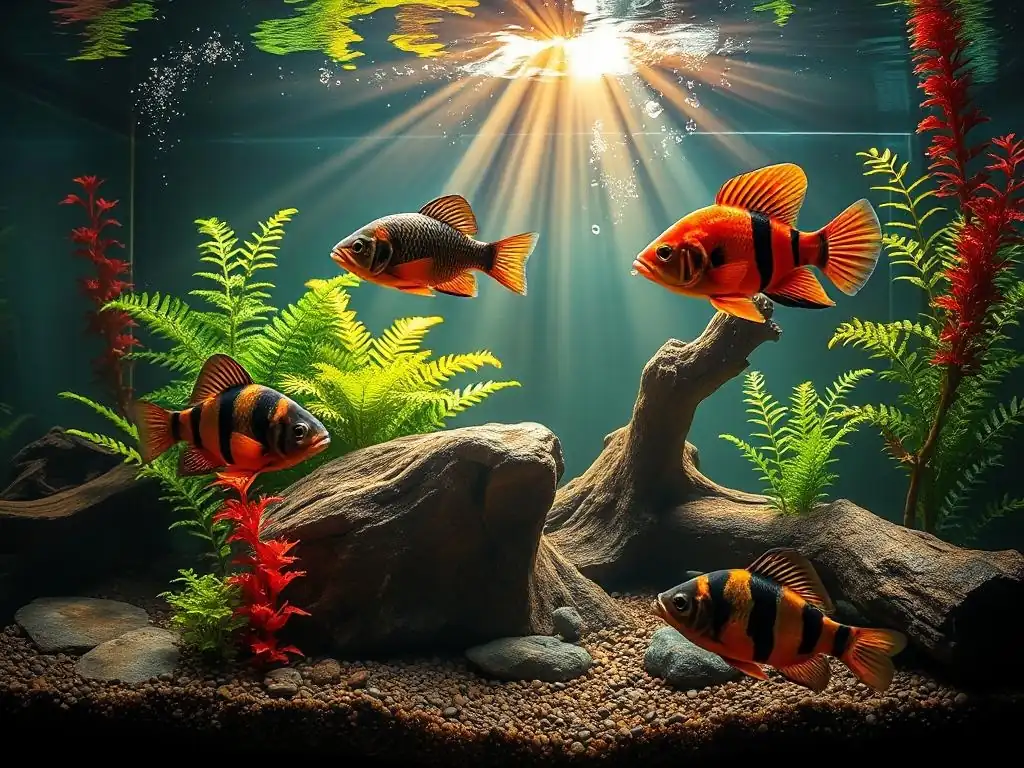
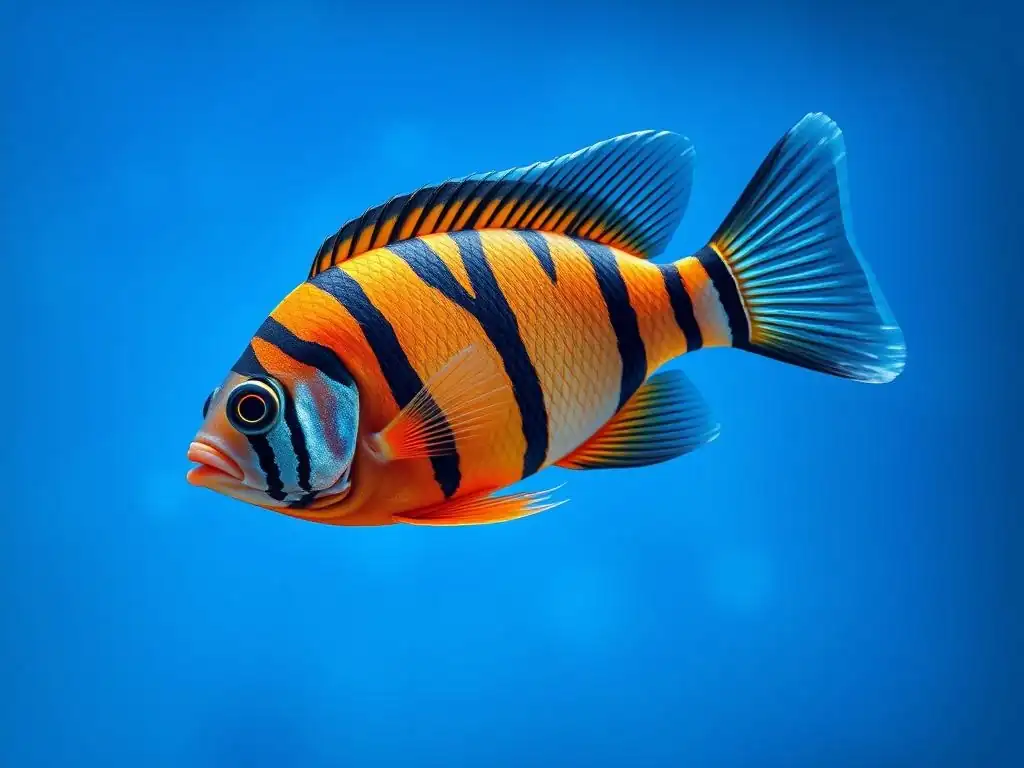
The Tiger Barb ( Puntigrus tetrazona), often recognized by its distinctive appearance, features a vibrant orange to gold body adorned with four prominent vertical black stripes. These stripes extend across its body and sometimes into its fins, giving it a striking, almost tiger-like pattern. Variations, such as the Green Tiger Barb (a selectively bred color morph) and Albino Tiger Barb, also exist, maintaining the characteristic striped pattern.
These active cyprinids typically grow to an adult size of about 2.5 to 3 inches (6 to 7.5 cm) in a well-maintained aquarium. They possess a robust, torpedo-shaped body that allows for swift movements. With proper care, including stable water conditions and a balanced diet, Tiger Barbs can live for approximately 5 to 7 years, making them a relatively long-lived addition to a freshwater tank.
Tank Requirements: Size, Decor, and Water
Due to their active nature and schooling requirements, Tiger Barbs need ample swimming space. A minimum tank size of 20 gallons (approximately 75 liters) is recommended for a small school of 6 to 8 individuals, with larger tanks (30 gallons or more) being ideal for thriving groups. The tank should be longer rather than taller to accommodate their horizontal swimming patterns.
Regarding decor, a Tiger Barb setup should include a mix of densely planted areas, using hardy plants like Java Fern or Anubias, alongside open swimming spaces. Driftwood and smooth rocks can also be incorporated to provide visual breaks and additional hiding spots. Water parameters should be maintained within a temperature range of 74-79°F (23-26°C), a pH of 6.0-7.0, and a general hardness (GH) of 5-12 dGH. Good filtration, providing moderate water flow, is essential to keep the water pristine for these fish.
Temperament and Compatibility: Tank Mates
Tiger Barbs are well-known for their semi-aggressive and fin-nipping tendencies, especially if kept in insufficient numbers. To mitigate this behavior, they should always be kept in a school of at least 6 to 8 individuals, which helps to distribute aggression amongst themselves rather than directing it at other tank inhabitants. When kept in larger groups, their aggression is typically reduced, and they display more natural schooling behaviors.
Compatible tank mates for Tiger Barbs include other fast-moving, similarly sized, and robust fish that can handle their boisterous nature. Good options include certain loaches (e.g., Clown Loaches, Yoyo Loaches), larger species of Tetras (e.g., Congo Tetras), Danios, and some types of Rainbowfish. It is highly advisable to avoid keeping them with slow-moving fish, species with long, flowing fins (like Angelfish, Bettas, or Gouramis), or very small, timid fish, as these are prime targets for fin-nipping.
Diet and Feeding
Tiger Barbs are omnivorous and not particularly fussy eaters, readily accepting a variety of foods. A high-quality flake food or small pellet designed for omnivorous fish should form the staple of their diet. Ensure the food is small enough for their mouths.
To provide a balanced diet and enhance their coloration and vitality, supplement their staple diet with live or frozen foods a few times a week. Excellent choices include brine shrimp, bloodworms, daphnia, and mosquito larvae. Vegetable matter, such as blanched zucchini or spirulina flakes, can also be offered occasionally. Feed small amounts multiple times a day, only what they can consume within a few minutes, to prevent overfeeding and maintain water quality.
Health Issues and Prevention
Like many freshwater fish, Tiger Barbs are susceptible to common aquarium diseases, particularly if exposed to poor water quality, stress, or improper diet. They can contract Ich (white spot disease), fin rot, and various fungal infections. Symptoms often include white spots on the body and fins, frayed fins, or cotton-like growths.
Prevention is key to maintaining healthy Tiger Barbs. This involves consistent and meticulous tank maintenance, including regular water changes (25-30% weekly) and proper filtration, to ensure stable and clean water parameters. Providing a balanced, varied diet and maintaining appropriate tank conditions (temperature, pH, school size) significantly reduces stress, thereby boosting their immune system. Quarantining new fish for 2-4 weeks before introducing them to the main tank is also a crucial preventative measure.
Cherry Barb Profile: Peaceful and Colorful
Appearance and Size: Sexual Dimorphism
The Cherry Barb ( Puntius titteya) is a charming and peaceful species known for its subtle beauty and distinctive sexual dimorphism. Males are particularly striking, developing a vibrant, deep cherry-red color, especially during breeding periods or when displaying to females. This intense coloration is what gives the fish its common name. Females, in contrast, are typically duller, exhibiting a more subdued brownish-orange hue with a less pronounced horizontal stripe along their flanks.
These smaller barbs generally reach an adult size of about 1.5 to 2 inches (4 to 5 cm), making them an excellent choice for smaller community aquariums. They possess a slender, elongated body shape. With good care, Cherry Barbs can live for approximately 4 to 6 years, contributing a splash of color and calm activity to the aquarium environment.
Tank Requirements: Ideal Environment
Cherry Barbs are less demanding in terms of tank size compared to their larger relatives. A minimum tank size of 10 gallons (approximately 38 liters) is suitable for a small school of 6 to 8 individuals, though a 20-gallon tank or larger is always preferable for a more stable environment and a larger school. They thrive in a well-planted aquarium with plenty of hiding spots and shaded areas.
Ideal decor includes dense vegetation, particularly fine-leaved plants like Java Moss, Hornwort, or Cabomba, which provide cover and spawning sites. Driftwood and smooth river stones can also be incorporated. They prefer gentle water flow and appreciate dim lighting, which can be achieved through floating plants. Water parameters should be maintained within a temperature range of 72-79°F (22-26°C), a pH of 6.0-7.0, and a general hardness (GH) of 5-19 dGH, showing a wider tolerance range than some other barbs.
Temperament and Compatibility: Peaceful Community
Cherry Barbs are renowned for their remarkably peaceful and shy temperament, making them an excellent choice for a wide variety of community aquariums. Unlike their Tiger Barb cousins, they are not prone to fin-nipping or aggression. They are schooling fish and thrive when kept in groups of at least 6 individuals; larger schools will make them feel more secure and display their natural behaviors and vibrant colors more readily.
Compatible tank mates for Cherry Barbs include other peaceful, similarly sized community fish. Good choices include smaller tetras (such as Neon Tetras, Ember Tetras, or Rummy Nose Tetras), various species of Rasboras, Corydoras catfish, Otocinclus catfish, and dwarf gouramis. They generally coexist well with most peaceful bottom dwellers and mid-water swimmers. Avoid keeping them with large, aggressive, or overly boisterous fish that might stress them.
Diet and Feeding
Cherry Barbs are omnivorous and have a fairly undemanding diet, readily accepting most high-quality aquarium foods. A staple diet of good quality flake food or micro-pellets designed for small omnivorous fish is usually sufficient. Ensure the food particles are appropriately sized for their relatively small mouths.
To ensure optimal health and enhance their beautiful coloration, supplement their diet with small live or frozen foods a few times a week. Excellent options include brine shrimp, daphnia, and micro-worms. They also appreciate some vegetable matter, such as spirulina flakes. Feed small portions two to three times a day, only what they can consume within a couple of minutes, to prevent uneaten food from fouling the water.
Health Issues and Prevention
Cherry Barbs are generally hardy fish and, when kept in appropriate conditions, are quite resistant to disease. However, like all aquarium inhabitants, they can become susceptible to common freshwater ailments such as Ich, fin rot, or fungal infections if water quality deteriorates or if they experience prolonged stress. Symptoms might include lethargy, clamped fins, or visible lesions.
To prevent health issues, consistent and diligent tank maintenance is crucial. This includes performing regular partial water changes (25% weekly), ensuring robust filtration, and maintaining stable water parameters within their preferred ranges. Providing a well-planted environment with plenty of hiding spots helps to reduce stress, which in turn strengthens their immune system. A varied and nutritious diet also plays a significant role in their overall health and disease resistance.
Denison Barb Profile: Elegant and Active
Appearance and Size: Distinctive Features
The Denison Barb ( Sahyadria denisonii), also widely known as the Roseline Shark or Red-line Torpedo Barb, is celebrated for its elegant and distinctive appearance. It features a sleek, torpedo-shaped body with a striking silver-gold base coloration. A prominent black stripe runs horizontally along its body, extending from the snout to the caudal fin. Parallel to this black stripe, a vibrant red stripe adds a splash of color, typically starting from the snout, passing through the eye, and extending partially along the body. The dorsal fin often displays red and black markings, further enhancing its visual appeal.
These impressive fish are significantly larger than Tiger and Cherry Barbs, reaching an adult size of about 4.5 to 6 inches (11 to 15 cm) in captivity, though they can grow even larger in their natural habitat. Their active nature and graceful swimming make them a captivating addition to a spacious aquarium. With optimal care, Denison Barbs can enjoy a lifespan of 5 to 8 years or even longer.
Tank Requirements: Natural Habitat
Denison Barbs are powerful, active swimmers that require substantial space to thrive. A minimum tank size of 55 gallons (approximately 200 liters) is recommended for a small school of 6 to 8 individuals, with larger tanks (75 gallons or more) being ideal to accommodate their size and activity level. The tank should be long to provide ample horizontal swimming room, mimicking their natural fast-flowing river environments.
Decor should include smooth rocks, driftwood, and hardy plants rooted along the edges or securely attached to decor, allowing plenty of open swimming space in the center. They prefer highly oxygenated water with strong filtration and a noticeable current, which can be achieved with powerheads or appropriate filter outlets. Water parameters should be maintained within a temperature range of 60-77°F (16-25°C), a pH of 6.5-7.8, and a general hardness (GH) of 5-25 dGH, indicating a broader tolerance for water chemistry but a preference for cooler temperatures than many tropical fish.
Temperament and Compatibility: Suitable Tank Mates
Denison Barbs are generally peaceful but very active and can be somewhat skittish if not kept in appropriate conditions. They are schooling fish and absolutely thrive when kept in groups of 6 or more; larger schools help them feel secure, reduce stress, and encourage their natural schooling behaviors. When kept alone or in small numbers, they can become shy and prone to stress.
Compatible tank mates for Denison Barbs include other large, active, and peaceful fish that can keep up with their energy without being intimidated or aggressive towards them. Good choices include various species of Rainbowfish (e.g., Boeseman's Rainbowfish, Turquoise Rainbowfish), larger Rasboras (e.g., Harlequin Rasboras), Danios, and certain peaceful, similarly sized cichlids (e.g., Kribensis). Avoid very small, slow-moving, or overly aggressive fish, as these can either be stressed by the Denison Barbs' activity or cause stress to the barbs themselves.
Diet and Feeding: Balanced Diet
Denison Barbs are omnivorous, and a varied, balanced diet is crucial for their health and vibrant coloration. They readily accept high-quality flake foods, sinking pellets, and small granules. However, their diet should not be limited to dry foods alone.
It is highly beneficial to supplement their staple diet with plenty of live and frozen foods, such as bloodworms, brine shrimp, Mysis shrimp, and chopped earthworms, several times a week. Crucially, they also require a significant amount of vegetable matter in their diet. Offer spirulina flakes, blanched zucchini, or other vegetable-based foods regularly to ensure they receive all necessary nutrients. Feed small amounts multiple times a day to match their active metabolism.
Health Issues and Prevention
Denison Barbs are known to be sensitive to poor water quality and high nitrate levels, which can quickly lead to stress and susceptibility to disease. They are generally robust but can suffer from common freshwater ailments such as Ich, bacterial infections, or fin rot if their environmental needs are not met. Stress, often caused by inadequate tank size, insufficient schooling, or unsuitable tank mates, is a primary contributor to health problems.
Prevention is paramount for keeping Denison Barbs healthy. This involves maintaining impeccable water quality through strong filtration and performing large, regular water changes (30-50% weekly or bi-weekly depending on bioload). Ensuring high oxygenation and a proper current is also critical. Providing a spacious, well-established tank with appropriate schooling numbers and compatible tank mates minimizes stress and supports their immune system, making them less vulnerable to disease.
Barb Comparison: Detailed Analysis
Size and Appearance
When undertaking a Tiger cherry denison barb comparison, one of the most immediate distinctions is size and appearance. Tiger Barbs typically reach 2.5-3 inches (6-7.5 cm) and are characterized by their bold black and orange/gold stripes, giving them a stocky, robust look. Cherry Barbs are significantly smaller, growing to only 1.5-2 inches (4-5 cm), with males displaying a striking cherry-red coloration and females a more subdued brownish-orange; their bodies are more slender than Tiger Barbs.
In stark contrast, Denison Barbs are the largest of the trifecta, commonly reaching 4.5-6 inches (11-15 cm) in aquariums, and are recognized by their sleek, torpedo-shaped silver bodies adorned with distinctive black and red stripes running horizontally. This Tiger cherry denison barb comparison highlights that while all are barbs, their mature sizes and visual aesthetics vary dramatically, influencing tank selection and overall aquarium design.
Temperament is a critical factor in a Tiger cherry denison barb comparison, as it dictates potential tank mate compatibility. Tiger Barbs are notorious for their semi-aggressive, fin-nipping behavior, especially towards slow-moving or long-finned fish; they require large schools (6-8+) to disperse aggression and are best kept with similarly robust, fast-moving species. Cherry Barbs, on the other hand, are remarkably peaceful, shy, and make excellent additions to most community tanks, thriving in schools of at least six.
Denison Barbs are generally peaceful but highly active. They are strong schoolers (6-8+ individuals) and can become stressed or shy if kept in insufficient numbers or with overly aggressive tank mates. Their high activity level means they can overwhelm very small or timid fish, even if not directly aggressive. This Tiger cherry denison barb comparison underscores the importance of choosing tank mates carefully based on the specific barb species' social dynamics.
Tank Size and Setup
The ideal tank size and setup requirements also vary significantly across these species. For Tiger Barbs, a minimum of a 20-gallon (75-liter) long tank is necessary for a small school, providing ample open swimming space combined with some dense planting. Cherry Barbs are more forgiving, suitable for a minimum 10-gallon (38-liter) tank for a small school, preferring densely planted environments with gentle water flow and dimmer lighting.
Denison Barbs, due to their larger size and high activity, demand a minimum of a 55-gallon (200-liter) tank for a small group, with larger tanks being highly recommended. They require extensive open swimming areas, strong filtration, and high oxygenation to mimic their natural fast-flowing river habitats. This Tiger cherry denison barb comparison makes it clear that tank capacity and environmental setup must be tailored to the specific needs of the chosen barb species.
Dietary Needs
While all three barb species are omnivorous, their specific dietary preferences and requirements show subtle differences. Tiger and Cherry Barbs are relatively undemanding, thriving on a staple of high-quality flake or micro-pellet foods supplemented with occasional live or frozen protein sources like brine shrimp or bloodworms. They are opportunistic feeders and will accept a wide variety of commercial foods.
Denison Barbs, while also omnivorous, benefit significantly from a diet that includes a higher proportion of vegetable matter in addition to protein-rich live or frozen foods. Spirulina flakes, blanched zucchini, and other plant-based foods are crucial for their long-term health and vibrant coloration, reflecting their natural diet in fast-flowing waters. This Tiger cherry denison barb comparison highlights the need for a more varied and specific diet for Denison Barbs compared to their smaller relatives.
Water Parameter Preferences
Water parameter preferences offer another point of divergence in this Tiger cherry denison barb comparison. Tiger Barbs prefer temperatures between 74-79°F (23-26°C) and a slightly acidic to neutral pH of 6.0-7.0. Cherry Barbs thrive in a similar temperature range of 72-79°F (22-26°C) and a pH of 6.0-7.0, showing a slightly wider tolerance for general hardness.
Denison Barbs, however, exhibit a preference for cooler temperatures compared to many tropical species, ideally between 60-77°F (16-25°C), and a pH range of 6.5-7.8. They also demand highly oxygenated water with strong flow. This Tiger cherry denison barb comparison reveals that while there's some overlap, Denison Barbs stand out with their cooler temperature and higher oxygenation requirements, necessitating specific consideration for their environmental setup.
Choosing the Right Barb: Key Factors
Aquarium Size
The size of your existing or planned aquarium is arguably the most critical factor when choosing between these three popular barb species. A Tiger cherry denison barb comparison unequivocally shows that their mature sizes and activity levels dictate vastly different space requirements. A Cherry Barb school can comfortably inhabit a 10-gallon tank, whereas Tiger Barbs need at least a 20-gallon long tank to thrive without becoming overly aggressive.
For Denison Barbs, their large size and energetic swimming necessitate a minimum of a 55-gallon tank, with larger aquariums (75 gallons or more) being ideal for a healthy, active school. Attempting to house any of these species in an undersized tank will inevitably lead to stress, stunted growth, increased aggression, and susceptibility to disease, compromising their well-being and the overall health of your aquatic ecosystem.
Compatibility with Tank Mates
Understanding the temperament and social behavior revealed by a Tiger cherry denison barb comparison is paramount for successful community tank keeping. Tiger Barbs, with their notorious fin-nipping tendencies, are best suited for tanks with robust, fast-moving, and similarly sized fish that can hold their own. They are generally incompatible with slow-moving or long-finned species.
Cherry Barbs, being peaceful and shy, are excellent choices for a wide range of tranquil community tanks alongside other small, non-aggressive fish. Denison Barbs, while peaceful, are very active and large, requiring tank mates that can tolerate their energy and size without being intimidated. Carefully consider the temperament of all inhabitants to ensure a harmonious environment and prevent stress or injury to any fish.
Maintaining a Balanced Ecosystem
Regardless of the barb species chosen, maintaining a balanced and healthy ecosystem is fundamental to their long-term well-being. This involves consistent water quality management, including regular partial water changes (e.g., 25-30% weekly for Tiger and Cherry Barbs, 30-50% weekly for Denison Barbs due to their size and activity). Robust filtration appropriate for the tank size and bioload is also essential to remove waste and maintain clarity.
Beyond water parameters, a balanced ecosystem includes providing appropriate decor that mimics their natural habitat, whether it's dense planting for Cherry Barbs or open swimming space with strong current for Denison Barbs. A varied and nutritious diet, specific to the needs highlighted in this Tiger cherry denison barb comparison, also plays a crucial role in preventing nutritional deficiencies and bolstering their immune systems against disease.
Personal Preferences
While the practical considerations of tank size, compatibility, and specific care needs are paramount, personal preferences also play a significant role in choosing the right barb. Do you prefer the bold, active display of a Tiger Barb school, the serene beauty of a group of vibrant Cherry Barbs, or the elegant, powerful presence of Denison Barbs darting through the water?
This Tiger cherry denison barb comparison provides the factual basis for making an informed decision, but ultimately, your aesthetic preferences and the type of aquatic environment you wish to create will guide your final choice. Consider the level of activity you desire in your tank, the color palette you envision, and your commitment to meeting the specific, sometimes demanding, requirements of each species.
Conclusion: Enjoying a Barb Aquarium
The Tiger cherry denison barb comparison highlights that while all three species are fascinating members of the barb family, they possess unique characteristics that dictate their suitability for different aquarium setups. From the semi-aggressive, striped Tiger Barb to the peaceful, vibrant Cherry Barb, and the large, elegant Denison Barb, each offers a distinct experience for the aquarist. Understanding their specific requirements for tank size, water parameters, diet, and temperament is not merely a recommendation but a necessity for their well-being.
By carefully considering the detailed information provided in this Tiger cherry denison barb comparison, aquarists can make informed choices that lead to a thriving and harmonious aquatic environment. Whether you seek a boisterous display, a serene community, or a dynamic centerpiece, selecting the barb that perfectly aligns with your aquarium's capacity and the needs of its inhabitants will ensure a rewarding and enjoyable experience for years to come.
Frequently Asked Questions
How do Tiger Barbs, Cherry Barbs, and Denison Barbs differ in their size and temperament?
Tiger Barbs are smaller and known for their nippy behavior. Cherry Barbs are peaceful and relatively small. Denison Barbs are larger and more peaceful but require a larger tank.
What are the ideal water parameters for keeping Tiger, Cherry, and Denison Barbs?
Tiger and Cherry Barbs prefer slightly acidic to neutral water. Denison Barbs need pristine water conditions with excellent filtration. All three require stable parameters.
What type of aquarium setup is recommended for each of these Barb species?
Tiger Barbs thrive in a densely planted tank to break line of sight. Cherry Barbs enjoy a similar environment, but on a smaller scale. Denison Barbs require a large tank with strong water flow.
What are the dietary requirements of Tiger, Cherry, and Denison Barbs?
All three species are omnivorous and accept a variety of foods. A balanced diet consisting of flakes, pellets, and live or frozen foods is ideal. Variety is key for optimal health.
How do Tiger, Cherry, and Denison Barbs compare in terms of ease of care for beginner aquarists?
Cherry Barbs are the easiest to care for, making them suitable for beginners. Tiger Barbs can be more challenging due to their fin-nipping. Denison Barbs require more experience due to their size and specific needs.
Final Reflection: Appreciating the Aquatic Spectrum
The world of aquarium keeping, as we've explored through this Tiger, Cherry, and Denison Barb comparison, is a microcosm of the natural world, demanding our attention to detail and fostering an appreciation for biodiversity. Understanding the nuances of each species, their individual needs, and their collective impact on the aquarium ecosystem, is more crucial now than ever, as responsible fishkeeping becomes increasingly important in the face of environmental challenges.
This journey through the vibrant colors and unique behaviors of these barbs has illuminated not only their differences but also their shared beauty and the responsibility we bear as their caretakers. My hope is that this comparison has sparked a deeper understanding of these fascinating creatures and inspired a more thoughtful approach to aquarium design and fish selection. In the end, we will conserve only what we love; we will love only what we understand; and we will understand only what we are taught.
- Baba Dioum
Now, as you consider adding these captivating barbs to your own aquascape, I invite you to reflect on the lessons learned. Consider not just their aesthetic appeal, but also their needs, their compatibility, and the long-term commitment you're making. Let this Tiger, Cherry, and Denison Barb comparison serve as a reminder that responsible fishkeeping is an act of conservation, a celebration of the aquatic spectrum, and a testament to the beauty and fragility of life.
Unleash Your Aquarium's Potential!
Thanks for diving into the vibrant world of barb fish! We hope you found the comparison of Tiger, Cherry, and Denison barbs insightful for planning your dream aquarium. Now, it's time to take your newfound knowledge and put it into action.
Here’s what you can do next:
- Decide which barb species best fits your aquarium’s ecosystem and begin planning your stocking strategy.
- Explore less common barb species, like the Rosy Barb or Spanner Barb, to broaden your aquascaping horizons.
- Share this article with a fellow aquarium enthusiast and spark a conversation about their favorite barb varieties!
Which of these barbs will you introduce to your aquarium first, and what tank mates do you envision for them?