
Bolivian Ram: The Hardier, Peaceful Microgeophagus Altispinosus

Welcome to Aquarium Mastery!
Ever wondered if there's a vibrant, peaceful, and relatively easy-to-care-for cichlid that can truly bring your freshwater aquarium to life? Delve into our comprehensive guide and unlock the secrets to thriving with the Bolivian Ram. Discover essential Bolivian Ram care tips and learn how to create the perfect environment for these captivating fish. Ready to transform your aquarium into a stunning underwater paradise? Let's dive in!
- Bolivian Ram: The Peaceful Microgeophagus altispinosus for Your Aquarium
- Understanding the Bolivian Ram: An Introduction to Microgeophagus altispinosus
- Bolivian Ram Care Tips: Creating the Ideal Habitat
- Bolivian Ram Diet and Feeding: Ensuring Proper Nutrition
- Bolivian Ram Tank Mates: Compatibility and Community Tank Considerations
- Bolivian Ram Health and Disease Prevention: Common Issues and Treatments
- Bolivian Ram Breeding: Encouraging Spawning in Your Aquarium
- Troubleshooting Common Bolivian Ram Care Issues
- The Benefits of Keeping Bolivian Rams: A Rewarding Aquarium Experience
-
Frequently Asked Questions
- What are some essential water parameters for keeping Bolivian Rams happy and healthy?
- What are some good tank mates for Bolivian Rams in a community aquarium?
- What should I feed my Bolivian Rams to ensure they get proper nutrition?
- What are some signs that my Bolivian Ram is stressed or sick?
- How often should I perform water changes in a Bolivian Ram aquarium?
- Final Reflection: Appreciating the Resilience of the Bolivian Ram
- Unleash Your Bolivian Ram's Potential!
Bolivian Ram: The Peaceful Microgeophagus altispinosus for Your Aquarium
Understanding the Bolivian Ram: An Introduction to Microgeophagus altispinosus
Why Choose Bolivian Rams for Your Freshwater Aquarium?
Bolivian Rams, scientifically known as Microgeophagus altispinosus, are an excellent choice for freshwater aquariums due to their remarkably peaceful temperament and impressive hardiness. Unlike some of their more delicate cichlid cousins, these dwarf cichlids are forgiving of minor fluctuations in water parameters, making them a suitable option even for aquarists new to the cichlid family. Their active nature and interesting behaviors, such as sifting through substrate, add dynamic life to a community tank without the typical aggression associated with many cichlid species.
Furthermore, Bolivian Rams exhibit a captivating beauty with their subtle golden-brown bodies, iridescent scales that shimmer under proper lighting, a distinct black spot on their flanks, and striking red-tipped fins. They are known for forming strong pair bonds and displaying fascinating social interactions, often engaging in gentle sparring or showing off their vibrant colors. Their relatively small size, typically reaching about 3-4 inches (7-10 cm), allows them to fit comfortably into moderately sized aquariums, making comprehensive Bolivian Ram care tips accessible to a broader audience of hobbyists.
Bolivian Ram vs. German Blue Ram: Key Differences and Advantages
When considering dwarf cichlids, the Bolivian Ram is often compared to its more famous relative, the German Blue Ram ( Mikrogeophagus ramirezi). The most significant distinction lies in their hardiness and adaptability. German Blue Rams are notoriously sensitive to water quality and require pristine, stable conditions to thrive, often leading to shorter lifespans (typically 2-3 years) if not met precisely. In contrast, Bolivian Rams are far more robust, tolerating a wider range of water parameters and generally living longer, often reaching 4-6 years in a well-maintained aquarium.
Visually, German Blue Rams boast more intense, electric blue and red coloration, which is often a primary draw. Bolivian Rams, while less flamboyant, possess a natural elegance with their earthy tones, subtle iridescence, and a distinctive black line that runs through their eye. Their temperament is also a key advantage; Bolivian Rams are consistently more peaceful and less prone to aggression or shyness than German Blue Rams, making them superior candidates for diverse community tanks. This inherent resilience makes understanding Bolivian Ram care tips a more straightforward and rewarding experience for aquarists.
Bolivian Ram Care Tips: Creating the Ideal Habitat
Optimal Tank Size for Bolivian Rams: Space Requirements
Providing adequate space is a fundamental Bolivian Ram care tip for their well-being. For a single pair of Bolivian Rams, a minimum tank size of 20 gallons (approximately 75 liters) is recommended. This volume allows them sufficient territory to establish themselves and offers ample swimming space without feeling cramped. The "long" dimension of a 20-gallon tank (typically 30 inches or 76 cm) is preferred over a "high" tank, as it provides more horizontal swimming room and floor space for their sifting activities.
For a small group of Bolivian Rams, such as 4-6 individuals, or if you plan to include other peaceful community fish, a 30-gallon (approximately 113 liters) or 40-gallon (approximately 150 liters) breeder tank would be more appropriate. Larger tanks help dilute waste, maintain stable water parameters, and allow for the creation of multiple territories, which can minimize potential squabbles among the Rams. While they are dwarf cichlids, their active nature and need for personal space make a generous tank size a critical factor in their overall health and happiness.
Setting Up the Perfect Bolivian Ram Tank Environment: Substrate, Décor, and Lighting
The ideal substrate for a Bolivian Ram tank is fine sand, such as CaribSea Super Naturals or Estes Marine Sand. This preference stems from their natural behavior of sifting through the substrate in search of food particles and detritus. Gravel can be abrasive to their delicate mouths and gills, hindering their natural feeding and exploratory behaviors. A layer of at least 1-2 inches (2.5-5 cm) of sand allows them to engage in this fascinating activity, which is crucial for their mental and physical health.
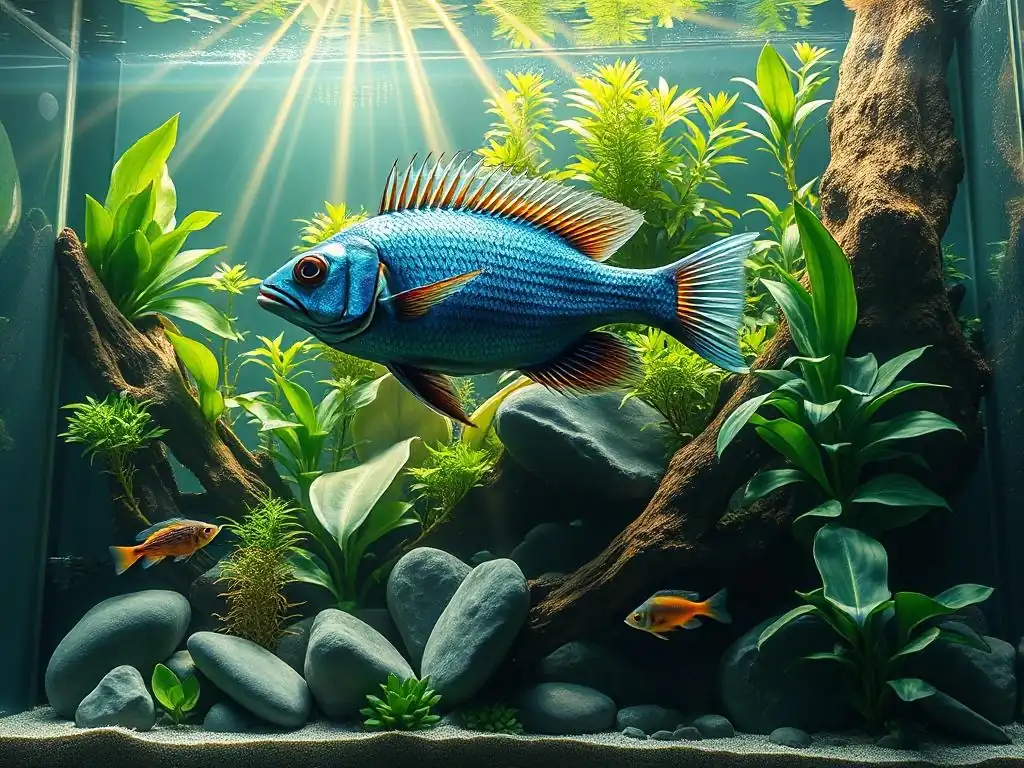
Décor should focus on providing ample hiding spots and visual barriers to reduce stress and establish territories. Driftwood pieces, smooth river rocks (e.g., Seiryu Stone, Dragon Stone), and ceramic caves are excellent choices. Live plants, such as Amazon Swords, Cryptocorynes, Anubias, and Java Fern, not only enhance the aesthetic appeal but also provide crucial cover and break up lines of sight.
Floating plants like Salvinia or Frogbit can help diffuse lighting, which Bolivian Rams appreciate as they prefer slightly subdued light conditions, mimicking their shaded natural habitats. Moderate lighting is generally sufficient and contributes to a stress-free environment, a vital component of successful Bolivian Ram care tips.
Water Parameters for Bolivian Rams: Maintaining Stability
Maintaining stable water parameters is paramount for the health and longevity of Bolivian Rams. While they are more tolerant than German Blue Rams, consistent water quality prevents stress and disease. Regular testing with a reliable liquid test kit for ammonia, nitrite, nitrate, pH, and temperature is highly recommended.
Ideal Temperature Range for Bolivian Rams
The ideal temperature range for Bolivian Rams is 74-82°F (23-28°C). Within this range, stability is key; sudden fluctuations can cause significant stress and compromise their immune system. A reliable aquarium heater with an accurate thermostat is essential to maintain a consistent temperature.
Temperatures at the lower end of this range may lead to reduced activity and increased susceptibility to common fish diseases like Ich. Conversely, temperatures exceeding 82°F (28°C) for prolonged periods can reduce dissolved oxygen levels in the water, leading to respiratory distress and general discomfort for the fish. Maintaining a consistent temperature within their preferred range is a crucial Bolivian Ram care tip that directly impacts their metabolism, behavior, and overall vitality.
pH Levels for Optimal Bolivian Ram Health
Bolivian Rams thrive in a pH range of 6.0-7.5. They are adaptable to a somewhat wider pH range than some cichlids, but stability within this spectrum is more important than hitting an exact number. Wild Bolivian Rams originate from river systems in South America where the water is typically soft and slightly acidic.
Sudden and drastic changes in pH can be highly detrimental, causing pH shock that severely stresses the fish and can even be fatal. If your tap water falls outside this range, consider methods to slowly adjust it, such as using reverse osmosis (RO) water mixed with tap water, or incorporating peat filtration, which naturally lowers pH over time. Consistent pH management is a fundamental aspect of comprehensive Bolivian Ram care tips for ensuring their long-term health and vibrant coloration.
Water Hardness Considerations for Microgeophagus altispinosus
For Microgeophagus altispinosus, soft to medium-hard water is preferred, with a general hardness (dGH) range of 5-15 dGH (approximately 89-268 ppm). While they are quite adaptable, water that is excessively hard can cause stress and may hinder breeding success. Their natural habitats are characterized by softer water conditions.
To maintain appropriate water hardness, regular partial water changes (e.g., 25-30% weekly) using properly conditioned tap water are essential. If your tap water is exceptionally hard, you might consider blending it with RO water to achieve the desired parameters. Monitoring both general hardness (GH) and carbonate hardness (KH) can provide a more complete picture of your water chemistry and help prevent pH swings. Ensuring suitable water hardness is a crucial element of effective Bolivian Ram care tips, contributing to their overall resilience and well-being.
Bolivian Ram Diet and Feeding: Ensuring Proper Nutrition
What Do Bolivian Rams Eat? A Guide to Balanced Feeding
Bolivian Rams are omnivores with a clear preference for meaty foods, reflecting their natural diet in the wild. In their native Amazon basin habitats, they are micro-predators and detritivores, sifting through the substrate to find small invertebrates, insect larvae, tiny crustaceans, and various forms of organic detritus. This natural feeding behavior highlights the importance of offering a varied and balanced diet in the aquarium to ensure they receive all necessary nutrients for optimal health and vibrant coloration.
A diet consisting solely of one type of food, such as basic flakes, will not provide the complete nutritional profile these fish require. Nutritional deficiencies can lead to faded colors, weakened immune systems, and susceptibility to various diseases. Therefore, a comprehensive feeding strategy that incorporates a range of food types is a crucial Bolivian Ram care tip, promoting their longevity, energy levels, and overall vitality.
Recommended Foods for Bolivian Rams: Flakes, Pellets, and Live Foods
For the staple diet, high-quality sinking flakes and small pellets specifically formulated for cichlids or omnivorous tropical fish are highly recommended. Look for brands that list fish meal, spirulina, and various vitamins as primary ingredients. Examples include Hikari Cichlid Gold Bites, Omega One Super Color Flakes, or New Life Spectrum Thera-A. Sinking foods are preferred as Bolivian Rams are bottom-to-mid dwelling fish.
Supplementing their diet with frozen and live foods is essential for providing variety, boosting their immune system, and encouraging natural feeding behaviors. Excellent frozen options include bloodworms, brine shrimp, daphnia, and mysis shrimp. These provide rich protein and fats. Live foods, such as newly hatched brine shrimp, microworms, or blackworms, are particularly beneficial for conditioning breeding pairs and providing an enriching hunting experience. Offering these diverse food types several times a week significantly enhances the effectiveness of Bolivian Ram care tips.
Feeding Schedule for Bolivian Rams: Frequency and Portion Control
A consistent feeding schedule is important for Bolivian Rams. It is generally recommended to feed them 1-2 times per day. Rather than offering one large meal, it is better to provide smaller portions more frequently, as this mimics their natural grazing behavior and prevents overfeeding.
Portion control is a vital aspect of Bolivian Ram care tips that directly impacts water quality. Only feed what your Bolivian Rams can consume entirely within 2-3 minutes. Any uneaten food will quickly decompose, leading to elevated ammonia and nitrite levels, which are toxic to fish. Overfeeding can also lead to digestive issues, such as bloating or swim bladder problems. Regularly removing any uneaten food after the feeding period helps maintain pristine water conditions and contributes significantly to the long-term health of your fish.
Bolivian Ram Tank Mates: Compatibility and Community Tank Considerations
Best Tank Mates for Bolivian Rams: Peaceful Community Fish
Selecting appropriate tank mates is a critical Bolivian Ram care tip to ensure a harmonious aquarium environment. Bolivian Rams are generally peaceful and can coexist well with a variety of similarly sized or slightly smaller community fish that are not overly boisterous or aggressive. Ideal tank mates typically occupy different water columns, reducing competition for space.
Excellent choices include various species of tetras, such as Neon Tetras, Cardinal Tetras, Rummy-nose Tetras, and Ember Tetras, which are schooling fish that add vibrant activity to the upper and middle levels of the tank. Peaceful rasboras (e.g., Harlequin Rasboras, Chili Rasboras) and smaller, non-nipping barbs (e.g., Cherry Barbs, Rosy Barbs) also make good companions.
For the bottom layer, peaceful catfish like Corydoras species (e.g., Panda Corydoras, Pygmy Corydoras) and Otocinclus catfish are excellent choices, as they do not compete directly with the Rams for territory and can help with algae control. These combinations create a balanced and thriving community setup.
Fish to Avoid Keeping with Bolivian Rams: Aggressive or Fin-Nipping Species
To maintain the peaceful nature of your Bolivian Ram aquarium, it is crucial to avoid certain types of fish. Large, highly aggressive cichlids, such as Oscars, Jack Dempseys, or Green Terrors, should never be housed with Bolivian Rams. These larger cichlids will view the dwarf Rams as either a threat or, worse, a food source, leading to constant harassment, injury, or even predation.
Additionally, species known for fin-nipping behavior should be avoided. Fish like Tiger Barbs or Serpae Tetras, while sometimes kept in community tanks, can be notorious for nipping at the fins of slower-moving or long-finned fish, which includes Bolivian Rams. Such constant harassment causes immense stress, leading to faded colors, clamped fins, increased susceptibility to disease, and a significantly reduced lifespan. Prioritizing compatibility is a fundamental Bolivian Ram care tip for preventing stress and promoting a thriving environment.
Bolivian Rams and Invertebrates: Shrimp and Snail Compatibility
The compatibility of Bolivian Rams with invertebrates largely depends on the size of the invertebrate. For smaller dwarf shrimp species, such as Cherry Shrimp ( Neocaridina davidi) or Crystal Red Shrimp, adult Bolivian Rams will generally view them as a food source, especially the shrimp fry. While some aquarists report limited success in heavily planted tanks with abundant hiding spots, the likelihood of shrimp predation remains high. Larger, more robust shrimp like Amano Shrimp ( Caridina multidentata) or fully grown Ghost Shrimp might coexist, but even then, caution is advised and success is not guaranteed.
Regarding snails, most common aquarium snails are generally safe with Bolivian Rams. Snails like Nerite snails, Mystery snails, and Malaysian Trumpet Snails are too large for Bolivian Rams to consume and can even be beneficial by cleaning algae or aerating the substrate. However, very small snail species or snail eggs might occasionally be picked at. This specific consideration for invertebrates is an important detail for comprehensive Bolivian Ram care tips when planning a diverse community tank.
Bolivian Ram Health and Disease Prevention: Common Issues and Treatments
Recognizing Signs of Illness in Bolivian Rams: Early Detection
Early detection of illness is a crucial Bolivian Ram care tip for successful treatment and prevention of widespread disease in your aquarium. Regularly observe your fish for any changes in their normal behavior or physical appearance. Healthy Bolivian Rams are active, display vibrant coloration, have clear eyes, and maintain a good appetite.
Signs of potential illness include lethargy or unusual hiding, erratic or clamped fin swimming, faded or dull coloration, white spots resembling salt grains (Ich), frayed or deteriorating fins (fin rot), bloating, visible lesions, or a loss of appetite. Any deviation from their typical routine or appearance warrants immediate investigation. A daily visual inspection during feeding times allows aquarists to quickly identify subtle changes, enabling prompt intervention before conditions worsen or spread to other tank inhabitants.
Common Diseases Affecting Bolivian Rams: Ich, Fin Rot, and Parasites
Like many freshwater fish, Bolivian Rams can be susceptible to common aquarium diseases, particularly if stressed by poor water quality or improper care. Ich, or White Spot Disease ( Ichthyophthirius multifiliis), is one of the most prevalent, appearing as small white spots scattered across the fish's body and fins. It is highly contagious and often triggered by sudden temperature fluctuations or new fish introductions.
Fin Rot, characterized by frayed, discolored, or disintegrating fins, is typically a bacterial infection often caused by poor water quality, overcrowding, or injury. Internal and external parasites can also affect Bolivian Rams, manifesting as weight loss despite eating, bloating, visible worms (e.g., anchor worms, fish lice), or abnormal waste. Prompt identification and treatment with appropriate aquarium medications, following manufacturer instructions, are essential for recovery. Addressing the underlying cause, such as water quality issues, is equally important for long-term health.
Preventing Disease in Bolivian Rams: Quarantine and Water Quality Management
The best defense against disease in Bolivian Rams is prevention, and two primary Bolivian Ram care tips stand out: strict quarantine protocols and diligent water quality management. Always quarantine new fish in a separate, dedicated tank for at least 2-4 weeks before introducing them to your main aquarium. This isolation period allows you to observe them for any signs of illness and treat them without risking the health of your established fish.
Maintaining pristine and stable water parameters is paramount. Perform regular partial water changes (e.g., 25-30% weekly) using dechlorinated and temperature-matched water. Ensure your filtration system (e.g., canister filter, hang-on-back filter, sponge filter) is adequately sized for your tank and that filter media is cleaned or replaced as needed. Avoid overfeeding, which is a common cause of poor water quality. Providing a varied, nutritious diet boosts their immune system, and minimizing stress by offering plenty of hiding spots and compatible tank mates further strengthens their natural defenses against illness.
Bolivian Ram Breeding: Encouraging Spawning in Your Aquarium
Creating Breeding Conditions for Bolivian Rams: Temperature and Water Chemistry
Encouraging Bolivian Rams to breed in an aquarium requires specific environmental cues, primarily related to temperature and water chemistry. To stimulate spawning, gradually raise the water temperature to the higher end of their preferred range, ideally between 80-82°F (27-28°C). This warmer temperature often signals favorable breeding conditions, mimicking the onset of the rainy season in their natural habitat.
While Bolivian Rams are more adaptable than German Blue Rams, they will breed more readily in soft, slightly acidic water. Aim for a pH between 6.0-6.5 and a general hardness (dGH) of 5-10. This can often be achieved by diluting tap water with reverse osmosis (RO) water or using peat filtration in your filter.
Providing suitable spawning sites is also crucial; flat rocks, pieces of slate, broad plant leaves (like those of an Amazon Sword), or even small, overturned clay pots offer ideal surfaces for egg laying. A dedicated breeding tank (e.g., 10-20 gallons) can also increase success rates by minimizing disturbance from other fish.
Bolivian Ram Breeding Behavior: Pair Formation and Egg Laying
Bolivian Rams are monogamous and form strong pair bonds, often choosing a mate from a group of juveniles. Once a pair has formed, they will exhibit increased interaction, including "lip-locking" (a form of ritualized sparring), flaring fins, and cooperative territorial defense. The pair will meticulously clean a chosen spawning site, such as a flat rock or a broad leaf, using their mouths to remove any debris.
During spawning, the female will make several passes over the cleaned surface, laying a string of small, adhesive eggs, typically numbering between 100-300. Immediately following the female, the male will pass over the eggs to fertilize them. Both parents usually participate in guarding the eggs, fanning them with their fins to ensure proper oxygenation and diligently removing any infertile or fungused eggs. This dedicated parental care is a fascinating aspect of Bolivian Ram care tips for breeding enthusiasts. The eggs typically hatch within 2-3 days, depending on the water temperature.
Raising Bolivian Ram Fry: Care and Feeding of Baby Rams
Once Bolivian Ram eggs hatch, the tiny fry will initially remain as "wrigglers," absorbing their yolk sacs, often in a small pit dug by the parents or on the spawning site. Within 5-7 days of hatching, they will become free-swimming. At this stage, raising the fry requires meticulous attention to diet and water quality. The fry are very small and require microscopic food.
Initially, the best food source is newly hatched brine shrimp or microworms, offered several times a day in small amounts. As the fry grow, which typically takes a few weeks, they can gradually be introduced to finely crushed high-quality flakes or very small pellets. Maintaining pristine water quality is paramount for fry survival; perform small, frequent water changes (e.g., 10% daily or every other day) using aged or conditioned water to avoid shocking them.
A gentle sponge filter is ideal for filtration, as it provides biological filtration without creating strong currents that can overwhelm the delicate fry. Patience and consistency are key Bolivian Ram care tips for successfully raising a new generation.
Troubleshooting Common Bolivian Ram Care Issues
Bolivian Ram is Hiding: Possible Causes and Solutions
If your Bolivian Ram is consistently hiding or appears unusually withdrawn, it's a clear sign of stress or discomfort. The primary causes often stem from environmental factors. Poor water quality, indicated by elevated ammonia, nitrite, or nitrate levels, or sudden fluctuations in pH or temperature, can make fish feel unwell and seek refuge. Aggressive tank mates that bully or chase the Rams are another common stressor. Insufficient hiding spots or a lack of visual barriers in the aquarium can also leave them feeling exposed and insecure.
To address this, immediately test your water parameters and perform a partial water change if any readings are off. Review your tank mate compatibility; if you have aggressive species, consider rehoming them. Ensure your tank has plenty of driftwood, rocks, caves, and dense plant groupings to provide ample hiding spots and break up lines of sight, which significantly reduces stress. A calm, well-structured environment is a crucial Bolivian Ram care tip for encouraging their natural, outgoing behavior.
Bolivian Ram is Not Eating: Identifying the Issue and Remedial Actions
A Bolivian Ram refusing to eat is a significant concern and usually indicates an underlying problem. The most common reasons include stress, illness, poor water quality, or unsuitable food. Newly introduced fish may also take a few days to settle into their new environment and begin feeding normally.
Begin by thoroughly checking all water parameters; even slight deviations can cause a loss of appetite. Observe your fish closely for any other signs of illness, such as white spots, bloating, clamped fins, or unusual swimming patterns, which could point to internal parasites or bacterial infections. Offer a variety of high-quality foods, including live or frozen options like bloodworms or brine shrimp, as these are often more enticing.
If the issue persists and no obvious environmental cause is found, consider consulting with an aquatic veterinarian or using a broad-spectrum anti-parasitic or antibiotic treatment if other symptoms suggest specific diseases. Addressing feeding issues promptly is a critical Bolivian Ram care tip for their recovery.
Bolivian Ram is Losing Color: Stress and Water Quality Factors
When a Bolivian Ram loses its vibrant coloration and appears faded or dull, it is almost always a clear indicator of stress or poor health. Several factors can contribute to this, with water quality issues being a leading cause. Spikes in ammonia or nitrite, high nitrate levels, or incorrect pH and temperature parameters can all induce severe stress, causing the fish to "wash out" its colors as a defense mechanism.
Other contributing factors include aggression from tank mates, which creates a constant state of fear, an inadequate or unvaried diet that leads to nutritional deficiencies, or the onset of a disease. To remedy this, immediately perform a significant partial water change (e.g., 50%) and thoroughly test all water parameters. Ensure the tank environment is stable, free from aggression, and provides sufficient hiding spots.
Re-evaluate their diet to ensure it's varied and nutritious. If the color loss persists after addressing environmental factors, observe for other symptoms that might indicate an underlying illness. Consistent attention to these Bolivian Ram care tips is essential for maintaining their striking appearance and overall well-being.
The Benefits of Keeping Bolivian Rams: A Rewarding Aquarium Experience
Keeping Bolivian Rams in a freshwater aquarium offers a truly rewarding experience for aquarists of all levels. Their remarkable hardiness, especially when compared to other popular dwarf cichlids, makes them a forgiving and resilient choice, reducing the stress often associated with maintaining more delicate species. Their inherently peaceful nature allows them to integrate seamlessly into a wide variety of community tanks, adding character and visual appeal without the common aggression issues found in many cichlid species.
Beyond their ease of care and peaceful demeanor, Bolivian Rams exhibit fascinating behaviors, from their diligent substrate sifting to their intricate social interactions and dedicated parental care during breeding. Their subtle yet striking coloration, with iridescent scales and distinctive markings, adds a unique aesthetic to any aquascape. By following comprehensive Bolivian Ram care tips – focusing on stable water parameters, a varied diet, and appropriate tank mates – these captivating fish can thrive for many years, providing continuous enjoyment and a deeper appreciation for the diverse world of freshwater aquariums.
Frequently Asked Questions
What are some essential water parameters for keeping Bolivian Rams happy and healthy?
Bolivian Rams require pristine water conditions. Aim for a temperature between 72-79°F (22-26°C), a pH of 6.0-7.5, and low levels of nitrates and nitrites.
What are some good tank mates for Bolivian Rams in a community aquarium?
Consider peaceful, similarly sized fish like tetras, rasboras, or Corydoras catfish. Avoid aggressive or fin-nipping species that could stress the Rams.
What should I feed my Bolivian Rams to ensure they get proper nutrition?
Offer a varied diet including high-quality flake food, small sinking pellets, and occasional live or frozen foods like bloodworms and brine shrimp.
What are some signs that my Bolivian Ram is stressed or sick?
Look for symptoms such as clamped fins, loss of color, erratic swimming, or refusal to eat. These could indicate poor water quality or disease.
How often should I perform water changes in a Bolivian Ram aquarium?
Perform regular water changes (25-50%) at least once a week to maintain optimal water quality and remove accumulated waste.
Final Reflection: Appreciating the Resilience of the Bolivian Ram
The journey of understanding and caring for the Bolivian Ram, as we've explored, highlights the delicate balance between providing optimal conditions and appreciating the inherent resilience of this captivating fish. This balance is particularly relevant today, as responsible aquarium keeping increasingly emphasizes mimicking natural environments and minimizing stress on our aquatic companions. The Bolivian Ram, with its hardiness and peaceful nature, serves as a potent reminder that beauty and adaptability can coexist, offering a rewarding experience for both novice and experienced aquarists.
The impact of understanding proper Bolivian Ram care extends beyond the individual aquarium; it contributes to a broader appreciation for biodiversity and responsible pet ownership. My own experience with these fish has underscored the importance of patient observation and adapting care strategies to individual needs. In the end, we will conserve only what we love; we will love only what we understand; and we will understand only what we are taught.
- Baba Dioum. This quote resonates deeply, reminding us that informed care fosters a deeper connection and a stronger commitment to the well-being of these fascinating creatures.
As you embark on, or continue, your journey with the Bolivian Ram, I encourage you to reflect on the lessons learned here. Consider how you can further refine your approach, not just to meet their basic needs, but to truly enhance their lives. Let the Bolivian Ram's resilience inspire you to persevere in your own endeavors, to adapt to challenges, and to find beauty in the unexpected. Embrace the opportunity to create a thriving ecosystem, both within your aquarium and within yourself, fostering a deeper understanding and appreciation for the natural world.
Unleash Your Bolivian Ram's Potential!
Thank you for diving into the world of Bolivian Rams! We hope you've discovered new insights into keeping these fascinating fish happy and healthy. Now it's time to put that knowledge into action.
Here's what you can do next:
- Start planning your Bolivian Ram's dream tank: Research compatible tank mates and design a scape that mimics their natural environment for optimal well-being.
- Explore different feeding strategies to enhance their coloration and ensure they receive a balanced diet. What uncommon treats could you offer?
- Share your Bolivian Ram experiences with other aquarists – inspire someone else to discover these amazing fish!
What specific aspect of Bolivian Ram care are you most excited to implement in your aquarium?