
Kissing Gourami Exposed: More Than Just a Pucker – Full Care Guide

Welcome to Aquarium Mastery!
Ever wondered if that "kiss" is truly a sign of affection? Dive deep into the fascinating world of Kissing Gouramis with our comprehensive care guide. Uncover the secrets to their unique behavior, optimal tank conditions, and everything you need to know to keep these captivating creatures thriving. Ready to unlock the mysteries of the Kissing Gourami? Let's get started!
- Understanding the Kissing Gourami: An Introduction to Helostoma temminckii
- Setting Up the Perfect Kissing Gourami Tank: A Comprehensive Guide
- Kissing Gourami Diet and Feeding: Ensuring Proper Nutrition
- Kissing Gourami Tank Mates: Choosing Compatible Companions
- Kissing Gourami Care: Maintaining a Healthy and Happy Fish
- Breeding Kissing Gouramis: A Step-by-Step Guide
- Common Kissing Gourami Problems and Solutions
- Advanced Kissing Gourami Care: Beyond the Basics
- Conclusion: Mastering Kissing Gourami Care for a Rewarding Aquarium Experience
- Frequently Asked Questions
- Final Reflection: Beyond the Kiss: Understanding Our Aquatic Companions
- Transform Your Tank: Welcome the Kissing Gourami!
Understanding the Kissing Gourami: An Introduction to Helostoma temminckii
Kissing Gourami Overview: Size, Appearance, and Lifespan
The Kissing Gourami, scientifically known as Helostoma temminckii, is a distinctive freshwater fish popular in the aquarium hobby. In their natural habitat, these fish can grow up to 12 inches (approximately 30 cm) in length, though they typically reach 6-8 inches (15-20 cm) in captivity. They possess a flattened, oval-shaped body and are most recognized for their large, fleshy lips. Two primary color morphs are commonly seen: the wild-type green/brown and the more prevalent pink/albino variety, which is a result of selective breeding. Their scales are relatively large, and their fins are generally small in proportion to their body.
With optimal Kissing Gourami care, these fish can live for a considerable period. In a well-maintained aquarium environment, their average lifespan ranges from 5 to 7 years. However, with consistent high-quality water parameters, a balanced diet, and appropriate tank conditions, some individuals have been known to live for up to 10 years. This longevity underscores the importance of diligent care and a stable environment for their long-term health and vitality.
Natural Habitat and Behavior of Kissing Gouramis
Kissing Gouramis are native to the slow-moving, heavily vegetated waters of Southeast Asia, particularly found in countries such as Thailand, Malaysia, Sumatra, Java, Borneo, and Vietnam. Their preferred natural habitats include swamps, floodplains, canals, and other areas with dense aquatic vegetation, submerged roots, and leaf litter. These environments typically feature soft to moderately hard water with a neutral to slightly acidic pH, providing ample cover and foraging opportunities.
In their natural environment, Kissing Gouramis are primarily omnivores, spending much of their time grazing on algae and biofilm that accumulates on submerged surfaces. They are known to be somewhat territorial, especially as they mature. While generally peaceful towards other species, intra-species aggression, often manifested in their characteristic "kissing" behavior, is common, particularly among males establishing dominance or during courtship rituals.
Debunking the "Kissing" Myth: What's Really Happening?
The iconic "kissing" behavior of the Kissing Gourami is perhaps its most famous, yet often misunderstood, trait. Far from being a sign of affection or friendship, this lip-locking action is primarily a form of intra-species aggression or territorial display. It is most commonly observed between two males vying for dominance or territory, but can also occur between males and females during courtship. The fish press their thick, fleshy lips together and push, sometimes for several minutes, in a test of strength and hierarchy.
This behavior, while appearing gentle, is a display of power and can sometimes lead to stress or minor injuries if performed too frequently or in an overcrowded tank. It serves to establish a pecking order within a group, with the stronger individual eventually pushing the weaker one away. Understanding this natural behavior is crucial for proper Kissing Gourami care, as it informs decisions regarding tank size, aquascaping, and group dynamics to minimize potential conflict and stress.
Setting Up the Perfect Kissing Gourami Tank: A Comprehensive Guide
Tank Size Requirements for Kissing Gouramis: Avoiding Overcrowding
Due to their potential adult size, Kissing Gouramis require a spacious aquarium. For a single adult Kissing Gourami, a minimum tank size of 55 gallons (approximately 208 liters) is recommended. This provides adequate swimming space and helps to mitigate potential territorial behaviors. A 75-gallon (about 284 liters) tank is even more ideal, allowing for more stable water parameters and greater flexibility in aquascaping.
When considering keeping a small group of Kissing Gouramis, which can help disperse aggression, a significantly larger tank is necessary. A 100-gallon (approximately 378 liters) tank or larger is advisable for 3-4 individuals. Overcrowding can lead to increased stress, stunted growth, heightened aggression, and rapid deterioration of water quality, making a larger tank a fundamental aspect of successful Kissing Gourami care.
Essential Equipment: Filtration, Heating, and Lighting for Healthy Gouramis
Robust filtration is paramount for a Kissing Gourami tank due to their size and the bioload they produce. An external canister filter or a powerful hang-on-back (HOB) filter capable of processing at least 5-10 times the tank volume per hour is recommended. This setup should provide comprehensive mechanical, chemical, and biological filtration to efficiently remove waste, toxins, and maintain crystal-clear water. Regular filter maintenance is essential to prevent nitrate buildup.
Maintaining a stable temperature is crucial for Kissing Gouramis. An appropriately sized heater should be used to keep the water temperature consistently between 75-82°F (24-28°C). Lighting should be moderate, mimicking the subdued conditions of their natural, heavily vegetated habitats. A standard LED aquarium light operating on an 8-10 hour cycle is generally sufficient, supporting any live plants while not causing undue stress to the fish.
Substrate and Decorations: Creating a Natural and Stimulating Environment
For the substrate in a Kissing Gourami tank, fine gravel or sand is generally suitable. While these fish are not typically bottom-dwellers, a fine substrate is aesthetically pleasing and provides a good base for live plants. It is important to avoid coarse or sharp substrates that could potentially injure their sensitive mouths if they attempt to graze along the bottom or dig. A substrate depth of 2-3 inches (5-7.5 cm) is usually adequate.
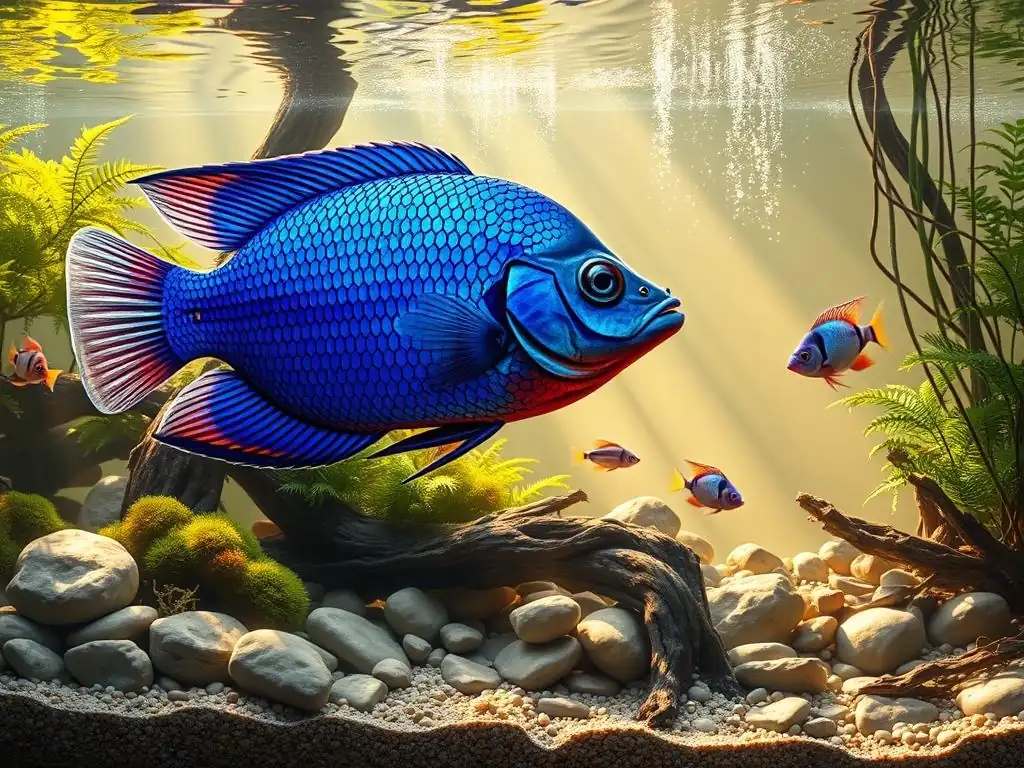
Decorations are vital for creating a stimulating and secure environment. Provide ample hiding spots and visual barriers using driftwood, smooth rocks, and dense plantings. These elements help to reduce stress and diffuse potential aggression among Gouramis by breaking up lines of sight and creating distinct territories. Arrange decorations to allow plenty of open swimming space in the mid-to-upper water column, while still offering retreats.
Water Parameters: Maintaining Optimal Conditions for Kissing Gouramis
Maintaining stable and optimal water parameters is a cornerstone of effective Kissing Gourami care. The ideal pH range for these fish is between 6.0 and 8.0, with a preference for slightly acidic to neutral water, typically 6.5-7.5. General hardness (GH) should be kept between 5-15 dGH, and carbonate hardness (KH) between 3-10 dKH. Consistency in these parameters is often more critical than hitting exact numbers.
Temperature should be consistently maintained within the 75-82°F (24-28°C) range. Crucially, ammonia and nitrite levels must always be 0 ppm, as these compounds are highly toxic. Nitrate levels should be kept below 20 ppm, ideally below 10 ppm, through regular water changes. Frequent testing with a reliable liquid test kit is essential to monitor these parameters and ensure a healthy environment.
Kissing Gourami Diet and Feeding: Ensuring Proper Nutrition
What Do Kissing Gouramis Eat? A Balanced Diet Explained
Kissing Gouramis are omnivorous, with a significant part of their natural diet consisting of plant matter and algae. Their specialized mouths are adapted for scraping biofilm and algae from surfaces in their native habitats. In an aquarium setting, their diet should reflect this natural inclination, incorporating both high-quality plant-based foods and appropriate protein sources to ensure comprehensive nutrition.
A varied diet is crucial for promoting vibrant coloration, robust growth, and strong immunity in Kissing Gouramis. Relying solely on one type of food can lead to nutritional deficiencies over time. By offering a diverse range of foods, aquarists can mimic their natural foraging behaviors and provide all the necessary vitamins, minerals, and macronutrients for optimal health, which is a key component of Kissing Gourami care.
Feeding Frequency and Portion Control: Preventing Overfeeding
For adult Kissing Gouramis, feeding 1-2 times per day is generally sufficient. The key to proper feeding is portion control: offer only what they can consume within 2-3 minutes. Overfeeding is a common pitfall in aquarium keeping, leading to a host of problems. Excess food decomposes, rapidly deteriorating water quality by increasing ammonia, nitrite, and nitrate levels, which are detrimental to fish health.
Signs of overfeeding include uneaten food accumulating on the substrate, cloudy water, and elevated nutrient levels in water tests. Chronic overfeeding can also lead to health issues in the fish themselves, such as bloating, fatty liver disease, and swim bladder problems. Adhering to strict portion control is vital not only for the fish's well-being but also for maintaining a clean and stable aquarium ecosystem.
Recommended Foods: Flakes, Pellets, and Live/Frozen Options
As a staple diet, high-quality spirulina-based flakes or pellets are highly recommended for Kissing Gouramis. These dry foods should be specifically formulated for herbivorous or omnivorous tropical fish, ensuring they contain a significant proportion of plant matter, such as spirulina, various algaes, and vegetable derivatives. Look for reputable brands that offer balanced nutritional profiles.
To supplement their staple diet and provide essential proteins, offer a variety of live or frozen foods occasionally. Excellent choices include bloodworms, brine shrimp, and daphnia. These foods not only provide crucial nutrients but also stimulate the gouramis' natural hunting and foraging instincts. Additionally, blanched vegetables like zucchini slices, cucumber, or lettuce can be offered as a treat, reinforcing their herbivorous tendencies and adding variety to their Kissing Gourami care routine.
Supplementing Their Diet: Vitamins and Minerals for Gourami Health
While a well-varied diet typically provides most of the necessary nutrients, occasional supplementation with vitamins and minerals can significantly boost the overall health and immunity of Kissing Gouramis. This can be particularly beneficial for fish recovering from stress or illness, or during specific life stages such as breeding. Vitamins like C and E are known to enhance immune function and reduce stress.
Supplements can be administered by soaking dry foods (flakes or pellets) in liquid vitamin solutions before feeding. Alternatively, some specialized frozen foods are pre-enriched with vitamins and minerals. Trace minerals, often absorbed directly from the water, can also be replenished through high-quality aquarium salts or mineral supplements if water parameters indicate a deficiency. This proactive approach contributes to robust health and vibrant coloration, rounding out comprehensive Kissing Gourami care.
Kissing Gourami Tank Mates: Choosing Compatible Companions
Ideal Tank Mates: Fish That Thrive with Kissing Gouramis
When selecting tank mates for Kissing Gouramis, it is crucial to choose species that are peaceful, similarly sized, and can tolerate the same water parameters. Good companions include robust, peaceful tetras, such as Congo Tetras or Lemon Tetras, which are large enough not to be intimidated. Various species of Rainbowfish, like Boeseman's Rainbowfish or Australian Rainbowfish, also make excellent choices due to their active nature and comparable size.
Other suitable tank mates can include larger, peaceful barbs (e.g., Tinfoil Barbs, provided the tank is exceptionally large, 200+ gallons), peaceful catfish like Bristlenose Plecos or Corydoras (though ensure the Gouramis don't pick on smaller species), and certain larger, non-aggressive schooling fish. The key is to select species that are not prone to fin-nipping and can hold their own without being overly aggressive or excessively timid, ensuring a harmonious environment for Kissing Gourami care.
Fish to Avoid: Aggressive or Incompatible Species
Certain fish species are generally incompatible with Kissing Gouramis and should be avoided in a community tank. Small, delicate species such as neon tetras, guppies, or small rasboras can be easily intimidated or even preyed upon by larger Kissing Gouramis, especially as the gouramis mature. Similarly, very docile or slow-moving fish might be subject to bullying or stress from the Gourami's occasional territorial displays.
Fin-nipping species, such as certain smaller barbs (e.g., Tiger Barbs) or some cichlids, should also be avoided as they can damage the Gourami's fins, leading to stress and potential infections. Conversely, overly aggressive or highly territorial cichlids (e.g., many African cichlids) can pose a significant threat to the Gouramis, leading to constant stress, injury, or even death. Careful consideration of temperament is vital for successful Kissing Gourami care in a community setup.
Kissing Gouramis, while generally considered peaceful, can exhibit varying degrees of territoriality and aggression, particularly among themselves. As they mature, especially males, their "kissing" behavior becomes more pronounced as a dominance display. While they can be kept in groups, providing ample space and visual barriers is essential to diffuse aggression and prevent prolonged stress.
It is imperative for the aquarist to closely observe the interactions between Kissing Gouramis and their tank mates, especially during the first few weeks after introduction. Signs of stress or aggression include clamped fins, hiding, rapid breathing, or constant chasing. A well-designed aquascape with plenty of hiding spots and broken lines of sight can significantly mitigate potential conflicts, promoting peaceful coexistence and ensuring the well-being of all inhabitants, a critical aspect of comprehensive Kissing Gourami care.
Kissing Gourami Care: Maintaining a Healthy and Happy Fish
Regular Water Changes: Maintaining Water Quality
Regular water changes are perhaps the most critical aspect of maintaining optimal water quality and ensuring the long-term health of Kissing Gouramis. A weekly or bi-weekly water change of 25-30% of the tank volume is generally recommended. This routine helps to dilute accumulated nitrates, replenish essential trace minerals, and remove dissolved organic compounds that can build up over time.
When performing water changes, use a gravel vacuum to remove detritus and uneaten food from the substrate. Always ensure that the replacement water is thoroughly dechlorinated and temperature-matched to the aquarium water to prevent shocking the fish. Consistency in this maintenance routine is paramount for providing a stable and healthy environment, which is the foundation of excellent Kissing Gourami care.
Monitoring Water Parameters: Testing for Ammonia, Nitrite, and Nitrate
Consistent monitoring of water parameters is indispensable for proactive Kissing Gourami care. Regular testing for ammonia, nitrite, and nitrate levels using a reliable liquid test kit (more accurate than test strips) is essential. Ammonia and nitrite, highly toxic byproducts of the nitrogen cycle, should always be at 0 ppm. Any detectable levels indicate an imbalance and require immediate action, such as a large water change and investigation of the filtration system.
Nitrate levels, the end product of the nitrogen cycle, should be kept below 20 ppm, ideally below 10 ppm. High nitrate levels indicate accumulated organic waste and necessitate more frequent or larger water changes. Regular testing allows for early detection of potential problems, enabling prompt corrective action before fish health is compromised. This vigilant approach ensures a stable and non-toxic environment for your Kissing Gouramis.
Recognizing and Treating Common Kissing Gourami Diseases
Kissing Gouramis, like all aquarium fish, are susceptible to common freshwater diseases, often triggered by poor water quality, stress, or the introduction of new, unquarantined fish. Common ailments include Ich (white spot disease), characterized by small white spots resembling salt grains; Fin Rot, which manifests as frayed, discolored, or decaying fins; Columnaris (mouth rot), appearing as white or gray patches around the mouth; and Dropsy, identified by a swollen body and protruding scales (pineconing).
Early detection is crucial for successful treatment. Upon observing any symptoms, immediately assess water parameters and perform a water change. Many diseases are treatable with appropriate medications, which should be chosen based on a confirmed diagnosis. For instance, Ich often responds to elevated temperatures and specific Ich medications, while Fin Rot requires antibacterial treatments. Understanding these signs and having a plan for prompt intervention is a vital part of comprehensive Kissing Gourami care.
Preventing Illness: Proactive Care and Quarantine Procedures
Prevention is always better than cure in aquarium keeping. Proactive Kissing Gourami care involves several key practices: maintaining stable and optimal water parameters, providing a balanced and varied diet, avoiding overcrowding, and minimizing environmental stressors. A clean, well-maintained, and appropriately sized aquarium significantly reduces the likelihood of disease outbreaks.
The single most effective preventive measure is the use of a quarantine tank. All new fish, plants, and even decorations should be quarantined in a separate tank for at least 2-4 weeks before being introduced to the main display aquarium. This allows for observation, treatment if necessary, and prevents the introduction of pathogens, parasites, or diseases to your established fish. This diligent practice safeguards the health of your entire aquarium community.
Breeding Kissing Gouramis: A Step-by-Step Guide
Setting Up a Breeding Tank: Creating the Ideal Environment
Breeding Kissing Gouramis requires a dedicated breeding tank, as parents may consume eggs or fry. A separate aquarium of at least 20-30 gallons (75-113 liters) is recommended. The tank should have subdued lighting and gentle filtration, ideally provided by a sponge filter, to prevent powerful currents that could harm delicate eggs or fry. Crucially, the tank should be heavily planted with floating plants such as Java Moss, Water Sprite, or Hornwort, which provide sites for egg deposition and shelter for the newly hatched fry.
Specific water parameters can help stimulate spawning. Slightly softer water, with a general hardness (GH) of 4-8 dGH, and a pH in the range of 6.5-7.0 are often preferred. The water temperature should be gradually raised to 78-82°F (26-28°C) to encourage breeding behavior. Maintaining these precise conditions is a specialized aspect of advanced Kissing Gourami care for reproduction.
Conditioning Kissing Gouramis for Breeding
To prepare Kissing Gouramis for breeding, a process known as conditioning is essential. For 1-2 weeks prior to attempting to breed, feed the prospective breeding pair a high-protein diet. This should include a variety of live and frozen foods such as bloodworms, brine shrimp, daphnia, and high-quality mosquito larvae. This rich diet signals to the fish that environmental conditions are favorable for reproduction and helps the female develop eggs.
Identifying the sexes for breeding can be subtle: males tend to be more slender with slightly more pointed dorsal fins, while females are typically plumper, especially when gravid with eggs. During conditioning, you might observe an increase in "kissing" behavior between the pair, which can be part of their courtship ritual, indicating readiness to spawn.
Spawning Behavior and Egg Care
Kissing Gouramis are bubble nest builders, though their nests are often loose and less elaborate than those of other gourami species, sometimes consisting simply of eggs scattered among floating plants. The male typically initiates the nest building. During courtship, the "kissing" behavior is often observed, followed by the male embracing the female in a spawning embrace. Eggs are released in batches, with a single spawning yielding hundreds, sometimes over a thousand, small, buoyant eggs.
Immediately after spawning, the adult Kissing Gouramis should be carefully removed from the breeding tank. Both parents are known to consume their own eggs and fry. The eggs are typically translucent and will float to the surface, often collecting within the floating plants or the loose bubble nest. Under optimal conditions, the eggs usually hatch within 24-48 hours, marking the next phase of the breeding process.
Raising Kissing Gourami Fry: From Hatching to Maturity
Once Kissing Gourami fry hatch, they are incredibly tiny and initially subsist on their yolk sacs for the first few days. After their yolk sacs are absorbed, they become free-swimming and require microscopic food. Infusoria, liquid fry food, or green water are excellent initial food sources. As they grow, they can transition to newly hatched brine shrimp or micro-worms, which provide essential protein for rapid development.
Maintaining pristine water quality is paramount for fry survival. Perform small, frequent water changes (e.g., 10% daily) using a gentle airline tubing to avoid siphoning out the delicate fry. Provide gentle aeration. As the fry continue to grow, they will gradually require larger foods, eventually transitioning to finely crushed flakes and then to adult-sized foods. Raising Kissing Gourami fry is a delicate and rewarding aspect of Kissing Gourami care, requiring consistent attention and precise feeding.
Common Kissing Gourami Problems and Solutions
Fin Rot - Treatment and Prevention
Fin Rot is a common bacterial infection that affects aquarium fish, including Kissing Gouramis. It manifests as frayed, ragged, or decaying fins, often with a white or reddish edge. The condition is primarily caused by poor water quality (high levels of ammonia, nitrite, or nitrate), chronic stress, or physical injury that allows bacteria to proliferate. Secondary fungal infections can also occur alongside bacterial fin rot.
Immediate and effective treatment for Fin Rot involves addressing the underlying water quality issues. Perform a large water change (e.g., 50%) and thoroughly clean the tank. Treat the affected fish with a broad-spectrum antibacterial medication, such as those containing Maracyn or Furan-2, following the manufacturer's instructions. Prevention focuses on consistent water maintenance, avoiding overcrowding, ensuring compatible tank mates, and maintaining a low-stress environment for optimal Kissing Gourami care.
Ich (White Spot Disease) - Identification and Treatment
Ich, caused by the parasitic protozoan Ichthyophthirius multifiliis, is one of the most common and recognizable diseases in freshwater aquariums. It appears as small, distinct white spots resembling grains of salt scattered across the fish's body, fins, and sometimes gills. Fish may also exhibit scratching behavior against tank decorations, lethargy, or clamped fins. Ich outbreaks are often triggered by sudden temperature fluctuations, poor water quality, or stress from new introductions.
Treatment for Ich typically involves gradually raising the tank temperature to 82-86°F (28-30°C) over several hours and maintaining it for 7-10 days. Higher temperatures accelerate the parasite's life cycle, making it more vulnerable to treatment. Concurrently, treat the water with Ich-specific medications containing malachite green or formalin. Ensure adequate aeration at higher temperatures, as warm water holds less dissolved oxygen. Prevention relies on quarantining new fish and maintaining stable water parameters, key tenets of effective Kissing Gourami care.
Cloudy Eye - Causes and Remedies
Cloudy Eye is a condition where one or both of a Kissing Gourami's eyes become opaque, hazy, or develop a white film. The causes are varied and can include poor water quality (especially high nitrates or ammonia), bacterial infections, internal parasites, or physical injury resulting from aggression with tank mates or bumping into sharp decorations. If left untreated, severe cases can lead to blindness or secondary infections.
The initial remedy for Cloudy Eye involves performing significant water changes (30-50%) to improve overall water quality and reduce potential irritants. If the condition persists or worsens, it may indicate a bacterial infection requiring treatment with a broad-spectrum antibiotic. Ensure the aquarium environment is free of sharp objects and that tank mates are compatible to prevent physical injuries. Addressing the root cause, whether environmental or pathogenic, is essential for successful treatment and forms an important part of comprehensive Kissing Gourami care.
Advanced Kissing Gourami Care: Beyond the Basics
Plant Selection for Kissing Gourami Tanks
When selecting plants for a Kissing Gourami tank, it's important to choose robust and hardy species that can withstand some grazing, as Gouramis are known to nibble on plant matter. Anubias species (e.g., Anubias barteri, Anubias nana), Java Fern ( Microsorum pteropus), and various Sword plants ( Echinodorus species like Amazon Sword) are excellent choices due to their tough leaves and adaptability. Cryptocoryne species also work well, particularly those with thicker leaves.
Floating plants such as Water Lettuce ( Pistia stratiotes) or Frogbit ( Limnobium laevigatum) are highly beneficial. They provide natural shade, which Kissing Gouramis appreciate, and offer additional hiding spots, contributing to a sense of security. Live plants also play a crucial role in improving water quality by absorbing nitrates, enhancing the overall aesthetic, and creating a more natural and stimulating environment for the fish, elevating the level of Kissing Gourami care.
Aquascaping Ideas for a Thriving Gourami Habitat
Effective aquascaping for Kissing Gouramis involves balancing open swimming areas with ample hiding spots and visual barriers. Design the layout to include clear swimming lanes in the mid-to-upper water column, which is where Gouramis typically reside. Along the back and sides of the tank, create dense plantings and incorporate large pieces of driftwood or smooth rock formations. This arrangement breaks up lines of sight, which is crucial for reducing aggression, especially in groups of Gouramis.
Large pieces of driftwood can serve as focal points and provide additional surfaces for algae grazing, mimicking their natural feeding behavior. Ensure all decor is smooth and stable to prevent injuries. A thoughtfully designed aquascape not only enhances the visual appeal of the aquarium but also significantly contributes to the well-being and natural behavior of the Kissing Gouramis. This attention to environmental detail is a hallmark of advanced Kissing Gourami care.
Understanding Kissing Gourami Genetics and Color Variations
Understanding the genetics behind Kissing Gourami color variations can add another layer of appreciation for these fish. The two primary color morphs are the wild-type, which typically displays a green to brownish-grey coloration, and the more widely recognized pink or "albino" form. The pink variety is not a true albino but rather a leucistic trait, meaning there is a reduction in pigment cells, resulting in a lighter, pinkish hue while the eyes retain their normal dark color.
Selective breeding has primarily focused on the pink morph due to its popularity in the aquarium trade. Dedicated breeders may also work on enhancing other traits, such as the size or shape of their distinctive lips, or subtle variations in body conformation. While specific genetic markers for these traits are complex, recognizing these variations provides insight into the history and potential future of Kissing Gourami care and breeding within the hobby.
Conclusion: Mastering Kissing Gourami Care for a Rewarding Aquarium Experience
Frequently Asked Questions
What is the ideal tank size for Kissing Gouramis?
Kissing Gouramis need a large tank, typically at least 75 gallons, due to their potential size and active swimming habits. Smaller tanks can stunt their growth and lead to aggression.
What is the best diet for Kissing Gouramis?
They are omnivores, so offer a varied diet. This includes high-quality flake food, algae wafers, and occasional treats like bloodworms or daphnia.
Are Kissing Gouramis compatible with other fish?
They can be semi-aggressive, especially towards similar-looking fish or in smaller tanks. Choose tank mates carefully, opting for robust and similarly sized species.
What are the ideal water parameters for Kissing Gouramis?
Maintain a water temperature between 72-82°F (22-28°C), a pH level of 6.0-7.5, and ensure good water quality through regular water changes.
How do I troubleshoot common health problems in Kissing Gouramis?
Common issues include ich and fin rot. Address these with appropriate medications and improve water quality through frequent water changes.
Final Reflection: Beyond the Kiss: Understanding Our Aquatic Companions
The journey through understanding the Kissing Gourami, as detailed in this care guide, highlights a crucial aspect of responsible pet ownership: the commitment to understanding the nuanced needs of another living being. What begins as a simple fascination with their unique "kissing" behavior quickly evolves into a recognition of their complex environmental and social requirements, a realization that extends far beyond the confines of a fish tank.
This exploration into Kissing Gourami care underscores the broader responsibility we have to all creatures, great and small. It's a reminder that our choices, even seemingly small ones like selecting a pet, have a profound impact on the lives of others. The greatness of a nation and its moral progress can be judged by the way its animals are treated.
- Mahatma Gandhi. This quote resonates deeply, reminding us that compassion and informed action are essential components of a truly ethical existence.
Now, as you consider bringing a Kissing Gourami into your life, or perhaps reflect on the care you currently provide, I urge you to embrace the spirit of continuous learning and mindful observation. Let this guide be a starting point, not an end, in your journey to provide the best possible life for these fascinating creatures. By understanding their needs, we not only enrich their lives but also deepen our own understanding of the interconnectedness of all living things.
Transform Your Tank: Welcome the Kissing Gourami!
Thanks for diving into the fascinating world of Kissing Gouramis! We hope you've gained a deeper understanding of these unique fish and are ready to create the perfect habitat for them. Now it’s your turn to take action and provide an incredible life for these amazing creatures!
Here's what you can do next:
- Set up your dream tank: Commit to creating the ideal environment by diligently following the tank setup guide provided. This will dramatically improve your Kissing Gourami's well-being.
- Share your knowledge: Spread the word! Tell your friends about the incredible world of Kissing Gouramis and encourage them to explore responsible fishkeeping.
- Experiment with natural decor: Get creative with adding safe, natural elements like smooth rocks or driftwood to your tank to mimic their natural habitat!
What specific plants are you most excited to add to your Kissing Gourami's new home? Share your ideas in the comments below!