
Preventing Egg Eating in Danio and Rasbora Breeding Tanks: Proven Strategies

Welcome to Aquarium Mastery!
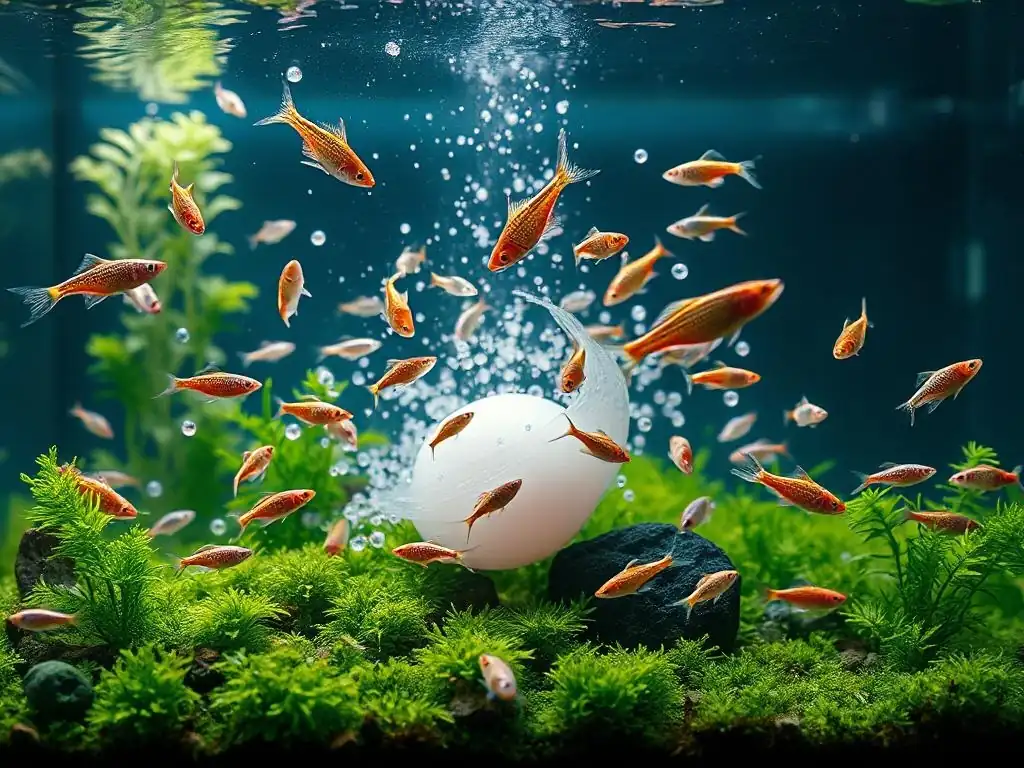
Ever wondered how to successfully breed those dazzling Danio rasboras without the heartbreak of losing their precious eggs? Many aquarists face the frustrating challenge of egg eating. Dive into our article, " Preventing Egg Eating in Danio and Rasbora Breeding Tanks: Proven Strategies," where we reveal practical and effective techniques to safeguard your future generations. Curious to learn how to create a thriving breeding environment? Let's explore the secrets together!
- Understanding the Threat: Why Danios and Rasboras Eat Their Eggs
- Setting Up a Safe Breeding Environment for Danios and Rasboras
- Implementing Physical Barriers for Egg Protection
- Optimizing Tank Conditions to Reduce Egg Consumption
- Nutritional Strategies to Minimize Egg Eating
- Monitoring and Management of the Breeding Tank
- Alternative Breeding Methods for Danio and Rasbora Egg Protection
- Choosing the Best Egg Protection Strategy for Your Fish
- Raising Danio and Rasbora Fry After Hatching
-
Frequently Asked Questions
- What is the biggest challenge when breeding Danio and Rasbora fish?
- Why do Danio and Rasbora eat their own eggs?
- What are some effective strategies for protecting Danio and Rasbora eggs?
- How important is water quality for successful Danio and Rasbora breeding?
- When should I remove the parent fish from the breeding tank?
- Final Reflection: Protecting the Future Generation
- Transform Your Tank: Secure Your Next Generation of Danios & Rasboras!
Understanding the Threat: Why Danios and Rasboras Eat Their Eggs
The Natural Instinct: Egg Consumption in Small Cyprinids
Danio and Rasbora species, common small schooling cyprinids in the aquarium hobby, exhibit a strong natural instinct to consume their own eggs. This behavior, known as oophagy or filial cannibalism, is widespread among many fish species, particularly those that broadcast spawn without parental care. In the wild, this might serve to reduce competition for resources among a massive spawn or to provide a nutritional boost to the parents after the energetically demanding spawning process. However, in a controlled breeding tank, it represents the primary obstacle to successfully raising fry.
This inherent behavior means that even well-fed adult fish will often turn to their newly laid eggs as a readily available food source. The eggs, being small and nutrient-dense, are an easy target, especially for active swimmers like Danios and Rasboras. Without specific Danio rasbora breeding egg protection strategies, it is common for almost all eggs to be consumed within hours, if not minutes, of being laid, significantly reducing the potential for successful propagation.
Identifying Egg-Eating Behavior in Your Breeding Tank
Identifying egg-eating behavior in Danio and Rasbora breeding tanks is often straightforward due to their active nature and the rapid consumption of eggs. After spawning, which typically occurs in the early morning hours, adult fish can be observed darting around the substrate or plants, seemingly "pecking" at surfaces where eggs might have settled. For instance, a female Zebra Danio might lay around 200-300 eggs over several spawning events, but if no protective measures are in place, very few, if any, will be visible by midday.
A clear sign of successful spawning followed by egg consumption is the presence of adult fish with slightly distended bellies after a period of intense activity, even if no eggs are visible. Experienced aquarists will notice the absence of the tiny, clear or slightly amber eggs that should be present on the tank bottom, within spawning mops, or on plant leaves. The goal of effective Danio rasbora breeding egg protection is to break this cycle and ensure the eggs are inaccessible to the hungry parents.
Setting Up a Safe Breeding Environment for Danios and Rasboras
Dedicated Breeding Tanks: Minimizing Predation
Establishing a dedicated breeding tank is paramount for maximizing the survival rate of Danio and Rasbora eggs. While it might be tempting to attempt breeding in a community tank, the presence of other fish, including the parents themselves, dramatically increases the chances of egg predation. A separate tank, typically small (e.g., 5-10 gallons for a pair or small group), allows for precise control over environmental parameters and provides a secure space for eggs to develop without interference.
This specialized setup ensures that once spawning is complete, the adult fish can be safely removed, leaving the eggs undisturbed to hatch. For instance, in a 5-gallon breeding tank, a single pair of Harlequin Rasboras can be conditioned and encouraged to spawn, with the eggs falling through a protective grid to safety. This isolation is a cornerstone of successful Danio rasbora breeding egg protection, creating a sanctuary where the delicate eggs can mature into fry.
Essential Components: Sponge Filter, Heater, Thermometer
The success of a Danio or Rasbora breeding tank hinges on a few crucial, yet simple, components. A sponge filter is an indispensable item due to its gentle filtration capabilities, which prevent delicate eggs and newly hatched fry from being sucked up, unlike power filters. It provides both mechanical and biological filtration without creating strong currents that could stress the fish or dislodge eggs. For example, a small air-driven sponge filter is ideal for a 5-gallon tank, ensuring adequate oxygenation and biological filtration for a small breeding group.
Maintaining stable water temperature is also critical, and a submersible heater paired with a reliable thermometer is essential. Most Danio and Rasbora species spawn optimally in temperatures ranging from 72-79°F (22-26°C). Fluctuations can stress the fish and reduce spawning success or egg viability. For instance, maintaining a consistent 76°F (24.5°C) can encourage spawning in Zebra Danios and support healthy egg development. These elements collectively contribute to optimal Danio rasbora breeding egg protection by fostering a stable and safe environment.
Implementing Physical Barriers for Egg Protection
Using Breeding Grids: A Simple and Effective Solution
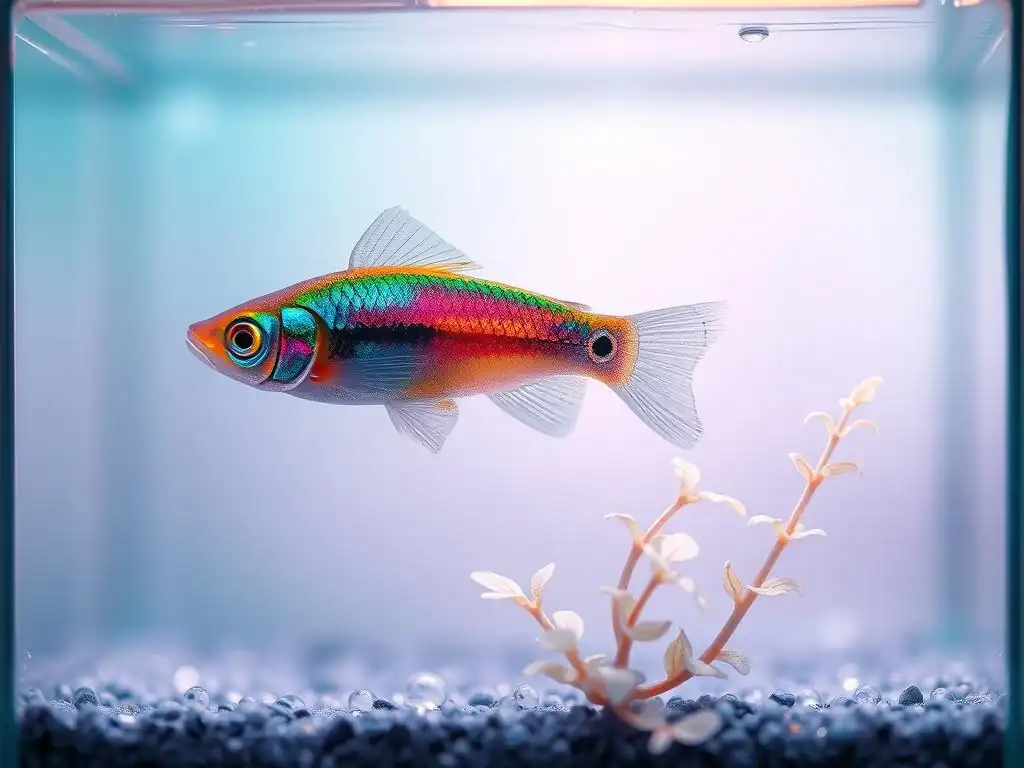
Breeding grids, often made from plastic mesh or egg crate material, are one of the most effective and widely used physical barriers for Danio rasbora breeding egg protection. These grids are placed a short distance (typically 0.5 to 1 inch, or 1.2-2.5 cm) above the bottom of the breeding tank. When the fish spawn, the eggs, which are non-adhesive or weakly adhesive, fall through the small openings in the grid to the tank bottom, where the adult fish cannot reach them.
For example, a common setup involves cutting a piece of plastic egg crate light diffuser to fit snugly within the breeding tank, resting on small supports or suction cups. After spawning, the adult fish are removed, leaving the eggs safely beneath the grid to hatch. This simple yet ingenious method significantly increases the number of viable eggs that survive, making it a cornerstone for serious Danio and Rasbora breeders.
Mesh Bottoms: Preventing Access to Fallen Eggs
Similar to breeding grids, mesh bottoms provide an even finer barrier for Danio rasbora breeding egg protection. These can be constructed using fine plastic netting or even a piece of window screen material stretched across a frame, positioned just above the tank floor. The smaller mesh size ensures that even the tiniest Danio eggs, which can be less than 1 mm in diameter, fall through to safety while preventing the adults from reaching them.
This method is particularly effective for very small-egged species or for breeders who want to ensure maximum egg recovery. For instance, a breeder might use a fine mesh bottom in a 10-gallon tank dedicated to breeding Celestial Pearl Danios, whose eggs are notoriously small and easy for parents to consume. The mesh allows for a clean separation of eggs from parents, maximizing the chances of successful hatching.
Marbles and Gravel: Creating a Safe Haven for Eggs
While not as foolproof as grids or mesh, a layer of marbles or coarse gravel can offer a degree of Danio rasbora breeding egg protection. The concept is simple: when eggs are scattered during spawning, many will fall into the crevices between the marbles or gravel pieces, making them inaccessible to the larger adult fish. This method is often favored by hobbyists seeking a more natural-looking breeding setup or those with limited access to specialized breeding grids.
For example, a 1-2 inch (2.5-5 cm) layer of clean glass marbles can be spread across the bottom of a breeding tank. While some eggs may still be consumed, a significant portion will settle safely within the gaps. This technique is often combined with dense planting for additional cover. However, it's important to note that removing unhatched eggs or detritus from a marble substrate can be challenging, potentially impacting water quality if not managed carefully.
Optimizing Tank Conditions to Reduce Egg Consumption
Water Quality: Maintaining Optimal Parameters for Spawning and Egg Survival
Optimal water quality is not only crucial for encouraging spawning but also for the viability of the eggs and reducing the parents' stress, which can indirectly influence egg consumption. Clean, well-aerated water with stable parameters is essential. For most Danios and Rasboras, slightly acidic to neutral water (pH 6.0-7.5) and soft to moderately hard water (GH 5-12 dGH) are ideal. Regular small water changes, perhaps 10-20% daily or every other day in a breeding tank, help to maintain pristine conditions and remove any unfertilized eggs or waste.
High levels of ammonia, nitrite, or nitrate can stress the breeding fish, potentially leading to reduced spawning activity or, conversely, increased parental stress that might manifest as more aggressive egg consumption. For instance, a breeding tank for Harlequin Rasboras should consistently have ammonia and nitrite at 0 ppm, and nitrates below 20 ppm. Pristine water quality directly supports the health of the spawning adults and the delicate developing eggs, contributing significantly to effective Danio rasbora breeding egg protection.
Dense Planting: Providing Cover and Reducing Stress
Dense planting, particularly with fine-leaved plants, serves multiple purposes in a Danio and Rasbora breeding tank: it provides spawning sites, offers cover for stressed fish, and can even act as an egg trap, contributing to Danio rasbora breeding egg protection. Plants like Java Moss ( Taxiphyllum barbieri), Hornwort ( Ceratophyllum demersum), and even spawning mops made from synthetic yarn, offer ideal surfaces for fish to scatter their eggs. The intricate structure of these plants allows many eggs to become lodged within their leaves, making them harder for adults to find and consume.
Beyond egg protection, a heavily planted tank reduces stress on the breeding pair or group. Fish that feel secure and have places to retreat are more likely to spawn successfully. For example, a thick mat of Java Moss covering 50-70% of the tank bottom can significantly increase the number of eggs that survive, even without a breeding grid. This natural approach mimics their wild habitats, encouraging natural spawning behavior and offering a degree of inherent egg safety.
Lighting Strategies: Mimicking Natural Conditions
Lighting plays a subtle yet important role in encouraging spawning and potentially influencing egg consumption behaviors. Mimicking natural light cycles is crucial for conditioning fish to breed. A consistent photoperiod, typically 12-14 hours of light followed by 10-12 hours of darkness, helps regulate their circadian rhythms and reproductive cycles. Abrupt changes or overly bright, constant lighting can stress fish and inhibit spawning.
Furthermore, some breeders observe that dim or subdued lighting immediately after spawning can help reduce the initial urge of parents to consume eggs, especially if combined with other Danio rasbora breeding egg protection methods. For instance, turning off the tank lights after observing spawning activity and leaving the room dark for a few hours can provide a window for eggs to settle into protective substrates before parents become actively searching. While not a standalone solution, it complements other strategies by reducing visual stimulation for egg hunting.
Nutritional Strategies to Minimize Egg Eating
High-Protein Diet: Satisfying Parental Needs
A well-conditioned breeding pair or group of Danios and Rasboras is less likely to aggressively consume their eggs if their nutritional needs are fully met. Providing a high-protein diet in the weeks leading up to spawning ensures that the adult fish are in peak condition for reproduction and less driven by hunger immediately after. Optimal protein content for conditioning often ranges from 40-50% for carnivorous or omnivorous species like these.
This includes a variety of high-quality flake foods, micro-pellets, and especially live or frozen foods. For example, feeding adult fish live blackworms, bloodworms, brine shrimp, or daphnia several times a week, in addition to their regular dry food, provides essential amino acids and fats. This robust diet not only promotes egg development in the female but also ensures the parents are satiated, reducing the physiological urge to consume their own spawn as a post-spawning energy boost, thereby supporting overall Danio rasbora breeding egg protection.
Frequent Feeding: Reducing the Urge to Consume Eggs
Beyond just the quality of food, the frequency of feeding in the breeding tank can also play a role in minimizing egg consumption. Keeping the adult fish consistently well-fed, even immediately before and during the spawning period, can reduce their impulse to turn to eggs as a food source. While it won't eliminate the instinct entirely, a satiated fish is generally less ravenous.
For instance, feeding small amounts of high-quality food 3-4 times a day, rather than one large meal, can keep the fish's hunger at bay. On the morning of spawning, a small feeding of live or frozen food just before or as spawning begins can distract the parents and potentially reduce their focus on the eggs. This strategy, combined with physical barriers, enhances Danio rasbora breeding egg protection by addressing a primary motivator for egg eating: hunger.
Live Foods: Supplementing the Diet During Breeding
Live foods are an invaluable component of a breeding diet for Danios and Rasboras, offering superior nutritional value and stimulating natural hunting instincts. The movement of live foods often triggers a stronger feeding response compared to dry foods, ensuring the fish consume adequate nutrients. Common live foods include brine shrimp nauplii, daphnia, micro-worms, and grindal worms.
These foods are particularly rich in protein and essential fatty acids, crucial for egg development and overall fish vigor. For example, feeding live brine shrimp daily for two weeks prior to introducing fish to the breeding tank can significantly improve spawning success and the quality of the eggs. Furthermore, the act of hunting live food can keep the fish occupied, potentially diverting their attention from newly laid eggs, thereby indirectly aiding in Danio rasbora breeding egg protection.
Monitoring and Management of the Breeding Tank
Regular Observation: Detecting and Addressing Egg-Eating Quickly
Consistent and keen observation is a critical management practice in any Danio and Rasbora breeding setup. Breeders should regularly monitor the tank, especially during the early morning hours when most Danio and Rasbora species typically spawn. Watching for spawning behavior—such as chasing, fin nipping, and the scattering of eggs—allows for timely intervention. If eggs are observed being laid and there's no immediate protective measure, seeing parents actively consuming them signals the need for swift action.
For instance, if a breeding grid is in place but eggs are still visible on top, it might indicate the grid is too close to the surface or the fish are particularly adept at reaching them. Prompt observation allows for the immediate removal of parents after spawning, which is the most effective Danio rasbora breeding egg protection strategy. Early detection of egg-eating behavior also helps in evaluating the effectiveness of the chosen protection method and making necessary adjustments.
Removing Parents After Spawning: A Preventative Measure
The most definitive and widely recommended strategy for Danio rasbora breeding egg protection is the prompt removal of adult fish immediately after spawning is complete. Once eggs are observed to have been laid and settled into their protective environment (e.g., beneath a grid or within dense moss), the adult fish should be carefully netted and returned to their main community tank or a separate holding tank. This action completely eliminates the threat of parental predation.
For example, after a successful morning spawn of Zebra Danios over a spawning mop and grid, the breeder should wait an hour or two to ensure all eggs have been laid, then gently remove the adults. This ensures that 100% of the viable eggs are safe from consumption. While it requires active participation from the aquarist, this method offers the highest success rate for egg survival and is indispensable for serious breeding efforts.
Hatching Eggs Separately: Ensuring Maximum Fry Survival
Hatching eggs in a separate, dedicated container or the same breeding tank after parent removal is key to ensuring maximum fry survival. Once the eggs are safe from parental consumption, they still require specific conditions to hatch successfully and for the subsequent fry to thrive. This separate environment allows for precise control over water parameters vital for delicate eggs and fry, such as temperature, aeration, and cleanliness.
For instance, after removing adult Harlequin Rasboras from a 5-gallon breeding tank, the water level might be slightly lowered to reduce the volume for easier management of the tiny fry. A few drops of methylene blue can be added to prevent fungal growth on unfertilized eggs, without harming the viable ones. This isolated environment, free from adult fish, ensures that the newly hatched fry have the best possible start without any lingering threat of predation, thus completing the Danio rasbora breeding egg protection cycle and focusing on fry rearing.
Alternative Breeding Methods for Danio and Rasbora Egg Protection
The Sponge Filter Method: Gentle Filtration and Egg Safety
The sponge filter method for Danio rasbora breeding egg protection is not just about filtration; it can also be adapted to serve as a direct egg collection device. In this technique, a fine-pored sponge filter is placed directly on the bottom of the breeding tank, sometimes even slightly elevated. As Danios and Rasboras broadcast their eggs, many will land on the soft surface of the sponge filter. Due to the texture and slight suction, a significant number of eggs can become lodged within the sponge's pores, protecting them from the parents.
After spawning, the adult fish are removed, and the sponge filter, now laden with eggs, is carefully transferred to a separate hatching tank. Alternatively, the sponge can simply be left in the breeding tank, which now serves as the hatching and fry-rearing tank. This method is particularly gentle and minimizes handling of the delicate eggs, reducing the risk of damage, and is effective for species that scatter eggs widely, providing a passive form of egg protection.
Using Plants as Natural Egg Traps: Java Moss and Hornwort
Utilizing dense clumps of fine-leaved plants like Java Moss ( Taxiphyllum barbieri) or Hornwort ( Ceratophyllum demersum) as natural egg traps is an effective and aesthetically pleasing method for Danio rasbora breeding egg protection. These plants provide an intricate network of leaves and stems where non-adhesive eggs can fall and become lodged, making them difficult for adult fish to access and consume.
For example, a large, bushy clump of Java Moss can be placed loosely in the breeding tank, covering a significant portion of the bottom. When Danios or Rasboras spawn over the moss, hundreds of tiny eggs will settle deep within its structure. After spawning, the entire moss clump can be gently removed and transferred to a separate hatching tank. This method leverages the natural behavior of the fish to scatter eggs into dense vegetation, providing a simple yet effective barrier against predation.
Choosing the Best Egg Protection Strategy for Your Fish
Comparing the Effectiveness of Different Methods
When selecting a Danio rasbora breeding egg protection strategy, it's helpful to compare the effectiveness of the various methods available. Physical barriers like breeding grids and mesh bottoms generally offer the highest degree of protection, often resulting in 80-95% egg survival once parents are removed. These methods provide a clear, impenetrable barrier. Natural methods like dense planting with Java Moss or Hornwort are also effective, typically yielding 50-70% egg survival, as some eggs may still be accessible or consumed.
The "marbles and gravel" method offers the least protection, with survival rates often varying widely, perhaps 30-50%, depending on the density and size of the substrate. The sponge filter method can be quite effective, especially if the sponge is saturated with eggs, offering a good balance between ease of use and protection. The choice often comes down to the breeder's commitment, the specific species, and the desired yield of fry.
Considerations: Species-Specific Needs and Tank Size
The optimal Danio rasbora breeding egg protection strategy can vary based on species-specific needs and the size of the breeding tank. For instance, tiny species like Celestial Pearl Danios ( Danio margaritatus) or Emerald Dwarf Rasboras ( Celestichthys erythromicron) have extremely small eggs that might pass through coarser grids, making fine mesh or very dense Java Moss more suitable. Larger species like Zebra Danios ( Danio rerio) are less particular and thrive with standard breeding grids.
Tank size also dictates practicality. In a very small tank (e.g., 2-3 gallons), a simple spawning mop or a small clump of Java Moss might be easier to manage than a full breeding grid. Conversely, for a larger setup (e.g., 10-20 gallons) aiming for mass production, a robust breeding grid system is often the most efficient. Ultimately, understanding the specific fish's behavior and egg characteristics, combined with the available tank space, will guide the selection of the most appropriate and successful egg protection method.
Raising Danio and Rasbora Fry After Hatching
First Foods: Providing the Right Nutrition for Newborn Fry
Once Danio and Rasbora eggs hatch, providing appropriate first foods is paramount for the survival and healthy development of the tiny fry. Most Danio and Rasbora fry are incredibly small and require microscopic food sources for the first few days to a week. Infusoria, which are microscopic protozoa, are often the ideal initial food. These can be cultivated easily by decaying vegetable matter in a separate jar.
After a few days, as the fry grow slightly (typically when they become free-swimming), they can graduate to slightly larger foods. Newly hatched brine shrimp nauplii are an excellent and highly nutritious next step, offering a perfect size and high protein content. Micro-worms, which are small nematodes, are another superb option. Consistent feeding, often 2-3 times a day, is crucial to ensure all fry receive adequate nutrition and grow quickly.
Maintaining Water Quality: Essential for Fry Development
Maintaining pristine water quality is even more critical for fry than for adult fish. Newly hatched Danio and Rasbora fry are extremely sensitive to ammonia, nitrite, and nitrate. Their small size means they have little tolerance for poor conditions. Regular, small water changes are essential—often 10-20% daily or every other day—using temperature-matched, dechlorinated water. Siphoning out uneaten food and detritus from the bottom of the tank is also crucial to prevent water fouling.
A gentle air stone or a well-cycled sponge filter should be used to provide aeration and biological filtration without creating strong currents that could harm the fry. For example, ensuring ammonia and nitrite remain at 0 ppm and nitrates below 10 ppm is a non-negotiable standard for successful fry rearing. Diligent water quality management directly impacts fry survival rates and is the continuation of successful Danio rasbora breeding egg protection into the fry stage.
Growing Out the Fry: Ensuring Healthy Growth and Survival
As Danio and Rasbora fry grow, their nutritional needs and space requirements will increase. After about two weeks on brine shrimp or micro-worms, they can typically start accepting finely crushed high-quality flake food or small pellets. As they continue to grow, the frequency of water changes might be reduced slightly, but the volume increased, perhaps 25% every other day, to keep up with their increasing bioload.
Providing ample space is also vital to prevent stunting and aggression. As the fry grow, they may need to be moved to larger grow-out tanks. For example, 100 Zebra Danio fry might start in a 5-gallon tank, but after a month, they would ideally need a 20-gallon tank or larger to thrive and develop properly. Consistent feeding of varied, nutritious foods, coupled with excellent water quality and sufficient space, are the pillars for successfully growing out Danio and Rasbora fry to juvenile size and beyond.
Frequently Asked Questions
What is the biggest challenge when breeding Danio and Rasbora fish?
The biggest challenge is preventing the parent fish from eating the eggs. Danio and Rasbora species are notorious for this behavior.
Why do Danio and Rasbora eat their own eggs?
While the exact reason isn't fully understood, it's thought to be related to nutrient deficiency, stress, or simply instinctual behavior. They perceive the eggs as food.
What are some effective strategies for protecting Danio and Rasbora eggs?
Using a breeding trap or egg scatter mat are effective. These devices allow eggs to fall through to safety, beyond the reach of the parents.
How important is water quality for successful Danio and Rasbora breeding?
Excellent water quality is crucial for successful breeding and egg hatching. Regular water changes and proper filtration are essential to maintain optimal conditions.
When should I remove the parent fish from the breeding tank?
Remove the parent fish immediately after spawning is complete. This is usually within a few hours, and ensures the highest survival rate for the eggs.
Final Reflection: Protecting the Future Generation
The techniques and strategies explored in this article, focused on Danio and Rasbora breeding egg protection, are not merely academic exercises in fishkeeping. They represent a broader commitment to responsible stewardship of life, even within the confines of our aquariums. The success of these small fish, and the continuation of their lineage, hinges on our understanding and application of these principles.
This journey into the nuances of Danio and Rasbora breeding has underscored the delicate balance within our ecosystems, both natural and artificial. It's a reminder that even seemingly insignificant actions can have profound consequences, shaping the future of these tiny lives. The fate of every living thing is inextricably linked to the actions of others, both seen and unseen.
This quote resonates deeply when considering the vulnerability of fish eggs and the proactive role we can play in ensuring their survival.
Now, consider the lessons learned here, not just in the context of your aquarium, but in the broader tapestry of life. How can you apply the principles of protection, nurturing, and mindful intervention to other areas of your life? Let us all strive to be guardians of the future, fostering environments where growth and prosperity can flourish, for all beings, great and small.
Transform Your Tank: Secure Your Next Generation of Danios & Rasboras!
Thanks for diving deep into strategies for preventing egg eating in your Danio and Rasbora breeding tanks. We hope you've found valuable insights to boost your breeding success! Ready to put your knowledge into action?
Here's what you can do next:
- Implement Your Best Strategy: Dedicate the next week to meticulously observing your breeding tank, implementing your chosen method—be it marbles, spawning mops, or a breeder box—and note any behavioral changes in your fish.
- Explore unconventional feeding strategies: Introduce tiny live foods like infusoria or newly hatched brine shrimp immediately after spawning to distract the adults and potentially reduce their interest in eggs.
- Share your successes (and challenges!): Head over to the Aquarium Mastery forums and post about your experiences. What worked? What didn't? Let's learn together!
What unexpected solution have you discovered in your quest to prevent egg eating?