
Wild Swordtails vs. Fancy Varieties: Understanding Their Differences

Welcome to Aquarium Mastery!
Ever wondered if your fancy swordtail is really that different from its wild ancestor? This article dives deep into Swordtail fish care tips, exploring the fascinating distinctions between wild and fancy varieties. Discover how these differences impact their needs and unlock the secrets to keeping both thriving. Ready to become a true swordtail expert? Let's get started!
- Introduction to Swordtail Fish: Wild Origins and Selective Breeding
-
Wild Swordtails: A Closer Look at Their Characteristics and Care
- Wild Swordtail Appearance: Coloration, Size, and Fin Shape
- Natural Habitat and Ideal Tank Conditions for Wild Swordtails
- Wild Swordtail Diet and Nutritional Needs: Mimicking Their Natural Food Sources
- Wild Swordtail Temperament and Compatibility with Tank Mates
- Breeding Wild Swordtails: Maintaining the Natural Lineage
-
Fancy Swordtail Varieties: Exploring the Diverse World of Selective Breeding
- Common Fancy Swordtail Varieties: Red Velvet, Koi, Lyretail, Pineapple, Neon
- Unique Appearance of Fancy Swordtails: Colors, Fin Shapes, and Body Modifications
- Tank Setup and Water Parameters for Fancy Swordtails: Special Considerations
- Fancy Swordtail Diet and Feeding Strategies: Enhancing Color and Growth
- Breeding Fancy Swordtails: Genetic Considerations and Maintaining Traits
- Swordtail Fish Care Tips: Comparing Wild and Fancy Varieties
- Choosing the Right Swordtail: Considerations for Your Aquarium
- Maintaining a Healthy Swordtail Aquarium: Essential Practices
- Conclusion: Appreciating the Diversity of Swordtail Fish
-
Frequently Asked Questions
- What are the key differences between wild swordtail fish and fancy varieties?
- What are some important considerations for Swordtail fish care tips in terms of tank size?
- How does water chemistry play a role in Swordtail fish care tips?
- What are some common health issues that can affect swordtail fish, and how can they be prevented?
- What are some suitable tank mates for swordtail fish, keeping in mind both wild and fancy varieties?
- Final Reflection: Appreciating the Swordtail's Legacy
- Dive Deeper into the Swordtail World!
Introduction to Swordtail Fish: Wild Origins and Selective Breeding
Brief Overview of Swordtail Fish (Xiphophorus hellerii)
The swordtail fish, scientifically known as Xiphophorus hellerii, is a highly popular and iconic freshwater species originating from Central America, specifically parts of Mexico, Guatemala, and Honduras. Named for the elongated, sword-like lower caudal fin of the male, these vibrant livebearers are cherished by aquarists worldwide for their energetic nature, ease of care, and striking appearance. They belong to the Poeciliidae family, which also includes guppies, mollies, and platies.
Swordtails are renowned for their adaptability and relatively hardy constitution, making them suitable for both novice and experienced aquarists. Their popularity has led to extensive selective breeding, resulting in a vast array of color patterns and fin shapes that differ significantly from their wild counterparts. Understanding the distinctions between wild and fancy varieties is crucial for providing optimal swordtail fish care tips and appreciating their unique characteristics.
The Allure of Wild Swordtails: Natural Beauty and Hardiness
Wild swordtails possess a subtle yet captivating beauty, often characterized by an olive-green body with a distinctive red or orange lateral stripe running from gill to tail. The male's "sword" is typically a vibrant yellow or orange, often outlined in black. Their streamlined bodies and natural coloration allow them to blend seamlessly into their native riverine habitats, offering a glimpse into the species' original form.
Beyond their natural aesthetic, wild swordtails are celebrated for their inherent hardiness and resilience. They typically exhibit stronger immune systems and are less prone to genetic deformities or specific health issues often associated with intensive selective breeding. This robust nature makes them an excellent choice for aquarists aiming to recreate a biotope aquarium or those prioritizing natural vigor and longevity in their fish.
The Rise of Fancy Swordtail Varieties: Color and Fin Shape Innovations
The desire for more visually striking and diverse aquarium fish led to the extensive selective breeding of swordtails, giving rise to an impressive array of fancy varieties. Breeders meticulously cross-bred individuals with desirable mutations, focusing on enhancing specific traits such as vibrant colors, exaggerated finnage, and unique body patterns. This process, spanning decades, has transformed the humble wild swordtail into a kaleidoscope of aquatic art.
These innovations have resulted in popular varieties like the Red Velvet, Koi, Lyretail, and Pineapple swordtails, each boasting distinct colorations and fin configurations. While undeniably beautiful, the genetic manipulation involved in creating these fancy strains can sometimes come with trade-offs in terms of their natural hardiness and disease resistance compared to their wild ancestors. Proper swordtail fish care tips become even more critical for these specialized varieties.
Wild Swordtails: A Closer Look at Their Characteristics and Care
Wild Swordtail Appearance: Coloration, Size, and Fin Shape
Wild swordtails, Xiphophorus hellerii, typically exhibit a streamlined body with a base coloration ranging from olive-green to brownish-green. A prominent red or orange lateral stripe often runs along the length of their body, extending into the caudal fin. Males are distinguished by their elongated, sword-like extension on the lower part of the caudal fin, which is usually yellow or orange with a black outline and can measure up to 50% of their body length.
Female wild swordtails are generally larger and lack the sword, reaching lengths of up to 4.7 inches (12 cm), while males, excluding the sword, typically grow to about 3.1 inches (8 cm). Their fins are naturally proportioned and robust, designed for efficient swimming in flowing water. This natural, unexaggerated appearance contributes to their overall hardiness and agility within the aquatic environment.
Natural Habitat and Ideal Tank Conditions for Wild Swordtails
Wild swordtails are native to rivers, streams, and canals in Central America, often found in areas with dense vegetation and moderate to strong water flow. These environments are typically well-oxygenated with stable water parameters. Replicating these conditions in an aquarium is fundamental for their well-being, providing essential swordtail fish care tips for wild types.
For a small group of wild swordtails, a minimum 20-gallon long aquarium is recommended to provide ample swimming space. Ideal water temperatures range from 72-80°F (22-27°C), with a pH between 7.0 and 8.0. The water should be well-filtered and oxygenated, mimicking their natural flowing habitats. Dense live plants, such as Java fern, Anubias, and various stem plants, are highly beneficial, offering hiding spots and a sense of security.
Wild Swordtail Diet and Nutritional Needs: Mimicking Their Natural Food Sources
In their natural habitats, wild swordtails are omnivorous, feeding on a diverse diet that includes algae, detritus, small insects, and aquatic larvae. To ensure optimal health and coloration in captivity, their diet should reflect this natural variety. A high-quality flake or pellet food formulated for omnivorous fish should form the staple of their diet.
Supplementing their primary diet with live or frozen foods such as brine shrimp, daphnia, and bloodworms provides essential protein and encourages natural hunting behaviors. Vegetable matter, like spirulina flakes, blanched spinach, or zucchini slices, should also be offered regularly to ensure they receive adequate plant-based nutrition. Feeding small amounts two to three times a day is generally recommended to support their active metabolism.
Wild Swordtail Temperament and Compatibility with Tank Mates
Wild swordtails are generally peaceful and active fish, making them excellent candidates for a community aquarium. However, male swordtails can exhibit territorial behavior towards each other, especially if kept in insufficient numbers or without enough space. It is advisable to maintain a ratio of at least two to three females per male to disperse potential aggression and reduce stress on individual females.
Compatible tank mates include other peaceful, similarly sized community fish. Good choices include other livebearers like mollies and platies, larger tetras (e.g., Black Skirt Tetras, Serpae Tetras), rasboras, and various peaceful bottom dwellers such as Corydoras catfish. Avoid housing them with known fin-nippers, which could damage the male's delicate sword, or overly aggressive cichlids that might harass them.
Breeding Wild Swordtails: Maintaining the Natural Lineage
Wild swordtails are prolific livebearers, meaning they give birth to live, free-swimming fry rather than laying eggs. Breeding them in a home aquarium is relatively straightforward, provided good water quality and nutrition are maintained. The gestation period typically lasts between 28 and 40 days, with a single female capable of producing anywhere from 20 to 80 fry in one brood.
To maintain the genetic purity and natural lineage of wild swordtails, it is crucial to prevent cross-breeding with fancy varieties. Providing dense vegetation, such as Java moss or hornwort, in the aquarium offers excellent hiding spots for the newborn fry, increasing their survival rate from adult predation. Fry can be fed finely crushed flake food, specialized fry food, or newly hatched brine shrimp.
Fancy Swordtail Varieties: Exploring the Diverse World of Selective Breeding
Common Fancy Swordtail Varieties: Red Velvet, Koi, Lyretail, Pineapple, Neon
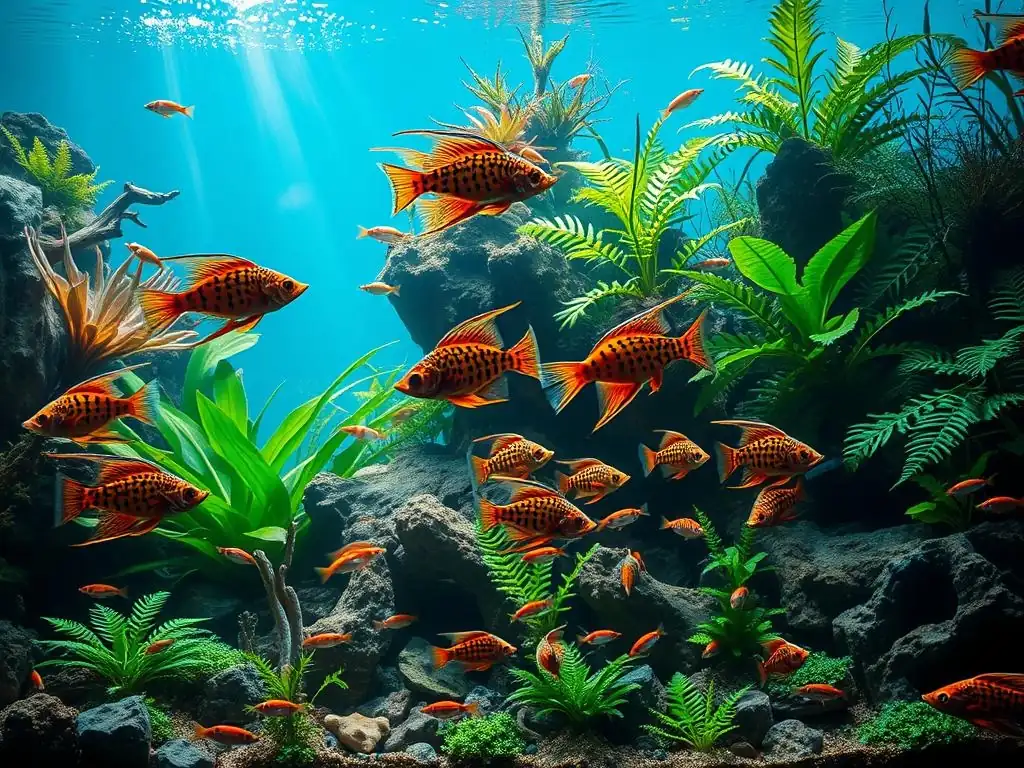
Selective breeding has transformed the swordtail into a canvas of aquatic artistry, yielding numerous distinct and beautiful varieties. Among the most popular is the Red Velvet Swordtail, prized for its intense, uniform red coloration across its entire body, often with a darker red or black sword. The Koi Swordtail mimics the revered Koi carp, displaying striking patterns of white, red, and black patches.
The Lyretail Swordtail stands out with its dramatically elongated and flowing dorsal, anal, and caudal fins, giving it an elegant, almost ethereal appearance. Pineapple Swordtails feature a vibrant yellow-orange body speckled with black markings, reminiscent of the fruit. Lastly, Neon Swordtails possess iridescent scales that shimmer with metallic blues, greens, or reds, creating a dazzling effect under aquarium lighting. Other notable varieties include High-Fin, Tuxedo, and various bicolors, each showcasing unique genetic traits.
Unique Appearance of Fancy Swordtails: Colors, Fin Shapes, and Body Modifications
The most striking aspect of fancy swordtails is their diverse and often exaggerated appearance, a direct result of decades of targeted breeding. Their coloration can range from solid, intense hues like deep red, bright yellow, or jet black, to intricate patterns such as calico, tuxedo, or multi-colored mosaics. These vibrant colors are often more pronounced and cover larger areas of the body compared to their wild ancestors.
Beyond color, fancy swordtails exhibit a wide array of modified fin shapes. The classic "sword" can be extended, doubled (producing a "double swordtail"), or even reduced. Dorsal and anal fins can be significantly elongated, as seen in Lyretail and High-Fin varieties, creating a flowing, ornamental look. While less common in swordtails than in other livebearers, some breeding lines may also feature slight body modifications, such as a more compressed or rounded body shape, though this is usually less extreme than the "balloon" varieties found in mollies or platies.
Tank Setup and Water Parameters for Fancy Swordtails: Special Considerations
While fancy swordtails generally thrive in similar conditions to their wild counterparts, their specialized genetics and often delicate finnage necessitate particular attention to tank setup and water parameters. A minimum 20-gallon long tank is still recommended for a small group, but larger tanks (30-40 gallons or more) are often preferred, especially for varieties with extensive finnage, to ensure ample swimming space and reduce stress.
Maintaining pristine water quality is paramount for fancy swordtails. Their elaborate fins can be more susceptible to fin rot or bacterial infections if water conditions deteriorate. Consistent temperatures between 72-80°F (22-27°C) and a pH range of 7.0-8.0 are ideal. Strong filtration, regular partial water changes, and stable parameters are crucial swordtail fish care tips to prevent stress and disease in these often more sensitive strains.
Fancy Swordtail Diet and Feeding Strategies: Enhancing Color and Growth
The diet for fancy swordtails plays a vital role not only in their overall health and growth but also in maintaining and enhancing their vibrant colors. High-quality commercial flake or pellet foods formulated specifically for color enhancement are highly recommended. These often contain natural color boosters like astaxanthin or spirulina, which intensify red, orange, and yellow pigments.
Supplementing their diet with a variety of live or frozen foods, such as bloodworms, brine shrimp, and daphnia, provides essential protein and promotes vigorous growth and fin development. Vegetable matter, including blanched peas or spirulina flakes, should also be offered regularly. Feeding small amounts two to three times a day is beneficial, ensuring they receive consistent nutrition without overfeeding, which can lead to water quality issues.
Breeding Fancy Swordtails: Genetic Considerations and Maintaining Traits
Breeding fancy swordtails is a more intricate process than breeding wild types, as it involves a deep understanding of genetics to consistently produce offspring with desired traits. Breeders carefully select parent fish based on their color intensity, fin shape, and pattern to ensure these characteristics are passed on to successive generations. This often involves line breeding, where closely related individuals are bred to concentrate specific genes.
While rewarding, this selective breeding can sometimes lead to reduced genetic diversity within a specific fancy line, potentially resulting in weaker immune systems or increased susceptibility to certain genetic conditions compared to wild populations. Responsible breeding practices, including occasional outcrossing to unrelated healthy individuals, are important swordtail fish care tips for maintaining the vigor and health of fancy swordtail strains over time.
Swordtail Fish Care Tips: Comparing Wild and Fancy Varieties
Water Quality Requirements: A Comparison of Wild and Fancy Needs
Both wild and fancy swordtails demand excellent water quality to thrive, but their specific needs can subtly differ. Wild swordtails, accustomed to naturally flowing rivers and streams, are generally more tolerant of minor fluctuations in parameters and can handle slightly harder water. They benefit from strong filtration and good aeration, mimicking their high-oxygen natural environments.
Fancy varieties, especially those with exaggerated fins or highly specialized color patterns, tend to be more sensitive to poor water conditions. Their elaborate finnage makes them particularly susceptible to fin rot and other bacterial infections if ammonia, nitrite, or nitrate levels are elevated. Therefore, maintaining exceptionally pristine and stable water parameters through consistent filtration and regular partial water changes (25-30% weekly) is even more critical for fancy swordtails.
Common Diseases and Health Issues in Swordtails: Prevention and Treatment
Swordtails are generally robust fish, but like all aquarium inhabitants, they are susceptible to common freshwater diseases. The most prevalent issues include Ich (white spot disease), fin rot, velvet, and various bacterial infections. Stress, often induced by poor water quality, overcrowding, sudden temperature changes, or incompatible tank mates, is the primary precursor to most health problems.
Prevention is the cornerstone of good swordtail fish care tips. This includes maintaining stable and pristine water parameters, providing a balanced and nutritious diet, ensuring adequate tank size, and avoiding sudden environmental shifts. If disease does occur, prompt identification and treatment with appropriate aquarium medications, often in a dedicated quarantine tank, are essential for recovery. Early intervention significantly increases the chances of successful treatment.
Behavioral Differences: Observing Interactions in the Aquarium
Observing the behavior of wild versus fancy swordtails can reveal subtle differences related to their breeding history. Wild swordtails, with their streamlined bodies and natural finnage, tend to be more agile and active swimmers. They often exhibit more pronounced schooling or shoaling behaviors when comfortable, reflecting their ancestral life in open water.
Fancy varieties, particularly those with elaborate or elongated fins (e.g., Lyretails, High-Fins), may be slightly less agile and display more deliberate swimming patterns due to the physical burden of their exaggerated fins. Male aggression, characterized by chasing and fin-nipping among males or persistent harassment of females, is present in both types but can sometimes appear more pronounced in fancy strains if tank space is limited or the male-to-female ratio is unbalanced.
Lifespan and Growth Rate: Factors Influencing Longevity
With optimal swordtail fish care tips, both wild and fancy swordtails can enjoy a lifespan of 3 to 5 years, and occasionally even longer. Wild swordtails, due to their natural genetic robustness, often exhibit consistent growth rates and reach their full potential adult size without significant issues, assuming their environmental needs are met.
Fancy varieties, while capable of similar lifespans, might sometimes be slightly more prone to age-related health complications or have slightly reduced longevity if their specific genetic lines are weakened by intensive inbreeding. Factors such as a high-quality diet, stable and clean water, appropriate tank size, and a stress-free environment are paramount for maximizing the lifespan and promoting healthy growth in both wild and fancy swordtail types.
Choosing the Right Swordtail: Considerations for Your Aquarium
Tank Size and Stocking Levels: Optimizing Space for Swordtails
Choosing the right tank size and maintaining appropriate stocking levels are fundamental swordtail fish care tips for the health and well-being of both wild and fancy varieties. For a small group of swordtails (e.g., one male and two to three females), a minimum 20-gallon long aquarium is recommended. The "long" dimension is important as it provides ample horizontal swimming space for these active fish.
For larger groups, or if you plan to keep multiple males, a 30-gallon or 40-gallon breeder tank is much more suitable. Overstocking can lead to increased aggression, poor water quality, and elevated stress levels, all of which compromise the fish's health and shorten their lifespan. Always consider the adult size of the fish and their activity levels, rather than just the "inch-per-gallon" rule.
Compatibility with Other Fish Species: Creating a Peaceful Community Tank
Swordtails are generally considered excellent additions to a community aquarium due to their peaceful nature, though male-on-male aggression can occur. When selecting tank mates, prioritize species that are similarly sized, share similar water parameter requirements, and exhibit a calm temperament. Good choices include other livebearers like platies and mollies, as well as various tetras (e.g., Neon Tetras, Rummy Nose Tetras), rasboras, and peaceful bottom dwellers such as Corydoras catfish.
Avoid housing swordtails with aggressive or fin-nipping species, such as Tiger Barbs, which might harass them or damage the male's distinctive sword or the flowing fins of fancy varieties. Similarly, very small or timid species might become stressed or outcompeted for food by the active swordtails. Always research the compatibility of any potential tank mates to foster a harmonious environment.
Personal Preferences: Matching Swordtails to Your Aesthetic Vision
The decision between wild and fancy swordtails often boils down to personal aesthetic preference and the overall vision for your aquarium. Wild swordtails offer a natural, understated beauty, making them ideal for biotope setups that aim to replicate their native Central American rivers. Their inherent hardiness and robust nature appeal to aquarists who prioritize natural vigor and authenticity.
Fancy varieties, on the other hand, provide an explosion of color and unique fin shapes, perfect for those who desire a vibrant, eye-catching display. Their diverse range allows for endless possibilities in creating a visually stunning aquarium that highlights the artistry of selective breeding. Consider your existing aquarium's theme and the visual impact you wish to achieve when making your choice.
Maintaining a Healthy Swordtail Aquarium: Essential Practices
Regular Water Changes and Filtration: Keeping the Water Pristine
Regular water changes are arguably the most critical component of effective swordtail fish care tips. A consistent schedule of 25-30% weekly partial water changes is essential to remove accumulated nitrates, replenish vital minerals, and maintain stable water parameters. This practice is crucial for both wild and fancy swordtails, preventing the buildup of toxins that can lead to stress and disease.
A robust filtration system is equally important to handle the bioload of these active fish. A hang-on-back (HOB) filter or a canister filter, providing both mechanical and biological filtration, is highly recommended. Ensure the filter provides adequate water circulation and surface agitation to promote oxygen exchange, mimicking the well-oxygenated conditions of their natural riverine habitats.
Monitoring Water Parameters: pH, Ammonia, Nitrite, and Nitrate Levels
Consistent monitoring of water parameters is a non-negotiable aspect of responsible swordtail keeping. Regular testing for pH, ammonia, nitrite, and nitrate levels allows aquarists to detect issues before they become critical. Ideally, ammonia and nitrite should always be at 0 parts per million (ppm), as even trace amounts are highly toxic to fish.
While swordtails are adaptable, a pH range of 7.0-8.0 is generally preferred. Nitrate levels should be kept below 20 ppm through diligent water changes. Consistency in these parameters is often more important than hitting exact numbers, as sudden fluctuations can cause significant stress to fish. A reliable liquid test kit is an invaluable tool for any aquarist.
Providing Enrichment and Stimulation: Promoting Natural Behaviors
Beyond basic water and food needs, providing an enriching environment is a key swordtail fish care tip that promotes natural behaviors and reduces stress. A well-decorated tank with live plants, such as Java fern, Anubias, and various stem plants like Hornwort or Water Wisteria, offers essential hiding spots for all fish, especially females seeking refuge from persistent males.
Strategic placement of driftwood or rocks can also create territories and visual barriers, further reducing aggression. For wild swordtails, incorporating areas with moderate water flow can mimic their natural riverine environment, encouraging their active swimming patterns. A stimulating environment contributes significantly to the overall well-being and longevity of your swordtails.
Conclusion: Appreciating the Diversity of Swordtail Fish
The Enduring Appeal of Wild and Fancy Swordtail Varieties
The world of swordtail fish offers a remarkable spectrum of beauty and genetic diversity, from the understated elegance of their wild ancestors to the vibrant, selectively bred fancy varieties. Wild swordtails captivate with their natural hardiness, streamlined form, and subtle coloration, embodying the essence of their riverine origins. They appeal to aquarists who appreciate authenticity and a natural aesthetic in their aquariums.
Conversely, fancy swordtails showcase the incredible artistry achievable through human selection. Their dazzling array of colors, patterns, and exaggerated fin shapes provides endless visual fascination, allowing aquarists to curate a truly unique and vibrant aquatic display. Both types, in their own way, contribute to the enduring appeal of these dynamic and engaging livebearers in the freshwater hobby.
Responsible Swordtail Keeping: A Commitment to Their Well-being
Regardless of whether you choose a wild or fancy swordtail, responsible ownership is a commitment to their well-being and longevity. Providing appropriate tank size, maintaining pristine water quality through consistent filtration and regular water changes, and offering a balanced, nutritious diet are fundamental swordtail fish care tips that cannot be overstated.
Understanding their social dynamics, ensuring proper male-to-female ratios, and providing ample hiding spots contribute to a stress-free environment where these active fish can thrive. By dedicating attention to these essential practices, aquarists can enjoy the beauty, personality, and dynamic behaviors of swordtail fish for many years, truly appreciating the diversity and resilience of this remarkable species.
Frequently Asked Questions
What are the key differences between wild swordtail fish and fancy varieties?
Wild swordtails generally have a more streamlined body shape and drabber coloration, while fancy varieties are bred for their vibrant colors and exaggerated finnage. This selective breeding impacts their appearance and sometimes their hardiness.
What are some important considerations for Swordtail fish care tips in terms of tank size?
Swordtails, regardless of variety, need adequate space. A minimum of 20 gallons is recommended for a small group to allow for swimming and to minimize stress, which is essential for Swordtail fish care tips.
How does water chemistry play a role in Swordtail fish care tips?
Maintaining stable water parameters is crucial. Swordtails thrive in slightly alkaline water (pH 7.0-8.0) and require regular water changes to remove nitrates and prevent ammonia buildup, key aspects of Swordtail fish care tips.
What are some common health issues that can affect swordtail fish, and how can they be prevented?
Swordtails can be susceptible to diseases like Ich and fin rot. Prevention involves maintaining excellent water quality, providing a balanced diet, and quarantining new fish before introducing them to the main tank, all important Swordtail fish care tips.
What are some suitable tank mates for swordtail fish, keeping in mind both wild and fancy varieties?
Good tank mates include other peaceful community fish like platies, mollies, and corydoras catfish. Avoid aggressive or fin-nipping species that could stress the swordtails, which is a consideration under Swordtail fish care tips.
Final Reflection: Appreciating the Swordtail's Legacy
The journey through the world of swordtails, from their wild origins to the dazzling array of fancy varieties, underscores a crucial point: understanding the roots of any creature is paramount to its well-being in our care. The differences we've explored are not merely aesthetic; they represent generations of adaptation and selective breeding, each impacting the fish's needs and resilience. Ignoring these nuances can lead to compromised health and a diminished quality of life for these captivating creatures.
The swordtail, in its humble, wild form, reminds us of the power of natural selection and the importance of preserving biodiversity. My own fascination with these fish began with a simple observation of their natural grace, a stark contrast to some of the more heavily modified breeds. This appreciation has only deepened with the research for this article, highlighting the ethical considerations inherent in fishkeeping. In the end, we will conserve only what we love; we will love only what we understand; and we will understand only what we are taught.
- Baba Dioum's words resonate deeply, urging us to educate ourselves and others about the delicate balance we must maintain.
Now, armed with a deeper understanding of swordtail fish care tips, I invite you to reflect on your own role in the aquarium hobby. Are you prioritizing the health and well-being of your fish above all else? Are you actively seeking knowledge and sharing it with others? Let us all strive to be responsible stewards of these beautiful creatures, ensuring that future generations can appreciate the swordtail in all its diverse and magnificent forms.
Dive Deeper into the Swordtail World!
Thank you for exploring the fascinating differences between wild and fancy swordtails! We hope you've gained valuable insights into these vibrant fish and their unique characteristics. Now, it's time to put that knowledge into action!
Here are a few ways to expand your swordtail expertise:
- Plan a Biotope Aquarium: Challenge yourself by designing a tank that mimics the natural habitat of wild swordtails! Research specific plant and water parameters to create the perfect environment.
- Join the Conversation: Share your thoughts or experiences with swordtails in the comments below. Tell us which varieties you prefer and why.
- Explore Rare Swordtail Mutations: Research unusual or less-common swordtail mutations to uncover hidden gems in the world of fish breeding.
Which aspect of swordtail care are you most eager to explore further?