
Yellow Leaves & Stunted Growth? Decoding Your Aquarium Plant's Cry for Specific Nutrients

Welcome to Aquarium Mastery!
Ever noticed your beautifully planted aquarium looking a little… under the weather? Are your plants sporting yellow leaves and showing signs of stunted growth? You're not alone! Dive into our comprehensive guide on yellow leaves nutrient deficiencies and unlock the secrets to restoring vibrant health to your aquatic plants. Discover the specific nutrients your plants are craving and learn how to diagnose and correct common deficiencies, turning your underwater world into a thriving paradise. Let's get started!
- Understanding Nutrient Deficiencies in Aquarium Plants
-
Diagnosing Specific Nutrient Deficiencies: A Visual Guide
- Iron Deficiency: Pale or Yellow Leaves with Green Veins (Interveinal Chlorosis)
- Nitrogen Deficiency: Uniform Yellowing of Older Leaves
- Potassium Deficiency: Yellowing with Small Brown Spots or Holes
- Phosphorus Deficiency: Stunted Growth and Dark Green or Reddish Leaves
- Magnesium Deficiency: Yellowing Between Veins, Primarily in Older Leaves
- Calcium Deficiency: New Growth Deformities and Root Problems
- Micronutrient Deficiencies: Addressing Trace Element Imbalances
-
Identifying the Root Cause of Plant Nutrient Problems
- Inadequate Substrate Fertilization: The Importance of Root Tabs and Substrates
- Insufficient Water Column Fertilization: Liquid Fertilizers and Dosing Schedules
- Imbalances in the Aquarium Ecosystem: Overcrowding and Poor Water Quality
- Incorrect Lighting: Light Intensity and Spectrum Impact Nutrient Uptake
- CO2 Deficiency: The Role of Carbon Dioxide in Plant Growth
-
Treating and Preventing Nutrient Deficiencies in Aquarium Plants
- Choosing the Right Aquarium Plant Fertilizer: A Comprehensive Guide
- Dosing Liquid Fertilizers: Understanding NPK Ratios and Microelements
- Adding Root Tabs to Your Aquarium Substrate: A Step-by-Step Guide
- Optimizing Water Parameters for Plant Growth: pH, KH, and GH
- Managing Lighting for Optimal Plant Health: Intensity and Duration
- Implementing CO2 Injection Systems: A Deep Dive
- Preventing Future Issues: Maintaining a Healthy Planted Aquarium
- Conclusion: Achieving Lush and Healthy Aquarium Plants Through Proper Nutrition
-
Frequently Asked Questions
- What are the most common causes of yellow leaves in aquarium plants, as it relates to nutrient deficiencies?
- How can I tell if my aquarium plants have a nitrogen deficiency causing yellow leaves?
- How does a lack of iron specifically contribute to yellow leaves in aquarium plants?
- Besides yellow leaves, what other symptoms might indicate nutrient deficiencies in my aquarium plants?
- How can I address nutrient deficiencies causing yellow leaves in my aquarium plants?
- Final Reflection: The Silent Language of Aquatic Life
- Nourish Your Aquatic Garden: Watch Your Plants Thrive!
Understanding Nutrient Deficiencies in Aquarium Plants
Why Aquarium Plants Need Nutrients
Aquarium plants, much like their terrestrial counterparts, require a balanced array of essential nutrients to thrive. These vital elements are broadly categorized into macronutrients (needed in larger quantities) and micronutrients (needed in smaller, trace amounts). Macronutrients like nitrogen (N), phosphorus (P), and potassium (K) are fundamental for core biological processes such as photosynthesis, cell division, and energy transfer. Without these, plants cannot build new tissues, process light energy, or maintain cellular functions.
Beyond the major three, other crucial nutrients like calcium, magnesium, sulfur, and a suite of trace elements such as iron, manganese, boron, zinc, and copper, play specific roles in enzyme activation, chlorophyll production, and overall plant structure. A deficiency in any one of these can disrupt the entire metabolic pathway, leading to visible signs of stress. For instance, iron is critical for chlorophyll synthesis, so its absence directly leads to chlorosis, a common form of yellow leaves nutrient deficiencies.
Recognizing the Signs: Identifying Plant Nutrient Deficiencies
Identifying nutrient deficiencies in aquarium plants often relies on careful observation of their visual symptoms. While yellowing leaves are a common indicator, the specific pattern of discoloration, its location (old vs. new growth), and accompanying symptoms like stunted growth, holes, melting, or deformed leaves can provide critical clues. For example, a general paling of older leaves might point towards a nitrogen deficiency, whereas yellowing of new leaves with green veins is a classic sign of iron deficiency.
It's crucial to differentiate between nutrient deficiencies and other plant problems, such as algae overgrowth, pest infestations, or simply plants adjusting to a new environment. Consistent monitoring of your aquarium plants, noting changes in color, texture, and growth rate, is the first step in diagnosing yellow leaves nutrient deficiencies. Maintaining a plant journal can help track symptoms over time, providing a valuable reference for troubleshooting.
The Connection Between Yellow Leaves and Nutrient Imbalance
Yellow leaves, or chlorosis, are perhaps the most common and noticeable symptom of nutrient imbalance in aquarium plants. This yellowing occurs primarily due to a reduction in chlorophyll production, the green pigment essential for photosynthesis. Chlorophyll molecules require specific nutrients like nitrogen, iron, and magnesium for their synthesis and structure. When these nutrients are insufficient, the plant's ability to produce chlorophyll is compromised, leading to the characteristic pale green or yellow appearance.
The location of the yellowing—whether on older or newer leaves—is key to narrowing down the specific deficiency. Mobile nutrients (like nitrogen and magnesium) can be relocated by the plant from older leaves to support new growth, causing older leaves to yellow first. Immobile nutrients (like iron and calcium) cannot be moved, so their deficiency first appears in new growth, leading to yellow leaves nutrient deficiencies that manifest distinctly.
Diagnosing Specific Nutrient Deficiencies: A Visual Guide
Iron Deficiency: Pale or Yellow Leaves with Green Veins (Interveinal Chlorosis)
Iron deficiency is one of the most common causes of yellow leaves nutrient deficiencies in planted aquariums, especially in tanks with higher pH levels. The hallmark symptom is interveinal chlorosis, where the newest leaves turn pale yellow or almost white, while the veins remain distinctly green. This occurs because iron is crucial for the synthesis of chlorophyll, and its immobility within the plant means new growth is affected first as the plant cannot move existing iron from older leaves.
Even if iron is present in the water, high pH (above 7.0) can render it unavailable for plant uptake by causing it to precipitate out of solution. Similarly, an excess of other trace elements like manganese can sometimes compete with iron for uptake. Ensuring proper iron supplementation, often through chelated iron products that remain stable across a wider pH range, is essential to prevent these pale yellow leaves nutrient deficiencies.
Nitrogen Deficiency: Uniform Yellowing of Older Leaves
Nitrogen is a primary macronutrient vital for all aspects of plant growth, including protein synthesis and DNA formation. A nitrogen deficiency typically manifests as a uniform yellowing of older leaves, often starting from the tips and edges and progressing inwards. This is because nitrogen is a mobile nutrient; when supplies are low, the plant reallocates nitrogen from older, established leaves to support new, developing growth, causing the older foliage to suffer first.
Beyond the yellowing, plants with nitrogen deficiency will exhibit significantly stunted overall growth. Their stems may become thin, and new leaves will be noticeably smaller than usual. While fish waste provides some nitrogen in the form of nitrates, it's often insufficient for heavily planted tanks, particularly those with low bioloads, making supplementary nitrogen dosing crucial to prevent these widespread yellow leaves nutrient deficiencies.
Potassium Deficiency: Yellowing with Small Brown Spots or Holes
Potassium is another essential macronutrient involved in numerous plant processes, including enzyme activation, water regulation (osmotic balance), and nutrient transport. A potassium deficiency often presents as yellowing along the margins of older leaves, followed by the appearance of small, pinprick-sized brown spots. These spots can enlarge and merge, eventually leading to holes (necrosis) in the leaves, giving them a ragged or "shot-hole" appearance.
Unlike some other deficiencies, potassium deficiency often results in leaves that appear otherwise healthy in terms of shape and texture, apart from the discoloration and holes. This deficiency is common in tanks that rely solely on fish food for nutrients, as fish food often lacks sufficient potassium. Regular supplementation with a potassium-specific fertilizer is usually required to prevent these distinctive yellow leaves nutrient deficiencies.
Phosphorus Deficiency: Stunted Growth and Dark Green or Reddish Leaves
Phosphorus is a critical macronutrient involved in energy transfer (ATP), root development, and the formation of genetic material. A deficiency in phosphorus leads to a noticeable overall stunting of plant growth. Leaves may become unusually dark green, almost bluish-green, and in some species, a reddish or purplish tint can develop, particularly on the undersides of leaves or along the margins. This color change is due to the accumulation of anthocyanin pigments.
New growth will be severely limited and very small, and roots may appear underdeveloped or stunted. While phosphorus is present in fish waste and food, it can sometimes be limited in very clean, low-bioload tanks or when uptake is hindered by extreme pH levels. Regular, measured dosing of a phosphate-containing fertilizer is essential to ensure robust root development and prevent these specific yellow leaves nutrient deficiencies.
Magnesium Deficiency: Yellowing Between Veins, Primarily in Older Leaves
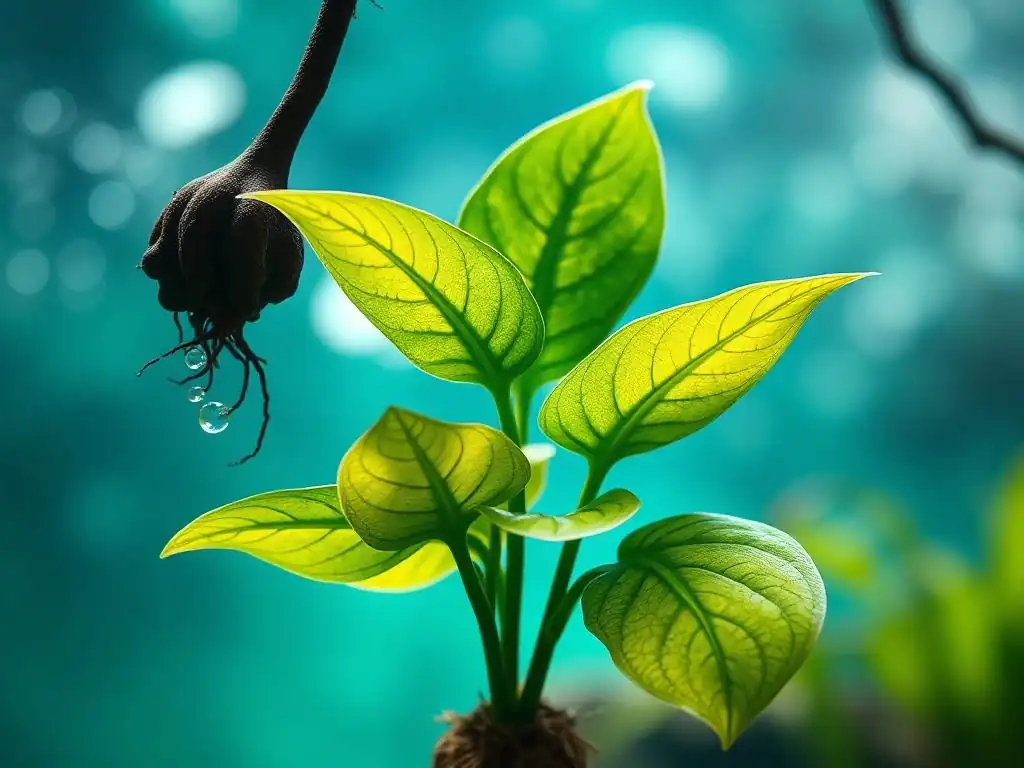
Magnesium is a central component of the chlorophyll molecule itself, making it indispensable for photosynthesis. A magnesium deficiency typically presents as interveinal chlorosis, similar to iron deficiency, but it predominantly affects older leaves first. The areas between the leaf veins turn yellow, while the veins themselves remain green, creating a distinct striped or marbled appearance. As the deficiency progresses, the yellowing can spread to newer leaves.
In severe cases, the yellowed areas may turn necrotic (brown and dead), and leaves might curl or cup. Magnesium is a mobile nutrient, so the plant attempts to move it from older leaves to support new growth, hence the symptoms appearing on mature foliage first. While many water sources contain some magnesium, supplementary dosing, often as part of a general hardness booster or a comprehensive liquid fertilizer, is necessary to prevent these forms of yellow leaves nutrient deficiencies.
Calcium Deficiency: New Growth Deformities and Root Problems
Calcium is an immobile nutrient vital for cell wall formation, cell division, and overall structural integrity of the plant. Because it cannot be translocated from older tissues, calcium deficiency symptoms appear exclusively on new growth. This includes stunted, distorted, or curled new leaves, often with brown necrotic spots along the edges or tips. The growing tips themselves may die back.
Beyond leaf deformities, calcium deficiency severely impacts root development, leading to short, stubby, or underdeveloped root systems that are less efficient at absorbing nutrients. While hard water typically provides ample calcium, very soft water or the use of reverse osmosis (RO) water without remineralization can lead to this deficiency. Supplementing with calcium, often through products that increase general hardness (GH), is crucial to prevent these specific yellow leaves nutrient deficiencies.
Micronutrient Deficiencies: Addressing Trace Element Imbalances
Beyond the primary and secondary macronutrients, a host of micronutrients (trace elements) such as manganese, boron, zinc, copper, and molybdenum are essential for various enzymatic reactions and metabolic processes. Deficiencies in these trace elements can manifest in a wide array of symptoms that are often less distinct and can sometimes mimic other deficiencies or cause general poor health and stunted growth. For example, manganese deficiency can also cause interveinal chlorosis, but it often affects mid-level leaves.
Given their minute required quantities, individual trace element deficiencies are less common in aquariums that receive regular doses of a comprehensive liquid fertilizer, as these products are formulated to provide a balanced array of micronutrients. However, in setups with very lean dosing or unique water chemistry, specific trace element imbalances can occur, contributing to the broader category of yellow leaves nutrient deficiencies. Regular, balanced dosing is the best preventative measure.
Identifying the Root Cause of Plant Nutrient Problems
Inadequate Substrate Fertilization: The Importance of Root Tabs and Substrates
Many aquatic plants, particularly heavy root feeders like Amazon Swords (Echinodorus species), Cryptocorynes (Cryptocoryne species), and certain types of Anubias, primarily absorb nutrients through their root systems. If your aquarium substrate is inert (like gravel or sand without added nutrients) or if a nutrient-rich substrate has become depleted over time, these plants will inevitably suffer from nutrient deficiencies. Their leaves may yellow, growth will slow, and overall vitality will decline.
To combat this, employing nutrient-rich aqua soils or regularly burying root tabs near the base of root-feeding plants is crucial. For instance, a 10-gallon tank heavily planted with Swords and Crypts might require 2-3 root tabs every 3-4 months, depending on the specific product and plant density. These tabs slowly release essential nutrients like iron, potassium, and phosphorus directly into the root zone, preventing localized yellow leaves nutrient deficiencies.
Insufficient Water Column Fertilization: Liquid Fertilizers and Dosing Schedules
In contrast to root feeders, many stem plants (e.g., Rotala, Ludwigia), mosses, and epiphytic plants (e.g., Java Fern, Bucephalandra) primarily absorb nutrients directly from the water column. If you are not consistently dosing a comprehensive liquid fertilizer, or if your dosing schedule is inadequate for your plant mass, these plants will show signs of nutrient deficiency. Common symptoms include pale or yellow leaves, slow growth, and melting.
Establishing a consistent and appropriate dosing schedule for liquid fertilizers is paramount. For example, a moderately planted 20-gallon tank might benefit from 5ml of a balanced liquid fertilizer (containing NPK and micronutrients) dosed 2-3 times per week. Heavily planted or high-tech tanks may require daily micro-nutrient dosing and multiple weekly macro-nutrient doses to prevent widespread yellow leaves nutrient deficiencies in the water column.
Imbalances in the Aquarium Ecosystem: Overcrowding and Poor Water Quality
The overall health and balance of your aquarium ecosystem significantly impact nutrient availability and plant health. An overcrowded tank, for instance, can lead to excessive organic waste accumulation, which, while providing some nitrates, can also lead to nutrient imbalances or lock up certain elements. High levels of pollutants can stress plants, making them less efficient at nutrient uptake, even if nutrients are technically present.
Conversely, an extremely low bioload in a densely planted tank might not generate enough waste to supply sufficient nitrates or phosphates for robust plant growth, leading to yellow leaves nutrient deficiencies. Furthermore, poor water circulation can create stagnant zones where nutrients don't reach plants effectively. Maintaining a balanced fish load, regular cleaning, and efficient filtration are critical for a healthy planted tank, enabling plants to optimally utilize available nutrients.
Incorrect Lighting: Light Intensity and Spectrum Impact Nutrient Uptake
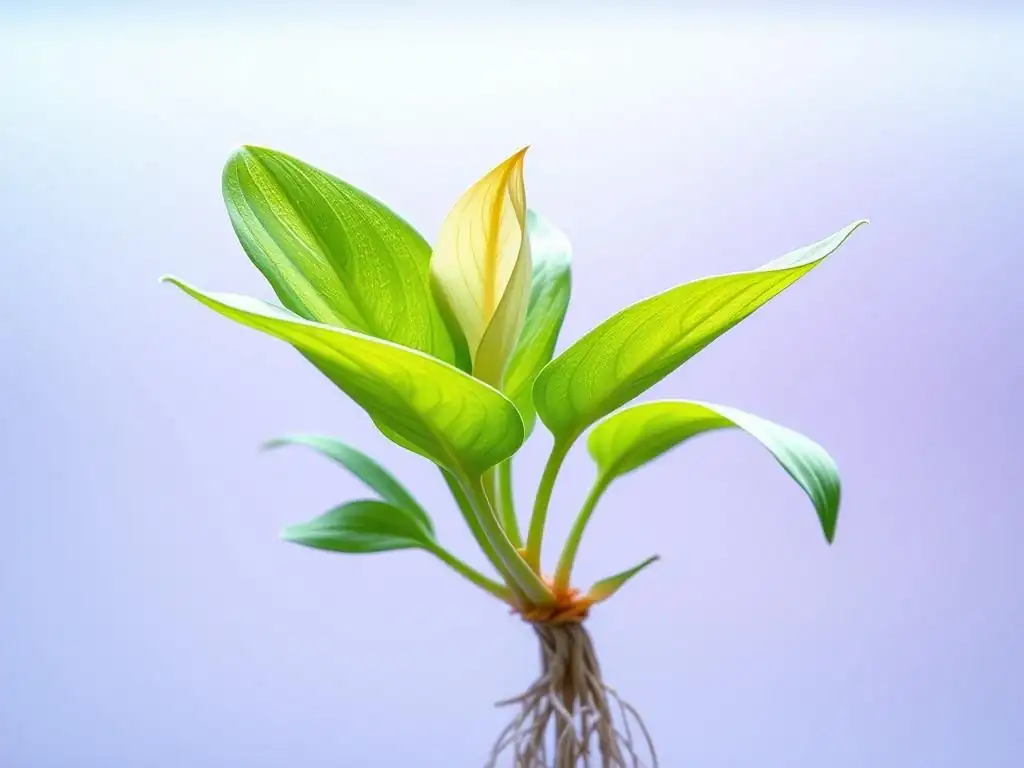
Lighting is the engine of photosynthesis, the process by which plants convert light energy into chemical energy, driving nutrient uptake and growth. Both insufficient and excessive lighting can lead to nutrient problems. Too little light means plants photosynthesize slowly, thus consuming fewer nutrients, making them appear "deficient" even if nutrients are present. Conversely, too much light can accelerate growth beyond the available nutrient supply, quickly depleting essential elements and leading to yellow leaves nutrient deficiencies.
The light spectrum also plays a role; plants primarily utilize red and blue light for photosynthesis. A light source with a Kelvin temperature around 6500K is generally considered ideal for plant growth. For a medium-tech planted tank, aiming for a Photosynthetically Active Radiation (PAR) level of 20-40 at the substrate level for 8-10 hours a day is a good starting point. Adjusting light intensity and duration in conjunction with nutrient dosing is essential to maintain balance.
CO2 Deficiency: The Role of Carbon Dioxide in Plant Growth
Carbon dioxide (CO2) is arguably the most critical nutrient for aquatic plants, serving as the primary carbon source for photosynthesis. In fact, CO2 is often the limiting factor for growth in planted aquariums, even when all other macro and micronutrients are abundant. Without sufficient CO2, plants cannot efficiently photosynthesize, leading to severely stunted growth, melting leaves, and an inability to utilize other available nutrients, mimicking various yellow leaves nutrient deficiencies.
In a high-light, high-nutrient aquarium, if CO2 levels drop below the optimal range (typically 20-30 ppm), plants will struggle immensely. They may exhibit slow growth, develop algae on their leaves, or even begin to melt, regardless of how much liquid fertilizer is added. For a 50-gallon planted tank, maintaining 2-3 bubbles per second of CO2 injection might be necessary to achieve the desired concentration and prevent CO2-induced yellow leaves nutrient deficiencies.
Treating and Preventing Nutrient Deficiencies in Aquarium Plants
Choosing the Right Aquarium Plant Fertilizer: A Comprehensive Guide
Selecting the appropriate fertilizer is crucial for addressing and preventing yellow leaves nutrient deficiencies. Fertilizers typically come in two main forms: comprehensive all-in-one liquid solutions and individual macro/micronutrient supplements. For beginners or those with moderately planted tanks, an all-in-one liquid fertilizer (e.g., Seachem Flourish, API Leaf Zone, Nilocg aquatics lines) is often the easiest and most balanced choice, as it provides a blend of NPK and trace elements.
For advanced aquarists with specific plant demands or those practicing Estimative Index (EI) dosing, individual macro (Nitrogen, Phosphorus, Potassium) and micro (Iron, Manganese, etc.) supplements offer greater control. When choosing, look for products that specify their NPK ratios and list chelated forms of iron (e.g., EDTA, DTPA) for better availability. For example, a common NPK ratio for planted tank fertilizers might be around 1-0.1-1, providing a good baseline for most plants.
Dosing Liquid Fertilizers: Understanding NPK Ratios and Microelements
Accurate and consistent dosing of liquid fertilizers is paramount to prevent both deficiencies and algae outbreaks. Overdosing can lead to algae, while underdosing results in yellow leaves nutrient deficiencies. Always start with the manufacturer's recommended dosage as a baseline, then adjust based on your tank's plant mass, observed symptoms, and water test results. A dense plant mass will naturally consume more nutrients and require higher dosing.
For instance, a heavily planted 30-gallon tank might require daily dosing of a micro-nutrient solution (e.g., 2-3 ml) to keep trace elements abundant, while NPK (macro-nutrients) might be dosed 2-3 times per week (e.g., 5 ml per dose) after a water change. Monitoring plant response and making small, gradual adjustments is key to finding the optimal balance for your specific setup and preventing recurring yellow leaves nutrient deficiencies.
Adding Root Tabs to Your Aquarium Substrate: A Step-by-Step Guide
Root tabs are an effective way to deliver essential nutrients directly to the root zone of heavy root-feeding plants, bypassing the water column. This is particularly important for plants like Amazon Swords, Cryptocorynes, and certain Valisneria species that primarily absorb nutrients through their substrate. To add root tabs, simply bury them deep into the substrate, near the base of the plants you wish to fertilize. Ensure they are fully covered to prevent them from dissolving into the water column, which could fuel algae.
The frequency of replacement depends on the specific product and plant demands, but typically, root tabs last between 3 to 6 months. A common strategy is to place one root tab every 4-6 inches in the substrate, especially under larger plants or in areas with dense root feeders. This localized nutrient delivery significantly helps in preventing yellow leaves nutrient deficiencies that stem from depleted substrate.
Optimizing Water Parameters for Plant Growth: pH, KH, and GH
Water parameters such as pH, KH (carbonate hardness), and GH (general hardness) significantly influence nutrient availability and plant health. For example, a high pH (above 7.5) can cause certain nutrients, particularly iron, to precipitate out of solution, making them unavailable for plant uptake even if present. KH acts as a buffer for pH and CO2, while GH indicates the concentration of calcium and magnesium, two essential plant nutrients.
Most aquatic plants thrive in slightly acidic to neutral water, with a pH range of 6.5-7.5. A general hardness (GH) of 4-8 dGH (approximately 70-140 ppm) ensures sufficient calcium and magnesium. A carbonate hardness (KH) of 3-6 dKH (approximately 50-100 ppm) provides good buffering capacity for CO2. Maintaining these optimal ranges helps ensure that nutrients remain soluble and accessible to plants, effectively preventing many forms of yellow leaves nutrient deficiencies.
Managing Lighting for Optimal Plant Health: Intensity and Duration
Proper lighting management is fundamental to a healthy planted aquarium, as light drives photosynthesis and nutrient consumption. The goal is to provide sufficient light intensity and duration for healthy plant growth without causing nutrient imbalances or encouraging excessive algae. Too little light slows plant metabolism and nutrient uptake, while too much light can quickly deplete available nutrients, leading to yellow leaves nutrient deficiencies and triggering algae blooms.
For a moderately planted tank, a light duration of 8-10 hours per day is generally recommended. Light intensity, measured in Photosynthetically Active Radiation (PAR), should be appropriate for your plant selection. For instance, a medium-tech tank might aim for 30-50 PAR at the substrate level. Adjusting light intensity (e.g., using a dimmer or raising/lowering the light fixture) or duration can help balance the plant's metabolic rate with nutrient availability, thereby preventing light-induced yellow leaves nutrient deficiencies.
Implementing CO2 Injection Systems: A Deep Dive
For truly lush and vibrant plant growth, especially in high-light, high-nutrient setups, supplemental CO2 injection is often indispensable. Carbon dioxide is a primary nutrient, and its availability often limits plant growth more than any other element. Implementing a pressurized CO2 system involves a CO2 cylinder, a regulator, tubing, a diffuser or reactor, and often a solenoid valve connected to a timer or pH controller.
The goal is to maintain a consistent CO2 level of 20-30 ppm throughout the photoperiod. For a 75-gallon tank, this might translate to a bubble count of 2-3 bubbles per second, delivered via a high-efficiency diffuser. Proper CO2 injection ensures that plants can fully utilize other macro and micronutrients, preventing the stunted growth and yellow leaves nutrient deficiencies that commonly occur when CO2 is the limiting factor.
Preventing Future Issues: Maintaining a Healthy Planted Aquarium
Regular Water Changes: Replenishing Nutrients and Removing Waste
Regular water changes are a cornerstone of maintaining a healthy planted aquarium, serving multiple vital functions. They help to remove accumulated pollutants, organic waste, and excess nutrients that could otherwise lead to algae. Crucially, water changes also replenish trace elements and minerals that plants absorb or that might get depleted over time, even if you are dosing fertilizers. Fresh water introduces new, readily available micro-nutrients.
For a planted tank, a weekly water change of 20-30% is a widely recommended practice. This routine helps to "reset" the water chemistry, dilute any potential nutrient excesses, and ensure a constant supply of fresh, clean water for optimal plant health. Consistent water changes are a simple yet effective method for preventing the onset of various yellow leaves nutrient deficiencies and maintaining overall tank stability.
Monitoring Water Parameters: Testing for Nutrient Levels
Proactive monitoring of key water parameters is essential for identifying potential nutrient imbalances before visible yellow leaves nutrient deficiencies appear. While you can't test for every single nutrient, regularly testing for nitrates, phosphates, and potassium can provide valuable insights into your tank's nutrient status. Iron test kits are also available and can be particularly useful if you suspect iron deficiency.
Target ranges for a healthy planted tank often include nitrates at 5-15 ppm, phosphates at 0.5-1 ppm, and potassium at 10-20 ppm. Regularly testing these levels (e.g., weekly or bi-weekly) allows you to adjust your fertilization regimen proactively. If a nutrient consistently tests low, you know to increase its dosage; if it's consistently high, you might reduce dosing or increase water change frequency, thereby preventing deficiencies and promoting lush growth.
Consistent Fertilization Schedule: Preventing Deficiencies Before They Occur
The most effective strategy for preventing yellow leaves nutrient deficiencies is to establish and adhere to a consistent fertilization schedule. Plants thrive on stability, and providing a steady supply of nutrients prevents the "feast or famine" cycle that can stress them and lead to visible symptoms. It is significantly easier to maintain healthy plants through regular, measured dosing than it is to correct severe deficiencies once they have manifested.
Consider setting up a dedicated day or days each week for dosing liquid fertilizers, or even using an auto-dosing pump for daily micro-nutrient additions in high-tech setups. For instance, dosing liquid fertilizer every other day, or weekly after a water change, based on your plant demands and product instructions, ensures a continuous supply. This proactive approach ensures plants always have the resources they need, preventing the onset of common yellow leaves nutrient deficiencies.
Choosing Compatible Plant Species: Matching Plants to Your Aquarium Environment
A fundamental aspect of preventing nutrient deficiencies is selecting plant species that are compatible with your aquarium setup's capabilities and your commitment level. Some aquatic plants are highly demanding, requiring intense light, CO2 injection, and precise nutrient dosing to thrive. Others are much more forgiving, flourishing in lower light and less rigorous fertilization regimes.
For beginners, starting with low-demanding plants like Anubias, Java Fern, and various Cryptocoryne species is highly recommended. These plants are generally less prone to severe yellow leaves nutrient deficiencies and can often thrive with basic liquid fertilization and root tabs. Attempting to grow high-tech plants in a low-tech setup will almost certainly lead to chronic nutrient deficiencies and frustration. Matching plant needs to your tank's environment is crucial for long-term success.
Conclusion: Achieving Lush and Healthy Aquarium Plants Through Proper Nutrition
Frequently Asked Questions
What are the most common causes of yellow leaves in aquarium plants, as it relates to nutrient deficiencies?
The most common causes are deficiencies in macronutrients like nitrogen, phosphorus, and potassium, and micronutrients such as iron. These essential nutrients are crucial for healthy plant growth and chlorophyll production.
How can I tell if my aquarium plants have a nitrogen deficiency causing yellow leaves?
Nitrogen deficiency often manifests as general yellowing of older leaves, starting from the bottom of the plant. The plant may also exhibit stunted growth, and the leaves might eventually turn brown.
How does a lack of iron specifically contribute to yellow leaves in aquarium plants?
Iron deficiency typically causes chlorosis, where the veins of the leaves remain green while the tissue between them turns yellow. This is especially visible in new growth. Iron is vital for chlorophyll production.
Besides yellow leaves, what other symptoms might indicate nutrient deficiencies in my aquarium plants?
Other symptoms include stunted growth, holes in leaves, transparent leaves, and brittle leaves. These symptoms often vary depending on the specific nutrient deficiency.
How can I address nutrient deficiencies causing yellow leaves in my aquarium plants?
The best way is to use a high-quality liquid fertilizer specifically formulated for aquarium plants. Regularly test your water parameters to identify deficiencies and adjust your fertilization accordingly.
Final Reflection: The Silent Language of Aquatic Life
The insights shared throughout this article, detailing the intricate relationship between aquarium plants and their nutritional needs, resonate deeply in a world increasingly focused on sustainable ecosystems and responsible stewardship. Understanding the subtle cues of yellow leaves and stunted growth is no longer just about aesthetics; it's about recognizing the delicate balance within our enclosed aquatic worlds and taking proactive steps to maintain their health.
This journey into the world of nutrient deficiencies has profoundly impacted my own perspective, highlighting the interconnectedness of all living things, even within the confines of a glass tank. It's a reminder that careful observation and informed action are crucial for nurturing life. As the renowned naturalist John Muir wisely stated: When we try to pick out anything by itself, we find it hitched to everything else in the Universe.
This quote perfectly encapsulates the complex web of relationships within an aquarium ecosystem, where a single nutrient deficiency can ripple outwards, affecting the entire environment.
Now, armed with this knowledge, I invite you to reflect on your own role in nurturing life, both within and beyond the aquarium. Consider the subtle signs of imbalance in your own life and the world around you. What 'yellow leaves' are you overlooking? What stunted growth are you failing to address? Let this understanding of aquatic plant nutrition inspire you to cultivate a deeper awareness and take meaningful action towards creating a healthier, more vibrant world, one carefully tended ecosystem at a time.
Nourish Your Aquatic Garden: Watch Your Plants Thrive!
Thank you for diving into the fascinating world of aquarium plant nutrition! We hope this article has equipped you with the knowledge to identify and address nutrient deficiencies. Now, it's time to put that knowledge into action and witness the flourishing of your aquatic ecosystem.
- Prioritize testing your aquarium water: Begin by using a comprehensive test kit to pinpoint specific nutrient deficiencies—understanding the 'why' is crucial to solving the problem!
- Share your success story! Document your plant's transformation with before-and-after photos on social media and tag us @AquariumMastery, inspiring other aquascapers.
- Experiment with a DIY liquid fertilizer mix! Research safe and effective recipes online to create a custom blend tailored to your plants' specific needs, and monitor their response closely.
Ready to unlock the full potential of your aquarium plants and create a vibrant underwater paradise?