
Anthias and Aggression: Managing Dominance and Territoriality in a School

Welcome to Aquarium Mastery!
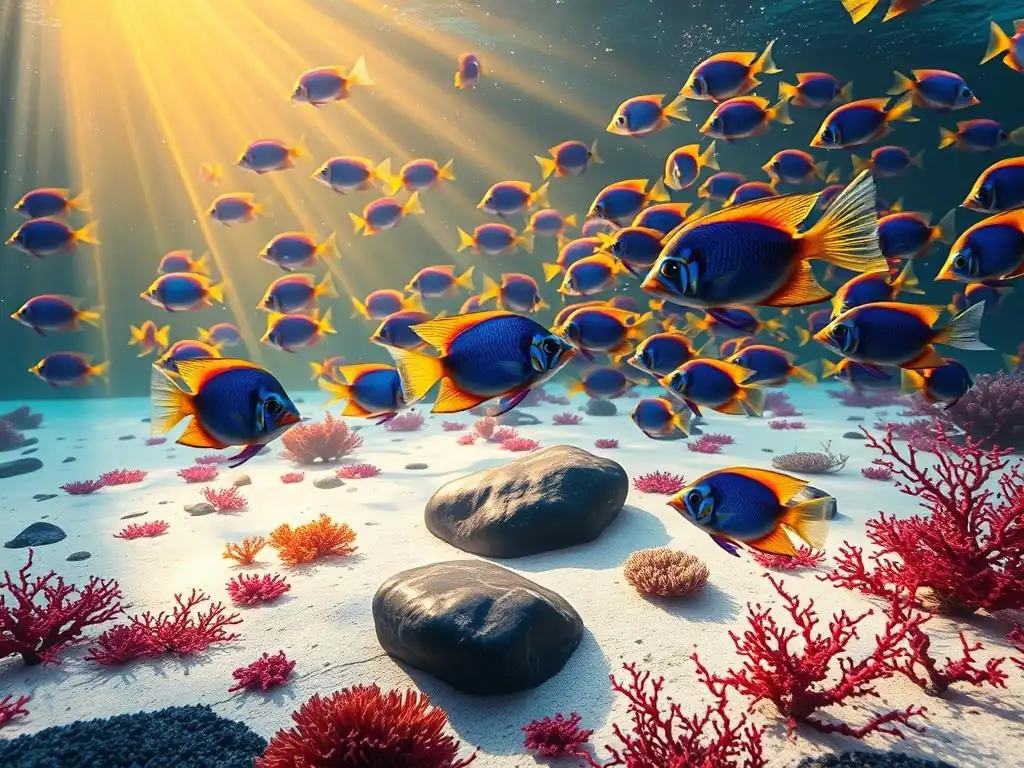
Ever wondered how to keep the peace in your Anthias school? These vibrant fish can bring incredible beauty to your saltwater aquarium, but their complex social dynamics can also lead to aggression. Dive in to discover essential Anthias aggression management tips and unlock the secrets to a harmonious and thriving reef environment. Let's explore how to navigate their dominance displays and territorial squabbles, ensuring a healthy and happy community!
- Understanding Anthias Aggression in Reef Aquariums
- Anthias Management Strategies: Promoting Harmony
- Advanced Techniques for Managing Anthias Behavior
- Preventing Future Behavioral Problems
- Conclusion: Fostering a Thriving Anthias School
-
Frequently Asked Questions
- How common is aggression within Anthias schools in aquariums?
- What are some initial signs of aggression to watch for in my Anthias school?
- What are some practical steps I can take to reduce aggression when first introducing Anthias to my aquarium?
- How does the size of the aquarium impact aggression levels among Anthias?
- What role does feeding play in managing aggression within an Anthias school?
- Final Reflection: Harmony in the Reef
- Cultivate Harmony: Transform Your Anthias School Today!
Understanding Anthias Aggression in Reef Aquariums
Anthias, predominantly members of the Pseudanthias genus, are captivating schooling fish highly prized for their vibrant colors and active swimming patterns in reef aquariums. In their natural habitat, they typically form large aggregations along reef slopes and outer reefs, often numbering in the hundreds or even thousands of individuals. Their social structure is typically a haremic system, where a single dominant male presides over a group of females.
If the dominant male is removed or dies, the largest female will undergo a sex change to become the new male. This inherent social hierarchy is a fundamental aspect of their behavior.
Within these schools, a complex pecking order exists, with larger, more dominant individuals asserting their status over smaller, more subordinate ones. This is a natural part of their social dynamic, allowing for efficient foraging and predator avoidance. However, in the confines of an aquarium, this natural hierarchy can sometimes escalate into problematic Anthias aggression, especially when space is limited, or the male-to-female ratio is imbalanced. For instance, Pseudanthias squamipinnis (Lyretail Anthias) are a classic example, often seen in groups ranging from 5-10 individuals in home aquariums, displaying this intricate social order.
Identifying Signs of Stress and Aggression in Anthias Schools
Recognizing the early signs of stress and aggression is crucial for effective Anthias aggression management tips. Mild aggression often manifests as chasing, fin nipping, or rapid color changes, particularly when a dominant male is asserting his territory or a new fish is introduced. You might observe one Anthias repeatedly darting at another, attempting to drive it away from a preferred spot or food source. This can be a daily occurrence in a healthy social structure, but constant, relentless pursuit is a red flag.
More severe signs of stress and aggression include clamped fins, faded coloration, refusal to eat, rapid breathing, and excessive hiding. A targeted Anthias might constantly seek refuge, appearing withdrawn from the rest of the school. In extreme cases, physical injuries like torn fins or body scrapes may become apparent. For example, if a Pseudanthias dispar (Dispar Anthias) consistently hides behind rockwork for days and shows no interest in food, it's a strong indicator of significant stress, likely due to bullying. Prompt identification allows for timely intervention, preventing further harm or even fatalities within the school.
Factors Influencing Anthias Behavior: Tank Environment, Species Compatibility, and More
Several factors contribute to the manifestation of Anthias aggression. Tank size is paramount; an undersized aquarium (e.g., less than 75 gallons for a small group of Pseudanthias ignitus or Ignitus Anthias) can severely limit swimming space, leading to heightened territoriality and increased confrontations. A lack of adequate hiding spots or visual barriers also exacerbates the issue, as subordinate fish have nowhere to escape the dominant individuals' sight. The aquascape plays a significant role in providing these essential retreats.
Furthermore, water parameters and overall water quality are critical. Fluctuations in temperature, salinity, or pH, or elevated levels of nitrates and ammonia, can induce stress in Anthias, making them more susceptible to aggressive outbursts or more vulnerable to being bullied. Species compatibility with other tank mates is also vital; overly aggressive tank mates can stress Anthias, while very shy species might be intimidated by their active nature. Overstocking the aquarium, an improper male-to-female ratio (e.g., too many males or too few females), and inadequate feeding can all contribute to competition and intensified Anthias aggression.
Anthias Management Strategies: Promoting Harmony
Selecting Compatible Anthias Species for Your Aquarium
Choosing Anthias Species with Peaceful Temperaments
When planning an Anthias school, selecting species known for more peaceful temperaments is a foundational Anthias aggression management tip. While most Anthias are generally active and can display some level of aggression, certain species are less prone to severe territorial disputes. For instance, Pseudanthias squamipinnis (Lyretail Anthias) are widely regarded as one of the more docile and adaptable Anthias species, making them an excellent choice for beginners or mixed reef tanks. Similarly, Pseudanthias dispar (Dispar Anthias) and Pseudanthias ignitus (Ignitus Anthias) are often successfully kept in groups without excessive conflict, provided their environmental needs are met.
It is also beneficial to choose species that can thrive in similar water parameters and have comparable dietary requirements. This minimizes competition for food and reduces stress related to suboptimal living conditions. For example, most Pseudanthias species are planktivores, requiring multiple small feedings throughout the day. Selecting a group with consistent feeding needs ensures that all individuals receive adequate nutrition, which is a key factor in reducing food-related aggression. Researching the adult size and social structure of specific Anthias species is essential before making a purchase.
Avoiding Combinations Known to Cause Conflict
Careful consideration of species combinations is crucial to prevent conflict within your Anthias school and with other tank inhabitants. Avoid mixing multiple dominant males of different Anthias species, especially in smaller or moderately sized tanks (e.g., under 150 gallons), as this can lead to intense territorial battles. Even within the same species, introducing too many males without a sufficiently large female group can result in heightened aggression. The general rule is one dominant male per school, with a ratio of at least 3-5 females per male.
Furthermore, be cautious when introducing Anthias to a tank with existing aggressive fish species, such as some triggers or large angelfish, as they may harass or outcompete the Anthias. Conversely, avoid pairing Anthias with very shy or slow-moving species that may not be able to compete for food or may become targets of the Anthias' natural active behavior. For example, a delicate pipefish might struggle to get food when housed with a fast-moving school of Anthias. Proper Anthias aggression management tips involve creating a community where all inhabitants can coexist peacefully.
Tank Design and Aquascaping: Creating a Suitable Environment
Providing Ample Swimming Space and Hiding Spots
Anthias are highly active fish that require considerable open swimming space to thrive. A minimum tank size of 75-100 gallons is generally recommended for a small school of 5-7 Anthias, with larger tanks (150+ gallons) being ideal for more extensive groups or larger species. Ample swimming room allows dominant individuals to establish territories without constantly encroaching on others, thereby diffusing potential conflicts. Imagine a school of Pseudanthias bartlettorum (Bartlett's Anthias) darting through the water column; restricted space would lead to constant bumping and stress.
Equally important is the provision of numerous hiding spots and caves within the aquascape. Live rock structures should be arranged to create intricate networks of crevices and overhangs where subordinate Anthias can retreat when feeling stressed or pursued. This allows them to escape the sight of dominant fish, reducing constant harassment and providing a sense of security. These hiding spots also serve as individual territories for females or subdominant males, which is a vital aspect of their social structure.
Establishing Visual Barriers to Reduce Territorial Disputes
Strategic aquascaping is a powerful Anthias aggression management tip, particularly the establishment of visual barriers. By arranging live rock, coral colonies, and other decorations, you can break up the line of sight across the tank. This prevents dominant Anthias from continuously seeing and harassing subordinate individuals, thereby reducing the frequency and intensity of aggressive encounters. For example, a tall rock structure or a large branching coral placed centrally can create distinct zones within the aquarium.
These visual barriers mimic the natural reef environment where Anthias utilize the complex topography to establish territories and avoid constant confrontation. Creating multiple distinct "neighborhoods" within the tank allows different individuals or small sub-groups to claim their own space without direct visual contact with the dominant male or other aggressive individuals. This reduces overall stress levels within the school and promotes a more harmonious environment, allowing the fish to display their natural behaviors without excessive conflict.
Introduction and Acclimation: Minimizing Initial Stress
Quarantine Procedures and Gradual Acclimation
Proper introduction and acclimation are critical steps in preventing initial stress and subsequent aggression in Anthias. All new fish, especially schooling species like Anthias, should undergo a quarantine period of at least 2-4 weeks in a separate observation tank. This allows you to monitor their health, treat any potential diseases (like marine ich or velvet), and ensure they are eating well before introducing them to your main display tank. Introducing a sick or stressed fish into an established community can trigger aggression from existing inhabitants or make the new fish a target.
When transferring Anthias from the quarantine tank to the main aquarium, use a slow and gradual acclimation method, such as drip acclimation, over 30-60 minutes. This minimizes the shock from changes in water parameters (temperature, salinity, pH) between the two tanks. Dimming the aquarium lights during and immediately after introduction can also help reduce stress, allowing the new Anthias to explore their surroundings without being overwhelmed by bright light or the immediate attention of tank mates. This careful approach significantly improves their chances of successful integration and reduces the likelihood of stress-induced Anthias aggression.
Introducing Multiple Anthias Simultaneously to Distribute Aggression
A highly effective Anthias aggression management tip, particularly for establishing a new school, is to introduce multiple individuals simultaneously. When introducing 5-7 Anthias at once (e.g., a dominant male and several females), any initial aggression from the established tank inhabitants or among the newly introduced Anthias themselves tends to be distributed among many targets rather than concentrated on one or two individuals. This dilutes the impact of any bullying and allows the group to quickly establish a new hierarchy.
Introducing Anthias one by one can be problematic, as each new addition becomes the sole target of aggression from the already established fish. This often leads to severe bullying, stress, and even death of the new fish. By introducing the entire school at once, the group dynamics are reset, and the fish can quickly sort out their pecking order in a more natural and less harmful way. For instance, when adding Pseudanthias pleurotaenia (Squareback Anthias), known for being slightly more assertive, introducing 5-6 at once is far more successful than adding them incrementally.
Feeding Strategies for a Healthy and Balanced School
Regular Feeding with a Varied Diet
Consistent and appropriate feeding is paramount for the health and temperament of Anthias, directly impacting Anthias aggression management. As planktivores, Anthias in the wild feed almost continuously throughout the day on zooplankton in the water column. In an aquarium setting, this translates to requiring multiple small feedings daily, typically 2-3 times, rather than one large meal. This ensures a steady supply of nutrients and mimics their natural feeding behavior, reducing hunger-driven competition.
Their diet should be varied and rich in protein and essential fatty acids. High-quality frozen foods like enriched mysis shrimp, cyclop-eeze, and enriched brine shrimp are excellent staples. Small, high-quality pellets or flakes designed for marine planktivores can also be offered. For example, feeding Pseudanthias bartlettorum (Bartlett's Anthias) a mix of frozen mysis and finely chopped krill twice a day helps maintain their energy levels and reduces food-related stress, a common trigger for aggression.
Ensuring All Anthias Have Access to Food
Even with regular feedings, it's crucial to ensure that all individuals within the school, especially the shyer or more subordinate ones, have ample access to food. Dominant Anthias can sometimes monopolize feeding areas, leaving less assertive fish underfed. Observing feeding behavior carefully is vital; if some fish are consistently missing out, adjustments are necessary. Broadcasting food widely across the tank can help distribute it more evenly, allowing all fish to grab a share.
Alternatively, offering food at multiple locations simultaneously can prevent a single dominant fish from hoarding resources. Malnourished Anthias are more prone to stress, weakened immune systems, and can become easy targets for aggression. A well-fed school is generally a more harmonious one, as the primary driver of competition (food scarcity) is significantly reduced. This proactive approach to nutrition is a simple yet highly effective Anthias aggression management tip.
Maintaining Optimal Water Quality: Supporting Anthias Health
Regular Water Testing and Water Changes
Pristine and stable water quality is non-negotiable for the health and well-being of Anthias, directly influencing their stress levels and propensity for aggression. Regular water testing, ideally weekly, for key parameters such as ammonia, nitrite, nitrate, pH, salinity, and temperature, is essential. Ammonia and nitrite should always be undetectable (0 ppm), nitrates kept below 10-20 ppm, salinity stable at 1.024-1.026 specific gravity, and pH between 8.1-8.4.
Routine partial water changes are fundamental to maintaining these optimal conditions. Performing 10-20% water changes weekly or bi-weekly helps remove accumulated pollutants, replenish essential trace elements, and stabilize parameters. For instance, consistent 15% weekly water changes in a 100-gallon tank with a school of Pseudanthias huchtii (Huchtii's Anthias) can significantly reduce environmental stress, which is a major contributor to stress-induced Anthias aggression.
Addressing Water Quality Issues Promptly
Any deviation from optimal water parameters can quickly lead to stress and compromised immune systems in Anthias, making them more susceptible to disease and more prone to aggressive behavior. High nitrate levels, fluctuating pH, or sudden temperature swings are common stressors. For example, a sudden nitrate spike to 50 ppm or higher can cause immediate distress, leading to lethargy, clamped fins, and increased susceptibility to bullying from tank mates.
Addressing water quality issues promptly is therefore critical. If tests reveal elevated nitrates, an immediate larger water change (e.g., 25-30%) might be necessary. If pH is unstable, investigate the cause (e.g., inadequate alkalinity, poor aeration) and rectify it. Prompt corrective action not only safeguards the physical health of the Anthias but also plays a significant role in reducing stress-induced aggression, contributing to overall Anthias aggression management. A healthy fish is a happy fish, less likely to be overly aggressive or a victim of aggression.
Advanced Techniques for Managing Anthias Behavior
Utilizing Live Rock Placement to Create Natural Territories
Beyond simply providing hiding spots, strategic live rock placement can be an advanced Anthias aggression management tip. By creating distinct, visually separated territories within the tank, you can encourage Anthias to establish their own zones, mimicking the micro-habitats they occupy on a natural reef. This involves building multiple rock islands or distinct formations rather than one monolithic structure, allowing for natural breaks in line of sight and encouraging the dispersal of the school.
For instance, designing the aquascape with a dominant central structure for the male and several smaller, separate rock formations for females or subdominant individuals can help diffuse aggression. This allows individuals to retreat to their own perceived "safe zones" without constantly being in the direct view of the dominant fish. The goal is to create a complex, three-dimensional environment that encourages exploration and provides ample opportunities for fish to avoid confrontation, thereby reducing the overall level of Anthias aggression.
Employing Refugiums to Provide a Safe Haven
A connected refugium can serve as an invaluable tool for Anthias aggression management. A refugium is a separate, dedicated section of the sump or a connected tank that provides a safe, low-flow environment for beneficial microfauna (like copepods and amphipods) to proliferate without predation from the main display tank inhabitants. It can also serve as a temporary "safe haven" for stressed or bullied Anthias.
If an individual Anthias is consistently being targeted by a dominant tank mate and shows signs of severe stress or injury, temporarily moving it to the refugium can allow it to recover in a peaceful environment. This provides a break from constant harassment, enabling the fish to regain strength and health. Additionally, the proliferation of copepods and amphipods in the refugium can continuously seed the main display tank with live food, supplementing the Anthias' diet and reducing food-related competition, which is a common trigger for aggression.
Considering Separating Excessively Aggressive Individuals
In some cases, despite all other Anthias aggression management tips, an individual Anthias may become excessively aggressive, posing a threat to the well-being of the entire school or other tank inhabitants. This is most often a dominant male who is relentlessly harassing females or subdominant males to the point of injury or starvation. When such extreme aggression persists and other mitigation strategies fail, the most effective solution may be the temporary or permanent removal of the instigator.
This could involve moving the aggressive fish to a separate holding tank or a different aquarium if you have one available. Sometimes, even a brief period of separation (e.g., a few days to a week) can be enough to "reset" the social dynamics.
Upon reintroduction, the aggressive fish may have lost some of its dominance, or the hierarchy may have shifted. However, if the aggression resumes, rehoming the excessively aggressive individual to another aquarium (perhaps one with more robust tank mates or a much larger volume) might be the only long-term solution to protect the rest of your cherished Anthias school.
Preventing Future Behavioral Problems
Thorough Research Before Purchasing Anthias
The most effective Anthias aggression management tip begins long before the fish are introduced to your aquarium: thorough research. Before purchasing any Anthias species, it is crucial to understand their specific needs, temperament, adult size, and schooling requirements. For example, some Anthias species like Pseudanthias ventralis (Ventralis Anthias) are known to be more delicate and require very specific conditions, while others like Pseudanthias squamipinnis (Lyretail Anthias) are more robust and adaptable.
Researching their typical social structure, preferred male-to-female ratios, and compatibility with other common reef fish will help you make informed decisions. Understanding the maximum adult size of the species (e.g., a Lyretail Anthias can reach 5 inches) will also inform your tank size requirements. By selecting Anthias species that are well-suited to your aquarium's size, existing inhabitants, and your experience level, you can significantly reduce the likelihood of future behavioral problems related to aggression.
Regular Observation of Anthias Behavior
Consistent and vigilant observation of your Anthias school is a simple yet powerful Anthias aggression management tip. Daily, or even multiple times a day, take a few minutes to watch their interactions. Pay close attention to their feeding habits, swimming patterns, coloration, and any signs of chasing, nipping, or hiding. Are all fish active and engaged? Is anyone showing clamped fins or faded colors? Are new fish integrating well?
Early detection of subtle changes in behavior can allow for prompt intervention before minor skirmishes escalate into serious aggression. For instance, noticing a dominant male consistently singling out one female could prompt you to adjust the aquascape to provide more hiding spots or consider adding more females to dilute the aggression. Regular observation empowers you to be proactive rather than reactive, enabling you to address potential issues before they become entrenched problems.
Adjusting Tank Conditions Based on Observed Behavior
Based on your regular observations, be prepared to make adjustments to your tank conditions as needed. The aquarium is a dynamic environment, and the needs of your Anthias school may evolve. If you notice persistent Anthias aggression, consider the following adjustments: increasing the frequency or amount of feeding, adding more live rock or rearranging existing structures to create more visual barriers and hiding spots, or even re-evaluating the current male-to-female ratio.
Sometimes, a slight change in water flow or lighting can also impact stress levels. For instance, if Anthias appear stressed by strong flow, adjusting powerhead placement might help. A proactive approach to adjusting the environment based on observed behavior is key to long-term success in managing Anthias aggression. This adaptability ensures that your aquarium remains a thriving and harmonious home for your beautiful Anthias school.
Conclusion: Fostering a Thriving Anthias School
Key Considerations for Successful Anthias Keeping
Successful Anthias keeping, particularly in managing potential aggression, hinges on several key considerations. Firstly, providing an appropriately sized aquarium (minimum 75-100 gallons for a small school) with ample open swimming space and a well-designed aquascape featuring numerous hiding spots and visual barriers is paramount. Secondly, diligent species selection, opting for generally more peaceful Anthias species and avoiding known conflict-prone combinations, sets the foundation for a harmonious school.
Thirdly, maintaining pristine water quality through regular testing and water changes is non-negotiable, as stable parameters reduce stress. Fourthly, implementing effective feeding strategies, including multiple small daily feedings of a varied diet, ensures all individuals are well-nourished and reduces food-related competition. Finally, vigilant observation of behavior and a willingness to make proactive adjustments to tank conditions or even separate excessively aggressive individuals are crucial Anthias aggression management tips for long-term success.
The Benefits of a Healthy and Well-Adjusted Anthias School
Fostering a healthy and well-adjusted Anthias school offers immense rewards to the dedicated aquarist. A thriving group of Anthias, displaying their natural schooling behaviors and vibrant colors, transforms a reef aquarium into a dynamic, living masterpiece. Watching a coordinated school of Pseudanthias tuka (Tuka Anthias) dart through the water column, each fish exhibiting its unique personality within the group, is a truly captivating experience that brings a unique energy to the tank.
Beyond the aesthetic appeal, successfully managing Anthias aggression contributes to the overall stability and health of your entire reef ecosystem. A stress-free environment promotes stronger immune systems in all inhabitants, reducing susceptibility to disease and fostering robust growth for corals and other invertebrates. The satisfaction derived from maintaining such a complex and beautiful social structure is unparalleled, making the effort invested in Anthias aggression management tips a truly rewarding endeavor for any passionate aquarist.
Frequently Asked Questions
How common is aggression within Anthias schools in aquariums?
Aggression is quite common, especially when establishing a hierarchy within the school. Limited space and uneven gender ratios can exacerbate the problem.
What are some initial signs of aggression to watch for in my Anthias school?
Look for chasing, nipping, and isolating of individual fish. A decrease in appetite or lethargy in a specific Anthias can also be a warning sign.
What are some practical steps I can take to reduce aggression when first introducing Anthias to my aquarium?
Introduce all Anthias simultaneously to minimize territorial disputes. Ensure the tank is large enough to provide adequate space for each fish. Consider adding plenty of hiding places to break up lines of sight.
How does the size of the aquarium impact aggression levels among Anthias?
A larger aquarium generally reduces aggression because it provides more space for Anthias to establish territories and escape from dominant individuals. Overcrowding intensifies competition.
What role does feeding play in managing aggression within an Anthias school?
Frequent and varied feedings can help reduce aggression by ensuring all fish get enough food. Targeted feeding of weaker individuals can also prevent them from being bullied.
Okay, here's a final reflection tailored for your article "Anthias and Aggression: Managing Dominance and Territoriality in a School," optimized for the keyword "Anthias aggression management tips," and following the structure you outlined:
Final Reflection: Harmony in the Reef
The insights shared throughout this article, focusing on Anthias aggression management tips, are not merely academic exercises; they are immediately applicable to creating thriving reef environments. The delicate balance within an Anthias school, where dominance and territoriality can quickly escalate into conflict, demands a proactive and informed approach. Understanding these dynamics is crucial for any aquarist seeking to cultivate a vibrant and peaceful reef ecosystem.
The challenge of managing Anthias aggression has profoundly shaped the way we understand and interact with these beautiful fish. It's a constant reminder that responsible reef keeping goes beyond simply providing food and water; it requires a deep understanding of their social structures and environmental needs. The best way to keep a species is to understand its natural history.
– Archie Carr. This quote perfectly encapsulates the spirit of this article, emphasizing the importance of mimicking their natural habitat and social dynamics to minimize aggression and promote well-being.
As you consider the information presented here, I encourage you to reflect on your own approach to reef keeping. Are you actively observing your Anthias school for signs of aggression? Are you providing ample space and hiding places to minimize territorial disputes? By implementing these Anthias aggression management tips, you can create a more harmonious and enriching environment for your Anthias, and ultimately, a more rewarding experience for yourself. Strive to be a mindful steward of your reef, and you will be rewarded with the vibrant beauty and captivating behavior of these fascinating fish.
Cultivate Harmony: Transform Your Anthias School Today!
Thank you for diving deep into the world of anthias behavior! We hope this article has equipped you with valuable insights into managing aggression and fostering a thriving community within your reef tank. Now, it's time to put that knowledge into action.
Here are a few steps you can take to ensure a peaceful environment for your anthias:
- Re-evaluate your tank dynamics. If aggression persists, consider temporarily removing the dominant individual to disrupt established hierarchies and allow others to acclimate.
- Document behaviors! Start a log to track aggressive interactions; noticing patterns can help you identify triggers and intervene effectively.
- Reach out! Share your experiences and challenges in online aquarium forums to learn from other enthusiasts' successes and failures with anthias.
What specific change will you implement this week to promote peace and stability in your anthias school?